
Medical Tourism Blog
Nipple Whitening Treatment in Korea: Methods, Safety, Recovery, and Travel Planning
Table of contents
- Nipple Whitening Treatment at a Glance
- What Is Nipple Whitening Treatment?
- Who Is a Good Candidate for Nipple Whitening Treatment?
- How Is Nipple Whitening Treatment Performed?
- Why Visit Korea for Nipple Whitening Treatment?
- Key Information for International Patients
- Which Are the Best Clinics in Korea for Nipple Whitening Treatment?
- Nipple Whitening Treatment From Start to Finish
- Alternatives to Nipple Whitening Treatment
- How Can I Prepare for Nipple Whitening Treatment?
- Aftercare Advice
Considering treatment in Korea? Everything you need to know e.g. — how to avoid scams, visas, interpreters, recovery tips — in our Medical Tourism Master Guide. Plan with confidence in minutes, not weeks!
Last updated: September 2026
Nipple Whitening Treatment at a Glance
- What it treats — Nipple whitening is an elective cosmetic attempt to gradually even or reduce pigment in the nipple, areola, or both; it does not reliably create a pink color, permanently remove melanin, or change nipple or breast shape.
- Evidence is limited — No standardized protocol has strong direct evidence for nipple–areola lightening: the main topical study included 15 women, while direct laser evidence is limited to one case report.
- Treatment timeline — In the small topical study, the bleaching phase lasted 4–8 weeks, followed by 4–6 weeks of hydroquinone-only treatment, with a mean total course of 16.6 weeks; laser session numbers and durability are unknown.
- Best candidates — Appropriate candidates are adults with stable, symmetrical, symptom-free pigmentation and intact skin who accept modest, gradual improvement and can complete a test spot and healing review before laser treatment.
- Do not treat unexplained changes — A new or one-sided change with scale, crusting, itch, pain, bleeding, discharge, retraction, ulceration, or a breast lump requires medical assessment rather than cosmetic lightening because it can indicate conditions including mammary Paget disease.
- Pigment and scarring risk — Lasers, peels, and strong bleaching products can cause burns, delayed healing, scarring, rebound darkening, or lighter patches; persistent pigment change is a particular concern in brown or Black skin, so conservative settings and a test spot are prudent.
- Korea travel planning — Plan 2–3 days in Korea for examination, a possible test spot, conservative treatment, and an early review; Korea has international-care pathways, but no Korea-specific clinical outcomes or uniquely validated nipple-whitening protocol.
What Is Nipple Whitening Treatment?
Nipple whitening treatment is a cosmetic approach intended to lighten or even the natural color of the nipple or surrounding skin. It addresses concerns about perceived darkness or uneven tone, with the goal of gradual, subtle color improvement rather than a guaranteed shade. It is non-surgical and may use clinician-directed topical products, light or laser treatment, or superficial peeling.
Who Is a Good Candidate for Nipple Whitening Treatment?
- Stable, symmetrical pigmentation — Adults with a long-standing, even darker tone of the nipple, areola, or both, with intact skin and no breast symptoms, are the most appropriate candidates for assessment.
- Realistic cosmetic goal — Good candidates want modest, gradual tone-evening rather than a guaranteed pink shade, complete melanin removal, or a permanent result.
- Low pigment-risk history — A cautious assessment is particularly important after prior post-inflammatory hyperpigmentation, hypopigmentation, hypertrophic scars, or keloids.
- Able to attend review — Laser-based treatment is best suited to patients who can have a test spot and healing review before full-area treatment.
Do not treat a new, one-sided, progressive, irregular, scaly, crusted, itchy, painful, bleeding, ulcerated, retracted, or discharging nipple/areola change as a cosmetic concern. Mammary Paget disease can begin as a slowly progressive, eczema-like nipple change and is commonly associated with underlying breast cancer. Defer treatment for eczema, infection, fissuring, open skin, a recent burn or tan, and herpes-type eruptions; persistent one-sided nipple eczema needs clinical assessment. Pregnancy and breastfeeding are reasons to defer elective treatment, and previous breast surgery, irradiation, reconstruction, free-nipple grafting, implant complications, or gender-affirming chest surgery require clearance from the relevant surgeon. Normal nipple–areola color changes with inherited pigmentation, hormones, puberty, pregnancy, lactation, friction, inflammation, and prior injury, so anatomy and cause must be assessed before treatment.
How Is Nipple Whitening Treatment Performed?
“Nipple whitening” is a marketing term rather than a standardized procedure. A clinician must document whether treatment is intended for the nipple, the areola, or both, and explain that no method has robust comparative evidence for cosmetic nipple–areola complex lightening.
- Dermatologist-supervised topical therapy — The only directly identified NAC study was a small, uncontrolled series of 15 women. It used 0.2–0.4% tretinoin gel, 5% hydroquinone, and 7% lactic-acid ointment during a 4–8-week bleaching phase, followed by 4–6 weeks of hydroquinone-only treatment; the mean total course was 16.6 weeks. Twelve of 15 participants improved and 11 of 15 reported satisfaction, but reactive redness and surrounding post-inflammatory hyperpigmentation occurred, sometimes requiring another course. This historical regimen is not a self-treatment protocol.
- Conservative pigment-targeting laser or light — A low-fluence, non-ablative approach can be considered only after examination and preferably a small test spot. Direct laser evidence is limited to one case report using combined low-fluence 1064-nm Q-switched Nd:YAG and copper-bromide laser, so there is no validated wavelength, fluence, session schedule, or outcome prediction for different skin tones.
- Superficial chemical peel — A clinician may consider a carefully selected superficial peel for superficial pigment or texture concerns, but direct NAC evidence is inadequate. Strong at-home acids and medium or deep peels can cause chemical burns, dermatitis, uneven pigmentation, and scarring.
- Ablative or fractional resurfacing — CO2 and Er:YAG resurfacing intentionally create controlled skin injury and require more wound care than conservative pigment laser treatment. They have no robust direct evidence for NAC whitening, while general laser-resurfacing guidance identifies a higher scarring risk with ablative approaches than non-ablative treatment.
- Camouflage micropigmentation — Areola tattooing changes visible color rather than removing melanin. It can address perceived color mismatch or asymmetry but has separate risks of infection, allergy, fading, and implanted-pigment mismatch.
Why Visit Korea for Nipple Whitening Treatment?
Korea can be a practical destination for patients seeking dermatology consultation and coordinated international-care services. It is not possible to claim that Korea has uniquely validated nipple-whitening outcomes: no Korea-specific clinical outcomes, regulatory indication, or comparative safety data were identified for this treatment. Select the clinician and method on documented assessment and follow-up capacity, not destination alone.
- International-care verification — Korea’s official Medical Korea platform provides a starting point for identifying international medical-service pathways. Confirm directly that the chosen institution can arrange communication in English or another needed language.
- Clinician-led assessment — The main advantage for this sensitive treatment is access to an in-person dermatology or breast-focused assessment before cosmetic intervention. This is essential because suspicious nipple findings require diagnosis rather than pigment treatment.
- Test-spot planning — Ask whether the clinician will perform a small test spot, take standardized photographs, and review healing before treating the full area. This conservative approach is especially important for brown or Black skin, because laser resurfacing can cause persistent darker or lighter pigment change.
- Transparent treatment details — Request the clinician’s specialty and license, exact device or topical ingredients, whether proposed NAC use is off-label, anticipated sessions, written aftercare, adverse-event contact method, and remote-review plan before booking travel.
Key Information for International Patients
- Minimum stay — Plan 2–3 days for an in-person examination, possible test spot, conservative non-ablative treatment under topical anesthetic, and an early review where feasible.
- Longer stay for skin injury or sedation — Remain locally until the clinician has reviewed healing if treatment causes blistering, open skin, or substantial crusting, or if an ablative procedure is used. This travel advice is extrapolated from general laser-resurfacing care, not NAC-specific travel studies.
- Flights — Flying after a conservative treatment with intact skin and no sedation is mainly a comfort and follow-up issue, not a known physiologic restriction. Do not fly alone or drive after oral or intravenous sedation.
- Itinerary impact — Schedule treatment near the end of sightseeing plans. Avoid hot baths, saunas, swimming, tight clothing, strenuous chest exercise, and friction while treated skin is tender, peeling, or open.
- Remote follow-up — Arrange a secure photo review and obtain a written plan for redness, blistering, pigment change, infection concerns, and local urgent-care escalation after returning home.
Travel note: A companion is usually unnecessary for topical treatment or a small local-anesthetic session. Bring an adult escort and arrange nearby accommodation when any oral or intravenous sedation is planned.
Which Are the Best Clinics in Korea for Nipple Whitening Treatment?
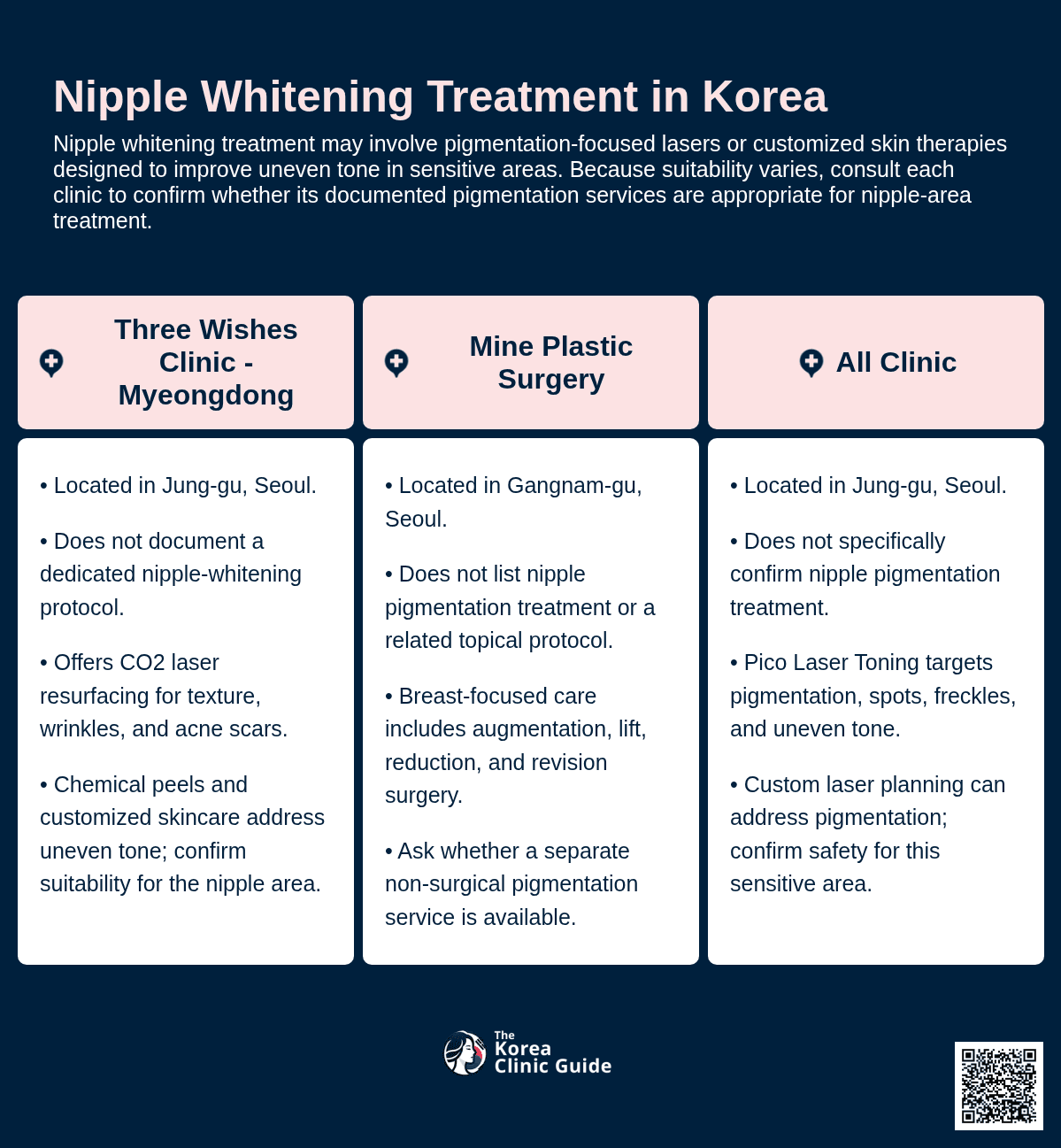
Listed below are some of the best clinics in Korea for nipple whitening treatment.
1. Three Wishes Clinic - Myeongdong
If you are considering nipple whitening treatment, the provided service information for Three Wishes Clinic does not list a dedicated nipple-whitening protocol. You can ask whether an appropriate pigmentation-focused assessment or treatment is available; the clinic does document CO2 laser treatment and facial peels among its skin services, although these are not specifically described for the nipple area.
- URL: Three Wishes Clinic - Myeongdong Website
- Location: Jung-gu, Seoul
- Documented skin services:
- CO2 laser resurfacing is listed for improving skin texture, wrinkles, and acne scars through removal of damaged skin layers and collagen stimulation.
- Chemical peels are listed for exfoliation and concerns including uneven tone, sun damage, fine lines, and mild scars.
- Customized skin care treatments include cleansing, hydration, and maintenance facials tailored to individual skin concerns.
- Other listed services:
- The clinic lists laser hair removal for long-lasting hair reduction across almost all body areas.
- Its non-surgical aesthetic menu also includes Botox, dermal fillers, fat-dissolving injections, thread lifting, Shurink ultrasound treatment, PDT acne treatment, and Rejuran Healer.
2. Mine Plastic Surgery
If you are seeking nipple whitening treatment, Mine Plastic Surgery’s provided information does not list nipple pigmentation treatment or a related laser or topical protocol. Its documented breast-focused care is surgical, including HD endoscopic augmentation, breast lift, reduction, and revision surgery, so you should confirm whether the clinic offers a separate non-surgical pigmentation service.
- URL: Mine Plastic Surgery Website
- Location: Gangnam-gu, Seoul
- Documented breast surgery options:
- HD endoscopic breast augmentation is listed as using high-definition endoscopy for precise augmentation, minimal scarring, and quicker recovery.
- Breast lift surgery is listed to elevate and reshape sagging breasts and may be combined with augmentation or reduction.
- Breast reduction removes excess breast tissue and skin to achieve a more proportionate size and address discomfort associated with large breasts.
- Breast revision surgery is listed for concerns or dissatisfaction following previous breast surgery.
- Other listed care:
- The clinic also lists rhinoplasty, eyelid procedures, facial contouring surgery, MACS lift, thread lifting, liposuction, tummy tuck, facial fat grafting, Botox, and fillers.
- The provided information describes personalized care from specialized surgeons but does not identify an individual surgeon for nipple whitening.
3. All Clinic
If you are exploring nipple whitening treatment, All Clinic’s provided information does not specifically confirm treatment of nipple pigmentation. It does list Pico Laser Toning for pigmentation such as spots and freckles and custom laser planning for pigmentation, redness, and texture, so you can ask whether either approach is suitable and appropriate for this sensitive area.
- URL: All Clinic Website
- Location: Jung-gu, Seoul
- Pigmentation and skin options:
- Pico Laser Toning uses ultra-short pulses to address pigmentation, including spots and freckles, and to brighten overall skin tone with minimal downtime.
- A custom laser program can combine devices to address pigmentation, redness, and texture after diagnosis, with sessions sequenced for the treatment plan.
- Potenza RF microneedling is listed for pores, texture, and acne scars, with depth and energy adjusted by treatment area.
- Skin boosters, including hyaluronic acid, Rejuran Healer, and exosome-based formulations, are listed for hydration, skin quality, elasticity, and post-procedure support.
- Other listed non-surgical services:
- The clinic lists fillers and botulinum toxin treatments, including lip, facial contouring, earlobe, wrinkle, and masseter options.
- Ultherapy, Thermage FLX, InMode RF, and periorbital HIFU/RF are listed for facial and neck lifting or tightening.
- Medical-grade laser hair removal is listed for face and body areas.
Nipple Whitening Treatment From Start to Finish
- Remote enquiry and screening — Send bilateral, unfiltered, well-lit photographs and disclose when the pigmentation began; whether it is changing or asymmetrical; itch, scale, pain, bleeding, discharge, or lumps; pregnancy or breastfeeding; breast procedures; radiation; allergies; herpes outbreaks; medicines; supplements; and current topical products. Remote images cannot exclude disease or confirm candidacy.
- Virtual consultation and travel coordination — Confirm whether an English-language or interpreter-supported consultation is available. Ask for the proposed method, exact product or device, estimated sessions, test-spot policy, required stay, sedation plan, written consent, and remote-follow-up arrangements.
- In-person examination — The clinician inspects both nipple–areola complexes, reviews breast and skin history, records baseline photographs, and determines whether the pigment is stable and appropriate for cosmetic treatment. One-sided or symptomatic lesions require dermatology or breast assessment; Paget disease evaluation can include biopsy and breast imaging according to clinical findings.
- Treatment planning or test spot — For a laser or light plan, request a small test area and a healing review before full-area treatment. The clinician sets a conservative initial approach based on skin tone, pigment history, skin integrity, and the exact NAC area being treated.
- Treatment day — A topical depigmenting plan involves clinician-prescribed home application over weeks. A conservative laser/light session is generally outpatient and commonly uses topical anesthetic; the exact duration, passes, and endpoint are not standardized for NAC pigmentation. Sedation is unusual for minor treatment but requires fasting and discharge arrangements if used.
- Discharge instructions — Leave with the exact procedure record, approved cleanser and barrier ointment if relevant, pain-relief plan, products to stop, warning signs, clinic contact route, and review date. Do not restart retinoids, hydroquinone, exfoliating acids, fragranced products, or other bleaching agents without approval.
- Early review and overseas follow-up — Attend the planned local review when possible, particularly after a test spot, blistering, peeling, or ablative treatment. After returning home, send the clinic requested photographs and seek local urgent assessment for infection, extensive blistering, severe pain, or an open wound.
Alternatives to Nipple Whitening Treatment
The appropriate alternative depends on the actual goal. Non-surgical options attempt pigment modification or visual camouflage but have uncertain NAC-specific outcomes; surgery addresses shape, size, inversion, or reconstruction rather than uncomplicated pigmentation.
No Procedure
- Best suited to normal variation — Stable, symmetrical, symptom-free NAC pigmentation is often normal and does not require treatment.
- Key tradeoff — This avoids pigment irregularity, burns, scarring, and maintenance treatment, but does not alter color.
Treat the Underlying Cause
- Best suited to active change — Eczema, contact allergy, infection, friction, or injury should be diagnosed and controlled before any cosmetic plan.
- Key tradeoff — Treating inflammation can improve post-inflammatory darkening and protects skin health, but does not guarantee removal of established pigment.
Areola Tattoo or Micropigmentation
- Best suited to visual color correction — Areola tattooing can camouflage color differences or improve perceived symmetry without attempting to remove melanin.
- Key tradeoff — It avoids depigmenting chemicals and resurfacing, but pigment can fade or shift color and often needs touch-ups.
Areola or Nipple Surgery
- Best suited to structural concerns — Areola surgery or nipple surgery addresses areolar diameter, nipple shape, inversion, asymmetry, or reconstruction.
- Key tradeoff — Surgery can change anatomy but carries incision, healing, scar, sensation, and potential breastfeeding considerations; it is not a treatment for normal pigment alone.
Deferral
- Best suited to temporary risk factors — Defer elective treatment during pregnancy, breastfeeding, active dermatitis, recent tanning or burns, and periods of hormonal instability.
- Key tradeoff — Deferral protects vulnerable skin and nursing infants from uncertain exposure, but postpones cosmetic change.
How Can I Prepare for Nipple Whitening Treatment?
- Medical disclosure — Tell the clinician about all medicines, hormones, anticoagulants or antiplatelets, diabetes medicines, immunosuppressants, supplements, allergies, prior laser or peel reactions, herpes outbreaks, keloids, breast surgery, implants, reconstruction, radiation, and altered nipple sensation.
- Prescription medicines — Do not independently stop anticoagulants, diabetes medicines, immunosuppressants, hormones, or other prescribed drugs. Obtain any medication-change instructions from the clinician who manages the prescription.
- Isotretinoin history — Report current or recent isotretinoin use. General laser-resurfacing guidance cautions against treatment within the prior year; the treating clinician must assess this risk individually.
- Topical products — Use only written clinic instructions for pausing tretinoin or other retinoids, hydroquinone, lactic acid and other exfoliating acids, benzoyl peroxide, self-tanner, fragrances, and unregulated bleaching products. Do not apply anything to irritated, fissured, or open NAC skin.
- Pregnancy and nursing — Postpone elective treatment during pregnancy and breastfeeding. Do not apply hydroquinone to a nursing nipple or areola without individualized medical advice; LactMed advises preventing infant skin contact and ingestion from treated maternal skin.
- Fasting and transport — No fasting is normally needed for topical-anesthetic outpatient treatment. Follow the clinic’s exact fasting rules if sedation is planned, and arrange an adult escort for discharge.
- Clothing and accommodation — Pack a clean, loose cotton bra or soft top that will not rub the treatment area. Book flexible nearby accommodation if a test spot, peel, ablative treatment, or early review is planned.
Travel note: Keep return flights flexible until the clinician confirms that treated skin is intact and healing normally, especially after blistering, open skin, or sedation.
Confirm the clinic’s specific preparation requirements, as the treating doctor’s instructions take precedence over general guidance.
Aftercare Advice
Protect the treated nipple–areola skin from friction, heat, irritation, and unapproved products until it is fully comfortable and intact.
- Keep products simple — Use only the prescribed cleanser, ointment, and pain-relief plan. Do not pick, scrub, exfoliate, or restart retinoids, hydroquinone, acids, fragranced products, or other bleaching agents until the clinician authorizes them.
- Control friction and activity — Wear clean, loose, soft clothing. Avoid tight bras, rough seams, adhesive nipple covers, strenuous chest exercise, and sexual contact that rubs the area until tenderness, peeling, and skin breakdown have resolved.
- Avoid heat and water exposure — Skip saunas, hot tubs, pools, and swimming while skin is open, crusted, weeping, or peeling. Do not soak or apply harsh antiseptics unless specifically directed.
- Watch pigment and healing changes — Temporary redness, tenderness, swelling, itch, or pigment darkening can follow conservative laser/light treatment. Blistering, crusting, and a longer wound-care period are more likely after peeling or ablative resurfacing.
- Seek urgent assessment — Contact the clinic promptly and seek local urgent care for escalating pain, spreading redness or warmth, marked swelling, pus, fever, extensive blistering, gray or black skin, persistent bleeding, or an open wound.
- Attend follow-up — Send requested photographs and attend review before escalating treatment. The best documented topical protocol lasted a mean 16.6 weeks, while laser-session number and durability are not established for NAC pigmentation.
Follow the treating doctor’s instructions over general advice and contact the clinic whenever healing, color change, or symptoms appear abnormal.
Frequently Asked Questions
Related Blogs
Filler Dissolver in Korea: Hyaluronic Acid Reversal, Recovery, Risks, and Travel Planning
Hyaluronic acid filler dissolution uses targeted hyaluronidase injections, with ultrasound assessment when filler is old, migrated, deep, periocular, or uncertain. International patients can plan consultation, outpatient treatment, a review at about 48 hours, written treatment records, and remote follow-up; urgent pain, skin-color changes, visual symptoms, or neurological symptoms require immediat
Updated: Sep 28, 2026
Collagen Filler in Korea: Products, Safety, Recovery, and Travel Planning
Collagen filler treatment involves confirming the exact product, medical screening, possible allergy testing, outpatient injection, and follow-up planning. International patients should stay in Korea for 2–3 days, expect bruising or swelling for up to 1–2 weeks, and obtain emergency contacts and complete product records.
Updated: Sep 27, 2026
Ultracol in Korea: Candidates, Safety, Recovery, and Travel Planning
Ultracol is a PDO microsphere injectable intended in Korea for temporary improvement of bilateral nasolabial folds, delivered after eligibility review and product-label verification. The article covers candidate screening, outpatient treatment and recovery, travel planning, aftercare, warning signs, follow-up, and alternatives.
Updated: Sep 27, 2026

Korean Arginine Fluid Optimization: See How Costs Stack Up Against Germany, China, and More Countries
Explore the cost dynamics of Arginine Fluid in Korea, examining factors influencing its pricing and availability. Discover how economic and healthcare trends impact the accessibility of this essential amino acid supplement.
Updated: Sep 27, 2026
Clinics offering Nipple Whitening Treatment

Three Wishes Clinic - Myeongdong, Korea: Advanced Botox, Fillers, Laser, and Skin Treatments for Confidence and Care
Myeongdong
Mine Plastic Surgery Clinic Korea: Premier Destination for Comprehensive Cosmetic Procedures and Body Contouring
Apgujeong
All Clinic Korea | Myeongdong Fillers, Botox, HIFU, Thermage
Myeongdong
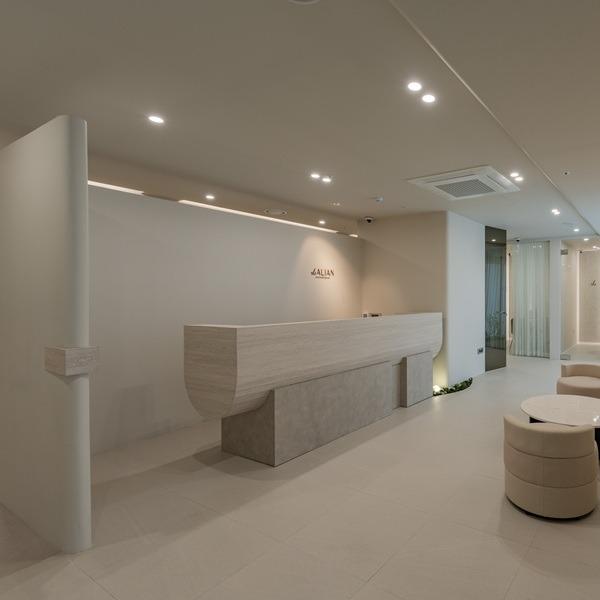
Lalian Cheongdam Clinic Korea | Premium Dermatology & Aesthetic Treatments
Cheongdam