
Medical Tourism Blog
Areola Tattoo in Korea: Types, Recovery, Travel Planning and Safety
Table of contents
- Areola Tattoo at a Glance
- What Is an Areola Tattoo?
- Who Is a Good Candidate for an Areola Tattoo?
- What Are the Different Types of Areola Tattoo?
- Why Visit Korea for an Areola Tattoo?
- Key Information for International Patients
- Which Are the Best Clinics in Korea for Areola Tattoo?
- Areola Tattoo From Start to Finish
- Alternatives to an Areola Tattoo
- How Can I Prepare for an Areola Tattoo?
- Aftercare Advice
Considering treatment in Korea? Everything you need to know e.g. — how to avoid scams, visas, interpreters, recovery tips — in our Medical Tourism Master Guide. Plan with confidence in minutes, not weeks!
Last updated: September 2026
Areola Tattoo at a Glance
- What it does — Areola tattooing is medical micropigmentation that restores areolar color, border, size, and visual symmetry; 3D shading can make a flat nipple–areola complex look projected, but cannot create physical projection, change breast shape, or restore sensation.
- Best candidates — It is most often a final step after mastectomy reconstruction, nipple grafting, breast or chest surgery, or selected top-surgery cases once scars, skin quality, and breast or chest position are fully stable.
- Treatment time — This is usually an outpatient procedure under topical or local anesthesia, with tattooing typically taking 15–60 minutes; a Korean academic series reported a 29-minute mean tattoo-only session.
- Healing and results — Keep the initial dressing on for about 48 hours, expect flaking or scabbing for 10–14 days, and wait 4–8 weeks for pigment to settle; color can fade or heal unevenly, so touch-up assessment is usually at 6–8 weeks and later maintenance may be needed.
- Key safety limitation — Do not proceed with active infection, open wounds, dermatitis, unresolved healing, active cancer treatment, pregnancy, or planned near-term revision; irradiated, thin, scarred, or poorly vascularized skin has less predictable healing and pigment retention.
- Korea travel planning — Plan at least 3 days in Korea for consultation, treatment, and the early dressing period, but a same-team touch-up may require a return trip or a 6–8-week stay; avoid immediate long-haul travel until the treating clinician clears the early skin check.
- Korea-specific consideration — Korea’s Tattooist Act is scheduled to take effect on October 29, 2027; until then, non-medical tattooing remains prohibited, so international post-reconstruction patients should verify the practitioner’s current legal authority and favor a medically integrated service.
What Is an Areola Tattoo?
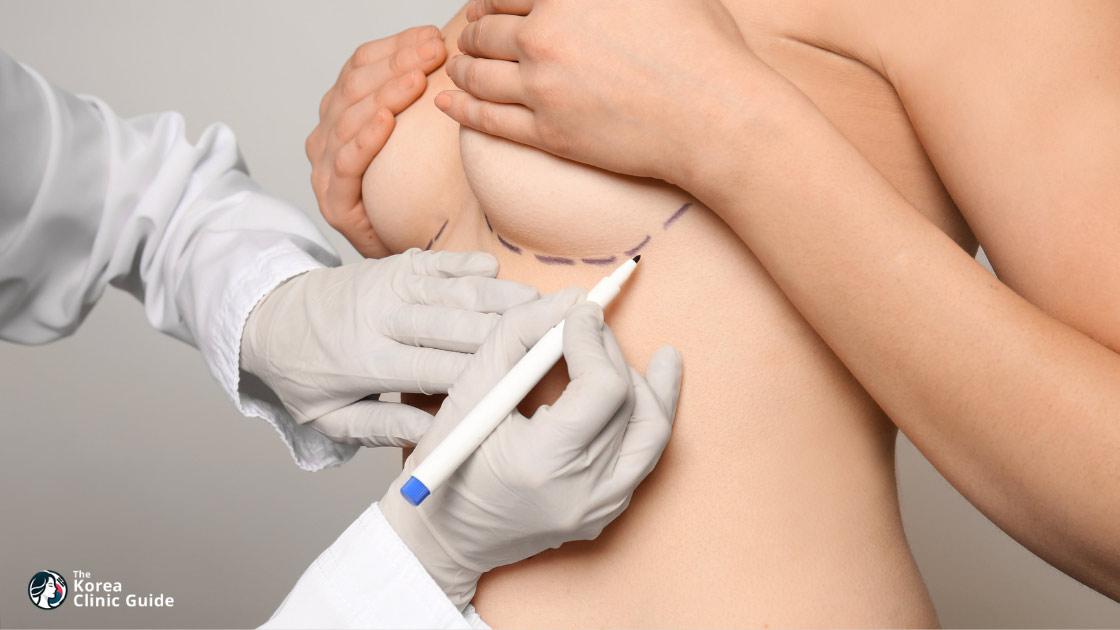
An areola tattoo is medical micropigmentation that adds pigment to restore the color, outline, and appearance of the nipple–areola area. It helps improve visual symmetry after breast reconstruction, chest surgery, trauma, or pigment loss, and shading can create the appearance of nipple projection without changing breast shape or sensation. It is a minimally invasive, outpatient procedure rather than surgery.
Who Is a Good Candidate for an Areola Tattoo?
- Post-reconstruction patients — Good candidates have completed mastectomy reconstruction and want restored areolar color, border, diameter, or the visual impression of nipple projection without another operation.
- Stable post-surgical skin — Treatment can address pigment loss, scars, or asymmetry after nipple grafting, breast or chest surgery, trauma, or selected top surgery cases once the contour and scars have settled.
- Unilateral symmetry correction — An untreated areola can be used as a reference for placement, diameter, shape, and pigment blending.
- Realistic visual goals — 3D shading can create a convincing optical nipple–areola complex on flat skin. It does not create physical nipple projection, change breast shape, reduce areolar tissue, or restore sensation.
Active infection, open wounds, dermatitis, ulceration, or unresolved healing problems at the treatment site rule out treatment until fully resolved. Defer areola micropigmentation during pregnancy, active cancer treatment, near-term breast revision, or when new unexplained breast or chest skin changes need assessment. Uncontrolled diabetes, immunosuppression, chronic systemic steroid use, prior serious reactions to pigment, nickel, anesthetics, dressings, or adhesives require clinician review; irradiated, thin, scarred, or poorly vascularized skin also needs specific counseling because pigment retention and healing are less predictable. There is no universal post-surgery or post-radiotherapy waiting period: the breast surgeon, plastic surgeon, and oncologist should confirm that scars, skin, and breast position are stable before tattooing.
What Are the Different Types of Areola Tattoo?
Areola tattooing is tailored to the existing nipple, scar pattern, breast contour, and whether one or both sides need treatment.
- Areola-only pigmentation — Restores color and a defined border around an existing natural, preserved, or surgically reconstructed nipple. It suits patients whose main concern is pigment or edge definition.
- 2D restoration — Uses pigment to establish areolar color, outline, and diameter on a flat surface. This is appropriate when a natural-looking color field is the priority rather than an illusion of projection.
- 3D nipple–areola tattoo — Uses layered highlights, shadows, and color transitions to make a flat nipple–areola complex look projected. The effect is visual only and depends on lighting, skin texture, and healed pigment uptake.
- Scar blending or unilateral correction — Softens the visual contrast of scars or aligns one side with the other. It cannot correct a displaced breast mound, significant contour difference, or tissue shortage; those concerns need surgical assessment.
- Post-graft or post-reconstruction finishing tattoo — Adds color after surgical nipple reconstruction or grafting, often as the final reconstructive stage. Scar maturity and vascular quality determine timing.
Why Visit Korea for an Areola Tattoo?
Korea can be practical for patients already receiving breast reconstruction or chest surgery within a medically integrated setting. For this procedure, however, there is no robust evidence that Korea produces better pigment durability, safety, or satisfaction than other countries. Choose based on the treating team’s legal authority, reconstructive coordination, pigment documentation, and capacity to manage complications.
- Medical-setting coordination — Areola tattooing is commonly used as a later stage of breast reconstruction, a pathway described in breast reconstruction information from the U.S. National Cancer Institute. This is particularly relevant after mastectomy, radiotherapy, implant reconstruction, flap reconstruction, or nipple grafting.
- Korean clinical experience — A Seoul academic-center observational series reported a mean 29-minute tattoo-only session and mean satisfaction of 8.1/10 in its tattoo-only group. These results are useful local data, but the single-center study does not establish superiority over other techniques or destinations.
- Current legal status matters — Korea’s Tattooist Act was promulgated in 2025 but is scheduled to take effect on October 29, 2027. Until then, non-medical tattooing remains prohibited; verify the practitioner’s present legal authority and favor a medically integrated service for post-cancer or post-reconstruction care, as set out in the official legal record.
- Evidence limitation — A 2024 scoping review found that research on care processes and outcomes still needs strengthening. Long-term results across skin tones, irradiated skin, pigment formulations, and techniques remain insufficiently standardized.
Key Information for International Patients
- Minimum stay — Plan at least 3 days for consultation or an indicated patch test, treatment, and the roughly 48-hour early-dressing period. An uncomplicated tattoo-only appointment is outpatient and does not normally require an overnight admission.
- Appointment length — Treatment commonly takes 15–60 minutes; a local Korean academic series reported a 29-minute mean for tattoo-only treatment. Consultation, markings, anesthetic time, and aftercare teaching extend the visit.
- Touch-up logistics — Assess color and patchiness at 6–8 weeks, after pigment has settled. A same-team touch-up requires a much longer Korea stay or a separate return trip; arrange a remote review plan before travelling.
- Flying home — There is no well-established evidence-based flight ban after an uncomplicated areola tattoo. Do not book an immediate long-haul departure: obtain the treating clinician’s clearance after the early dressing and skin check.
- Itinerary restrictions — Keep the chest dry and avoid pools, beaches, hot tubs, saunas, strenuous exercise, and activities that cause sweating until surface healing is complete, usually 10–14 days. This limits spa, swimming, hiking, and gym plans after treatment.
- Remote follow-up — Confirm an English-language contact method, the clinic’s response plan for infection or allergy concerns after departure, and whether they need dated photographs at 48 hours, 2 weeks, and 6–8 weeks.
Travel note: A 3-day Korea stay is a practical safety and logistics recommendation, not a validated aviation rule. Build flexibility into flights in case the clinician advises more in-person review.
Which Are the Best Clinics in Korea for Areola Tattoo?
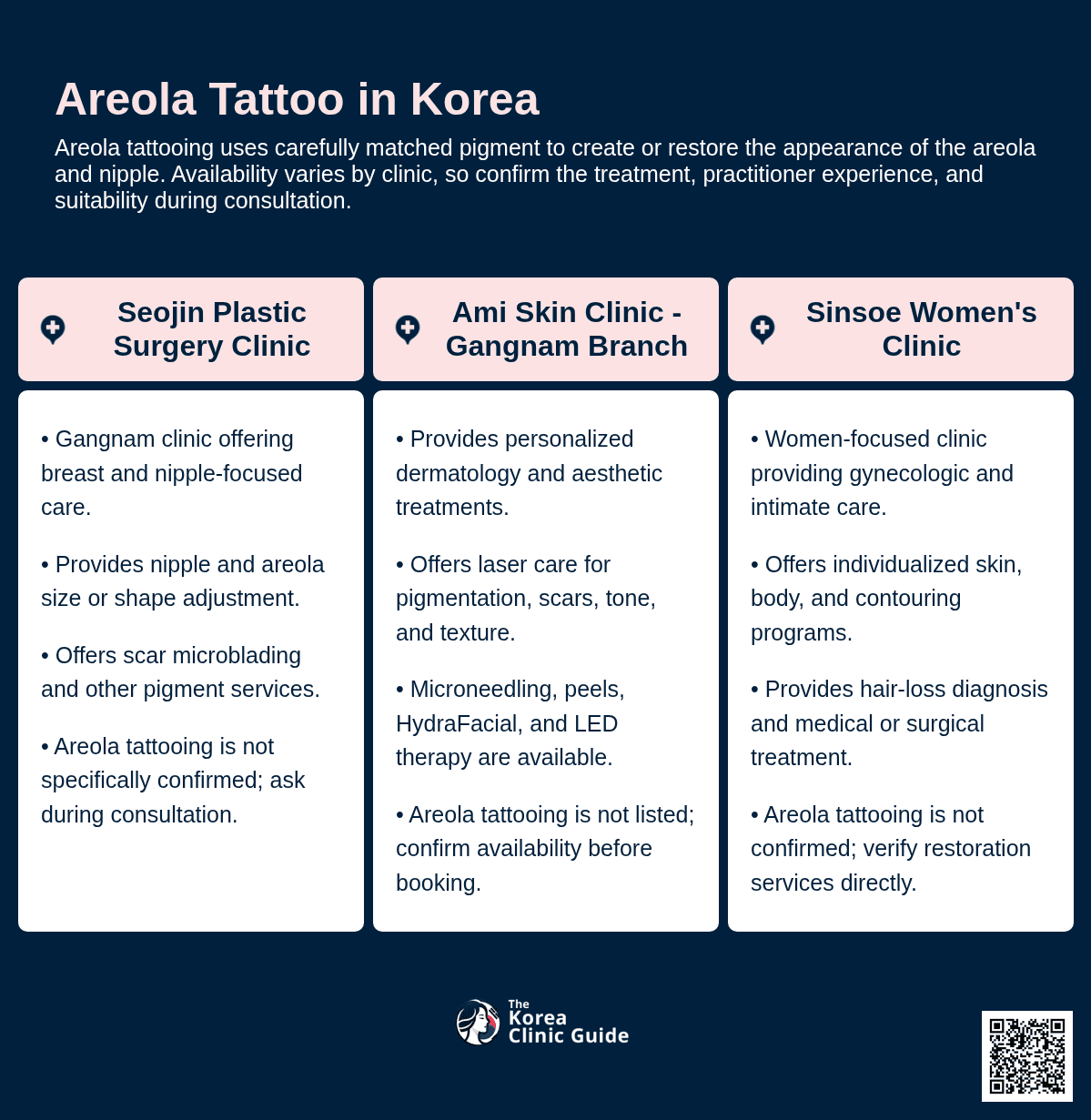
Listed below are some of the best clinics in Korea for areola tattoo.
1. Seojin Plastic Surgery Clinic
If you are considering an areola tattoo alongside breast or nipple-focused care, Seojin Plastic Surgery Clinic offers relevant breast surgery and nipple/areola adjustment services, with care led end-to-end by Dr. Lee Hyungmin. The provided information does not specifically confirm areola tattooing, so you should clarify whether this treatment is available and how it may fit your goals.
- URL: Seojin Plastic Surgery Clinic Website
- Location: Gangnam-gu, Seoul
- Relevant breast care:
- Offers breast implant, hybrid implant with fat grafting, breast lift, breast reduction, gynecomastia surgery, and transgender breast implant procedures.
- Lists nipple surgery for adjustment of nipple or areola size or shape.
- Related pigment and scar services:
- Lists scar microblading to camouflage scars by blending them with surrounding skin.
- Also offers scalp micropigmentation, eyebrow and eyeline microblading, and lip tattoo services.
- Care approach:
- Dr. Lee Hyungmin is described as providing comprehensive care in a one-doctor clinic setting.
- The clinic states that Dr. Lee has more than 16 years of experience and was recognized among the 100 Good Doctors in Korea.
- 3D imaging and high-definition endoscopy are listed among the clinic's technologies.
2. Ami Skin Clinic - Gangnam Branch
Ami Skin Clinic - Gangnam Branch provides personalized dermatology and aesthetic care near Sinnonhyeon Station, but the supplied information does not list areola tattooing. You may want to confirm whether it offers this procedure or can assess relevant skin concerns before treatment.
- URL: Ami Skin Clinic - Gangnam Branch Website
- Location: Gangnam-gu, Seoul
- Skin-focused treatments:
- Laser treatments are offered for pigmentation, scars, skin texture, and tone.
- Chemical peels and microneedling are available for skin texture, wrinkles, acne, and scars.
- HydraFacial and LED light therapy are listed for cleansing, hydration, inflammation, and skin healing support.
- Other aesthetic services: Offers Ultherapy, facial contouring with fillers or botulinum toxin, CoolSculpting, dermal fillers, and Botox.
3. Sinsoe Women's Clinic
Sinsoe Women's Clinic offers women-focused gynecologic, intimate plastic surgery, and individualized skin and body programs in Gangnam, though the provided information does not confirm areola tattooing. You should verify procedure availability directly if areola restoration or pigmentation is your goal.
- URL: Sinsoe Women's Clinic Website
- Location: Gangnam-gu, Seoul
- Women-focused services:
- Offers vaginoplasty and labiaplasty.
- Provides evaluation and treatment for gynecologic infections and STDs, menstrual disorders, urinary incontinence, pelvic-floor disorders, and menopause symptoms.
- Offers noninvasive HIFU treatment for uterine fibroids.
- Skin, body, and hair care:
- Lists customized skin and body programs based on individual conditions and contouring goals.
- Provides diagnostic and treatment options for hair loss, including medical and surgical approaches.
Areola Tattoo From Start to Finish
- First contact and virtual review — Send the clinic a concise history of mastectomy, reconstruction, radiotherapy, chemotherapy, chest surgery, prior tattoos, allergies, medications, healing problems, and reference photographs. Confirm English communication, anticipated stay, and remote follow-up arrangements.
- In-person assessment — The clinician examines scar maturity, skin thickness, vascular quality, breast or chest position, and the existing nipple–areola complex. For unilateral treatment, the opposite side guides size, placement, and color. New or unexplained skin changes need medical assessment before tattooing.
- Plan and consent — Agree on areolar diameter, shape, border, pigment direction, and whether 2D or 3D optical shading best meets the goal. Discuss fading, uneven retention, color mismatch, infection, scarring, allergy, and the likelihood of a touch-up. A patch test can be considered at least 24 hours beforehand for a relevant allergy history, but it cannot rule out every delayed reaction.
- Marking and pigment selection — The provider marks the planned position while accounting for standing body symmetry and selects or mixes pigments. Ask for pigment details for future breast-imaging and medical records.
- Micropigmentation — After skin cleansing and topical or local anesthesia when appropriate, sterile disposable needle cartridges place pigment into the skin in layers. Altered sensation after mastectomy or reconstruction means discomfort varies. Tattoo-only treatment generally lasts 15–60 minutes.
- Dressing and discharge — The team applies a protective dressing, explains cleansing and ointment instructions, and discharges the patient the same day. Routine fasting and laboratory tests are not intrinsic to a healed-skin tattoo unless medical history or planned sedation requires them.
- Early healing review — Keep the dressing on for the provider-specified interval, often about 48 hours. Redness, mild swelling, flaking, scabbing, and an initially light or patchy color are expected during the first 10–14 days.
- Remote assessment and touch-up decision — Send photos as instructed once the skin has healed and again at 6–8 weeks. Pigment settles over roughly 4–8 weeks, and uneven uptake or fading often leads to a touch-up plan. Longer-term color change is real: a prospective 59-patient study found continued change between 6 and 12 months.
Alternatives to an Areola Tattoo
The appropriate alternative depends on whether the priority is visual color restoration, actual nipple projection, scar revision, or changing breast position. Tattooing has lower downtime and avoids a new incision, while surgical options can alter tissue but add healing and complication risks.
No NAC reconstruction
- Best for — Patients comfortable leaving the breast or chest without a nipple–areola complex after mastectomy or reconstruction.
- Tradeoff — Avoids tattoo and surgical risks, but does not restore areolar color, outline, or visual symmetry.
Prosthetic or adhesive nipple
- Best for — Those wanting removable visual projection without surgery or permanent pigment.
- Tradeoff — Can provide physical prominence under clothing but needs ongoing replacement, attachment, and skin-tolerance management.
Surgical nipple reconstruction
- Best for — Patients who want actual tissue projection and have stable, adequately vascularized reconstructed skin.
- Tradeoff — Nipple surgery creates physical projection but requires incisions and healing, carries wound-healing or necrosis risk, and projection commonly decreases over time. Areola tattooing is often added later for color.
Nipple-sharing or areolar skin grafting
- Best for — Selected unilateral reconstruction cases where donor anatomy and surgical history support grafting.
- Tradeoff — Uses tissue rather than pigment but creates donor-site considerations and adds graft-healing risks. It is not suitable for every reconstruction.
Breast or scar revision
- Best for — Patients whose main issue is breast-mound position, contour, scar tethering, implant-related skin quality, or major nipple displacement.
- Tradeoff — Revision breast surgery or scar removal surgery can address structural concerns that tattooing cannot, but entails operative recovery and higher procedural risk.
How Can I Prepare for an Areola Tattoo?
- Medical clearance — Provide the tattoo team with operative reports when available, reconstruction type, radiotherapy and chemotherapy dates, oncology history, wound-healing history, diabetes status, immune conditions, and prior pigment reactions. Obtain clearance from the breast surgeon, plastic surgeon, or oncologist when treatment followed cancer care or complex reconstruction.
- Medicines and supplements — Do not independently stop anticoagulants, antiplatelets, diabetes medicines, corticosteroids, or cancer medicines. Ask the prescribing clinician and tattoo provider for an individualized plan; also disclose aspirin, ibuprofen, fish oil, vitamin E, herbal supplements, and any medication that increases bleeding or affects healing.
- Allergy planning — Report reactions to tattoo pigment, metals including nickel, lidocaine or other anesthetics, adhesives, and dressings. A patch test at least 24 hours before treatment can be considered, but does not guarantee against a delayed reaction.
- Skin condition — Arrive with clean, intact chest skin. Avoid sunburn, tanning, chest exfoliation, waxing, and irritating topical products before treatment. Postpone the appointment for rash, acne-like inflammation, an open area, or signs of infection.
- Nicotine and alcohol — Follow any nicotine-abstinence plan issued by the surgical team because nicotine compromises healing. Avoid alcohol according to the clinic’s instructions, particularly when bruising or bleeding risk is relevant.
- Food and transport — Fasting is not routinely required for a tattoo under topical or local anesthesia. Eat normally unless the clinic gives different instructions; arrange transport if sedation, anxiety medication, or a longer combined procedure is planned.
- Travel planning — Book accommodation that permits clean dressing care and avoid scheduling swimming, sauna visits, beach activities, or vigorous tours for 10–14 days. Keep flights changeable until the early healing check is complete.
Travel note: Bring a copy of your reconstruction and oncology summary, plus photographs showing the chest before surgery when these are useful for planning.
Confirm the treating doctor’s clinic-specific preparation instructions, which take precedence over general guidance.
Aftercare Advice
Protect the healing tattoo from friction, moisture, heat, and picking; early care strongly affects infection risk and pigment retention.
- Dressing — Keep the initial dressing on for the exact interval set by the provider, often about 48 hours. Replace it only as instructed and keep hands clean before touching the area.
- Cleansing and products — After dressing removal, cleanse gently and pat dry. Use only the ointment or moisturizer approved by the treating team; do not scrub, exfoliate, use fragranced products, or apply unapproved antibiotic creams.
- Flaking and scabs — Expect temporary redness, swelling, flaking, and scab shedding over about 10–14 days. Do not pick or peel; premature removal can leave patchy pigment and raise infection risk.
- Water, heat, and activity — Avoid baths, swimming pools, hot tubs, saunas, beach swimming, chest friction, and sweat-producing exercise until fully healed, commonly around 2 weeks. Shower only as directed.
- Sun protection — Once the skin is fully closed, protect the chest from sun exposure and use broad-spectrum SPF 50 on exposed skin to limit fading. Do not apply sunscreen to an open or scabbed tattoo.
- Warning signs — Contact the clinic promptly for worsening pain, spreading redness or warmth, pus, marked swelling, blistering, hives, or rash. Seek emergency care for breathing difficulty or facial swelling.
- Color review — Do not judge the final shade during early healing. Pigment generally settles over 4–8 weeks; arrange review at 6–8 weeks to discuss a touch-up, and expect that fading can require later maintenance.
Follow the treating doctor’s instructions over this general advice and contact the clinic promptly when anything appears wrong.
Frequently Asked Questions
Related Blogs
Gynecomastia in Korea: Surgery Methods, Recovery, Travel Planning and Alternatives
Gynecomastia surgery in Korea may use liposuction, gland excision, or skin reduction based on chest tissue, skin elasticity, and nipple position. Costs range from ₩4,000,000–₩8,000,000, with international patients advised to stay 7–10 days for early review and travel clearance.
Updated: Sep 17, 2026
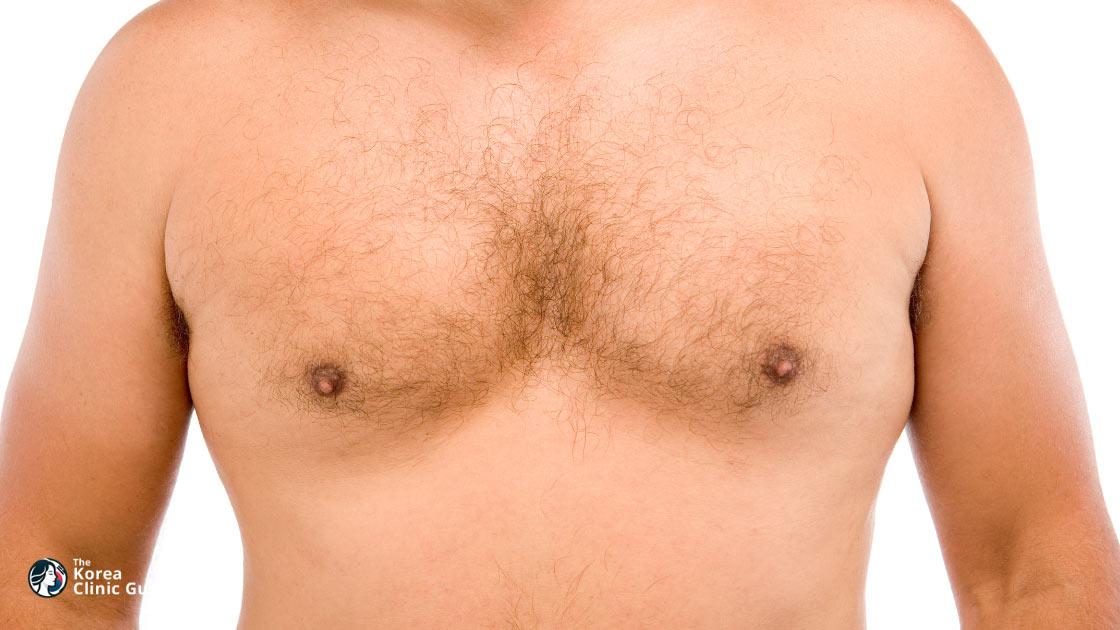
Gynecomastia in Korea: Surgery Methods, Recovery, Travel Planning, and Alternatives
Gynecomastia surgery in Korea may use liposuction, gland excision, or skin reduction based on gland, fat, skin excess, and nipple position; costs range from ₩4,000,000–₩8,000,000. International patients should plan 11–14 nights, avoid flying for at least 10 days after chest surgery, and arrange early reviews and remote follow-up.
Updated: Sep 16, 2026

Breast Reduction in Korea: Methods, Recovery, Travel Planning and Risks
Breast reduction removes breast tissue and excess skin under general anesthesia to reduce heaviness and reshape the breasts; pedicle and incision techniques depend on anatomy and reduction goals. In Korea, costs are ₩15,000,000–₩20,000,000, with international patients advised to stay at least 10–14 days for wound checks and surgeon-approved travel clearance.
Updated: Sep 14, 2026
Breast Fat Grafting in Korea: Candidacy, Recovery, Results, and Travel Planning
Breast fat grafting uses liposuction to harvest and process fat, then injects small parcels into the breasts for modest volume, contour correction, or asymmetry treatment. In Korea, prices range from ₩5,000,000 to ₩16,000,000, with international patients advised to plan 7–10 days minimum for early follow-up and travel clearance.
Updated: Sep 11, 2026
Clinics offering Areola Tattoo

Seojin Plastic Surgery Clinic Korea: Pioneering Advanced Cosmetic Procedures for Personalized Aesthetic Transformation
Apgujeong

Ladyuro Women's Clinic in Korea: Premier Destination for Vaginal Rejuvenation and Aesthetic Enhancements
Sinsa

Ami Skin Clinic - Gangnam Branch: Premier Aesthetic Treatments and Advanced Skincare in Korea
Sinnonhyeon Station

Dao Clinic: Premier Dermatology and Aesthetic Treatments in Myeongdong, Korea, Catering Especially to Japanese Tourists
Myeongdong