
Medical Tourism Blog
Nipple Surgery in Korea: Types, Recovery, Risks, and Travel Planning
Table of contents
- Nipple Surgery at a Glance
- What Is Nipple Surgery?
- Who Is a Good Candidate for Nipple Surgery?
- What Are the Different Types of Nipple Surgery?
- Why Visit Korea for Nipple Surgery?
- Key Information for International Patients
- Which Are the Best Clinics in Korea for Nipple Surgery?
- Nipple Surgery From Start to Finish
- Alternatives to Nipple Surgery
- How Can I Prepare for Nipple Surgery?
- Aftercare Advice
Considering treatment in Korea? Everything you need to know e.g. — how to avoid scams, visas, interpreters, recovery tips — in our Medical Tourism Master Guide. Plan with confidence in minutes, not weeks!
Last updated: September 2026
Nipple Surgery at a Glance
- What it treats — Nipple surgery is a group of procedures for reducing nipple length, width, or projection; correcting benign inversion; revising scars or asymmetry; or reconstructing a nipple–areola complex after mastectomy, top surgery, trauma, or congenital absence.
- Cost — No standardized price is available because costs vary substantially by procedure type, anesthesia, facility, and whether nipple work is performed alone or as part of larger breast or chest surgery.
- Recovery — Isolated reduction or inverted-nipple repair is usually outpatient; avoid nipple friction, pressure, swimming, chest exercise, heavy lifting, and sexual contact involving the area for about 2–4 weeks or until cleared.
- Results timeline — The broad change is visible after early healing, but swelling, scar stiffness, and symmetry continue to settle over several months; recurrent inversion, scar contraction, pregnancy, breastfeeding, and body changes can alter the result.
- Breastfeeding and sensation — Technique selection matters: duct-preserving inverted-nipple repair may better support future lactation, while duct division, nipple reduction, and reconstruction can change sensation, erectile response, or breastfeeding ability.
- Korea travel planning — For uncomplicated isolated surgery, plan at least 7 days in Korea, preferably 7–10 days, to complete an in-person wound review usually scheduled 5–10 days after surgery; combined breast or chest operations commonly require at least 2 weeks or longer.
- Important safety screen — A new one-sided inverted nipple, lump, bloody or spontaneous discharge, persistent scaly skin, ulceration, or unexplained breast change needs breast-specialist assessment before cosmetic treatment.
What Is Nipple Surgery?
Nipple surgery includes procedures that reshape, correct inversion of, revise, or reconstruct the nipple and surrounding areola. It can improve nipple size, projection, symmetry, or appearance after breast or chest surgery, while supporting reconstructive restoration when tissue is absent. It is surgical, although isolated procedures are often outpatient and performed with local anesthesia.
Who Is a Good Candidate for Nipple Surgery?
- Stable, specific concern — Adults seeking reduction of nipple length, width, or projection; correction of long-standing benign inversion; scar or asymmetry revision; or reconstruction after prior breast or chest surgery.
- Inversion assessed by severity — Candidates for inverted nipple repair understand whether the nipple is manually evertible or fixed, whether ducts are intended to be preserved, and that recurrence, sensation change, and lactation effects are possible.
- Healed reconstructive setting — People considering nipple–areola reconstruction after mastectomy or top surgery have a stable breast or chest mound and coordinate timing with their reconstructive team.
- Reliable aftercare access — International patients can remain locally for wound review, follow dressing instructions, and arrange a clinician at home for concerns after departure.
Do not treat a new or one-sided inverted nipple as a cosmetic concern until a breast specialist has assessed it. A lump, bloody or spontaneous non-milk discharge, persistent scaly or eczematous skin, ulceration, or another unexplained breast change requires diagnostic evaluation first; breast-cancer symptom guidance supports prompt assessment of these changes. Active infection, open wounds, uncontrolled dermatitis, uncontrolled diabetes, major medical illness, significant immunosuppression, or unresolved healing problems require deferral or individualized planning. Pregnancy, current breastfeeding, a strong future breastfeeding priority, nicotine exposure, anticoagulant use, and cancer treatment plans all change candidacy and technique selection. Cosmetic surgery is also inappropriate when expectations are unrealistic or timely postoperative review cannot be arranged.
What Are the Different Types of Nipple Surgery?
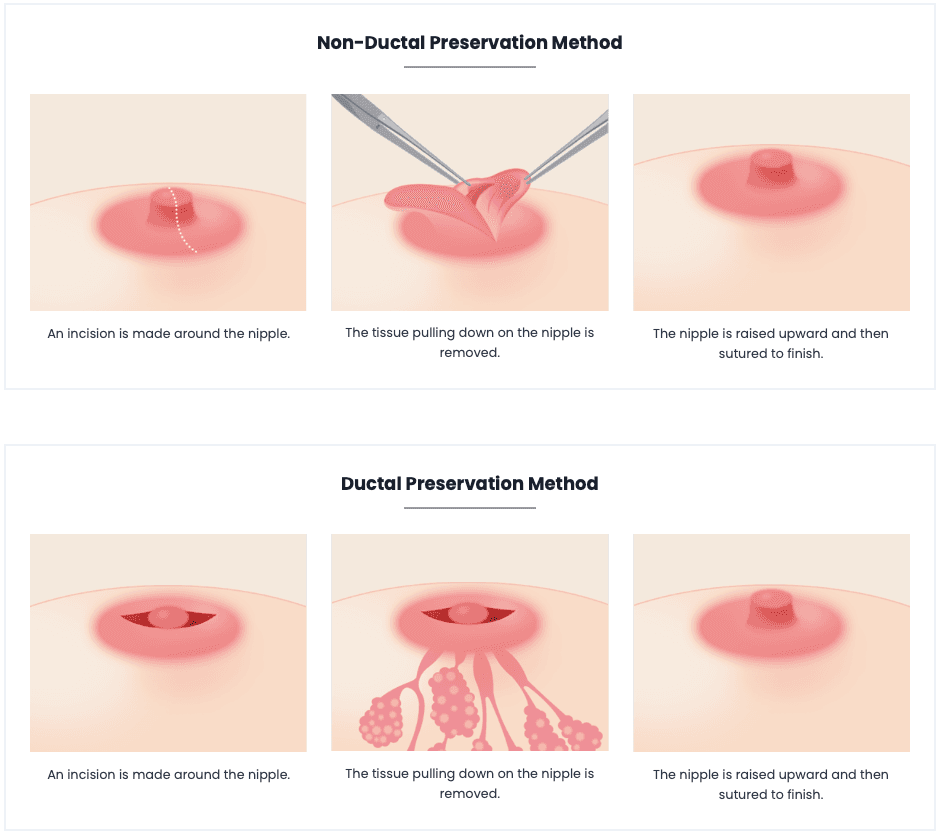
Nipple surgery is an umbrella term. The right operation depends on whether the issue involves nipple size, projection, inversion, areolar appearance, previous surgery, or loss of the nipple–areola complex.
- Nipple reduction — Removes a measured amount of tissue to reduce length, diameter, projection, or all three while attempting to preserve blood supply, sensation, and ducts. Circumferential, wedge, shortening, graft, and local-flap methods are described, but a systematic review of nipple-hypertrophy reduction found mostly low-level, non-comparative evidence and no technique proven best for every anatomy.
- Benign inverted-nipple correction — Releases short ducts or fibrous tethering bands that pull the nipple inward. Duct-preserving sutures, dermal flaps, and support techniques aim to retain duct function; duct-dividing approaches can suit selected severe fixed inversion but have greater lactation implications. A systematic review found no consensus on a preferred method.
- Nipple–areola reconstruction — Recreates nipple projection with local tissue flaps after mastectomy, top surgery, trauma, or congenital absence. Areolar color is often added later with tattooing; reconstructed tissue does not reliably regain normal erotic sensation, erectile response, or lactation.
- Combined breast or chest surgery — Nipple resizing, repositioning, grafting, or revision can form part of breast reduction, breast lift, gynecomastia surgery, [revision breast surgery](/blog/revision-breast-surgery-korea), or top surgery. The larger operation—not the nipple work alone—determines anesthesia, scars, blood-supply risk, recovery, and travel timing.
Why Visit Korea for Nipple Surgery?
Korea has an established international medical-care sector, including services for overseas visitors. That infrastructure can help with scheduling and communication, but it does not make nipple surgery a standardized procedure or replace careful surgeon selection and follow-up planning. Evidence specific to isolated nipple surgery in international patients remains limited.
- Documented local technique experience — A Seoul-based published series reported partial ductal division with V-Y parenchymal advancement in 168 patients involving 309 nipples. This shows that inverted-nipple techniques have been reported locally, but the Korean single-center report is not a national registry, comparative trial, or international-patient outcome study.
- International-patient infrastructure — Seoul reported receiving more than one million international medical tourists in 2024, reflecting substantial visitor-facing medical activity in the city. See the Seoul Metropolitan Government report for the reported figure.
- Access to related staged care — The same destination can be practical when nipple work is part of broader breast, chest, reconstructive, or gender-affirming planning, provided the operating team—not a travel itinerary—sets the timeline.
- Evidence limitation — No Korea-specific national registry or standardized comparative dataset was identified for isolated nipple reduction, inverted-nipple repair, or nipple reconstruction in international patients. Ask the surgeon for their own complication, revision, sensation, and recurrence data for the exact technique proposed.
Key Information for International Patients
- Minimum stay — Plan at least 7 days, preferably 7–10 days, for uncomplicated isolated nipple reduction or inverted-nipple repair so an in-person wound review can occur before a long-haul flight.
- Combined-surgery timeline — Breast reconstruction, breast reduction, breast lift, top surgery, drains, general anesthesia, wound concerns, active cancer treatment, and clot-risk factors commonly require at least 2 weeks locally or substantially longer. Normal activity after larger breast or chest surgery often takes 6–8 weeks or longer.
- Flight clearance — Do not book a fixed return flight until the operating surgeon clears travel. Follow an individualized clot-prevention plan for long-haul travel; the American Society of Plastic Surgeons guidance on patients traveling for surgery stresses the need for continuity of care and travel planning.
- Itinerary restrictions — Treat the first postoperative days as recovery time, not sightseeing. Avoid strenuous touring, alcohol while restricted or using sedating medicines, swimming, sun exposure, and activities that rub or compress the nipples.
- Follow-up plan — Obtain an English discharge summary stating the exact operation, anesthesia, medicines, dressing and shower instructions, suture plan, warning signs, and emergency contact route. Identify a clinician at home before travel who can assess delayed healing, infection, wound separation, or scar concerns.
Travel note: Sedation or general anesthesia requires an escort after discharge and no self-driving. Stay close enough to the clinic to attend an urgent review if bleeding, discoloration, or increasing pain develops.
Which Are the Best Clinics in Korea for Nipple Surgery?
Listed below are some of the best clinics in Korea for nipple surgery.
1. Seojin Plastic Surgery Clinic
You may consider Seojin Plastic Surgery Clinic if you want nipple or areola size and shape adjustment within a breast-surgery practice led directly by Dr. Lee Hyeongmin. The clinic describes nipple surgery as part of its breast services and emphasizes individualized consultation, 3D imaging, and high-definition endoscopy to support personalized surgical planning.
- URL: Seojin Plastic Surgery Clinic Website
- Location: Gangnam-gu, Seoul
- Procedure focus:
- Nipple surgery is offered for adjustment of nipple or areola size or shape.
- Related breast procedures include breast augmentation, hybrid implant-and-fat-grafting augmentation, breast lift, breast reduction, gynecomastia surgery, and breast implants for transgender individuals.
- Direct surgeon care:
- As a one-doctor clinic, Dr. Lee Hyeongmin provides end-to-end care.
- Dr. Lee has more than 16 years of experience and was recognized among the 100 Good Doctors in Korea.
- Planning tools: The clinic uses 3D imaging and high-definition endoscopy as part of its technology-supported approach.
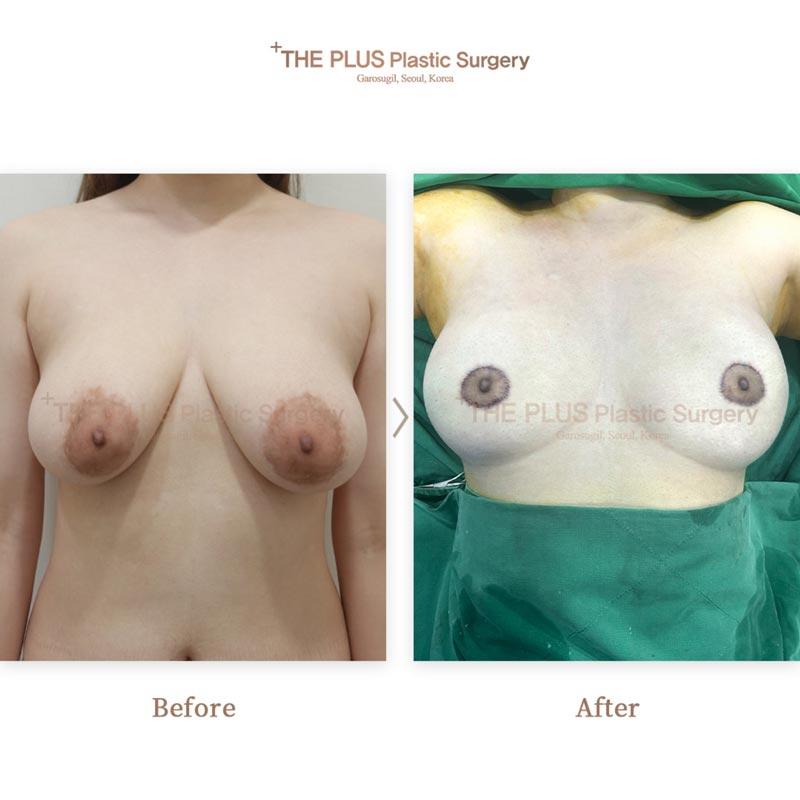
2. THEPLUS Plastic Surgery
You may consider THEPLUS Plastic Surgery if you value breast-surgery expertise, individualized planning, and structured postoperative monitoring; Dr. Lee is a board-certified plastic surgeon with experience in breast augmentation, lift, and reduction procedures. Nipple surgery is not specifically listed in the provided information, so you should confirm whether the clinic can address your particular nipple or areola concern during consultation.
- URL: THEPLUS Plastic Surgery Website
- Location: Gangnam-gu, Seoul
- Breast-surgery background:
- Dr. Lee specializes in breast augmentation, breast lift, and breast reduction surgery.
- Her prior experience includes a Surgery Specialist position at Seoul National University Hospital and clinical training at Seoul Metropolitan Boramae Hospital.
- She is a member of the Korean Society of Plastic and Reconstructive Surgery and the Korean Society of Aesthetic Plastic Surgery.
- Individualized surgical planning:
- Breast lifts are selected from donut, lollipop, or anchor techniques following a 3-D assessment of skin elasticity and breast shape.
- For breast reduction, the clinic describes use of a pedicle technique intended to preserve nipple sensation while removing excess volume.
- Breast augmentation planning includes personalized implant placement and incision selection with full-HD endoscopic visualization.
- Care and support:
- The clinic describes advanced sterilization protocols, systematic postoperative monitoring, and aftercare tailored to your healing pace.
- English-language support and translator assistance are available from consultation through recovery for international visitors.
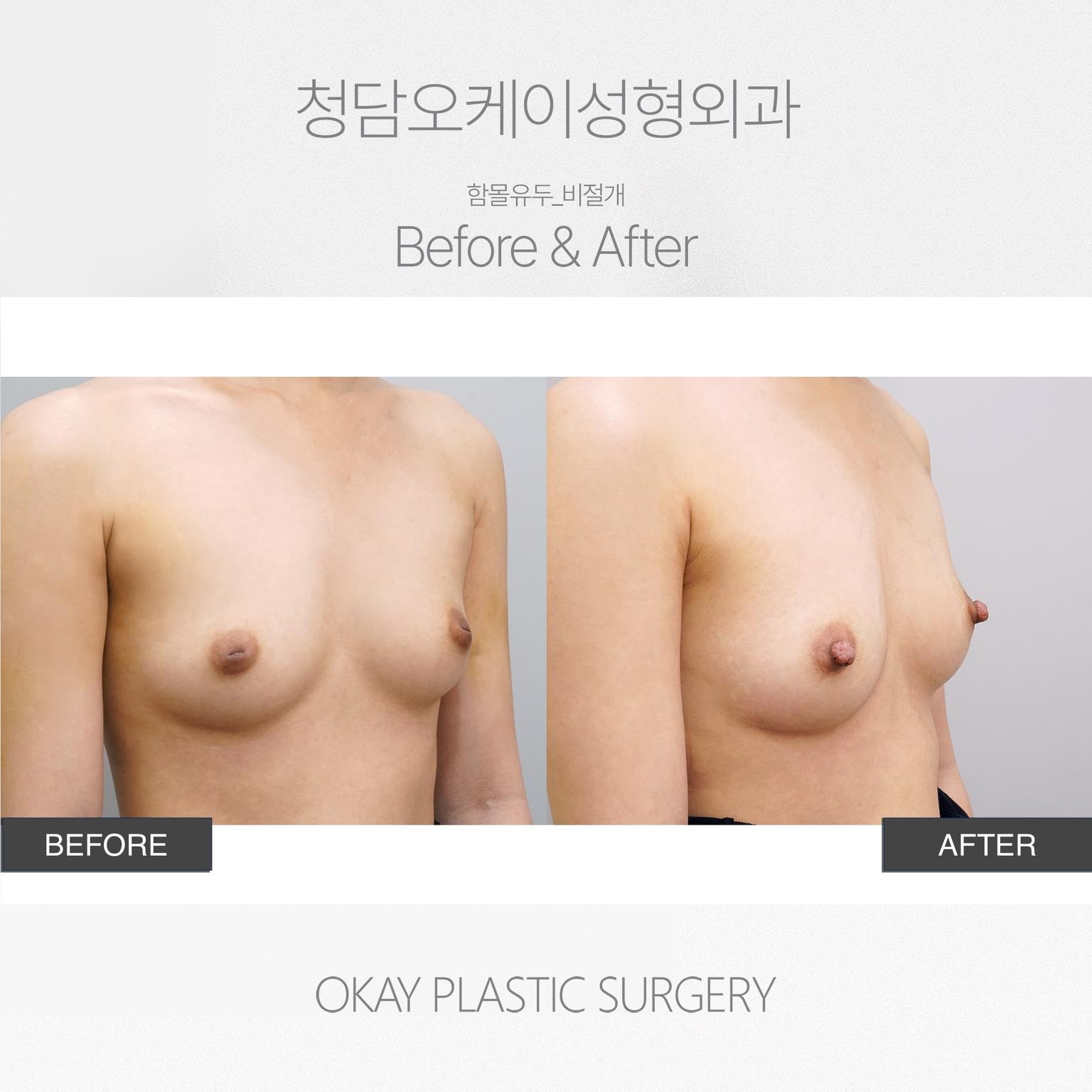
3. Okay Plastic Surgery Clinic
You may consider Okay Plastic Surgery Clinic for nipple correction because its specialized Breast Center specifically includes nipple correction alongside breast reduction and breast lift procedures. The clinic highlights Dr. Cho’s breast-surgery focus, research publications in the field, and comprehensive aftercare aimed at natural, lasting results.
- URL: Okay Plastic Surgery Clinic Website
- Location: Gangnam-gu, Seoul
- Procedure focus:
- The Breast Center offers nipple correction.
- The clinic also offers procedures for inverted nipples, breast reduction, breast lift for sagging breasts, augmentation, and gynecomastia.
- Breast-surgery expertise:
- Dr. Cho is described as having expertise in breast surgery and as having studied and published research papers on the subject.
- The clinic states that Dr. Cho handles standard breast augmentation as well as complex cases requiring substantial breast reduction.
- Aftercare: The clinic emphasizes comprehensive aftercare and individualized treatment planning for natural, lasting results.
Nipple Surgery From Start to Finish
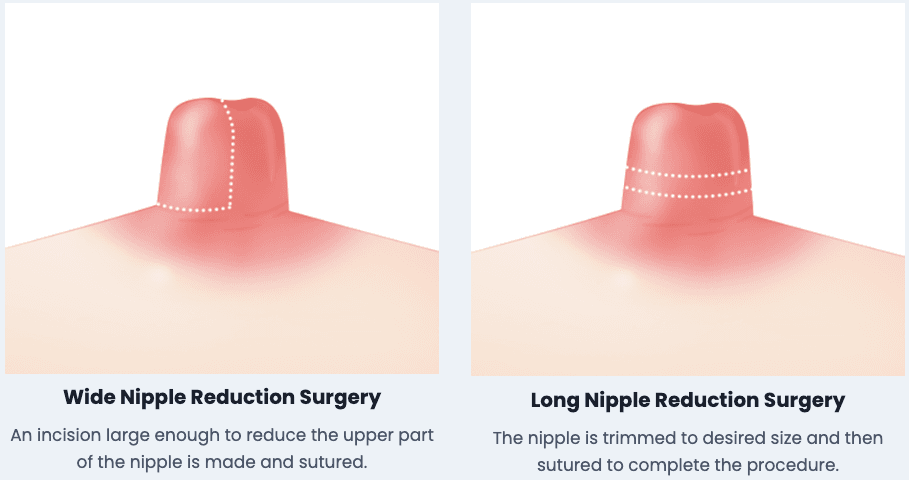
- Remote enquiry and consultation — Send the clinic a complete medical history, medicine and supplement list, allergy information, nicotine status, prior operative reports, breastfeeding plans, cancer history where relevant, and standardized photographs if requested. Confirm English-language or interpreter support. Remote review helps planning but does not replace examination.
- Procedure definition — Establish whether the goal is nipple reduction, inverted-nipple repair, scar revision, reconstruction, or related areolar work. Discuss incision placement, likely effect on ducts and sensation, the possibility of recurrence or revision, and whether tissue will be sent for pathology.
- In-person assessment in Korea — The surgeon examines both breasts or the chest, measures nipple dimensions and projection, evaluates symmetry and scar tissue, and checks whether a nipple change requires breast-clinic assessment rather than cosmetic treatment. Testing and anesthesia review depend on the operation, health history, age, and planned local anesthesia, sedation, or general anesthesia.
- Consent and operative plan — Review the exact technique, anticipated scar, blood-supply risks, expected dressing, restrictions, emergency contact process, and timing of wound review. Confirm whether duct preservation is feasible and desired before inverted-nipple correction.
- Anesthesia and surgery — Isolated procedures are often performed in an outpatient setting with local anesthesia; more extensive or combined breast/chest operations can require sedation or general anesthesia in a surgical facility. The surgeon reduces or releases tissue, reconstructs projection, or performs the planned combined operation according to anatomy and prior surgery.
- Same-day recovery and discharge — Local-only surgery commonly allows same-day discharge. After sedation or general anesthesia, leave with an escort. Receive written instructions for pain medicines, dressings, showering, activity limits, and urgent warning signs.
- Local wound review — Attend the planned examination, commonly around 5–10 days after isolated surgery, for wound and suture assessment. The surgeon decides whether the incision is healed enough for long-haul travel.
- Remote follow-up after return home — Send requested photographs and report pain, redness, drainage, opening wounds, color changes, sensation issues, or recurrent inversion promptly. Continue scar and activity guidance until the operating surgeon confirms tissue healing and discharge from routine follow-up.
Alternatives to Nipple Surgery
Alternatives depend on the actual goal. Non-surgical choices avoid a new wound and risks to sensation or lactation, while surgical alternatives can address surrounding breast or chest anatomy but involve more extensive recovery and different functional tradeoffs.
Observation or nipple covers
- Best for — People comfortable avoiding surgery, scars, potential altered sensation, and possible duct injury.
- Limitation — Clothing modifications and nipple covers change appearance only while used; they do not reduce tissue or permanently correct inversion.
Temporary inversion devices
- Best for — Short-term outward appearance in people with benign inversion who do not want an operation.
- Limitation — Retraction or suction devices should not be presented as proven permanent correction. The evidence review of inverted-nipple treatment found insufficient evidence for an effective non-surgical permanent treatment.
3-D areola tattoo or prosthesis
- Best for — People after mastectomy or chest reconstruction who want visual restoration without another surgical wound.
- Tradeoff — A 3-D nipple tattoo creates optical dimension but no physical projection; a removable prosthesis can provide projection but needs ongoing wear and care.
Areola-focused treatment
- Best for — Concerns primarily about areolar diameter, shape, or color rather than nipple length or inversion.
- Options — Areola surgery changes areolar size or shape; tattooing addresses color; nipple whitening treatment targets pigment concerns rather than structure.
Breast lift or breast reduction
- Best for — A low-looking or disproportionate nipple caused by breast ptosis, breast size, or surrounding breast shape.
- Tradeoff — Breast lift and breast reduction are more extensive operations with longer recovery, larger scars, and materially different lactation implications. Breastfeeding outcomes after reduction vary with preservation of subareolar tissue, as summarized in this systematic review.
How Can I Prepare for Nipple Surgery?
- Screen new breast changes first — Arrange diagnostic assessment before cosmetic surgery for new one-sided inversion, a lump, bloody or spontaneous discharge, persistent eczema-like scaling, ulceration, or unexplained nipple change.
- Disclose every medicine — Give the surgeon, anesthesiologist, and prescribing clinician a current list of anticoagulants, antiplatelets, NSAIDs, diabetes medicines, weight-loss medicines, hormones, corticosteroids, and injectable medicines. Do not stop prescribed treatment independently; the team must set an individualized plan.
- Report supplements — Declare vitamin E, fish oil/omega-3, ginkgo, garlic, ginseng, turmeric/curcumin, St John’s wort, and all herbal or wellness products. Exact hold periods are not universal and must come from the surgical and anesthesia teams.
- Stop nicotine as directed — Stop cigarettes, vaping, nicotine replacement, nicotine pouches, and other nicotine exposure for the surgeon-specified interval. Nicotine impairs healing and threatens nipple and skin blood supply.
- Protect the treatment area — Avoid sunburn, tanning, nipple piercing, waxing, aggressive exfoliation, and irritating chest products before surgery. Tell the surgeon about prior piercings, scars, rashes, and previous breast or chest operations.
- Follow fasting instructions — Follow the facility’s exact fasting rules when sedation or general anesthesia is planned. Local-only procedures can have different requirements.
- Plan practical recovery — Bring loose, front-opening clothing; arrange accommodation near the clinic; and organize an escort after sedation or general anesthesia. Keep flights flexible until the wound review is complete.
Travel note: Bring digital and printed copies of operative reports, relevant imaging, medication lists, and the contact details of a clinician at home.
Confirm the clinic’s procedure-specific requirements with the treating doctor; their instructions take precedence over general guidance.
Aftercare Advice
Protect the nipple–areola complex from pressure, friction, moisture, and heat until the surgeon confirms that the wounds have healed.
- Dressings and washing — Keep dressings clean and dry. Do not remove dressings, apply ointments, shower over the area, or start scar products unless the treating team has given explicit instructions.
- Friction and activity — Avoid rubbing, pulling, nipple stimulation, abrasive bras or clothing, chest-focused exercise, heavy lifting, baths, swimming, hot tubs, and sexual contact involving the area until cleared—often about 2–4 weeks after isolated surgery. Combined breast or chest surgery requires longer restrictions.
- Pain and swelling — Take only approved pain medicine. Early soreness, swelling, crusting, stiffness, and altered sensitivity are common; avoid self-starting aspirin, NSAIDs, supplements, or topical products unless the surgeon approves them.
- Scar protection — Once incisions are fully closed, protect scars from ultraviolet exposure as instructed; use broad-spectrum SPF 50 on exposed healed skin when sun protection is appropriate.
- Urgent warning signs — Contact the clinic urgently for rapidly expanding swelling, uncontrolled bleeding, severe one-sided pain, pale, dark, cool, or progressively discolored nipple tissue, pus or foul drainage, spreading redness, fever, wound separation, chest pain, shortness of breath, or one-sided calf swelling.
- Results and follow-up — Attend the planned wound and suture review, commonly 5–10 days after isolated procedures. Early healing shows the broad change, but swelling reduction, scar maturation, and final symmetry assessment take several months; pregnancy, breastfeeding, weight change, scar contraction, and recurrent inversion can alter the result.
Follow the treating doctor’s individualized instructions over this general advice and contact the clinic promptly when anything appears wrong.
Frequently Asked Questions
Related Blogs
Breast Fat Grafting in Korea vs. Global Costs: A Smart Investment for Natural Results
Explore the affordability and benefits of breast fat grafting in Korea, a popular cosmetic procedure known for its natural results. Discover why more individuals are choosing Korea for this innovative, cost-effective solution.
Updated: Sep 26, 2026
Breast Augmentation in Korea: Implants, Recovery, Travel Planning, and Long-Term Safety
Breast augmentation in Korea may use silicone or saline implants, or fat grafting, with planning based on anatomy, goals, incision, and pocket placement. The article covers candidacy, costs of ₩7,000,000–₩18,000,000, 10–14-day travel planning, recovery, follow-up, and implant records.
Updated: Sep 20, 2026
Capsular Contracture Treatment in Korea: Revision Options, Recovery, and Travel Planning
Capsular contracture treatment may include capsulotomy, partial or total capsulectomy, implant exchange or removal, pocket change, ADM support, breast lift, fat grafting, or autologous reconstruction based on symptoms and tissue condition. International patients should plan at least 10–14 days in Korea, complete local follow-ups, obtain surgeon clearance before flying, and arrange home-country car
Updated: Sep 19, 2026
Mastectomy in Korea: Types, Cancer Planning, Recovery, and Travel Considerations
Mastectomy removes breast tissue for cancer treatment or risk reduction, with total, skin-sparing, nipple-sparing, and reconstruction options selected through multidisciplinary review. International patients traveling to Korea need records review, postoperative monitoring, travel clearance, and a documented handoff to their home oncology team.
Updated: Sep 19, 2026
Clinics offering Nipple Surgery

THEPLUS Plastic Surgery Korea | Eye, Nose, Face & Body Surgery
Sinsa

Seojin Plastic Surgery Clinic Korea: Pioneering Advanced Cosmetic Procedures for Personalized Aesthetic Transformation
Apgujeong

Okay Plastic Surgery Clinic in Korea: Comprehensive Aesthetic Procedures with Sincerity and Care
Cheongdam
Evita Clinic Korea: Body Contouring, Breast & Gender-Affirming Surgery in Seoul (Apgujeong)
Apgujeong