
Medical Tourism Blog
Breast Lift in Korea: Techniques, Recovery, Travel Timing, and Safety
Table of contents
- Breast Lift at a Glance
- What Is a Breast Lift?
- Who Is a Good Candidate for a Breast Lift?
- How Is a Breast Lift Performed?
- Why Visit Korea for a Breast Lift?
- Key Information for International Patients
- Which Are the Best Clinics in Korea for Breast Lift?
- How Much Does a Breast Lift Cost in Korea?
- Breast Lift From Start to Finish
- Alternatives to a Breast Lift
- How Can I Prepare for a Breast Lift?
- Aftercare Advice
Considering treatment in Korea? Everything you need to know e.g. — how to avoid scams, visas, interpreters, recovery tips — in our Medical Tourism Master Guide. Plan with confidence in minutes, not weeks!
Last updated: September 2026
Breast Lift at a Glance
- What it does — A breast lift, or mastopexy, removes excess skin and reshapes breast tissue to raise the breast and reposition the nipple-areola complex; it improves shape and position but does not reliably add volume or upper-pole fullness.
- Cost in Korea — A stand-alone breast lift in South Korea is quoted at about ₩7,000,000–₩17,000,000 (approximately US$5,200–$12,600), with higher costs for more extensive lifts or combined implants, fat grafting, or reduction.
- Recovery timeline — Soreness, swelling, bruising, and arm-motion restrictions are most significant in the first week; desk work is often possible in 7–14 days, while heavy lifting and unrestricted exercise usually wait 4–6 weeks with surgeon approval.
- Results and durability — The breasts look lifted immediately but initially sit high and swollen; shape settles over several months, and scars commonly mature for 12 months or longer. Aging, pregnancy, and weight changes can cause recurrent drooping.
- Best candidates — Suitable candidates are stable-weight adults with breast sagging, stretched skin, low or downward-pointing nipples, or asymmetry who accept permanent scars and want improved shape rather than a major size increase.
- Key risk and limitation — Permanent scars, asymmetry, wound-healing problems, nipple sensation changes, and possible reduced breastfeeding ability are important considerations; current nicotine exposure materially increases wound and nipple-areola complications.
- Korea travel planning — International patients should stay in Korea at least 10 days, preferably 10–14 days before a long-haul flight, for wound and possible drain or suture checks. Verify the facility’s Medical Korea foreign-patient registration, but recognize it does not prove surgeon-specific mastopexy outcomes.
What Is a Breast Lift?
A breast lift, or mastopexy, is an operation that reshapes sagging breasts by removing excess skin and raising breast tissue and the nipple area. It addresses breast drooping, stretched skin, and low- or downward-pointing nipples to create a firmer, more elevated breast shape without reliably adding volume. It is a surgical procedure, usually performed under general anesthesia.
Who Is a Good Candidate for a Breast Lift?
- Stable-weight adults — Good candidates have breast ptosis (descent), stretched skin, downward-pointing nipples, enlarged areolae, or asymmetry and want a firmer, higher breast shape rather than a large increase in size.
- Realistic surgical candidates — Candidates accept permanent scars, some natural asymmetry, a recovery period with lifting restrictions, and the possibility that aging, pregnancy, or weight change can cause recurrent descent.
- Patients seeking shape correction — Mastopexy improves breast position, contour, and nipple-areola placement. It does not reliably restore major upper-pole fullness or add volume.
- International patients with follow-up time — Plan to stay locally for wound checks and arrange a clinician at home for longer-term scar and recovery follow-up.
Mastopexy is generally deferred during pregnancy, anticipated near-term pregnancy, and until breastfeeding-related breast changes have stabilized. An unexplained lump, nipple discharge, suspicious imaging, breast or skin infection, or incomplete cancer assessment needs diagnostic care before cosmetic surgery. Current nicotine exposure, uncontrolled diabetes, anemia, clotting disorders, major cardiopulmonary disease, uncontrolled hypertension, and medications that cannot be safely managed around anesthesia require optimization or can rule out elective surgery. Ongoing substantial weight loss, untreated body-image concerns, or inability to accept scars and complete postoperative care also make surgery unsuitable at that time.
How Is a Breast Lift Performed?
Incision length and internal reshaping are matched to nipple position, skin excess, breast volume, tissue quality, and the acceptable scar trade-off. Comparative long-term evidence is limited: a systematic review found highly variable techniques and outcome reporting, preventing meta-analysis.
- Periareolar or crescent lift — The incision sits around the areola and suits small nipple elevation, mild ptosis, limited skin excess, or areolar asymmetry. It leaves the shortest scar but provides limited lifting power and can widen the areola or flatten breast shape when placed under too much tension.
- Vertical or lollipop mastopexy — An areolar scar plus a vertical scar to the breast crease allows more skin removal and glandular reshaping. It is commonly selected for moderate ptosis.
- Wise-pattern or anchor lift — This adds a scar in the inframammary fold. It gives the surgeon the greatest control for marked ptosis, substantial skin excess, or a combined reduction, but creates the longest scar and a higher-tension T-junction.
- Pedicle and glandular reshaping — The nipple-areola complex remains attached to a tissue pedicle to preserve blood supply while the breast tissue is reshaped. Superior and superomedial pedicles showed a tendency toward better long-term stability than inferior pedicles in the review, but anatomy and surgeon judgment determine the appropriate approach.
- Augmentation-mastopexy — A lift combined with implants addresses descent plus a wish for greater volume. It can be a one-stage or staged plan; combining a tightened skin envelope with an implant increases planning complexity and can increase reoperation risk.
- Auto-augmentation or fat grafting — Rearranged breast tissue or selected fat grafting can improve contour in appropriate anatomy, but neither reliably substitutes for an implant when substantial added volume is the goal.
Why Visit Korea for a Breast Lift?
Korea has an official framework for institutions that attract foreign patients. This is a useful baseline verification tool, not evidence that mastopexy outcomes in Korea are inherently better than elsewhere. No identified high-quality comparative research shows lower Korean mastopexy complication or revision rates.
- Foreign-patient registration baseline — Medical Korea’s registration requirements include at least one relevant specialist and medical-malpractice liability insurance covering foreign patients. Confirm that the specific facility is registered.
- Verification remains essential — Public registration does not provide a surgeon-specific mastopexy registry with case volumes, revision rates, nipple-areola complications, anesthesia outcomes, or long-term patient-reported results. Ask who will perform each stage, who provides anesthesia, and how emergency transfer and complications are handled.
- Continuity planning — Obtain written complication and revision policies before committing. CDC medical-tourism guidance emphasizes arranging follow-up at home because complications can emerge after return travel.
- English documentation — Request an English operative report, discharge summary, anesthesia and medication records, pathology report when tissue is sent, and implant or device documentation where applicable; CDC specifically advises medical tourists to obtain records in English.
Key Information for International Patients
- Minimum stay — Remain in Korea for at least 10 days after an uncomplicated stand-alone lift; 10–14 days is preferable before a long-haul return. This allows an early wound review, drain care if used, and removal of non-absorbable sutures when needed.
- Flight timing — CDC guidance advises avoiding flying for 10 days after chest or abdominal surgery; its traveler guidance also advises delaying air travel 10–14 days after major surgery, particularly chest procedures. Treat this as a planning minimum, not automatic clearance.
- Surgeon clearance — The operating surgeon must assess wounds, drains, mobility, pain control, complications, and personal deep-vein-thrombosis risk before authorizing travel. Do not book a non-changeable early flight.
- Early recovery impact — Expect soreness, swelling, bruising, dressings, restricted chest and arm movement, and sometimes drains during the first week. Desk-based work is often possible around days 7–14, while heavy lifting and unrestricted exercise usually wait until weeks 4–6 with surgeon clearance.
- Travel support — Arrange a companion for the first 24 hours, private transport after anesthesia, and airport help. Do not carry luggage, backpacks, shopping bags, or children.
- Remote follow-up — Agree on the clinic’s after-hours contact route, photo-review process, and the name of a clinician at home who can assess a wound problem. Surgery and prolonged sitting both increase clot risk; discuss aisle access, walking, hydration, compression, and whether clinician-prescribed clot prevention is appropriate. Do not self-start aspirin or anticoagulants.
Travel note: Chest pain, shortness of breath, fainting, calf pain or swelling, or rapidly increasing one-sided breast swelling requires urgent medical assessment, including during the journey home.
Which Are the Best Clinics in Korea for Breast Lift?
Listed below are some of the best clinics in Korea for breast lift.
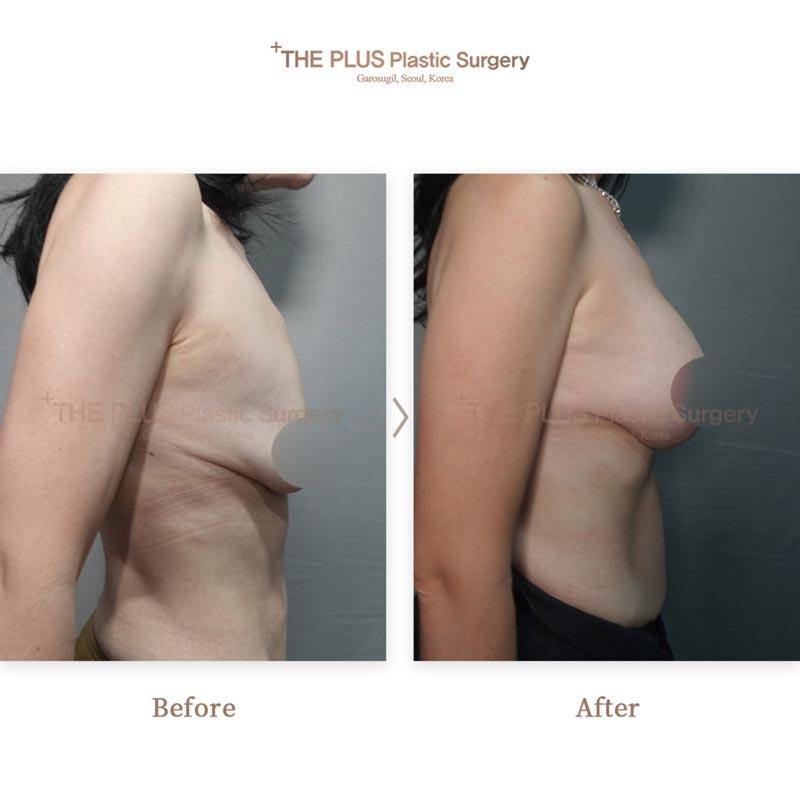
1. THEPLUS Plastic Surgery
For a breast lift, you can receive an approach tailored to your breast shape and skin elasticity: Dr. Lee selects a donut, lollipop, or anchor technique after a 3-D assessment, with the goal of restoring a higher, reshaped breast contour. She is a board-certified plastic surgeon whose practice includes breast lift, augmentation, and reduction surgery.
- URL: THEPLUS Plastic Surgery Website
- Location: Gangnam-gu, Seoul
- Breast-lift planning:
- Technique selection is based on a 3-D assessment of your skin elasticity and breast shape.
- Available lift patterns include donut, lollipop, and anchor techniques.
- Surgeon background:
- Dr. Lee is a board-certified plastic surgeon specializing in breast surgery.
- Her experience includes work as a Surgery Specialist at Seoul National University Hospital and clinical training at Seoul Metropolitan Boramae Hospital.
- She is affiliated with the Korean Society of Plastic and Reconstructive Surgery and the Korean Society of Aesthetic Plastic Surgery.
- Related breast procedures:
- Breast augmentation using FDA-approved Motiva Ergonomix® implants, with implant placement and incision tailored to your body type under full-HD endoscopic visualization.
- Breast reduction using a pedicle technique intended to preserve nipple sensation while removing excess volume.
- Care considerations:
- The clinic describes advanced sterilization protocols, systematic postoperative monitoring, and aftercare tailored to your healing pace.
- English-language support and dedicated translator assistance are available from consultation through recovery for international visitors.
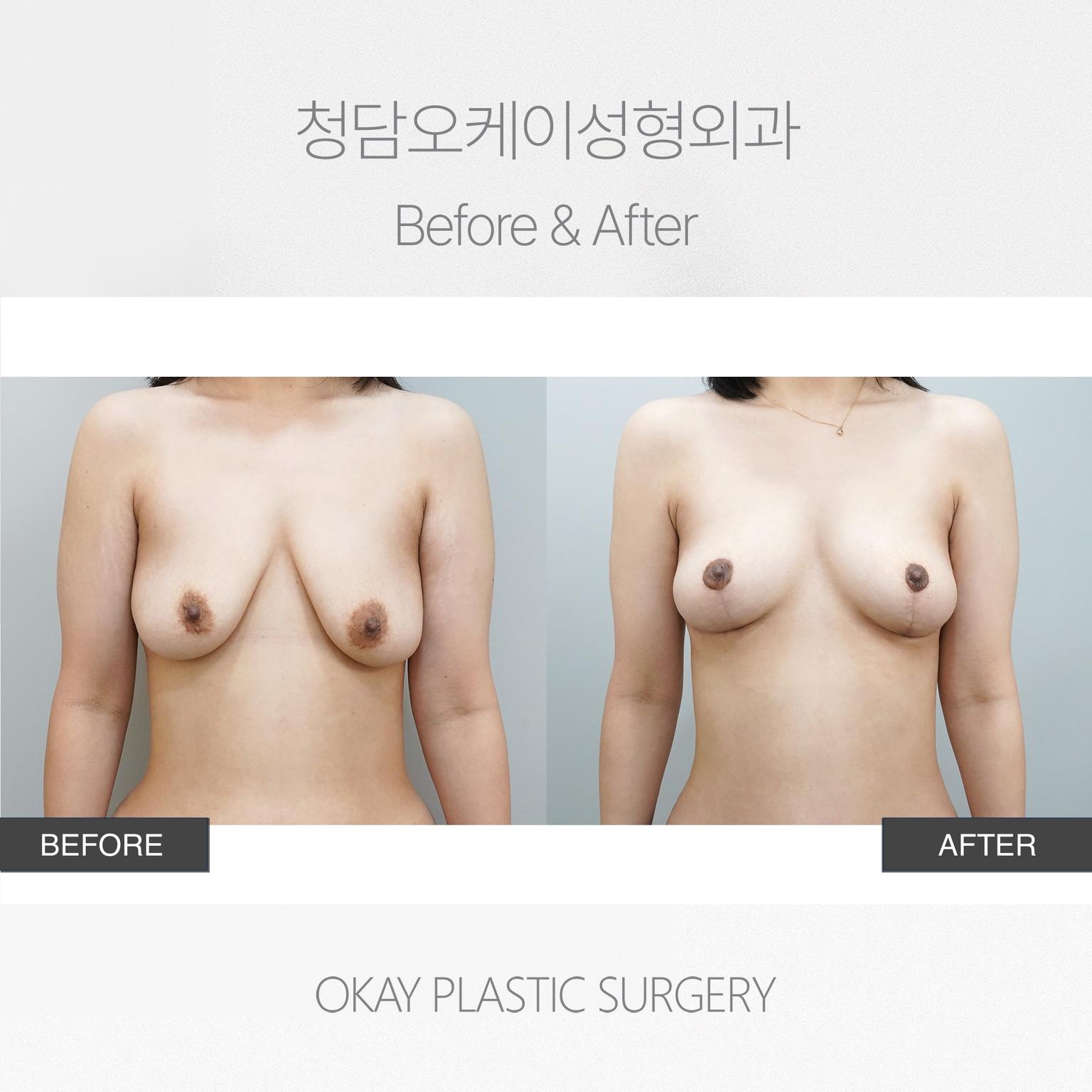
2. Okay Plastic Surgery Clinic
You may consider Okay Plastic Surgery Clinic if you want a breast-focused setting: its specialized Breast Center offers breast lift, reduction, and nipple-correction procedures, with individualized treatment planning and comprehensive aftercare intended to support natural, lasting results.
- URL: Okay Plastic Surgery Clinic Website
- Location: Gangnam-gu, Seoul
- Breast services:
- The Breast Center offers breast lift, breast reduction, and nipple-correction procedures.
- Other listed breast services include augmentation, fat grafting, treatment for inverted nipples, and gynecomastia surgery.
- Breast-surgery expertise:
- Dr. Cho is described as specializing in breast surgery and as having studied and published research on the subject.
- The clinic notes experience with significant breast-reduction cases.
- Aftercare: The clinic emphasizes comprehensive aftercare as part of its breast-surgery care.
3. Banobagi Plastic Surgery
You may consider Banobagi Plastic Surgery for a breast lift if you value a clinic with a dedicated breast-surgery center, individualized treatment, and an established multidisciplinary plastic-surgery setting. Founded in 2000 by plastic-surgery specialists from Seoul National University Hospital, it states that it avoids recommending unnecessary or excessive procedures.
- URL: Banobagi Plastic Surgery Website
- Location: Gangnam-gu, Seoul
- Breast-surgery setting:
- The clinic includes a dedicated breast-surgery center within its broader plastic-surgery practice.
- Its facilities also include body contouring, wrinkle surgery, eye surgery, nose surgery, filler and special surgery, and an obesity clinic.
- Treatment approach:
- The clinic describes providing one-to-one customized treatment supported by professional medical equipment in each field.
- It states that it avoids recommending unnecessary or excessive surgery.
- Background:
- Banobagi was established in 2000 by plastic-surgery specialists from Seoul National University Hospital.
- Its practice operates across a six-story main building and a five-story annex.
How Much Does a Breast Lift Cost in Korea?
A breast lift in South Korea is quoted at ₩7,000,000–₩17,000,000 (about US$5,200–$12,600). Individual quotes vary because the surgical plan, including the degree of lift and any combined volume procedure, determines the operative work and resources required.
| Procedure Price | Korean Won (₩) | USD ($) |
|---|---|---|
| Low Price | ₩7,000,000 | $5,200 |
| High Price | ₩17,000,000 | $12,600 |
Exchange rate as of 2026-09-06: 1 KRW = 0.000741 USD.
What Affects the Price?
- Incision pattern and degree of ptosis correction — A periareolar lift for mild ptosis uses a more limited incision and provides limited elevation. Moderate ptosis may require a vertical lollipop mastopexy, while substantial skin excess or significant ptosis can require a Wise-pattern/anchor lift with an added inframammary-fold incision. Larger skin-envelope adjustments, nipple-areola repositioning, and glandular reshaping require more operating time and surgical work.
- Combined augmentation, fat grafting, or reduction — Augmentation-mastopexy combines the lift with implants when elevation and added volume are planned; implant selection and placement add operative steps and device-related consumables. Fat grafting adds harvesting and graft-processing work. A reduction-plus-lift requires tissue removal as well as reshaping, which increases the scope of surgery compared with a stand-alone lift.
- Anesthesia and facility requirements — Mastopexy is commonly performed under general anesthesia, requiring anesthesia care, operating-room time, recovery monitoring, and outpatient discharge resources. A longer or more complex lift, particularly one combined with augmentation or reduction, uses these resources for longer.
- Early wound, drain, and suture follow-up — The treatment plan may include dressings, a support garment, drain management when drains are used, early wound checks, and removal of non-absorbable sutures if used. These requirements create different postoperative-care needs from a plan without drains or removable sutures.
Cost tip: Request an itemized written quote stating what is included, particularly the planned lift method, anesthesia, facility and recovery use, implants or fat-grafting materials where applicable, garments, medications, and scheduled wound, drain, or suture checks.
The US$5,200–$12,600 conversion is approximate, based on an exchange rate of 0.000741 on 2026-09-06. Check the exchange rate again when budgeting.
Breast Lift From Start to Finish
- Remote consultation and records — Send photographs and medical information through a secure channel. Provide prior breast-operation reports, implant details, relevant imaging, allergies, medication and supplement lists, nicotine exposure, anesthesia history, clotting history, and travel dates. English or virtual consultation can establish options, but it cannot replace an in-person examination.
- In-person surgical assessment — The surgeon measures nipple and breast-fold position, evaluates ptosis versus pseudoptosis, skin elasticity, breast volume, asymmetry, chest-wall shape, and existing scars. Confirm the proposed incision pattern, whether tissue will be removed, expected scars, implant or fat-grafting details if relevant, and the revision and emergency-contact policy.
- Preoperative review and testing — Testing depends on age, medical history, examination findings, and anesthesia requirements. Cosmetic surgery does not automatically justify breast screening outside standard age- and risk-based recommendations; suspicious findings require appropriate assessment first.
- Anesthesia and surgical markings — On the operation day, the surgeon marks the breasts while standing. Mastopexy is commonly performed under general anesthesia, with the anesthesia team reviewing fasting status, medicines, and safety concerns.
- Lift and reshaping — The surgeon makes the planned incisions, removes excess skin, reshapes glandular tissue, repositions the nipple-areola complex when needed, and closes the incisions. Drains may be used or omitted depending on the operative plan.
- Recovery and discharge — After adequate anesthesia recovery, many patients go home or to their accommodation the same day with an escort. Leave with written medication, garment, showering, movement, and emergency instructions in English where possible.
- Korea-based wound checks — Attend the early wound and drain review, then incision review around days 7–14. Non-absorbable sutures are removed at this stage if used; do not leave Korea before the operating team approves travel.
- Overseas follow-up — Send requested wound photographs, attend remote reviews, and establish local care for concerns after returning home. Breast position, swelling, and scar color continue settling for months; scars often mature over 12 months or longer.
Alternatives to a Breast Lift
A breast lift is the direct option for meaningful excess skin and low nipple position, but it requires scars, general anesthesia, and recovery. Non-surgical or volume-only choices avoid some surgical trade-offs but cannot reliably correct significant ptosis.
Breast Augmentation
Breast augmentation or breast implants increase volume and projection.
- Best trade-off — Consider it when volume loss is the dominant concern and nipple position is acceptable.
- Key limitation — Implants alone do not reliably correct substantial nipple descent or stretched skin; adding volume can make an untreated droop more obvious.
Fat Grafting
Breast fat grafting transfers the patient’s own fat for modest volume enhancement.
- Best trade-off — It avoids an implant and can refine contour in selected patients with adequate donor fat.
- Key limitation — It does not remove excess skin or reliably elevate a low nipple, so it is not a replacement for mastopexy in meaningful ptosis.
Breast Reduction With Lift
Breast reduction removes breast tissue and skin while lifting and reshaping the breast.
- Best trade-off — Consider it when large or heavy breasts contribute to discomfort, skin stretching, or recurrent descent.
- Key limitation — It reduces volume and carries the same scar and recovery considerations as a lift, with additional risks related to tissue removal.
Deferring Surgery
Waiting is a legitimate option when pregnancy, breastfeeding, bariatric surgery, or major weight loss is planned.
- Best trade-off — Operating after breast size and weight stabilize can produce a more durable shape.
- Key limitation — Supportive bras can improve appearance in clothing but cannot permanently reposition breast tissue.
How Can I Prepare for a Breast Lift?
- Nicotine cessation — Follow the surgeon’s exact cessation timetable. Cigarettes, vapes, heated tobacco, nicotine pouches, and nicotine-replacement products compromise blood supply and materially raise wound-healing and nipple-areola risks.
- Medicines and supplements — Give the surgeon and anesthesiologist a complete list of prescription medicines, over-the-counter products, vitamins, herbal products, supplements, and recreational substances. Do not independently stop anticoagulants or antiplatelet medicines; the prescribing clinician, surgeon, and anesthesiologist need a coordinated plan.
- GLP-1 and fasting instructions — Follow the facility’s written anesthesia plan rather than a generic online fasting rule. Requirements differ with diabetes, reflux, delayed gastric emptying, kidney disease, obesity, and medicines including GLP-1 receptor agonists.
- Breast records and health disclosure — Bring prior mammograms or other relevant imaging, breast-operation reports, implant cards, allergy details, anesthesia complications, family breast-cancer history, and clotting history. Report a new lump, discharge, rash, fever, or breast infection before surgery.
- Accommodation and transport — Stay near the facility in accommodation with elevator access, food and water nearby, and space to rest. Arrange private transport and a responsible adult for the first night after general anesthesia.
- Packing and clothing — Pack front-fastening loose tops, slip-on shoes, original labeled medicines, chargers, a thermometer, and the clinic-approved support garment. Do not plan to lift luggage or carry children.
- Flexible itinerary — Keep the first 10–14 postoperative days free of tours, shopping, spa heat, and long travel. Book changeable return flights and preserve time for additional reviews if swelling, wound healing, or drains delay clearance.
Travel note: Confirm travel insurance exclusions before departure. Many policies exclude elective treatment and complications related to it.
Confirm all medicine changes, fasting times, garment requirements, nicotine testing, and arrival instructions directly with the treating doctor; individualized surgical and anesthesia instructions take precedence over general guidance.
Aftercare Advice
Protect the incisions, avoid strain, and attend every scheduled review: an early recovery problem is easier to treat while still in contact with the operating team.
- Dressings and support bra — Keep dressings clean and dry and wear only the support bra or compression garment approved by the surgeon. Do not apply creams, silicone products, antibiotic ointments, or tape unless the team has instructed it.
- Movement and lifting — Walk gently and regularly as directed, but avoid heavy lifting, pushing, pulling, running, chest workouts, repetitive overhead reaching, and swimming. Desk work is often feasible in 1–2 weeks; return to unrestricted exercise only after surgeon clearance, commonly at 4–6 weeks.
- Heat, water, and contact — Follow individualized instructions for showering, bathing, underwire bras, sleeping position, sexual activity, massage, sauna, and hot baths. Avoid sun exposure on healing scars; once incisions are fully closed, use clothing coverage and broad-spectrum SPF 50 on exposed scars.
- Symptoms needing urgent care — Seek urgent assessment for rapidly increasing one-sided swelling or tightness, expanding bruising, uncontrolled pain, persistent vomiting, fever, spreading redness, foul drainage, wound separation, or pale, dark, or cold nipple or breast skin. Treat chest pain, shortness of breath, fainting, or calf pain or swelling as an emergency.
- Results and scars — The breasts appear lifted immediately but are initially high, swollen, and firm. Position and swelling settle over months; scar color and firmness commonly improve over about 12 months or longer. Pregnancy, breastfeeding, aging, and weight changes can stretch the tissues and contribute to recurrent ptosis.
Follow the treating doctor’s instructions over general advice, contact the clinic promptly when anything appears wrong, and arrange local medical assessment rather than waiting for a remote reply when urgent symptoms occur.
Frequently Asked Questions
Related Blogs
Gynecomastia in Korea: Surgery Methods, Recovery, Travel Planning and Alternatives
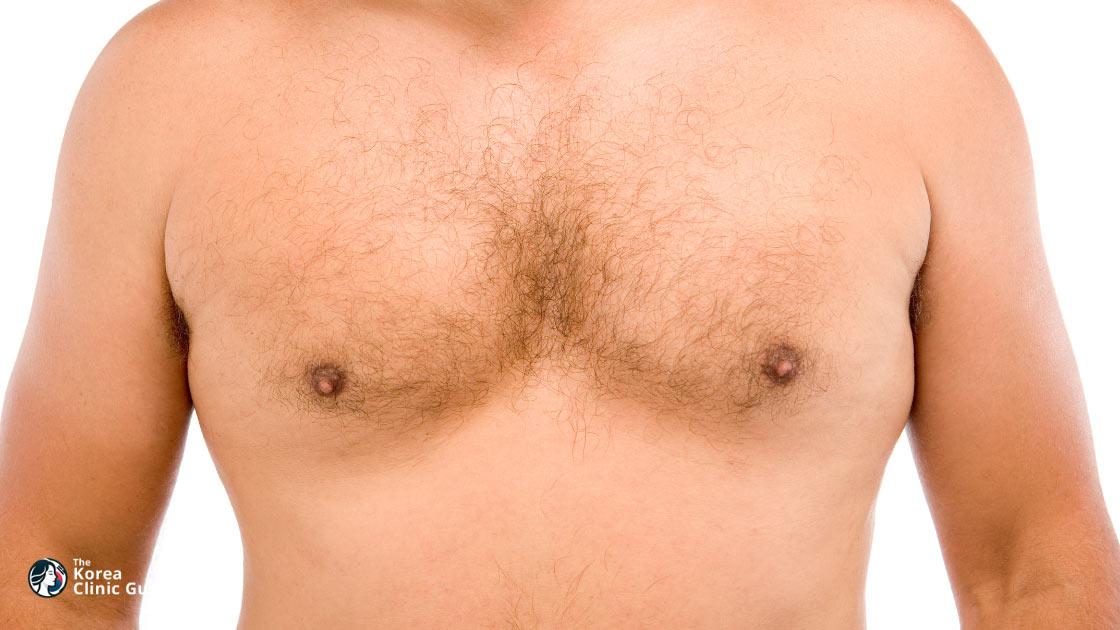
Gynecomastia surgery in Korea may use liposuction, gland excision, or skin reduction based on chest tissue, skin elasticity, and nipple position. Costs range from ₩4,000,000–₩8,000,000, with international patients advised to stay 7–10 days for early review and travel clearance.
Updated: Sep 17, 2026
Gynecomastia in Korea: Surgery Methods, Recovery, Travel Planning, and Alternatives
Gynecomastia surgery in Korea may use liposuction, gland excision, or skin reduction based on gland, fat, skin excess, and nipple position; costs range from ₩4,000,000–₩8,000,000. International patients should plan 11–14 nights, avoid flying for at least 10 days after chest surgery, and arrange early reviews and remote follow-up.
Updated: Sep 16, 2026
Areola Tattoo in Korea: Types, Recovery, Travel Planning and Safety
Areola micropigmentation restores areolar color, borders, symmetry, or a 2D/3D visual nipple effect after stable reconstruction, surgery, trauma, or selected top surgery cases. The article covers candidacy, treatment steps, Korea travel planning, 10–14-day healing restrictions, aftercare, touch-up timing, risks, and alternatives.
Updated: Sep 15, 2026

Breast Reduction in Korea: Methods, Recovery, Travel Planning and Risks
Breast reduction removes breast tissue and excess skin under general anesthesia to reduce heaviness and reshape the breasts; pedicle and incision techniques depend on anatomy and reduction goals. In Korea, costs are ₩15,000,000–₩20,000,000, with international patients advised to stay at least 10–14 days for wound checks and surgeon-approved travel clearance.
Updated: Sep 14, 2026
Clinics offering Breast Lift

THEPLUS Plastic Surgery Korea | Eye, Nose, Face & Body Surgery
Sinsa

Okay Plastic Surgery Clinic in Korea: Comprehensive Aesthetic Procedures with Sincerity and Care
Cheongdam

Banobagi Plastic Surgery: A Pioneering and Trusted Plastic Surgery Clinic in Korea
Seolleung

The Regen Plastic Surgery Clinic in Korea: Comprehensive Aesthetic Procedures for Eye, Nose, Facial Contouring, and Face Lifting
Hakdong