
Medical Tourism Blog
Areola Surgery in Korea: Techniques, Recovery, Risks and Travel Planning

Table of contents
- Areola Surgery at a Glance
- What Is Areola Surgery?
- Who Is a Good Candidate for Areola Surgery?
- How Is Areola Surgery Performed?
- Why Visit Korea for Areola Surgery?
- Key Information for International Patients
- Which Are the Best Clinics in Korea for Areola Surgery?
- How Much Does Areola Surgery Cost in Korea?
- Areola Surgery From Start to Finish
- Alternatives to Areola Surgery
- How Can I Prepare for Areola Surgery?
- Aftercare Advice
Considering treatment in Korea? Everything you need to know e.g. — how to avoid scams, visas, interpreters, recovery tips — in our Medical Tourism Master Guide. Plan with confidence in minutes, not weeks!
Last updated: September 2026
Areola Surgery at a Glance
- What it does — Areola surgery reduces, reshapes, or corrects asymmetry of the pigmented skin around the nipple, either as a standalone procedure or during breast, chest, or gender-affirming surgery.
- Korea cost — Standalone or limited areola surgery in Korea is listed at ₩2,500,000–₩7,000,000 (about US$1,900–US$5,200); combined breast or chest operations cost more depending on anesthesia, operative extent, and revision complexity.
- Recovery milestones — Desk work may be possible after several days, but lifting, chest exercise, swimming, heat exposure, and incision friction are commonly restricted for 4–6 weeks; shape is easier to assess at 6–12 weeks and scars mature over 6–12 months.
- Travel planning — International patients should plan at least 7–10 days in Korea for an isolated procedure, including an in-person wound and suture check around day 5–10; 10–14 days is more conservative after general anesthesia or combined surgery.
- Best candidates — The procedure is best suited to people with stable breast or chest size whose main concern is areola diameter, border irregularity, or asymmetry—not major breast droop, volume mismatch, or chest contour issues that may need a larger operation.
- Permanent-scar tradeoff — Diameter reduction requires a permanent circular scar, and early redness, firmness, puckering, or minor asymmetry are expected; scars can widen and the areola can stretch again, sometimes requiring revision.
- Korea-specific check — No strong evidence shows superior standalone areola-surgery outcomes in Korea, so verify the named operating surgeon through the Korean specialist directory or Medical Korea registered-provider system and obtain the technique, anesthesia plan, follow-up, and revision policy in writing.
What Is Areola Surgery?
Areola surgery is a cosmetic procedure that reduces, reshapes, repositions, or corrects uneven pigmented skin around the nipple. It addresses concerns about enlarged, stretched, irregular, or asymmetric areolae and can improve their proportion with the breast or chest. It is surgical, ranging from a limited standalone procedure to work performed during broader breast or chest surgery.
Who Is a Good Candidate for Areola Surgery?
- Isolated areola concerns — Good candidates want to reduce areola diameter, refine an irregular border, or improve visible asymmetry when breast or chest shape is otherwise satisfactory.
- Stable breast or chest size — Weight stability and stable hormonal status help the surgeon judge the appropriate diameter and reduce the chance that later tissue stretching changes the result.
- Realistic scar priorities — Candidates accept that diameter reduction requires a permanent circumareolar scar and that early puckering, redness, firmness, and minor asymmetry are part of healing.
- Combined-procedure needs — People having a breast lift, breast reduction, gynecomastia surgery, or top surgery can discuss areola resizing as part of the larger operation.
Do not proceed with elective surgery until a new breast lump, persistent one-sided nipple discharge, new nipple inversion or retraction, or unexplained nipple or breast skin changes have been clinically assessed. Active infection, dermatitis, folliculitis, open skin, pregnancy, active breastfeeding, uncontrolled diabetes, important bleeding or clotting disorders, major cardiopulmonary disease, substantial immunosuppression, and current nicotine use require postponement or individualized assessment. There is no universal ideal areola size; breast volume, ptosis, skin elasticity, prior scars, implants, radiation history, baseline sensation, scar tendency, and breastfeeding priorities determine whether isolated reduction is appropriate. Future lactation and unchanged nipple sensation cannot be guaranteed; evidence from breast reduction indicates that preserving subareolar tissue is important for breastfeeding outcomes, but those data do not directly establish outcomes after skin-only areola reduction [in this systematic review] (https://pubmed.ncbi.nlm.nih.gov/29049351/).
How Is Areola Surgery Performed?
Areola surgery is not one standardized operation. The chosen approach depends on the required reduction, skin quality, position of the nipple-areola complex, prior surgery, blood supply, and whether the procedure is isolated or part of breast or chest contouring.
- Peripheral circumareolar excision — The surgeon removes a measured ring of pigmented and sometimes adjacent skin, then closes the opening at a smaller diameter. A permanent or absorbable purse-string, also called round-block, suture can distribute tension. This common concept for isolated reduction leaves a circular scar and can cause early pleating, flattening, scar widening, or later areolar stretch.
- Intra-areolar reduction — Incisions and tissue removal are placed within pigmented skin in selected cases, usually when breast volume is relatively small. Published support is chiefly technical description rather than comparative evidence on scar or sensory outcomes.
- Resizing with breast or chest surgery — During a lift, reduction, augmentation, gynecomastia correction, or revision, the surgeon can reduce and reposition the areola while changing breast volume or skin envelope. The longer scar pattern, recovery, vascular risk, sensation risk, and breastfeeding implications are materially different from isolated skin-only surgery.
- Reconstruction or gender-affirming resizing — The nipple-areola complex can remain attached on a vascular pedicle or be resized and transferred as a free nipple graft. Free grafts have distinct risks of pigment change, reduced projection, altered sensation, and partial tissue loss. Nerve-repair research in mastectomy and reconstruction populations cannot be assumed to apply to cosmetic areola reduction as the authors’ population and techniques differ.
Why Visit Korea for Areola Surgery?
Korea offers an established medical-tourism framework and access to plastic-surgery services, but no reliable comparative evidence shows that Korea delivers better safety, sensation preservation, scar quality, revision rates, or faster recovery for standalone areola reduction. Choose a surgeon and facility on verifiable credentials, a specific operative plan, and early in-person follow-up—not promotional claims or before-and-after photographs.
- Registered-provider checks — Korea’s Medical Korea platform provides a registered medical institution system that international patients can use as one part of provider verification.
- Specialist-directory access — The Korean Society of Plastic and Reconstructive Surgeons provides a surgeon search tool. Confirm the named operating surgeon, rather than relying on a coordinator or clinic brand.
- Written clinical planning — Request the planned incision, target dimensions, closure method, whether a purse-string suture is intended, anesthesia arrangement, suture-removal timing, revision policy, and emergency contact pathway in writing before booking travel.
- Evidence limitation — A Seoul report on periareolar reduction mammoplasty involved 43 breasts undergoing reduction mammoplasty, not isolated cosmetic areola surgery; it cannot demonstrate Korean outcomes for standalone reduction as the study itself shows.
Key Information for International Patients
- Minimum stay — Arrange at least 7–10 days in Korea for an isolated procedure so the operating team can inspect the incision and remove non-absorbable sutures if used. A 10–14-day stay is more conservative after general anesthesia or combined breast/chest surgery.
- Flight timing — Get explicit clearance from the operating surgeon before a long-haul flight. Recent surgery and prolonged travel add venous-thromboembolism risk, particularly when procedure extent, reduced mobility, bleeding risk, or personal clot history are relevant according to plastic-surgery guidance.
- Early review — Plan an in-person wound and circulation check around postoperative day 5–10. This visit assesses closure tension, infection, hematoma, symmetry, and nipple-areola complex viability.
- Itinerary impact — Desk work can be possible after several days when pain is controlled and sedation restrictions have ended. Avoid luggage lifting, strenuous sightseeing, swimming, spas, saunas, chest exercise, and friction from tight clothing until the incision is fully sealed—commonly 4–6 weeks.
- Remote follow-up — Before departure, obtain the operative report, anesthesia record, medication list, wound-care instructions, measurements or photographs, and an emergency contact. Arrange a local clinician who can assess a wound problem after return if needed.
Travel note: Book flexible flights and accommodation close to the facility. After sedation or general anesthesia, a responsible adult must escort you and remain available overnight.
Which Are the Best Clinics in Korea for Areola Surgery?
Listed below are some of the best clinics in Korea for areola surgery.
1. THEPLUS Plastic Surgery
For areola surgery, you can consider THEPLUS Plastic Surgery’s breast-focused surgical care, including Dr. Lee’s specialization in breast augmentation and experience as a Surgery Specialist at Seoul National University Hospital. The clinic also offers breast lift and reduction procedures, which may be relevant when areola concerns are considered alongside breast shape or position.
- URL: THEPLUS Plastic Surgery Website
- Location: Gangnam-gu, Seoul
- Breast surgery experience:
- Dr. Lee is a board-certified plastic surgeon specializing in breast augmentation.
- Her professional experience includes work at hospitals across Korea and a Surgery Specialist position at Seoul National University Hospital.
- She participates in several leading Korean plastic-surgery societies.
- Related breast procedures:
- Breast implants, breast lift, and breast reduction are listed among the clinic’s breast-surgery services.
- A consultation can help determine whether an areola-focused concern may relate to breast volume, skin excess, or breast position.
2. Seojin Plastic Surgery Clinic
For areola surgery, Seojin Plastic Surgery Clinic lists nipple surgery for adjusting the size or shape of the nipples or areolae. You receive end-to-end care from Dr. Lee Hyungmin in a one-doctor clinic, with consultation and treatment tailored to your individual goals.
- URL: Seojin Plastic Surgery Clinic Website
- Location: Gangnam-gu, Seoul
- Procedure scope:
- Nipple surgery is listed for changes to nipple or areola size and shape.
- Breast lift, reduction, implant, and hybrid implant procedures are also available if your consultation identifies related breast-contour goals.
- Personalized care:
- Dr. Lee Hyungmin provides comprehensive care as the clinic’s sole doctor.
- The clinic notes more than 16 years of experience and recognition of Dr. Lee as one of the 100 Good Doctors in Korea.
- Planning tools: The clinic uses 3D imaging and high-definition endoscopy as part of its stated technology offerings.
3. Okay Plastic Surgery Clinic
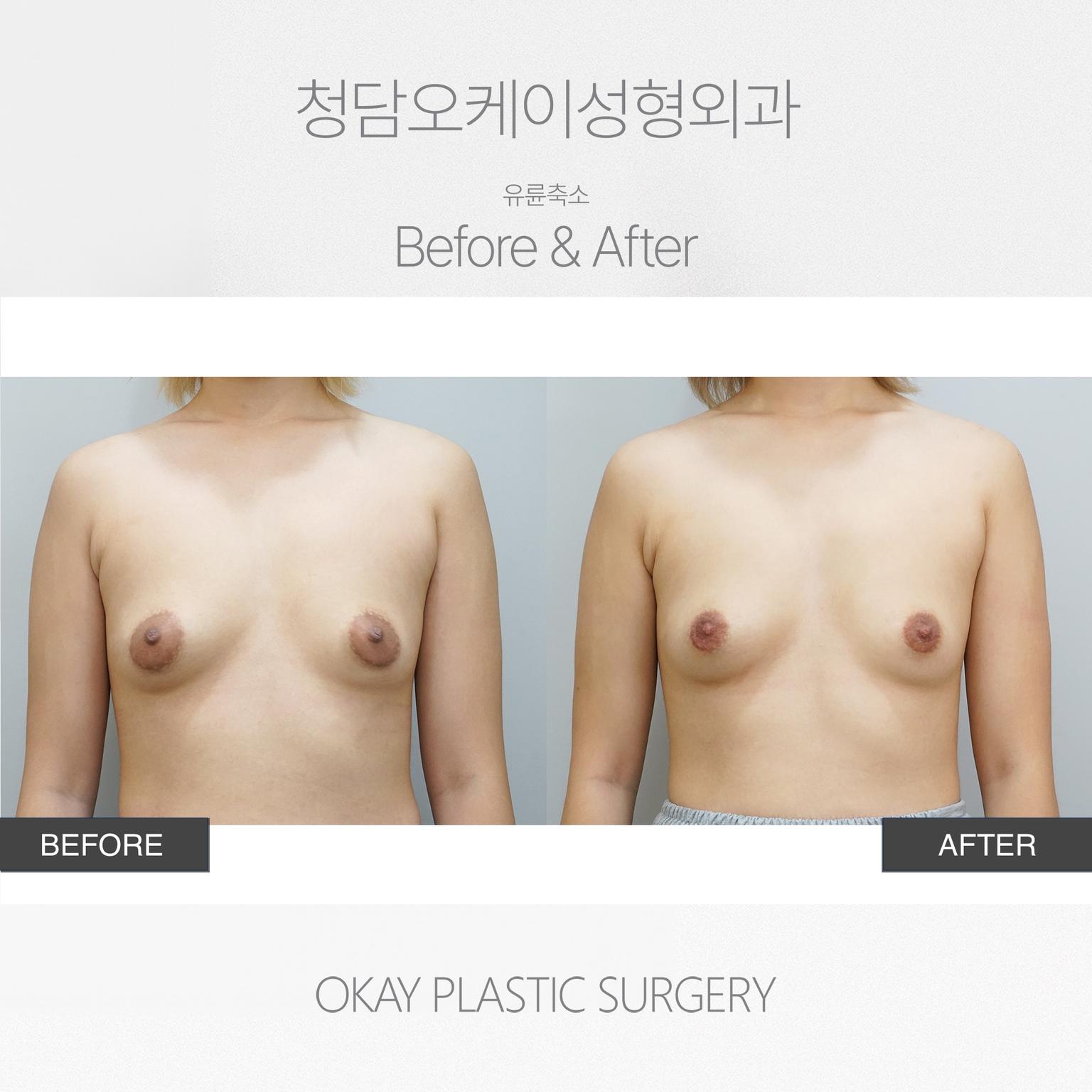
For areola-related concerns, Okay Plastic Surgery Clinic’s specialized Breast Center offers nipple correction alongside breast reduction and breast lift procedures. You can expect an individualized treatment approach and comprehensive aftercare intended to support natural, lasting results.
- URL: Okay Plastic Surgery Clinic Website
- Location: Gangnam-gu, Seoul
- Breast Center services:
- The Breast Center lists nipple correction, breast reduction, and breast lift procedures.
- It also offers breast augmentation, treatment for inverted nipples, and gynecomastia surgery.
- Surgical expertise:
- Dr. Cho is described as specializing in breast surgery and as having studied and published research papers in the field.
- The clinic notes experience with severe breast-reduction cases requiring significant reduction.
- Aftercare: The clinic emphasizes comprehensive aftercare as part of its approach to natural, lasting results.
How Much Does Areola Surgery Cost in Korea?
Areola Surgery is supplied at ₩2,500,000–₩7,000,000 (approximately US$1,900–US$5,200). Individual quotes vary because the planned operation can range from an isolated skin-only areola reduction to nipple-areola work performed within a more extensive breast or chest procedure.
| Procedure Price | Korean Won (₩) | USD ($) |
|---|---|---|
| Low Price | ₩2,500,000 | $1,900 |
| High Price | ₩7,000,000 | $5,200 |
Exchange rate as of 2026-09-06: 1 KRW = 0.000741 USD.
What Affects the Price?
- Isolated reduction versus combined breast or chest surgery — A peripheral circumareolar reduction performed alone generally uses a more limited incision and operating plan. Adding a breast lift, breast reduction, augmentation, gynecomastia correction, reconstruction, or chest masculinization requires broader tissue reshaping, longer operating time, and greater facility, anesthesia, and consumable needs.
- Areola resizing, repositioning, or revision requirements — Simple diameter reduction is different from correcting asymmetry, distortion after prior surgery, scar problems, or a nipple-areola complex that also needs repositioning. These requirements demand more measurements, dissection, and closure planning, particularly where prior scars or altered anatomy affect skin tension and blood supply.
- Closure method and tension control — A circumareolar reduction may require a round-block or purse-string suture to distribute tension around the smaller areola. Planning and placing this closure, including use of a permanent suture when selected, adds procedural work and suture-material requirements intended to manage pleating and later widening.
- Anesthesia and early postoperative care — An isolated procedure may be performed with local anesthetic with or without sedation, while combined surgery is more likely to require general anesthesia and associated monitoring and recovery-facility resources. Early incision assessment and removal of non-absorbable sutures, if used, also need to be specified in the treatment plan.
Cost tip: Request an itemized quote stating what is included, with the planned technique, anesthesia arrangement, facility use, surgical consumables, early wound/suture follow-up, and any revision-policy terms listed separately.
The US$1,900–US$5,200 conversion is approximate, based on the supplied exchange rate of 0.000741 on 2026-09-06. Check the exchange rate again when budgeting.
Areola Surgery From Start to Finish
- Remote consultation and screening — Send standardized front, oblique, and side photographs only through the clinic’s secure process. Discuss desired diameter, asymmetry, scar tolerance, sensation and breastfeeding priorities, past breast/chest procedures, implants, radiation, nicotine exposure, medicines, and travel dates. Confirm whether English-language or virtual consultation support is available.
- Proposed plan before travel — Request a written outline stating whether surgery is isolated or combined, the likely scar pattern, anesthesia type, anticipated surgical duration, required stay, suture plan, early review date, and complication contact process. The surgeon must avoid promising a scarless result or an exact sensory outcome.
- In-person assessment — The surgeon examines breast or chest shape, ptosis, skin elasticity, areola diameter and position, nipple projection, scars, and baseline sensation. Upright markings and measurements are usually taken. Medical and anesthesia review, and sometimes imaging or tests, depend on age, symptoms, and personal or family breast history.
- Surgery and anesthesia — Isolated reduction is usually an outpatient procedure using local anesthetic with or without sedation; combined surgery more often uses general anesthesia. The surgeon removes and reshapes selected skin, then closes the circumference, sometimes with a round-block or purse-string suture.
- Discharge and first night — Leave only when vital signs, pain, and nausea are controlled under the facility’s protocol. After sedation or general anesthesia, do not drive, use public transport alone, make important decisions, or stay unaccompanied overnight.
- Early healing in Korea — Tenderness, swelling, temporary sensation change, bruising, and circular-scar puckering are expected during the first weeks. Attend the planned day 5–10 assessment for wound review and removal of non-absorbable sutures where applicable.
- Return travel and remote follow-up — Travel only after surgeon clearance. Send requested wound photographs through the clinic’s secure channel and keep a local care plan in place. Shape becomes more assessable at about 6–12 weeks; scars continue to mature for 6–12 months, and non-urgent revision is generally delayed until tissues stabilize.
Alternatives to Areola Surgery
The right alternative depends on whether the main concern is pigment and border appearance, nipple projection, breast droop or volume, chest contour, or a mature scar. Non-surgical options can change appearance but cannot remove skin or physically reduce areola diameter; larger surgical operations address structural concerns but involve broader scars and recovery.
Areola Tattooing
- Best for — Uneven color, border definition, or the visual impression of asymmetry.
- Tradeoff — Areola tattooing cannot remove skin, reduce physical diameter, reposition tissue, or change nipple projection.
Nipple Surgery
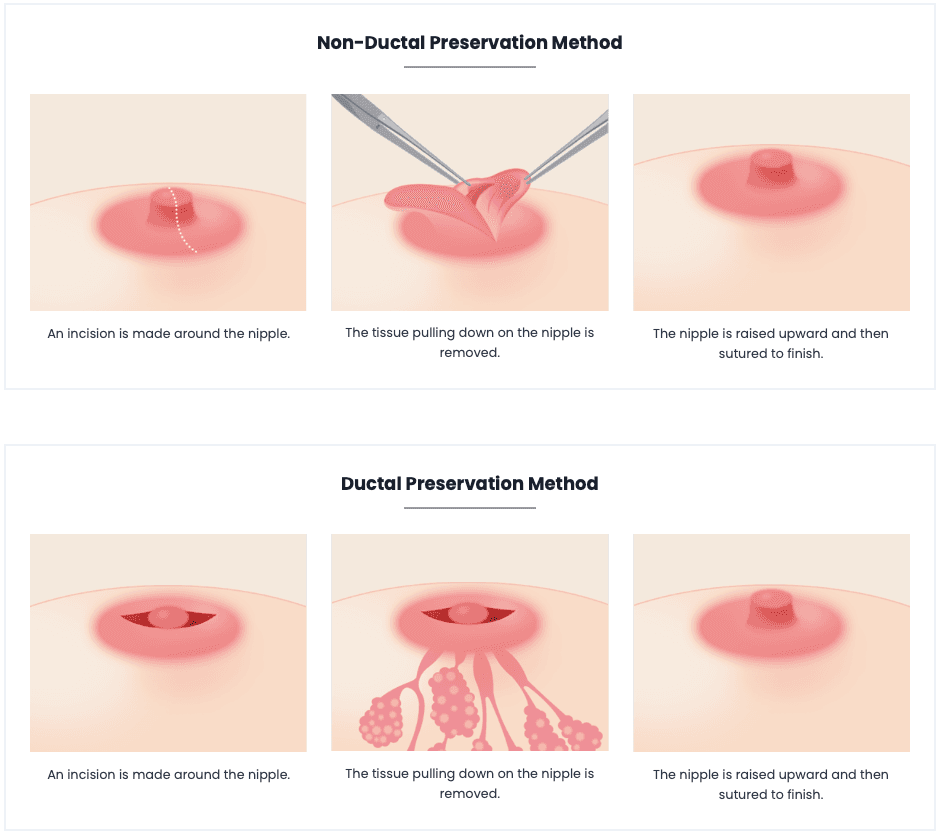
- Best for — Excess nipple length or width, inversion, or projection concerns that are not primarily about the pigmented areola.
- Tradeoff — Nipple surgery targets nipple shape and projection; it does not reliably correct a broad areola or breast ptosis.
Breast Lift or Reduction
- Best for — Breast droop, stretched skin, volume-related asymmetry, or enlarged areolae occurring with a lower nipple position.
- Tradeoff — A breast lift or breast reduction can reposition the nipple-areola complex and reshape the breast, but requires more extensive surgery, scars, recovery, and consideration of lactation and sensation.
Gynecomastia or Top Surgery
- Best for — Glandular tissue, skin excess, or chest contour as the underlying concern.
- Tradeoff — Gynecomastia surgery or top surgery treats chest structure and can include areola resizing, but carries procedure-specific risks that exceed isolated reduction.
Scar Revision
- Best for — A mature widened, raised, depressed, or distorted scar after prior nipple-areola surgery.
- Tradeoff — Revision breast surgery can improve a scar or distortion but does not necessarily reduce areolar diameter and can create a new scar.
How Can I Prepare for Areola Surgery?
- Disclose health history — Report every previous breast or chest operation, biopsy, implant, radiation treatment, breastfeeding history, personal and family breast history, clotting event, scar-healing problem, allergy, and nicotine exposure. Report a new lump, discharge, inversion, rash, or skin change promptly; cosmetic surgery must wait for appropriate assessment.
- Review medicines early — Provide prescription drugs, over-the-counter medicines, anticoagulants, antiplatelets, anti-inflammatory drugs, injectable weight-loss medicines, hormones, vitamins, and herbal supplements. Do not stop anticoagulants, antiplatelets, or prescribed hormones independently; the surgeon, anesthetist, and prescribing clinician must coordinate changes.
- Follow fasting instructions exactly — Fasting requirements apply when sedation or general anesthesia is planned. Obtain the precise cut-off times for food, clear liquids, and essential medicines from the anesthesia team.
- Stop nicotine as directed — Stop smoking, vaping, nicotine pouches, and nicotine replacement for the surgeon-directed period before and after surgery. Nicotine impairs blood flow and raises wound-healing concerns.
- Protect operative skin — Report acne, folliculitis, dermatitis, sunburn, piercings, wounds, or irritation near the breast or chest. Avoid tanning and ultraviolet exposure before surgery and during scar healing.
- Plan practical support — Arrange an adult escort and overnight companion after sedation or general anesthesia. Pack front-opening clothing, avoid carrying luggage, stay near the facility, and keep flights flexible until the surgeon clears travel.
Travel note: Bring enough regularly prescribed medication for the full trip plus delay time, in original labeled packaging, and carry a current medication list.
Confirm the treating surgeon’s individualized medicine, fasting, garment, wound-care, and travel requirements; those instructions take precedence over general guidance.
Aftercare Advice
Protect the incision from tension, contamination, heat, and friction until the operating surgeon confirms that healing is secure.
- Dressings and showering — Keep dressings clean and dry, and follow the clinic’s specific showering and garment instructions. Do not apply silicone sheets, scar creams, antibiotic ointments, bleaching products, exfoliants, or tattoo pigment to an unsealed incision unless prescribed.
- Activity limits — Take gentle walks once cleared, but avoid lifting, pushing, pulling, chest workouts, running, high-impact exercise, swimming, hot tubs, saunas, and tight-friction clothing until surgeon clearance. Isolated surgery often requires 4–6 weeks before these restrictions are lifted; combined surgery usually takes longer.
- Scar protection — Start scar treatment only after complete epithelial closure and surgeon approval. Keep healed scars covered from sun or apply broad-spectrum SPF 50 when exposure cannot be avoided, because ultraviolet exposure can darken scars.
- Warning signs — Seek urgent medical review for rapidly increasing one-sided swelling, expanding bruising, uncontrolled pain, pus or foul drainage, fever, spreading redness or warmth, wound separation, or a pale, dusky, gray, or black nipple-areola complex. Treat chest pain, shortness of breath, coughing blood, fainting, or calf pain/swelling as urgent emergencies.
- Follow-up and expectations — Attend the day 5–10 wound check before leaving Korea. The result is visible immediately but early swelling, numbness, redness, pleating, and firm scar tissue make the first weeks unreliable; assess shape more meaningfully around 6–12 weeks and expect scar maturation over 6–12 months.
Follow the treating doctor’s instructions over general advice and contact the clinic promptly when healing appears abnormal.
Frequently Asked Questions
Related Blogs
Breast Fat Grafting in Korea vs. Global Costs: A Smart Investment for Natural Results
Explore the affordability and benefits of breast fat grafting in Korea, a popular cosmetic procedure known for its natural results. Discover why more individuals are choosing Korea for this innovative, cost-effective solution.
Updated: Sep 26, 2026
Nipple Surgery in Korea: Types, Recovery, Risks, and Travel Planning
Nipple surgery may reduce nipple size or projection, correct benign inversion, revise scars, or reconstruct the nipple–areola complex; technique, anesthesia, and recovery depend on the procedure and any combined breast or chest surgery. International patients should plan at least 7–10 days locally for uncomplicated isolated procedures, attend wound review before flying, arrange follow-up at home,
Updated: Sep 21, 2026
Breast Augmentation in Korea: Implants, Recovery, Travel Planning, and Long-Term Safety
Breast augmentation in Korea may use silicone or saline implants, or fat grafting, with planning based on anatomy, goals, incision, and pocket placement. The article covers candidacy, costs of ₩7,000,000–₩18,000,000, 10–14-day travel planning, recovery, follow-up, and implant records.
Updated: Sep 20, 2026
Capsular Contracture Treatment in Korea: Revision Options, Recovery, and Travel Planning
Capsular contracture treatment may include capsulotomy, partial or total capsulectomy, implant exchange or removal, pocket change, ADM support, breast lift, fat grafting, or autologous reconstruction based on symptoms and tissue condition. International patients should plan at least 10–14 days in Korea, complete local follow-ups, obtain surgeon clearance before flying, and arrange home-country car
Updated: Sep 19, 2026
Clinics offering Areola Surgery

THEPLUS Plastic Surgery Korea | Eye, Nose, Face & Body Surgery
Sinsa

Seojin Plastic Surgery Clinic Korea: Pioneering Advanced Cosmetic Procedures for Personalized Aesthetic Transformation
Apgujeong

Okay Plastic Surgery Clinic in Korea: Comprehensive Aesthetic Procedures with Sincerity and Care
Cheongdam
ID Hospital - Main Branch in Korea: Specializing in Safe & Customized Facial Plastic Surgery and Post-Care Services
Sinsa