
Medical Tourism Blog
Breast Reduction in Korea: Methods, Recovery, Travel Planning and Risks

Table of contents
- Breast Reduction at a Glance
- What Is Breast Reduction?
- Who Is a Good Candidate for Breast Reduction?
- How Is Breast Reduction Performed?
- Why Visit Korea for Breast Reduction?
- Key Information for International Patients
- Which Are the Best Clinics in Korea for Breast Reduction?
- How Much Does Breast Reduction Cost in Korea?
- Breast Reduction From Start to Finish
- Alternatives to Breast Reduction
- How Can I Prepare for Breast Reduction?
- Aftercare Advice
Considering treatment in Korea? Everything you need to know e.g. — how to avoid scams, visas, interpreters, recovery tips — in our Medical Tourism Master Guide. Plan with confidence in minutes, not weeks!
Last updated: September 2026
Breast Reduction at a Glance
- What it does — Breast reduction removes breast fat, glandular tissue, and excess skin, then reshapes and usually lifts the breasts and repositions the nipples; it can relieve symptoms such as neck, shoulder, and upper-back pain, bra-strap grooves, and skin-fold irritation.
- Korea cost — Breast reduction in South Korea is listed at ₩15,000,000–₩20,000,000, approximately US$11,100–US$14,800; confirm whether the quote includes general anesthesia, facility fees, drains, pathology, overnight care, and follow-up visits.
- Recovery timeline — Expect a restricted first week, with many desk-based patients returning to work in about 2–3 weeks; lifting, overhead stretching, impact exercise, and strenuous activity are commonly restricted for 4–6 weeks.
- Results and tradeoffs — Smaller, lifted breasts are visible immediately, but swelling and shape settle over several months; scars are permanent, and nipple sensation, breast symmetry, and breastfeeding ability can change.
- Best candidates — Suitable candidates usually have heavy breasts causing physical symptoms or want a smaller, reshaped contour, have stable weight and breast size, are medically fit for general anesthesia, and can complete follow-up care.
- Travel requirement — International patients should remain in Korea at least 10–14 days after an uncomplicated operation and fly home only after surgeon clearance; a 2–3 week stay offers more margin for wound checks, drain issues, and clot-risk review.
- Korea-specific caution — No robust evidence shows breast reduction in Korea has better outcomes than elsewhere, so verify foreign-patient facility registration, surgeon credentials, anesthesia and emergency-transfer plans, English records, and post-return care arrangements.
What Is Breast Reduction?
Breast reduction, or reduction mammaplasty, removes excess breast tissue and skin to create smaller, reshaped breasts. It addresses discomfort from heavy breasts, including neck, shoulder, and back pain, skin irritation, and limits on daily activity. It is a surgical procedure, usually performed under general anesthesia.
Who Is a Good Candidate for Breast Reduction?
- Symptomatic macromastia — Good candidates have large, heavy breasts causing neck, shoulder, or upper-back pain, bra-strap grooves, recurrent skin-fold irritation, or limits on exercise and clothing fit.
- Size-and-shape goals — Reduction mammaplasty suits people seeking smaller breasts as well as a lifted, reshaped contour; it removes breast fat, glandular tissue, and excess skin rather than only lifting the breast.
- Stable baseline — A stable weight and breast size support more predictable planning. Significant planned weight loss, pregnancy, and hormonal changes can alter breast volume and skin stretch after surgery.
- Realistic acceptance of tradeoffs — Candidates understand that scars are permanent, some asymmetry is normal, nipple or breast sensation can change, and breastfeeding ability can be reduced.
- Able to complete follow-up — International patients need time in Korea for early wound checks and a clear plan for remote and local care after returning home.
Active nicotine use, pregnancy, recent childbirth, active breastfeeding, untreated breast symptoms, and medical conditions that make general anesthesia unsafe require postponement, investigation, or individualized risk management. Uncontrolled diabetes, hypertension, heart or lung disease, active infection, and uncorrected bleeding disorders need optimization before elective surgery. A 2025 meta-analysis found higher complication odds in patients with diabetes, smoking exposure, BMI of 30 kg/m² or higher, and previous breast radiation; these population findings do not predict one person's outcome. Adolescents with persistent, distressing macromastia can be considered after individualized counseling about possible breast regrowth and future lactation. Very large reductions, marked ptosis, prior radiation, high BMI, diabetes, and nicotine exposure can change the pedicle, observation plan, and travel timeline rather than automatically ruling out surgery.
How Is Breast Reduction Performed?
Breast reduction is usually performed under general anesthesia. The surgeon selects both a tissue-preserving nipple technique and a skin-removal pattern after assessing breast volume, skin quality, ptosis, asymmetry, breast width, nipple position, and the planned amount of reduction.
- Pedicle-based reduction — The nipple–areola complex stays attached to a pedicle, or bridge, of living tissue while excess tissue and skin are removed. Inferior, superomedial, medial, superior, and other pedicles are chosen around blood supply, resection volume, breast shape, and priorities concerning sensation and breastfeeding.
- Superomedial versus inferior pedicle — A 2025 review of 12 observational comparative studies found lower pooled overall-complication and delayed-healing rates with superomedial versus inferior pedicles, but no statistically significant differences for infection, hematoma, nipple–areola necrosis, sensation loss, hypertrophic scarring, or reoperation. This does not establish one universally best method.
- Wise-pattern or anchor scar — Incisions circle the areola, extend vertically down the breast, and run in the breast crease. This pattern permits substantial skin removal and reshaping in larger reductions or pronounced ptosis.
- Vertical or short-scar pattern — Incisions circle the areola and extend vertically downward without the long crease incision. It can suit selected smaller-to-moderate reductions with less skin excess, but it is not appropriate simply because a shorter scar is preferred.
- Free nipple graft — For extreme macromastia or selected high-risk anatomy, the nipple–areola can be detached and grafted into a higher position. It enables a very large reduction but generally removes breastfeeding potential and carries a high likelihood of permanent nipple-sensation and pigment changes.
Why Visit Korea for Breast Reduction?
Breast reduction is available through South Korean plastic-surgery services, including hospital-based care. However, no robust comparative evidence shows that Korea has better or worse breast-reduction complication rates, scars, breastfeeding outcomes, revision rates, or long-term satisfaction than other destinations. Choose on verifiable safety arrangements and continuity of care, not claims of national superiority.
- Foreign-patient registration — Verify that the facility is registered to treat international patients through Korea’s registered medical-institution system, then independently confirm the surgeon’s credentials and operating privileges.
- Facility and anesthesia plan — Confirm in writing who provides anesthesia, where surgery takes place, whether overnight observation is available, and how emergency transfer is handled. These details matter more than destination branding for a major breast operation.
- Communication and records — Request English consent documents, discharge teaching, medication instructions, the operative report, anesthesia record, pathology report when tissue is examined, and direct after-hours contact details.
- Evidence limitation — Public Korean procedure-specific data on case volume, pedicle choice, unplanned admission, reoperation, and standardized long-term outcomes remain limited. Comparative technique research is also heterogeneous: a review found 57 reported outcomes and 16 outcome measures across eligible breast-reduction studies.
Key Information for International Patients
- Minimum stay — Remain in South Korea for at least 10–14 days after an uncomplicated operation and do not schedule a return flight until the operating surgeon clears it. For a long-haul return, a 2–3 week stay gives more margin for wound checks, drain concerns, delayed healing, and clot-risk review.
- Flight timing — CDC advises avoiding flight for 10 days after chest or abdominal surgery and describes delaying travel for 10–14 days after major surgery involving the chest in its medical-tourism guidance. Surgery, air travel, and prolonged sitting all add venous-thromboembolism risk.
- Early recovery — Expect restricted activity in the first week, dressings and a surgical support bra, and possibly temporary drains. Some reductions are outpatient; bleeding risk, nausea control, medical history, the scale of reduction, and home support can justify overnight observation.
- Itinerary impact — Plan a quiet stay close to the surgical facility. Do not carry luggage, use crowded public transport immediately after anesthesia, or schedule sightseeing that requires long walks, arm use, or shopping bags.
- Companion and transport — Arrange a responsible adult escort after general anesthesia and for the first night. Confirm whether the facility requires a companion and organize hotel and airport transfers that avoid lifting.
- Remote follow-up — Arrange telehealth access and identify a clinician at home before travel who can examine infection, delayed healing, wound separation, or scar problems. CDC advises securing continuity of care and records before medical travel because complications after return can be prolonged and may not be covered by insurance.
Travel note: Before booking, obtain written confirmation of the expected drain policy, local follow-up dates, English-language support, after-hours contact method, emergency pathway, and the clinic’s plan if you cannot fly as scheduled.
Which Are the Best Clinics in Korea for Breast Reduction?
Listed below are some of the best clinics in Korea for breast reduction.
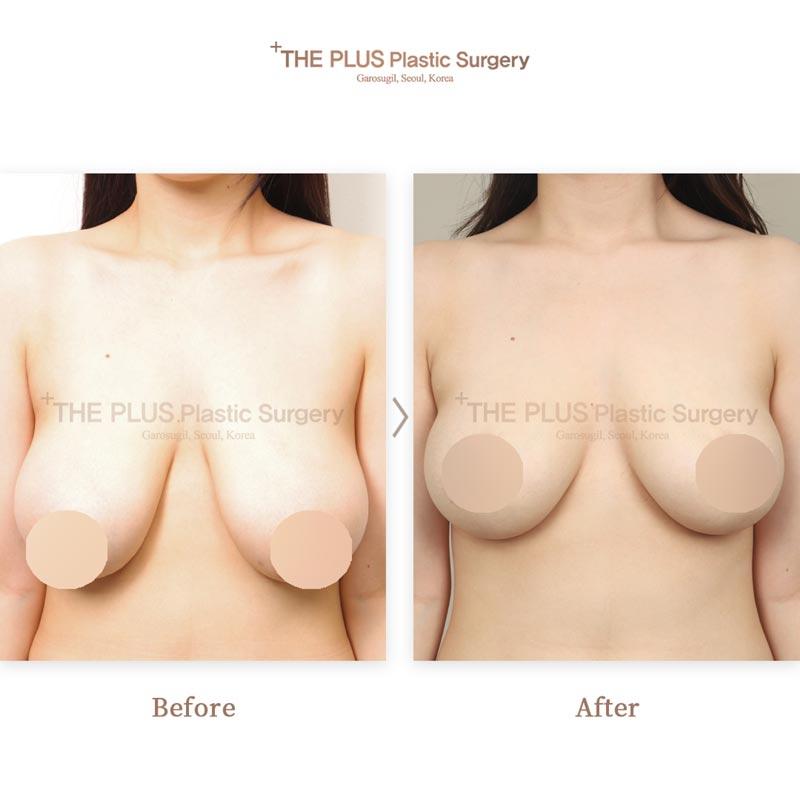
1. THEPLUS Plastic Surgery
For breast reduction, you can expect Dr. Lee to use a pedicle technique intended to preserve nipple sensation while removing excess breast volume and shaping a natural, balanced contour rather than simply making the breasts smaller. Your plan is individualized, with systematic postoperative monitoring and aftercare tailored to your healing pace.
- URL: THEPLUS Plastic Surgery Website
- Location: Gangnam-gu, Seoul
- Procedure approach:
- Breast reduction removes excess tissue and skin to create a lighter, more proportionate breast shape.
- Dr. Lee’s stated approach uses a pedicle technique to preserve nipple sensation and prioritize balanced shaping.
- Surgeon background:
- Dr. Lee is a board-certified plastic surgeon whose practice includes breast augmentation, breast lift, and breast reduction surgery.
- Her experience includes a Surgery Specialist position at Seoul National University Hospital and clinical training at Seoul Metropolitan Boramae Hospital.
- She is affiliated with the Korean Society of Plastic and Reconstructive Surgery and the Korean Society of Aesthetic Plastic Surgery.
- Care considerations:
- The clinic describes advanced sterilization protocols and systematic postoperative monitoring.
- Your aftercare plan is tailored to your individual healing pace.
- English-language support and translator assistance are available from consultation through recovery for international visitors.
2. Okay Plastic Surgery Clinic
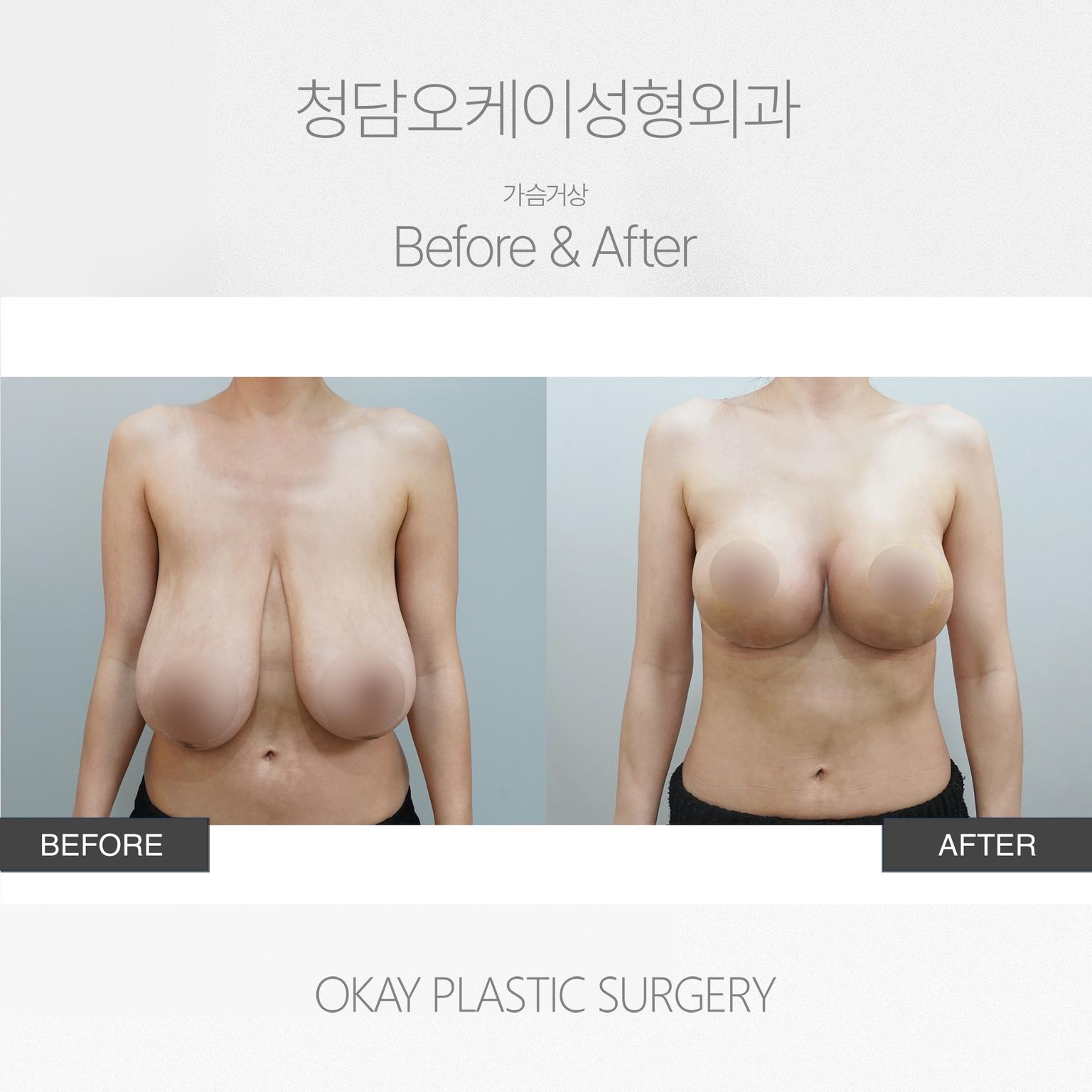
For breast reduction, you can be assessed through a specialized Breast Center that also provides breast-lift and nipple-correction procedures. Dr. Cho’s breast-surgery experience includes research and published papers, with the clinic stating expertise in substantial reductions for severe cases as well as comprehensive aftercare intended to support natural, lasting results.
- URL: Okay Plastic Surgery Clinic Website
- Location: Gangnam-gu, Seoul
- Breast reduction care:
- Breast reduction surgery is offered to reduce breast size, address discomfort, and pursue your desired breast proportions.
- The Breast Center also offers breast lift and nipple-correction procedures, which may be relevant when discussing your overall breast shape and nipple concerns.
- Surgeon expertise:
- Dr. Cho focuses on breast surgery and has studied and published research papers in the field.
- The clinic describes Dr. Cho as experienced in significant breast reductions for severe cases.
- Related services:
- Breast augmentation is available using implants or fat grafting.
- The clinic also offers gynecomastia surgery for male breast-tissue reduction.
- Aftercare: The clinic emphasizes comprehensive aftercare for natural, lasting results.
3. id Hospital Korea
You can discuss breast reduction within a hospital that offers breast surgery alongside facial, skin, lifting, and dental services. The clinic describes its care as customized, safety-oriented, and supported by systematic post-care.
- URL: id Hospital Korea Website
- Location: Gangnam-gu, Seoul
- Care approach:
- Treatment planning is described as customized and patient-safety-oriented.
- The hospital provides systematic post-care.
- Available services: Breast surgery is offered alongside orthognathic surgery, facial contouring, eye and nose plastic surgery, lifting, skin-clinic treatments, petit plastic surgery, and dentistry.
How Much Does Breast Reduction Cost in Korea?
Breast Reduction is supplied at ₩15,000,000–₩20,000,000 (approximately US$11,100–US$14,800). Individual quotes vary because the planned reduction, breast anatomy, and perioperative requirements determine the surgical resources needed.
| Procedure Price | Korean Won (₩) | USD ($) |
|---|---|---|
| Low Price | ₩15,000,000 | $11,100 |
| High Price | ₩20,000,000 | $14,800 |
Exchange rate as of 2026-09-06: 1 KRW = 0.000741 USD.
What Affects the Price?
- Reduction size, asymmetry, and reshaping required — A larger tissue resection, marked breast asymmetry, substantial ptosis, or extensive skin excess requires more dissection, skin removal, nipple repositioning, and contour shaping. These requirements can extend operating time and increase use of operating-room and anesthesia resources.
- Pedicle and scar-pattern plan — Pedicle-based reduction preserves the nipple–areola complex on living tissue, while the chosen pedicle is tailored to resection size, blood supply, breast shape, and sensation or lactation priorities. A Wise-pattern/anchor reduction is often needed when substantial skin removal is required, whereas a vertical pattern suits selected smaller-to-moderate reductions; the planned technique changes the reconstruction and operating work involved.
- Free nipple graft requirement — For extreme macromastia/gigantomastia or selected high-risk anatomy, a free nipple graft may be required instead of maintaining the nipple–areola complex on a pedicle. Detaching, grafting, and monitoring the nipple–areola complex adds distinct operative and postoperative care requirements.
- Anesthesia, observation, and early postoperative care — Breast reduction is generally performed under general anesthesia. Drain use, bleeding risk, pain or nausea control, medical comorbidities, available support, and facility policy can determine whether outpatient recovery is appropriate or overnight observation is needed, adding anesthesia and facility resources.
Cost tip: Request an itemized quote stating exactly what is included, particularly the planned surgical technique, general anesthesia, operating-facility use, possible overnight observation, drains, pathology if tissue is examined, and local postoperative checks.
The US$11,100–US$14,800 conversion is approximate, based on an exchange rate of 0.000741 on 2026-09-06. Check the exchange rate again when budgeting.
Breast Reduction From Start to Finish
- Remote inquiry and screening — Send standardized front, side, and oblique photographs; height and weight; desired size range; medical and surgical history; medication and allergy list; nicotine exposure; pregnancy and breastfeeding plans; clotting history; and prior breast imaging. English-language or virtual consultation can assess feasibility, but it cannot replace an in-person examination.
- Travel and follow-up coordination — Confirm the operating location, anesthesia provider, companion requirement, accommodation near the facility, likely length of stay, postoperative appointments, and flight-change flexibility. Ask how delayed healing or other complications will be managed after departure.
- In-person examination and testing — The surgeon assesses volume, skin elasticity, ptosis, asymmetry, nipple position, and the inframammary fold. Age-, symptom-, and risk-appropriate mammography, ultrasound, or other assessment is arranged when indicated.
- Surgical planning and consent — Review the planned size range, pedicle, incision pattern, expected scars, estimated resection, potential need for a free nipple graft, sensation and breastfeeding implications, drain use, pathology policy, and revision risks.
- Anesthesia and surgery — Breast reduction is generally performed under general anesthesia. The surgeon removes planned tissue and skin, reshapes the breast, and repositions the nipple–areola complex; operating time depends on breast size, asymmetry, resection volume, and technique.
- Recovery and discharge — Dressings and a surgical bra support the breasts. Temporary drains are used in some cases. Discharge occurs after the team is satisfied with bleeding surveillance, pain and nausea control, mobility, and available adult support; selected patients stay overnight.
- Local postoperative checks — Early appointments assess swelling, hematoma, nipple and skin blood supply, incisions, drain output, and dressing changes. Stay nearby until the surgeon considers healing stable and approves air travel.
- Return-home follow-up — Leave with English records, a medication list, written warning signs, and direct clinic contact details. Send requested wound photographs through the clinic’s secure follow-up process and attend local assessment promptly if a problem develops.
Alternatives to Breast Reduction
The practical alternative depends on whether the main problem is breast weight and volume, drooping, or symptoms that need temporary relief. Surgical options can change breast shape or volume but leave scars and require recovery; nonsurgical approaches do not remove glandular tissue or correct substantial ptosis.
Breast Lift
A breast lift raises and reshapes drooping breasts with little intended volume reduction.
- Best suited to — People whose main concern is ptosis rather than heaviness, skin-fold symptoms, or the need for significantly smaller breasts.
- Key tradeoff — Mastopexy still creates scars and can affect sensation or breastfeeding, but it does not reliably relieve symptoms caused by excess breast volume.
Liposuction-Only Reduction
Liposuction can reduce fatty breast volume through small incisions without the skin excision of standard reduction mammaplasty.
- Best suited to — Selected patients with predominantly fatty breasts, good skin elasticity, limited ptosis, and modest reduction goals.
- Key tradeoff — It cannot reliably remove dense glandular tissue, elevate the nipple, remove substantial loose skin, or reshape markedly drooping breasts.
Nonoperative Symptom Management
Supportive measures can reduce discomfort when surgery is not currently appropriate.
- Options — Professionally fitted bras, physical therapy or activity modification, skin-fold treatment, and clinician-guided analgesia.
- Key tradeoff — These measures do not reduce breast tissue, correct ptosis, or provide the durable volume change of surgery.
How Can I Prepare for Breast Reduction?
- Medical disclosure — Provide a complete English medical summary, personal and family clotting history, medication and allergy list, prior breast-operation records, and breast imaging reports. Report new lumps, nipple discharge, or concerning skin changes before surgery.
- Medicines and supplements — List anticoagulants, antiplatelets, aspirin, anti-inflammatory medicines, diabetes medicines, hormonal therapy or estrogen-containing contraception, weight-loss injections, vitamins, herbal products, and fish oil or omega-3 products. Do not stop prescribed medication independently; the surgeon, anesthesiologist, and prescribing clinician must set the plan and timing.
- Nicotine and substances — Stop cigarettes, vaping, nicotine pouches, gum, patches, and all other nicotine exposure for the surgeon-directed interval. Disclose alcohol, cannabis, cocaine, amphetamines, opioids, and other recreational drugs honestly because they affect anesthesia and pain-control safety.
- Fasting — Follow the anesthesiologist’s exact instructions for food, drink, and morning medicines. Do not use a generic fasting schedule in place of the clinic’s directions.
- Breast assessment — Complete any indicated mammogram, ultrasound, or review of breast symptoms before the operation. Elective surgery should not proceed before a suspicious finding is assessed.
- Accommodation and packing — Stay close to the operating facility, pack loose front-closing clothing, and bring the prescribed support bra if instructed. Avoid clothing that needs overhead arm movement.
- Support and transport — Book a responsible adult escort, private transport after discharge, and accommodation where help is available. Do not plan to lift suitcases or carry shopping bags.
- Flexible travel — Keep return flights changeable and budget for an extended stay if wound healing, drains, or clot-risk assessment delay clearance.
Travel note: Carry records in English and request English copies of the operative report, anesthesia record, pathology report when applicable, discharge instructions, and direct emergency contact details before leaving Korea.
Confirm every medication change, nicotine-stop interval, fasting rule, companion requirement, and testing requirement with the treating surgeon and anesthesiologist; their individualized instructions take precedence.
Aftercare Advice
Protect healing breasts and incisions during the first weeks; early overexertion, nicotine exposure, and missed wound checks can turn a manageable recovery into a complication.
- Support and dressings — Wear the surgical bra and use dressings exactly as directed. Take only medications approved by the surgical team, and follow the clinic’s instructions for showering, drain care, incision care, and later scar treatment.
- Movement and exercise — Take light walks as directed to avoid prolonged immobility, but avoid lifting, pushing, pulling, overhead stretching, running, impact exercise, chest workouts, and strenuous activity for about 4–6 weeks or until cleared. Many desk-based patients return to work around weeks 2–3; physical work needs a longer restriction plan.
- Flying and clot prevention — Fly only after surgeon clearance. Use an aisle seat when feasible, walk periodically, and perform seated calf exercises on a long flight. Discuss compression stockings or prescribed clot prevention if you have risk factors; do not take aspirin solely for travel-clot prevention unless a clinician directs it.
- Healing and scars — Swelling, bruising, firmness, and temporary shape asymmetry improve over weeks to months. The smaller, lifted size is immediate, but the breast shape settles over several months and scars can continue fading longer. Keep scars out of direct sun and use SPF 50 once incisions are fully closed and the surgeon approves sun protection.
- Urgent warning signs — Seek urgent assessment for rapidly increasing one-sided swelling, sudden severe pain or tightness, worsening bleeding, a pale, dark, or cool nipple or skin area, fever, spreading redness, foul drainage, or wound separation. Seek emergency care for shortness of breath, chest pain, coughing blood, fainting, or one-sided leg pain or swelling.
Follow the treating doctor’s individualized instructions and contact the clinic promptly when an incision, breast shape, pain level, or general health appears wrong.
Frequently Asked Questions
Related Blogs
Breast Fat Grafting in Korea vs. Global Costs: A Smart Investment for Natural Results
Explore the affordability and benefits of breast fat grafting in Korea, a popular cosmetic procedure known for its natural results. Discover why more individuals are choosing Korea for this innovative, cost-effective solution.
Updated: Sep 26, 2026
Nipple Surgery in Korea: Types, Recovery, Risks, and Travel Planning
Nipple surgery may reduce nipple size or projection, correct benign inversion, revise scars, or reconstruct the nipple–areola complex; technique, anesthesia, and recovery depend on the procedure and any combined breast or chest surgery. International patients should plan at least 7–10 days locally for uncomplicated isolated procedures, attend wound review before flying, arrange follow-up at home,
Updated: Sep 21, 2026
Breast Augmentation in Korea: Implants, Recovery, Travel Planning, and Long-Term Safety
Breast augmentation in Korea may use silicone or saline implants, or fat grafting, with planning based on anatomy, goals, incision, and pocket placement. The article covers candidacy, costs of ₩7,000,000–₩18,000,000, 10–14-day travel planning, recovery, follow-up, and implant records.
Updated: Sep 20, 2026
Capsular Contracture Treatment in Korea: Revision Options, Recovery, and Travel Planning
Capsular contracture treatment may include capsulotomy, partial or total capsulectomy, implant exchange or removal, pocket change, ADM support, breast lift, fat grafting, or autologous reconstruction based on symptoms and tissue condition. International patients should plan at least 10–14 days in Korea, complete local follow-ups, obtain surgeon clearance before flying, and arrange home-country car
Updated: Sep 19, 2026
Clinics offering Breast Reduction

BongBong Plastic Surgery Dermatology Korea | Body, Breast & Aesthetic Treatments
Nonhyeon

THEPLUS Plastic Surgery Korea | Eye, Nose, Face & Body Surgery
Sinsa

Okay Plastic Surgery Clinic in Korea: Comprehensive Aesthetic Procedures with Sincerity and Care
Cheongdam
ID Hospital - Main Branch in Korea: Specializing in Safe & Customized Facial Plastic Surgery and Post-Care Services
Sinsa