
Medical Tourism Blog
Sagging Breasts Solutions: Breast Lift Procedures in Korea for Firmer, Youthful Contours
Table of contents
- The Medical Procedure: Breast Lift (Mastopexy)
- Which Are the Best Clinics in Korea for Sagging Breasts?
- The Process of Getting a Breast Lift in South Korea
- Costs Associated with Breast Lift Procedures in South Korea
- Patient Experiences and Outcomes
- Conclusions
- References
Considering treatment in Korea? Everything you need to know e.g. — how to avoid scams, visas, interpreters, recovery tips — in our Medical Tourism Master Guide. Plan with confidence in minutes, not weeks!
Breast ptosis is the technical term for drooping breast tissue and is crucial for effective communication between patients and healthcare professionals. Some level of sagging is natural with age as the breasts change over time. To objectively assess this condition, breast ptosis is classified into different grades based on the position of the nipple-areolar complex (NAC) in relation to the inframammary fold (IMF).
- Pseudoptosis: The NAC is at or above the IMF, but the main breast tissue descends below it.
- Grade I Ptosis: The NAC is right at the level of the IMF.
- Grade II Ptosis: The NAC is below the IMF but not yet at the lowest point of the breast.
- Grade III Ptosis: The NAC is the lowest point on the breast, often indicating severe sagging.
Using "breast ptosis" promotes clear communication and helps patients feel empowered and informed, moving the conversation away from stigmatized or emotional language.
Common Causes and Contributing Factors to Breast Sagging
Breast sagging results from a mix of biological processes and lifestyle habits. Aging is the primary driver as skin loses elasticity and the support structures within the breast weaken. Gravity, over time, further accentuates this downward pull.
Pregnancy and breastfeeding stretch the supportive ligaments due to volume changes, and these ligaments may not return to their original state afterward. Major weight fluctuations can also stretch the skin and breast tissue, altering breast shape. Macromastia (large, heavy breasts) increases susceptibility to sagging due to added weight. Hormonal changes throughout life affect tissue resilience, while certain medical conditions like Ehlers-Danlos syndrome or prior breast surgeries can further contribute. Understanding these factors helps set realistic goals for surgery and highlights the importance of ongoing breast support.
Common Pseudonyms and Societal Perceptions
Society uses many informal—sometimes negative—terms for sagging breasts, including "droopy breasts," "saggy boobs," and "grandma boobs," among others. These words reflect the cultural pressures surrounding youthful breast contours and can weigh heavily on self-esteem. Medical professionals should be mindful of this emotional component, emphasizing that mastopexy can improve not only physical appearance but also psychological well-being.
The Medical Procedure: Breast Lift (Mastopexy)
Purpose and Indications for Mastopexy
Mastopexy, or breast lift, is a surgical procedure intended to elevate and firm the breasts by removing excess skin, tightening tissue, and repositioning the NAC. Common reasons for considering a breast lift include the desire for fuller breast shape, correcting nipples that point downward, reducing stretched areolae, correcting asymmetry, and relieving physical discomfort like skin irritation beneath the breasts.
Mastopexy is not recommended for patients with active infections, breast cancer, current pregnancy, or those unfit for anesthesia. It's also not the procedure of choice for those seeking a substantial size reduction. Ensuring that the patient's motivations are personal—and not driven by external pressure—is a key consideration before proceeding.
Overview of Surgical Techniques and Incision Patterns
The choice of mastopexy technique depends on the degree of breast ptosis, required lift, skin quality, and personal goals, with the aim of maximizing aesthetics and minimizing visible scarring.
- Crescent Lift: A small, crescent-shaped incision above the areola; provides minor lift with minimal scarring.
- Peri-Areolar or "Donut" Lift: Two concentric circles around the areola; suitable for mild to moderate sagging; leaves a circular scar.
- Vertical or "Lollipop" Lift: An incision around the areola plus a vertical line down to the IMF; good for moderate sagging, with a "lollipop" scar.
- Inverted T or "Anchor" Lift: Incisions around the areola, vertically to the IMF, and along the fold; reserved for extensive sagging, results in the most scarring but also the most dramatic reshaping.
Scars are a normal outcome of mastopexy, typically fading over 1–2 years. Individual healing varies, and proper scar care—including silicone products and sun protection—helps improve their appearance. It's important for patients to understand and come to terms with these permanent but often fading marks.
Combining Mastopexy with Augmentation or Reduction
Breast lift procedures can be customized further by combining them with breast augmentation (with implants or fat grafting) for added volume, or with breast reduction for those with macromastia. Autologous fat grafting is particularly advanced in South Korea, with high retention rates of grafted tissue. Sometimes, surgeons might recommend splitting the lift and augmentation/reduction into two stages to optimize outcomes.
This flexibility highlights the importance of open discussion and personalized planning to achieve the patient’s desired look and comfort.
Risks, Complications, and Side Effects
Like any surgery, mastopexy involves risks such as anesthesia reactions, bleeding, hematoma, infection, and delayed wound healing. Specific concerns include permanent scarring, changes in nipple or skin sensation, possible asymmetry, and rare complications like tissue necrosis. Some patients might experience difficulty breastfeeding after the procedure. Meticulous surgical technique and adherence to post-operative instructions help minimize these risks, and thorough preoperative counseling is essential for informed consent.
Non-Surgical Alternatives: Efficacy and Limitations
Non-surgical breast lifts include fillers, PRP (vampire lift), vacuum and micro-current therapy, laser radiofrequency (like Morpheus8), thread lifts, chest exercises, topical creams, and massage. Most provide only mild, temporary improvements and cannot effectively address moderate to severe breast ptosis. Surgical mastopexy remains the only solution for lasting, significant reshaping and lift.
Which Are the Best Clinics in Korea for Sagging Breasts?
Listed below are some of the best clinics in Korea for sagging breasts.
1. THEPLUS Plastic Surgery
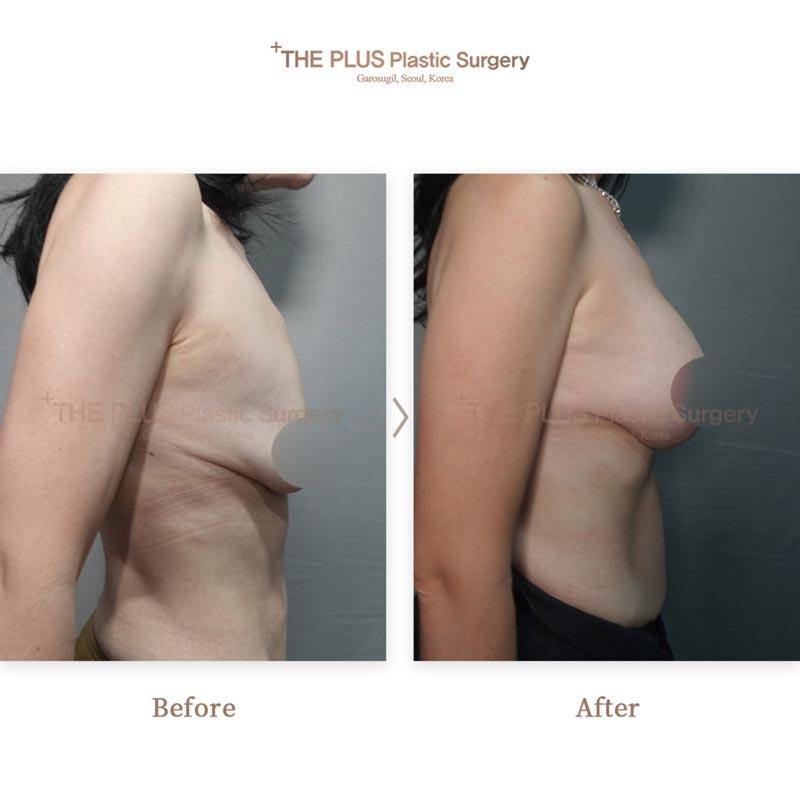
For sagging breasts, you can consider THEPLUS Plastic Surgery for a breast lift planned around a 3-D evaluation of your skin elasticity and breast shape. Dr. Lee selects a donut, lollipop, or anchor lift technique according to those findings, with the aim of restoring a higher, reshaped breast contour through an individualized surgical plan.
- URL: THEPLUS Plastic Surgery Website
- Location: Gangnam-gu, Seoul
- Breast lift planning:
- Your breast lift approach is selected after a 3-D assessment of skin elasticity and breast shape.
- Available lift patterns include donut, lollipop, and anchor techniques, allowing the incision design to be matched to your anatomy and degree of sagging.
- Breast surgeon:
- Dr. Lee is a board-certified plastic surgeon whose practice includes breast augmentation, breast lift, and breast reduction.
- Her background includes work as a Surgery Specialist at Seoul National University Hospital and clinical training at Seoul Metropolitan Boramae Hospital.
- She belongs to the Korean Society of Plastic and Reconstructive Surgery and the Korean Society of Aesthetic Plastic Surgery.
- Related breast procedures:
- Breast reduction is offered using a pedicle technique intended to preserve nipple sensation while removing excess breast volume.
- For augmentation, the clinic uses FDA-approved Motiva Ergonomix® implants and tailors implant placement and incision location with full-HD endoscopic visualization.
- Care considerations:
- The clinic describes advanced sterilization protocols, systematic postoperative monitoring, and aftercare tailored to your healing pace.
- English-language support and dedicated translator assistance are available from consultation through recovery for international visitors.
2. Okay Plastic Surgery Clinic
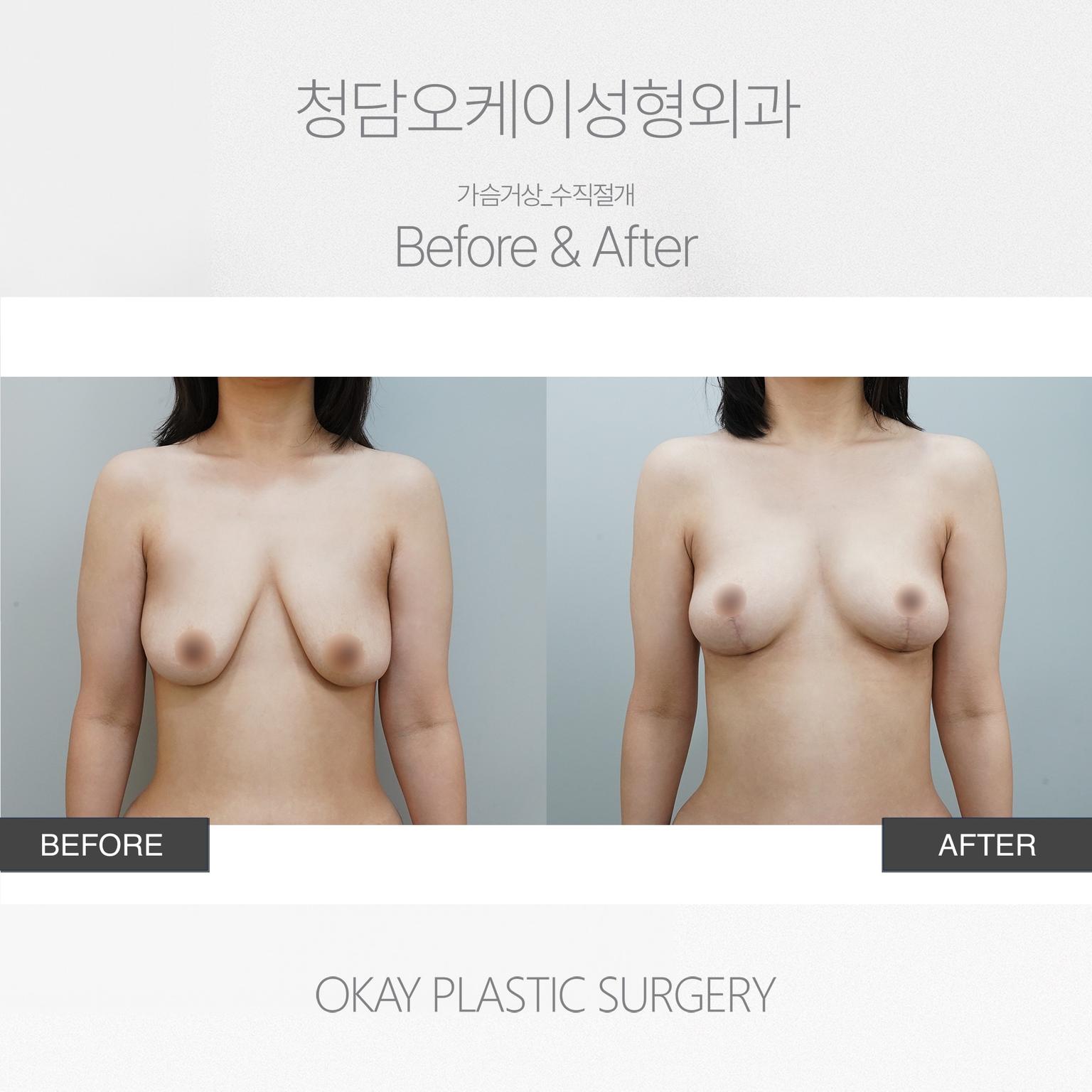
For sagging breasts, Okay Plastic Surgery Clinic offers breast lift surgery through its specialized Breast Center, where your plan can be tailored to lifting and reshaping concerns as well as related needs such as breast size or nipple correction. The clinic highlights breast-surgery expertise from Dr. Cho and comprehensive aftercare as part of your treatment journey.
- URL: Okay Plastic Surgery Clinic Website
- Location: Gangnam-gu, Seoul
- Breast-focused care:
- The clinic operates a specialized Breast Center offering breast lift, breast reduction, and nipple-correction procedures.
- Its listed services also include augmentation and correction for inverted nipples.
- Surgeon experience and follow-up:
- Dr. Cho’s stated focus is breast surgery, including published research in the field and experience with significant breast-reduction cases.
- The clinic emphasizes individualized treatment planning and comprehensive aftercare intended to support natural-looking, lasting results.
3. Banobagi Plastic Surgery
For sagging breasts, you may consider Banobagi Plastic Surgery because it has a dedicated breast surgery center and describes its care as 1:1 customized rather than a one-size-fits-all approach. Founded by plastic-surgery specialists from Seoul National University Hospital, the clinic also states that it avoids recommending unnecessary or excessive surgery.
- URL: Banobagi Plastic Surgery Website
- Location: Gangnam-gu, Seoul
- Breast surgery setting:
- The clinic includes a dedicated breast surgery center within its main and annex facilities.
- It states that care is provided with 1:1 customized treatment and professional medical equipment by specialty.
- Clinic background:
- Banobagi was established in 2000 by plastic-surgery specialists from Seoul National University Hospital.
- Its stated approach is to avoid recommending unnecessary or excessive surgery.
The Process of Getting a Breast Lift in South Korea
South Korea is renowned for its advanced surgical techniques, patient care, and integrated services, making it a highly popular destination for medical tourists seeking a breast lift.
Pre-operative Phase
Planning often starts with virtual consultations, where medical history, personal goals, and breast examinations (including 3D imaging and photos) are completed. Lengthy consultations allow for personal attention. Pre-operative preparations include necessary medical tests and lifestyle adjustments (like stopping smoking).
Travel logistics are supported by clinics, with many offering bundled arrangements to ease the process for international patients. A stay of 7–14 days is typical for adequate recovery and post-op checks.
Surgical Procedure
On surgery day, patients undergo detailed preparation, anesthesia, and antiseptic prepping. The chosen incision is guided by individual anatomy and goals, and the procedure may involve innovative Korean techniques like the Lejour-Modified Korean Technique with internal bra suturing—offering long-lasting lifts and shorter scars. Additionally, technologies like Ultrasonic Skin Tightening and advanced fat grafting are integrated to enhance results.
Post-operative Care and Recovery
Korean clinics prioritize post-op comfort and healing, with same-day discharge, drain care, pain management, and support bras. Patients must avoid heavy lifting or strenuous movement for several weeks, and may benefit from laser treatments to reduce swelling.
Follow-up care is notably more extensive than in many countries, both in-person and virtually. Packages often include accommodation, transfers, translation, and personal nurse support, helping patients feel cared for throughout their stay. Long-term maintenance includes a stable weight, good nutrition, supportive bras, and sun protection.
Costs Associated with Breast Lift Procedures in South Korea
Cost Range and Factors
The average breast lift cost in Korea is about $11,512 USD, but ranges from $5,000 to $12,000 in places like Gangnam. Adding augmentation increases the price by $3,000–$5,000 or more. Top surgeons, advanced techniques, complexity of procedure, type of anesthesia, pre- and post-op tests, and clinic reputation all influence price.
Many clinics offer all-inclusive packages covering most or all aspects of the surgical journey. Patients should confirm details upfront to avoid unexpected costs.
International Comparison
Here’s a comparison of average breast lift costs:
| Country | Average Cost (USD) |
|---|---|
| South Korea | $5,000 - $12,000 |
| Turkey | $2,700 - $4,900 |
| Mexico | $3,500 - $6,200 |
| Thailand | $2,500 - $5,000 |
| Czech Republic | $4,000 - $7,000 |
| United States | $8,000 - $15,000 |
| United Kingdom | $6,000 - $12,000 |
| Australia | $6,000 - $15,000 |
While Turkey, Mexico, and Thailand may have lower prices, South Korea’s value proposition centers on advanced techniques, extended care, and superior technology.
Patient Experiences and Outcomes
Initial Satisfaction and Emotional Journey
Patients typically report significant satisfaction after mastopexy, often describing their results as transformative for their self-image and comfort. Many are thrilled with the immediate improvement, but adjusting to post-surgical scars can be emotionally challenging at first. With time, scars usually fade, and most patients grow to appreciate the benefits far more than any cosmetic trade-offs.
Recovery Experience
Recovery occurs over stages: swelling and discomfort are common in the first days, with rapid improvement in the first week and return to light activities soon after. Most people resume exercise after about six weeks. Full healing and scar maturation can take up to 18 months, during which compliance with support bras and care instructions is vital.
How Mastopexy Addresses Patient Issues
A breast lift addresses physical concerns—such as sagging, discomfort, and asymmetry—by elevating the breast and restoring nipple position. Emotional benefits are equally significant, with patients reporting enhanced self-confidence and satisfaction. Key improvements also include reduced irritation and rashes, better fit in clothes, and restored symmetry.
Results typically last 10–15 years, though factors like age, pregnancy, and weight changes can affect longevity. Revision is possible if needed.
Conclusions
Breast ptosis is a natural, common occurrence, but surgical mastopexy offers the most effective and lasting solution for those seeking significant improvement. South Korea stands out globally for its advanced techniques, personalized care, and integrated medical tourism services, making it a compelling option for patients seeking high-quality results and value. Non-surgical approaches may address only very mild sagging and are generally temporary, while surgical results address both physical and psychological needs with high satisfaction rates.
References
1, 2, 3, 4, 5, 6, 7, 8, 9, 10, 11, 12, 13, 14, 15, 16, 17, 18, 19, 20, 21, 22, 23, 24, 25, 26, 27, 28, 29, 30, 31, 32, 33, 34, 35, 36, 37, 38, 39, 40, 41, 42
Frequently Asked Questions
Related Blogs
Breast Fat Grafting in Korea vs. Global Costs: A Smart Investment for Natural Results
Explore the affordability and benefits of breast fat grafting in Korea, a popular cosmetic procedure known for its natural results. Discover why more individuals are choosing Korea for this innovative, cost-effective solution.
Updated: Sep 26, 2026
Nipple Surgery in Korea: Types, Recovery, Risks, and Travel Planning
Nipple surgery may reduce nipple size or projection, correct benign inversion, revise scars, or reconstruct the nipple–areola complex; technique, anesthesia, and recovery depend on the procedure and any combined breast or chest surgery. International patients should plan at least 7–10 days locally for uncomplicated isolated procedures, attend wound review before flying, arrange follow-up at home,
Updated: Sep 21, 2026
Breast Augmentation in Korea: Implants, Recovery, Travel Planning, and Long-Term Safety
Breast augmentation in Korea may use silicone or saline implants, or fat grafting, with planning based on anatomy, goals, incision, and pocket placement. The article covers candidacy, costs of ₩7,000,000–₩18,000,000, 10–14-day travel planning, recovery, follow-up, and implant records.
Updated: Sep 20, 2026
Capsular Contracture Treatment in Korea: Revision Options, Recovery, and Travel Planning
Capsular contracture treatment may include capsulotomy, partial or total capsulectomy, implant exchange or removal, pocket change, ADM support, breast lift, fat grafting, or autologous reconstruction based on symptoms and tissue condition. International patients should plan at least 10–14 days in Korea, complete local follow-ups, obtain surgeon clearance before flying, and arrange home-country car
Updated: Sep 19, 2026
Clinics offering Breast Lift

THEPLUS Plastic Surgery Korea | Eye, Nose, Face & Body Surgery
Sinsa

Okay Plastic Surgery Clinic in Korea: Comprehensive Aesthetic Procedures with Sincerity and Care
Cheongdam

Banobagi Plastic Surgery: A Pioneering and Trusted Plastic Surgery Clinic in Korea
Seolleung

The Regen Plastic Surgery Clinic in Korea: Comprehensive Aesthetic Procedures for Eye, Nose, Facial Contouring, and Face Lifting
Hakdong