
Medical Tourism Blog
Revision Eye Surgery in Korea: Methods, Recovery, Risks and Travel Planning
Table of contents
- Revision Eye Surgery at a Glance
- What Is Revision Eye Surgery?
- Who Is a Good Candidate for Revision Eye Surgery?
- How Is Revision Eye Surgery Performed?
- Why Visit Korea for Revision Eye Surgery?
- Key Information for International Patients
- Which Are the Best Clinics in Korea for Revision Eye Surgery?
- How Much Does Revision Eye Surgery Cost in Korea?
- Revision Eye Surgery From Start to Finish
- Alternatives to Revision Eye Surgery
- How Can I Prepare for Revision Eye Surgery?
- Aftercare Advice
Considering treatment in Korea? Everything you need to know e.g. — how to avoid scams, visas, interpreters, recovery tips — in our Medical Tourism Master Guide. Plan with confidence in minutes, not weeks!
Last updated: September 2026
Revision Eye Surgery at a Glance
- What it corrects — Revision eye surgery is tailored eyelid surgery after a prior procedure to improve problems such as an uneven, high or low crease, scars, multiple folds, hollowing, ptosis, incomplete closure, or lower-lid retraction.
- Typical cost in Korea — Revision eyelid surgery in South Korea costs about ₩2,600,000–₩7,500,000 (approximately US$1,900–$5,600), with reconstruction, ptosis repair, grafts, lower-lid support, and anesthesia increasing the quote.
- Wait for stable healing — Elective revision is commonly delayed for at least 6 months after the original operation because swelling and scar remodeling can continue changing eyelid position and appearance.
- Recovery and final results — Bruising and swelling are most noticeable for 1–2 weeks, and many people are socially presentable in 10–14 days, but scar softening, dryness, crease settling, and symmetry may continue improving for months.
- Korea travel commitment — International patients should plan at least 10–14 days in Korea for an early wound and vision review and possible suture removal at about 1 week; return flights should wait for in-person surgeon clearance.
- Function comes first — A low lid margin, dry eye, irritation, tearing, incomplete closure, ectropion, or scleral show requires assessment of ptosis, blink, lid support, and corneal protection, since additional skin removal can worsen eye exposure.
- Korea-specific consideration — Korea has substantial clinical experience with revision double-eyelid concerns, but no robust studies prove superior outcomes; verify the named surgeon, anesthesia and emergency arrangements, KAHF facility status, and cross-border follow-up plan.
What Is Revision Eye Surgery?
Revision eye surgery, or revision blepharoplasty, is an operation that corrects concerns remaining after previous eyelid surgery. It aims to improve eyelid comfort, closure, contour, scars, or symmetry while protecting normal eye function. It is surgical, with the extent of treatment based on the specific eyelid problem.
Who Is a Good Candidate for Revision Eye Surgery?
- Healed, defined concern — Good candidates have a stable concern after previous eyelid surgery, such as a high or low crease, multiple folds, scar tethering, asymmetry, persistent pretarsal fullness, hollowing, lower-lid retraction, or incomplete eyelid closure.
- Function-led assessment — Candidates with a low eyelid margin, eye irritation, tearing, exposure symptoms, ectropion, or scleral show need assessment of ptosis, lid support, blink, closure, and corneal protection—not simply a cosmetic crease plan.
- Realistic reconstructive goal — Revision blepharoplasty aims to improve comfort, closure, contour, scar quality, and symmetry within the limits of remaining skin, fat, and scarred tissue. Perfectly identical eyelids are not a realistic surgical promise.
- Suitable medical and travel plan — Adults in suitable health for local anesthesia with or without sedation, or general anesthesia for extensive reconstruction, need enough time in Korea for early review and any suture removal.
Elective revision is usually deferred until the original operation has healed, commonly for at least 6 months, because swelling and scar remodeling can still change the eyelids. Earlier surgery can be necessary for a functional complication. Sudden visual loss, severe eye pain, rapidly increasing one-sided swelling or proptosis, acute infection, marked corneal exposure, or suspected orbital hemorrhage requires urgent ophthalmic or emergency care rather than routine revision planning. Uncontrolled dry eye, blepharitis, thyroid eye disease, infection, pregnancy, untreated bleeding risk, and uncontrolled systemic illness require treatment, clearance, or deferral; people who recently had LASIK, LASEK, or PRK should obtain clearance from their eye surgeon. The assessment must also distinguish true ptosis, brow descent, skin shortage, and lower-lid laxity, since further skin removal can worsen incomplete closure and exposure.
How Is Revision Eye Surgery Performed?
Revision eyelid surgery is planned around the anatomical cause of the prior result. Scarred tissue planes, limited skin, changed fat position, and the need to preserve blinking and corneal protection make it more complex than first-time surgery.
- Upper-lid crease and scar revision — The surgeon releases scar adhesions or old fixation, removes retained suture when relevant, and adjusts crease height or depth. Volume redistribution or restoration can help when hollowing makes a crease look excessively deep.
- Revision double-eyelid construction — Failed buried-suture or non-incisional procedures can require failed-suture removal, a limited-incision approach, or full-incision reconstruction. The choice depends on scarring, excess skin, fat, and the need for stable fixation.
- Ptosis revision — A low upper eyelid margin caused by levator dysfunction needs ptosis repair. Revising the crease alone does not lift a truly drooping lid margin; see ptosis correction.
- Skin-shortage or retraction reconstruction — When the lid cannot close fully, ocular protection takes priority. Scar release, eyelid lengthening, grafting, or staged reconstruction can be required; additional skin excision can worsen lagophthalmos.
- Lower-lid support and reconstruction — Retraction or ectropion can require scar release plus canthopexy, canthoplasty, or lateral tarsal-strip tightening. Vertical tissue shortage or significant middle-lamellar scarring can require a spacer graft. A systematic review of cicatricial lower-lid retraction found no universally accepted gold-standard operation.
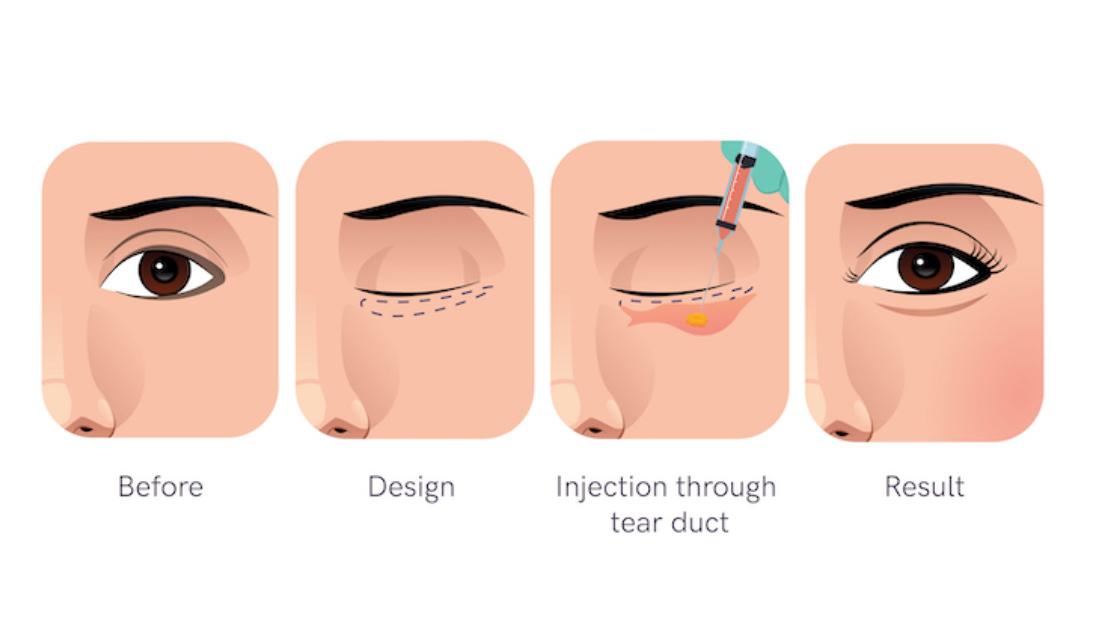
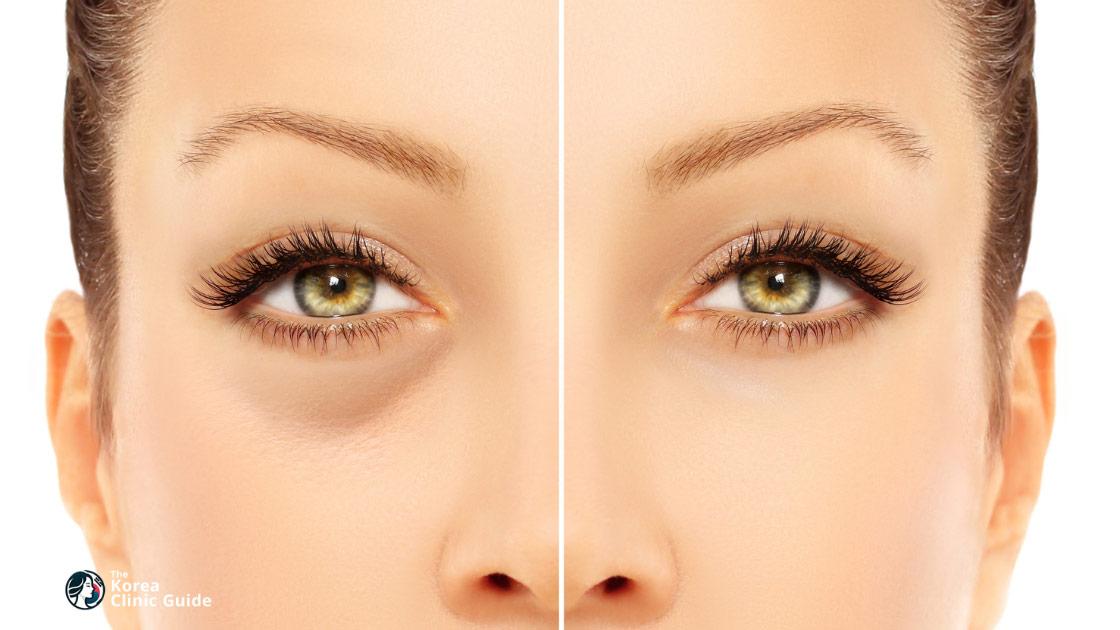
- Fat and volume correction — Selected under-eye bags or hollows can be addressed with conservative fat treatment, fat repositioning, or volume restoration. A transconjunctival approach avoids an external lower-lash incision but is not appropriate for every lower-lid anatomy.
- Brow and corner adjuncts — A brow lift, subbrow lift, canthoplasty, or eyelid retraction repair can be more appropriate than repeating a crease operation when brow descent or lid-corner support is the underlying problem.
Technique comparisons have important limits: a systematic review and meta-analysis of upper blepharoplasty techniques found no significant pooled advantage across evaluated functional outcomes, partly because anatomy, methods, and outcome definitions differ.
Why Visit Korea for Revision Eye Surgery?
South Korea has a substantial clinical literature on revision double-eyelid concerns, including crease height, multiple folds, scarring, pretarsal fullness, ptosis, and asymmetry. This can be relevant when the revision concerns an eyelid crease or prior double-eyelid operation. It does not prove that Korean outcomes are superior to equivalent care elsewhere.
- Revision double-eyelid experience — A Korean review describes the breadth of problems addressed in secondary Asian eyelid surgery, including high and low creases, multiple folds, excessive depth, scars, ptosis, and asymmetry, reflecting focused clinical discussion of these concerns in the Korean setting.
- Accreditation check for overseas patients — The KAHF accreditation framework evaluates participating institutions for patient safety and foreign-patient services. Accreditation is not evidence that a particular surgeon delivers superior revision outcomes.
- Credential verification — International patients can use the Korean Society of Plastic and Reconstructive Surgeons search service as one part of verifying a named doctor's professional credentials. Also ask who performs the operation, who administers anesthesia, and who handles emergencies.
- Evidence limitation — No robust comparative studies establish better revision-eyelid outcomes in South Korea than in other countries. Choose on diagnosis-specific experience, a complete functional eye examination, transparent consent, anesthesia arrangements, emergency transfer pathways, and a workable cross-border follow-up plan.
Key Information for International Patients
- Minimum stay — Plan at least 10–14 days in South Korea for an uncomplicated outpatient revision. This allows an early wound and vision review and removal of non-absorbable upper-lid sutures at roughly 1 week when used.
- Return visits — Ask before booking whether the plan uses external non-absorbable sutures and the exact removal date. A systematic review of upper-lid closure found broadly similar scar quality and complication rates for absorbable and non-absorbable sutures; absorbable material can reduce removal visits, but the review did not quantify the actual travel burden.
- Flights — Do not book a return flight until the operating surgeon examines and clears you in person. No evidence-based universal interval for commercial long-haul flying after revision blepharoplasty has been established; swelling, dry-eye or exposure symptoms, vision changes, hematoma concern, and serial-care needs determine timing.
- Itinerary impact — Bruising and swelling are most apparent in the first 1–2 weeks. Many people are socially presentable at 10–14 days, but residual swelling, redness, dryness, temporary asymmetry, and scar maturation continue for months.
- Escort and accommodation — Arrange nearby flexible accommodation and a responsible adult for discharge and the first night after sedation or general anesthesia. Do not plan solo long-haul travel immediately after surgery.
- Remote follow-up — Leave with an English operative summary, medication list, wound-care instructions, emergency contact details, and dates for video or photograph reviews. Confirm how the clinic will coordinate care if a problem develops after you return home.
Travel note: Revision results are not final at 2 weeks. Build flexibility into work, events, accommodation, and flights, especially for lower-lid reconstruction, ptosis repair, or surgery involving grafts or canthal support.
Which Are the Best Clinics in Korea for Revision Eye Surgery?
Listed below are some of the best clinics in Korea for revision eye surgery.
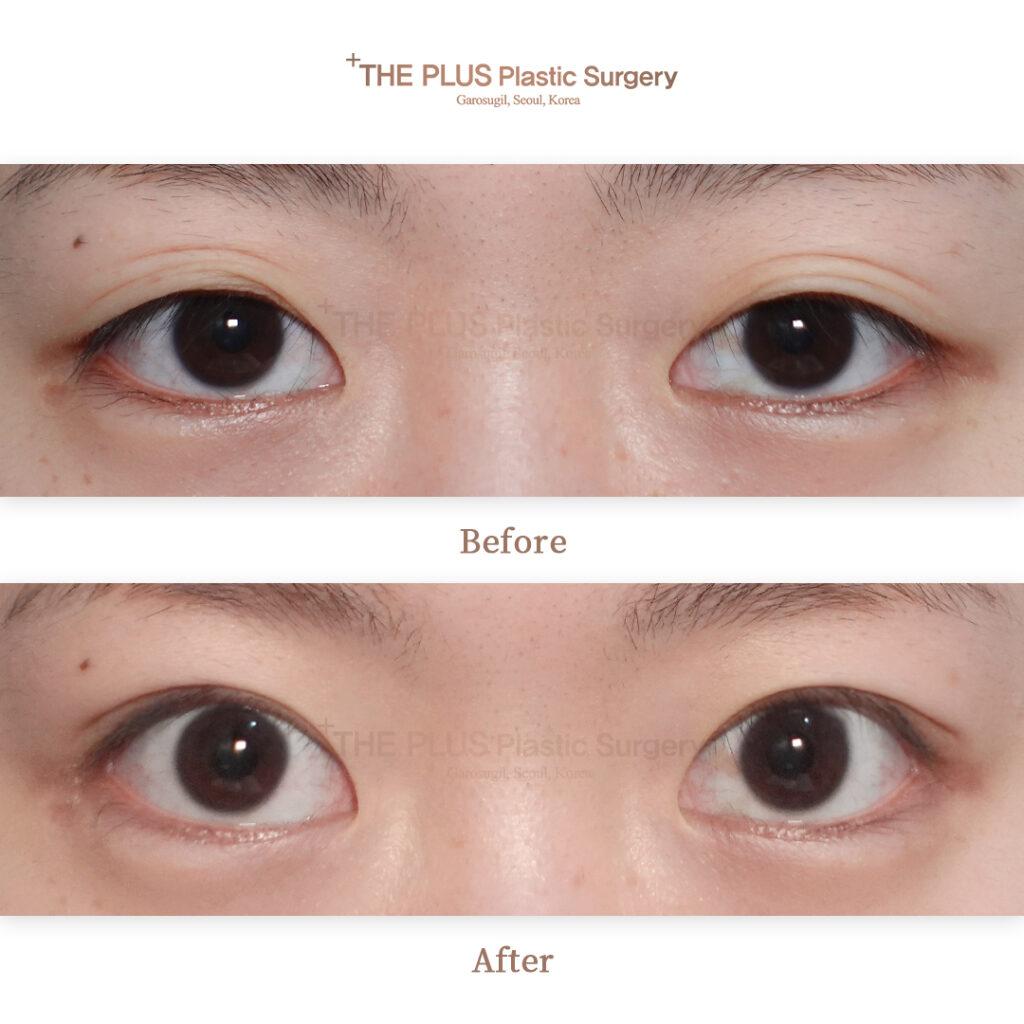
1. THEPLUS Plastic Surgery
For revision eye surgery, you may consider THEPLUS Plastic Surgery if you want your eyelid concerns assessed alongside overall facial balance. Its listed eye-surgery options include double-eyelid surgery, ptosis correction, and blepharoplasty, allowing discussion of concerns such as eyelid crease definition, drooping lids, or excess eyelid tissue.
- URL: THEPLUS Plastic Surgery Website
- Location: Gangnam-gu, Seoul
- Eye procedures:
- Double-eyelid surgery is offered to create an upper-eyelid crease designed to match your facial features.
- Ptosis correction addresses drooping upper lids by correcting the muscles involved in opening the eyes.
- Blepharoplasty adjusts excess skin and tissue around the eyelids.
- Practice approach:
- The clinic describes its care as personalized and focused on safety, research, and specialized surgical expertise.
- Its stated aesthetic approach emphasizes harmonious facial proportions and natural-looking enhancement.
2. Made Young Plastic Surgery
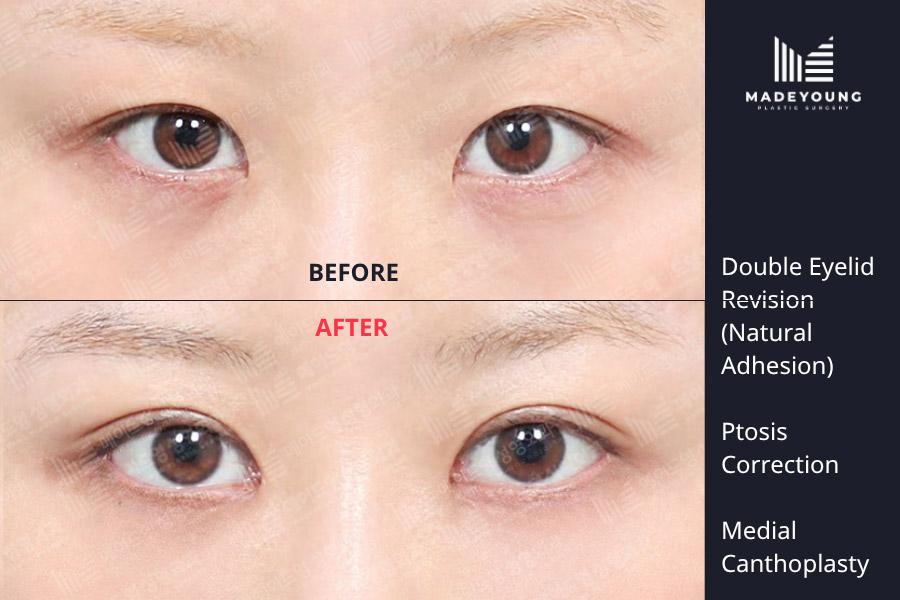
You may consider Made Young Plastic Surgery for revision eye surgery if you value individualized eyelid planning by a surgeon with 15 years of experience exclusively in eye surgery. Dr. Park Byung-Chan customizes incision lines, crease height, eyelid thickness, and the overall eye impression, which can be particularly relevant when refining the result of an earlier procedure.
- URL: Made Young Plastic Surgery Website
- Location: Seocho-gu, Seoul
- Eye-surgery options:
- Listed procedures include incisional and non-incisional double-eyelid surgery, ptosis correction, upper and lower blepharoplasty, canthoplasty, and dark-circle treatments.
- Incisional double-eyelid surgery can permit tissue removal or rearrangement when clinically appropriate.
- Consultation and planning:
- The medical team provides direct consultation and diagnosis before a procedure.
- Planning is described as tailored to your eyelid anatomy and desired eye shape rather than using a uniform crease design.
- Safety and aftercare:
- Full-time board-certified anesthesiologists are listed as on site, with one-to-one anesthesiologist monitoring during procedures.
- The clinic describes a cross-check emergency response system, full CCTV coverage of procedures, and a separate aftercare center.
3. RINE Plastic Surgery Clinic
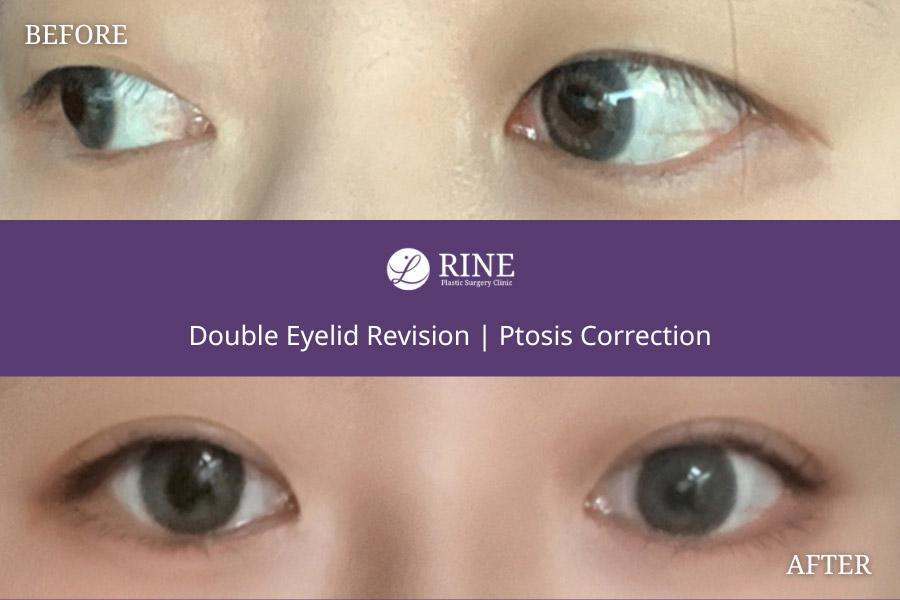
For revision eye surgery, RINE Plastic Surgery Clinic offers a focused approach to concerns after prior double-eyelid or inner-corner surgery, including thick or faded creases, asymmetry, multiple folds, scarring, and overdone epicanthoplasty. You can expect the head director to analyze the cause of the prior result and create a one-to-one design based on your facial proportions, skin condition, and desired eye line.
- URL: RINE Plastic Surgery Clinic Website
- Location: Seocho-gu, Seoul
- Revision eye procedures:
- Double-eyelid revision is available through natural-adhesion (non-incisional) or incisional methods, selected according to the individual case.
- The clinic addresses concerns including overly thick creases, loosened lines, asymmetry, multiple folds, and scarring.
- Epicanthoplasty revision is offered for issues such as excessive tear-duct exposure or an unnatural inner-eye contour.
- Director-led care:
- Board-certified plastic surgeon Director Jang Nam personally handles consultation, surgery, treatment, and recovery.
- The clinic reports that its director has personally performed more than 10,000 eye surgeries and has over 15 years of clinical experience.
- Planning and recovery:
- Your plan is based on a customized eyelid-line design rather than a one-size-fits-all approach.
- A one-person recovery room is available for private recovery.
- The clinic describes ongoing postoperative care, infection-control measures, surgical safety protocols, and emergency preparedness.
How Much Does Revision Eye Surgery Cost in Korea?
Revision Eye Surgery is priced at ₩2,600,000–₩7,500,000 (approximately US$1,900–$5,600). Individual quotes vary because revisional eyelid surgery is planned around the specific anatomic problem, remaining tissue, and whether functional reconstruction is required.
| Procedure Price | Korean Won (₩) | USD ($) |
|---|---|---|
| Low Price | ₩2,600,000 | $1,900 |
| High Price | ₩7,500,000 | $5,600 |
Exchange rate as of 2026-09-06: 1 KRW = 0.000741 USD.
What Affects the Price?
- Extent and location of revision — A focused upper-lid crease or scar revision generally uses fewer treated areas and less operating time than a combined upper- and lower-lid revision. Lower-lid retraction, ectropion, scleral show, or incomplete closure can require more extensive dissection and reconstruction to restore eyelid position and corneal protection.
- Scar release and tissue reconstruction — Previously operated eyelids can have scarred tissue planes, limited skin, and altered fat position. Releasing adhesions, removing retained sutures when relevant, revising fixation, repositioning fat, or restoring volume requires more detailed dissection and additional surgical resources than a straightforward crease adjustment.
- Ptosis repair or lid-support procedures — True ptosis requires levator-focused repair rather than crease revision alone. Lower-lid malposition may require canthopexy, canthoplasty, lateral tightening, spacer material, grafting, or combined reconstruction; these procedures add operative steps, consumables, and operating time.
- Anesthesia and facility requirements — A limited revision may be performed with local anesthetic, while extensive reconstruction may require sedation or general anesthesia. The anesthesia plan determines staffing, monitoring, recovery needs, and facility resources.
Cost tip: Request an itemized quote stating what is included, with the planned corrective method, anesthesia, facility use, consumables or graft material if needed, medications, postoperative reviews, and any suture-removal or remote-follow-up arrangements clearly identified.
The US$1,900–$5,600 conversion is approximate, based on an exchange rate of 0.000741 on 2026-09-06. Check the exchange rate again when budgeting.
Revision Eye Surgery From Start to Finish
- Remote screening — Send unfiltered photographs in primary gaze, upgaze, downgaze, and gentle eye closure, plus the original operative report, prior photographs, ophthalmology records, refractive-surgery history, allergies, and complete medicine and supplement list. English-language or virtual consultation can clarify feasibility, but it cannot replace examination.
- In-person diagnostic consultation — The surgeon examines crease and lid-margin height, levator function, brow position, available skin, scars, lower-lid tone, eye prominence, blink, eyelid closure, and ocular surface. The plan should name the precise defect: crease, ptosis, scar, fat, retraction, ectropion, canthus, or volume.
- Eye and medical assessment — Depending on symptoms and findings, assessment includes visual acuity, slit-lamp examination, tear-film or dry-eye testing, exposure assessment, lid laxity, and investigation for thyroid eye disease. Medical and anesthesia clearance, blood pressure review, and laboratory testing are ordered when indicated by the operation, health history, age, or facility policy.
- Treatment planning and consent — Discuss what tissue remains, whether waiting would improve the result, expected scars, risk to closure and corneal protection, anesthesia, recovery milestones, and the possibility of staged reconstruction. Confirm the surgeon, anesthesia clinician, emergency arrangements, and post-discharge contact process.
- Anesthesia and operation — Local anesthetic alone, local anesthetic with oral or IV sedation, or general anesthesia is selected according to complexity and patient factors. Incisions can use a prior upper-lid crease, lower-lash line, or the conjunctiva inside the lower lid; the corrective method follows the diagnosed problem.
- Discharge and first night — Many uncomplicated cases are outpatient procedures. After sedation or general anesthesia, leave with an adult escort, prescribed medicines, lubricants or ointment when ordered, and written instructions for cold compresses, elevation, and urgent symptoms.
- Early Korean follow-up — Attend the scheduled wound and vision review. External sutures, if used, are often removed at about 1 week. The surgeon checks healing, lid position, eye closure, ocular-surface comfort, infection, bleeding, and whether travel is appropriate.
- Overseas follow-up — Continue scheduled video or photograph reviews after returning home. Send clear photographs in the requested gaze positions, and seek local urgent ophthalmic care rather than waiting for remote messaging if vision or severe pain changes occur.
Alternatives to Revision Eye Surgery
The right alternative depends on whether the problem is still healing, is caused by ptosis or brow descent, reflects volume loss, or threatens lower-lid support and corneal protection. Non-surgical approaches can improve selected contour or surface issues but cannot reliably replace surgery for true ptosis, skin shortage, ectropion, or significant retraction.
Observation and healing time
- Best use — Recent eyelid surgery with ongoing swelling, incision redness, or scar remodeling but no urgent functional problem.
- Tradeoff — Avoids operating on unstable tissue, but does not correct a persistent structural defect once healing has stabilized.
Ptosis correction
- Best use — A low eyelid margin from levator dysfunction rather than an incorrectly positioned crease.
- Tradeoff — Directly addresses lid height and visual function, while crease revision alone does not correct true ptosis. Read about ptosis correction.
Brow or subbrow lift
- Best use — Brow descent causing upper-lid hooding when further skin removal would risk closure problems.
- Tradeoff — Repositions the brow rather than rebuilding the eyelid crease. Options include eyebrow lift and subbrow lift.
Fat repositioning or volume restoration
- Best use — Selected hollowing or contour irregularity after fat removal, with adequate lower-lid support.
- Tradeoff — Can avoid repeated fat excision, but evidence for post-blepharoplasty hyaluronic-acid and volume-restoration protocols is heterogeneous and does not support one universal approach. Consider eyelid fat grafting or eyelid fat removal or repositioning.
Lower-lid reconstruction
- Best use — Retraction, ectropion, scleral show, exposure symptoms, or horizontal laxity.
- Tradeoff — Can require canthal tightening, scar release, spacer grafting, or combined reconstruction rather than cosmetic under-eye fat treatment alone. See eyelid retraction repair.
How Can I Prepare for Revision Eye Surgery?
- Provide prior records early — Send the original operative report, details of sutures, implants, or other materials, consistent before-and-after photographs, ophthalmology records, contact-lens history, and LASIK, LASEK, PRK, or other eye-surgery history before travel.
- Disclose medicines and supplements — List every prescription and over-the-counter medicine, aspirin, NSAID, anticoagulant, antiplatelet drug, vitamin, herbal product, nicotine product, and recreational substance. Do not stop aspirin, warfarin, apixaban, clopidogrel, or other prescribed blood-thinning medicine independently; the operating surgeon and prescribing clinician must set the plan.
- Treat eye-surface problems first — Report dry eye, redness, blepharitis, contact-lens intolerance, light sensitivity, incomplete closure, or vision changes. Complete any prescribed lid hygiene, lubrication, or ophthalmology treatment before elective surgery.
- Avoid nicotine and alcohol as directed — Stop smoking and disclose vaping, pouches, patches, and gum because nicotine impairs wound healing. Follow the surgeon’s written cessation interval and the anesthesia team’s alcohol restrictions.
- Follow fasting instructions exactly — When sedation or general anesthesia is planned, follow the facility’s written fasting and medication instructions. Do not assume standard fasting times apply to your case.
- Prepare the eye area — Do not wear contact lenses or eye makeup on the procedure day unless the facility directs otherwise. Disclose lash extensions, eyelid tattooing, microblading, Botox, fillers, lasers, peels, topical retinoids, and any active facial or eyelid infection.
- Plan transport and accommodation — Stay near the facility, arrange an adult escort and first-night support after sedation or general anesthesia, and keep flights and major sightseeing flexible until the postoperative examination.
Travel note: Bring copies of all records and prescriptions in English where possible. Confirm in advance whether the clinic can provide an English operative summary and coordinate urgent care with a clinician in your home country.
Confirm the treating doctor’s individualized medicine, fasting, nicotine, travel, and accommodation requirements; those instructions take precedence over general guidance.
Aftercare Advice
Protect eyelid closure and vision first: increasing pain, worsening swelling, or any visual change is not routine recovery.
- Cold compresses and elevation — Use cold compresses during the first 48 hours while awake and keep the head elevated, following the surgeon’s schedule. Do not place heavy pressure directly on the eyelids.
- Lubrication and incision care — Use prescribed eye drops, ointment, and external-incision ointment exactly as directed. Clean gently, keep hands clean, and do not rub the eyes or pull at sutures or crusting.
- Activity and heat restrictions — Avoid heavy lifting, strenuous exercise, swimming, sauna, steam rooms, forceful bending, and activities that increase facial pressure until cleared. Limit screens or reading when they aggravate dryness or eye strain.
- Contacts, makeup, and sun — Do not resume contact lenses, eye makeup, lash treatments, scar products, or non-prescribed products near incisions until approved. Protect healing scars from sun with sunglasses and SPF 50 on healed surrounding skin when the surgeon permits application.
- Urgent warning signs — Seek urgent ophthalmic or emergency care for decreasing or sudden vision loss, severe or escalating pain, rapidly increasing one-sided swelling, new double vision, inability to close the eye with pain or light sensitivity, fever, pus-like drainage, spreading redness, or uncontrolled bleeding.
- Follow-up and final result — Attend early review and suture removal before leaving Korea, then complete remote reviews. Bruising and swelling usually peak in the first 1–2 weeks; social recovery is often around 10–14 days, while scar softening, crease settling, dryness, and symmetry continue to improve over months.
Follow the treating doctor’s instructions when they differ from this guidance, and contact the clinic promptly when anything appears wrong.
Frequently Asked Questions
Related Blogs
Eyelid Retraction Repair in Korea: Methods, Recovery, Travel Planning, and Alternatives
Eyelid retraction repair repositions an upper or lower eyelid through retractor recession, scar release, spacer grafting, or support procedures based on tissue shortage, scarring, and corneal exposure. International patients should plan 10–14 days in Korea for uncomplicated repair, arrange early review and home follow-up, and obtain surgeon clearance before flying.
Updated: Sep 19, 2026
Love Band Surgery in Korea: Methods, Recovery, Risks and Travel Planning
Love band surgery augments the narrow pretarsal aegyo-sal roll beneath the lower lashes using HA filler, fat, grafts, implants, or tissue plication, with method-specific reversibility, recovery, and revision considerations. The article covers candidate screening, Korea travel planning, treatment steps, aftercare, emergency warning signs, follow-up, and alternatives for eye bags, tear troughs, laxi
Updated: Sep 15, 2026
Under Eye Fat Grafting in Korea: Candidacy, Recovery, Risks, and Travel Planning
Under-eye fat grafting uses harvested, processed fat placed in small parcels to restore tear-trough and lid-cheek volume; Korea pricing is ₩1,000,000–₩2,000,000 (about US$700–$1,500). International patients should plan 8–10 days for assessment, outpatient treatment, early review and pre-flight clearance, with swelling and bruising often visible for 1–2 weeks.
Updated: Sep 14, 2026
Eyelid Fat Removal or Repositioning in Korea: Methods, Recovery, Risks and Travel Planning
Lower blepharoplasty uses an internal or external incision to conservatively remove or reposition under-eye fat, with skin removal or lid support added when anatomy requires it. The article covers candidacy, Korea travel planning, procedure steps, recovery, aftercare, alternatives, and urgent warning signs.
Updated: Sep 14, 2026
Clinics offering Revision Eye Surgery

RINE Plastic Surgery Clinic | Facelift and Eye Rejuvenation Surgery
Nonhyeon

THEPLUS Plastic Surgery Korea | Eye, Nose, Face & Body Surgery
Sinsa

Made Young Plastic Surgery: Rejuvenating Aesthetic Excellence in Korea for Face Lifts, Contouring and More
Gangnam Station

LABOM Plastic Surgery: Expertise in Non-Surgical Nose, Facial Lifting & Anti-Aging Surgeries in Korea
Apgujeong