Medical Tourism Blog

Procedure

Lower Canthoplasty in Korea | Best Clinics, Costs, Procedure Types & More

Lower Canthoplasty in Korea | Best Clinics, Costs, Procedure Types & More
Wednesday, May 13, 2026

Table of contents

Considering treatment in Korea? Everything you need to know e.g. — how to avoid scams, visas, interpreters, recovery tips — in our Medical Tourism Master Guide. Plan with confidence in minutes, not weeks!


Have you ever wondered how a subtle change at the outer corner of the eye can completely soften and balance your facial expression? In Korea, lower canthoplasty has become one of the most talked-about eye-shaping procedures for patients seeking a longer, gentler, and more refined look. This delicate surgery goes far beyond simply making the eyes appear bigger, requiring precise planning to protect both appearance and eyelid function. In this article, we explore how lower canthoplasty works, why Korea is a leading destination for it, how much it costs, and what alternatives may also be worth considering.

Lower canthoplasty has become an increasingly discussed cosmetic eye procedure in Korea, especially among patients seeking a softer, longer, and more balanced eye shape. In this article, we will explain what lower canthoplasty is, how the procedure is performed, and the aesthetic goals it is designed to achieve. We will also look at why Korea is a leading destination for lower canthoplasty, including the country’s advanced cosmetic surgery techniques and specialized clinics. In addition, the article will outline the typical cost of lower canthoplasty in Korea and the factors that can influence pricing, before exploring alternative procedures that may be recommended depending on a patient’s anatomy, goals, and recovery preferences.

What Is Lower Canthoplasty?

Lower canthoplasty is an eyelid surgery that reshapes the outer lower corner of the eye. The “canthus” refers to the corner where the upper and lower eyelids meet. In lower canthoplasty, the surgeon adjusts the position and tension of the lower outer eyelid to create a wider, softer, or more elongated eye appearance.

In Korea, lower canthoplasty is commonly discussed as part of aesthetic eye surgery because even small changes in the outer eye corner can significantly affect the overall impression of the eyes and face. The procedure is often used to make the eyes appear less upturned, reduce a tight or sharp outer eye shape, and create a more open or balanced contour.

Although lower canthoplasty is usually performed for cosmetic reasons, it is still a delicate eyelid operation involving highly specialized anatomy. The eyelids are responsible not only for appearance, but also for essential functions such as protecting the eye surface, distributing tears, and maintaining ocular comfort. For that reason, lower canthoplasty requires careful planning and precise surgical technique.

The basic idea behind the procedure

The outer corner of the eye is supported by tendons, skin, conjunctiva, and surrounding soft tissue. Lower canthoplasty typically involves releasing or repositioning some of the structures at the lateral lower eyelid and then securing them in a new position. This may slightly lower the outer lower eyelid, lengthen the visible eye opening, or reduce the upward slant of the eye.

The goal is not simply to “make the eyes bigger.” Rather, the procedure is intended to refine the shape of the palpebral fissure, which is the visible opening between the upper and lower eyelids.

Aesthetic changes people usually seek

Patients often consider lower canthoplasty when they want to:

  • Make the outer eye appear less lifted or less sharp
  • Create a gentler or more approachable eye shape
  • Increase visible horizontal length of the eye
  • Improve the balance between the upper and lower eyelid contour
  • Open the lateral lower eyelid area for a brighter appearance
  • Complement other eye surgeries, such as double eyelid surgery or ptosis correction

The surgery does not necessarily change the entire eye size in a dramatic way. Instead, it often produces a more refined change in shape, angle, and openness.

How lower canthoplasty differs from other eye surgeries

Lower canthoplasty is often confused with several other procedures:

Lateral canthoplasty

Lateral canthoplasty focuses on the outer corner of the eye and may lengthen the horizontal width of the eye opening. In practice, it is sometimes combined with lower canthoplasty.

Lower eyelid lowering

This term is sometimes used broadly to describe procedures that lower the position of the lower eyelid, especially at the outer portion. Depending on the clinic, lower canthoplasty may be presented as part of this category.

Canthopexy

Canthopexy is a tightening or supporting procedure that reinforces the outer corner without fully reconstructing it. It is generally less extensive than canthoplasty.

Epicanthoplasty

Epicanthoplasty changes the inner corner of the eye, not the outer corner. It is used to reduce the epicanthal fold and make the medial part of the eye more visible.

Because terminology can vary between surgeons and clinics, especially in cosmetic surgery marketing, patients should ask exactly what structures will be changed and what kind of result is realistically possible.


Who Is Lower Canthoplasty For?

Lower canthoplasty may be suitable for people who are unhappy with the shape of the outer lower eye area and want a more open or horizontally extended look. Good candidates usually have specific anatomical features that make the procedure both feasible and beneficial.

Common candidate profiles

A person may be a potential candidate if they have:

  • Eyes that appear short horizontally
  • A noticeably upturned outer eye corner
  • A tight or closed-looking lateral lower eyelid
  • A desire for a softer, less intense eye appearance
  • Asymmetry in the outer corners of the eyes
  • A need for refinement after previous eye surgery
  • Interest in combining eye-shape surgery with double eyelid or ptosis procedures

In Korea, lower canthoplasty is often considered by patients who want a more delicate and elongated eye shape rather than a round or strongly elevated lateral eye contour.

Anatomical considerations

Not everyone is equally suited to this surgery. The result depends heavily on anatomy, including:

  • The current position of the lateral canthus
  • The length of the palpebral fissure
  • Eyelid tension and elasticity
  • Skin thickness
  • The shape of the lower eyelid margin
  • Eye protrusion or prominence
  • Scleral show risk, meaning too much white below the iris
  • Tendon support and lower eyelid stability

A patient with strong lower eyelid support and appropriate tissue flexibility is often a better candidate than someone with pre-existing eyelid laxity or dry-eye issues.

Patients who may need caution or may not be ideal candidates

Lower canthoplasty may not be appropriate, or may require a more conservative plan, in patients with:

  • Dry eye syndrome
  • Poor lower eyelid tone
  • History of eyelid malposition
  • Significant exophthalmos, or prominent eyes
  • Previous aggressive eyelid surgery
  • Scarring around the outer eye
  • Thyroid eye disease
  • Chronic irritation of the ocular surface
  • Unrealistic expectations for dramatic enlargement

A thorough consultation with an oculoplastic or experienced eyelid surgeon is especially important in these cases.


What Problems Can Lower Canthoplasty Address?

Lower canthoplasty is primarily a shape-refining procedure. It does not treat every cosmetic concern around the eyes, but it can address several specific issues.

Upturned or sharp outer eye shape

Some people naturally have a strongly elevated outer corner, giving the eyes a more intense or cat-like appearance. Lower canthoplasty can help soften this impression by slightly lowering the outer lower eyelid.

Short-looking eyes

When the visible eye opening appears horizontally short, adjusting the outer corner can create the impression of a longer, more extended eye shape.

Tight lower outer eyelid

A tight or constricted lower outer corner can make the eyes appear smaller or more closed laterally. Surgical release and repositioning may improve this.

Asymmetry

Mild asymmetry in outer eye shape or angle may sometimes be improved with a canthal procedure, though perfect symmetry is rarely possible.

Revision of previous cosmetic eye surgery

Patients who feel their eyes became too upturned, too tight, or unbalanced after earlier surgery may seek lower canthoplasty as part of revision planning.


Types of Lower Canthoplasty Procedures

There is no single universal version of lower canthoplasty. The exact technique depends on the patient’s anatomy, goals, and the surgeon’s preferred method.

1. Isolated lower canthoplasty

This approach focuses mainly on the lower outer eyelid. The surgeon repositions the lower lateral canthal tissues to create a lower or more open outer eye contour.

This may be appropriate for patients who do not need significant horizontal lengthening but do want a change in the lower outer eye angle.

2. Lower canthoplasty with lateral canthal extension

In many cases, lower canthoplasty is combined with some degree of lateral extension. This means the outer corner is not only repositioned downward or outward, but also subtly lengthened.

This combined approach may be chosen when the patient wants:

  • A longer-looking eye
  • A less cramped outer eye corner
  • Both horizontal and angular change

3. Soft tissue release and fixation techniques

Some surgeries rely mainly on releasing tight tissues and securing the lower eyelid at a new point of fixation. The fixation may be placed on stronger deeper tissue, often near the periosteum of the lateral orbital rim.

This type of technique is designed to improve stability and reduce relapse.

4. Mucosal or conjunctival adjustment

In selected cases, the inner lining of the eyelid and surrounding soft tissue may also be adjusted to allow more effective repositioning and to reduce tension on the lower lid.

5. Revision lower canthoplasty

Revision surgery is more complex than primary surgery. It may involve:

  • Releasing scar tissue
  • Restoring support to the lower eyelid
  • Correcting over-lowering or asymmetry
  • Improving ectropion or retraction
  • Rebuilding the lateral canthal angle

Revision cases often require a more conservative and function-focused approach.


How Surgeons Evaluate a Patient Before Lower Canthoplasty

Careful evaluation is one of the most important parts of successful lower canthoplasty. Since the outer lower eyelid plays a major role in eye protection and tear distribution, the surgeon must assess both aesthetics and function.

Preoperative assessment usually includes

  • Eye shape and eyelid angle
  • Lower eyelid laxity
  • Position of the lower lid relative to the iris
  • Degree of scleral show
  • Skin quality and thickness
  • Eye prominence
  • Tear film and dry-eye symptoms
  • Existing asymmetry
  • History of eye surgery, trauma, or laser procedures
  • Contact lens use
  • Overall facial balance

Why photographic analysis matters

Detailed preoperative photos help analyze:

  • The eye from front and side angles
  • The relation between the inner and outer corners
  • Brow and upper lid position
  • Midface support and cheek volume
  • Natural asymmetries that may influence outcome

Because lower canthoplasty changes only a small area, even a few millimeters can produce a visible effect. Preoperative analysis helps ensure the result fits the rest of the face.


How the Procedure Is Performed

The exact surgical sequence varies, but lower canthoplasty generally follows a series of core steps.

Anesthesia

The procedure is often performed under:

  • Local anesthesia with sedation, or
  • General anesthesia in selected cases

The choice depends on the complexity of surgery, whether other procedures are being combined, and patient preference.

Typical operative steps

A surgeon may:

  1. Make a small incision at or near the outer corner of the eye
  2. Expose the lateral canthal structures
  3. Release tissues that restrict movement of the lower outer eyelid
  4. Reposition the lower canthal tissues to a new location
  5. Fix the tissue securely to deeper support structures
  6. Refine the outer corner shape
  7. Close the incision carefully to minimize visible scarring

Surgical goals during the operation

During surgery, the surgeon aims to:

  • Preserve natural eyelid function
  • Avoid over-lowering the lower eyelid
  • Maintain appropriate lid-to-globe contact
  • Improve the eye shape while preserving a natural appearance
  • Minimize visible scarring
  • Reduce the chance of relapse

How long the procedure takes

A lower canthoplasty may take around 30 minutes to 1.5 hours when performed alone, but the time varies widely depending on:

  • Surgical complexity
  • Whether it is a revision case
  • Whether it is combined with other eye procedures

Best Clinics in Korea for Lower Canthoplasty

Listed below are the best clinics in Korea for lower canthoplasty:

Clinic NameKey FeaturesSpecial Techniques
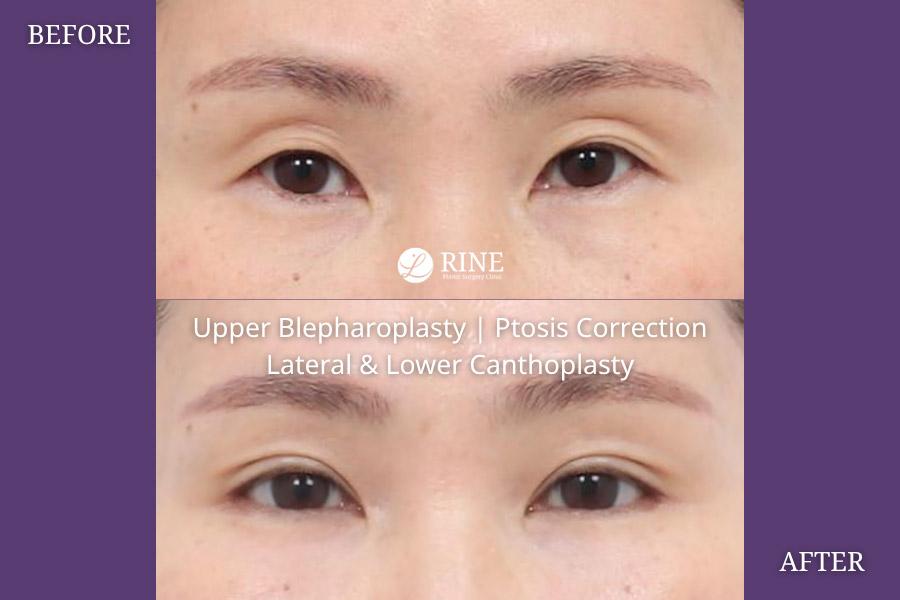
RINE Plastic Surgery ClinicHighly specialized focus on eye surgery and facial lifting; personalized surgical philosophy; hands-on care by board-certified plastic surgeon Director Jang Nam who oversees every stage from consultation to surgery and recovery; 1:1 customized line design based on each patient’s facial structure, creating balanced, natural-looking eye proportions; more than 10,000 procedures performed; over 2,000 verified patient reviews; canthoplasty to adjust outer eye corner, improve eye length and angle, and create smoother, more harmonious proportions; strong option for Lower Canthoplasty with anatomy-based approach; revision eye surgery expertise; comprehensive eye surgery lineup enabling combination with other procedures for balanced results1:1 customized eye line design; canthoplasty and Lower Canthoplasty; revision eye surgery expertise; eye-shape refinement and natural-looking results; combining procedures for balanced outcomes
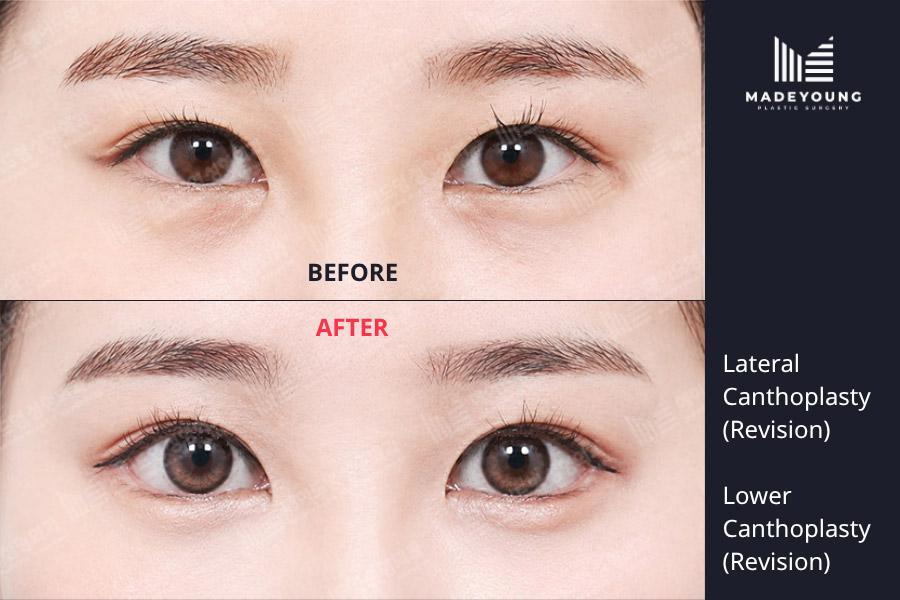
Made Young Plastic SurgerySpecialized facial and eye surgery expertise with rigorous safety and aftercare system; located in Seoul’s Gangnam district; premium clinic dedicated to facial and anti-aging procedures; every patient evaluated directly by a highly skilled medical team with doctors averaging more than 15 years of clinical experience; precise consultation, diagnosis, and surgical planning for delicate procedures such as Lower Canthoplasty; full-time board-certified anesthesiologists on site; 1:1 dedicated monitoring system; cross-check emergency response system involving multiple anesthesiologists; full CCTV coverage for transparency and patient confidence; recovery support through a separate dedicated aftercare center and complete, systematic post-procedure care program; recognitions including 2022 Korea No.1 Award, 2022 Korea Customer Satisfaction 1st Place, Outstanding Member of the Korean Society of Plastic and Reconstructive Surgeons, certification by the Minimally Invasive Aesthetic Surgery Society1:1 dedicated monitoring system; on-site board-certified anesthesiologists; cross-check emergency response system with multiple anesthesiologists; CCTV coverage; comprehensive post-procedure care and aftercare center

RINE Plastic Surgery Clinic

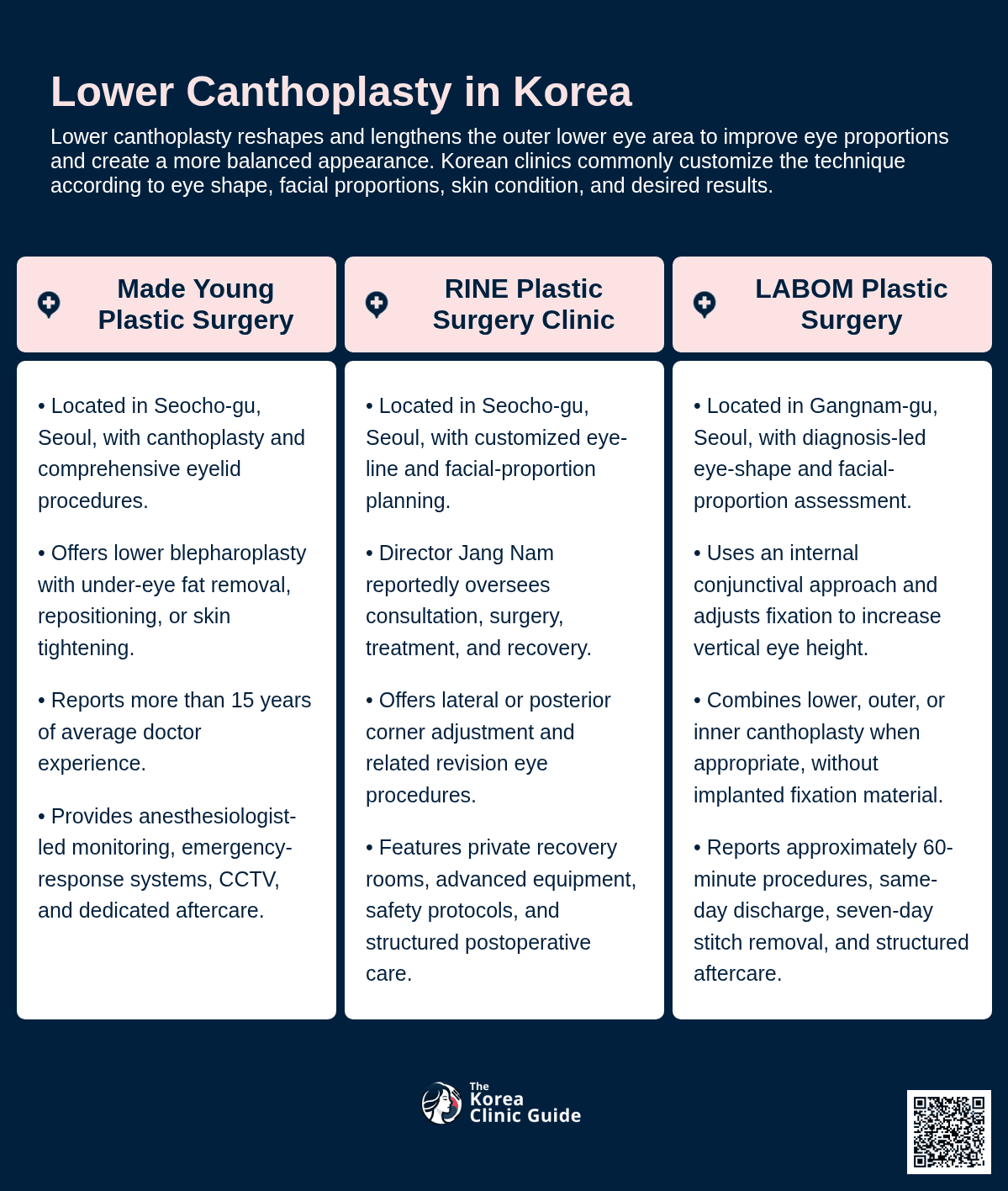
For patients considering Lower Canthoplasty in Korea, RINE Plastic Surgery Clinic in Gangnam stands out as a premier choice thanks to its highly specialized focus on eye surgery and facial lifting, its personalized surgical philosophy, and the hands-on care of board-certified plastic surgeon Director Jang Nam, who personally oversees every stage from consultation to surgery and recovery. True to its name, “Refine Your Line,” RINE is known for 1:1 customized line design based on each patient’s facial structure, helping create balanced, natural-looking eye proportions rather than a one-size-fits-all result. With more than 10,000 surgical procedures performed and over 2,000 verified patient reviews, the clinic combines extensive clinical experience with a strong reputation for refined, natural outcomes, making it an especially trusted destination for patients seeking Lower Canthoplasty with both aesthetic precision and safety in mind.

• Specialized eye surgery clinic with deep experience in canthoplasty and eye-shape refinement

• Board-certified plastic surgeon Director Jang Nam personally manages consultation, surgery, and post-operative care

• 1:1 customized surgical design tailored to each patient’s eye shape, facial balance, and aesthetic goals

• Strong focus on natural-looking results that enhance the eyes without creating an overdone appearance

• Extensive surgical track record with more than 10,000 procedures performed

• Backed by over 2,000 verified patient reviews, reflecting high patient trust and satisfaction

• Offers canthoplasty to adjust the outer eye corner, improve eye length and angle, and create smoother, more harmonious proportions

• Particularly strong option for Lower Canthoplasty patients who want both cosmetic improvement and a carefully planned, anatomy-based approach

• Revision eye surgery expertise is an added advantage for patients who need precise correction after a previous procedure

• Comprehensive eye surgery lineup allows lower canthoplasty to be combined with other procedures when needed for more balanced overall results

You can check out their website here: RINE Plastic Surgery Clinic Website

Made Young Plastic Surgery

For patients considering Lower Canthoplasty in Korea, Made Young Plastic Surgery stands out as the premier choice because it combines specialized facial and eye surgery expertise with an exceptionally rigorous safety and aftercare system. Located in Seoul’s prestigious Gangnam district, Made Young is a premium clinic dedicated to facial and anti-aging procedures, and every patient is evaluated directly by a highly skilled medical team whose doctors average more than 15 years of clinical experience, ensuring precise consultation, diagnosis, and surgical planning for delicate procedures such as Lower Canthoplasty. The clinic’s commitment to safety is equally impressive, with full-time board-certified anesthesiologists on site, a 1:1 dedicated monitoring system, a cross-check emergency response system involving multiple anesthesiologists, and full CCTV coverage for transparency and patient confidence. Beyond surgery itself, Made Young provides thorough recovery support through a separate dedicated aftercare center and a complete, systematic post-procedure care program, helping patients achieve smoother healing and refined results. Its reputation is further reinforced by major recognitions, including the 2022 Korea No.1 Award, 2022 Korea Customer Satisfaction 1st Place, selection as an Outstanding Member of the Korean Society of Plastic and Reconstructive Surgeons, and certification by the Minimally Invasive Aesthetic Surgery Society, making Made Young Plastic Surgery a trusted leader for Lower Canthoplasty in Korea.

You can check out their website here: Made Young Plastic Surgery Website

Common Combination Procedures in Korea

In Korea, lower canthoplasty is often not performed in isolation. It is frequently combined with other procedures to harmonize the entire eye area.

Double eyelid surgery

Some patients want both a defined upper eyelid crease and a more open outer eye shape. Combining double eyelid surgery with lower canthoplasty can create a more balanced overall result.

Ptosis correction

If the upper eyelid droops and covers too much of the pupil, ptosis correction may be needed. In some cases, opening the eye more effectively requires addressing both the upper and lower components.

Epicanthoplasty

Patients who feel their eyes are narrow both medially and laterally may combine inner corner and outer corner procedures for a more elongated eye contour.

Lower blepharoplasty

Older patients or those with under-eye bags may combine lower canthoplasty with lower eyelid rejuvenation procedures, particularly if lower lid support is also being adjusted.

Lateral canthoplasty

This is one of the most common combinations. A patient who wants a longer and softer eye shape may benefit from simultaneous lateral and lower canthal work.


What Patients Should Expect Immediately After Surgery

Recovery after lower canthoplasty is usually manageable, but the eyelid area is delicate and visible, so swelling and bruising can feel significant even if the surgery itself is relatively small.

Common early symptoms

After the operation, patients may experience:

  • Swelling around the outer eye
  • Bruising
  • Mild discomfort or tightness
  • Temporary redness
  • Slight tearing
  • Temporary asymmetry during healing
  • Mild foreign-body sensation

These are common in the early recovery phase and often improve gradually.

Usual aftercare instructions

Postoperative care may include:

  • Cold compresses
  • Prescription ointment or eye drops
  • Avoiding eye rubbing
  • Sleeping with the head elevated
  • Avoiding smoking and alcohol during early healing
  • Limiting strenuous exercise
  • Avoiding contact lenses for a period recommended by the surgeon
  • Attending follow-up appointments to monitor eyelid position

Suture care

If external sutures are used, they are usually removed within several days, depending on the technique.


Recovery Timeline

Healing varies between individuals, but patients are often advised that visible recovery occurs in stages.

First few days

  • Swelling and bruising are usually most noticeable
  • The outer eye may look tighter, lower, or more exaggerated than the final result
  • The eyes may feel dry or slightly irritated

One to two weeks

  • Bruising often fades substantially
  • Many patients feel comfortable returning to social activities
  • The eye shape starts to settle, though it is still not final

Several weeks to a few months

  • Residual swelling continues to decrease
  • The lower outer corner begins to look more natural
  • Scar maturation progresses
  • The final contour becomes easier to assess

Longer-term healing

Eyelid tissues can continue refining for several months. Final stabilization depends on tissue memory, fixation strength, skin quality, and healing response.


Expected Results and Their Limitations

Lower canthoplasty can create meaningful improvement in eye shape, but it has anatomical and functional limits.

What the procedure can usually do

A well-planned lower canthoplasty may:

  • Soften an upturned outer eye
  • Create a more elongated eye contour
  • Open the lateral lower eyelid area
  • Improve harmony with other facial features
  • Produce a more refined, less sharp expression

What it cannot always do

The procedure may not be able to:

  • Dramatically enlarge the eye in every case
  • Overcome severe anatomical tightness safely
  • Create identical results in both eyes
  • Maintain an extreme lowered shape without risk
  • Correct all eye asymmetry if the cause lies elsewhere

A good result should look balanced and stable, not exaggerated.

How long results last

The result is generally considered long-lasting, but longevity depends on:

  • Surgical method
  • Tissue healing
  • Skin elasticity
  • Natural aging
  • Scar formation
  • Whether the original anatomy tends to pull the eyelid back toward its former position

Some degree of relaxation or subtle change over time can occur.


Risks and Possible Complications

As with any eyelid surgery, lower canthoplasty has both cosmetic and functional risks. Because the lower eyelid is closely involved in protecting the eye, even a small imbalance can matter.

General surgical risks

  • Bleeding
  • Infection
  • Swelling that lasts longer than expected
  • Bruising
  • Scarring

Eyelid-specific risks

  • Under-correction
  • Over-correction
  • Relapse of the original eye shape
  • Asymmetry
  • Lower eyelid retraction
  • Ectropion, where the eyelid turns outward
  • Excess scleral show
  • Rounding or blunting of the outer corner
  • Visible scar at the lateral canthus
  • Persistent tightness
  • Changes in eye closure

Ocular surface risks

  • Dryness
  • Irritation
  • Tearing
  • Temporary blurred vision from ointment or dryness
  • Exposure symptoms if the eyelid does not sit properly against the eye

Why surgeon selection matters

Lower canthoplasty may seem small from the outside, but it requires detailed knowledge of eyelid anatomy and support mechanics. A surgeon must balance cosmetic goals with eyelid stability and ocular health.


How Lower Canthoplasty Differs Between Patients

There is no one-size-fits-all plan. The ideal technique depends on what specifically makes the eye look short, upturned, or tight.

Younger patients

Younger patients often seek shape refinement and may have firmer tissues, which can be favorable for support and healing. However, strong tissue recoil can also limit how much lowering is realistically sustainable.

Patients with previous surgery

Patients who have had prior canthal surgery, double eyelid surgery, or lower blepharoplasty may have scar tissue or altered support. These cases often need a more individualized approach.

Patients with naturally prominent eyes

Prominent eyes may be at greater risk of postoperative exposure or lower lid malposition. Conservative planning is especially important.

Older patients may have lower lid laxity, fat protrusion, or skin excess. In these cases, lower canthoplasty may need to be paired with support procedures or lower blepharoplasty rather than performed as a simple aesthetic reshaping alone.


Functional Considerations: Why This Procedure Is More Than Cosmetic

Even though lower canthoplasty is commonly requested for appearance, the lower eyelid has essential protective functions.

The lower eyelid helps with

  • Maintaining contact with the eyeball
  • Supporting normal tear distribution
  • Preventing excessive exposure of the eye surface
  • Contributing to complete blinking
  • Protecting the cornea

A lower canthoplasty that is too aggressive or not properly supported can interfere with these functions. This is why detailed planning and conservative technique are often preferred over excessive lowering.


Scarring and Incision Placement

One common patient concern is visible scarring.

Where scars are usually placed

Incisions are typically made in or near the natural crease or junction at the outer eye corner. This placement is designed to make scars less noticeable.

Factors that affect scar visibility

  • Skin type
  • Individual healing tendency
  • Surgical technique
  • Tension on the wound
  • Sun exposure during healing
  • Whether the surgery is primary or revision

Most scars improve over time, though a faint line or slight change in contour at the outer corner may remain in some patients.


How Surgeons Balance Naturalness and Enlargement

Many patients ask for “bigger eyes,” but experienced surgeons usually focus on proportion instead of maximum expansion.

A natural-looking result usually depends on

  • Preserving a sharp but not harsh outer corner
  • Avoiding excessive downward pull
  • Matching the eye shape to the upper lid and brow
  • Respecting the patient’s ethnic anatomy and facial structure
  • Preventing lower lid instability

In Korean aesthetic practice, a refined and harmonious result is often preferred over an obvious or overextended surgical look.


Questions Patients Commonly Ask During Consultation

Will lower canthoplasty make my eyes look much larger?

It can make the eyes look more open, longer, or softer, but the effect depends on your anatomy. The surgery usually refines shape more than it dramatically increases size.

Is it permanent?

Results are generally long-lasting, but tissue settling and aging can affect the final appearance over time.

Can it be reversed?

Revision may be possible in some cases, but reversal is not always simple or complete. Revision surgery is more difficult than primary surgery.

Will I have visible scars?

Scars are usually placed at the outer eye corner and often become less visible with time, but no incision is completely scarless.

Can it be combined with other surgeries?

Yes. It is commonly combined with double eyelid surgery, ptosis correction, epicanthoplasty, lateral canthoplasty, or lower blepharoplasty.

Is lower canthoplasty painful?

Most patients describe postoperative discomfort as mild to moderate rather than severe, though tightness, swelling, and irritation are common during early healing.


Lower Canthoplasty in the Korean Aesthetic Surgery Context

In Korea, eye surgery is often approached with a highly detailed understanding of subtle facial proportions. Lower canthoplasty has become a notable procedure because many patients want eye refinement rather than only crease creation.

  • Small changes in the outer eye corner can strongly affect facial expression
  • Patients often seek a softer, more balanced eye line
  • The procedure can complement other commonly requested eyelid surgeries
  • Korean aesthetic preferences often emphasize harmony, delicacy, and refined contour rather than extreme change

What makes consultation especially important in this setting

Because lower canthoplasty is often marketed alongside other eye procedures, patients should clarify:

  • Whether the surgeon recommends isolated lower canthoplasty or a combined approach
  • What degree of lowering is anatomically safe
  • How the surgeon manages support and fixation
  • What signs of overcorrection to avoid
  • Whether the surgeon has experience in revision or complex eyelid cases

Key Factors That Influence Surgical Planning

Several details determine how a surgeon plans lower canthoplasty.

Eye shape and slant

The current angle between the inner and outer corners helps determine how much change is feasible.

Lower lid support

Weak lower lid support may require reinforcement rather than simple lowering.

Soft tissue tightness

Tighter tissue may resist repositioning or increase relapse risk.

Desired aesthetic

A patient seeking only a subtle softening needs a different plan than someone seeking maximal horizontal extension.

Skin quality

Thin skin, thick skin, or scar-prone skin all affect incision strategy and healing.

Previous surgery

Prior operations may alter the anatomy significantly and can limit certain techniques.


Signs of a Good Candidate Consultation

A high-quality consultation for lower canthoplasty usually includes more than a quick visual assessment.

It should involve discussion of

  • Your exact aesthetic concern
  • Realistic degree of change
  • Functional risks
  • Recovery expectations
  • Whether combining procedures makes sense
  • Whether your anatomy can support the desired result

It should also clarify

  • If the result will mainly be lowering, lengthening, or both
  • How relapse is minimized
  • What the surgeon considers a safe endpoint
  • Whether dry eye or exposure symptoms are a concern
  • What revision options exist if needed

When Functional Protection Takes Priority Over Cosmetic Change

In some patients, the safest plan may be more conservative than the originally requested aesthetic goal.

This is especially true when there is:

  • Significant eye prominence
  • Existing dryness
  • Weak lid support
  • Prior scarring
  • Higher risk of ectropion or retraction

In these situations, preserving healthy eyelid closure and eye comfort is more important than maximizing visible enlargement.


Technical Terms Patients May Hear

Lateral canthus

The outer corner where the upper and lower eyelids meet.

Palpebral fissure

The visible opening between the upper and lower eyelids.

Lid laxity

Looseness or weakness of eyelid support.

Scleral show

Visible white of the eye below the iris, which may become more prominent if the lower lid is pulled too low.

Ectropion

Outward turning of the eyelid margin.

Canthopexy

Tightening or suspension of the canthal area without full reconstruction.

Canthoplasty

A more structural reshaping of the canthal corner.


Practical Expectations for Patients Considering Lower Canthoplasty

Patients usually do best when they understand that lower canthoplasty is a precision contour procedure, not a universally dramatic enlargement surgery.

The best candidates often want:

  • Subtle but meaningful shape refinement
  • A softer outer eye angle
  • Better balance with other eyelid surgery
  • Improvement that still looks natural on their face

Realistic planning is central to satisfaction, especially because the outer lower eyelid is both visually important and functionally sensitive.

Lower Canthoplasty in Korea

Lower canthoplasty in Korea is a cosmetic eye surgery designed to adjust the shape, position, and tension of the lower outer eyelid. It is most often chosen by people who want their eyes to look longer, softer, less upturned, or more balanced. In Korean aesthetic surgery, this procedure is commonly discussed alongside lateral canthoplasty, epicanthoplasty, lower lid retraction correction, and under-eye contouring, because all of these can affect the overall appearance of the eyes.

In practical terms, getting lower canthoplasty in Korea usually means going through a highly systemized cosmetic surgery process: consultation, eye analysis, surgical planning, same-day or scheduled surgery, and close follow-up during the healing period. Korea is known for a large number of clinics specializing in eyelid and facial procedures, so patients often find that consultations are very visual and detail-oriented, with emphasis on eye proportions, facial harmony, and how the eyes will look both at rest and when smiling.

What lower canthoplasty actually changes

The outer corner of the eye is called the lateral canthus. Lower canthoplasty focuses on the lower eyelid side of this area. The goal is usually to lower or reposition the outer lower lid slightly so the eye appears:

  • Longer horizontally
  • Less slanted upward
  • More open at the outer corner
  • Softer or more “gentle” in expression
  • Better balanced with the other eye or with other facial features

This is not simply a matter of making the eyes “bigger.” In many cases, the surgery is about changing the eye line and the angle of the outer corner. A surgeon may release certain tissues, reposition the lower eyelid, and secure it in a new position. The exact effect depends on anatomy, especially the strength of the lower lid, existing eye slant, skin elasticity, scleral show risk, and the depth of the bony orbit.

In Korea, lower canthoplasty is often requested by patients who feel their eyes look too short, too sharp, too upturned, or asymmetric. Some also seek it after previous eyelid surgery if they feel the eye shape became too tight or unnatural.

Patients are often confused by the names of eye procedures because clinics may use overlapping terms. In Korea, lower canthoplasty is commonly distinguished from the following:

Lateral canthoplasty

This usually refers to extending or opening the outer corner of the eye more laterally. It focuses on the side extension of the eye and the outer canthal area in general.

Lower canthoplasty

This focuses more on lowering or reshaping the lower outer eyelid. It is often used to reduce an upturned appearance and create a smoother lower eye line.

Epicanthoplasty

This changes the inner corner of the eye rather than the outer corner.

Lower blepharoplasty or under-eye surgery

This treats under-eye fat, bags, or skin laxity, not primarily the outer eye angle.

In actual Korean practice, these procedures may be combined. A clinic may recommend lateral canthoplasty plus lower canthoplasty if the patient wants both horizontal lengthening and a lower outer eye angle. That is one reason consultations can become highly individualized.

Why Korea is a common destination for this procedure

Korea has a strong reputation in eyelid and facial aesthetic surgery, and lower canthoplasty is part of a broader eye-shaping surgical field that is especially developed there. Several features shape the experience:

  • Surgeons often have extensive case volume in cosmetic eye procedures
  • Clinics typically use detailed preoperative photography and digital analysis
  • Staff may be familiar with international patients
  • Surgical plans are often tailored to subtle aesthetic preferences rather than dramatic changes
  • Many clinics are accustomed to combining procedures in one operative session

Korean clinics also tend to focus heavily on facial balance. Rather than treating the eye in isolation, they often evaluate brow position, upper eyelid crease, under-eye fullness, cheek volume, and the overall frame of the eye. For this reason, lower canthoplasty is rarely described as a standalone “one-size-fits-all” procedure.

Who is considered a good candidate

A good candidate usually has a specific anatomical reason the procedure could be effective and safe. Examples include:

  • Eyes that appear noticeably upturned at the outer corners
  • A short horizontal eye shape
  • A tense or high outer lower eyelid
  • Mild asymmetry in outer eye angle
  • A desire for a softer, less sharp eye appearance
  • Good lower eyelid support and reasonable skin elasticity

A surgeon in Korea will also look for signs that a patient may not be an ideal candidate. Limitations matter a great deal with lower canthoplasty because the lower lid is delicate and overcorrection can cause functional and cosmetic problems. You may not be a good candidate if you have:

  • Weak lower eyelid tone
  • Significant dry eye
  • Prominent eyes or shallow orbital support
  • Prior scarring from previous eyelid surgeries
  • Unrealistic expectations about how much the eye can be lowered
  • A desire for an effect that would compromise eyelid closure or natural expression

A reputable surgeon generally explains what can and cannot be changed based on anatomy. In Korea, the better consultations often include discussion of how much visible white under the iris is safe to show and whether lowering the outer lid could create an artificial look.

The consultation experience in Korea

The consultation is usually one of the most important parts of the process. In Korea, this visit often feels very precise and image-based. The surgeon may examine:

  • The tilt of the eyes
  • Distance from the pupil to the lower lid
  • Degree of outer canthal upturn
  • Lower lid tightness
  • Eye symmetry
  • Skin thickness and elasticity
  • Existing scars
  • Brow and cheek support
  • Tear troughs and under-eye contour

Photos are generally taken from multiple angles. Some clinics use simulation tools, though these are only rough visual aids and not guarantees of outcome.

Patients are commonly asked what bothers them most. Typical answers include:

  • “My eyes look too fierce or sharp”
  • “The outer corners are too high”
  • “My eyes seem short”
  • “I want a softer look without changing my whole face”
  • “I want my eyes to match after other eye surgery”

In Korea, consultations may move quickly in high-volume clinics, so it helps to arrive with specific questions. If you are an international patient, some clinics provide translators or coordinators. It is worth confirming whether you will be consulting directly with the surgeon who will perform the procedure, not only with a consultant or coordinator.

Questions patients commonly ask during consultation

When considering lower canthoplasty in Korea, patients often ask:

  • How much can the outer corner actually be lowered?
  • Will the result look natural when I smile?
  • Do I need lateral canthoplasty as well?
  • What are the risks of visible scarring?
  • Could my eye look rounder or droopy in a bad way?
  • Will this worsen dry eye symptoms?
  • How likely is relapse?
  • How long will swelling last?
  • Can this be reversed or revised if I dislike the result?
  • Is my anatomy suitable for the effect I want?

These are important questions because lower canthoplasty has less room for aggressive change than many patients expect. Surgeons in Korea who specialize in eye procedures often emphasize that subtle, stable improvement is better than dramatic lowering that may not heal well.

Preparing for surgery

Preparation varies slightly by clinic, but patients are often instructed to:

  • Stop smoking before and after surgery for a recommended period
  • Avoid blood-thinning medications or supplements if approved by their physician
  • Disclose all prior surgeries and eye conditions
  • Mention contact lens use, dry eye, allergies, and vision issues
  • Remove eyelash extensions before surgery
  • Avoid heavy eye makeup on the day of surgery
  • Arrange transportation and support afterward

If the procedure is being done as part of medical tourism, clinics may ask for passport information, travel dates, and health history in advance. Some patients schedule consultation and surgery on separate days, while others consult and have surgery on the same day if they are already committed and the clinic deems it appropriate.

What the surgery day is like

In Korea, lower canthoplasty is usually performed in a specialized plastic surgery clinic rather than a large hospital, unless it is part of a more complex reconstructive case. The process typically includes:

  1. Check-in and review of consent forms
  2. Preoperative photographs
  3. Final design markings by the surgeon
  4. Preparation in the treatment or operating room
  5. Local anesthesia with sedation, or sometimes another anesthesia plan depending on the clinic and combined procedures
  6. The surgery itself
  7. Brief recovery and discharge instructions

Most cosmetic lower canthoplasty procedures are done on an outpatient basis. That means patients generally go home the same day.

Before surgery begins, the surgeon usually marks the outer eye area while the patient is sitting upright. This step matters because eye shape changes depending on position and muscle tone. Korean surgeons often spend time at this stage fine-tuning the intended vector of change.

How the procedure is typically performed

Technique varies, but the operation generally involves making a small incision near the outer corner of the eye, releasing and repositioning tissues related to the lower outer lid, and securing the eyelid in a lower or more favorable position. Depending on the anatomy and goals, the surgeon may:

  • Release tension at the lateral canthal region
  • Reposition the lower eyelid margin
  • Fix the lid to a stable deeper structure
  • Adjust the angle and contour of the outer eye line
  • Combine with lateral extension if needed

The exact internal steps differ widely among surgeons. Some emphasize deeper fixation to improve stability and reduce relapse. Others may be more conservative to avoid lower lid malposition. In Korea, many surgeons discuss the importance of preserving a natural eyelid-globe relationship, meaning the lower lid should still rest appropriately against the eye.

The operation may take roughly 30 minutes to over an hour depending on complexity and whether additional eye procedures are performed at the same time.

Will there be visible scars?

Because the incision is usually placed near the outer corner of the eye, scarring is one of the biggest concerns. In experienced hands, the scar is often designed to be as discreet as possible and may become much less noticeable over time. However, patients should not assume it will be invisible from the start.

In the early healing phase, the scar may look:

  • Pink or red
  • Slightly raised
  • Firm
  • Noticeable when the skin is stretched

Korean clinics often provide scar care guidance, which may include ointments, silicone-based products, or instructions on sun protection. Scar maturation can take months. Patients with a history of poor scarring should mention this during consultation.

What recovery is like

Recovery after lower canthoplasty in Korea usually involves swelling, bruising, tightness, and temporary changes in eye shape during the early healing period. The eye area can look uneven or exaggerated before it settles.

Common early experiences include:

  • Swelling around the outer corner and lower lid
  • Bruising under or beside the eye
  • Mild discomfort, soreness, or stinging
  • Tightness when blinking
  • Watering or dryness
  • Temporary asymmetry
  • A feeling that the outer eye is pulled or unfamiliar

In the first few days, patients are often told to rest with the head elevated, use cold compresses as instructed, avoid rubbing the eyes, and limit strenuous activity. Reading, screen use, and contact lens use may need to be reduced depending on irritation.

Sutures, if non-absorbable, may be removed within about a week, though timing varies. Many patients are able to return to light daily activities relatively soon, but visible swelling can last longer than expected. It is common for the outer corners to look too low, too round, or too tense early on, then gradually normalize as healing progresses.

The healing timeline patients should realistically expect

First 3 days

This is often the period of peak swelling. The outer eye may feel puffy, tight, and look more dramatic than intended. Mild tearing or dryness is common.

First 1 to 2 weeks

Bruising starts to fade. Stitches may be removed. Most patients still look like they have had surgery, especially at close range. Makeup may help once the surgeon allows it.

Weeks 3 to 6

The shape begins to settle, though residual swelling can remain. The result starts to look more natural in daily life, but healing is still ongoing.

2 to 3 months

Much of the obvious swelling is usually gone. The contour is more representative of the actual outcome, though fine settling may continue.

Several months and beyond

Scars continue to soften and the eyelid tissues mature. Subtle changes in eye shape may still occur as the tissues relax and stabilize.

Korean clinics often schedule multiple follow-up visits, especially during the first month. For international patients, remote follow-up via photos or messaging may be offered after returning home.

Pain and discomfort level

Lower canthoplasty is not usually described as severely painful, but it can be uncomfortable. Patients more often report:

  • Tightness
  • Tenderness
  • A pulling sensation
  • Mild burning or stinging around the incision
  • Dryness or irritation rather than strong pain

Pain is often managed with prescribed medication, but discomfort usually feels more like delicate eye-area soreness than intense postoperative pain. If pain is severe, worsening, or associated with vision changes, that requires urgent medical attention.

What results typically look like

When the surgery is successful and suited to the patient’s anatomy, the eyes may appear:

  • Slightly longer
  • More level rather than sharply upturned
  • Softer and less severe
  • More open at the outer lower contour
  • More balanced with the upper eyelid crease or with the opposite eye

The best results are often subtle. In Korea, many patients specifically want a refined change that improves the mood of the eyes without making them look obviously operated on.

A common misunderstanding is expecting the eye to be dramatically lowered while still looking completely natural and stable. In reality, there is a limit to how far the lower outer lid can be repositioned safely. Overly aggressive lowering risks a round, droopy, or unnatural appearance.

Combining lower canthoplasty with other procedures

In Korea, lower canthoplasty is often not performed alone. It may be combined with:

  • Lateral canthoplasty
  • Double eyelid surgery
  • Ptosis correction
  • Epicanthoplasty
  • Lower blepharoplasty
  • Fat repositioning under the eyes
  • Facial fat grafting
  • Midface or under-eye support procedures

Combination surgery can improve overall harmony, but it can also make recovery more complex. For example, pairing lower canthoplasty with under-eye fat repositioning may create a more cohesive lower eyelid contour, while combining it with upper eyelid surgery may better balance the whole eye frame.

Risks and complications

Like any eyelid surgery, lower canthoplasty carries meaningful risks. This is one reason surgeon selection matters so much. Potential complications include:

  • Under-correction or minimal visible change
  • Overcorrection with an unnatural lowered look
  • Asymmetry
  • Relapse, where the outer corner gradually returns toward its original position
  • Visible scarring
  • Lower lid retraction
  • Ectropion, where the eyelid turns outward
  • Round eye appearance
  • Dry eye symptoms
  • Irritation or incomplete lid closure
  • Infection
  • Bleeding
  • Persistent discomfort
  • Need for revision surgery

A very important issue is the balance between aesthetics and function. The lower eyelid must still protect the eye surface. A result that looks “larger” but causes exposure, dryness, or chronic irritation is not a good outcome.

In Korea, experienced eye plastic surgeons often screen patients carefully for this reason. Patients with weaker lower lids, prominent eyeballs, or previous surgeries may be at higher risk of complications.

Revision surgery and why it can be difficult

Revision lower canthoplasty is generally more complex than primary surgery. If the first surgery led to scarring, distortion, retraction, or poor support, correcting it can be technically challenging. Korean clinics that specialize in revision eyelid surgery may evaluate:

  • Scar tissue
  • Fixation point from prior surgery
  • Current lower lid tension
  • Degree of exposure or dryness
  • Need for grafting or support procedures

Patients seeking revision should be especially careful about choosing a surgeon with substantial experience in both cosmetic and reconstructive eyelid work.

How to choose a clinic in Korea

Because this procedure is delicate, choosing the right clinic is one of the most important parts of the experience. Patients often look for:

  • A board-certified or appropriately credentialed plastic surgeon or oculoplastic specialist
  • Frequent experience with eye surgeries
  • Before-and-after cases that resemble their own anatomy
  • A conservative and realistic consultation style
  • Clear explanation of risks and limitations
  • Transparent postoperative care
  • Access to direct communication with the surgeon or medical team

It is wise to be cautious of clinics that promise extreme changes, guaranteed outcomes, or “scarless” results. Lower canthoplasty is highly anatomy-dependent, and trustworthy surgeons usually explain that subtle, stable improvement is the goal.

What international patients should expect

Medical tourists often travel to Korea specifically for eye and facial cosmetic surgery. For lower canthoplasty, the experience may include:

  • Online photo consultation before travel
  • In-person evaluation after arrival
  • Interpreter or coordinator support
  • Assistance with scheduling surgery and follow-up
  • Instructions for local recovery before flying home

Patients traveling from abroad should plan enough time in Korea for initial healing and at least one or more follow-up visits. Even if the procedure is relatively short, the eye area can swell unpredictably, and flying too soon after surgery may be uncomfortable.

It is also important to consider what happens after returning home. Since lower canthoplasty can involve a longer settling period, patients should ask:

  • How will follow-up be handled remotely?
  • Who should I contact if I develop a complication at home?
  • Will revision or emergency care be available if needed?
  • What should I do if the eyelid feels too tight, dry, or exposed?

Cost considerations in Korea

The price of lower canthoplasty in Korea varies depending on:

  • Surgeon experience
  • Clinic location
  • Whether it is a primary or revision surgery
  • Whether other eye procedures are combined
  • Type of anesthesia
  • Included follow-up care
  • Translation or international patient services

Some clinics quote a base price for lower canthoplasty alone, while others recommend a combined package with lateral canthoplasty or other eyelid procedures. Patients should clarify whether the quoted fee includes:

  • Consultation
  • Blood tests or pre-op screening
  • Anesthesia
  • Medication
  • Suture removal
  • Follow-up visits
  • Scar care
  • Revision policy if needed

A very low price may not reflect the true complexity of the procedure. Since eyelid support and eye health are involved, many patients prioritize experience and safety over bargain pricing.

Cultural and aesthetic preferences in Korean eye surgery

One of the distinct aspects of getting lower canthoplasty in Korea is the local aesthetic framework. Korean surgeons often discuss eye shape in terms of softness, brightness, balance, and natural harmony rather than just size. Many patients ask for a “gentler” or “friendlier” eye appearance rather than a dramatic alteration.

That said, beauty preferences vary widely. Some patients want a very subtle adjustment that no one else can identify, while others want a noticeably less upturned eye line. During consultation, it helps to communicate in specific visual terms:

  • Do you want a softer eye angle?
  • Do you want more horizontal length?
  • Do you want less of a “cat-eye” tilt?
  • Do you want the outer lower lid to show slightly more?
  • Are you aiming for cute, elegant, natural, or balanced?

Bringing reference photos can help, but surgeons may explain that another person’s eye shape cannot be copied exactly because anatomy differs.

What daily life feels like after surgery

In the first part of recovery, patients often become very focused on the appearance of the outer corners because the eyes are such a central feature of the face. It is common to feel self-conscious during this period. Typical day-to-day experiences include:

  • Looking more swollen in the morning
  • Feeling tightness when smiling
  • Avoiding intense exercise
  • Sleeping carefully to reduce pressure on the face
  • Using lubricating drops if recommended
  • Limiting social events for a short time
  • Watching the symmetry closely from day to day

The emotional side of recovery can also be significant. Because the eye area changes facial expression so much, even normal swelling can make people worry that the result looks too round, too low, or uneven. Many of these concerns improve as tissues settle, but patients should still stay in touch with their surgeon about anything unusual.

Signs that require prompt medical attention

After lower canthoplasty, patients should seek urgent medical advice if they experience:

  • Sudden vision changes
  • Severe or rapidly worsening pain
  • Significant bleeding
  • Marked swelling on one side with increasing pressure
  • Fever or signs of infection
  • Inability to close the eye properly
  • Pronounced redness with discharge
  • A lower lid that appears to pull away severely from the eyeball

These symptoms are not considered routine postoperative discomfort and should not be ignored.

Realistic expectations

A realistic experience of lower canthoplasty in Korea is usually one of subtle design, careful anatomical assessment, a relatively short procedure, and a recovery that can be emotionally longer than patients expect because the eye area heals visibly. The most satisfied patients are often those who understand that this surgery is meant to refine eye shape within anatomical limits, not completely transform the eye without trade-offs.

A natural-looking result usually depends on respecting the structure of the lower eyelid, preserving eye function, and avoiding the temptation to lower the outer corner beyond what the tissues can safely support.

Cost of Lower Canthoplasty in Korea

Lower Canthoplasty

In Korea, the cost of Lower Canthoplasty generally falls in the low-to-high range of about KRW 1,200,000 to KRW 3,500,000 for the procedure alone. In U.S. dollars, that is roughly USD 900 to USD 2,600, depending on the clinic, surgeon, and whether the procedure is performed as a standalone treatment or combined with other eye surgeries.

Typical procedure price range in Korea

Cost levelEstimated price
Low rangeKRW 1,200,000 to KRW 1,800,000
Mid rangeKRW 1,800,000 to KRW 2,800,000
High rangeKRW 2,800,000 to KRW 3,500,000+

What affects the price

Several factors can move the price toward the lower or higher end:

  • Surgeon experience: Well-known oculoplastic or facial plastic surgeons usually charge more.
  • Clinic location: Premium clinics in Seoul, especially in Gangnam, may have higher fees.
  • Complexity of the case: Revision surgery or procedures requiring more precise reshaping can increase cost.
  • Anesthesia type: Local anesthesia is usually cheaper than sedation or monitored anesthesia.
  • Bundled procedures: If Lower Canthoplasty is combined with lateral canthoplasty, lower blepharoplasty, ptosis correction, or epicanthoplasty, the total cost rises.
  • Post-op care included: Some clinics bundle follow-up visits, medications, and aftercare into the quoted price, while others bill them separately.

Costs that may not be included in the quoted surgery fee

When comparing clinics, it is important to check whether the following are included:

  • Consultation fee
  • Pre-operative testing
  • Blood work or eye examination
  • Medication after surgery
  • Follow-up visits
  • Stitch removal
  • VAT, if applicable
  • Interpretation services for international patients

These extra charges can add around KRW 100,000 to KRW 500,000+ depending on the clinic.

Flight cost to Korea

The cost of flying to Korea varies widely based on your departure city, season, and how early you book. Typical round-trip economy airfare ranges are:

Departure regionEstimated round-trip airfare
JapanUSD 150 to USD 400
China / Hong Kong / TaiwanUSD 200 to USD 500
Southeast AsiaUSD 250 to USD 700
AustraliaUSD 500 to USD 1,000
U.S. West CoastUSD 700 to USD 1,300
U.S. East CoastUSD 900 to USD 1,600
EuropeUSD 700 to USD 1,400
Middle EastUSD 500 to USD 1,100

If you travel during peak holiday seasons, flights can be significantly more expensive.

Accommodation costs in Korea

Most patients stay in Seoul for several days to allow time for consultation, surgery, and early follow-up. Typical hotel costs per night are:

Accommodation typeEstimated cost per night
Budget guesthouseUSD 30 to USD 60
Budget hotelUSD 50 to USD 90
Mid-range hotelUSD 90 to USD 180
Serviced residenceUSD 120 to USD 250

For a 5 to 7 night stay, accommodation may cost about USD 150 to USD 1,260 depending on your travel style.

Daily travel and food expenses

Local travel and food in Seoul are often manageable compared with many Western cities.

Transportation

  • Airport railroad or limousine bus: USD 7 to USD 15
  • Taxi from Incheon Airport to central Seoul: USD 45 to USD 70
  • Subway or bus within Seoul: USD 1 to USD 2 per ride
  • Average local transportation budget: USD 5 to USD 15 per day

Food

  • Budget meals: USD 5 to USD 10
  • Mid-range meals: USD 10 to USD 25
  • Daily food budget: USD 15 to USD 40+

Other possible medical travel expenses

International patients may also need to budget for:

ItemEstimated cost
Pre-op tests / screeningUSD 50 to USD 150
Post-op medicationUSD 20 to USD 80
Additional follow-up or dressing careUSD 30 to USD 150
Interpreter services, if not includedUSD 0 to USD 50+ per hour
Travel insuranceUSD 30 to USD 150+

Estimated total budget for international patients

A realistic total budget depends on where you are flying from and your accommodation level.

Budget estimate

  • Surgery: USD 900 to USD 1,300
  • Flight: USD 200 to USD 700
  • Hotel: USD 150 to USD 400
  • Food and local transport: USD 100 to USD 250
  • Miscellaneous medical costs: USD 50 to USD 150

Estimated total: USD 1,400 to USD 2,800

Mid-range estimate

  • Surgery: USD 1,300 to USD 2,000
  • Flight: USD 700 to USD 1,300
  • Hotel: USD 450 to USD 900
  • Food and transport: USD 150 to USD 350
  • Miscellaneous medical costs: USD 100 to USD 300

Estimated total: USD 2,700 to USD 4,850

Higher-end estimate

  • Surgery: USD 2,000 to USD 2,600+
  • Flight: USD 1,000 to USD 1,600
  • Hotel: USD 900 to USD 1,750
  • Food and transport: USD 250 to USD 500
  • Miscellaneous medical costs: USD 150 to USD 500

Estimated total: USD 4,300 to USD 6,950+

Cost-saving tips for medical travelers

  • Compare whether clinics include consultation, medication, and follow-up care in the package.
  • Ask for a written quotation before booking flights.
  • Travel during off-peak seasons for lower airfare and hotel rates.
  • Stay near the clinic to reduce taxi costs and make follow-up visits easier.
  • Check whether the clinic offers airport pickup, hotel partnerships, or translation support.

Important note on pricing

Lower Canthoplasty prices in Korea can change by clinic and by patient anatomy. Online advertised fees may reflect promotional pricing, while final quotes may be higher if your case is more complex or if combined procedures are recommended.

Alternatives to Lower Canthoplasty

If a patient wants larger-looking or more defined eyes but is not an ideal candidate for lower canthoplasty, several other procedures may be considered depending on the anatomy of the eyes and the desired result.

1. Lateral Canthoplasty

Lateral canthoplasty is often recommended for patients who want the eyes to appear longer or wider at the outer corners without significantly lowering the lower eyelid line.

Why it may be recommended:

  • It can create a more elongated eye shape.
  • It may help improve a crowded or short-looking outer eye area.
  • In some cases, it offers a subtler change than lower canthoplasty.

How it differs from lower canthoplasty:

  • Lower canthoplasty mainly focuses on adjusting the lower outer eyelid position.
  • Lateral canthoplasty focuses more on extending or repositioning the outer corner of the eye.

Best suited for:

  • Patients who want a wider horizontal eye appearance
  • Those with relatively upturned or short outer eye corners
  • People seeking a refined change rather than a pronounced lowering effect

2. Epicanthoplasty

Epicanthoplasty is a common alternative for patients whose main concern is that the eyes look short or closed at the inner corners. This procedure reduces the epicanthal fold, making the eyes appear more open.

Why it may be recommended:

  • It can make the eyes appear longer from the inner corner.
  • It is often chosen when the inner fold is the main reason the eyes look smaller.
  • It can improve overall eye balance without altering the lower outer eyelid.

How it differs from lower canthoplasty:

  • Lower canthoplasty changes the outer lower eyelid area.
  • Epicanthoplasty addresses the inner corner of the eyes instead.

Best suited for:

  • Patients with a prominent epicanthal fold
  • Those who want a brighter, more open inner eye appearance
  • People seeking better balance between the inner and outer corners of the eyes

3. Lower Blepharoplasty or Under-Eye Fat Repositioning

For some patients, the issue is not the eye shape itself but heaviness, puffiness, or shadowing under the eyes. In these cases, lower blepharoplasty or fat repositioning may be a better option than lower canthoplasty.

Why it may be recommended:

  • It can smooth under-eye bags and improve the contour beneath the eyes.
  • It may make the eyes look fresher, less tired, and more open.
  • It can improve the lower eyelid area without changing the canthal angle.

How it differs from lower canthoplasty:

  • Lower canthoplasty changes the shape or position of the outer lower eyelid.
  • Lower blepharoplasty focuses on skin, fat, and under-eye contour.

Best suited for:

  • Patients with under-eye bags or puffiness
  • Those with a tired or aged appearance around the lower eyelid
  • People who want rejuvenation rather than a major change in eye shape

When considering any of these alternatives in Korea, the most suitable option depends on eye anatomy, skin tension, lower eyelid support, and the specific aesthetic goal. A detailed consultation with an experienced plastic surgeon or oculoplastic specialist is important to determine which procedure can provide the safest and most natural-looking result.

Conclusion

In summary, lower canthoplasty in Korea is a popular cosmetic eye procedure for patients seeking a longer, softer, and more refined eye shape, and the country’s experienced surgeons, advanced techniques, and competitive pricing have made it a leading destination for this treatment. However, because costs can vary depending on the clinic, surgeon, and whether lower canthoplasty is combined with other eye procedures, it is important to look beyond price alone and focus on safety, surgical expertise, and realistic results. Patients should also carefully consider alternatives, as non-surgical options or different eye surgeries may be more appropriate depending on their anatomy and goals. A thorough consultation with a qualified specialist is the best way to determine whether lower canthoplasty in Korea is the right choice for achieving a natural and balanced outcome.

Frequently Asked Questions

Related Blogs
    Are you a clinic?

    Join our trusted platform to effortlessly enhance your online visibility among those seeking top-quality medical care in Korea from abroad.