
Medical Tourism Blog
Upper Blepharoplasty in Korea: Methods, Recovery, Risks, and Travel Planning
Table of contents
- What Is Upper Blepharoplasty?
- Best Clinics in Korea for Upper Blepharoplasty
- Getting Upper Blepharoplasty in Korea
- Cost of Upper Blepharoplasty in Korea
- Alternatives to Upper Blepharoplasty
- Conclusion
Considering treatment in Korea? Everything you need to know e.g. — how to avoid scams, visas, interpreters, recovery tips — in our Medical Tourism Master Guide. Plan with confidence in minutes, not weeks!
Have your upper eyelids begun to look heavy, hooded, or more tired than you feel? In Korea, upper blepharoplasty is one of the most sought-after eyelid procedures for creating a more defined crease, improving symmetry, and restoring a fresher eye appearance. This article explores how the procedure is performed, who may be a good candidate, and what makes Korean surgical planning so detail-focused. It also covers cost considerations and the key alternatives for patients weighing other treatment options.
Upper blepharoplasty is a popular eyelid procedure in Korea for patients seeking a more defined upper eyelid crease, improved eye symmetry, or a less heavy, tired-looking appearance. In this article, we’ll explain what upper blepharoplasty is and how the procedure is typically approached in Korea, including who may be a good candidate based on anatomy, cosmetic goals, and age-related concerns. We’ll also look at the cost of upper blepharoplasty in Korea, what can influence pricing from clinic to clinic, and how the procedure compares with non-surgical or surgical alternatives for those considering other options.
What Is Upper Blepharoplasty?
Upper blepharoplasty is a surgical procedure that reshapes the upper eyelids by removing or repositioning excess skin, fat, and sometimes muscle. It is performed to improve the appearance of the upper eyelids, restore a more defined eyelid crease, and in some cases improve vision when drooping skin hangs over the lashes and blocks the upper field of sight.
The procedure is one of the most commonly performed eyelid surgeries and may be done for either functional or cosmetic reasons:
- Functional upper blepharoplasty is intended to correct excess upper eyelid tissue that interferes with vision or causes eyelid heaviness.
- Cosmetic upper blepharoplasty is performed to create a smoother, more refreshed, and more youthful eyelid contour.
In Korea, upper blepharoplasty is also frequently discussed in the context of eyelid crease surgery and age-related eyelid rejuvenation, although those are not always exactly the same operation. The specific surgical plan depends on the patient’s anatomy, age, skin quality, eyelid shape, and aesthetic goals.
What the Procedure Treats
Upper blepharoplasty is used to address several common concerns involving the upper eyelids, including:
- Loose or sagging upper eyelid skin
- Puffiness caused by protruding orbital fat
- A “hooded” appearance of the eyelids
- Loss of a defined upper eyelid fold or crease
- Heaviness or tired-looking eyes
- Asymmetry between the two upper eyelids
- Skin that touches or covers the eyelashes
- Visual obstruction from redundant upper lid skin
These changes often happen gradually with aging, but some people have naturally fuller or hooded upper lids due to inherited anatomy.
Anatomy Involved in Upper Blepharoplasty
To understand upper blepharoplasty, it helps to know the structures involved in the upper eyelid:
- Skin: The eyelid skin is the thinnest skin on the body and is especially prone to stretching and wrinkling.
- Orbicularis oculi muscle: This circular muscle helps close the eyelids.
- Orbital septum: A thin fibrous layer that holds the orbital fat in place.
- Fat pads: Fat in the upper eyelid can bulge forward over time, causing puffiness.
- Levator aponeurosis: The tendon-like structure that lifts the upper eyelid and helps form the eyelid crease.
- Tarsal plate: A firm connective tissue structure that supports the eyelid.
- Brow and forehead tissues: Brow position can strongly affect the appearance of upper eyelid skin excess.
A careful surgeon evaluates all of these structures because what appears to be “excess eyelid skin” may actually be partly caused by brow descent, true eyelid drooping, or differences in the underlying fat and muscle.
How Upper Blepharoplasty Works
The operation typically involves making an incision in the natural upper eyelid crease so that the scar is less visible once healed. Through this incision, the surgeon can:
- Remove a measured amount of excess skin
- Trim or preserve a strip of muscle if needed
- Remove, reduce, or reposition protruding fat
- Refine or recreate the eyelid crease
- Improve contour and symmetry
The exact amount of tissue removed is highly important. If too little is removed, the result may not be noticeable enough. If too much is removed, the eyelid can look hollow, tight, or may not close properly. Modern upper blepharoplasty generally aims for a balanced, natural-looking result rather than an overly aggressive removal of eyelid tissue.
Functional vs. Cosmetic Upper Blepharoplasty
Although the surgical technique may overlap, the goals differ.
Functional Upper Blepharoplasty
This version is performed when excess tissue causes real physical problems, such as:
- Restricted upper visual field
- Forehead strain from constantly lifting the brows
- Eyelid heaviness
- Irritation from skin rubbing against the lashes
In these cases, examination may include vision testing and photographs to document how much the skin interferes with sight.
Cosmetic Upper Blepharoplasty
Cosmetic surgery focuses on aesthetic improvement, such as:
- Creating a more open-eyed appearance
- Reducing upper lid hooding
- Softening signs of aging
- Improving eyelid symmetry
- Defining a more desirable eyelid crease
In aesthetic cases, the surgeon also considers facial harmony, brow shape, the amount of visible upper lid platform, and the relationship between the eyes and surrounding facial features.
Who May Be a Candidate
People who may be candidates for upper blepharoplasty often have one or more of the following:
- Excess upper eyelid skin
- Puffy upper eyelids
- A tired or heavy-eyed appearance
- A hidden or poorly defined eyelid crease
- Good general health
- Realistic expectations about the results
A full assessment is important because not everyone who appears to have excess upper lid skin is best treated with upper blepharoplasty alone. Some patients may instead need or benefit from:
- Ptosis repair, if the eyelid margin itself is drooping
- Brow lift, if the eyebrow has descended and is pushing skin downward
- Fat grafting or volume restoration, if hollowing rather than fullness is the main issue
- A combination of procedures for the most balanced outcome
Upper Blepharoplasty and Ptosis: Not the Same Procedure
A common point of confusion is the difference between upper blepharoplasty and ptosis surgery.
- Upper blepharoplasty mainly addresses excess skin, fat, and soft tissue of the upper eyelid.
- Ptosis repair corrects weakness or stretching of the eyelid-lifting mechanism when the eyelid margin sits too low.
A person can have both conditions at the same time. In that situation, upper blepharoplasty alone may not fully open the eyes if the underlying eyelid droop is not corrected. For this reason, careful diagnosis matters.
Preoperative Evaluation
Before surgery, the surgeon typically evaluates:
- Eyelid skin quality and elasticity
- Position and shape of the eyelid crease
- Brow height and symmetry
- Degree of fat fullness or hollowing
- Eyelid closure and tear function
- Presence of dry eye symptoms
- Vision concerns
- Existing asymmetry
- Medical history, including eye disease and prior eyelid procedures
Photographs are often taken for planning. The amount of visible upper eyelid platform, lash show, brow position, and facial proportions may all be considered. In Korea, where eyelid aesthetics are often tailored very precisely, crease height, line definition, and natural facial compatibility are especially important planning factors.
Types and Techniques of Upper Blepharoplasty
There is no single “standard” upper blepharoplasty for every patient. Surgeons choose among different approaches based on anatomy and goals.
Skin-Only Upper Blepharoplasty
This approach mainly removes excess skin. It may be suitable for patients whose primary issue is redundant skin without much fat bulging or muscle heaviness.
Skin and Muscle Excision
In some cases, a conservative strip of orbicularis muscle may also be removed or adjusted to reduce fullness or heaviness. Many surgeons are cautious with muscle removal to avoid a hollow or unnatural result.
Fat Removal or Fat Repositioning
If the upper eyelids are puffy because of bulging fat pads, the surgeon may remove a small amount of fat or reposition it. Modern eyelid rejuvenation tends to preserve volume when possible, since over-removal can lead to a sunken appearance.
Crease Formation or Crease Refinement
For some patients, especially in East Asian eyelid surgery, the operation may include creating or strengthening an upper eyelid crease. This can be done in a way that aims for a subtle, natural fold or a more defined crease, depending on preference and anatomy.
Combined Upper Blepharoplasty and Ptosis Correction
If a patient has both excess tissue and true eyelid drooping, the surgeon may combine tissue removal with tightening or advancing the levator mechanism.
How the Surgery Is Performed
While techniques vary, the general process usually includes the following steps:
-
Marking the eyelids:
The surgeon designs the incision and determines how much skin can be safely removed. Symmetry and crease position are carefully planned. -
Anesthesia:
Upper blepharoplasty is often performed under local anesthesia with or without sedation. Some cases are done under general anesthesia, particularly when combined with other facial procedures. -
Incision placement:
The incision is usually made in the natural upper eyelid crease so that it blends into the fold once healed. -
Tissue adjustment:
Excess skin is removed, and if needed, small amounts of muscle and fat are adjusted. The surgeon carefully preserves enough tissue for natural contour and proper lid closure. -
Crease shaping:
If the eyelid crease is being created or refined, the surgeon places deeper sutures to help define the fold. -
Closure:
The incision is closed with fine sutures designed to support neat healing and a discreet scar.
The procedure itself is relatively short compared with many other facial surgeries, though exact operating time depends on complexity and whether additional procedures are being performed.
Upper Blepharoplasty in East Asian Patients
In Korea, upper eyelid surgery is often approached with close attention to East Asian eyelid anatomy. Not all East Asian patients have the same eyelid structure, but some common anatomical considerations include:
- A lower or absent supratarsal crease
- Thicker upper eyelid soft tissue
- Fuller preaponeurotic fat
- Different crease-to-brow proportions
- Greater emphasis on natural-looking crease design
In this setting, upper blepharoplasty may be performed not only for age-related skin excess but also for crease definition, asymmetry correction, or revision of prior eyelid surgery. Surgeons often tailor the operation to preserve ethnic identity while improving openness and contour.
Recovery and Healing
Recovery after upper blepharoplasty usually involves a period of swelling, bruising, and temporary tightness around the eyes. Common aspects of healing include:
- Mild to moderate swelling for the first several days
- Bruising around the eyelids
- Temporary dryness, tearing, or sensitivity
- A feeling of tightness when blinking
- Gradual softening of the incision line over weeks to months
Sutures are often removed within about a week if non-absorbable stitches are used. Most visible swelling improves significantly in the early recovery period, but the final refined result may take longer to fully appear as residual swelling resolves and scars mature.
Expected Results
The intended result of upper blepharoplasty is a more rested, open, and defined upper eyelid appearance. Depending on the reason for surgery, patients may notice:
- Less hooding over the eyes
- Improved upper field of vision
- Reduced puffiness
- A more visible eyelid crease
- Better eyelid symmetry
- A younger or less tired appearance
Results can be long-lasting, but the eyelids still continue to age over time. Factors such as skin quality, genetics, sun exposure, and brow descent may influence how the area changes in the future.
Scarring
Because the incision is typically hidden in the natural upper lid crease, scarring from upper blepharoplasty is often difficult to see once healed. Early scars may appear pink or slightly raised, but they usually fade over time. Scar quality depends on surgical technique, skin type, healing tendencies, and aftercare.
Risks and Possible Complications
Like any surgery, upper blepharoplasty carries risks. Although serious complications are uncommon when performed by a qualified surgeon, potential issues include:
- Bleeding
- Infection
- Noticeable asymmetry
- Under-correction or over-correction
- Dry eyes or irritation
- Difficulty fully closing the eyelids
- Unfavorable scarring
- Changes in eyelid contour
- Hollowing from excessive fat removal
- Temporary blurred vision from ointment or swelling
- Need for revision surgery
Rare but more serious complications can also occur, which is why detailed preoperative planning and postoperative monitoring are important.
How It Differs From Lower Blepharoplasty
Upper blepharoplasty focuses on the upper eyelids, especially skin redundancy, hooding, and crease definition. Lower blepharoplasty treats the lower eyelids, usually targeting under-eye bags, loose skin, and lower lid wrinkles. Although both are eyelid surgeries, they address different anatomical problems and are performed with different technical considerations.
Is Upper Blepharoplasty Permanent?
The tissue removed during upper blepharoplasty does not grow back, so the structural changes are generally long-lasting. However, the natural aging process continues. Over time, some patients may develop new skin laxity, brow descent, or changes in eyelid volume that alter the appearance again. For that reason, the procedure is considered durable but not immune to future aging.
Why Surgical Planning Matters
Upper blepharoplasty may seem straightforward, but it is a highly detail-sensitive operation. Even small differences in incision design, crease height, fat handling, and tissue removal can significantly affect the final result. The surgeon must balance:
- Function and aesthetics
- Youthfulness and naturalness
- Symmetry and individual anatomy
- Tissue reduction and volume preservation
This is especially important in facial procedures, where subtle changes can have a major impact on expression and overall appearance.
Best Clinics in Korea for Upper Blepharoplasty
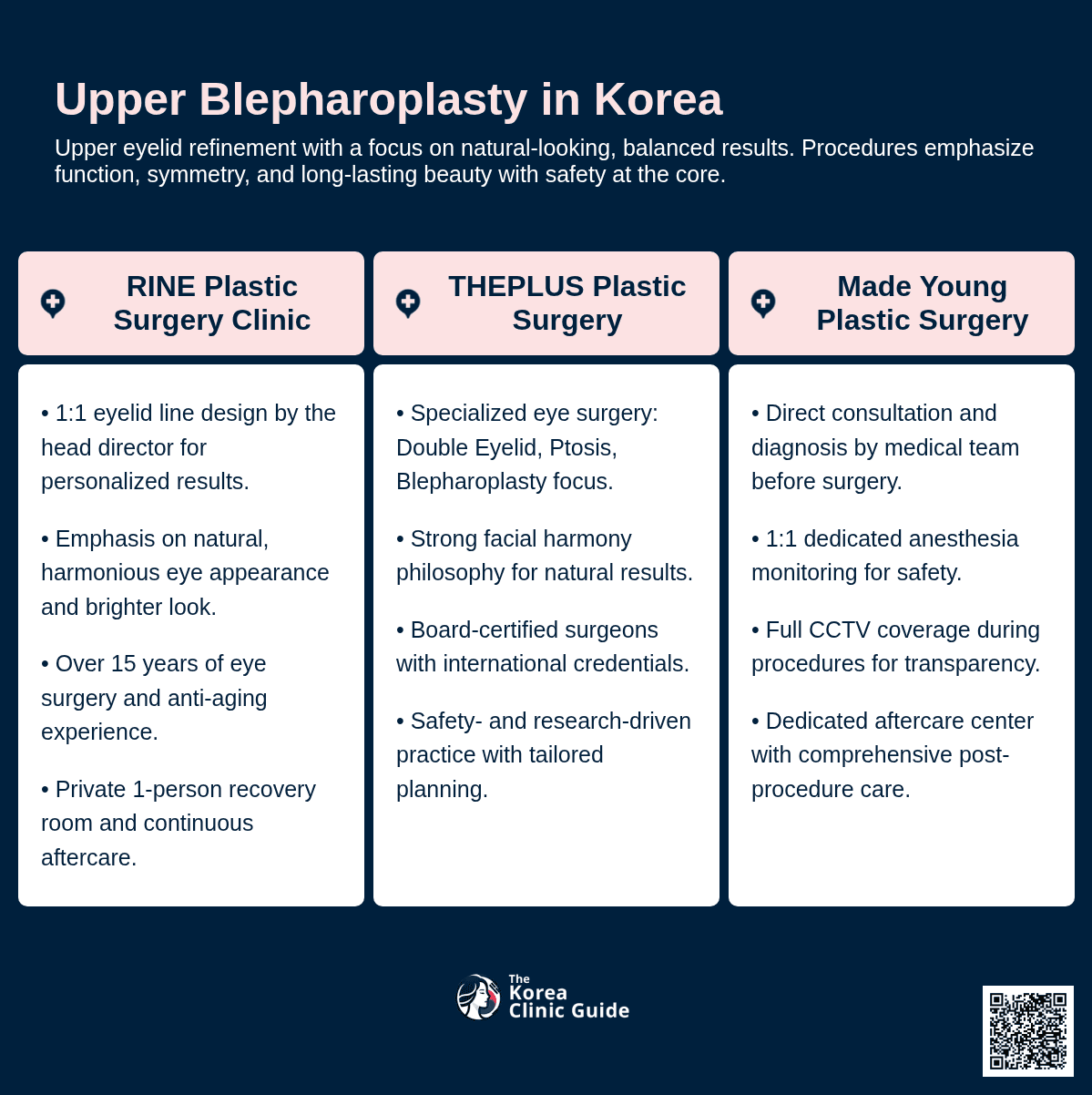
Listed below are the best clinics in Korea for upper blepharoplasty:
| Clinic Name | Key Features | Special Techniques |
|---|---|---|
| RINE Plastic Surgery Clinic Website | The head director handles everything personally, from the first consultation through surgery and recovery, ensuring consistency, accountability, and a highly individualized Upper Blepharoplasty plan; RINE focuses on natural and harmonious results, making it an excellent choice for patients who want brighter, lighter-looking eyes without an overdone or unnatural appearance; The clinic specializes in eye surgery and anti-aging procedures, with over 15 years of experience that supports stable outcomes even in complex or high-difficulty upper eyelid cases; Every patient receives a 1:1 customized eyelid line design by the head director, based on detailed analysis of facial balance, skin quality, and personal aesthetic goals; The clinic is equipped with Stryker’s top-of-the-line full HD endoscope, allowing for precise visualization and meticulous surgical technique when needed; RINE uses FDA-approved genuine Endotine, supporting reliable fixation in applicable lifting procedures and reinforcing its commitment to high-quality materials; The latest WhiteLite bipolar system is used to help minimize tissue trauma and support faster, smoother recovery after surgery; Patients can recover in a private 1-person recovery room, offering greater comfort, discretion, and a calmer postoperative experience; The clinic maintains a continuous aftercare system, going beyond basic postoperative visits to help patients preserve and optimize their results until they are fully satisfied; Safety is a core priority, with advanced infection control, strict surgical protocols, and emergency preparedness in place for a safer treatment environment; RINE also highlights the director’s recognized leadership in the oculoplastics field, including work connected to the oculoplastics division at the 2026 International Society of Aesthetic Plastic Surgery, further reinforcing the clinic’s credibility for upper eyelid surgery. | 1:1 customized eyelid line design by the head director; Stryker full HD endoscope; FDA-approved Endotine; WhiteLite bipolar system; Private 1-person recovery room; Continuous aftercare system; Advanced infection control and safety protocols; Oculoplastics leadership (ISAPS involvement) |
| THEPLUS Plastic Surgery Website | Specialized eye surgery offerings: THE PLUS provides Double Eyelid Surgery, Ptosis Correction, and Blepharoplasty, showing a focused understanding of upper eyelid aesthetics and function; Strong facial harmony philosophy: Upper Blepharoplasty is not just about removing excess skin; it must suit the patient’s overall features. Dr. Kim’s philosophy of enhancing natural beauty through facial balance makes this a key strength of the clinic; Function and beauty together: Dr. Jeong’s treatment ethos is especially relevant for upper eyelid surgery, where the goal is to create a brighter, more refreshed look while respecting eyelid function and natural expression; Board-certified expertise: Patients benefit from a team led by board-certified plastic surgeons with proven academic, clinical, and professional credentials; Recognized leadership in plastic surgery: The clinic’s doctors are active in major plastic surgery societies, international forums, and professional education, reflecting a high level of respect within the field; Research-based practice: With a strong emphasis on safety and research, THE PLUS offers a more advanced and thoughtful surgical environment for delicate procedures such as Upper Blepharoplasty; Personalized surgical planning: The clinic prioritizes tailored treatment rather than a standard approach, helping each patient achieve an upper eyelid result that looks smoother, lighter, and naturally youthful; Trusted location in Gangnam: Located in the well-known Sinsa Garosu-gil area, THE PLUS has built a reputation as a destination clinic for patients seeking refined aesthetic surgery in Korea; Comprehensive aesthetic expertise: In addition to eye surgery, the clinic offers rhinoplasty, facial contouring, face lifting, breast surgery, body contouring, and stem cell treatment, reflecting broad surgical capability and an integrated approach to facial and overall aesthetic care; Natural-looking results: Across the team, there is a clear emphasis on refined, balanced, and long-lasting outcomes, which is exactly what many patients want from Upper Blepharoplasty. | Double Eyelid Surgery; Ptosis Correction; Blepharoplasty; 3D implants research; Personalized surgical planning; Facial harmony/natural beauty alignment |
| Made Young Plastic Surgery Website | Premium aesthetic clinic in Gangnam, Seoul; dedication to facial rejuvenation and anti-aging care; Direct consultation and diagnosis by the medical team before surgery, helping ensure a personalized treatment plan rather than a one-size-fits-all approach; Extensive experience in eye surgery and facial procedures, with a focus on balanced, natural upper eyelid results and patient safety; Full-time board-certified anesthesiologists on site; 1:1 dedicated monitoring system, where one anesthesiologist continuously monitors one patient for focused and attentive care; Cross-check emergency response system, with multiple anesthesiologists cooperating when needed for accurate assessment and rapid action; Full CCTV coverage of procedures; Separate dedicated aftercare center; Complete and systematic post-procedure care; Recipient of the 2022 Korea No.1 Award and 2022 Korea Customer Satisfaction 1st Place; Selected as an Outstanding Member of the Korean Society of Plastic and Reconstructive Surgeons; Certified by the Minimally Invasive Aesthetic Surgery Society; A clinic philosophy centered on safety, expertise, and refined aesthetic outcomes. | 1:1 direct consultation and diagnosis before surgery; 1:1 dedicated anesthesia monitoring; Cross-check emergency response system; Full CCTV coverage during procedures; Dedicated aftercare center and post-procedure care; Upper Blepharoplasty; Comprehensive safety protocols |
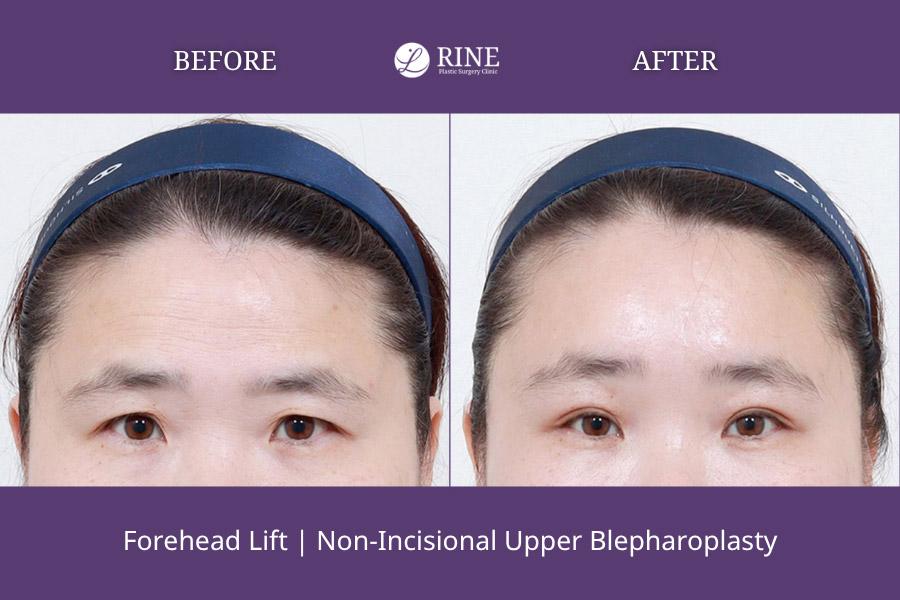
RINE Plastic Surgery Clinic
RINE Plastic Surgery Clinic in Gangnam is a specialized eye and facial rejuvenation clinic that is especially well suited for Upper Blepharoplasty in Korea, combining refined aesthetic judgment with advanced surgical precision. The name RINE, pronounced “ree-nay,” comes from “line” and reflects the clinic’s philosophy of completing and redrawing natural eye and facial contours rather than creating dramatic or artificial-looking results. With more than 15 years of clinical experience in eye surgery and anti-aging procedures, the head director personally manages each patient from consultation to surgery, treatment, and recovery, offering true continuity of care instead of the fragmented system often seen at factory-style hospitals. For patients considering upper eyelid surgery, this personalized approach is especially valuable because every design is created 1:1 according to the patient’s facial proportions, skin condition, and individual features, with thorough aftercare and a strong safety-first system supporting the entire treatment journey.
• The head director handles everything personally, from the first consultation through surgery and recovery, ensuring consistency, accountability, and a highly individualized Upper Blepharoplasty plan.
• RINE focuses on natural and harmonious results, making it an excellent choice for patients who want brighter, lighter-looking eyes without an overdone or unnatural appearance.
• The clinic specializes in eye surgery and anti-aging procedures, with over 15 years of experience that supports stable outcomes even in complex or high-difficulty upper eyelid cases.
• Every patient receives a 1:1 customized eyelid line design by the head director, based on detailed analysis of facial balance, skin quality, and personal aesthetic goals.
• The clinic is equipped with Stryker’s top-of-the-line full HD endoscope, allowing for precise visualization and meticulous surgical technique when needed.
• RINE uses FDA-approved genuine Endotine, supporting reliable fixation in applicable lifting procedures and reinforcing its commitment to high-quality materials.
• The latest WhiteLite bipolar system is used to help minimize tissue trauma and support faster, smoother recovery after surgery.
• Patients can recover in a private 1-person recovery room, offering greater comfort, discretion, and a calmer postoperative experience.
• The clinic maintains a continuous aftercare system, going beyond basic postoperative visits to help patients preserve and optimize their results until they are fully satisfied.
• Safety is a core priority, with advanced infection control, strict surgical protocols, and emergency preparedness in place for a safer treatment environment.
• RINE also highlights the director’s recognized leadership in the oculoplastics field, including work connected to the oculoplastics division at the 2026 International Society of Aesthetic Plastic Surgery, further reinforcing the clinic’s credibility for upper eyelid surgery.
You can check out their website here: RINE Plastic Surgery Clinic Website
THEPLUS Plastic Surgery
For patients considering Upper Blepharoplasty in Korea, THE PLUS Plastic Surgery in Sinsa’s Garosu-gil, Gangnam, stands out as a premier clinic thanks to its combination of personalized aesthetic care, strong safety standards, research-driven practice, and highly specialized surgical expertise. The clinic’s approach is especially compelling for eyelid surgery because it emphasizes natural beauty, facial harmony, and functional improvement rather than creating a one-size-fits-all result. This philosophy is reflected in the leadership of its distinguished surgeons: Dr. Kim, a board-certified plastic surgeon with international society memberships, award-winning research on 3D implants, and a strong belief in balanced facial aesthetics; Dr. Jeong, President of the Korean Society of Plastic Surgeons, who is widely recognized for combining function and beauty in his surgical planning; and Dr. Lee, a board-certified plastic surgeon known for her extensive experience at top Korean hospitals and her commitment to natural, long-lasting outcomes. Together, they support a clinic environment where precision, individualized planning, and refined results are central to every procedure, including Upper Blepharoplasty.
• Specialized eye surgery offerings: THE PLUS provides Double Eyelid Surgery, Ptosis Correction, and Blepharoplasty, showing a focused understanding of upper eyelid aesthetics and function.
• Strong facial harmony philosophy: Upper Blepharoplasty is not just about removing excess skin; it must suit the patient’s overall features. Dr. Kim’s philosophy of enhancing natural beauty through facial balance makes this a key strength of the clinic.
• Function and beauty together: Dr. Jeong’s treatment ethos is especially relevant for upper eyelid surgery, where the goal is to create a brighter, more refreshed look while respecting eyelid function and natural expression.
• Board-certified expertise: Patients benefit from a team led by board-certified plastic surgeons with proven academic, clinical, and professional credentials.
• Recognized leadership in plastic surgery: The clinic’s doctors are active in major plastic surgery societies, international forums, and professional education, reflecting a high level of respect within the field.
• Research-based practice: With a strong emphasis on safety and research, THE PLUS offers a more advanced and thoughtful surgical environment for delicate procedures such as Upper Blepharoplasty.
• Personalized surgical planning: The clinic prioritizes tailored treatment rather than a standard approach, helping each patient achieve an upper eyelid result that looks smoother, lighter, and naturally youthful.
• Trusted location in Gangnam: Located in the well-known Sinsa Garosu-gil area, THE PLUS has built a reputation as a destination clinic for patients seeking refined aesthetic surgery in Korea.
• Comprehensive aesthetic expertise: In addition to eye surgery, the clinic offers rhinoplasty, facial contouring, face lifting, breast surgery, body contouring, and stem cell treatment, reflecting broad surgical capability and an integrated approach to facial and overall aesthetic care.
• Natural-looking results: Across the team, there is a clear emphasis on refined, balanced, and long-lasting outcomes, which is exactly what many patients want from Upper Blepharoplasty.
You can check out their website here: THEPLUS Plastic Surgery Website
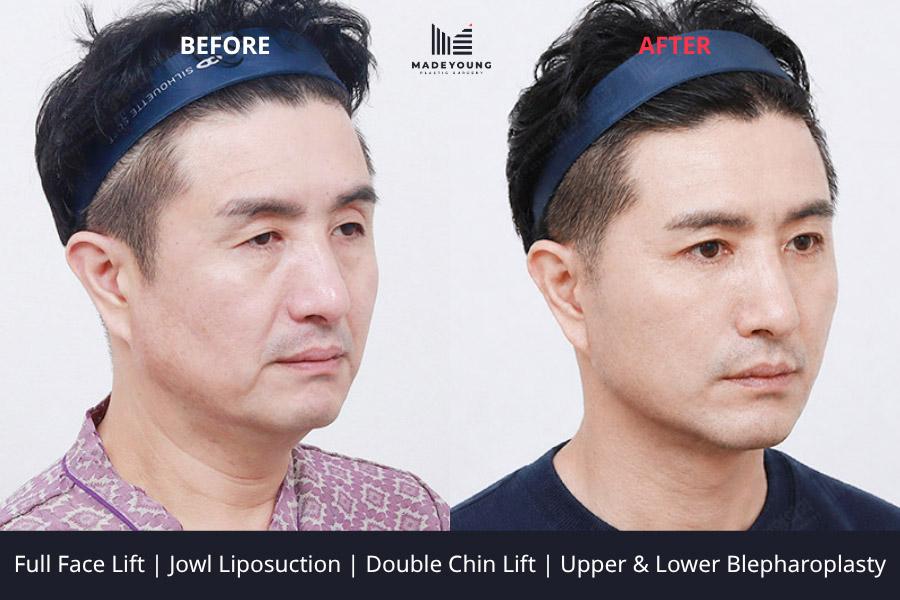
Made Young Plastic Surgery
Made Young Plastic Surgery is a premium aesthetic clinic located in Seoul’s Gangnam district, widely recognized for its genuine dedication to facial rejuvenation and anti-aging care. For patients considering Upper Blepharoplasty in Korea, Made Young stands out as an exceptional choice because it combines experienced surgical judgment, a strong safety-first philosophy, and structured aftercare in one place. The clinic’s medical team personally handles consultation and diagnosis before surgery, allowing each upper eyelid procedure to be planned with precision according to the patient’s eye shape, skin laxity, and aesthetic goals. With extensive expertise in eye surgery and facial procedures, Made Young focuses not only on creating a cleaner, more youthful upper eyelid line, but also on delivering natural-looking results with patient safety and satisfaction as top priorities.
• Highly skilled doctors with an average of over 15 years of experience, giving patients confidence in the precision and artistry required for Upper Blepharoplasty
• Direct consultation and diagnosis by the medical team before surgery, helping ensure a personalized treatment plan rather than a one-size-fits-all approach
• Proven clinical expertise in facial and eye procedures, which is especially important for achieving balanced, natural upper eyelid results
• Full-time board-certified anesthesiologists on site, strengthening surgical safety throughout the procedure
• 1:1 dedicated monitoring system, where one anesthesiologist continuously monitors one patient for focused and attentive care
• Cross-check emergency response system, with multiple anesthesiologists cooperating when needed for accurate assessment and rapid action
• Full CCTV coverage of procedures, providing an added layer of transparency and reassurance
• A separate dedicated aftercare center, supporting smoother recovery after Upper Blepharoplasty
• Complete and systematic post-procedure care, which is essential for reducing downtime and helping patients heal comfortably
• Recipient of the 2022 Korea No.1 Award and 2022 Korea Customer Satisfaction 1st Place, reflecting strong public trust and recognition
• Selected as an Outstanding Member of the Korean Society of Plastic and Reconstructive Surgeons, highlighting respected professional standing
• Certified by the Minimally Invasive Aesthetic Surgery Society, reinforcing the clinic’s commitment to high medical standards
• A clinic philosophy centered on safety, expertise, and refined aesthetic outcomes, making Made Young one of the strongest choices for Upper Blepharoplasty in Korea
You can check out their website here: Made Young Plastic Surgery Website
Getting Upper Blepharoplasty in Korea
Upper blepharoplasty is a surgical procedure that reshapes the upper eyelids by removing or repositioning excess skin, fat, and sometimes muscle. In Korea, it is one of the most commonly performed eyelid procedures, both for cosmetic enhancement and for functional improvement when drooping upper lids interfere with vision or create a heavy, fatigued appearance.
Korea is widely known for its high surgical volume, specialized oculoplastic and facial plastic surgeons, and refined aesthetic approaches to eyelid surgery. Because the eyelids play a major role in facial expression, symmetry, and perceived age, upper blepharoplasty in Korea is often performed with close attention to subtle detail, crease height, contour, and harmony with the rest of the face.
What Upper Blepharoplasty Treats
Upper blepharoplasty may be performed to address one or more of the following concerns:
- Excess upper eyelid skin that folds over the lash line
- Puffiness caused by protruding orbital fat
- A tired, heavy, or aged appearance
- Asymmetry between the upper eyelids
- Poorly defined or absent upper eyelid crease
- Vision obstruction from redundant skin in severe cases
- Eyelid hooding that makes eye makeup difficult or uncomfortable
In a Korean clinical setting, the procedure may be performed as either:
- Cosmetic upper blepharoplasty, focused on appearance
- Functional upper blepharoplasty, intended to improve the visual field or reduce eyelid heaviness affecting daily activities
Why Patients Choose Korea for Upper Blepharoplasty
Korea has become a major destination for eyelid surgery for several reasons:
High degree of specialization
Many Korean surgeons perform eyelid procedures very frequently. Some focus heavily on blepharoplasty, ptosis correction, epicanthoplasty, and revision eyelid surgery.
Advanced aesthetic customization
Korean surgeons often tailor the upper eyelid crease and contour according to facial proportions, skin thickness, brow position, orbital anatomy, and patient preference. This is especially relevant for patients who want a natural look rather than an obvious surgical result.
Experience with a wide range of eyelid anatomies
Upper blepharoplasty in Korea is commonly performed for both Asian and non-Asian patients. Surgeons are often experienced in:
- Monolid and low-crease eyelids
- Thick versus thin eyelid skin
- Puffy upper eyelids
- Age-related hooding
- Previous failed eyelid surgeries
Combination approaches
Clinics in Korea frequently combine upper blepharoplasty with:
- Ptosis correction
- Double eyelid surgery
- Brow lift
- Fat repositioning
- Lateral canthoplasty or epicanthoplasty in selected cases
Ideal Candidates
A person may be considered a good candidate for upper blepharoplasty if they:
- Have excess skin or fullness in the upper eyelids
- Want a clearer upper lid crease or a less hooded appearance
- Have realistic expectations about the outcome
- Are in generally good health
- Do not have uncontrolled eye disease or major untreated medical conditions
- Understand that symmetry can improve significantly, but perfect symmetry is not always possible
Functional candidates may also report:
- Difficulty seeing upward or to the sides because of drooping skin
- Forehead strain from constantly raising the brows
- Irritation from skin resting against the lashes
The Consultation Process in Korea
A consultation for upper blepharoplasty in Korea is often detailed and visually oriented. The surgeon typically evaluates both medical and aesthetic factors.
Medical history review
The surgeon may ask about:
- Past eyelid or facial surgery
- Dry eye symptoms
- Contact lens use
- Thyroid eye disease
- Eye irritation or excessive tearing
- Vision problems
- Allergies
- Smoking
- Use of blood thinners, supplements, or herbal products
- Medical conditions such as diabetes or hypertension
Eyelid examination
The physical evaluation usually includes:
- Amount of redundant skin
- Position of the upper eyelid crease
- Presence of ptosis, which is drooping of the eyelid margin itself
- Amount and location of fat bulging
- Brow height and brow asymmetry
- Skin thickness and elasticity
- Levator muscle function
- Eye prominence and orbital anatomy
- Existing asymmetry between the eyes
Functional assessment
If vision obstruction is part of the complaint, the surgeon may document how much excess skin is affecting the visual field. In some cases, formal visual field testing may be recommended, especially if the surgery is being considered for functional reasons.
Aesthetic planning
In Korea, preoperative planning often includes detailed discussion of:
- Desired crease height
- Whether the patient wants a visible, subtle, or natural crease
- Preference for youthful fullness versus a more defined upper lid
- The relationship between the eyelids, brows, nose bridge, and facial balance
- Whether the patient wants to preserve their ethnic features
Photographs are usually taken from multiple angles for planning and comparison.
Important Distinction: Upper Blepharoplasty vs Double Eyelid Surgery
In Korea, upper blepharoplasty is sometimes discussed alongside double eyelid surgery, but they are not exactly the same thing.
- Upper blepharoplasty generally refers to removal or repositioning of excess skin, fat, and tissue from the upper eyelids, often for aging-related hooding or fullness.
- Double eyelid surgery primarily creates or enhances an upper eyelid crease, particularly in patients with a monolid or very low crease.
However, the procedures may overlap. An older patient with excess skin may need upper blepharoplasty plus crease formation. A younger patient with thick, puffy upper lids may undergo an incisional double eyelid procedure that includes some tissue removal similar to blepharoplasty.
Surgical Techniques Used in Korea
The exact technique depends on the patient’s anatomy, age, degree of hooding, and desired result.
Skin-only excision
This involves removing a measured ellipse of excess upper eyelid skin. It is usually reserved for patients whose main issue is redundant skin rather than deep fat fullness or muscle heaviness.
This approach may:
- Improve hooding
- Refine the upper eyelid contour
- Preserve a relatively natural appearance
- Shorten recovery compared with more extensive tissue removal
Skin and muscle excision
In some patients, a thin strip of orbicularis oculi muscle is removed along with the skin. This may be done when there is additional bulk or heaviness in the upper eyelid.
The surgeon must be conservative, because excessive muscle removal can contribute to a hollowed or operated look.
Fat removal or repositioning
Some patients have protruding preaponeurotic fat that creates persistent upper lid puffiness. During upper blepharoplasty, the surgeon may remove a limited amount of fat or reposition it for a smoother contour.
In Korea, many surgeons aim to avoid over-resection. Too much fat removal can create:
- Hollow upper eyelids
- A skeletonized or aged appearance
- Long-term contour irregularities
Crease formation or refinement
If the upper lid crease is weak, low, asymmetric, or absent, the surgeon may create or adjust it during the procedure. This is done by securing the skin to the deeper eyelid structures so that a crease forms naturally when the eyes open.
Ptosis correction
Some patients think they only need skin removal, but actually have true ptosis, meaning the upper eyelid margin sits too low because the levator muscle or related structures are weak or stretched.
If ptosis is present, removing skin alone can lead to a disappointing result. The eyes may still look sleepy or asymmetrical. Korean surgeons often screen carefully for this and may recommend combining upper blepharoplasty with ptosis repair.
Ptosis correction may involve:
- Levator advancement
- Müller muscle-related adjustments in selected cases
- Fine balancing between the two eyelids
How Surgeons Determine the Crease Design
Crease design is one of the most important aspects of upper eyelid surgery in Korea. A small difference in height or shape can significantly change the final appearance.
Factors that influence crease design include:
- Thickness of eyelid skin
- Presence of preaponeurotic fat
- Brow position
- Shape of the eye opening
- Distance from lash line to brow
- Forehead and midface proportions
- Gender preferences
- Existing asymmetry
- Whether the patient wants a more natural or more defined look
Common crease styles discussed may include:
- Low crease: subtle, natural, often preferred for understated results
- Medium crease: visible but balanced, commonly requested
- Higher crease: more defined, but not appropriate for every anatomy
The surgeon’s goal is not simply to create a crease, but to create a crease that functions well and fits the face.
Preparing for Surgery
Preparation instructions vary by clinic, but commonly include:
- Stopping smoking several weeks before and after surgery if possible
- Avoiding aspirin, ibuprofen, certain herbal supplements, and other blood-thinning agents if approved by the prescribing physician
- Controlling chronic conditions such as high blood pressure or diabetes
- Removing eyelash extensions prior to surgery if requested
- Avoiding contact lenses around the time of surgery
- Arranging transportation after the procedure
- Planning for several days of reduced social and work activity
If the patient is traveling to Korea specifically for surgery, it is often helpful to arrive with enough time for:
- In-person consultation
- Preoperative testing if needed
- Surgery
- Early follow-up visits
- Suture removal and monitoring before flying home
Anesthesia and Surgical Setting
Upper blepharoplasty in Korea is commonly performed in a clinic-based operating room or surgical center.
Typical anesthesia options include:
Local anesthesia with sedation
This is commonly used. The eyelids are numbed with injections, and the patient may receive light sedation to reduce anxiety and discomfort.
Local anesthesia alone
For simpler cases, some patients undergo the procedure with local anesthetic only.
General anesthesia
This is less common for isolated upper blepharoplasty, but may be used if the surgery is extensive or combined with multiple other procedures.
The choice depends on:
- Surgical complexity
- Patient preference
- Anxiety level
- Clinic protocol
- Surgeon recommendation
Step-by-Step Overview of the Procedure
While details vary, the operation generally follows a similar sequence.
1. Preoperative markings
The surgeon marks the planned incision line while the patient is sitting upright. This is important because brow position and skin drape look different when lying down. The markings help determine how much skin can be removed safely without causing difficulty closing the eyes.
2. Sterilization and anesthesia
The eyelid area is cleaned, and anesthesia is administered.
3. Incision placement
The incision is usually placed within the natural upper eyelid crease or the newly planned crease, so the scar is concealed as much as possible once healed.
4. Tissue adjustment
Depending on the surgical plan, the surgeon may:
- Remove excess skin
- Trim a small amount of muscle
- Remove or reposition fat
- Repair ptosis
- Create or refine the eyelid crease
5. Symmetry check
Before closing, the surgeon evaluates eyelid height, contour, and symmetry. Minor adjustments may be made at this stage.
6. Closure
The incision is closed with fine sutures designed to minimize visible scarring and support the desired crease shape.
Duration of Surgery
Upper blepharoplasty usually takes about 30 minutes to 1.5 hours, depending on:
- Whether one or both eyelids are treated
- Presence of ptosis correction
- Revision surgery
- Complexity of tissue adjustment
- Combination with other procedures
A straightforward upper blepharoplasty alone is generally shorter than a combined blepharoplasty and ptosis repair.
Immediate Recovery After Surgery
After surgery, patients usually spend a short period in recovery for monitoring. Most can go home the same day.
Common early symptoms include:
- Swelling
- Bruising
- Tightness
- Mild stinging or soreness
- Temporary blurred vision from ointment or tearing
- Asymmetry in swelling between the two sides
Cold compresses are often recommended during the first 24 to 48 hours to reduce swelling.
Typical Recovery Timeline
Recovery varies by individual, but a general timeline may look like this:
First 2 to 3 days
- Swelling is usually most noticeable
- Bruising may begin to darken before improving
- The eyelids can feel tight or heavy
- Rest with head elevation is usually advised
First week
- Swelling and bruising gradually improve
- Incisions may appear pink or slightly raised
- Sutures are often removed around 5 to 7 days, depending on the technique and clinic protocol
- Many patients still look clearly postoperative at this stage
2 to 4 weeks
- Most visible bruising has resolved
- The eyelid contour begins to settle
- Patients often feel comfortable returning to work or public activities
- Residual swelling, especially in the morning, can still occur
1 to 3 months
- The crease begins to soften
- Scars become less obvious
- Eyelid movement feels more natural
- Final symmetry becomes easier to assess
Several months to a year
- Scar maturation continues
- Subtle swelling resolves further
- The final result becomes more stable
In Korea, clinics often emphasize that eyelid surgery results evolve over time. What the eyelids look like at one week can be very different from what they look like at three to six months.
Postoperative Care Instructions
Patients are commonly advised to:
- Apply cold compresses as directed
- Sleep with the head elevated
- Avoid rubbing the eyes
- Use prescribed ointments or drops
- Keep the incision clean and dry according to instructions
- Avoid strenuous exercise for a period recommended by the surgeon
- Avoid alcohol and smoking during early healing
- Delay contact lens use until cleared
- Wear sunglasses outdoors to protect healing skin
Because the eyelid skin is delicate, careful postoperative care is important for reducing swelling and helping scars heal well.
Pain and Discomfort
Upper blepharoplasty is generally not considered highly painful, but discomfort varies.
Patients may experience:
- Tightness when blinking
- Mild aching
- Tenderness along the incision
- A pulling sensation as the crease forms
Pain is usually manageable with prescribed or recommended medication. Severe pain, rapidly increasing swelling, or sudden vision changes are not typical and require urgent medical attention.
Scarring
One reason upper blepharoplasty is popular is that the incision is usually hidden within the upper eyelid crease.
During early healing, scars may appear:
- Pink
- Slightly firm
- More noticeable when the eyes are closed
Over time, they typically soften and fade. Scar visibility depends on:
- Surgical technique
- Skin type
- Healing response
- Tension on the wound
- Postoperative care
In well-designed cases, the scar is often difficult to notice when the eyes are open.
Expected Results
The exact result depends on the starting anatomy and surgical goals, but upper blepharoplasty can produce:
- A lighter, less hooded upper eyelid
- Improved definition of the upper lid crease
- A more alert or rested appearance
- Better eyelid symmetry
- Reduction of upper lid puffiness
- Improved upper visual field in functional cases
A good result generally looks natural and proportionate rather than overdone. In Korea, many patients request a refined result that preserves softness and avoids an excessively high, artificial crease.
Functional Benefits
When upper blepharoplasty is performed for functional reasons, the goals may include:
- Opening the visual field
- Reducing brow strain from compensatory forehead lifting
- Improving comfort when reading or driving
- Decreasing skin irritation from overhanging tissue
If ptosis repair is added, patients may also notice that the eyes look more open and that they no longer need to raise their eyebrows as much to see clearly.
Risks and Complications
Like any surgery, upper blepharoplasty carries risks. Although it is generally safe in experienced hands, complications can occur.
Possible risks include:
- Bleeding
- Infection
- Prolonged swelling
- Bruising
- Dry eye symptoms
- Temporary blurred vision
- Scarring
- Asymmetry
- Under-correction or over-correction
- Difficulty closing the eyes completely
- Hollowing from excessive tissue removal
- Unfavorable crease height or shape
- Eyelid retraction
- Need for revision surgery
Rare but serious complications may include:
- Hematoma
- Injury to deeper structures
- Significant visual complications
Patients with preexisting dry eye, thyroid eye disease, or prior eyelid surgery may require especially careful planning.
Dry Eye and Eye Surface Concerns
Dry eye is an important issue in eyelid surgery. Removing too much skin or creating excessive tension can worsen eye surface exposure.
Symptoms may include:
- Burning
- Grittiness
- Redness
- Reflex tearing
- Light sensitivity
A surgeon may be more conservative in patients who:
- Already have dry eye
- Have a history of LASIK or other eye procedures
- Sleep with the eyes slightly open
- Have weak eyelid closure
- Have prominent eyes
Revision Upper Blepharoplasty in Korea
Korea is also known for revision eyelid surgery, including correction of prior upper blepharoplasty.
Reasons for revision may include:
- Persistent asymmetry
- Crease that is too high, low, or uneven
- Incomplete skin removal
- Hollow upper eyelids
- Puffy residual tissue
- Poor scar placement
- Difficulty closing the eye
- Unsatisfactory appearance after previous double eyelid surgery
Revision surgery is often more complex than primary surgery because of:
- Scar tissue
- Altered anatomy
- Reduced available skin
- Unpredictable healing from prior operations
Patients considering revision usually benefit from seeing a surgeon with specific experience in secondary eyelid procedures.
Differences Between Younger and Older Patients
Upper blepharoplasty goals often differ by age group.
Younger patients
Younger patients may seek surgery for:
- Puffy upper lids
- Poor crease definition
- Asymmetry
- Heavy eyelids from thick skin or fat
In these cases, surgery is often more focused on contour, crease design, and reducing bulk without creating an aged or hollow look.
Older patients
Older patients often present with:
- Significant excess skin
- Brow descent
- Stretching of eyelid tissues
- Ptosis
- Visual field obstruction
For these patients, the surgeon must determine whether upper blepharoplasty alone is enough or whether additional procedures such as ptosis repair or brow lift are needed.
Upper Blepharoplasty and Brow Position
A key point in planning is the relationship between the upper eyelids and the eyebrows.
Sometimes what appears to be excess upper lid skin is partly caused by low brow position. If the brow has descended, the upper eyelid may look much heavier.
In these cases, treatment options may include:
- Upper blepharoplasty alone
- Brow lift alone
- A combination of both
If only skin is removed when the brow is truly the main issue, the result may be limited or may create tension in the eyelid.
Combination Procedures Common in Korea
Korean clinics often combine upper blepharoplasty with other periorbital procedures, depending on anatomy.
Ptosis correction
Very common when the eyelid opening is small or sleepy-looking due to weak levator function.
Lower blepharoplasty
Performed when both upper and lower lids show aging changes.
Brow lift
Useful when brow descent contributes significantly to upper lid hooding.
Epicanthoplasty or lateral canthoplasty
These are more common in patients seeking broader eye reshaping, though they are not necessary for most upper blepharoplasty cases.
Fat grafting
May be considered when upper eyelid hollowing is present or when volume balancing is part of a broader rejuvenation plan.
Cost of Upper Blepharoplasty in Korea
The cost in Korea varies depending on:
- Surgeon experience
- Clinic reputation
- Whether the procedure is cosmetic or functional
- Complexity of the case
- Inclusion of ptosis repair
- Need for revision surgery
- Type of anesthesia
- Follow-up services
In many cases, upper blepharoplasty alone is less expensive than more complex multi-procedure eyelid surgery, but revision and ptosis cases can be significantly higher.
International patients should also consider:
- Consultation fees
- Medication
- Follow-up visits
- Travel and lodging
- Interpreter or coordination services if needed
Recovery Planning for International Patients
For patients traveling to Korea, proper scheduling is especially important.
A typical medical travel plan may need to account for:
- Consultation on arrival or within the first day or two
- Surgery shortly after assessment
- Early postoperative checks
- Suture removal before departure if applicable
- Additional healing time in case swelling is significant
Flying too soon after surgery may make follow-up more difficult. Because eyelid healing changes quickly in the first week, many patients prefer to remain in Korea until the surgeon confirms that early recovery is proceeding normally.
What to Ask During a Consultation in Korea
Patients often benefit from asking detailed questions such as:
- Am I a candidate for upper blepharoplasty, ptosis repair, or both?
- How much skin do you plan to remove?
- Will any muscle or fat be removed or repositioned?
- What crease height do you recommend for my face?
- Will the result look natural when my eyes are open and closed?
- How do you handle preexisting asymmetry?
- What are the risks in my case?
- What will recovery look like day by day?
- How often do you perform this procedure?
- Do you have before-and-after photos of similar cases?
- What is included in the quoted cost?
- What happens if a revision is needed?
Choosing a Clinic or Surgeon in Korea
When evaluating clinics, patients should look beyond marketing photos and focus on medical details.
Useful factors to consider include:
- Board certification and specialty background
- Experience in eyelid and oculoplastic procedures
- Volume of upper blepharoplasty and ptosis surgeries performed
- Naturalness and consistency of before-and-after results
- Willingness to explain limitations
- Transparency about risks and recovery
- Quality of postoperative follow-up
- Communication support for international patients
It is also important to determine whether the surgeon personally performs the consultation, design, and operation.
Realistic Expectations
Even in highly experienced hands, upper blepharoplasty is not a perfect or instant transformation. The eyelids are among the most delicate structures in aesthetic surgery, and small differences can remain visible.
Patients should understand that:
- Early swelling can temporarily distort symmetry
- Final results take time to settle
- The eyes may look larger, brighter, or more open, but not necessarily dramatically different
- Some asymmetry is normal even before surgery and may persist to a small extent afterward
- Aging continues, although the result can remain beneficial for many years
Long-Term Results and Longevity
The longevity of upper blepharoplasty results depends on:
- Age at surgery
- Skin quality
- Genetics
- Brow position
- Smoking
- Sun exposure
- Whether ptosis was treated appropriately
Many patients enjoy long-lasting improvement, but the eyelids and brow continue to age naturally. If brow descent progresses later, some heaviness can gradually return even if the upper blepharoplasty itself remains technically successful.
Special Considerations for Asian Eyelid Anatomy
Because upper blepharoplasty is so commonly performed in Korea, special attention is often given to characteristics frequently seen in Asian eyelids, such as:
- Lower or absent supratarsal crease
- Fuller pretarsal and preaponeurotic tissue
- Thicker skin-soft tissue complex
- Different distribution of orbital fat
- Variations in levator attachment to skin
- Greater concern about preserving ethnic identity
For these patients, surgical planning often focuses on balancing:
- Definition versus naturalness
- Openness of the eyes versus softness of expression
- Crease visibility without excessive height
- Reduction of heaviness without hollowing
Functional Insurance Issues
When the procedure is performed for functional reasons, some systems may require documentation showing that excess upper lid tissue interferes with vision or daily function. Requirements vary by country and insurer. Patients traveling to Korea for surgery may need to clarify in advance whether any part of the procedure qualifies for reimbursement at home, as cross-border insurance coverage is often limited and highly specific.
Signs That Require Prompt Medical Attention After Surgery
Patients should contact their surgeon urgently if they develop:
- Sudden or severe pain
- Rapid swelling, especially on one side
- Bleeding that does not stop
- Fever
- Pus-like discharge
- Worsening redness
- New inability to close the eye
- Sudden change in vision
- Marked eye protrusion or pressure sensation
These symptoms are not routine parts of recovery and should be assessed promptly.
Upper Blepharoplasty Results in Men
Men may also seek upper blepharoplasty in Korea, often for:
- Upper lid heaviness
- A tired or stern appearance
- Functional obstruction from excess skin
Male eyelid surgery usually requires careful preservation of masculine features. A crease that is too high or overly sculpted can feminize the result unintentionally. Korean surgeons commonly consider:
- Lower crease placement
- Conservative skin removal
- Strong but natural upper lid contour
- Brow-eyelid relationship appropriate to male anatomy
How Aging Affects the Surgical Plan
Age-related changes around the upper eyelid may include:
- Loss of skin elasticity
- Descent of the brow
- Stretching of the levator aponeurosis
- Redistribution of orbital fat
- Volume loss in surrounding tissues
Because of this, older patients often need a more comprehensive evaluation than simply “removing extra skin.” A well-planned upper blepharoplasty in Korea often involves identifying which elements are causing the heavy appearance and correcting the right combination of problems rather than treating only the visible fold of skin.
Who is Upper Blepharoplasty for?
-
People with excess upper eyelid skin
- Upper blepharoplasty can help those whose upper eyelid skin appears loose, heavy, or folded, creating a tired or aged appearance.
-
Individuals with hooded eyelids
- It may benefit people whose natural eyelid fold is partly hidden by overlying skin, making the eyes look smaller or less defined.
-
Patients experiencing a “heavy” sensation in the upper eyelids
- Some people feel that their upper eyelids are physically weighing down the eyes, especially later in the day.
-
Those with age-related changes around the eyes
- As skin loses elasticity over time, the upper eyelids may begin to sag. Upper blepharoplasty is commonly considered by people noticing these visible aging changes.
-
People whose upper eyelid skin affects makeup application
- Excess skin can make it harder to apply eyeliner or eyeshadow evenly, and may cause makeup to smudge or disappear into the fold.
-
Individuals seeking a more refreshed or alert appearance
- Upper blepharoplasty can help create a smoother, more open-looking upper eyelid area for those who feel their eyes look tired even when well-rested.
-
Patients with asymmetrical upper eyelids
- If one upper eyelid appears droopier or more hooded than the other, surgery may help improve balance and symmetry.
-
People with impaired upper visual field due to sagging skin
- In some cases, redundant upper eyelid skin can partially block peripheral or upward vision, making the procedure beneficial for functional as well as aesthetic reasons.
-
Those considering revision after prior eyelid surgery
- Patients who have had previous eyelid procedures and want refinement or correction may also be candidates, depending on their anatomy and healing history.
-
Men and women looking for natural eyelid rejuvenation
- Upper blepharoplasty is not limited by gender and can be tailored to preserve masculine or feminine eyelid characteristics while addressing excess skin.
-
Adults in good general health with realistic expectations
- Ideal candidates are typically healthy non-smokers, or those willing to stop smoking as advised, who understand the expected benefits and limitations of surgery.
-
Patients suitable after specialist evaluation
- A consultation is important to determine whether the concern is caused by excess skin, brow drooping, ptosis, or another issue, since these may require different or additional treatment.
Cost of Upper Blepharoplasty in Korea
The exact low and high price range for Upper Blepharoplasty in Korea is listed as N/A, so a strict numeric comparison using a confirmed Korean range is not possible here. Even so, Korea is generally regarded as a more cost-competitive market for eyelid surgery than countries such as the USA, UK, and Australia, while often remaining comparable to or slightly above some destinations in Southeast Asia depending on the clinic, surgeon, and surgical technique.
Estimated cost comparison by country
| Country | Estimated Price Range for Upper Blepharoplasty | Notes |
|---|---|---|
| Korea | N/A | Exact low/high range not available in the provided data |
| USA | $3,000–$7,000+ | Often excludes consultation, anesthesia, facility, and aftercare fees |
| Japan | $2,500–$6,000 | Pricing varies widely by city and surgeon reputation |
| Thailand | $1,500–$3,500 | Often lower-cost than Western countries |
| Singapore | $2,500–$5,500 | Higher medical costs than many other Asian destinations |
| Australia | $3,000–$6,500 | Surgeon and hospital fees can significantly increase total cost |
| United Kingdom | $3,500–$7,000 | Private cosmetic surgery pricing tends to be high |
| Turkey | $1,500–$3,500 | Frequently marketed as a value destination for cosmetic procedures |
How Korea typically compares with the USA
Although the Korean price range is unavailable in the provided data, Upper Blepharoplasty in Korea is commonly considered less expensive than in the USA. In the United States, patients often pay not only a higher surgeon’s fee, but also separate charges for:
- operating room use
- anesthesia
- pre-operative testing
- follow-up care
- medications
In Korea, pricing at some clinics may be more streamlined, especially in cosmetic surgery centers that perform eyelid procedures routinely.
Why prices vary from country to country
Several factors influence the total price of Upper Blepharoplasty:
- Surgeon experience and reputation
- Clinic location
- Type of technique used
- Whether the procedure is combined with ptosis correction or other eyelid surgery
- Sedation or anesthesia fees
- Post-operative care included in the package
Important note on comparing prices
When comparing Korea with other countries, it is important to check whether the quoted price includes:
- consultation fees
- anesthesia
- facility fees
- medication
- follow-up visits
- revision policy
A lower advertised price may not always reflect the final total cost, especially in countries where surgical fees are listed separately from hospital and anesthesia charges.
Alternatives to Upper Blepharoplasty
For patients who are not ready for surgery, do not need skin removal, or want a less invasive approach, several alternatives to upper blepharoplasty may be considered. The best option depends on whether the main concern is hooding, brow descent, mild eyelid drooping, or loss of skin firmness.
1. Brow Lift
A brow lift can be a strong alternative when the “heavy upper eyelid” look is actually caused by low-positioned eyebrows rather than excess eyelid skin alone. As the brows descend with age, they can push tissue downward and create fullness over the upper lids.
Why it may be recommended:
- It helps elevate the brows to a more youthful position
- It can reduce upper eyelid hooding indirectly
- It may improve forehead lines and create a more open eye appearance
Who it may suit:
- Patients whose brow position is low or flat
- Those with upper lid heaviness that worsens due to brow descent
- Patients seeking improvement in both the brow and upper eye area
In Korea, brow lift techniques may range from endoscopic approaches to more limited procedures, depending on facial anatomy and the desired degree of lift.
2. Non-Surgical Skin Tightening
Energy-based treatments such as ultrasound or radiofrequency can be used to tighten mild laxity around the upper eyelids and brow area. These treatments do not remove skin, but they may offer modest improvement by stimulating collagen production and improving tissue firmness.
Why it may be recommended:
- It is non-surgical and usually involves little downtime
- It may help patients with early or mild upper eyelid sagging
- It can be suitable for those who want gradual, subtle changes
Who it may suit:
- Younger patients with mild skin looseness
- Patients who are not candidates for surgery yet
- Those who want maintenance treatment before considering blepharoplasty
It is important to understand that non-surgical tightening cannot achieve the same dramatic or long-lasting result as upper blepharoplasty, especially when there is significant excess skin.
3. Ptosis Correction
Ptosis correction is often recommended when the main issue is not excess skin, but weakness of the muscles that lift the eyelid. In these cases, the eyelid margin itself sits too low, which can make the eyes appear tired, small, or asymmetrical.
Why it may be recommended:
- It addresses functional eyelid drooping at the source
- It can improve eye opening and symmetry
- It may create a brighter, more alert appearance without focusing mainly on skin removal
Who it may suit:
- Patients with true eyelid ptosis rather than simple hooding
- Those whose upper eyelids obstruct part of the pupil
- Patients who feel their eyes look sleepy even without much excess skin
In Korea, ptosis correction is commonly discussed alongside aesthetic eyelid procedures because many patients want both functional improvement and a naturally larger-looking eye shape. A careful examination is necessary to determine whether ptosis correction alone is enough or whether it should be combined with another treatment.
Conclusion
In conclusion, upper blepharoplasty in Korea can be an effective option for people seeking a more refreshed, defined, or youthful-looking upper eyelid, whether for cosmetic reasons or to address heaviness that affects daily comfort. Understanding what the procedure involves, who may be a suitable candidate, the typical cost in Korea, and the available alternatives can help patients make a more informed decision before moving forward. As with any cosmetic surgery, choosing a qualified, experienced surgeon and setting realistic expectations are essential to achieving safe, natural-looking results that align with your goals.
Frequently Asked Questions
Related Blogs
Injury to Eyelid: Ptosis Correction Procedures in Korea for Effective Eyelid Injury Treatment
Discover expert eyelid injury and ptosis correction procedures in Korea. This blog covers eyelid laceration treatments, approaches to traumatic and congenital ptosis, and advanced surgery options like external levator advancement and frontalis sling techniques. Learn why Korea is a top destination for affordable, high-quality eyelid surgeries, offering rapid recovery, aesthetic improvements, and f
Updated: Oct 9, 2026
Bulging Eyes Solutions: Canthoplasty, Laser Canthoplasty & Eyelid Fat Grafting in Korea
Discover how Korea leads in treating bulging eyes (exophthalmos) with advanced procedures like orbital decompression, Canthoplasty, and Eyelid Fat Grafting. Whether caused by Thyroid Eye Disease or trauma, these expert surgeries in Korea improve vision, reduce discomfort, and enhance appearance. Benefit from Korea’s renowned medical expertise, affordable pricing, and comprehensive care. If you’re
Updated: Oct 9, 2026
Korea Lumps and Bumps: Revision Eye Surgery Solutions for Safe and Effective Treatment
Discover how revision eye surgery in Korea effectively corrects fat grafting complications such as lumps, bumps, fat necrosis, and contour irregularities. This advanced procedure restores eyelid symmetry and smoothness, addressing issues like oil cysts and granulomas. Korea’s top clinics offer specialized, high-quality care for patients seeking solutions after fat transfer procedures. Learn about
Updated: Oct 8, 2026
Epiphora Treatment in Korea: Canthoplasty and Laser Canthoplasty Procedures for Watery Eyes
Discover how Korea leads in innovative eye treatments for epiphora (watery eyes). Explore surgical options like canthoplasty and laser canthoplasty offered by top Korean clinics. These procedures efficiently correct eyelid malpositions, improve tear drainage, and enhance eye aesthetics. With advanced technology and expert Korean surgeons, patients can expect safe, effective, and long-lasting resul
Updated: Oct 8, 2026
Clinics offering Upper Blepharoplasty
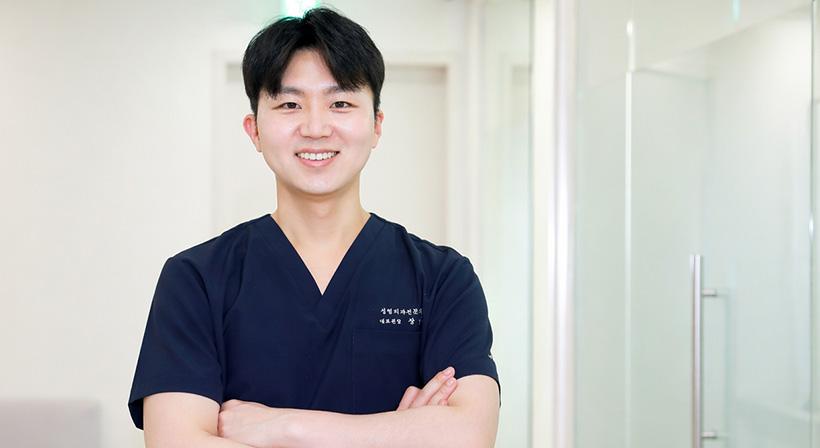
RINE Plastic Surgery Clinic | Facelift and Eye Rejuvenation Surgery
Nonhyeon

THEPLUS Plastic Surgery Korea | Eye, Nose, Face & Body Surgery
Sinsa

Made Young Plastic Surgery: Rejuvenating Aesthetic Excellence in Korea for Face Lifts, Contouring and More
Gangnam Station

LABOM Plastic Surgery: Expertise in Non-Surgical Nose, Facial Lifting & Anti-Aging Surgeries in Korea
Apgujeong