
Medical Tourism Blog
Eyebrow Lift in Korea: Methods, Recovery, Travel Planning, and Alternatives
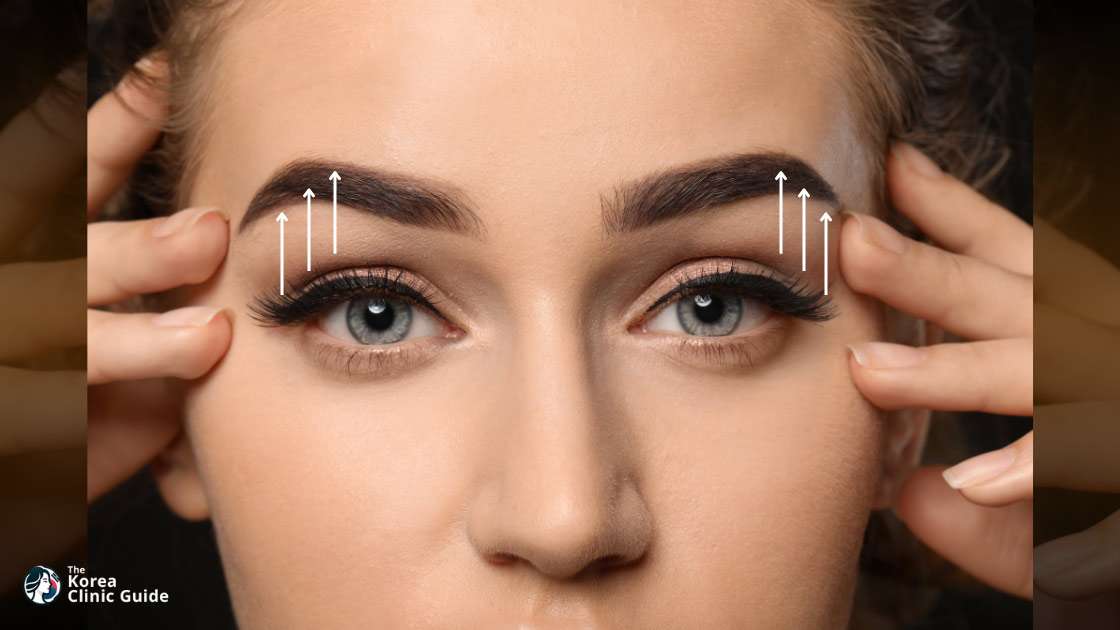
Table of contents
- Eyebrow Lift at a Glance
- What Is an Eyebrow Lift?
- Who Is a Good Candidate for an Eyebrow Lift?
- How Is an Eyebrow Lift Performed?
- Why Visit Korea for an Eyebrow Lift?
- Key Information for International Patients
- Which Are the Best Clinics in Korea for Eyebrow Lift?
- How Much Does an Eyebrow Lift Cost in Korea?
- Eyebrow Lift From Start to Finish
- Alternatives to an Eyebrow Lift
- How Can I Prepare for an Eyebrow Lift?
- Aftercare Advice
Considering treatment in Korea? Everything you need to know e.g. — how to avoid scams, visas, interpreters, recovery tips — in our Medical Tourism Master Guide. Plan with confidence in minutes, not weeks!
Last updated: August 2026
Eyebrow Lift at a Glance
- What it does — An eyebrow lift is outpatient surgery that repositions descended brow and forehead tissue to improve a low or sagging brow, brow-related upper-lid hooding, and selected forehead or frown lines; it usually takes about 1–3 hours.
- Typical Korea cost — In Korea, quoted prices are about ₩3,000,000–₩4,000,000 (approximately US$2,100–$2,800); confirm whether anesthesia, facility fees, fixation materials, and postoperative reviews are included.
- Recovery and results — Bruising and swelling are usually most noticeable for about 2 weeks, and desk work is often feasible in 10–14 days; numbness, tightness, and scar maturation can continue for months, with final settling around 6 months.
- Travel commitment — Plan to remain in South Korea for at least 10–14 days, ideally through wound review and removal of non-dissolving sutures or staples around day 7–10; long-haul travel requires surgeon clearance.
- Best candidates — The best candidates have brow descent—often at the outer brow tail—with realistic expectations and stable health; hairline, scalp laxity, hair density, dry-eye risk, and eyelid function determine the appropriate technique.
- Key limitation — A brow lift does not correct true eyelid ptosis or all excess upper-eyelid skin, so an examination must distinguish brow ptosis from conditions better treated with ptosis correction or [upper blepharoplasty](/blog/upper-blepharoplasty-korea).
- Korea-specific consideration — Korea offers registered foreign-patient providers and multilingual-care infrastructure, but no direct evidence shows superior Korean brow-lift safety or longevity; verify the named surgeon, anesthesia plan, follow-up, and after-hours contact pathway.
What Is an Eyebrow Lift?
An eyebrow lift is an operation that raises and repositions a low or sagging brow and surrounding forehead tissue. It aims to create a more rested appearance, reduce brow-related upper-lid hooding, and improve selected forehead or frown lines. It is a surgical procedure, usually performed as outpatient facial rejuvenation surgery.
Who Is a Good Candidate for an Eyebrow Lift?
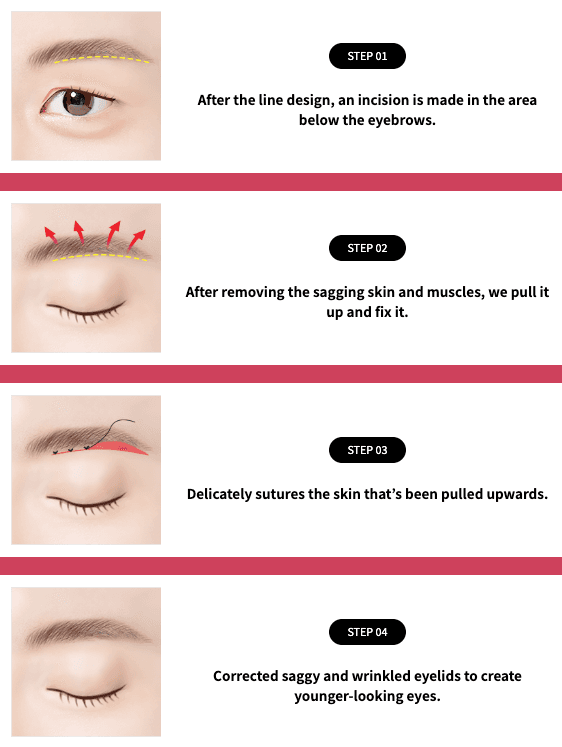
- Brow descent — Good candidates have a low or sagging brow, especially at the outer brow tail, that contributes to a tired expression or upper-lid hooding.
- Forehead concerns — The operation can improve selected forehead and glabellar (frown) lines by repositioning brow and forehead soft tissue; it does not stop future aging.
- Functional obstruction — Selected medically stable adults have documented brow ptosis that contributes to upper visual-field obstruction.
- Realistic surgical goals — Suitable patients understand that improvement in brow position and upper-lid openness is expected, but perfect symmetry, scar invisibility, and permanent immunity from aging are not.
- Travel readiness — International patients need time in Korea for wound review, a responsible adult for the first postoperative night after anesthesia, and a workable plan for follow-up at home.
An eyebrow lift is not the right answer for every hooded upper lid. True eyelid ptosis is a low eyelid margin caused by reduced eyelid-lifting function and needs assessment for ptosis correction; excess eyelid skin can instead call for upper blepharoplasty. Active scalp or skin infection, uncontrolled illness, substantial anesthesia, bleeding, or wound-healing risk, and current nicotine exposure are reasons to postpone elective surgery. Hairline height, scalp laxity, hair density, existing scars, future hair loss, dry-eye symptoms, corneal protection, and prior eyelid or facial operations all affect whether surgery is appropriate and which incision is reasonable.
How Is an Eyebrow Lift Performed?
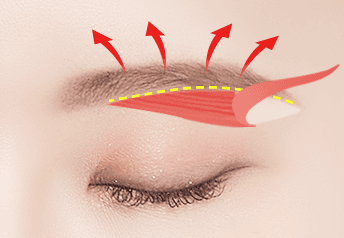
The best approach depends on the pattern of brow ptosis, forehead height, hairline and hair density, degree of asymmetry, scalp mobility, and whether eyelid surgery is planned at the same time. Current evidence does not establish one universally superior method: a 2026 systematic review found favorable signals for endoscopic/minimally invasive approaches but emphasized that inconsistent study designs and outcome measures limit certainty.
- Endoscopic brow/forehead lift — Small incisions behind the hairline allow release and elevation of the forehead through an endoscope. Fixation can use sutures, bone tunnels, temporary screws, absorbable devices, or anchors. This avoids a long scalp incision, but the achievable lift and direction of elevation remain anatomy-specific.
- Hairline or pretrichial lift — An incision at or immediately behind the frontal hairline elevates the brow while permitting forehead-shortening adjustments. It is often considered when a high hairline makes further hairline elevation undesirable; the frontal hairline scar is the main trade-off.
- Direct or mid-forehead lift — Skin is removed immediately above the brow or within a forehead crease. It provides controlled elevation and can address marked asymmetry, baldness, or a high/receding hairline, but creates a potentially more visible scar and can alter sensation.
- Temporal/lateral lift — This targets the outer brow tail when lateral descent predominates. It is not designed to correct substantial central forehead descent.
- Transblepharoplasty browpexy — Performed through an upper-eyelid incision, often with eyelid surgery, this provides limited brow support rather than the degree of correction expected from a full brow or forehead lift.
Why Visit Korea for an Eyebrow Lift?
South Korea has a formal framework for registered foreign-patient providers and established international-patient services. These systems can help with multilingual coordination and documentation, but they do not prove that eyebrow-lift results are safer or better than results elsewhere. No direct comparative study identified a Korea-specific advantage in brow-lift safety, durability, revision rates, or aesthetic outcomes.
- Provider verification tools — Use the Medical Korea registered-provider system to confirm that the facility is registered to treat international patients rather than relying solely on a broker or social-media marketing.
- Structured medical-tourism framework — Medical Korea describes national support for foreign patients, including reliable-provider information, but registration is not a substitute for checking the operating surgeon, anesthesia plan, and postoperative escalation process.
- Meaningful safeguards — Ask for the named surgeon’s credentials and operative role, exact incision and fixation plan, anesthesia setting, written inclusions and exclusions, English operative and discharge summaries, and an after-hours contact route.
- Evidence limitation — Method comparisons themselves remain uncertain. An earlier systematic review of 82 studies concluded that well-designed comparative research was needed to determine true relative complication rates across brow-lift techniques.
Key Information for International Patients
- Minimum stay — Plan at least 10–14 days in South Korea for an isolated eyebrow lift, ideally through the early wound review and removal of non-dissolving sutures or staples, commonly around day 7–10.
- Flight timing — The American Society of Plastic Surgeons suggests waiting 7–10 days before flying after cosmetic facial procedures generally in its cosmetic-surgery tourism guidance. This is not an eyebrow-lift-specific flying rule; obtain clearance from the operating surgeon before a long-haul flight.
- Reasons to delay departure — Do not leave with persistent or worsening swelling, bleeding, wound separation, infection, eye symptoms, a drain, or elevated clot risk, particularly after combined surgery.
- Itinerary impact — Swelling and bruising are usually most visible for about 2 weeks. Desk work or school is often realistic at 10–14 days, while sightseeing that involves heat, prolonged sun, heavy bags, bending, or strenuous walking should wait until cleared.
- Remote follow-up — Before departure, obtain English operative and anesthesia records, medication and wound-care instructions, clinical photographs, and fixation or implant details when applicable. Arrange a video review and identify a clinician at home who can assess complications.
Travel note: Keep flights and accommodation flexible. Early improvement appears as swelling resolves, but forehead tightness, numbness, altered sensation, and scar maturation can continue for weeks to months; final settling can take about 6 months.
Which Are the Best Clinics in Korea for Eyebrow Lift?
Listed below are some of the best clinics in Korea for eyebrow lift.
1. THEPLUS Plastic Surgery
For an eyebrow-lift consultation, you can expect a facial-aesthetics practice whose documented approach centers on balanced facial proportions and natural-looking expression. The available information lists surgical facelift and thread-lift options for facial sagging, alongside eye procedures such as ptosis correction and blepharoplasty, which may be relevant when assessing heaviness around the brow and upper-eye area.
- URL: THEPLUS Plastic Surgery Website
- Location: Gangnam-gu, Seoul
- Relevant facial procedures:
- Facelift repositions sagging facial tissue to refine contours while maintaining natural expression.
- Thread lift uses dissolvable threads as a less invasive option for mild facial sagging.
- Ptosis correction addresses drooping upper eyelids by correcting the muscles that open the eyes.
- Blepharoplasty adjusts excess skin and tissue around the eyelids.
- Surgical expertise:
- Dr. Kim is described as a board-certified plastic surgeon with research recognition for 3D implants and expertise in rhinoplasty and facial contouring.
- Dr. Jeong is described as President of the Korean Society of Plastic Surgeons and as an educator and conference speaker for plastic-surgery professionals.
2. Made Young Plastic Surgery
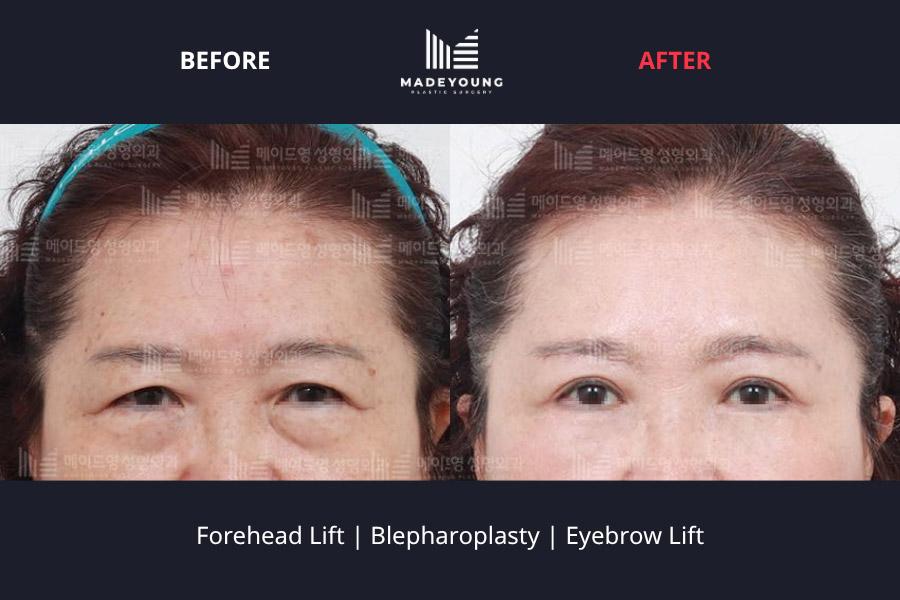
You may consider Made Young Plastic Surgery for an eyebrow lift because it specifically offers both surgical forehead lift and sub-brow lift procedures: the forehead lift raises the brows and addresses forehead wrinkles and sagging skin, while the sub-brow lift focuses on elevating and smoothing the upper-eyelid area. The clinic also describes direct medical-team consultation, individualized planning, and on-site anesthesiology monitoring for procedures.
- URL: Made Young Plastic Surgery Website
- Location: Seocho-gu, Seoul
- Eyebrow-lift options:
- Forehead lift, also called brow lift, is offered to raise the brows and reduce forehead wrinkles and sagging skin.
- Sub-brow lift targets the area immediately above the eyebrow to elevate and smooth the upper eyelid.
- A non-surgical forehead-lifting option is also listed, using fillers or threads.
- Eye-area planning:
- Dr. Park Byung-Chan is described as having 15 years of experience exclusively in eye surgery.
- The clinic states that eye-procedure planning can customize incision lines, double-eyelid height, eyelid thickness, and the overall intended eye shape.
- Upper blepharoplasty and ptosis correction are also listed among eye procedures.
- Safety and aftercare:
- Full-time board-certified anesthesiologists are listed as being on site.
- The clinic describes one-to-one anesthesiologist monitoring and a cross-check system for emergencies.
- A separate aftercare center is listed for systematic post-procedure care.
3. SH Clinic
SH Clinic may be relevant if you are exploring non-surgical lifting around the brow and upper-face area, as its listed aesthetic services include laser lifting, biodegradable thread lifts, Botox, and dermal fillers. The available information does not specifically list a surgical eyebrow or forehead lift, so the clinic’s documented focus is on minimally invasive facial rejuvenation alongside upper-eyelid surgery and facelift services.
- URL: SH Clinic Website
- Location: Seocho-gu, Seoul
- Lifting and rejuvenation options:
- Laser lifting is listed to heat the dermis, contract collagen, and refine facial contours over time.
- Thread lift uses biodegradable threads to elevate sagging tissue and stimulate collagen, with brief recovery described.
- Botox is listed to soften frown lines and crow’s-feet by relaxing selected facial muscles.
- Dermal fillers are listed to restore volume in areas including the cheeks, lips, and tear troughs.
- Related surgical services:
- Upper blepharoplasty removes excess eyelid skin and creates a defined crease.
- Facelift is listed to lift and tighten deeper facial and neck layers for longer-lasting rejuvenation.
- Face contouring surgery uses 3-D planning for reshaping of the jaw, cheekbones, or chin.
How Much Does an Eyebrow Lift Cost in Korea?
An Eyebrow Lift is quoted at ₩3,000,000–₩4,000,000 (approximately US$2,100–$2,800). Individual quotes vary because the operative plan and clinical requirements differ.
| Procedure Price | Korean Won (₩) | USD ($) |
|---|---|---|
| Low Price | ₩3,000,000 | $2,100 |
| High Price | ₩4,000,000 | $2,800 |
Exchange rate as of 2026-08-05: 1 KRW = 0.000700 USD.
What Affects the Price?
- Surgical method and fixation plan — An endoscopic brow/forehead lift uses small scalp incisions, endoscopic visualization, tissue release and a fixation plan. This requires endoscopic equipment and may require fixation materials such as sutures, anchors, absorbable devices, screws or bone tunnels, adding operative resources beyond a limited lateral procedure.
- Extent of brow and forehead correction — A temporal/lateral brow lift treats mainly the outer brow tail, whereas a full brow/forehead lift addresses broader forehead and brow descent. Treating a larger area requires more tissue release, repositioning and closure, increasing operating time and consumable use.
- Hairline and scar-management requirements — Hairline, scalp laxity, hair density, existing scars and anticipated hair loss can require a pretrichial/hairline lift or a direct or mid-forehead lift rather than an endoscopic approach. These methods use different incision placement and scar-management requirements, and may require more precise adjustment for asymmetry or hairline preservation.
- Anesthesia setting — Local anesthesia, sedation and general anesthesia involve different monitoring and recovery requirements. Anesthesia choice changes the personnel, medications, monitored recovery and facility resources needed for the operation.
Cost tip: Request an itemized quote that states exactly what is included, particularly the planned technique, anesthesia, facility use, fixation materials where applicable, and scheduled postoperative reviews.
The USD figures are approximate conversions at an exchange rate of 0.0007 KRW per USD on 2026-08-05; check the exchange rate again when budgeting.
Eyebrow Lift From Start to Finish
- Remote screening and virtual consultation — Send standardized front, oblique, and profile photographs with the brows relaxed and raised, plus medical history, allergies, medications, supplements, nicotine status, prior facial or eyelid surgery, and treatment goals. Confirm whether English-language consultation and written communication are available. Remote assessment is useful for screening, not a replacement for an in-person ocular and facial examination.
- Pre-travel planning — Confirm the named operating surgeon, proposed method, incision location, fixation plan, anesthesia setting, expected follow-up dates, total inclusions and exclusions, overnight-companion requirement, and emergency contact pathway. Arrange accommodation close enough for unplanned review.
- In-person examination — The surgeon assesses brow position at rest and with expression, symmetry, hairline, scalp laxity, hair density, upper-eyelid skin, eyelid margin and levator function, dry-eye symptoms, and corneal protection. Photographs are taken; laboratory testing or medical/anesthesia clearance is requested when history or planned anesthesia warrants it.
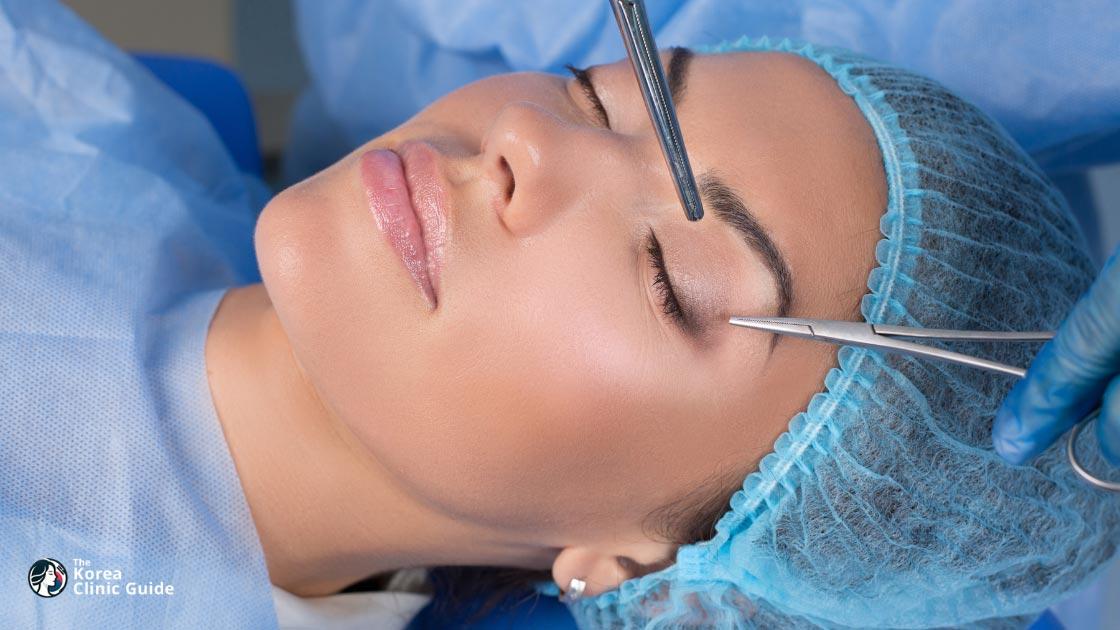
- Surgery day — After consent and surgical markings, the anesthesia plan is finalized. The surgeon performs the planned incisions, tissue release, brow elevation, fixation, and closure. An isolated brow lift commonly takes about 1–3 hours and is usually outpatient surgery.
- Monitored discharge — Recovery staff monitor pain, nausea, bleeding, and alertness before discharge. Leave with an adult after sedation or general anesthesia; do not drive. Follow the written medication, dressing, cooling, and head-elevation instructions.
- Local wound review — Dressings are commonly reviewed or removed within 1–3 days. Non-dissolving sutures or staples are often removed around 7–10 days, depending on the approach and surgeon.
- Return-home and remote review — Depart only after surgical clearance. Send requested wound photographs and attend video follow-up. Seek local urgent care and notify the Korean surgical team promptly for escalating pain, bleeding, infection signs, wound opening, new facial weakness, or eye and vision symptoms.
Alternatives to an Eyebrow Lift
Non-surgical choices offer limited or temporary change and do not reposition substantially descended forehead tissue. Surgical alternatives can be more anatomically appropriate when the primary problem is upper-lid skin excess or a low eyelid margin rather than brow ptosis.
Upper Blepharoplasty
Upper blepharoplasty removes or redistributes excess upper-eyelid skin and, where indicated, fat.
- Best fit — Hooding caused mainly by redundant eyelid skin rather than a low brow.
- Trade-off — It does not elevate a descended brow and can be combined with a brow lift when examination shows both problems.
Ptosis Correction
Ptosis correction addresses a low eyelid margin related to levator or eyelid-lifting function.
- Best fit — The eyelid margin covers too much of the pupil, rather than skin simply folding over the lid.
- Trade-off — It corrects eyelid height, not forehead or brow position; ocular-surface and eyelid-function assessment is essential.
Subbrow Lift
A subbrow lift removes skin below the eyebrow to reduce selected upper-lid hooding.
- Best fit — Patients whose concern is localized upper-lid skin excess near the brow.
- Trade-off — It does not provide the forehead repositioning of a full brow lift and leaves a scar beneath the brow.
Botulinum Toxin
Facial Botox can weaken selected brow-depressor muscles to create a modest temporary chemical brow lift.
- Best fit — Mild asymmetry or minor brow-tail descent with suitable muscle activity.
- Trade-off — It cannot correct substantial tissue descent and requires repeat injections.
Eyebrow Thread Lift
An eyebrow thread lift uses temporary threads for a lower-commitment lift.
- Best fit — People seeking a modest, non-surgical change and accepting a temporary result.
- Trade-off — It is not equivalent to surgical repositioning for meaningful brow ptosis and has thread-related risks.
How Can I Prepare for an Eyebrow Lift?
- Medication and supplement review — Give the surgeon and anesthetist a complete list of prescription medicines, aspirin, NSAIDs, anticoagulants, antiplatelet drugs, vitamins, herbal products, and recreational substances well before surgery. Do not stop prescribed blood thinners or other prescription medicines independently; the prescribing clinician and surgeon must make that plan together.
- Nicotine cessation — Stop smoking, vaping, nicotine replacement, and other nicotine exposure for the surgeon-specified preoperative and postoperative interval. Nicotine impairs blood flow and wound healing.
- Alcohol and substances — Avoid heavy alcohol use and disclose cannabis or other recreational substances because they can affect anesthesia, bleeding, and recovery planning.
- Fasting — Follow the facility’s exact fasting instructions for food, liquids, and regular medicines when sedation or general anesthesia is planned. Do not use generic internet fasting schedules instead.
- Health disclosure — Report recent illness, fever, cold sores, scalp or facial rashes, dry-eye symptoms, vision issues, new medicines, pregnancy status where relevant, allergies, and any history of bleeding, clotting, or anesthesia problems.
- Hair and skin — Follow the clinic’s instructions on washing hair and avoiding hair products, makeup, or scalp treatments before surgery. Do not shave or alter the planned hairline/incision area unless directed.
- Transport and companion — Arrange a responsible adult to escort you from the facility and stay overnight after outpatient anesthesia. Book accommodation that allows head elevation and easy access to the clinic.
- Travel schedule — Avoid intensive sightseeing, swimming, saunas, steam rooms, direct sun, and rigid return flights during the early recovery period.
Travel note: Bring enough routine medication for the full trip, carry it in original labeled containers, and keep copies of prescriptions and medical records accessible.
Confirm the treating surgeon’s individualized medicine-stop periods, fasting rules, arrival time, and travel requirements; those instructions take precedence over general guidance.
Aftercare Advice
Protect the incisions and eyes, control swelling, and stay locally available for the early reviews your surgeon schedules.
- Head elevation and cooling — Rest with the head elevated as instructed and use cool compresses only in the approved manner. Do not place pressure directly on the forehead or incision sites.
- Medicines and wound care — Take only approved analgesics and follow the written schedule for dressings, washing, hair care, and incision treatment. Do not apply unapproved creams, hair dye, or cosmetic products near healing incisions.
- Activity restriction — Avoid bending, straining, heavy lifting, vigorous exercise, and high-impact activity until cleared. Desk work is often possible after 10–14 days, but bruising and swelling can remain visible for about 2 weeks.
- Heat, sun, and contact — Avoid saunas, steam rooms, hot baths, swimming, and direct sun during early healing. Once wounds have closed, use SPF 50 protection and follow scar-care instructions to reduce ultraviolet-related scar darkening.
- Expected sensations — Tightness, itching, swelling, bruising, and temporary forehead or scalp numbness are common. Report symptoms that worsen rather than steadily improve.
- Urgent warning signs — Contact the clinic urgently for rapidly increasing swelling, uncontrolled bleeding, fever, spreading redness, pus or drainage, severe escalating pain, wound opening, new facial weakness, vision changes, severe eye pain or dryness, chest pain, shortness of breath, or palpitations.
- Result timeline — Early elevation is visible as swelling settles, while sensation, forehead tightness, and scars continue to mature for weeks to months. Expect the forehead to take up to about 6 months to fully settle.
Follow the treating doctor’s instructions over general advice, and contact the clinic promptly whenever healing appears abnormal.
Frequently Asked Questions
Related Blogs
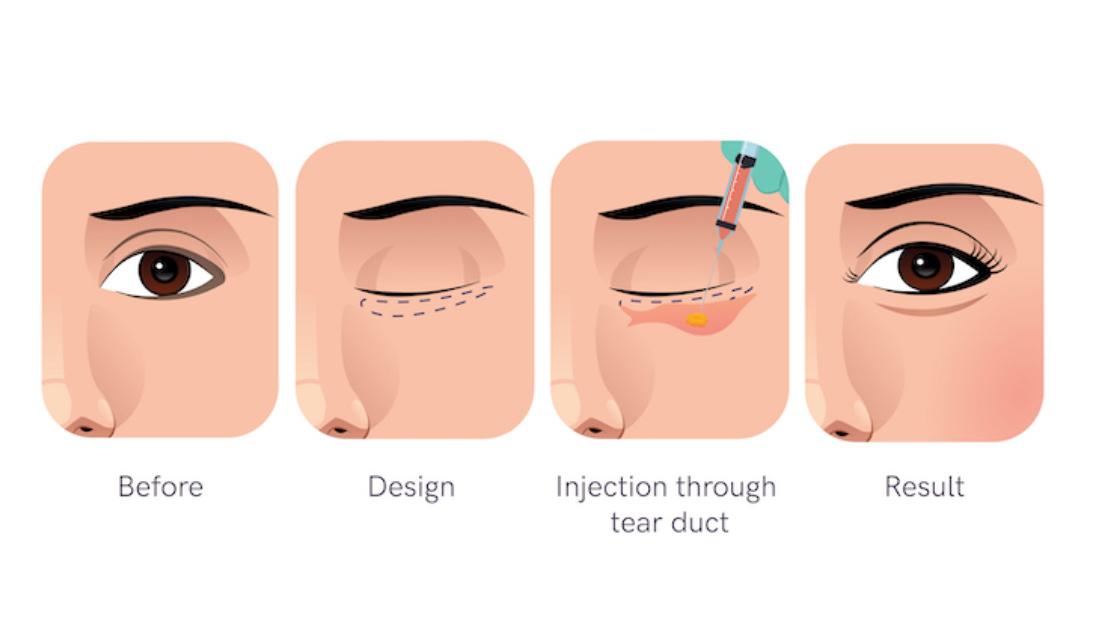
Love Band Surgery in Korea: Methods, Recovery, Risks and Travel Planning
Love band surgery augments the narrow pretarsal aegyo-sal roll beneath the lower lashes using HA filler, fat, grafts, implants, or tissue plication, with method-specific reversibility, recovery, and revision considerations. The article covers candidate screening, Korea travel planning, treatment steps, aftercare, emergency warning signs, follow-up, and alternatives for eye bags, tear troughs, laxi
Updated: Sep 15, 2026
Revision Eye Surgery in Korea: Methods, Recovery, Risks and Travel Planning
Revision eye surgery addresses healed concerns after prior eyelid procedures through scar release, crease or ptosis correction, volume restoration, or lower-lid support while protecting blink and corneal function. In Korea, plan at least 10–14 days for early review and possible suture removal; prices are ₩2,600,000–₩7,500,000 (about US$1,900–$5,600).
Updated: Sep 15, 2026
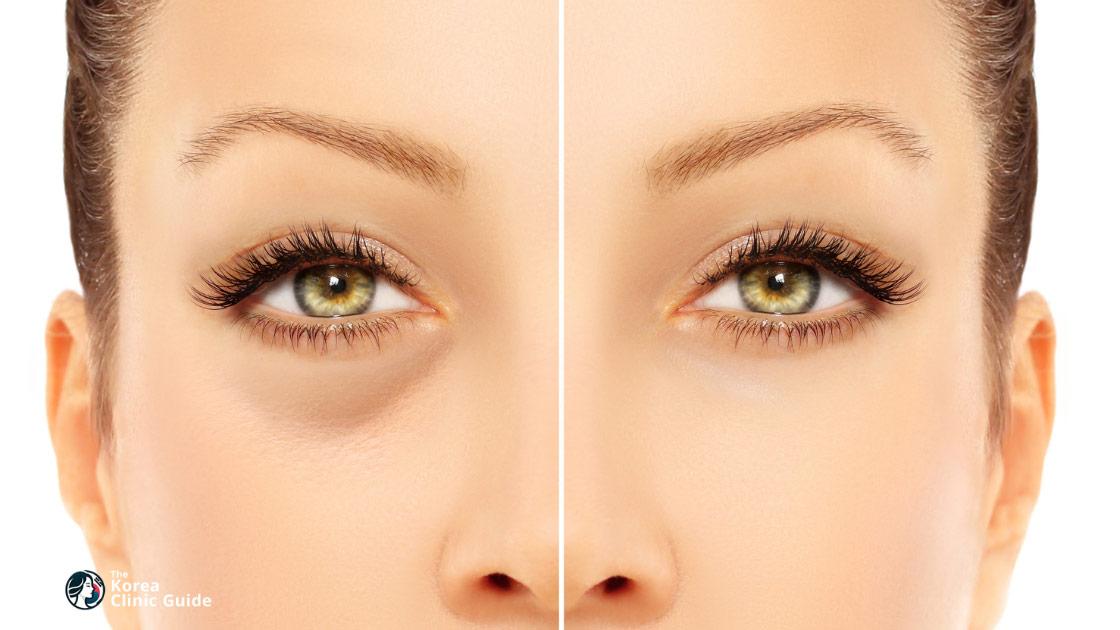
Under Eye Fat Grafting in Korea: Candidacy, Recovery, Risks, and Travel Planning
Under-eye fat grafting uses harvested, processed fat placed in small parcels to restore tear-trough and lid-cheek volume; Korea pricing is ₩1,000,000–₩2,000,000 (about US$700–$1,500). International patients should plan 8–10 days for assessment, outpatient treatment, early review and pre-flight clearance, with swelling and bruising often visible for 1–2 weeks.
Updated: Sep 14, 2026
Eyelid Fat Removal or Repositioning in Korea: Methods, Recovery, Risks and Travel Planning
Lower blepharoplasty uses an internal or external incision to conservatively remove or reposition under-eye fat, with skin removal or lid support added when anatomy requires it. The article covers candidacy, Korea travel planning, procedure steps, recovery, aftercare, alternatives, and urgent warning signs.
Updated: Sep 14, 2026
Clinics offering Eyebrow Lift

SH Clinic: Comprehensive Women's, Men's & Couples' Health Services in Korea
Sinsa

THEPLUS Plastic Surgery Korea | Eye, Nose, Face & Body Surgery
Sinsa

Made Young Plastic Surgery: Rejuvenating Aesthetic Excellence in Korea for Face Lifts, Contouring and More
Gangnam Station

LABOM Plastic Surgery: Expertise in Non-Surgical Nose, Facial Lifting & Anti-Aging Surgeries in Korea
Apgujeong