
Medical Tourism Blog
Blepharoplasty in Korea: Types, Recovery, Travel Planning, and Safety
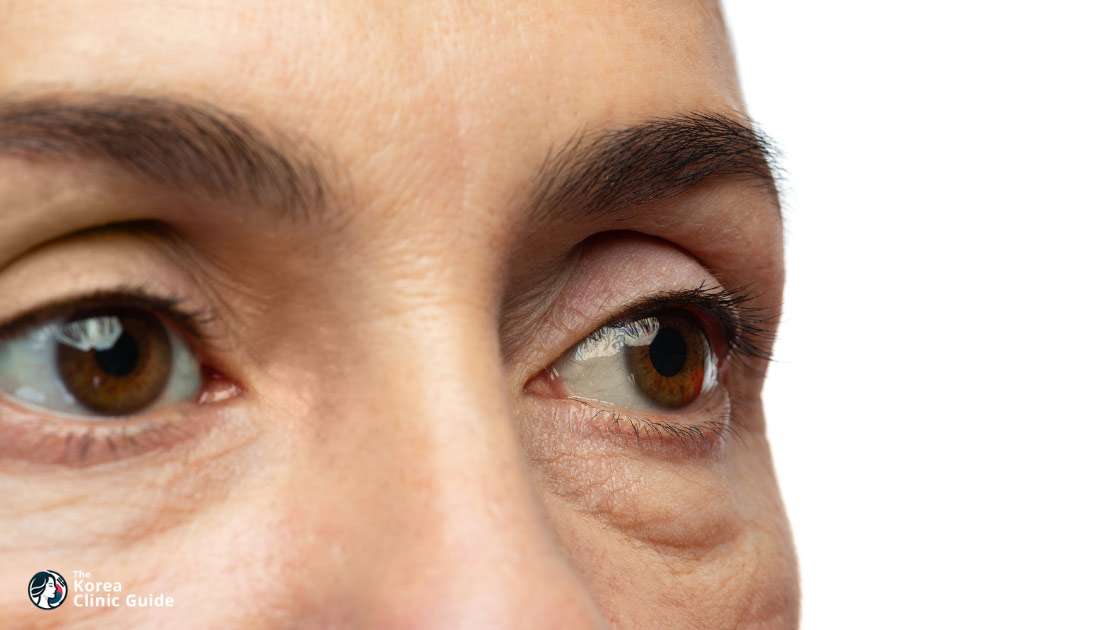
Table of contents
- Blepharoplasty at a Glance
- What Is Blepharoplasty?
- Who Is a Good Candidate for Blepharoplasty?
- What Are the Different Types of Blepharoplasty?
- Why Visit Korea for Blepharoplasty?
- Key Information for International Patients
- Which Are the Best Clinics in Korea for Blepharoplasty?
- How Much Does Blepharoplasty Cost in Korea?
- Blepharoplasty From Start to Finish
- Alternatives to Blepharoplasty
- How Can I Prepare for Blepharoplasty?
- Aftercare Advice
Considering treatment in Korea? Everything you need to know e.g. — how to avoid scams, visas, interpreters, recovery tips — in our Medical Tourism Master Guide. Plan with confidence in minutes, not weeks!
Last updated: September 2026
Blepharoplasty at a Glance
- What it treats — Blepharoplasty reshapes upper or lower eyelid skin and fat to improve hooding, under-eye bags, excess skin, or lid-cheek contour; upper surgery may also relieve visual-field obstruction from excess tissue.
- Korea cost — Blepharoplasty in Korea typically costs ₩3,000,000–₩8,000,000 (about US$2,200–US$5,900), with lower-lid work, combined surgery, ptosis repair, canthal support, and anesthesia increasing the quote.
- Recovery timeline — Swelling and bruising are usually most noticeable for 10–14 days, while scar redness, numbness, crease height, and final contour can continue settling for several months.
- Travel commitment — International patients should stay in Korea at least 7–10 days after incisional surgery; 10–14 days provides more time for suture care and early reviews, and long-haul travel requires the surgeon’s explicit clearance.
- Long-term results — Upper-lid results often last 5–7 years or longer, while lower-lid surgery is generally long-lasting and less commonly repeated, although natural aging and volume changes continue.
- Key limitation and risk — Blepharoplasty does not correct true ptosis, meaning a low eyelid margin may require ptosis repair; lower-lid surgery also carries a meaningful risk of retraction, ectropion, dry eye, or incomplete eye closure in susceptible anatomy.
- Korea-specific planning — Korean consultations are particularly relevant for double-eyelid and crease-revision goals because they commonly assess fold dynamics, epicanthal anatomy, levator function, ptosis, and symmetry; verify foreign-patient registration, surgeon credentials, anesthesia arrangements, and written aftercare before booking.
What Is Blepharoplasty?
Blepharoplasty is eyelid surgery that reshapes excess skin and fat in the upper lids, lower lids, or both. It can reduce eyelid hooding, under-eye bags, and selected vision obstruction caused by excess upper-lid tissue. It is a surgical procedure.
Who Is a Good Candidate for Blepharoplasty?
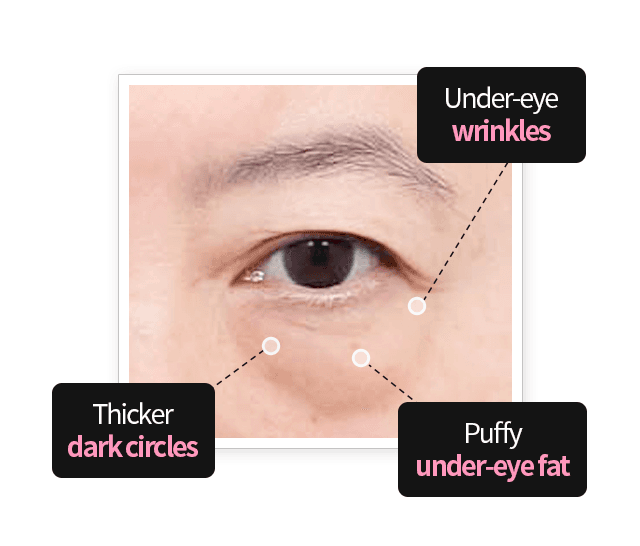
- Upper-lid concerns — Good candidates have dermatochalasis (loose upper-eyelid skin), a poorly defined crease, or upper-lid tissue that contributes to a heavy appearance or superior visual-field obstruction.
- Lower-lid concerns — Lower blepharoplasty suits selected people with under-eye fat bags, excess lower-lid skin, or a lid-cheek hollow that can be improved through fat preservation, repositioning, or conservative removal.
- Double-eyelid goals — Adults seeking creation or revision of a supratarsal fold need a plan based on lid thickness, fat distribution, levator function, epicanthal anatomy, symmetry, and the fold’s movement when the eyes open.
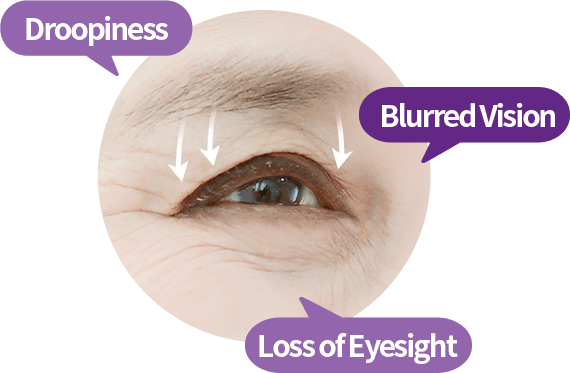
- Functional concerns — Patients whose eyelid margin sits low near the pupil need assessment for ptosis; upper-eyelid blepharoplasty does not correct true eyelid-margin droop.
- Travel readiness — Suitable overseas patients can remain in Korea for early reviews, arrange a responsible adult after sedation or general anesthesia, and establish local follow-up before returning home.
Elective surgery should be postponed for active blepharitis, conjunctivitis, eyelid infection, unstable dry eye, corneal disease, or untreated glaucoma concerns. Poorly controlled diabetes or hypertension, bleeding disorders, and anticoagulant or antiplatelet treatment require coordinated clearance; never stop warfarin, aspirin, or other prescribed blood-thinning medicine independently. Prominent eyes, thyroid eye disease, poor blink, facial nerve weakness, previous lower-lid surgery, marked lower-lid laxity, or negative-vector anatomy increase the risk of lower-lid retraction or ectropion and require particularly cautious specialist planning. Realistic expectations are essential: eyelid surgery improves selected tissue and contour problems but does not stop facial aging or guarantee perfect symmetry.
What Are the Different Types of Blepharoplasty?
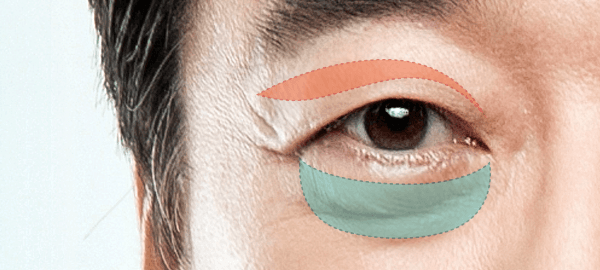
The correct type depends on whether the main issue is skin excess, a low lid margin, brow descent, fat prominence, lower-lid laxity, or a hollow lid-cheek junction.
- Upper blepharoplasty — A crease incision permits conservative skin removal and selected fat reshaping. It can be cosmetic or functional when excess tissue affects the superior visual field.
- Lower blepharoplasty — This addresses eye bags, skin excess, laxity, and lid-cheek contour. Because lower-lid position is delicate, the plan may include fat preservation or repositioning and lateral canthal support rather than skin removal alone.
- Combined upper and lower surgery — Treating both areas in one operation avoids two anesthetic episodes but increases swelling, bruising, and early eye-surface care requirements.
- Asian or double-eyelid blepharoplasty — This creates or refines an upper-lid fold. Fold height and shape should be individualized; a copied crease design can look unnatural or worsen asymmetry.
- Transconjunctival lower blepharoplasty — The incision is inside the lower eyelid, with no external lower-lash scar. It is commonly considered when fat prominence exists with little excess skin.
- Subciliary lower blepharoplasty — An incision just beneath the eyelashes provides access for skin treatment and broader lower-lid reshaping. Canthopexy or canthoplasty can be added when lid support is needed.
Why Visit Korea for Blepharoplasty?
Korea is particularly relevant for patients seeking double-eyelid surgery, upper-lid crease revision, or evaluation of epicanthal anatomy alongside eyelid shape. A remote consultation can help define goals, but it cannot replace a hands-on eyelid, lid-position, and ocular-surface examination in Korea. Published Korean technical literature demonstrates local experience, not proof that Korean outcomes are superior to those elsewhere.
- Crease-focused planning — Korean eyelid consultations often address fold dynamics, epicanthal anatomy, levator function, ptosis, and revision concerns that are central to Asian upper-lid surgery.
- Foreign-patient verification — Check whether a hospital or clinic appears in the Ministry of Health and Welfare/KHIDI registered medical-institution system, then independently verify the operating surgeon’s specialty, licensure, anesthesia provider, emergency arrangements, and language-accessible consent.
- Evidence limitation — Lower-eyelid studies use varied techniques and inconsistent complication reporting. A 2025 systematic review found generally low reported complication rates but called for stronger comparative evidence; this does not establish a universally best approach or country.
- Communication safeguards — Request written consent, postoperative instructions, medication details, and a complication-contact plan in a language understood by the patient before committing to surgery.
Key Information for International Patients
- Minimum stay — Remain in Korea for at least 7–10 days after incisional upper or lower blepharoplasty. A 10–14-day stay gives more buffer for bruising, suture care, and early healing review.
- Flight timing — Do not book a long-haul return flight based on appearance alone. Fly only after the surgeon examines the eyes and wounds and explicitly clears travel; no universal evidence-based flight interval exists.
- Suture review — External nonabsorbable sutures, when used, often need removal during the first one to two weeks. Confirm the planned review dates before purchasing flights.
- Recovery and itinerary — Swelling and bruising are prominent for about 10–14 days. Avoid scheduling photo-intensive activities, long day trips, strenuous exercise, swimming, or spa heat during the early recovery period.
- Companion and accommodation — Arrange a responsible adult to take you home and stay the first night after sedation or general anesthesia. Stay near the clinic, with an elevator, refrigeration for cold compresses, and reliable access to food and pharmacy services.
- Remote follow-up — Before departure, obtain the operative note, medication list, discharge instructions, and pre- and postoperative photographs. Arrange an ophthalmologist, oculoplastic surgeon, or plastic surgeon at home for planned review and urgent assessment.
Travel note: Sudden vision change, double vision, severe eye pain, rapidly expanding one-sided swelling, or uncontrolled bleeding requires immediate in-person emergency care—not a message to the clinic from abroad.
Which Are the Best Clinics in Korea for Blepharoplasty?
Listed below are some of the best clinics in Korea for blepharoplasty.
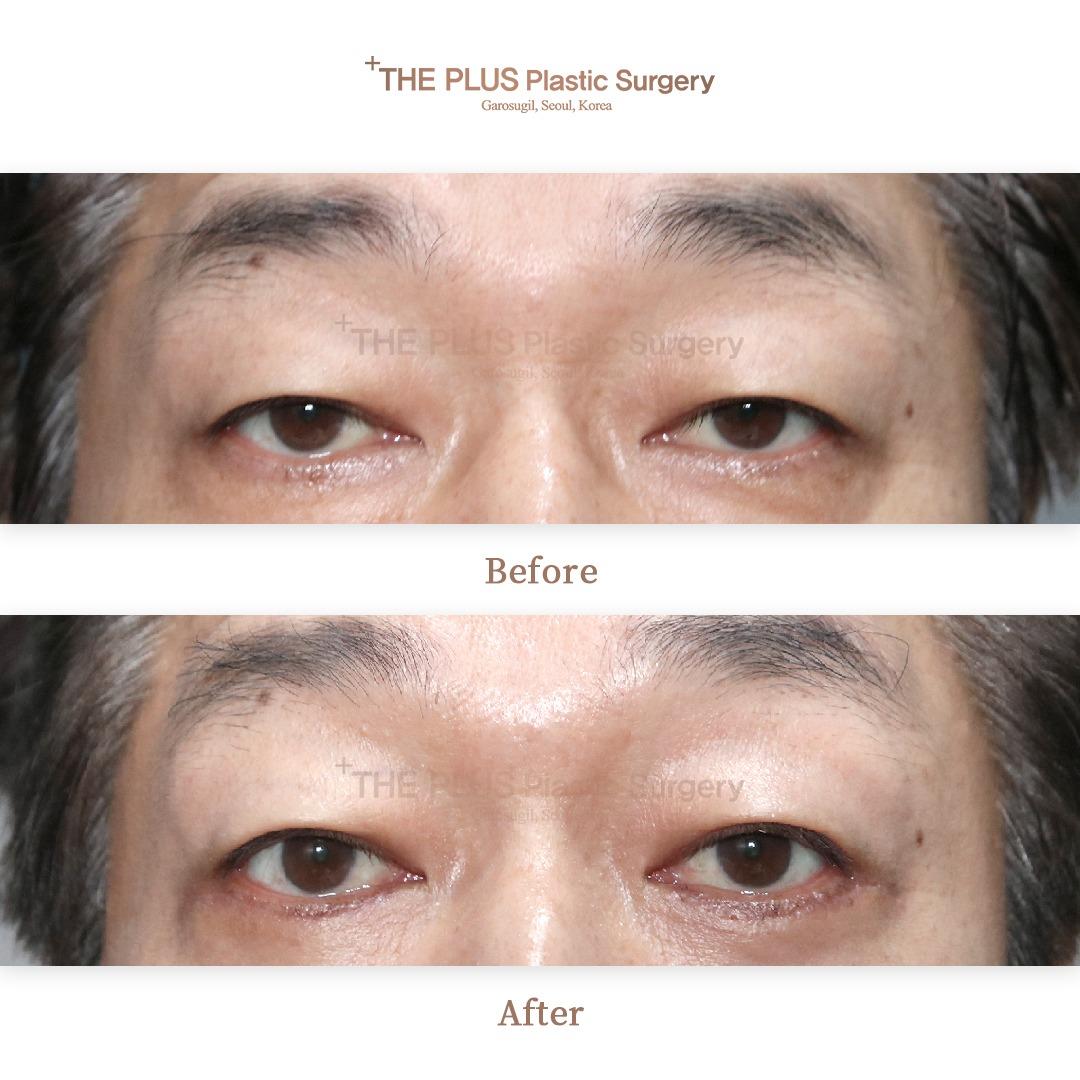
1. THEPLUS Plastic Surgery
You can consider THE PLUS Plastic Surgery for blepharoplasty if you want excess eyelid skin and tissue adjusted to create a smoother, refreshed eye contour while keeping the result aligned with your existing facial features. Its eye-surgery offerings also include double-eyelid surgery and ptosis correction, allowing the clinic to address related upper-eyelid concerns when appropriate.
- URL: THEPLUS Plastic Surgery Website
- Location: Gangnam-gu, Seoul
- Procedure details:
- Blepharoplasty is offered to remove or adjust excess skin and tissue around the eyelids.
- Double-eyelid surgery creates an upper-eyelid crease designed to suit your facial features.
- Ptosis correction addresses drooping upper eyelids by correcting the muscles that open the eyes.
- Additional notes:
- The clinic describes a personalized aesthetic approach centered on facial balance and natural-looking enhancement.
- Its surgical team includes board-certified plastic surgeons, with research and professional-society involvement described in the clinic information.
2. Made Young Plastic Surgery
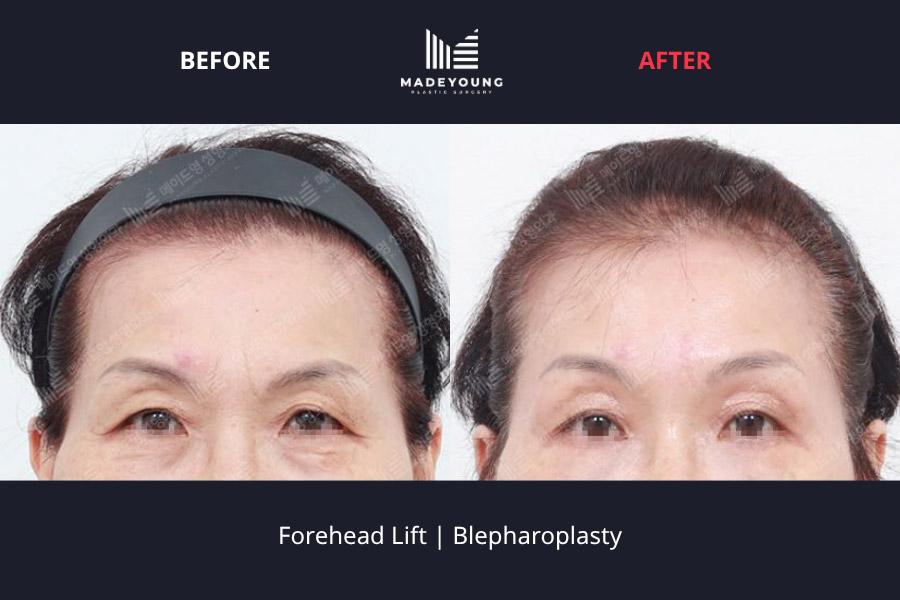
You may consider Made Young Plastic Surgery for blepharoplasty if you want upper- or lower-eyelid treatment planned around your eye shape, eyelid thickness, crease height, and overall desired image. Dr. Park Byung-Chan is described as having 15 years of experience exclusively in eye surgery, while the clinic offers direct medical-team consultation, dedicated anesthesiology monitoring, and structured aftercare.
- URL: Made Young Plastic Surgery Website
- Location: Seocho-gu, Seoul
- Procedure details:
- Upper blepharoplasty removes excess upper-eyelid skin and fat to address hooding; the clinic notes potential improvement in both visual field and appearance.
- Lower blepharoplasty treats under-eye bags through fat removal or repositioning and may include skin tightening.
- Incisional and non-incisional double-eyelid surgery, ptosis correction, canthoplasty, and dark-circle treatments are also offered.
- Eye-surgery experience:
- Dr. Park Byung-Chan is described as having 15 years dedicated exclusively to eye surgery.
- The clinic states that incision lines, double-eyelid height, eyelid thickness, and overall eye design are customized.
- Safety and aftercare:
- Full-time board-certified anesthesiologists are on site, with one anesthesiologist assigned to continuous one-to-one monitoring.
- The clinic describes an emergency cross-check system, procedure-room CCTV coverage, and a separate aftercare center.
3. RINE Plastic Surgery Clinic
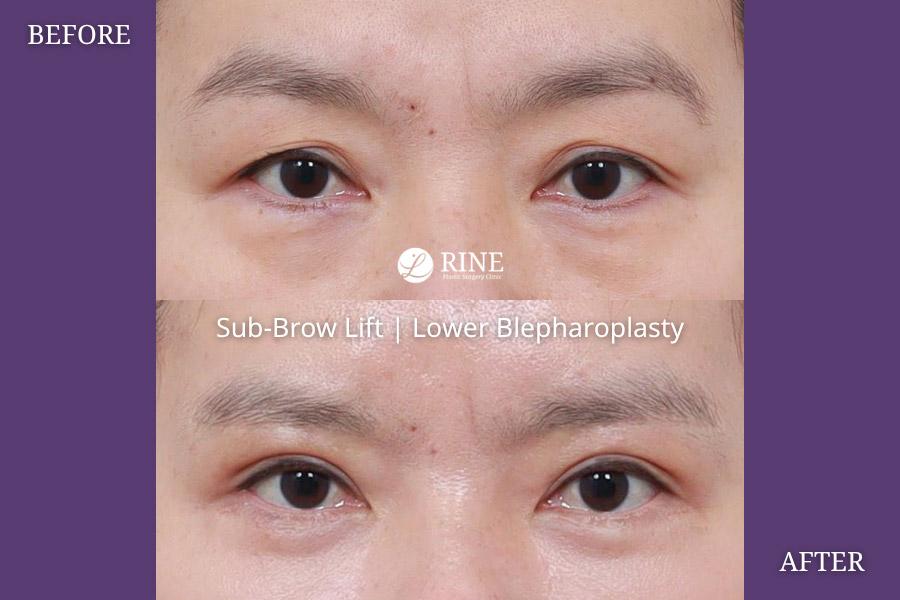
You may consider RINE Plastic Surgery Clinic for blepharoplasty if you want a director-led, one-to-one plan for upper-eyelid hooding or lower-eyelid bags, hollows, and laxity. Director Jang Nam personally handles consultation, surgery, treatment, and recovery, and the clinic describes more than 10,000 eye surgeries performed by its director; for lower blepharoplasty, it can combine eyelid correction with midface lifting to address the eyelid-cheek junction.
- URL: RINE Plastic Surgery Clinic Website
- Location: Seocho-gu, Seoul
- Procedure details:
- Upper blepharoplasty removes excess upper-eyelid skin and fat for hooding and heaviness; incisional and non-incisional approaches are available according to the degree of sagging.
- Lower blepharoplasty with lifting addresses lower-eyelid skin laxity, fat herniation, and reduced midface support.
- Under-eye fat repositioning redistributes orbital fat to smooth bags and hollows without removing volume.
- A subbrow lift is available for a heavy or drooping brow line while maintaining a natural brow position.
- Director-led planning:
- Director Jang Nam is described as personally overseeing every stage, from consultation through recovery.
- Plans are based on facial proportions, skin condition, and individual features, with a customized eye-line design.
- The clinic reports more than 15 years of clinical experience in eye surgery and anti-aging procedures.
- Related eye options:
- Ptosis correction, non-incisional double-eyelid surgery, canthoplasty, and revision eye surgery are available.
- Revision planning may address thick or faded creases, asymmetry, multiple folds, and scarring after prior eyelid surgery.
- Recovery and clinical resources:
- The clinic lists a full-HD endoscope, FDA-approved genuine Endotine, and WhiteLite bipolar equipment among its resources.
- Private one-person recovery rooms and a continuing postoperative-care system are described.
How Much Does Blepharoplasty Cost in Korea?
Blepharoplasty is supplied at ₩3,000,000–₩8,000,000 (approximately US$2,200–US$5,900). Individual quotes vary because the surgical plan can range from a limited upper-lid procedure to lower-lid or combined surgery requiring more extensive tissue work and perioperative resources.
| Procedure Price | Korean Won (₩) | USD ($) |
|---|---|---|
| Low Price | ₩3,000,000 | $2,200 |
| High Price | ₩8,000,000 | $5,900 |
Exchange rate as of 2026-09-06: 1 KRW = 0.000741 USD.
What Affects the Price?
- Upper, lower, or combined eyelid treatment — Upper blepharoplasty generally focuses on skin, selected fat, and crease work through the upper-lid fold. Lower blepharoplasty may address bags, skin excess, lid–cheek contour, and laxity; treating both upper and lower lids in one session expands the operative field, operating time, anesthesia requirements, and early aftercare needs.
- Lower-lid access and fat treatment — A transconjunctival lower procedure works through an incision inside the lid and is often used for fat prominence with little skin excess. A subciliary approach provides access for skin removal and broader lower-lid work, while fat repositioning adds tissue handling to improve the lid–cheek or tear-trough contour; these choices require different operative steps and consumables.
- Ptosis correction or lateral canthal support — Ptosis repair addresses a low eyelid margin rather than excess skin alone and requires correction of eyelid-opening mechanics. Canthopexy or canthoplasty may be required when lower-lid laxity or malposition risk needs support. Either addition increases surgical complexity, operating time, and postoperative monitoring compared with standalone blepharoplasty.
- Anesthesia plan — Blepharoplasty may be performed with local anesthetic and oral or IV sedation, or under general anesthesia. Sedation or general anesthesia requires anesthesia personnel, medication, monitoring, recovery-space use, and discharge arrangements beyond a local-anesthetic-only plan.
Cost tip: Request an itemized quote that states what is included, particularly the planned eyelid areas and technique, anesthesia, facility and recovery use, medications or consumables, and scheduled postoperative reviews or suture removal.
The US$2,200–US$5,900 conversion is approximate, based on the exchange rate dated 2026-09-06. Check the exchange rate again when budgeting.
Blepharoplasty From Start to Finish
- Remote inquiry and consultation — Send standardized photographs, goals, medical history, allergy list, medication and supplement list, previous eyelid or eye-operation records, and dry-eye symptoms through a secure channel. Ask whether English consultation and written English instructions are available.
- Travel and safety planning — Confirm the facility’s foreign-patient registration, surgeon credentials, anesthesia arrangements, early review schedule, and emergency contact pathway. Book flexible travel and accommodation close to the clinic.
- In-person eyelid assessment — The surgeon distinguishes skin excess from brow descent, ptosis, fat prolapse, tear-trough contour, lid laxity, asymmetry, and ocular-surface disease. Evaluation can include lid position, blink, eye closure, fat distribution, standardized photographs, and a dry-eye or eye examination when indicated.
- Testing and clearance — Blood tests, ECG, pregnancy testing, and medical clearance depend on health history, age, anesthesia plan, and facility policy. Contact-lens users, people with prior LASIK or other eye surgery, and patients with ocular symptoms need tailored assessment.
- Marking and anesthesia — The surgeon marks planned incisions while upright to account for natural lid position and crease dynamics. Cases use local anesthetic with oral or IV sedation or general anesthesia, depending on the operation and patient factors.
- Surgery — Upper surgery is performed through the planned crease. Lower surgery uses either an internal transconjunctival route or an external subciliary incision; fat is preserved, repositioned, or conservatively removed, and canthal support is added when anatomy requires it. Uncomplicated cosmetic cases are commonly outpatient procedures.
- Discharge and early recovery — A companion takes the patient to nearby accommodation. Use prescribed drops, ointment, and pain medicine exactly as directed, begin cold compresses if instructed, and attend all scheduled reviews.
- Suture care and travel clearance — The operating team checks wound healing, eye closure, vision symptoms, swelling, and lower-lid position, then removes sutures when applicable. Delay departure for significant dry eye, wound concerns, vision symptoms, or combined procedures such as ptosis correction or fat grafting.
- Home-country follow-up — Send requested healing photographs and attend local review if arranged. Final crease height, scars, numbness, and lower-lid contour settle over months, so do not assess final symmetry during the first weeks.
Alternatives to Blepharoplasty
Alternatives should address the actual anatomical cause. Surgery provides the most direct correction for meaningful skin excess, fat bags, or laxity; non-surgical options do not remove excess skin and have narrower indications.
Ptosis Correction
Ptosis correction raises a low eyelid margin when it encroaches on the pupil or creates an asymmetric opening.
- Best suited to — True lid-margin droop rather than simple excess skin.
- Tradeoff — It can be combined with upper blepharoplasty, but skin removal alone will not reliably fix ptosis.
Brow or Forehead Lift
An eyebrow lift or forehead lift addresses brow descent that pushes tissue onto the upper eyelid.
- Best suited to — Heaviness driven mainly by a descended brow.
- Tradeoff — It treats brow position rather than lower-lid bags or a low eyelid margin.
Under-Eye Fat Treatment
Under-eye fat removal or repositioning focuses on lower-lid fat prominence and can use an internal incision when excess skin is limited.
- Best suited to — Under-eye bags with little skin redundancy.
- Tradeoff — It does not substitute for skin tightening or canthal support when laxity is significant.
Under-Eye Filler or Fat Grafting
Under-eye filler and under-eye fat grafting add volume to selected hollows.
- Best suited to — Volume loss without substantial bags, skin excess, or lower-lid laxity.
- Tradeoff — Filler does not remove fat bags and can be unsuitable for patients prone to edema; graft survival and contour are less predictable than a simple filler correction.
Revision Eyelid Surgery
Revision eye surgery is for persistent asymmetry, an unsatisfactory crease, scarring, or functional complications after prior eyelid surgery.
- Best suited to — Fully assessed concerns after previous surgery.
- Tradeoff — Revision is usually deferred until tissues settle unless a functional problem requires earlier treatment.
How Can I Prepare for Blepharoplasty?
- Disclose every medicine — Provide prescription drugs, over-the-counter products, vitamins, fish oil, vitamin E, herbal products, aspirin, NSAIDs, anticoagulants, antiplatelet drugs, diabetes medicines, and psychiatric medicines well before surgery. The surgeon and prescribing clinician must coordinate any changes; do not stop prescribed medication on your own.
- Follow fasting instructions exactly — Confirm the required fasting time for food, liquids, alcohol, and routine medicines when sedation or general anesthesia is planned. Facility instructions take precedence.
- Stop nicotine on the clinic’s schedule — Tell the team about cigarettes, vaping, nicotine pouches, patches, and gum. Nicotine impairs wound healing, and elective surgery should be postponed when required abstinence cannot be maintained.
- Prepare the eye area — Treat active eyelid or eye infection before surgery. Arrive without eye makeup, false lashes, or contact lenses unless the clinic gives different instructions; bring glasses for recovery.
- Arrange postoperative support — Book a companion for discharge and the first night, nearby lodging, and a reachable phone number. Do not plan to drive after sedation or general anesthesia.
- Protect the itinerary — Avoid heavy alcohol intake and sun exposure before surgery as instructed, book flexible flights, and leave enough time for wound checks and possible suture removal.
- Collect records — Bring prior operative reports, eye records, and details of refractive surgery, glaucoma, thyroid eye disease, dry eye, allergies, and previous reactions to anesthesia.
Travel note: Confirm before travel who provides urgent eye assessment after hours, whether an interpreter is available, and what documentation the clinic will give you for follow-up at home.
Confirm the treating surgeon’s written, clinic-specific requirements, which take precedence over general preparation guidance.
Aftercare Advice
Protecting eye closure, the ocular surface, and the lower-lid position is as important as caring for the incision.
- Drops, ointment, and compresses — Use prescribed eye drops, lubricants, ointment, and incision medication exactly as directed. Cold compresses are commonly used for the first 48–72 hours; keep them clean and avoid pressure on the eyelids.
- Head elevation and activity — Sleep with the head elevated for several days. Avoid rubbing the eyes, bending, straining, heavy lifting, jogging, aerobics, swimming, and contact activity until cleared; lower-lid surgery, ptosis repair, canthoplasty, and fat grafting often need more cautious restrictions.
- Contact lenses, heat, and sun — Wear glasses until the surgeon permits contact lenses. Avoid saunas, hot baths, steam rooms, and intense heat during early recovery. Protect healing skin from wind and sun, using sunglasses and SPF 50 around healed incisions when approved.
- Expected recovery — Temporary blurred vision from ointment, tearing, light sensitivity, numbness, swelling, bruising, and mild discomfort can occur. Bruising and swelling usually improve substantially in 10–14 days, while incision redness, scar maturation, crease height, and final contour continue settling for several months.
- Urgent warning signs — Seek immediate in-person care for decreased or lost vision, new double vision, severe or escalating pain, rapidly expanding one-sided swelling, uncontrolled bleeding, inability to close the eyes, fever, pus-like drainage, marked redness, or shortness of breath. Rare retrobulbar hemorrhage can threaten vision and is time-critical.
- Results and follow-up — Upper-lid results often last 5–7 years or longer; lower-lid surgery is generally long-lasting, although aging and volume change continue. Keep every early review and do not judge symmetry or request revision until healing is sufficiently complete unless the surgeon identifies a functional concern.
Follow the treating doctor’s individualized instructions and contact the clinic promptly when anything appears wrong.
Frequently Asked Questions
Related Blogs

Upper Blepharoplasty in Korea: Methods, Recovery, Risks, and Travel Planning
Upper blepharoplasty conservatively removes excess upper-lid skin and, when indicated, limited muscle or fat after assessment of ptosis, brow position, eyelid closure, and eye health. International patients should plan a 7–10-day stay in Korea, attend early follow-up, arrange flexible travel and aftercare, and seek urgent assessment for vision changes or severe swelling.
Updated: Oct 13, 2026
Lower Canthoplasty in Korea: Methods, Recovery, Risks, and Travel Planning
Lower canthoplasty includes lower-eyelid-lowering and lateral canthal techniques, with candidacy based on lid support, ocular-surface health, and realistic anatomical goals. International patients can find guidance on technique clarification, 8–10 day travel planning, follow-up, aftercare, and urgent eye symptoms.
Updated: Oct 13, 2026
Upper Canthoplasty in Korea: Methods, Recovery, Risks and Travel Planning
Upper canthoplasty releases or redrapes the upper-medial epicanthal fold to improve visibility of an upper-eyelid crease, often alongside double-eyelid surgery. The article covers candidacy, surgical approaches, recovery, aftercare, travel planning for Korea, and warning signs requiring urgent eye care.
Updated: Oct 13, 2026
Epicanthoplasty in Korea: Methods, Recovery, Risks and Travel Planning
Epicanthoplasty is an outpatient procedure that releases and redrapes inner-eye-corner tissue to permanently reduce an epicanthal fold, with technique selected for anatomy, scar risk, and treatment goals. International patients should plan a 7–10-day stay for assessment and early wound review, follow aftercare restrictions, and arrange local eye-care follow-up after travel.
Updated: Oct 13, 2026
Clinics offering Blepharoplasty

RINE Plastic Surgery Clinic | Facelift and Eye Rejuvenation Surgery
Nonhyeon

SH Clinic: Comprehensive Women's, Men's & Couples' Health Services in Korea
Sinsa

THEPLUS Plastic Surgery Korea | Eye, Nose, Face & Body Surgery
Sinsa

Made Young Plastic Surgery: Rejuvenating Aesthetic Excellence in Korea for Face Lifts, Contouring and More
Gangnam Station