
Medical Tourism Blog
Subbrow Lift in Korea: Candidates, Surgery, Recovery, and Travel Planning
Table of contents
- Subbrow Lift at a Glance
- What Is a Subbrow Lift?
- Who Is a Good Candidate for a Subbrow Lift?
- How Is a Subbrow Lift Performed?
- Why Visit Korea for a Subbrow Lift?
- Key Information for International Patients
- Which Are the Best Clinics in Korea for Subbrow Lift?
- How Much Does a Subbrow Lift Cost in Korea?
- Subbrow Lift From Start to Finish
- Alternatives to a Subbrow Lift
- How Can I Prepare for a Subbrow Lift?
- Aftercare Advice
Considering treatment in Korea? Everything you need to know e.g. — how to avoid scams, visas, interpreters, recovery tips — in our Medical Tourism Master Guide. Plan with confidence in minutes, not weeks!
Last updated: September 2026
Subbrow Lift at a Glance
- What it treats — A subbrow lift removes a tailored strip of skin directly beneath the eyebrow to reduce upper-lid skin laxity and lateral hooding while preserving the existing eyelid crease.
- Korea cost — A standalone subbrow lift in Korea is listed at ₩3,000,000–₩4,000,000 (about US$2,200–$3,000); deeper fixation, sedation or general anesthesia, and combined eyelid procedures raise the quote.
- Best candidates — It is best suited to mild-to-moderate outer upper-eyelid hooding in people with enough eyebrow density to camouflage a permanent under-brow incision and who want to retain their native crease.
- Recovery timeline — External sutures are usually removed on days 5–7; swelling and bruising commonly improve over 1–2 weeks, while scar redness, contour, and symmetry continue settling for 3–6 months.
- Korea stay — International patients should plan at least 8–10 days in Korea for examination, outpatient surgery, an early wound review, and suture removal, and should not take a long-haul flight until cleared by the surgeon.
- Key limitation and risk — This is not a true brow lift or a repair for levator-related eyelid ptosis; visible or widened scarring, dry eye, incomplete eyelid closure, asymmetry, bleeding, and rare urgent vision complications are possible.
- Korea distinction — Korea has longstanding clinical experience with infrabrow surgery, but clinic quality varies; international patients should verify the facility’s foreign-patient registration and the operating doctor’s relevant specialty credentials.
What Is a Subbrow Lift?
A subbrow lift is an operation that removes a tailored strip of skin from just beneath the eyebrow to refresh the upper-eye area. It addresses excess upper-eyelid skin and outer-lid hooding, helping the eyes appear more open while preserving the natural eyelid crease. It is a surgical procedure.
Who Is a Good Candidate for a Subbrow Lift?
- Lateral upper-lid hooding — Good candidates have mild-to-moderate excess skin, especially at the outer upper eyelid, that creates a heavy or folded appearance.
- Native crease preservation — The infrabrow incision removes skin below the eyebrow rather than making the main incision in the lid crease, making it relevant for people who want to preserve their existing upper-lid crease.
- Scar camouflage potential — Adequate eyebrow density is important because the permanent incision follows the lower eyebrow border.
- Clear anatomical goal — Candidates understand that the operation treats redundant skin and selected soft tissue below the brow; it is not primarily a brow-elevation operation.
- Reliable follow-up access — International patients need to remain in Korea for early review and typical external suture removal around day 5–7.
There is no evidence-based age cutoff; suitability depends on completed facial development, skin laxity, brow position, eye health, and surgical goals rather than age alone. True eyelid ptosis from levator-muscle dysfunction requires assessment for ptosis correction, not a skin-only subbrow lift. Severe brow descent, forehead laxity, central/medial lid excess, or eyelid hollowing can require a different operation or combination plan. Defer elective surgery for active periocular infection, uncontrolled dry eye or ocular-surface disease, unexplained visual symptoms, unstable medical illness, nicotine exposure that breaches the surgeon’s cessation policy, or expectations that do not accept a permanent under-brow scar. Anticoagulants and antiplatelet medicines require a plan agreed by the prescribing clinician and surgeon; never stop prescribed aspirin, warfarin, apixaban, clopidogrel, or similar medication independently.
How Is a Subbrow Lift Performed?
Subbrow lift methods differ mainly in how much tissue is removed and whether the surgeon adds deeper support. The appropriate approach follows an in-person examination of brow position, eyelid closure, lid-margin height, dry-eye risk, and the location of skin excess.
- Skin-predominant infrabrow excision — The surgeon removes a tailored ellipse of skin directly below the eyebrow and closes the incision along its lower border. This approach targets skin laxity and lateral hooding.
- Deeper fixation or suspension — Some techniques anchor orbicularis muscle, brow fat, or skin-muscle tissue to periosteum or frontalis for added lateral support. A randomized study of 70 patients and 140 eyes reported better measured relaxation and wrinkle scores through 12 months with one periosteal-fixation technique than with skin-only surgery; this does not establish that fixation is necessary for every patient.
- Frontalis-sling or orbicularis-to-frontalis technique — This technical variation aims to support lateral orbital tissues. It is not proven to be universally superior.
- Combination surgery — A surgeon can combine a subbrow excision with upper blepharoplasty, ptosis repair, or volume treatment when examination identifies more than one cause of lid heaviness. Each added procedure changes anesthesia, downtime, risk, and the required stay.
Why Visit Korea for a Subbrow Lift?
Korea has an established academic history of infrabrow and subbrow surgery. It also has a formal system for medical institutions registered to receive foreign patients. Neither fact proves superior results at a particular clinic or guarantees an individual outcome.
- Procedure-specific clinical history — An early Korean 64-patient infrabrow excision series reflects longstanding local clinical familiarity with the approach.
- International-patient registration — Check whether the institution appears in the official registered medical institution system, then verify the operating doctor’s relevant specialty credentials directly.
- Access to specialist assessment — The key advantage for this procedure is access to an evaluation that distinguishes excess skin from brow ptosis, true eyelid ptosis, volume loss, and ocular-surface disease before selecting surgery.
- Evidence limits — Published studies use inconsistent names and techniques, are often single-center series, and are concentrated in East Asian populations. A one-year scar comparison in 106 Asian women found more favorable scar scores after subbrow than suprabrow blepharoplasty, but it does not predict scar visibility across all skin types, brow densities, sexes, ages, or prior-surgery histories.
Key Information for International Patients
- Minimum stay — Plan at least 8–10 days in Korea for the in-person assessment, operation, early wound review, and usual external suture removal on day 5–7. Combined ptosis repair, upper blepharoplasty, fat grafting, or delayed healing can require a longer stay.
- Flight timing — Do not book a long-haul return flight before surgeon clearance. A 7–10-day delay after facial or eyelid cosmetic surgery is commonly used for planning, but no subbrow-lift-specific study establishes a universal safe flight date.
- Itinerary impact — Expect visible swelling and bruising for 1–2 weeks. Avoid scheduling intensive sightseeing, strenuous exercise, swimming, sauna visits, or activities that require contact lenses during the early recovery period.
- Overnight support — Arrange escorted transport after local anesthesia with IV sedation or general anesthesia, and have a responsible adult stay overnight. Do not drive after sedation or anesthesia.
- Remote follow-up — Leave with English written aftercare, prescriptions, the operative note and anesthesia record, emergency contact details, and a photo/video follow-up plan. Arrange a local doctor or eye-care provider who can examine an urgent problem after return.
- Long-haul clot risk — Recent surgery combined with previous clotting events, thrombophilia, estrogen therapy, pregnancy or postpartum status, obesity, cancer, or reduced mobility requires individualized travel advice. The CDC identifies prolonged travel and several personal factors as venous-thromboembolism risks.
Travel note: Stay near the facility until the early review and suture-removal visit. New visual symptoms, rapidly increasing swelling, or persistent bleeding need in-person assessment, not messaging alone.
Which Are the Best Clinics in Korea for Subbrow Lift?
Listed below are some of the best clinics in Korea for subbrow lift.
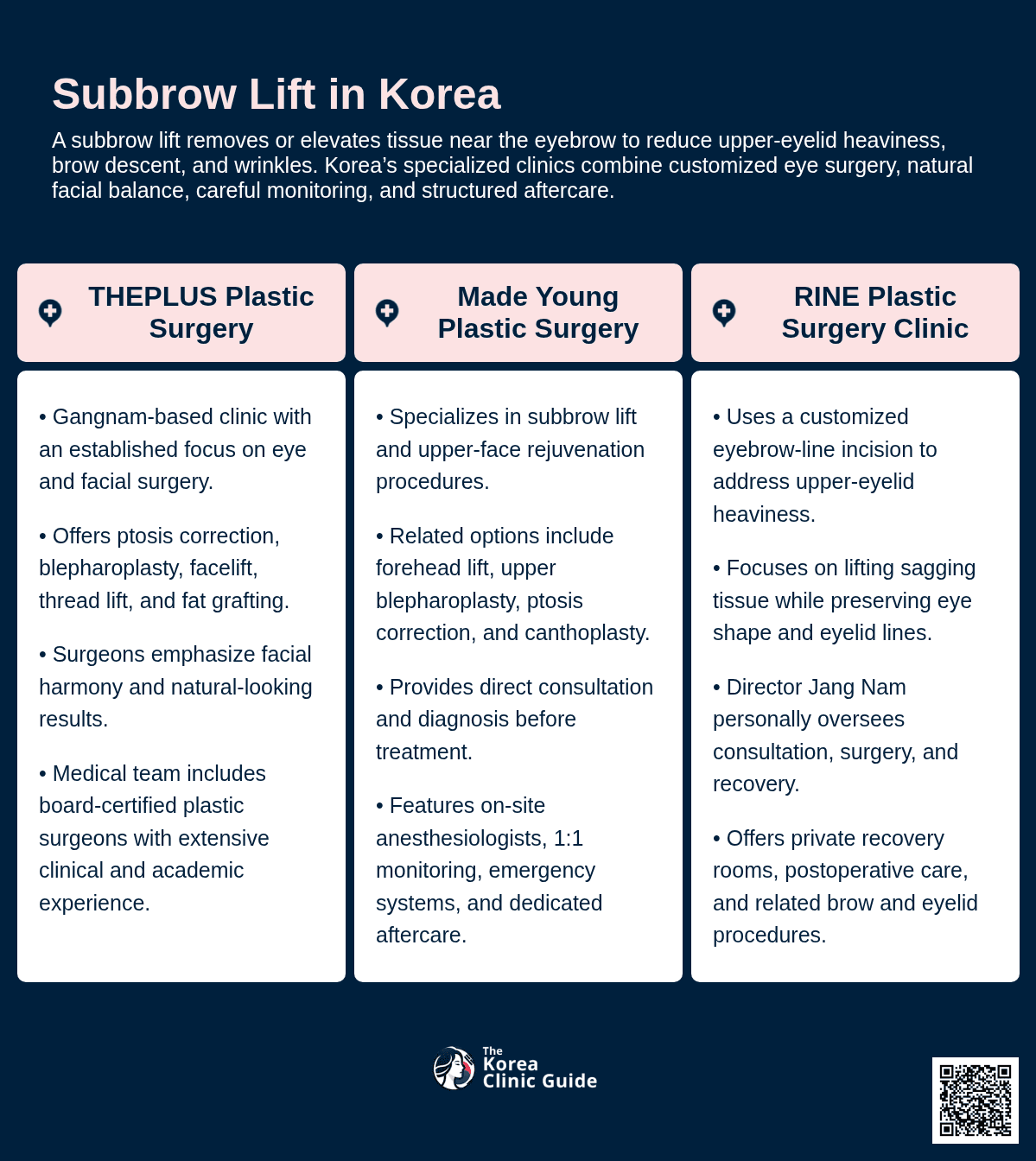
1. THEPLUS Plastic Surgery
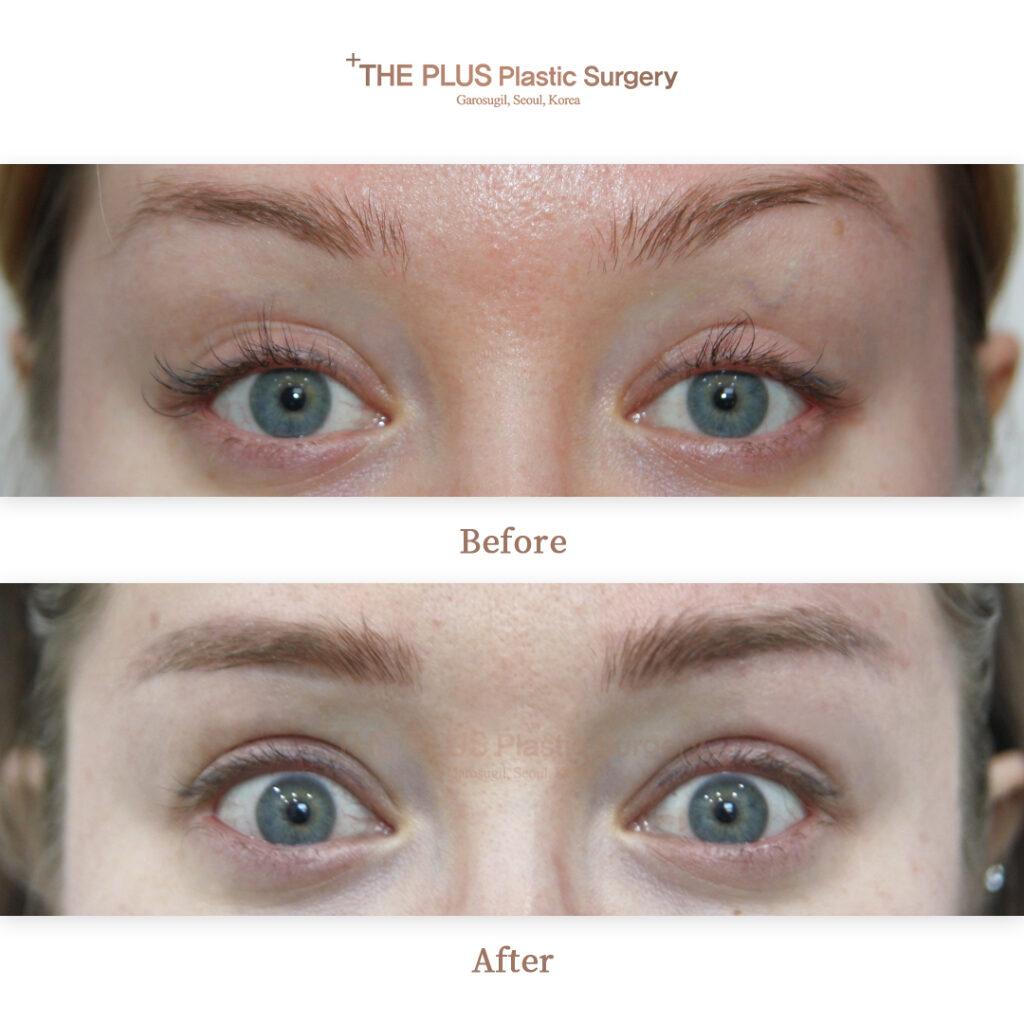
If you are considering a subbrow lift in Korea, you may consider THEPLUS Plastic Surgery for its personalized aesthetic approach and established focus on eye surgery, including ptosis correction and blepharoplasty, alongside facial lifting procedures. Its surgeons emphasize facial harmony and natural-looking balance, which can be relevant when discussing how to refresh a heavy upper-eye area while preserving your overall features.
- URL: THEPLUS Plastic Surgery Website
- Location: Gangnam-gu, Seoul
- Eye and lifting care:
- Eye-surgery services include double-eyelid surgery, ptosis correction, and blepharoplasty for excess upper-eyelid skin and tissue.
- Facelift, thread lift, and facial fat grafting are also offered for concerns involving facial laxity, contour, or volume loss.
- Surgeon background:
- Dr. Kim is a board-certified plastic surgeon with research recognition related to 3D implants and experience in rhinoplasty and facial contouring education.
- Dr. Jeong is described as President of the Korean Society of Plastic Surgeons and has presented internationally on rhinoplasty.
- Dr. Lee is a board-certified plastic surgeon with prior experience as a Surgery Specialist at Seoul National University Hospital.
2. Made Young Plastic Surgery
You may consider Made Young Plastic Surgery for a subbrow lift if your goal is to elevate and smooth the area just above your eyebrow and improve upper-eyelid heaviness through a clinic focused on facial and anti-aging surgery. The clinic lists subbrow lift as a targeted procedure for the upper-eye area and pairs direct medical consultation with on-site anesthesia monitoring and dedicated aftercare.
- URL: Made Young Plastic Surgery Website
- Location: Seocho-gu, Seoul
- Subbrow lift focus:
- The clinic describes subbrow lift as a focused procedure that elevates and smooths the area just above the eyebrow and upper eyelid.
- Related upper-face and eye options include forehead lift, upper blepharoplasty, ptosis correction, double-eyelid surgery, and canthoplasty.
- Safety and monitoring:
- Full-time board-certified anesthesiologists are on site.
- A 1:1 monitoring system assigns one anesthesiologist to continuous monitoring during a procedure.
- The clinic describes a cross-check emergency-response system involving multiple anesthesiologists and CCTV coverage of procedures.
- Consultation and aftercare:
- The medical team provides direct consultation and diagnosis before treatment.
- A separate aftercare center provides systematic post-procedure care.
- The clinic states that its doctors average more than 15 years of experience.
3. RINE Plastic Surgery Clinic
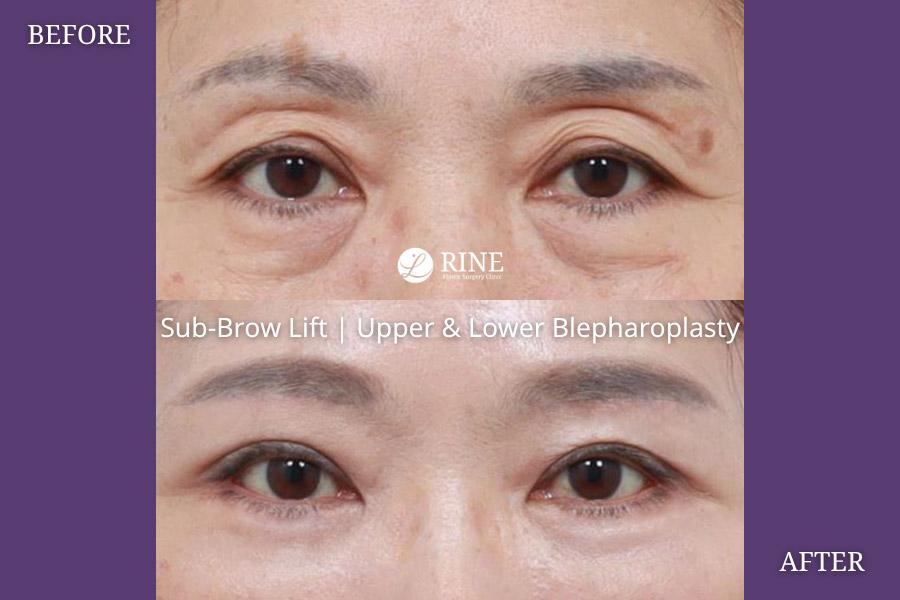
You may consider RINE Plastic Surgery Clinic for a subbrow lift if heavy upper lids, eye-area wrinkles, or pressure around your eyes are concerns and you want to preserve your existing eye shape and double-eyelid line. RINE describes a customized, eyebrow-line incision approach that lifts sagging tissue rather than over-removing skin, with the head director personally involved from consultation through recovery.
- URL: RINE Plastic Surgery Clinic Website
- Location: Seocho-gu, Seoul
- Subbrow lift approach:
- The procedure removes skin just below the brow to improve a heavy or drooping brow-area line while maintaining a natural brow position.
- RINE aims to lift muscles firmly rather than remove excessive skin, helping preserve your existing eye shape and double-eyelid line.
- The incision is placed along the eyebrow line; the clinic uses fine suturing and postoperative care intended to keep scarring minimal.
- The head doctor designs your surgical line one-to-one after analyzing eye and eyebrow proportions.
- Recovery and functional considerations:
- RINE states surgery takes about 30 minutes to one hour, with recovery within about one week and one follow-up visit required.
- The clinic describes the procedure as addressing heaviness pressing on the eyes and irritation around the eye area, in addition to visible sagging and wrinkles.
- Delicate surgical techniques are described as minimizing pain and supporting a return to daily activities.
- Continuity of care:
- Board-certified plastic surgeon Director Jang Nam personally handles consultation, surgery, treatment, and recovery.
- The clinic specializes in eye surgery and anti-aging procedures and cites more than 15 years of clinical experience.
- Private one-person recovery rooms are available, and the clinic describes a continuous postoperative care system.
- Related options:
- For upper-eye rejuvenation, RINE also offers upper blepharoplasty and ptosis correction.
- An endoscopic forehead lift is available for brow descent and forehead lines, while lower blepharoplasty with lifting addresses lower-eyelid and midface laxity.
How Much Does a Subbrow Lift Cost in Korea?
A Subbrow Lift is supplied at ₩3,000,000–₩4,000,000 (approximately US$2,200–$3,000). Individual quotes vary according to the treatment plan and perioperative requirements.
| Procedure Price | Korean Won (₩) | USD ($) |
|---|---|---|
| Low Price | ₩3,000,000 | $2,200 |
| High Price | ₩4,000,000 | $3,000 |
Exchange rate as of 2026-09-06: 1 KRW = 0.000741 USD.
What Affects the Price?
- Skin-only excision versus deeper fixation — A skin-predominant infrabrow excision removes a tailored strip of skin beneath the brow. Adding orbicularis, brow-fat, or skin-muscle fixation to periosteum or frontalis requires additional dissection, technical steps, operating time, and fixation materials.
- Combined eyelid or volume procedures — Ptosis repair for levator dysfunction, upper blepharoplasty for residual medial or crease-related laxity, and fat repositioning or fat grafting for hollowing add separate treatment steps, operative time, consumables, and follow-up needs beyond a standalone subbrow lift.
- Anesthesia plan — A local-only procedure has different staffing and monitoring requirements from local anesthesia with IV sedation or general anesthesia. Sedation or general anesthesia also requires anesthesia personnel, recovery monitoring, and facility resources.
- Extent of tissue correction — A limited skin excision for lateral upper-eyelid hooding uses a narrower treatment area than a plan addressing more extensive upper-lid skin laxity or requiring bilateral contour and symmetry adjustments. Greater tissue work increases operative planning and procedure time.
Cost tip: Request an itemized quote that states what is included, particularly the planned technique, anesthesia, facility use, consumables, early wound checks, and external suture removal around days 5–7.
The US-dollar conversion is approximate, based on an exchange rate of 0.000741 on 2026-09-06. Check the exchange rate again when budgeting.
Subbrow Lift From Start to Finish
- Remote screening — Send frontal, oblique, side, eyes-open, gently closed, and brow-relaxed photographs if the clinic offers English-language or virtual screening. Provide a medical summary, medication and allergy list, dry-eye symptoms, contact-lens use, glaucoma or retinal history, and details of prior eyelid or brow surgery. Remote photographs cannot replace examination.
- In-person consultation — The surgeon evaluates brow height and asymmetry, lid crease, eyelid-margin height, levator function, eyelid closure, corneal and dry-eye status, skin redundancy, volume changes, scars, and anesthesia or bleeding risks. Functional visual complaints may need clinical assessment and formal visual-field testing.
- Surgical planning — The surgeon confirms whether a subbrow lift alone is appropriate or whether eyebrow lift, forehead lift, upper blepharoplasty, ptosis repair, or fat treatment better addresses the anatomy. Agree on scar placement, extent of excision, anesthesia plan, and follow-up dates before surgery.
- Anesthesia and markings — The outpatient operation can use local anesthesia alone, local anesthesia with IV sedation, or general anesthesia, depending on health status, anxiety, facility practice, and combined procedures. Markings are made to preserve eyelid closure and avoid an unnatural brow shape.
- Infrabrow excision and closure — The surgeon removes a planned strip of skin immediately below the eyebrow, with selected deeper tissue when indicated. Optional fixation or suspension is performed before fine sutures close the incision.
- Discharge and first night — Follow the surgeon’s instructions for cold compresses, head elevation, eye drops or ointment, pain medicine, and wound care. An escort takes sedated or anesthetized patients back to accommodation.
- Early in-person review — Attend the wound check and the planned external suture-removal appointment, commonly around postoperative day 5–7. The surgeon checks healing, eyelid closure, eye-surface symptoms, asymmetry, and signs of infection or hematoma.
- Return-home and remote follow-up — Travel only after clearance. Send scheduled photographs or join video reviews as directed; obtain local urgent care for reduced vision, double vision, escalating dry-eye pain, suspected infection, bleeding, or rapidly worsening swelling.
Alternatives to a Subbrow Lift
The correct alternative depends on what is actually causing the heavy upper-eye appearance. Surgical options can correct anatomy directly but involve incisions and recovery; non-surgical camouflage cannot remove redundant skin or repair a weak eyelid-elevating muscle.
Upper Blepharoplasty
Best when excess skin, fat prominence, or crease design is centered in the upper eyelid rather than concentrated below the brow.
- Main tradeoff — The incision is typically placed in the upper-lid crease rather than at the eyebrow border.
- Relevant goal — Treats lid skin and, when appropriate, orbital-fat concerns within the upper lid.
Ptosis Correction
This operation treats a low eyelid margin caused by levator or aponeurotic dysfunction.
- Main tradeoff — It repairs the eyelid-elevating mechanism rather than simply removing skin.
- Relevant goal — Appropriate when the eyelid margin itself sits low and obstructs the eye opening.
Eyebrow or Forehead Lift
A direct brow lift or forehead lift addresses true brow descent and significant forehead laxity.
- Main tradeoff — These procedures reposition the brow more directly, with different incision patterns and recovery demands.
- Relevant goal — Better suited when a low brow, rather than lid skin alone, causes the apparent hooding.
Upper-Lid Volume Treatment
Eyebrow fat grafting or selected fat repositioning addresses clinically important hollowing.
- Main tradeoff — Volume treatment does not remove redundant skin.
- Relevant goal — Useful when a hollow upper orbit contributes to an aged appearance alongside, or instead of, skin laxity.
How Can I Prepare for a Subbrow Lift?
- Medical records — Send and bring an English medical summary, allergy and medication list, prior eyelid or brow operative reports, and relevant old photographs. Disclose dry eye, contact-lens use, glaucoma, retinal disease, bleeding history, and prior scarring problems.
- Bleeding-risk medicines — Tell the surgeon about aspirin, ibuprofen and other anti-inflammatory medicines, warfarin, apixaban, clopidogrel, herbal products, vitamin E, fish oil, and other supplements. The surgeon may ask for temporary avoidance of nonessential products that increase bleeding or bruising; timing is individualized. Never stop prescribed anticoagulants or antiplatelets without coordinated medical advice.
- Nicotine and alcohol — Follow the surgeon’s nicotine-cessation interval for cigarettes, vaping, nicotine pouches, patches, and gum. Avoid alcohol when instructed, especially around sedation and prescription pain medicine.
- Fasting and anesthesia — Follow the clinic’s written fasting instructions exactly when sedation or general anesthesia is planned. Fasting requirements differ by anesthesia type.
- Eye-area preparation — Arrive without eye makeup, false lashes, or contact lenses unless the facility directs otherwise. Bring glasses for the postoperative period.
- Transport and accommodation — Stay close to the clinic through early review and suture removal. Arrange a responsible adult and escorted transport after sedation or general anesthesia.
- Flexible travel — Keep return flights and accommodation changeable until the surgeon confirms wound healing and fitness to fly.
- Documents before departure — Request English copies of the operative note, anesthesia record, prescriptions, written wound-care instructions, and emergency contacts.
Travel note: Sun exposure can darken a healing scar. Pack a wide-brimmed hat and plan shaded transport and activities after surgery.
Confirm the treating doctor’s individualized medication, fasting, nicotine, and travel requirements; those instructions take precedence over general guidance.
Aftercare Advice
Protect the incision and the eye surface during the first week; the quality of healing matters as much as the skin removal itself.
- Head elevation and cold compresses — Keep the head elevated as instructed and use cold compresses only in the manner and schedule approved by the surgeon. Swelling, bruising, tearing, irritation, and temporary dry-eye symptoms can occur during days 0–2.
- Incision and eye products — Use only surgeon-approved drops, ointment, cleanser, dressings, and pain medicine. Do not rub the incision or apply eye makeup until cleared.
- Activity restrictions — Avoid strenuous exercise, heavy lifting, deep bending, straining, swimming, sauna or steam rooms, and contact lenses until the surgeon approves them. These restrictions commonly apply through the early postoperative period because they can worsen swelling, bleeding, irritation, or wound stress.
- Suture and scar care — Attend external suture removal, commonly on day 5–7. The incision can remain pink, firm, or raised for weeks; residual swelling and scar redness continue settling over months 1–3. Protect the area from sun with shade and SPF 50 once the incision is closed and the surgeon permits sunscreen use.
- Result timing — Most visible bruising commonly improves by about 3 weeks, while contour, symmetry, and scar maturity are more reliably assessed at 3–6 months.
- Urgent warning signs — Seek urgent local ophthalmic or emergency care for reduced or sudden loss of vision, double vision, severe or worsening pain, rapidly expanding one-sided swelling, persistent bleeding, fever, pus-like drainage, spreading redness, wound separation, inability to close the eye, chest pain, shortness of breath, fainting, or one-sided leg pain or swelling.
Follow the treating doctor’s instructions over general advice and contact the clinic promptly when healing or vision appears abnormal.
Frequently Asked Questions
Related Blogs
Neck Lift in Korea: Methods, Recovery, Travel Planning, and Alternatives
Neck lift surgery uses ear-area and often under-chin incisions to address loose skin, submental fat, and platysma bands; combined facelift techniques may be needed for jowls. In Korea, costs are approximately ₩6,600,000–₩9,900,000 (US$4,900–$7,300), with a planned 10–14-day stay, follow-up reviews, and flexible return travel.
Updated: Sep 12, 2026
Forehead Lift in Korea: Methods, Recovery, Risks and Travel Planning
Forehead lift surgery repositions low or asymmetric brows through endoscopic, hairline, temporal, direct, or coronal techniques, with planning based on hairline, eyelids, scalp, and brow descent. In Korea, costs are ₩6,600,000–₩12,000,000, with guidance on provider verification, 10–14 nights of stay, recovery, flying, and follow-up.
Updated: Sep 10, 2026

Forehead Reduction in Korea: Candidacy, Recovery, Risks and Travel Planning
Forehead reduction removes a strip of forehead skin and advances the hair-bearing scalp through a pretrichial or trichophytic hairline incision, with suitability based on stable hair loss, scalp laxity, and scar expectations. International patients should plan 7–10 days in Korea for wound review and possible suture removal, arrange first-night support, flexible flights, and remote follow-up.
Updated: Sep 9, 2026
Face Lift in Korea: Methods, Recovery, Travel Planning, and Safety
Face lift surgery repositions deeper facial tissues and redrapes skin to address jowls, lower-face and neck laxity, with Korea prices of KRW 7,000,000–15,000,000 (about USD 4,900–10,500). International patients should plan at least 14 days in Korea for early reviews, obtain surgeon flight clearance, and arrange records and remote follow-up before departure.
Updated: Sep 9, 2026
Clinics offering Subbrow Lift
RINE Plastic Surgery Clinic | Facelift and Eye Rejuvenation Surgery
Nonhyeon

SH Clinic: Comprehensive Women's, Men's & Couples' Health Services in Korea
Sinsa

THEPLUS Plastic Surgery Korea | Eye, Nose, Face & Body Surgery
Sinsa

Made Young Plastic Surgery: Rejuvenating Aesthetic Excellence in Korea for Face Lifts, Contouring and More
Gangnam Station