
Medical Tourism Blog
Canthoplasty in Korea: Types, Recovery, Risks, and Travel Planning
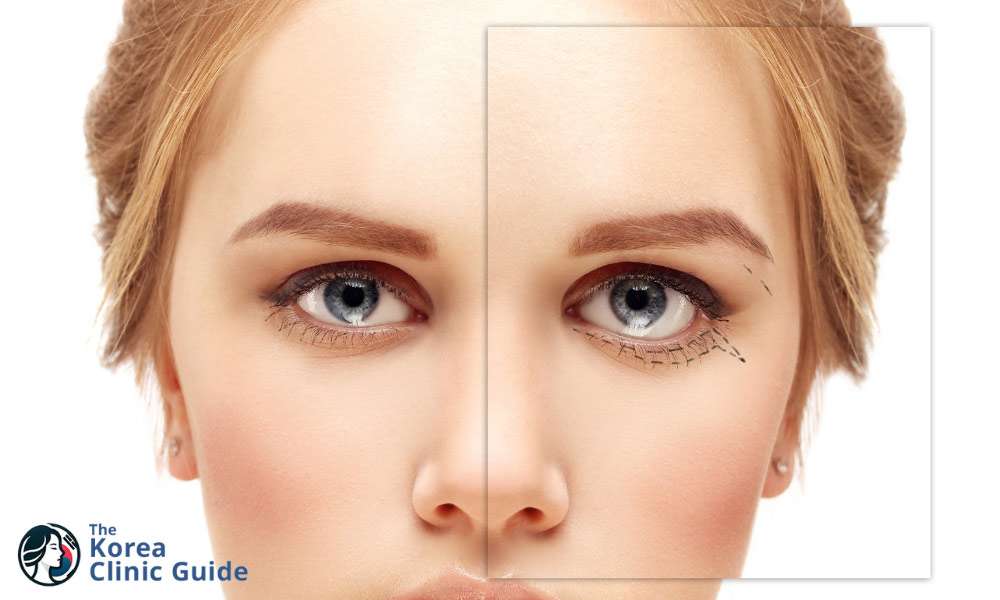
Table of contents
- Canthoplasty at a Glance
- What Is Canthoplasty?
- Who Is a Good Candidate for Canthoplasty?
- What Are the Different Types of Canthoplasty?
- Why Visit Korea for Canthoplasty?
- Key Information for International Patients
- Which Are the Best Clinics in Korea for Canthoplasty?
- How Much Does Canthoplasty Cost in Korea?
- Canthoplasty From Start to Finish
- Alternatives to Canthoplasty
- How Can I Prepare for Canthoplasty?
- Aftercare Advice
Considering treatment in Korea? Everything you need to know e.g. — how to avoid scams, visas, interpreters, recovery tips — in our Medical Tourism Master Guide. Plan with confidence in minutes, not weeks!
Last updated: August 2026
Canthoplasty at a Glance
- What it does — Canthoplasty reshapes or reconstructs the inner or outer eyelid corner; in cosmetic Korean listings, it usually means lateral canthoplasty to modestly lengthen the outer eye opening or change its tilt, while functional surgery restores lid support and corneal protection.
- Typical Korea cost — In Korea, quoted prices are typically ₩1,500,000–₩5,000,000 (about US$1,000–$3,500); revision surgery, reconstructive work, and sedation or general anesthesia can increase the quote.
- Recovery timeline — Bruising often improves within 7–10 days, sutures are commonly checked or removed on day 5–7, and most swelling is substantially better by 1 month; subtle settling and scar maturation can continue for 2–3 months or longer.
- Travel requirement — Plan to remain in Korea for 7–10 days for consultation, outpatient surgery, and an in-person early wound review; there is no evidence-based long-haul flight interval, so travel should wait for surgeon clearance.
- Who it suits — Best candidates have healthy tear-film and corneal surfaces, reliable blinking and eyelid closure, stable expectations, and anatomy that allows change without compromising lower-lid position or eye protection.
- Key safety limit — Dry eye, ectropion, lid retraction, prominent eyes, prior eyelid surgery, trauma, or poor lid closure raise the risk of postoperative exposure, malposition, and corneal injury; vision changes, severe pain, or inability to close the eye need urgent assessment.
- Korea-specific distinction — Korean publications describe lateral techniques intended to preserve the outer-corner angle and hide incisions, but achievable lengthening or tilt change remains limited by orbital anatomy, lid tone, and the need to protect closure; “laser canthoplasty” is not a standardized procedure.
What Is Canthoplasty?
Canthoplasty is eyelid-corner surgery that reshapes, tightens, or reconstructs the inner or outer corner where the upper and lower lids meet. It can modestly change eye shape or restore lid position, closure, and corneal protection when laxity, injury, or malposition causes symptoms. Canthoplasty is a surgical procedure, ranging from cosmetic eyelid reshaping to reconstructive oculoplastic treatment.
Who Is a Good Candidate for Canthoplasty?

- Cosmetic lateral-canthoplasty candidates — Adults seeking a modest change in the outer eye corner, such as a longer lateral eye opening or a different outer-corner tilt, with realistic expectations about the anatomical limit.
- Functional candidates — People with clinically assessed lower-lid laxity, ectropion, eyelid retraction, trauma-related malposition, or exposure symptoms. Canthoplasty in this setting aims to restore lid position and corneal protection, not simply alter appearance.
- Healthy ocular surface — Good candidates have stable tear-film and corneal health, normal or adequate blink, and reliable eyelid closure. The examination should include lower-lid position, scleral show, snapback, canthal-tendon laxity, punctal position, and corneal surface.
- Informed revision candidates — Previous blepharoplasty, canthoplasty, refractive surgery, trauma, or thyroid eye disease does not automatically rule out surgery, but increases the need for detailed oculoplastic assessment.
Elective surgery should be deferred for active eye, eyelid-skin, or systemic infection; pregnancy; uncontrolled dry eye; exposure keratopathy; active corneal disease; or inability to close the eyelids fully. Marked lid laxity, ectropion, retraction, facial-nerve weakness, prominent eyes, prior lower-eyelid surgery, and orbital trauma change the risk of postoperative exposure and malposition, and often require reconstructive planning. Uncontrolled hypertension or diabetes, a bleeding disorder, anticoagulation that cannot be safely managed, and medical conditions that make anesthesia unsafe require optimization and medical clearance. Nicotine use impairs healing, while body dysmorphic disorder, coercion, or a requested change beyond the anatomy’s safe limit are reasons to pause rather than proceed.
What Are the Different Types of Canthoplasty?

“Canthoplasty” is an umbrella term for surgery at the inner or outer eyelid corner. In cosmetic travel listings it usually means lateral canthoplasty, while reconstructive surgery is selected according to the eyelid problem and ocular-surface risk.
- Lateral canthoplasty — Works on the outer canthus to alter the lateral palpebral fissure, outer-corner tilt, and sometimes lower-lid support. Orbital-rim position, globe prominence, tissue availability, and lid tone limit the safe degree of change, as described in Korean cosmetic lateral-canthoplasty literature.
- Medial canthoplasty / epicanthoplasty — Targets the inner eye corner or epicanthal fold rather than the outer corner. It has distinct scar-placement and tear-drainage considerations; readers focused on this goal can review epicanthoplasty.
- Reconstructive canthoplasty — Includes procedures such as lateral tarsal strip reconstruction, retinacular procedures, grafting, or tendon repair for ectropion, retraction, trauma, and facial-palsy-related malposition. The technique follows the functional diagnosis.
- Canthopexy — Tightens or suspends lateral support without the same degree of release and reconstruction. It can suit less severe laxity or support a lower blepharoplasty; canthoplasty is generally used when more substantial horizontal shortening is needed.
- “Laser” labels — “Laser canthoplasty,” “upper canthoplasty,” and “lower canthoplasty” are not standardized peer-reviewed procedure definitions. Ask whether laser refers only to the skin incision and exactly what release, fixation, and eyelid-position change are planned.
Why Visit Korea for Canthoplasty?
Korea has published technique literature on cosmetic lateral canthoplasty and a large concentration of practices offering periocular aesthetic surgery. That does not establish that every clinic, technique, or marketing label produces the same outcome. Choose based on the operating surgeon’s assessment of lid support and ocular-surface safety, not on a clinic’s case volume alone.
- Korean technique development — Published Korean work describes approaches designed to alter the lateral eye corner while preserving lateral canthal-angle continuity and placing incisions discreetly; it also recognizes anatomical limits to cosmetic lengthening or tilt change (technical report).
- Published Seoul experience, with limits — A 2019 retrospective Seoul series of 246 cosmetic lateral canthoplasties reported high satisfaction and no severe complications, but it had no comparator group. It is useful technique-specific evidence, not a Korean national safety or revision benchmark.
- International-care infrastructure — Korea’s official Medical Korea platform provides a national entry point for international medical visitors. Confirm directly whether a prospective provider offers interpreter support, written English instructions, and an after-hours clinical contact.
- Evidence limitation — A review of recent cosmetic periocular literature found only a small number of lateral-canthoplasty approaches. The evidence is largely technical and retrospective, rather than randomized comparisons of cosmetic canthoplasty, canthopexy, and non-surgical choices (systematic review).
Key Information for International Patients
- Minimum stay — Plan 7–10 days in Korea for standalone cosmetic lateral canthoplasty, allowing for consultation, surgery, and an in-person wound or suture review around postoperative day 5–7. This is a practical recommendation based on typical early follow-up, not a commercial-flight rule.
- Flight timing — No reliable canthoplasty-specific evidence defines a minimum interval before long-haul flying. Do not leave until the operating surgeon examines the eyes, clears travel, and gives an overseas-care plan.
- Early appearance and itinerary — Bruising commonly settles in about 7–10 days. Swelling, tearing, visible redness, and temporary asymmetry can affect photos, meetings, sightseeing, and comfort for several weeks; most swelling is substantially better by about one month (recovery review).
- Activity restrictions — Keep the first week low-key. Do not plan strenuous exercise, swimming, saunas, eye makeup, contact-lens wear, or activities likely to cause eye rubbing until the surgeon clears them.
- Remote follow-up — Arrange a video or photo check before leaving Korea and confirm the clinic’s after-hours contact route. Obtain the operative note, medication list, English discharge instructions, and pre- and postoperative photographs before departure.
- Complex cases — Pre-existing dry eye, prior eye surgery, prominent eyes, lower-lid retraction, facial palsy, or reconstructive treatment warrant a pre-arranged local ophthalmologist or oculoplastic surgeon at home.
Travel note: Book flexible return travel. A painful red eye, worsening asymmetry, inability to close an eye, or any vision change requires assessment in Korea before flying.
Which Are the Best Clinics in Korea for Canthoplasty?
Listed below are some of the best clinics in Korea for canthoplasty.
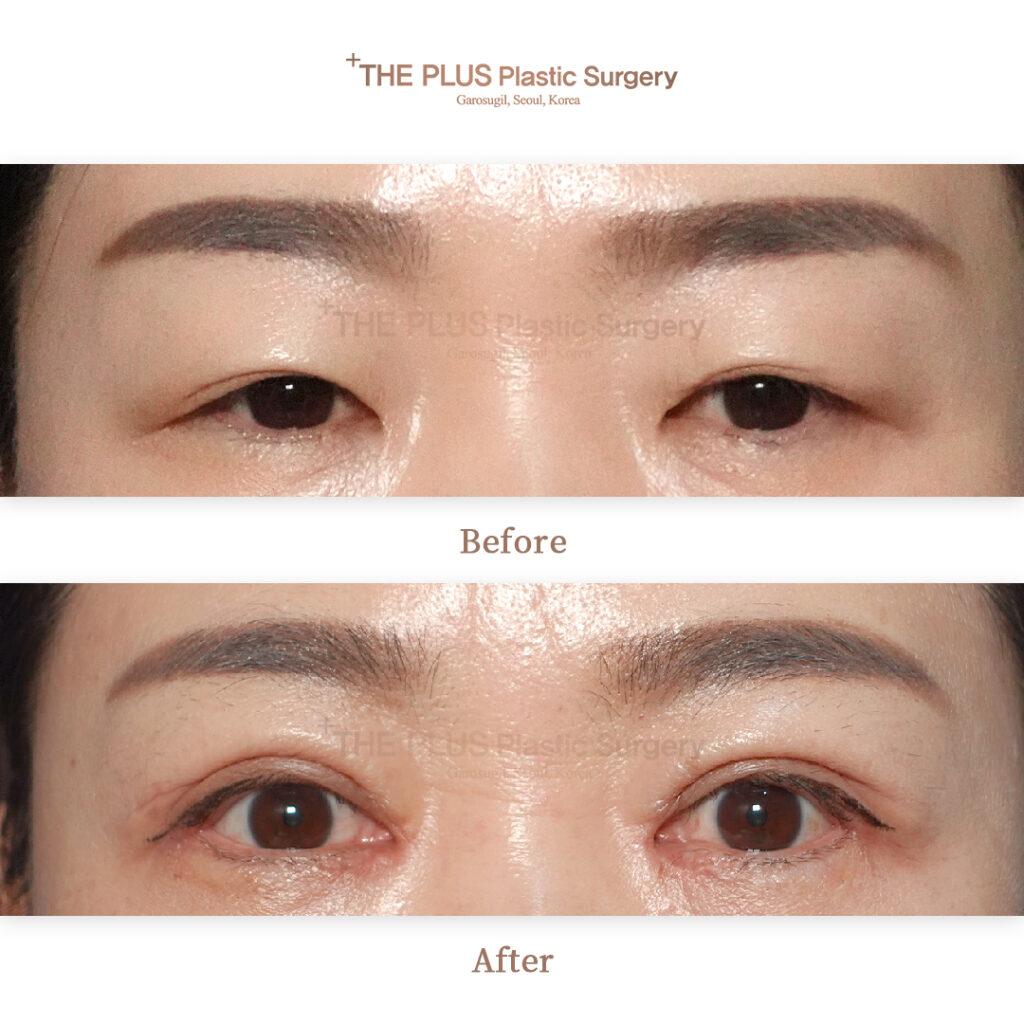
1. THEPLUS Plastic Surgery
If you are considering canthoplasty, the available clinic information points to an eye-surgery practice that emphasizes eyelid lines and facial harmony; however, canthoplasty itself is not specifically listed in the supplied service details, so you should confirm whether it is offered and how it would be planned for your eye shape.
- URL: THEPLUS Plastic Surgery Website
- Location: Gangnam-gu, Seoul
- Eye and facial approach:
- Listed eye procedures include double eyelid surgery, ptosis correction, and blepharoplasty.
- The clinic describes its surgical approach as aiming for balanced facial features and natural-looking enhancement.
- Clinical background:
- Dr. Kim is described as a board-certified plastic surgeon with research recognition related to 3D implants and expertise in rhinoplasty and facial contouring.
- Dr. Jeong is described as President of the Korean Society of Plastic Surgeons and as an educator and speaker in rhinoplasty-focused professional forums.
2. Made Young Plastic Surgery
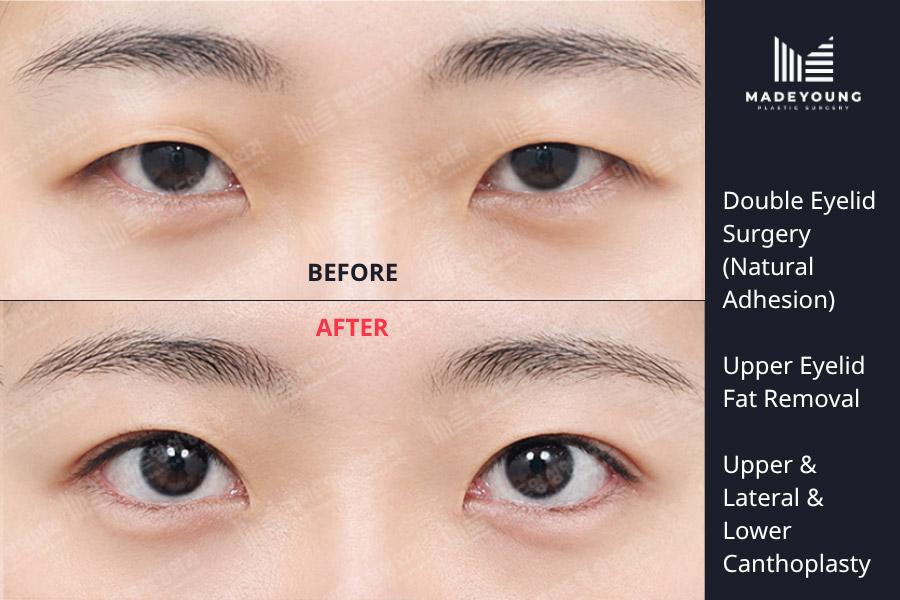
You may consider Made Young Plastic Surgery for canthoplasty if you want outer-eye-corner reshaping planned alongside your overall eye proportions: the clinic lists canthoplasty among its eye surgeries, and Dr. Park Byung-Chan is described as having 15 years of experience dedicated exclusively to eye surgery with individualized design of eyelid and eye-shape details.
- URL: Made Young Plastic Surgery Website
- Location: Seocho-gu, Seoul
- Canthoplasty and eye planning:
- Canthoplasty is described as surgery that lifts or reshapes the eye by altering the outer eyelid corner.
- The clinic also offers incisional and non-incisional double eyelid surgery, ptosis correction, and upper and lower blepharoplasty.
- Dr. Park’s stated customization includes incision lines, double-eyelid height, eyelid thickness, and overall image.
- Safety and aftercare:
- Full-time board-certified anesthesiologists are stated to be on site.
- The clinic describes one-to-one anesthesiologist monitoring, emergency cross-checking, and CCTV coverage of procedures.
- A separate dedicated aftercare center is listed.
3. RINE Plastic Surgery Clinic
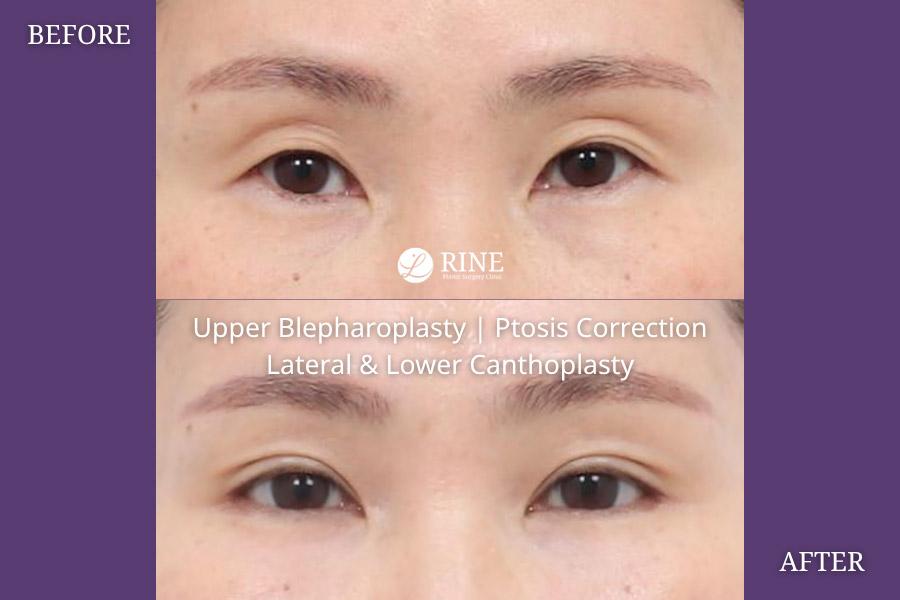
For canthoplasty, you can expect a one-to-one design process focused on your eye proportions, skin condition, and individual features. RINE describes lateral or posterior outer-corner adjustment to extend horizontal eye length or modify the outer-corner angle, with Director Jang Nam personally overseeing consultation, surgery, and recovery.
- URL: RINE Plastic Surgery Clinic Website
- Location: Seocho-gu, Seoul
- Canthoplasty details:
- The clinic offers lateral or posterior canthoplasty to adjust the outer eye corner, horizontal eye length, or outer-corner angle.
- Planning is described as individualized rather than standardized, with attention to facial proportions, skin condition, and personal features.
- Epicanthoplasty revision is also listed for concerns after prior inner-corner surgery, including excessive tear-duct exposure or an unnatural contour.
- Eye-surgery experience:
- The director is reported to have personally performed more than 10,000 eye surgeries.
- The clinic states that it specializes in eye surgery and anti-aging procedures and has more than 15 years of clinical experience.
- Related eye services include non-incisional double eyelid surgery, ptosis correction, under-eye fat repositioning, and revision double-eyelid surgery.
- Care process and facilities:
- Director Jang Nam is described as personally handling consultation, surgery, treatment, and recovery.
- The clinic lists a one-person private recovery room, an advanced infection-control system, surgical safety protocols, and emergency preparedness.
- Listed equipment includes a full-HD Stryker endoscope, FDA-approved genuine Endotine, and WhiteLite bipolar technology.
How Much Does Canthoplasty Cost in Korea?
Canthoplasty is quoted at KRW 1,500,000–5,000,000 (approximately USD 1,000–3,500). Individual quotes vary because canthoplasty can range from a focused cosmetic outer-corner procedure to functional or revisionary eyelid-corner reconstruction.
| Procedure Price | Korean Won (₩) | USD ($) |
|---|---|---|
| Low Price | ₩1,500,000 | $1,000 |
| High Price | ₩5,000,000 | $3,500 |
Exchange rate as of 2026-08-05: 1 KRW = 0.000700 USD.
What Affects the Price?
- Outer-corner versus inner-corner treatment — Cosmetic lateral canthoplasty for a limited outer-corner shape or tilt change generally involves a focused release and fixation. Medial canthal surgery or epicanthoplasty addresses the inner corner instead and has different scar and lacrimal-drainage considerations, requiring distinct planning and surgical work.
- Cosmetic reshaping versus functional reconstruction — A reconstructive procedure for ectropion, retraction, trauma, facial-palsy-related malposition, or substantial lid laxity can require lateral tarsal strip work, canthal tightening, grafting, or other support reconstruction. These functional requirements add operative steps, fixation materials or graft-related resources where used, and careful eyelid-position work to protect closure and the cornea.
- Anesthesia requirement — An uncomplicated standalone cosmetic lateral operation may be performed with local anesthesia with or without IV sedation. Combined, revisionary, or more complex reconstruction may require general anesthesia, increasing anesthesia personnel, monitoring, recovery resources, and facility requirements.
- Revision or high-risk eyelid anatomy — Prior eyelid surgery, trauma, lower-lid retraction, prominent eyes, dry-eye disease, or poor lid support can require more extensive assessment and cautious reconstruction to preserve blinking, lid closure, and corneal coverage. Revisionary or anatomically complex cases also commonly require longer operating time and closer postoperative monitoring.
Cost tip: Request an itemized quote stating what is included, particularly the planned canthoplasty technique, anesthesia, operating or facility use, medications or eye-care consumables, and scheduled follow-up.
The USD figures are approximate conversions at KRW 0.0007 per USD-equivalent rate on 2026-08-05. Check the exchange rate again when budgeting.
Canthoplasty From Start to Finish
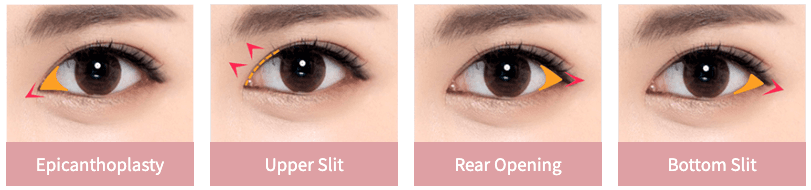
- Remote inquiry and consultation — Send clear, unfiltered front and angled photographs, medical history, previous operative records, dry-eye symptoms, contact-lens use, medication list, and the exact concern. Ask whether the clinic can provide an English or virtual consultation and whether the proposed operation is cosmetic lateral canthoplasty, canthopexy, or reconstruction.
- In-person assessment — The surgeon examines eyelid closure, blink, corneal surface, lower-lid tone, scleral show, canthal tendon laxity, facial symmetry, orbital prominence, and scar tissue from previous surgery. Discuss the achievable change and the possibility that surgery is not appropriate.
- Preoperative clearance and planning — Complete required health screening and anesthesia assessment. The team reviews bleeding risk, diabetes, hypertension, nicotine exposure, allergies, eye disease, prior refractive or eyelid surgery, and medications; complex or functional cases can require ophthalmic input.
- Marking and anesthesia — For cosmetic surgery, markings are commonly made while sitting upright. Local anesthesia with or without IV sedation is often used for straightforward cases; revisionary, combined, or complex reconstructive surgery can require general anesthesia.
- Canthal procedure — Depending on the plan, the surgeon creates a small lateral or eyelid-crease incision, releases selected retinacular or canthal-support tissues, repositions and anchors tissue to the lateral orbital-rim periosteum, reforms the corner angle, and closes with fine sutures. Exact steps differ substantially by anatomy and whether the aim is cosmetic reshaping or functional lid support.
- Same-day discharge — Standalone uncomplicated treatment is usually outpatient. Leave with prescribed lubricants, drops or ointment when indicated, incision-care instructions, emergency contacts, and a confirmed day-5–7 review appointment.
- Early in-person review — The clinician checks vision, lid closure, corneal comfort, wound healing, and lid position. Non-absorbable sutures, when used, are commonly removed around postoperative day 5–7.
- Overseas follow-up — Send requested photographs and attend video review after return. Seek local urgent ophthalmic care rather than waiting for a remote reply if vision changes, severe pain, or exposure symptoms develop.
Alternatives to Canthoplasty

The right alternative depends on what actually causes the concern. Surgery can alter eyelid structure but carries scarring, malposition, dry-eye, and revision risk; less extensive procedures provide less change and cannot correct every structural problem.
Canthopexy
A lateral-support procedure rather than the same degree of canthal release and reconstruction.
- Best fit — Mild-to-moderate lateral laxity or lower-lid support needed during eyelid surgery.
- Tradeoff — Less extensive than canthoplasty, but it may not provide the shortening or reconstruction required for significant ectropion or laxity (comparison of indications).
Blepharoplasty
Upper or lower eyelid surgery for excess skin, fat prominence, or lower-lid contour concerns.
- Best fit — The main concern is hooding, skin excess, or under-eye fat rather than the outer-corner position.
- Tradeoff — It does not reliably lengthen the outer eye opening; lower-lid surgery sometimes needs added canthal support. See blepharoplasty.
Ptosis Correction
Raises an eyelid whose margin sits too low because of levator dysfunction.
- Best fit — One or both eyes look smaller because the upper lid obstructs the pupil.
- Tradeoff — Corrects lid height, not the outer canthus. See ptosis correction.
Epicanthoplasty
Reshapes the inner eye corner or epicanthal fold.
- Best fit — The desired change is medial, not lateral.
- Tradeoff — Different scar and lacrimal-system risks apply. See epicanthoplasty.
Eyelid Retraction Repair
Functional reconstruction for eyelid retraction, exposure, or clinically significant malposition.
- Best fit — The eye feels dry or exposed, the lid cannot protect the cornea, or scleral show follows disease, trauma, or prior surgery.
- Tradeoff — The priority is corneal protection and lid position, not elective eye-shape change. See eyelid retraction repair.
How Can I Prepare for Canthoplasty?
- Medical and eye-history disclosure — Give the surgeon a complete list of prescriptions, over-the-counter medicines, supplements, allergies, dry-eye symptoms, contact-lens use, prior LASIK or other eye procedures, eyelid surgery, trauma, thyroid eye disease, facial palsy, bleeding history, and current illness.
- Blood-thinning medicines and supplements — Do not stop prescribed anticoagulants, antiplatelet drugs, or cardiovascular medicines on your own. Ask the prescribing clinician and surgeon for a written plan. Many plastic-surgery protocols ask patients to stop non-essential agents that increase bleeding risk, such as aspirin, NSAIDs, vitamin E, fish oil, ginkgo, garlic, and herbal supplements, about two weeks before surgery, but the individualized plan takes precedence (supplement safety guidance).
- Nicotine and alcohol — Stop cigarettes, vaping, nicotine pouches, and nicotine-replacement products for the surgeon’s required interval. Avoid alcohol as directed before surgery because it can increase swelling and interact with sedation or medication.
- Fasting — Follow the anesthesia team’s exact fasting instructions when sedation or general anesthesia is planned. Do not rely on a generic online schedule; fasting requirements depend on the anesthetic and medical history (ASA fasting guidance).
- Eye-area preparation — Arrive without eye makeup, false lashes, lash extensions unless the clinic permits them, or contact lenses. Bring glasses and a list of the exact lens prescription if needed.
- Travel logistics — Reserve accommodation close enough for the day-5–7 review, arrange an adult escort after sedation, and keep flights and major plans flexible.
Travel note: Bring a printed copy of your medication list and arrange a local ophthalmology contact before departure if dry eye, previous eye surgery, or complex reconstruction is involved.
Confirm every medication stop, fasting rule, companion requirement, and arrival time with the treating clinic; its individualized instructions take precedence over general guidance.
Aftercare Advice
Protect eyelid closure and the corneal surface first; a cosmetic recovery becomes urgent when vision, pain, or eye exposure worsens.
- Cold compresses and elevation — Use cold compresses in short intervals as instructed and sleep with the head elevated during the early swelling phase. Do not press on the eye or incision.
- Lubrication and medicines — Use prescribed drops, lubricants, ointment, and pain medicine exactly as directed. Do not use redness-relief drops, leftover antibiotics, or herbal remedies unless the surgeon approves them.
- Protect the incision — Keep the area clean according to the clinic’s instructions. Do not rub the eyes, pull the eyelids, or pick crusting. Avoid contact lenses, eye makeup, lash products, swimming, saunas, and strenuous exercise until cleared.
- Sun and scars — Protect healing skin from sun exposure. Once the incision is fully closed and the surgeon permits it, use sunglasses and SPF 50 around—not in—the eye area.
- Healing timeline — Bruising often improves in 7–10 days; sutures are often removed on day 5–7. Swelling is usually substantially improved by one month, while redness, scar maturation, and subtle settling can continue for 2–3 months or longer (recovery evidence). Do not judge final symmetry or plan revision during the early swelling period.
- Urgent warning signs — Seek urgent ophthalmic or emergency assessment for reduced or changed vision, severe or increasing pain, rapidly increasing one-sided swelling, persistent bleeding, new double vision, inability to close the eye, intense redness with light sensitivity, pus-like discharge, fever, or a painful watery red eye with foreign-body sensation.
- Follow-up — Attend the scheduled wound and suture check before leaving Korea, then send photographs or join remote review as arranged. Keep all records available for any clinician treating you at home.
Follow the treating doctor’s instructions over this general guidance, and contact the clinic promptly when anything appears wrong.
Frequently Asked Questions
Related Blogs
Laser Canthoplasty in Korea: Techniques, Recovery, Risks, and Travel Planning
Laser canthoplasty reshapes or supports the inner or outer eye corner through tissue release, repositioning, or tightening, with technique selected according to eyelid anatomy, laxity, dry-eye status, and treatment goals. International patients should plan at least 7–10 days in Korea for review and possible suture removal, keep travel flexible, and arrange local ophthalmic follow-up for urgent sym
Updated: Sep 21, 2026
Eyelid Retraction Repair in Korea: Methods, Recovery, Travel Planning, and Alternatives
Eyelid retraction repair repositions an upper or lower eyelid through retractor recession, scar release, spacer grafting, or support procedures based on tissue shortage, scarring, and corneal exposure. International patients should plan 10–14 days in Korea for uncomplicated repair, arrange early review and home follow-up, and obtain surgeon clearance before flying.
Updated: Sep 19, 2026
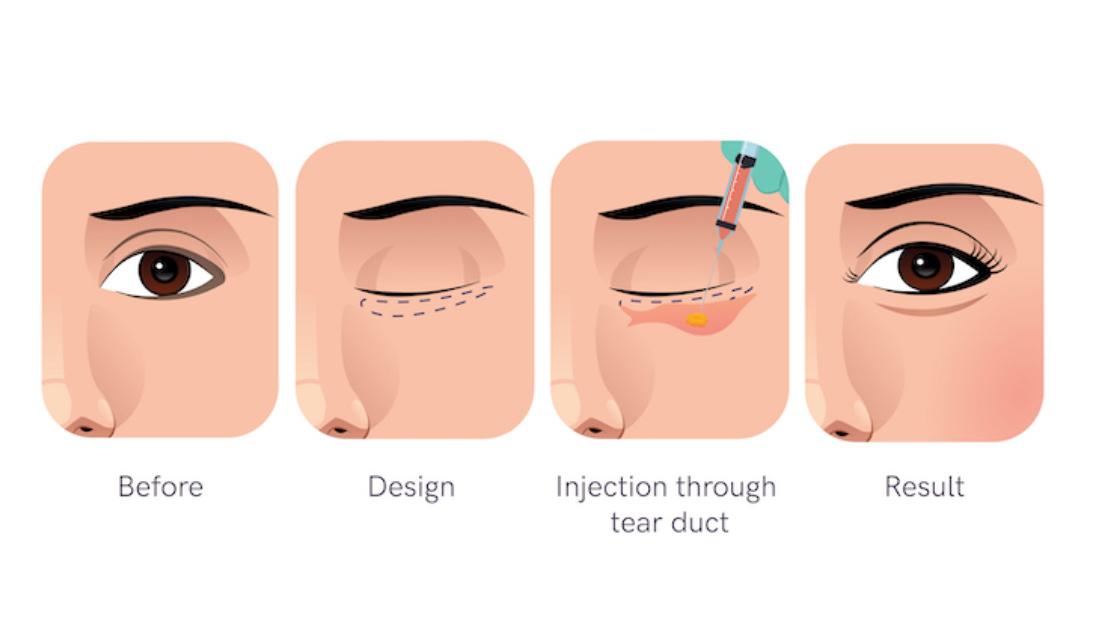
Love Band Surgery in Korea: Methods, Recovery, Risks and Travel Planning
Love band surgery augments the narrow pretarsal aegyo-sal roll beneath the lower lashes using HA filler, fat, grafts, implants, or tissue plication, with method-specific reversibility, recovery, and revision considerations. The article covers candidate screening, Korea travel planning, treatment steps, aftercare, emergency warning signs, follow-up, and alternatives for eye bags, tear troughs, laxi
Updated: Sep 15, 2026
Revision Eye Surgery in Korea: Methods, Recovery, Risks and Travel Planning
Revision eye surgery addresses healed concerns after prior eyelid procedures through scar release, crease or ptosis correction, volume restoration, or lower-lid support while protecting blink and corneal function. In Korea, plan at least 10–14 days for early review and possible suture removal; prices are ₩2,600,000–₩7,500,000 (about US$1,900–$5,600).
Updated: Sep 15, 2026
Clinics offering Canthoplasty
RINE Plastic Surgery Clinic | Facelift and Eye Rejuvenation Surgery
Nonhyeon

THEPLUS Plastic Surgery Korea | Eye, Nose, Face & Body Surgery
Sinsa

Made Young Plastic Surgery: Rejuvenating Aesthetic Excellence in Korea for Face Lifts, Contouring and More
Gangnam Station

LABOM Plastic Surgery: Expertise in Non-Surgical Nose, Facial Lifting & Anti-Aging Surgeries in Korea
Apgujeong