Medical Tourism Blog
Keratosis Pilaris Treatment in Korea: Effective Peeling Procedures for Smoother Skin
Table of contents
- Medical Peeling Procedures: A Detailed Explanation
- Best Clinics in Korea for Keratosis Pilaris
- Navigating "Peeling" Procedures in South Korea for Medical Tourists
- Costs Associated with "Peeling" Procedures: South Korea vs. Global
- Patient Experiences and Outcomes with "Peeling" for Keratosis Pilaris
- Conclusion
- Disclaimer
- References
Considering treatment in Korea? Everything you need to know e.g. — how to avoid scams, visas, interpreters, recovery tips — in our Medical Tourism Master Guide. Plan with confidence in minutes, not weeks!
Keratosis pilaris (KP) is a common, benign skin disorder that often causes cosmetic and psychological distress due to its rough, bumpy texture, even though it's medically harmless. This article explores KP, describes how "peeling"—specifically, chemical peels—serves as an effective primary treatment, and outlines what patients can expect when seeking these procedures in South Korea. Chemical peels exfoliate, reduce blockages, and encourage regeneration, substantially improving the appearance and feel of KP. With South Korea's reputation for advanced dermatology, personalized care, and competitive pricing, it stands out as a leading destination for medical tourists. However, series-based treatments and ongoing home care are usually necessary to maintain results, so patients should research thoroughly and consult experts before traveling.
What is Keratosis Pilaris?
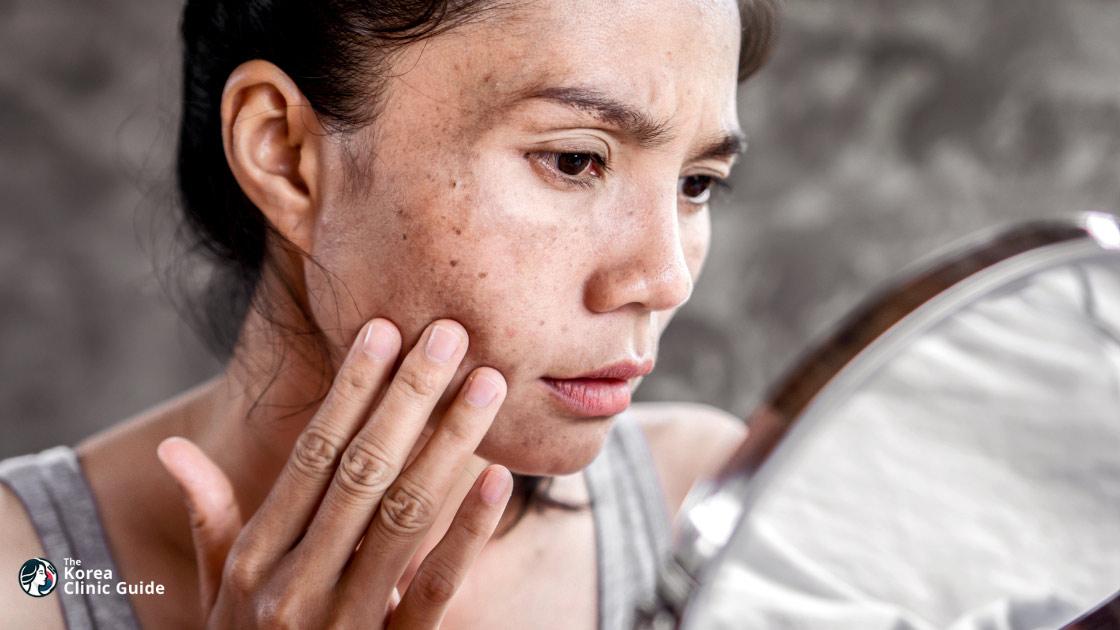
Keratosis pilaris (KP) is a prevalent, benign skin condition rooted in genetics and marked by rough, small follicular keratin plugs. These bumps are often called "chicken bumps," "chicken skin," or "goose-bumps" due to their appearance. While often skin-colored, they may appear pink or dark depending on skin tone, and sometimes encase a trapped hair. KP is triggered by excess keratin production, which plugs hair follicles through hyperkeratinization, sometimes leading to ingrown hairs and mild redness (erythema) caused by inflammation. In some cases, sebaceous glands may be underdeveloped or missing.
KP is most common on the outer arms and thighs but can also appear on the face, back, buttocks, or hands—anywhere except hairless regions like palms or soles. Symptoms often worsen in drier, colder months and improve in summer. KP affects around 30-50% of adults and 50-80% of adolescents globally, with a higher prevalence in women. Many KP sufferers don’t realize treatments exist, highlighting the importance of awareness and education. Though KP usually improves with age, adults may still experience it later in life, sometimes alongside other dryness-prone conditions like ichthyosis vulgaris, xerosis, or atopic dermatitis, and occasionally in connection with pregnancy, diabetes, obesity, or medication side effects.
Common Pseudonyms for KP
Many people self-describe keratosis pilaris using informal terms before seeking a diagnosis. Recognizing these phrases bridges patient experiences with medical terminology.
| Medical Term | Common Pseudonyms |
|---|---|
| Keratosis Pilaris | Chicken bumps, Chicken skin, Goose-bumps, Follicular keratosis, Lichen pilaris |
Medical Peeling Procedures: A Detailed Explanation
The Science Behind Chemical Peels
Chemical peeling (chemoexfoliation) is a cosmetic technique applying precise chemicals to the skin, causing controlled epidermal or dermal damage that prompts exfoliation and regeneration. This encourages healthier, smoother skin through renewal and increased collagen and elastin production. Superficial peels stimulate keratinocyte turnover and prompt fibroblasts to create new structural proteins, thickening the epidermis and firming the skin.
Alpha hydroxy acids (AHAs), often used in peels, disturb calcium ion gradients in the skin and disrupt cell adhesion (desmosomes), prompting exfoliation. Their acidity accelerates cell turnover and can lighten pigment by reducing melanin production. AHAs also have antioxidant and anti-inflammatory benefits, which help calm irritated skin and promote healing.
Types of Chemical Peels
Chemical peels are generally classified by how deeply they penetrate:
| Peel Type | Depth of Penetration | Key Actions/Benefits | Typical Downtime | Common Agents |
|---|---|---|---|---|
| Light (Superficial) | Epidermis only (may be "very superficial" in corneal layer) | Exfoliation, redness reduction, minor pigmentation or texture concerns, acne improvement | Minimal (~1 week skin healing, redness fades in 1-2 days) | Retinoic Acid, Salicylic Acid, Glycolic Acid, Lactic Acid, Jessner Solution |
| Medium | Entire epidermis + papillary dermis; possibly upper reticular dermis | Treats fine lines, sun damage, hyperpigmentation, acne scars | Moderate (swelling/peeling for days, peeling lasts up to 7 days) | Pyruvic Acid, Trichloroacetic Acid (TCA) |
| Deep | Epidermis and mid-reticular dermis | Deep-set wrinkle/scar treatment, long-lasting collagen stimulation | Extended (healing 3+ weeks, anesthesia required) | Phenol (Baker-Gordon formula) |
Key Peeling Agents and Their Applications
- Glycolic Acid (AHA): Widely used for light peels. High concentrations reduce roughness, hyperpigmentation, and redness in KP while stimulating skin regeneration.
- Salicylic Acid (BHA): Excellent for superficial peels targeting pore blockages and inflammation, breaking down KP's keratin plugs.
- Lactic Acid (AHA): Medium potency, with antimicrobial, sebo-regulating, and collagen-boosting effects. Treats acne and scarring, brightens skin, and improves pigmentation.
- Jessner Solution: Combines resorcinol, salicylic acid, and lactic acid for customizable exfoliation but can cause allergic dermatitis in some users.
- Trichloroacetic Acid (TCA): Versatile for light-to-medium peels; particularly helpful for digging out keratin plugs in KP, often used in multi-acid blends.
- Phenol: Used for deep peels with lasting effects, but must be performed under close supervision due to potential toxicity.
Chemical Peels as a Treatment for Keratosis Pilaris
Chemical peels directly target KP’s core issue: keratin blockages. By exfoliating outer layers and dissolving keratin, they smooth the skin, control bumps, lessen inflammation, and fade pigment. Their integrated action—shedding dead skin, calming inflammation, stimulating new collagen, and brightening skin tone—makes them very suitable for treating KP.
A typical treatment course is 3-5 peels spaced about 6 weeks apart, followed by maintenance peels every 3-4 months. Multi-acid peels that blend agents like TCA, kojic acid, and mandelic acid leverage each ingredient’s strengths for more dramatic and lasting results.
After a peel, patients usually see temporary redness like mild sunburn (within a day or two), with actual peeling starting 3-5 days later and lasting up to a week. Care after peels centers on gentle cleansing, moisturizing, avoiding sun and harsh treatments, and using sunscreen.
Best Clinics in Korea for Keratosis Pilaris
Listed below are the best clinics in Korea for keratosis pilaris:
| Clinic Name | Key Features | Special Techniques |
|---|---|---|
| D.A Plastic Surgery Clinic Website | Located near Gangnam Station; offers a wide range of advanced cosmetic procedures aimed at enhancing natural beauty in a safe, comfortable setting. The clinic’s experienced surgeons and dedicated staff focus on personalized care, helping patients choose options that fit their individual goals and facial or body proportions. | V-line surgery; turning zygoma reduction; genioplasty; revision facial contouring; Smile Triple Jaw surgery; cartilage rhinoplasty; hump removal; bulbous tip reshaping; alar reduction; revision rhinoplasty; augmentation; reduction; nipple surgery; revision; liposuction; tummy tuck; gynecomastia; double eyelid surgery; ptosis correction; canthoplasty; Ulthera Tuner; Thermage FLX; thread lifting; skin elasticity treatment. |
| Nana Plastic Surgery Clinic Website | Nana Plastic Surgery Clinic, located near Sinnonhyeon Station in Seoul, is widely recognized for advanced aesthetic care supported by extensive clinical data and broad procedural experience across surgery and dermatology. For patients seeking help with keratosis pilaris (KP), Nana stands out as a strong choice because it combines data-driven treatment planning with dermatology-based technologies—especially laser and skin-tightening modalities—within a clinic environment that is also equipped to handle complex, individualized aesthetic goals. - Convenient access: Centrally located by Sinnonhyeon Station for easy visits and follow-up care, which is important for KP management that often benefits from repeat sessions. - Advanced dermatology capabilities: Offers laser treatments and non-surgical tightening therapies that can be used to support smoother-looking skin texture—key concerns for many KP patients. - Data-backed, experience-driven approach: Known for extensive clinical data and diverse experience, supporting more personalized treatment planning for different skin types and severity levels. - Comprehensive aesthetic infrastructure: A full spectrum of procedures (from minimally invasive dermatology options to major surgeries) reflects strong clinical systems, consultation depth, and coordinated patient care. - Customized, stepwise care potential: Access to multiple dermatologic and aesthetic modalities (e.g., laser, tightening, targeted “Petit” sculpting options) allows clinicians to tailor plans around texture, redness, and overall skin appearance goals often associated with KP. | Laser treatments; non-surgical tightening therapies; multiple dermatologic and aesthetic modalities (e.g., laser, tightening, Petit sculpting options). |
| Modelo clinic Website | In Korea, many people with keratosis pilaris seek treatment not only to smooth rough, bumpy skin but also to improve overall confidence in their appearance. Modelo Clinic approaches these concerns with a philosophy that does not chase short-lived trends; instead, we aim for beauty that continues to maximize your values over time. At Modelo, the focus is on “your beautiful individuality,” creating a plan that fits your skin characteristics and long-term goals rather than copying someone else’s look. For patients who want a more refined and balanced appearance alongside their skin-care journey, Modelo Clinic offers a wide range of personalized aesthetic procedures optimized for Asian skin and facial structures. Options include Wrinkle Botox and Contour Botox for natural-looking facial balance, Fullface Filler and Baby Filler for volumizing and under-eye refreshment, and Skin treatments such as Lifting and Whitening to support firmness and clearer tone. Additional procedures like Comfort Thermage and Thread Lifting provide gradual, natural tightening, while Bodytoxin is available for contouring and smoothing concerns in body areas. | Wrinkle Botox; Contour Botox; Fullface Filler; Baby Filler; Lifting; Whitening; Comfort Thermage; Thread Lifting; Bodytoxin. |
D.A Plastic Surgery Clinic
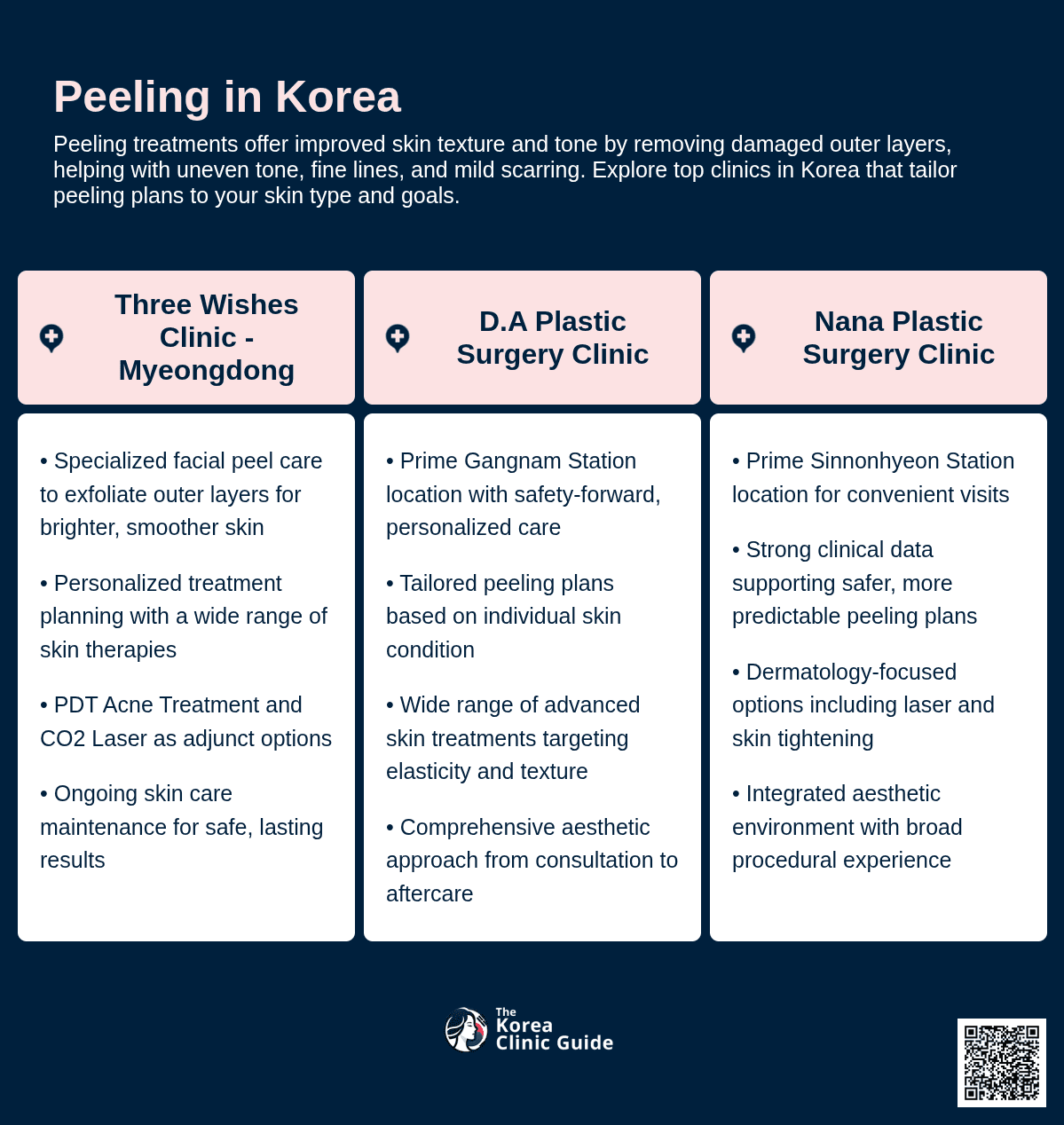
DA Plastic Surgery Clinic is located near Gangnam Station and offers a wide range of advanced cosmetic procedures aimed at enhancing natural beauty in a safe, comfortable setting. The clinic’s experienced surgeons and dedicated staff focus on personalized care, helping patients choose options that fit their individual goals and facial or body proportions.
Its services span facial contouring procedures such as V-line surgery, turning zygoma reduction, genioplasty, revision facial contouring, and Smile Triple Jaw surgery, as well as rhinoplasty options including cartilage rhinoplasty, hump removal, bulbous tip reshaping, alar reduction, and revision rhinoplasty. DA Plastic Surgery Clinic also provides breast procedures (augmentation, reduction, nipple surgery, and revision), body contouring (liposuction, tummy tuck, gynecomastia), eye procedures (double eyelid surgery, ptosis correction, canthoplasty), and non-surgical skin-focused treatments such as Ulthera Tuner, Thermage FLX, thread lifting, and skin elasticity treatment.
Find more about this clinic here: D.A Plastic Surgery Clinic Website
Nana Plastic Surgery Clinic
Nana Plastic Surgery Clinic, located near Sinnonhyeon Station in Seoul, is widely recognized for advanced aesthetic care supported by extensive clinical data and broad procedural experience across surgery and dermatology. For patients seeking help with keratosis pilaris (KP), Nana stands out as a strong choice because it combines data-driven treatment planning with dermatology-based technologies—especially laser and skin-tightening modalities—within a clinic environment that is also equipped to handle complex, individualized aesthetic goals.
- Convenient access: Centrally located by Sinnonhyeon Station for easy visits and follow-up care, which is important for KP management that often benefits from repeat sessions.
- Advanced dermatology capabilities: Offers laser treatments and non-surgical tightening therapies that can be used to support smoother-looking skin texture—key concerns for many KP patients.
- Data-backed, experience-driven approach: Known for extensive clinical data and diverse experience, supporting more personalized treatment planning for different skin types and severity levels.
- Comprehensive aesthetic infrastructure: A full spectrum of procedures (from minimally invasive dermatology options to major surgeries) reflects strong clinical systems, consultation depth, and coordinated patient care.
- Customized, stepwise care potential: Access to multiple dermatologic and aesthetic modalities (e.g., laser, tightening, targeted “Petit” sculpting options) allows clinicians to tailor plans around texture, redness, and overall skin appearance goals often associated with KP.
Find more about this clinic here: Nana Plastic Surgery Clinic Website
Modelo clinic
In Korea, many people with keratosis pilaris seek treatment not only to smooth rough, bumpy skin but also to improve overall confidence in their appearance. Modelo Clinic approaches these concerns with a philosophy that does not chase short-lived trends; instead, we aim for beauty that continues to maximize your values over time. At Modelo, the focus is on “your beautiful individuality,” creating a plan that fits your skin characteristics and long-term goals rather than copying someone else’s look.
For patients who want a more refined and balanced appearance alongside their skin-care journey, Modelo Clinic offers a wide range of personalized aesthetic procedures optimized for Asian skin and facial structures. Options include Wrinkle Botox and Contour Botox for natural-looking facial balance, Fullface Filler and Baby Filler for volumizing and under-eye refreshment, and Skin treatments such as Lifting and Whitening to support firmness and clearer tone. Additional procedures like Comfort Thermage and Thread Lifting provide gradual, natural tightening, while Bodytoxin is available for contouring and smoothing concerns in body areas.
Find more about this clinic here: Modelo clinic Website
Navigating "Peeling" Procedures in South Korea for Medical Tourists
South Korea: A Hub for Dermatology Medical Tourism
South Korea is highly regarded for advanced aesthetic and dermatological care, bolstered by a culture of cutting-edge research and a global reputation for quality. Clinics focus on scientific skin diagnosis and curated, step-by-step care—from assessment to aftercare—creating a personalized experience ideal for conditions like keratosis pilaris, where needs vary widely.
Many South Korean clinics have international accreditations (like JCI), publish in top journals, and employ experienced practitioners, reinforcing a commitment to safety and global standards. International patients benefit from dedicated staff who speak several languages and from agencies that help coordinate every detail—removing many common hurdles of traveling for care.
Step-by-Step Guide for International Patients
- Selecting Clinics and Virtual Consultations: Create a shortlist based on expertise, reviews, and before/after evidence. Verify if the clinic offers language services, airport pick-up, and recovery accommodations. Schedule virtual consultations; provide medical history and photos, and ask about techniques, costs, and recovery.
- Travel Arrangements: Check visa needs; many countries enjoy visa-free stays up to 90 days, but some treatments may require specific medical visas. Choose flexible flights and arrange accommodations near the clinic, ideally with recovery-friendly amenities. Some clinics or agencies offer recovery hotels with dedicated support.
- Preparing for Procedures: Confirm appointment details and payment options before your trip, upload necessary documents, and organize records digitally.
- On Procedure Day and Aftercare: Follow instructions about fasting if sedation is involved. Post-treatment, closely follow aftercare instructions—avoid sun, use recommended skin products, and rest.
- During Recovery: Expect mild swelling, healing, and peeling across the first week. Stay gentle on the skin, avoid sunlight, and don’t plan strenuous activities. Maintenance peels every 3-4 months may be suggested for KP.
- Language and Concierge Support: Clinics and agencies provide multilingual support; apps like Papago and KakaoTalk help bridge language gaps. Agencies such as Medical Avenue Korea and Seoul Guide Medical facilitate full itineraries and coordination.
Costs Associated with "Peeling" Procedures: South Korea vs. Global
Estimated Costs for Peeling in South Korea
Costs depend on peel type, treatment area, clinic, and included services:
| Clinic Name | Peel Type | Area Treated | Cost per Session (KRW) | Approx. Cost (USD) |
|---|---|---|---|---|
| Lienjang Clinic | GA Peel | Facial Skincare | ₩70,000 | ~$54 |
| Black Peel | Facial Skincare | ₩100,000 | ~$77 | |
| Pink Peel | Facial Skincare | ₩120,000 | ~$92 | |
| LHALA Peel | Facial Skincare | ₩120,000 | ~$92 | |
| Oxygen Peel | Facial Skincare | ₩100,000 | ~$77 | |
| New "Aladdin" Peel | Upper Chest | ₩240,000 | ~$185 | |
| New "Aladdin" Peel | Upper/Lower Back | ₩260,000 | ~$200 | |
| New "Aladdin" Peel | Full Back/Upper Arms | ₩480,000 | ~$370 | |
| Koenji Clinic (JP) | Chemical Peel | Upper Arms (20x10cm) | ¥27,280 | ~$175 |
| Conjure Skin (US) | Korean Coral Peel | 1 Treatment | - | $165 |
Korean peels are affordably supplied domestically, with products like Korea Bienpeel TCA 35% available wholesale for $90-99 per box.
A Medical Tourist's Perspective: Cost Comparison
Global averages for chemical peels vary widely, typically $700–$2,200 per session. South Korea’s range—$54 for facial peels to $370 for large body areas—is generally lower than in many Western countries, especially for extensive KP treatment. Package deals also often bring costs down further.
| Country | Minimum (USD) | Maximum (USD) | Average (USD) | Notes |
|---|---|---|---|---|
| South Korea | ~$54 (face) / ~$185 (body) | ~$370 (body) | - | Individual session prices, package options |
| Global Average | $700 | $2,200 | $1,700 | Typical chemical peels |
| Turkey | $150 | $2,735 | $1,528 | Wide pricing |
| Thailand | $40-$60 | $1,710 | $1,000 | Depends on clinic/hospital |
| USA | $180-$275+ | $350 | $300 | General pricing, deeper costs more |
With advanced technology, personalized care, and competitive pricing, South Korea stands out as offering both high value and quality for medical tourists.
Factors Influencing Procedure Costs
Factors affecting price include:
- Depth/type of peel: The stronger the peel and the more complex, the higher the cost.
- Chemical agents used: Some acids/formulations are pricier.
- Area treated: Larger areas cost more.
- Session count: KP often requires multiple sessions; package pricing lowers per-session costs.
- Clinic reputation/location: Premier or accredited clinics and those in sought-after neighborhoods may charge more.
- Additional services: Costs often include consultation, aftercare, recovery support, and sometimes translation or transport.
- Agency fees: Many agencies assisting foreign patients do so at no added charge, but some premium services may cost extra.
Patient Experiences and Outcomes with "Peeling" for Keratosis Pilaris
Reported Efficacy and Improvements
Chemical peels significantly improve KP by smoothing bumps and roughness, reducing papules, calming redness, and fading dark spots. Follicular hyperpigmentation often lightens, and skin appears more even and refined. Collagen stimulation offers improved elasticity and texture, sometimes reducing fine lines.
Patient Satisfaction and Long-Term Results
Patients usually report high satisfaction, particularly for texture and bump reduction. However, long-term studies indicate that peels are not a permanent fix; improvements may fade without regular maintenance. Consistent home routines with mild exfoliants (AHAs, BHAs, urea creams) complement professional peels for lasting benefits.
| Grading | Description |
|---|---|
| Excellent improvement | Best possible appearance after treatment |
| Significant improvement | Marked improvement vs. starting point |
| Some improvement | Noticeable but less dramatic improvement |
| No improvement | Looks essentially the same |
| Worse | Appearance has deteriorated |
Important Considerations and Side Effects
Patients should expect some downtime, which increases with peel depth. Common after-effects include mild redness, irritation, and sun sensitivity. Preparing by pausing certain skincare products, and following post-care instructions—like gentle cleansing and avoiding sunlight or exfoliants—is crucial to healing and preventing complications like scarring.
There’s variability in how people respond; not all treatments work for everyone, and sometimes symptoms may worsen.
Real-World Patient Testimonials
Many users report smoother skin, reduced bumps, and softer texture soon after beginning exfoliation routines. Some see reduced inflammation and brighter skin, while others find particular products ineffective or even aggravating. Personal consistency with home care is vital and often recommended by professionals for maintaining good results beyond the clinical setting.
Conclusion
Keratosis pilaris is a widespread but treatable skin condition that can cause significant cosmetic and emotional discomfort. Chemical peeling procedures provide an effective, science-backed option for improving KP symptoms, especially when combined with regular maintenance. South Korea stands out as a high-value destination for such treatments, offering advanced care at competitive prices. Lasting results depend on consistent treatment and at-home care, so patients are advised to research, plan, and consult professionals thoroughly before pursuing chemical peels, especially abroad.
Disclaimer
This information serves an educational purpose only and should not replace medical advice from a qualified healthcare provider. Consult a dermatologist for personalized recommendations and ensure thorough research into procedures, clinics, and travel requirements before making medical travel decisions.
References
1, 2, 3, 4, 5, 6, 7, 8, 9, 10, 11, 12, 13, 14, 15, 16, 17, 18, 19, 20, 21, 22, 23, 24, 25, 26, 27, 28, 29, 30, 31, 32, 33, 34, 35