
Medical Tourism Blog
10 Thera Lifting in Korea: Results, Recovery, Safety and Travel Planning
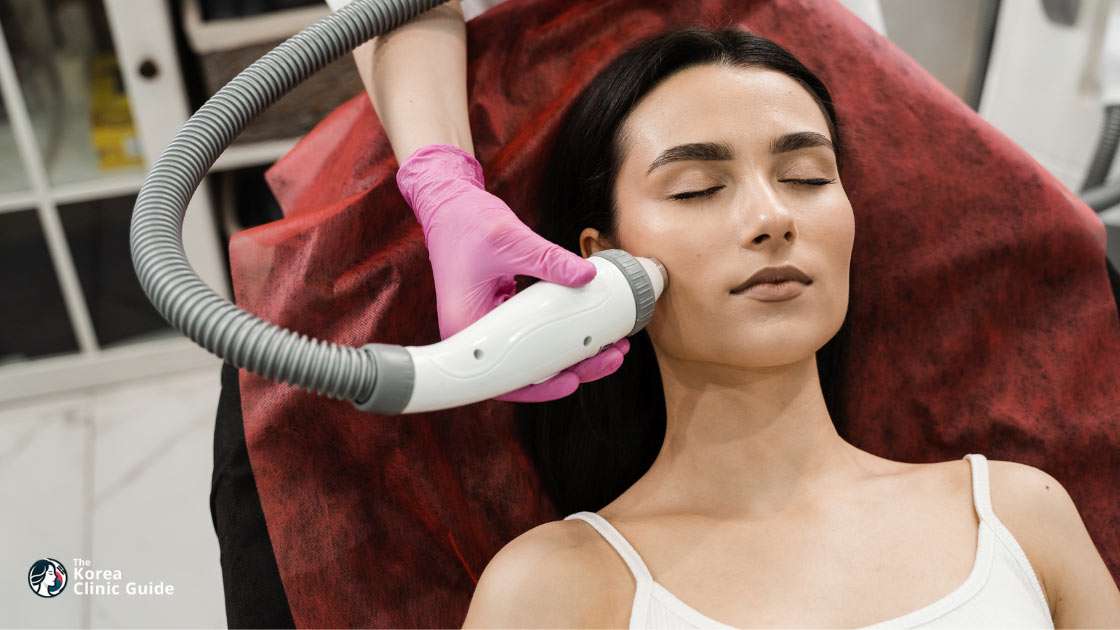
Table of contents
- 10 Thera Lifting at a Glance
- What Is 10 Thera Lifting?
- Who Is a Good Candidate for 10 Thera Lifting?
- How Is 10 Thera Lifting Performed?
- Why Visit Korea for 10 Thera Lifting?
- Key Information for International Patients
- Which Are the Best Clinics in Korea for 10 Thera Lifting?
- 10 Thera Lifting From Start to Finish
- Alternatives to 10 Thera Lifting
- How Can I Prepare for 10 Thera Lifting?
- Aftercare Advice
Considering treatment in Korea? Everything you need to know e.g. — how to avoid scams, visas, interpreters, recovery tips — in our Medical Tourism Master Guide. Plan with confidence in minutes, not weeks!
Last updated: September 2026
10 Thera Lifting at a Glance
- What it is — 10 Thera Lifting uses the Korean-made 10THERA device to deliver dual-line high-intensity focused ultrasound (HIFU) beneath the skin for non-surgical facial and neck tightening.
- Best candidates — It is best suited to medically appropriate adults with mild-to-moderate laxity, such as early jowls, a softened jawline, modest under-chin laxity, mild cheek descent, or subtle brow laxity.
- Result timeline — Some early tightening may be visible, but collagen-remodeling results should be assessed at 8–12 weeks; no validated 10THERA-specific maintenance schedule or long-term durability data are available.
- Recovery — Formal downtime is uncommon: redness usually settles within hours, swelling may last 3–72 hours, and tenderness, sensitivity, or bruising can persist for days to about two weeks.
- Key limitation — 10THERA can produce modest tightening but cannot remove substantial excess skin, replace lost facial volume, or deliver the correction of a surgical facelift or neck lift.
- Korea travel — Plan 1–2 days in Korea for consultation and treatment plus a next-day buffer; there is no established no-fly interval after uncomplicated non-sedated HIFU, although next-day long-haul travel is more practical.
- Evidence and device distinction — 10THERA delivers two parallel HIFU lines per shot, but the manufacturer’s efficiency claim is not head-to-head proof of equal outcomes or safety; device-specific evidence consists of small retrospective Korean studies with only about 1–4 months of follow-up.
What Is 10 Thera Lifting?
10 Thera Lifting is a dual-line high-intensity focused ultrasound treatment that delivers targeted energy beneath the skin to encourage tightening. It addresses mild to moderate facial and neck laxity, helping soften early jowls, refine the jawline, and improve modest cheek or under-chin looseness over time. It is a non-surgical, incision-free procedure.
Who Is a Good Candidate for 10 Thera Lifting?
- Mild-to-moderate laxity — Suitable candidates are medically well adults with early jowling, a mildly blurred jawline, modest under-chin or neck laxity, mild cheek descent, or subtle brow laxity.
- Gradual, conservative goals — Good candidates want modest tightening without incisions, surgical scars, or a long recovery. An early tightening effect can occur, but collagen-remodeling results are best assessed at 8–12 weeks.
- Anatomy-led planning — A clinician should distinguish lax skin from facial volume loss, submental fat, heavy jowls, platysmal bands, scar tethering, or skeletal structure before recommending HIFU.
- Realistic expectations — Focused ultrasound does not remove substantial excess skin, restore lost volume, or create a surgical facelift or neck-lift result. Broader facial HIFU evidence supports modest improvement in selected patients, but protocols and measurements differ considerably across studies, with limited long-term data (systematic review and meta-analysis).
Do not treat open wounds, active infection, rashes, severe inflammatory or cystic acne, or sunburn in the planned area. Defer elective treatment during pregnancy or breastfeeding. Pacemakers, implantable defibrillators, cochlear implants, neurostimulators, facial hardware, dental hardware, dermal implants, filler, threads, prior facial surgery, recurrent cold sores, keloid tendency, facial nerve palsy, bleeding disorders, anticoagulant or antiplatelet therapy, immunosuppression, epilepsy, significant autoimmune disease, and poorly controlled diabetes all require individualized medical review. Never independently stop warfarin, apixaban, rivaroxaban, clopidogrel, aspirin, or other prescribed medicine. The eye, eyelid, and inner orbital rim must not be treated; the clinician must also avoid major nerves, vessels, the thyroid, thyroid cartilage, and trachea.
How Is 10 Thera Lifting Performed?
10THERA has no separate patient-facing treatment types. The meaningful difference is the cartridge depth, treatment zone, and whether HIFU is used alone or as part of a staged plan.
- 3.0 mm cartridge plan — The manufacturer lists a 7 MHz, 3.0 mm cartridge for appropriate chin, cheek, and neck areas. It targets a more superficial plane beneath the skin (manufacturer brochure).
- 4.5 mm cartridge plan — The listed 4 MHz, 4.5 mm cartridge is intended for appropriate cheek areas and targets a deeper plane. Depth selection must account for facial thickness, bony landmarks, scars, prior treatment, and nerve-risk zones.
- Area-focused treatment — A plan can concentrate on the cheeks, jawline, jowls, under-chin area, neck, or brow region. More shots do not automatically mean a better or safer result.
- Standalone or combination treatment — Clinicians sometimes pair HIFU with radiofrequency, filler, biostimulation, neuromodulator, or submental-fat treatment when these address a separate anatomical issue. Do not assume a combination is necessary because it is offered.
- Two-line delivery — 10THERA delivers two parallel HIFU lines per shot. Its manufacturer presents this as an efficiency feature and claims 200 shots are comparable to 400 shots from a conventional one-line device; this is not head-to-head clinical proof of equivalent lifting, pain, or complication rates (manufacturer brochure).
Ask whether the planned device provides real-time ultrasound visualization and how the clinician will map prior filler, threads, scars, implants, and facial nerve-risk zones. Published 10THERA material describes fixed-depth cartridges but does not establish real-time imaging.
Why Visit Korea for 10 Thera Lifting?
10THERA is a Korean-made HIFU platform from TENTECH. Korea offers access to the original device and clinicians familiar with a market where energy-based aesthetic treatment is widely available. Device origin alone does not establish better outcomes; safety depends on the clinician’s assessment, training, treatment mapping, and conservative parameter selection.
- Original-platform access — TENTECH reports launching 10THERA in May 2020 and receiving Korean MFDS certification in June 2020 (company history).
- Defined dual-line hardware — Manufacturer material specifies simultaneous two-line delivery and 3.0 mm and 4.5 mm cartridges, rather than presenting “10 Thera lifting” as a surgical technique (device brochure).
- Korean clinical signals — A small retrospective Korean study reported a 14-minute median procedure time and early automated skin-analysis improvement among 16 evaluable participants. It had no control group and only about one to four months of follow-up (10THERA retrospective study).
- Important evidence limit — A second small retrospective Korean study found early improvement after 10THERA alone and after same-session 10THERA plus 10THERMA radiofrequency, but non-randomized design means it cannot prove the independent benefit of dual-line HIFU or superiority over other devices (combination-treatment study).
- Different devices, different mechanisms — 10THERA is HIFU; 10THERMA is TENTECH’s separate monopolar radiofrequency platform. Do not treat their names, effects, or evidence as interchangeable.
Key Information for International Patients
- Minimum stay — Plan 1–2 days in Korea: a consultation-and-treatment day plus an optional next-day buffer for redness, swelling, pain, or an unexpected reaction.
- Repeat visits — No validated 10THERA-specific maintenance interval exists. Reassess results at 8–12 weeks before deciding on another session; the available device-specific studies followed patients for only about one to four months (early follow-up evidence).
- Flights — There is no established mandatory no-fly interval after uncomplicated, non-sedated HIFU. For a long-haul flight, travel the next day rather than immediately after treatment. Do not fly if sedated, in substantial pain, or experiencing blistering, major swelling, weakness, visual symptoms, or neurological symptoms.
- Itinerary impact — Formal downtime is uncommon. Redness usually settles within hours, while swelling can last 3–72 hours and tenderness or bruising can persist for days to about two weeks. Avoid scheduling an important photo-dependent event immediately after treatment.
- Clinic communication — Arrange an English-language or virtual consultation before travel. Send unfiltered front, oblique, and profile photographs in even lighting and disclose all implants, facial procedures, filler, threads, dental work, medical conditions, medicines, and supplements.
- Remote follow-up — Obtain English treatment records where possible, including device and cartridge details, treated zones, shot or line count, energy settings if available, photographs, aftercare, and an emergency contact route. A remote check at 1–2 weeks is useful when symptoms persist.
Travel note: A companion is not routinely needed when treatment uses no sedation or topical anesthetic only. Arrange an adult escort and do not drive, cycle, or travel alone immediately afterward if the clinic gives an oral sedative, anxiolytic, or strong analgesic.
Which Are the Best Clinics in Korea for 10 Thera Lifting?
Listed below are some of the best clinics in Korea for 10 thera lifting.
1. PangPang Clinic
You may consider PangPang Clinic if your 10 Thera Lifting consultation benefits from a clinic centered on non-surgical lifting: its practice and research focus on thread lifting, with individualized planning that can address lifting, skin elasticity, and facial-volume concerns.
- URL: PangPang Clinic Website
- Location: Gangnam-gu, Seoul
- Lifting-focused approach:
- The clinic reports more than a decade of focus on thread-lifting research and clinical practice.
- It established a Thread Lifting Research Institute and cites ongoing procedure development based on research and clinical data.
- Its medical team participates in international beauty conferences through invited lectures and presentations.
- Personalized planning:
- A dedicated thread-lifting consultation center is described as tailoring treatment plans to your needs.
- The clinic reports using 31 specialized functional threads, with customized thread selection and pre-operative design supported by ultrasonic visual checks.
- Thread-lifting options include lifting, assist, tightening, and volume threads, depending on the treatment goal.
- Related treatments:
- Thread lifting is offered for facial and body areas including the neck, breasts, buttocks, and abdomen.
- Minute Lifting is described as a 30-minute, non-invasive lifting option with an immediate effect and a reported maintenance period of six months to one year.
- Revision care for unsatisfactory prior thread-lifting results may incorporate fillers, Botox, or lasers.
2. Cheongdam Oracle Dermatology & Plastic Surgery Clinic
You may consider Cheongdam Oracle Dermatology & Plastic Surgery Clinic for a 10 Thera Lifting consultation if you want your lifting goals assessed alongside skin quality, volume loss, and other facial-aging concerns. The clinic lists non-surgical thread lifting as an option intended to lift and tighten skin with immediate results and minimal downtime, within a broader dermatology and plastic-surgery service range.
- URL: Cheongdam Oracle Dermatology & Plastic Surgery Clinic Website
- Location: Gangnam-gu, Seoul
- Lifting and facial-aging options:
- Thread lifting is listed as a non-surgical facelift approach using threads to lift and tighten skin.
- Botox is available for wrinkles related to facial-muscle movement, including the forehead and eye area.
- Dermal fillers are offered to add facial volume and soften deeper lines, including in the lips, cheeks, and nasolabial folds.
- Skin-quality treatments:
- Laser resurfacing is offered for texture concerns, wrinkles, scars, and blemishes.
- Chemical peels, microneedling, and HydraFacial are listed among options for exfoliation, hydration, texture, and collagen-focused skin care.
- Personalized treatment plans are described for cosmetic and dermatologic procedures.
3. Banobagi Clinic Gwangju
You may consider Banobagi Clinic Gwangju for a 10 Thera Lifting consultation if you want to discuss lifting in combination with treatments for skin firmness, facial contour, and hydration. The clinic offers non-surgical thread lifting for sagging skin and laser lifting intended to tighten superficial-to-deep skin layers while supporting collagen production.
- URL: Banobagi Clinic Gwangju Website
- Location: Seo-gu, Gwangju
- Lifting options:
- Thread lifting uses medical-grade threads to lift and tighten sagging skin, with contouring and natural-looking lift goals.
- Laser lifting is offered to tighten skin and support collagen production for firmness and elasticity.
- Complementary facial treatments:
- Fillers are available for immediate facial volume and lift.
- Botox is offered for fine lines and wrinkles in areas such as the forehead, crow’s feet, and frown lines.
- Contour injections are listed for localized facial-fat reduction and shaping of areas such as the jawline, cheeks, and under-chin region.
- Skin-firmness and complexion care:
- Secret RF combines microneedling and radiofrequency for collagen-focused treatment of fine lines, scars, and enlarged pores.
- Skin boosters and customized skin-care programs are available for hydration, texture, and radiance.
- PicoSure Toning and Excel V are listed for pigmentation, vascular concerns, and complexion improvement.
10 Thera Lifting From Start to Finish
- Remote enquiry and screening — Request an English or virtual consultation where available. Send clear photos and disclose prior filler, threads, surgery, implants, facial-nerve conditions, cold sores, allergies, pregnancy or breastfeeding status, and all medicines and supplements.
- In-person assessment — The clinician assesses the actual cause of laxity, facial volume, scars, bony landmarks, skin condition, and risk zones. Routine blood tests are not generally expected for an uncomplicated non-sedated HIFU session, but medical clearance or testing can be appropriate for relevant health conditions or combined treatment.
- Photography, consent, and plan — Standardized photographs are taken. Review expected modest improvement, discomfort, possible complications, evidence limitations, cartridge depth, treatment areas, and alternatives before signing consent.
- Skin preparation and comfort — Remove makeup, sunscreen, and skincare. The clinic may use topical anesthetic; oral analgesia or sedation is not inherent to HIFU. Eat and hydrate normally unless sedation or another procedure changes the instructions.
- Marking and mapping — The clinician marks treatment zones and exclusion zones, then applies coupling gel. Confirm how previous filler, threads, scars, hardware, and nerve-risk areas will be avoided.
- Ultrasound delivery — The handpiece delivers planned dual-line HIFU shots with full skin contact. Manufacturer material lists 3.0 mm and 4.5 mm cartridges for selected facial and neck areas (device specifications). Report escalating focal pain, electric-shock-like pain, pain near the eye, or any visual symptom immediately.
- Post-treatment check and discharge — Gel is removed and the clinician checks for redness, swelling, welts, burn signs, and new sensory or motor symptoms. The firing time can be short—the first retrospective study reported a 14-minute median—but allow longer for consultation, numbing, photographs, marking, consent, and discharge (study report).
- Overseas follow-up — Keep written aftercare and clinic contact details. Contact the clinic promptly for concerning symptoms, arrange local in-person assessment for significant complications, and reassess cosmetic response at 8–12 weeks.
Alternatives to 10 Thera Lifting
Non-surgical options offer gradual or moderate change with less recovery, but do not correct substantial excess skin or major tissue descent. Surgical choices provide stronger structural correction but involve scars, anesthesia, and a longer recovery.
Ultherapy or MFU-V
- Key distinction — Ultherapy lifting uses microfocused ultrasound with real-time tissue visualization and has a larger published evidence base than 10THERA.
- Tradeoff — It remains non-surgical and can still be painful or cause burns, sensory changes, swelling, bruising, or nerve-related complications.
Other HIFU Platforms
- Key distinction — HIFU laser, Shurink lifting, and Liftera lifting are focused-ultrasound alternatives.
- Tradeoff — Imaging capability, cartridge depths, energy delivery, pain profile, regulatory status, and clinical evidence are device-specific and cannot be assumed equivalent.
Monopolar or RF-Based Tightening
- Key distinction — Thermage lifting and InMode lifting use radiofrequency rather than focused ultrasound and can suit patients whose main concern is diffuse dermal laxity or skin quality.
- Tradeoff — RF does not replace volume restoration, fat reduction, or surgical correction when those are the dominant issues.
Thread Lift
- Key distinction — A thread lift provides immediate mechanical repositioning rather than relying mainly on gradual collagen remodeling.
- Tradeoff — It introduces puncture-related risks, including infection, asymmetry, thread palpability or visibility, and possible revision or removal.
Facelift or Neck Lift
- Key distinction — A face lift is the more meaningful option for marked jowling, substantial excess skin, pronounced neck laxity, and platysmal banding.
- Tradeoff — Surgery offers greater correction but requires anesthesia, scars, recovery time, and management of surgical risks.
How Can I Prepare for 10 Thera Lifting?
- Medical disclosure — Give the clinic a complete list of conditions, allergies, prior filler, threads, facial surgery, dental work, implants, pacemakers, defibrillators, cochlear implants, and neurostimulators. Bring relevant implant records.
- Medicines and bleeding risk — Report warfarin, apixaban, rivaroxaban, clopidogrel, aspirin, and other anticoagulant or antiplatelet medicines. Do not stop prescribed treatment without instructions from both the prescriber and treating clinician.
- Supplements — Disclose fish oil or omega-3, vitamin E, ginkgo, garlic, ginseng, turmeric or curcumin, and other products that can affect bruising or bleeding. Stop them only when the appropriate clinician specifically advises.
- Skin condition — Postpone treatment for sunburn, open lesions, active infection, rash, severe acne flare, or uncontrolled cystic acne in the proposed treatment area.
- Food and fluids — No routine fasting is needed for topical anesthetic or non-sedated HIFU. Eat a light normal meal and hydrate unless sedation or a combined procedure is planned; then follow fasting instructions exactly.
- Treatment-day skin care — Arrive with clean skin and minimal or no makeup. Avoid irritating new skincare products or aggressive facial treatments before the appointment.
- Alcohol, transport, and lodging — Avoid heavy alcohol before treatment, particularly when bruising is a concern. Reserve nearby accommodation for the first night if receiving a combined procedure, using sedation, or taking a long-haul flight the next day.
- Flexible travel plan — Keep the departure schedule flexible enough to stay longer for a significant reaction or clinic review.
Travel note: Send photographs and medical history before booking non-refundable flights. A remote screening cannot replace an in-person anatomical assessment.
Confirm the treating doctor’s clinic-specific medication, fasting, skincare, and travel requirements; individualized instructions take precedence over general guidance.
Aftercare Advice
Protect treated skin and take new pain, sensory changes, burns, or weakness seriously; incision-free HIFU is not risk-free.
- First 24 hours — Use a gentle cleanser and bland moisturizer. Avoid strenuous exercise, steam rooms, saunas, overheating, heavy alcohol, and aggressive rubbing or massage while the skin is red, swollen, or tender.
- Skincare and sun — Apply broad-spectrum SPF 50 sunscreen when exposed to daylight. Pause exfoliating acids, retinoids, and irritating active products until redness and sensitivity have settled.
- Contact and further procedures — Do not book facial massage or another energy-based treatment until the treating clinician confirms safe sequencing, especially after filler, threads, or combination treatment.
- Expected recovery — Redness commonly resolves within hours; mild swelling can last 3–72 hours. Tenderness, bruising, or sensitivity can persist for days to about two weeks. Early tightening is not the final outcome; assess collagen-remodeling change at roughly 8–12 weeks.
- Warning signs — Contact the clinic immediately and seek urgent local medical care for severe or worsening pain, blistering, burn or skin breakdown, rapidly increasing swelling, widespread hives, marked asymmetry, new facial droop, difficulty speaking, vision changes, severe headache, or persistent or worsening numbness or weakness.
- Follow-up — Keep treatment records and arrange remote review at 1–2 weeks if symptoms continue. Photograph the area in consistent lighting for the 8–12-week outcome review.
Follow the treating doctor’s instructions over general advice, and contact the clinic promptly when anything appears wrong.
Frequently Asked Questions
Related Blogs
Nuviju in Korea: Treatment Process, Recovery, Safety, and Travel Planning
Nuviju is a prescription cholic-acid injection for adults with moderate-to-severe pinchable fat beneath the chin, delivered in a mapped series of preplatysmal-fat injections at least one month apart. The article covers candidacy screening, Korea travel planning, recovery reactions and warning signs, aftercare, and alternatives such as liposuction, neck lift, and deoxycholic acid.
Updated: Oct 13, 2026
Juveacell in Korea: Types, Safety, Recovery, and Travel Planning
Juveacell is a donor-derived hADM skin booster for gradual improvement in hydration, texture, fine lines, pores, elasticity, and dermal density, with 3% and 8% formulations documented by the manufacturer. Learn about candidate screening, injection steps, recovery, aftercare, product verification, and travel planning for treatment in Korea.
Updated: Oct 13, 2026
PRF Injection in Korea: Uses, Evidence, Recovery, and Travel Planning
PRF injections use a patient’s processed blood for facial skin or scalp treatment, typically through a series of superficial injections with short-term redness, swelling, or bruising. International patients should plan 2–3 days in Korea, arrange next-day and remote follow-up, verify the clinic’s processing protocol, and obtain English treatment records and emergency contact details.
Updated: Oct 13, 2026
Milia Under Eyes Treatment: Milia Removal Procedures in Korea for Clearer, Smoother Skin
Discover how Korea leads in safe, effective Milia removal techniques such as manual extraction, electrosurgery, and laser ablation. This blog explores the benefits of choosing Korea for milia treatment, offering advanced technology, skilled dermatologists, and affordable pricing. Perfect for medical tourists seeking quick, professional solutions to benign keratin cysts beneath the eyes and on the
Updated: Oct 12, 2026
Clinics offering 10 Thera Lifting

PangPang Clinic: Korea's Premier Thread Lifting and Skin Rejuvenation Specialist in Gangnam, Seoul
Sinsa

Cheongdam Oracle Dermatology & Plastic Surgery Clinic in Korea: Offering Advanced Skin, Anti-Aging, Body Contouring Treatments and More
Seolleung
BLS Main Branch Korea (Cheongdam) – Signature Lifting, Skin Analysis & Event Facial Programs
Cheongdam

The BB Plastic Surgery: Premier Plastic Surgery Clinic in Korea Offering Comprehensive Cosmetic Procedures
Gangnam Station