
Medical Tourism Blog
Gynecomastia in Korea: Surgery Methods, Recovery, Travel Planning, and Alternatives
Table of contents
- Gynecomastia at a Glance
- What Is Gynecomastia?
- Who Is a Good Candidate for Gynecomastia?
- How Is Gynecomastia Performed?
- Why Visit Korea for Gynecomastia?
- Key Information for International Patients
- Which Are the Best Clinics in Korea for Gynecomastia?
- How Much Does Gynecomastia Cost in Korea?
- Gynecomastia From Start to Finish
- Alternatives to Gynecomastia
- How Can I Prepare for Gynecomastia?
- Aftercare Advice
Considering treatment in Korea? Everything you need to know e.g. — how to avoid scams, visas, interpreters, recovery tips — in our Medical Tourism Master Guide. Plan with confidence in minutes, not weeks!
Last updated: September 2026
Gynecomastia at a Glance
- What it treats — Gynecomastia surgery, or male breast reduction, removes persistent glandular breast tissue and may add liposuction for chest fat or skin excision for major laxity to create a flatter chest contour.
- Typical cost in Korea — Treatment is listed at ₩4,000,000–₩8,000,000 (about US$3,000–$5,900); the price rises when combined gland excision, liposuction, skin reduction, general anesthesia, drains, or additional monitoring are needed.
- Best candidates — The strongest candidates have a persistent firm gland or puffy areola after reversible causes have been addressed, stable weight, adequate skin recoil, medical fitness for anesthesia, and realistic expectations about scars and symmetry.
- Recovery and results — Desk work may be possible in 3–7 days, while strenuous exercise and chest training are commonly restricted for about 4–6 weeks; swelling can obscure the result early, with a more dependable contour at 3–6 months and scar maturation up to 12 months.
- Korea travel plan — International patients should plan roughly 11–14 nights, including consultation and early reviews, because medical tourists are advised not to fly for 10 days after chest surgery; a 7–10-day visit may include suture removal when non-absorbable sutures are used.
- Key safety limitation — A new hard or one-sided mass, nipple discharge or retraction, skin changes, or enlarged lymph nodes requires diagnostic assessment—and sometimes biopsy—before cosmetic surgery; surgery also does not prevent recurrence if weight gain, steroid use, hormone exposure, or an untreated cause continues.
- Korea-specific check — Verify that the facility is registered to serve foreign patients through Medical Korea, and obtain the actual surgeon’s identity, anesthesia and emergency-transfer arrangements, English operative and aftercare documents, and a direct complication-contact plan before travel.
What Is Gynecomastia?
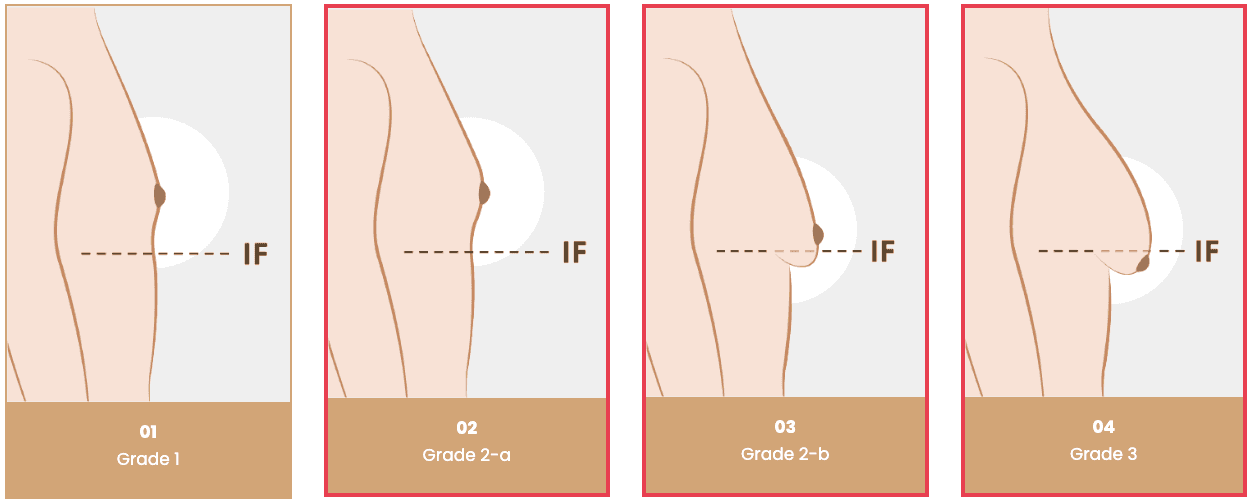
Gynecomastia surgery, also called male breast reduction, removes enlarged glandular breast tissue and may address excess chest fat or skin. It aims to create a flatter, more proportionate chest and reduce persistent nipple projection or distress related to breast enlargement. It is a surgical procedure, with the extent of treatment tailored to the tissue and skin involved.
Who Is a Good Candidate for Gynecomastia?
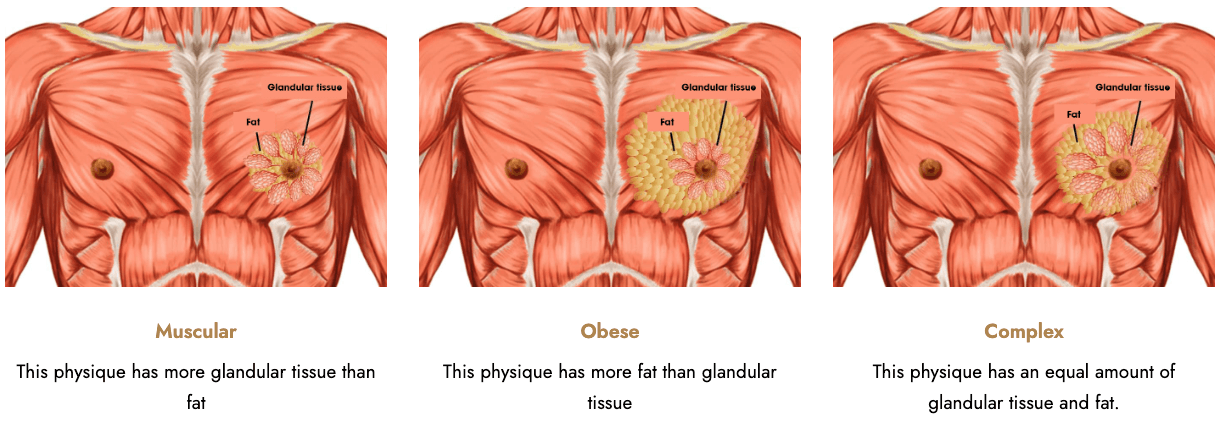
- Persistent glandular enlargement — Good candidates have long-standing true gynecomastia: a firm glandular disc beneath the nipple, puffy areolas, or breast enlargement that has not resolved after reversible causes were addressed.
- Mixed gland and fat — Combined gland excision and liposuction is often considered when both fibrous gland and chest fat contribute to the contour.
- Stable weight and skin quality — A stable weight helps the surgeon judge the likely contour. Good skin recoil can allow a smaller-incision operation; marked loose skin, nipple descent, or major weight-loss changes can require skin excision and longer scars.
- Medically prepared for surgery — Candidates need medical fitness for local anesthesia with sedation or general anesthesia, and must be able to wear compression, attend early reviews, and follow lifting and travel restrictions.
- Realistic contour goals — Surgery can flatten and reshape the chest but cannot guarantee perfect symmetry, eliminate every scar, or prevent recurrence when weight gain, anabolic steroids, hormones, or an untreated medical cause continue.
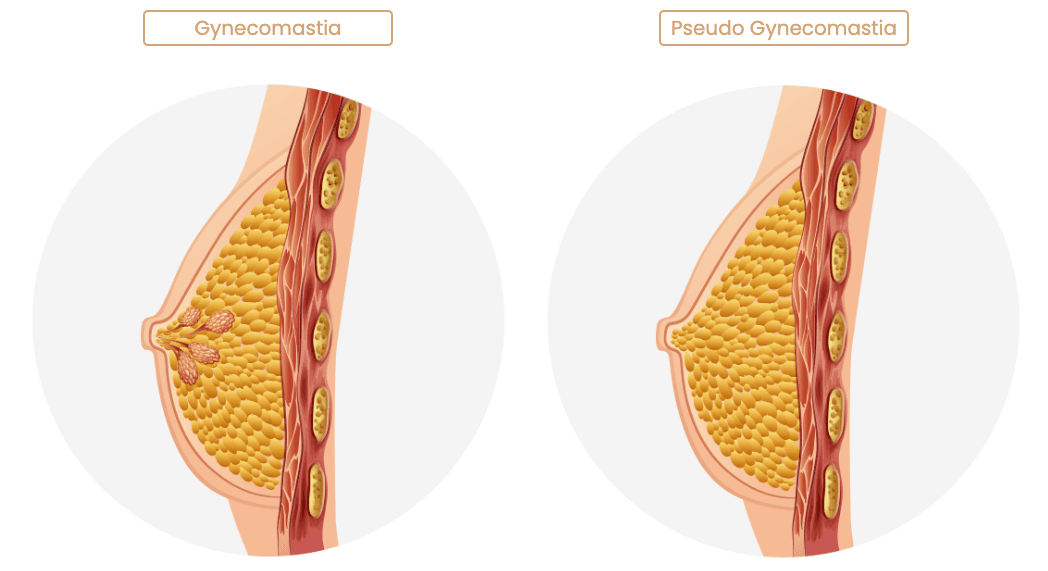
A new hard, eccentric, or one-sided mass, nipple discharge or retraction, skin change, enlarged lymph nodes, or suspicious imaging requires diagnostic assessment—and sometimes core-needle biopsy—before cosmetic surgery. Adult-onset enlargement needs evaluation for medication, hormone, testicular, thyroid, liver, kidney, and other underlying causes; clinical guidance supports cause-directed examination and selective testing or imaging. Delay surgery for active infection, uncontrolled diabetes, significant anemia, unmanaged bleeding risk, unstable weight, or nicotine exposure when the surgical team requires cessation. Pubertal gynecomastia often regresses, so surgery is generally reserved for persistent fibrotic enlargement or substantial distress after specialist assessment; recent guidance advises postponing surgery until after puberty where possible to reduce recurrence risk. A physical examination must also distinguish gynecomastia from pseudogynecomastia (lipomastia), where chest fat predominates.
How Is Gynecomastia Performed?
The operation is matched to the amount and location of gland, chest fat, skin excess, nipple position, asymmetry, and scar tolerance. A named device or hidden-incision route is not automatically a better operation; available comparative evidence identifies technique-specific trade-offs rather than one best method for every chest.
- Liposuction alone — Small access incisions allow removal and contouring of fat-predominant tissue. This suits selected patients with good skin recoil, but liposuction cannot reliably remove a dense central gland or correct persistent nipple projection.
- Direct gland excision — Also called subcutaneous mastectomy for gynecomastia, this removes firm glandular tissue, commonly through a lower-periareolar incision along the areola edge. It directly treats a palpable gland but leaves a scar and can cause a contour depression if too much tissue is removed.
- Combined liposuction and gland excision — Liposuction shapes the peripheral chest while excision treats the central gland. A systematic review found lower reported complication rates in combined-technique cohorts than excision-only cohorts, but differences in gynecomastia severity, techniques, and reporting limit a direct comparison.
- Energy-assisted or limited-access methods — Ultrasound-assisted, power-assisted, laser-assisted, and radiofrequency-assisted liposuction, plus pull-through, shaver, endoscopic, and transaxillary approaches, are tools or access routes. Small comparative studies report broadly similar aesthetic outcomes for certain techniques, with differing risks of residual gland, hematoma, contour irregularity, and visible scarring.
- Skin excision and nipple-areola repositioning — Severe enlargement, major skin excess, poor recoil, or nipple ptosis can require skin removal. This improves the chest shape when liposuction and excision alone would leave excess skin, but creates longer scars and adds wound-healing and nipple-blood-supply risk. Reviews of excisional methods report more wound separation, scarring, and nipple complications in periareolar skin-excision cohorts, which also tend to treat more severe cases.
Why Visit Korea for Gynecomastia?
Korea can be practical for gynecomastia surgery when the chosen facility has a verified foreign-patient pathway and can provide in-person assessment, anesthesia planning, early postoperative reviews, and English-language documentation. Technical experience reported by Korean authors includes combined liposuction-and-excision and scar-conscious access approaches. That experience does not prove superior outcomes over treatment elsewhere.
- Foreign-patient verification — Check whether the provider appears in the official Medical Korea registered medical institution system before arranging treatment.
- Technique discussion — Published Korean surgical reports describe approaches such as ultrasound-assisted liposuction with gland excision and limited-access techniques. Ask why the proposed incision and tool fit the amount of gland, fat, and skin excess rather than choosing based on device marketing.
- Documented care pathway — Request the actual surgeon’s name, anesthetic clinician or anesthesia arrangement, operating location, emergency-transfer plan, pathology policy when tissue is assessed, and a written English aftercare and complication-contact process.
- Evidence boundary — Robust prospective comparisons showing that Korean gynecomastia surgery is safer or more effective than surgery in other countries are lacking. Judge the individual surgical plan, credentials, consent process, and capacity to coordinate care at home—not the destination alone.
Key Information for International Patients
- Minimum stay — Plan at least 10 days in South Korea after surgery, plus time for the in-person consultation and any indicated work-up. A realistic itinerary is about 11–14 nights for consultation, surgery, early checks, and the no-fly interval.
- Flight timing — The CDC Yellow Book advises medical tourists not to fly for 10 days after chest surgery. Do not book a non-changeable return flight before the surgeon assesses healing, pain control, mobility, wounds, and drains.
- Clot-risk planning — Surgery and travel longer than four hours both increase venous-thromboembolism risk. Prior VTE, obesity, cancer, thrombophilia, limited mobility, hormone exposure, and extensive skin reduction warrant a longer stay or individualized prevention plan. Do not self-start aspirin for flight-clot prevention.
- Early recovery and itinerary — Gentle walking usually starts on the day of surgery or soon afterward. Desk work can be feasible in roughly 3–7 days when pain is controlled, but sightseeing, shopping, and public transport are poor substitutes for rest during the first postoperative days.
- Repeat visits — Expect an early check for bleeding, swelling, compression fit, and wound care. A review at about 7–10 days can include removal of non-absorbable sutures when used.
- Remote follow-up — Before departure, obtain an English operative note, medication list and doses, anesthesia record where relevant, pathology report when tissue was tested, and a direct complication contact. Confirm how photo reviews and urgent concerns will be handled once home.
Travel note: Book nearby accommodation with elevator access, a private bathroom, reliable phone/data service, and simple transport to postoperative visits. Arrange a responsible adult to escort discharge and remain for the first night after sedation or general anesthesia; confirm the facility’s written policy if travelling alone.
Which Are the Best Clinics in Korea for Gynecomastia?
Listed below are some of the best clinics in Korea for gynecomastia.
1. Lydian Plastic Surgery Clinic
For your gynecomastia consultation, Lydian Plastic Surgery Clinic offers documented strengths in anatomy-based chest and body contour planning, customized liposuction instrumentation, and structured contour-focused aftercare. The supplied information does not describe a gynecomastia-specific gland-removal technique, so you would need to clarify how your individual chest concerns would be assessed and treated.
- URL: Lydian Plastic Surgery Clinic Website
- Location: Gangnam-gu, Seoul
- Contour planning and imaging:
- Uses anatomy-based design that considers individual body shape, proportions, and chest circumference rather than a one-size-fits-all fat-removal plan.
- Uses Quantificare 3D imaging for detailed pre-surgical design and visualization of surgical results.
- Liposuction approach:
- Uses more than 30 custom-made liposuction cannulas designed for differing body shapes and treatment areas.
- Describes using 1–2 strategically placed, inconspicuous incisions for its liposuction procedures, although incision placement for chest surgery should be confirmed during consultation.
- Aftercare: Describes four aftercare priorities: swelling reduction, irregularity correction, skin-elasticity recovery, and residual-fat contouring.
- Surgeon background:
- Dr. An Kyung Chun is described as having more than two decades of body-sculpting experience and as Director of the 5D Liposculpture Academy.
- The clinic states that Dr. An provides physician training in high-definition body sculpting and liposuction devices.
2. Seojin Plastic Surgery Clinic
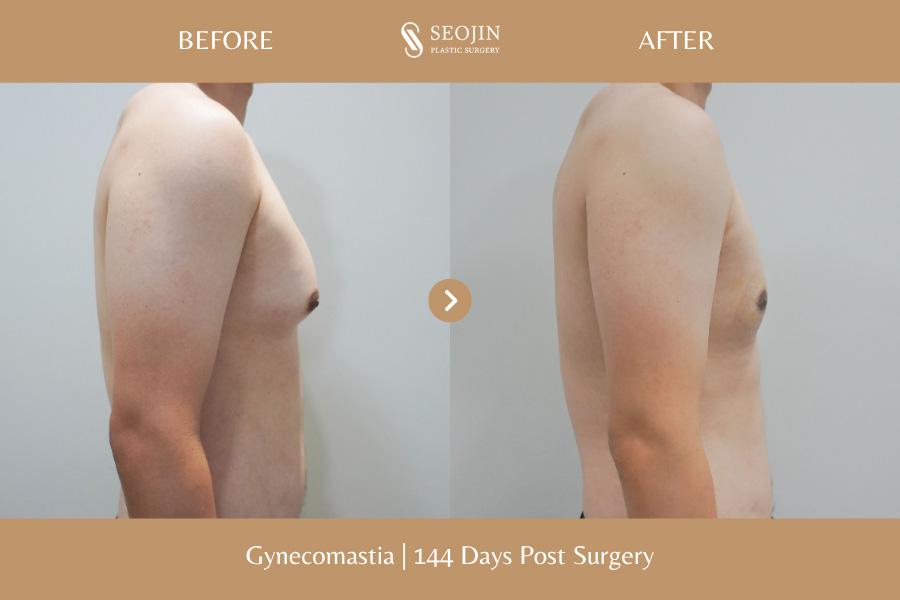
You may consider Seojin Plastic Surgery Clinic for gynecomastia because its described approach combines glandular-tissue removal, surrounding liposuction, and Velody II lifting when appropriate, while aiming to reduce visible scarring and chest sagging. As a one-doctor clinic, Dr. Lee Hyungmin provides end-to-end care, with dedicated male staff intended to support your comfort and privacy.
- URL: Seojin Plastic Surgery Clinic Website
- Location: Gangnam-gu, Seoul
- Procedure approach:
- Combines glandular-tissue removal, liposuction, and Velody II lifting as part of its comprehensive gynecomastia approach.
- Removes glandular tissue through a partial areola incision rather than the full areola, vertical, or anchor-shaped incisions described in the source.
- Performs nearby liposuction and Velody II lifting without additional incisions, with the stated aim of minimizing sagging and scars.
- Surgeon and care model:
- Dr. Lee Hyungmin is described as having more than 16 years of experience and as one of Korea’s 100 Good Doctors.
- As the clinic’s sole doctor, Dr. Lee provides consultation, procedure, and postoperative care in a continuous, personalized care model.
- Scar and recovery support:
- Offers postoperative support from initial consultation onward.
- Has a specialized scar-management center focused on semi-permanent scar concealment.
- International support:
- Offers bilingual support, personalized treatment plans, and online consultations for international visitors.
- Describes assistance from arrival in Korea through post-procedure recovery.
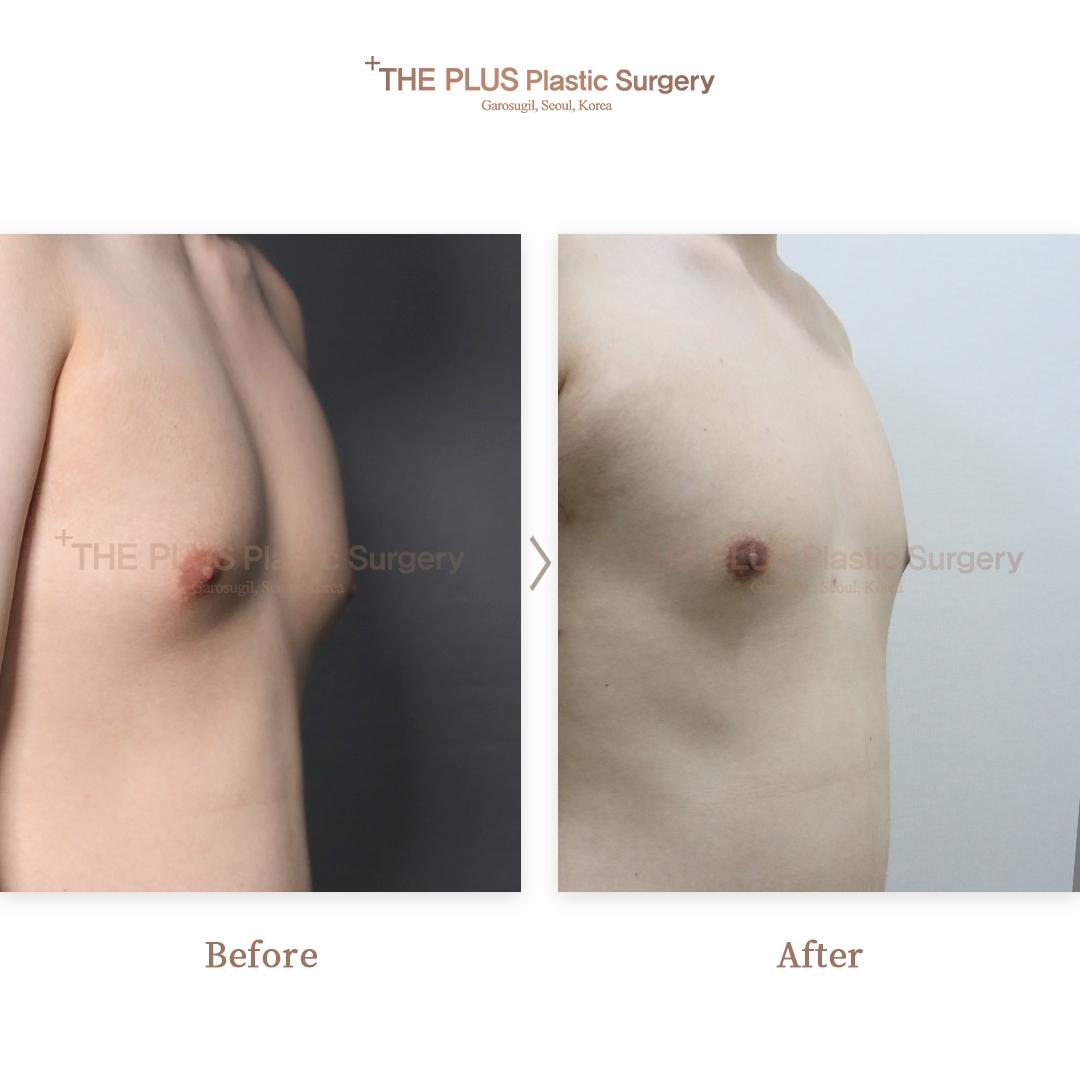
3. THEPLUS Plastic Surgery
For your gynecomastia evaluation, THEPLUS Plastic Surgery brings breast-reduction expertise led by Dr. Lee, a board-certified plastic surgeon who uses a pedicle technique intended to preserve nipple sensation while removing excess volume. The supplied information does not specify a gynecomastia-specific protocol, so your consultation should establish whether this breast-reduction approach fits your chest tissue, skin elasticity, and goals.
- URL: THEPLUS Plastic Surgery Website
- Location: Gangnam-gu, Seoul
- Breast-reduction approach:
- Dr. Lee’s stated breast-reduction technique uses a pedicle approach to preserve nipple sensation while removing excess volume.
- Her approach emphasizes natural, balanced proportions rather than size reduction alone.
- Surgeon background:
- Dr. Lee is a board-certified plastic surgeon specializing in breast augmentation, breast lift, and breast reduction surgery.
- Her experience includes a Surgery Specialist position at Seoul National University Hospital and clinical training at Seoul Metropolitan Boramae Hospital.
- She is a member of the Korean Society of Plastic and Reconstructive Surgery and the Korean Society of Aesthetic Plastic Surgery.
- Planning and aftercare:
- The clinic describes individualized assessment of skin elasticity and breast shape when selecting surgical techniques.
- States that procedures are supported by sterilization protocols, systematic postoperative monitoring, and aftercare tailored to your healing pace.
- International support: Provides English-language support and dedicated translator assistance from consultation through recovery for international visitors.
How Much Does Gynecomastia Cost in Korea?
Gynecomastia surgery is supplied at ₩4,000,000–₩8,000,000 (approximately US$3,000–$5,900). Individual quotes vary because the operation is matched to the balance of glandular tissue, chest fat, skin excess, and the anesthesia and postoperative care required.
| Procedure Price | Korean Won (₩) | USD ($) |
|---|---|---|
| Low Price | ₩4,000,000 | $3,000 |
| High Price | ₩8,000,000 | $5,900 |
Exchange rate as of 2026-09-06: 1 KRW = 0.000741 USD.
What Affects the Price?
- Liposuction, gland excision, or combined treatment — A fat-predominant chest with good skin recoil may be treated with liposuction alone, while a firm subareolar gland generally requires direct excision. Combined liposuction and gland excision treats both peripheral fat and central glandular tissue, adding operative steps, access incisions, and operating time.
- Skin excision and nipple-areola repositioning — Marked skin excess, poor recoil, ptosis, or major weight-loss-related laxity may require skin reduction rather than contouring alone. This is a more extensive operation with longer incisions, additional wound-management needs, and possible nipple-areola repositioning.
- Anesthesia and facility requirements — Local anesthesia with sedation or general anesthesia may be selected according to the extent of chest contouring. More extensive excision or skin reduction can require greater anesthesia resources, longer facility use, and, when medically indicated, overnight observation.
- Postoperative monitoring requirements — The need for drains, early bleeding and wound checks, and subsequent suture-removal visits depends on the surgical method and healing course. More extensive skin excision or drain management requires additional postoperative resources.
Cost tip: Request an itemized quote stating what is included, particularly the planned technique, anesthesia, facility use, compression garments, drains, prescriptions, pathology when clinically indicated, and postoperative checks.
The US$3,000–$5,900 conversion is approximate, based on the exchange rate dated 2026-09-06. Check the exchange rate again when budgeting.
Gynecomastia From Start to Finish
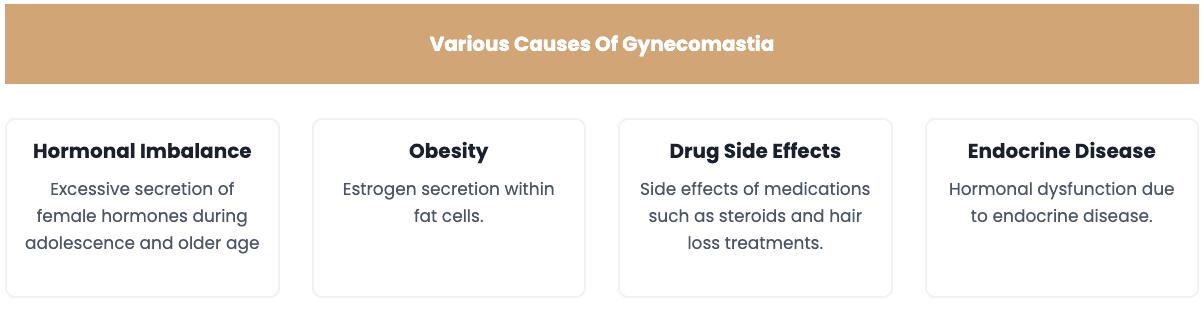
- Remote enquiry and screening — Send standardized front, oblique, and side chest photographs through the clinic’s secure channel, with age, height and weight, medical history, allergies, nicotine use, medication and supplement list, hormone or anabolic-steroid history, and previous endocrine or breast investigations. Ask whether an English or virtual consultation is available. Photo review cannot replace an examination.
- Pre-travel surgical planning — Discuss whether the preliminary plan includes gland excision, liposuction, possible skin reduction, anesthesia, compression garments, pathology when clinically indicated, drains, prescriptions, early reviews, and a 24-hour complication contact. Confirm that the in-person examination can change the technique or determine that surgery should not proceed.
- In-person consultation and work-up — The surgeon examines gland versus fat, skin elasticity, nipple position, asymmetry, and red flags requiring imaging, endocrinology referral, or biopsy. Pre-anesthetic testing can include blood count, coagulation and metabolic testing, ECG, or additional assessments based on age, history, and anesthesia plan.
- Surgery-day preparation — The surgeon marks the chest while standing. Local anesthesia with sedation or general anesthesia is selected according to the operation’s extent and anesthetic assessment. Follow the fasting plan given by the anesthetist, not a generic “nothing after midnight” rule.
- Chest contouring operation — The surgeon performs liposuction through small access points, gland excision through a lower-periareolar or limited-access incision, or skin excision when necessary. Duration depends on whether treatment is one or both sides, the volume of fat, gland density, and skin removal.
- Discharge and first night — Many patients leave the same day wearing a compression vest; extensive skin excision, drains, medical concerns, or recovery issues can require observation. An adult escort is needed after sedation or general anesthesia. Walk gently when cleared and take prescribed medicines only as directed.
- Early postoperative checks — The team reviews bruising, swelling, bleeding, drains where used, garment fit, and incision care. Non-absorbable sutures, if present, are often removed around 7–10 days.
- Travel clearance and overseas follow-up — Receive written fitness-to-fly and clot-prevention instructions before departure. Continue remote photo follow-up as arranged, and ensure a clinician at home can assess concerns that cannot be managed remotely.
Alternatives to Gynecomastia
Non-surgical treatment is appropriate when a reversible cause or fat-predominant chest is the main issue. Surgery is the more reliable contour treatment for persistent fibrotic glandular tissue, while more extensive operations trade smaller scars for the ability to remove redundant skin.
Observation and Cause Treatment
- Best fit — Recent-onset, pubertal, medication-related, substance-related, endocrine, or systemic enlargement.
- Trade-off — Treating the driver under medical supervision can reduce active enlargement, but established fibrotic gland often remains. The EAA guideline recommends treating underlying causes where possible.
Weight Management
- Best fit — Pseudogynecomastia or lipomastia, where excess chest fat predominates.
- Trade-off — Weight loss can improve fat-related fullness but does not reliably remove a firm subareolar gland.
Specialist-Directed Medical Therapy
- Best fit — Selected early or painful cases after endocrine assessment; testosterone is appropriate only for confirmed testosterone deficiency.
- Trade-off — Routine tamoxifen, aromatase inhibitors, and other hormone-active drugs are not recommended for gynecomastia in general by the EAA guideline. These medicines are not dependable substitutes for surgery in chronic fibrotic disease.
Liposuction or Skin-Reduction Surgery
- Best fit — Liposuction alone suits selected fat-predominant chests; skin-reduction surgery suits major loose skin or nipple descent.
- Trade-off — Liposuction has smaller scars but can leave gland behind. Skin reduction offers a more complete shape correction in severe cases but has longer scars, more wound-care demands, and a longer recovery. See BodyTite for information on a radiofrequency-assisted body-contouring approach; it is not equivalent to gland excision for true gynecomastia.
How Can I Prepare for Gynecomastia?
- Medical evaluation — Send all relevant endocrine, breast-imaging, and testicular assessment records before travel. Disclose new breast changes, nipple discharge, pain, and one-sided enlargement; do not proceed on the assumption that all chest enlargement is cosmetic.
- Medicines and supplements — Give the surgeon and anesthetist a complete list of prescriptions, over-the-counter medicines, aspirin, NSAIDs, anticoagulants, antiplatelet drugs, vitamins, herbal products, and supplements well in advance. Only the prescribing clinician, surgeon, and anesthetist should decide whether any drug can be held and for how long.
- Hormones and substances — Report testosterone, estrogen, hCG, antiandrogens, anabolic steroids, “test boosters,” finasteride or dutasteride, spironolactone, antipsychotics, HIV medicines, alcohol, cannabis, stimulants, opioids, and other recreational substances. Do not independently stop prescribed hormones or medicines.
- Nicotine — Follow the facility’s exact cessation policy for cigarettes, vaping, nicotine pouches, patches, gum, and other nicotine products. Nicotine can impair healing, especially after skin excision, and clinics can postpone surgery if testing or policy requirements are not met.
- Fasting and alcohol — Follow the anesthetist’s written fasting instructions, including permitted clear liquids and essential-medication timing. Avoid alcohol before surgery and while taking sedating pain medicine.
- Practical packing — Bring front-opening shirts, loose clothing, slip-on shoes, a thermometer, identification, and copies of medical records. Arrange a companion for discharge and the first night, and reserve flexible return flights.
- Accommodation and transport — Stay close enough for postoperative checks, with elevator access and a private bathroom. Do not plan to drive after anesthesia or while using sedating medication.
Travel note: Schedule consultation and indicated testing before surgery, then leave enough buffer before the 10-day post-chest-surgery flight restriction. Major skin reduction, drains, delayed healing, or elevated clot risk can require a longer stay.
Confirm the treating doctor’s clinic-specific medication, fasting, nicotine, compression, escort, and travel requirements; those individualized instructions take precedence over general guidance.
Aftercare Advice
Protect the surgical result by controlling swelling, avoiding chest strain, and treating new one-sided swelling or breathing symptoms as urgent—not as routine recovery.
- Compression and swelling — Wear the compression vest exactly as prescribed. Bruising, soreness, swelling, firmness, and temporary asymmetry are common early; vest duration depends on the technique and surgeon.
- Walking and exercise — Walk gently and regularly once cleared. Avoid heavy lifting, pushing, pulling, overhead strain, chest training, contact sports, swimming, and strenuous exercise until surgical clearance—often about 4–6 weeks, and longer after skin excision.
- Incision care — Keep incisions clean and dry according to the surgeon’s directions. Do not soak in baths, pools, hot tubs, or the sea until wounds are closed and the surgeon approves. Start scar products, massage, or silicone treatment only when instructed.
- Medication and heat — Take pain medicine and antibiotics only as prescribed. Avoid alcohol, driving, hazardous work, and important decisions while taking sedating medication. Avoid heat exposure that worsens swelling, including saunas and hot baths, until cleared.
- Urgent warning signs — Contact the surgical team urgently for rapidly enlarging one-sided swelling, persistent bleeding, severe pressure or pain, fever, spreading redness, foul drainage, wound opening, fainting, calf pain or swelling, chest pain, or shortness of breath. Chest pain or breathing difficulty requires emergency assessment.
- Results and follow-up — A flatter contour can be visible early, but swelling and scar adherence make the first weeks unreliable. A more dependable contour develops over 3–6 months, and scars can mature for up to 12 months. Continue the arranged remote follow-up after returning home.
Follow the treating doctor’s specific instructions over this general guidance, and contact the clinic promptly when healing appears abnormal.
Frequently Asked Questions
Related Blogs
Breast Fat Grafting in Korea vs. Global Costs: A Smart Investment for Natural Results
Explore the affordability and benefits of breast fat grafting in Korea, a popular cosmetic procedure known for its natural results. Discover why more individuals are choosing Korea for this innovative, cost-effective solution.
Updated: Sep 26, 2026
Nipple Surgery in Korea: Types, Recovery, Risks, and Travel Planning
Nipple surgery may reduce nipple size or projection, correct benign inversion, revise scars, or reconstruct the nipple–areola complex; technique, anesthesia, and recovery depend on the procedure and any combined breast or chest surgery. International patients should plan at least 7–10 days locally for uncomplicated isolated procedures, attend wound review before flying, arrange follow-up at home,
Updated: Sep 21, 2026
Breast Augmentation in Korea: Implants, Recovery, Travel Planning, and Long-Term Safety
Breast augmentation in Korea may use silicone or saline implants, or fat grafting, with planning based on anatomy, goals, incision, and pocket placement. The article covers candidacy, costs of ₩7,000,000–₩18,000,000, 10–14-day travel planning, recovery, follow-up, and implant records.
Updated: Sep 20, 2026
Capsular Contracture Treatment in Korea: Revision Options, Recovery, and Travel Planning
Capsular contracture treatment may include capsulotomy, partial or total capsulectomy, implant exchange or removal, pocket change, ADM support, breast lift, fat grafting, or autologous reconstruction based on symptoms and tissue condition. International patients should plan at least 10–14 days in Korea, complete local follow-ups, obtain surgeon clearance before flying, and arrange home-country car
Updated: Sep 19, 2026
Clinics offering Gynecomastia

BongBong Plastic Surgery | Premium Breast and Body Shaping with Innovative Autologous Fat Grafting and Hybrid Techniques
Nonhyeon

THEPLUS Plastic Surgery Korea | Eye, Nose, Face & Body Surgery
Sinsa

StanTop Urology & Andrology: Korea's Premier Clinic for Advanced Urological and Andrological Treatments
Sinnonhyeon Station

Lydian Plastic Surgery Clinic in Korea: Superior Cosmetic Procedures by World-Renowned Expert Dr. An Kyung Chun
Apgujeong