
Medical Tourism Blog
Chin Retrusion Solutions: Chin Implant Procedures in Korea for Enhanced Facial Balance
Table of contents
- Understanding Chin Retrusion
- Chin Augmentation Procedures
- The Process for Getting a Chin Implant in South Korea
- Which Are the Best Clinics in Korea for Chin Retrusion?
- Cost Comparison for Medical Tourists
- Conclusion
- References
Considering treatment in Korea? Everything you need to know e.g. — how to avoid scams, visas, interpreters, recovery tips — in our Medical Tourism Master Guide. Plan with confidence in minutes, not weeks!
Chin retrusion—also known as retrognathia or mandibular retrognathia—is a condition where the lower jawbone is underdeveloped or set backward. This anatomical difference doesn’t just affect appearance, leading to a "receding" or "weak" chin, but can also impact bite alignment, oral health, breathing, and facial harmony. Although it’s often regarded as a cosmetic issue, its functional effects are significant.
Chin implant surgery (alloplastic genioplasty) is a common cosmetic solution, involving insertion of a biocompatible implant to enhance chin projection and balance facial features. This procedure is distinct from more complex surgeries like sliding genioplasty or orthognathic surgery, which are designed to address bite problems.
South Korea is a leading destination for cosmetic medical tourism, thanks to expert surgeons, cutting-edge technology like 3D imaging, and strong support systems for international patients. This guide is intended to provide patients and their advisors with a thorough understanding of chin retrusion, its causes, diagnostics, and treatment options—emphasizing the importance of an accurate diagnosis, the different treatment modalities, the medical tourism process in South Korea, costs, and setting realistic expectations.
Understanding Chin Retrusion
Definition and Common Pseudonyms
Chin retrusion describes when the chin is set back compared to the rest of the face, resulting in both aesthetic and functional effects. The medical term for this is Mandibular Retrognathia or Retrognathia, referring to a backward-positioned mandible relative to the upper jaw. This often contributes to a Class II malocclusion (overbite), where the bite doesn’t align properly.
It's essential to distinguish retrognathia from micrognathia: retrognathia is about jaw position, while micrognathia relates to chin size. The fine line between these terms can affect diagnosis and treatment, so patients should know the difference.
Common terms like "receding chin," "weak chin," or "recessed jaw" are used in everyday language, highlighting the condition’s aesthetic perception but often overlooking underlying skeletal or bite-related issues, which are crucial for planning the right treatment.
Etiology and Contributing Factors
The causes of chin retrusion range from inherited to acquired:
Congenital Causes
- Genetics: Inherited jaw structure is one of the most common reasons.
- Syndromes: Several congenital conditions can involve retrognathia, including:
- Pierre Robin Sequence/Syndrome
- Treacher Collins Syndrome
- Hemifacial Microsomia
- Nager Syndrome
- Goldenhar Syndrome
- Mobius Syndrome
- Down Syndrome
Acquired Causes
- Facial Trauma: Injuries during development may impede jaw growth.
- Aging: Jawline definition may diminish as bone and soft tissue changes occur.
- Childhood Habits: Prolonged thumb-sucking or mouth breathing, often due to allergies, can adversely affect jaw development and result in a retruded chin or overbite.
A detailed patient history, including genetics and childhood habits, is essential for diagnosis and treatment planning, helping to determine if the root issue is skeletal, soft tissue, or both.
Clinical Manifestations, Functional Impact, and Associated Complications
Chin retrusion affects more than just facial profiles:
Aesthetic Concerns
A recessed chin disrupts facial harmony, making the nose seem larger and the lower face appear less defined, which can impact confidence.
Functional Implications
-
Malocclusion: Poor bite can cause:
- Difficulty chewing, biting, or swallowing (dysphagia)
- Speech challenges (lisp, slurred words)
- TMJ disorders (jaw pain, headaches, jaw clicking)
- Obstructive Sleep Apnea (OSA) and snoring
- Changes to the shape of the mouth and trouble closing lips (lip incompetence)
-
Other Health Issues: Poor alignment can lead to dental hygiene issues, increased risk of cavities, bruxism (teeth grinding), and dental wear.
Addressing only cosmetic concerns with a chin implant may miss or worsen underlying functional or health problems.
Diagnosis and Initial Assessment
Accurate diagnosis requires:
Clinical Exam
Detailed review of facial symmetry and jaw function.
Imaging
- Cephalometric X-ray: For measuring skeletal relationships.
- 3D Imaging: Allows precise surgical planning and visualization.
Pediatricians may identify early retrognathia, but diagnosis typically solidifies during adolescence, once growth patterns reveal the extent of retrusion.
Non-Surgical and Orthodontic Management
Orthodontics
Young patients with mild to moderate retrognathia may benefit from braces, headgear, or functional appliances, aiming to guide jaw growth and improve alignment before considering surgery.
Temporary, Non-Surgical Treatments
- Dermal Fillers: Hyaluronic acid-based fillers temporarily improve chin projection (6–18 months).
- Fat Transfer: Harvests and injects the patient’s own fat for longer-lasting but still non-permanent enhancement.
These options are less invasive and can be a "test run" for surgical implants.
Chin Augmentation Procedures
Both implants and bone reshaping procedures are used for chin augmentation, each with unique indications, techniques, and implications.
Chin Implant Surgery (Alloplastic Genioplasty)

Purpose and Candidacy
Chin implant surgery enhances chin size, shape, and projection for patients with a normal bite but insufficient chin definition (microgenia or mild retrognathia). It's often chosen for aesthetic improvements and sometimes coupled with facial reconstruction after trauma.
Implant Materials
The implant’s material is foundational for both the result and potential risks:
| Material Type | Key Features | Benefits | Risks/Cons | Longevity |
|---|---|---|---|---|
| Silicone (Silastic) | Flexible, nonporous | Custom fit, easy to shape | May shift, bone resorption possible | Permanent, may need revision |
| Porous Polyethylene (Medpor) | Rigid, porous | Stable, tissue integrates, bone-like feel | Harder to shape/remove, may inflame | Long-lasting, stable |
| Gore-Tex, Teflon, Dacron, Polyamide | Biocompatible | Integrates with tissue or bone | Material-specific concerns | Permanent or long-lasting |
Surgical Approaches
- Intraoral: Incision inside the mouth (no visible scar, but requires scrupulous oral hygiene).
- Submental: Under the chin (tiny external scar, better surgical access).
Choice depends on surgeon preference and patient priorities.
The Surgical Process
- Pre-op planning with 3D imaging.
- Anesthesia selection (local with sedation or general).
- Incision placement.
- Pocket creation and placement of the implant.
- Securing implant (with sutures or via tissue ingrowth if porous).
- Closure.
The procedure typically lasts 1–2 hours.
Recovery and Post-Operative Care
- Swelling, bruising, and mild discomfort for 1–2 weeks.
- Soft or liquid diet if intraoral approach was used.
- Avoid strenuous activity for several weeks; most patients return to work in 7–10 days.
Potential Risks and Complications
- Swelling, bruising, pain (short term)
- Implant movement, infection, nerve injury, bone resorption, scarring, asymmetry, and rare complications (e.g., blood clots)
Longevity and Revision Potential
Implants are usually permanent but can be revised or removed if needed, unlike bone reshaping procedures.
Bone Reshaping: Sliding Genioplasty / Osseous Genioplasty
Purpose and Candidacy
Sliding genioplasty is suited for patients needing significant changes or when bite correction is also needed. It reshapes and repositions the natural chin bone, both for aesthetics and improved function, and is often used with orthognathic surgery to address malocclusion.
The Surgical Process
- Intraoral incision.
- Bone cut (osteotomy) and repositioning.
- Fixation with plates and screws.
- Stitches (no external scar).
Typical surgery time is 1–3 hours.
Recovery and Risks
- Swelling and numbness may last longer than with implants.
- Liquid or soft food diet during initial healing.
- Significant complications (nerve damage, impaired bone healing) are more likely than with implants.
Longevity
Sliding genioplasty results are permanent and tend to age naturally.
Chin Implant vs. Sliding Genioplasty
The main distinction is functional: chin implants are cosmetic, while sliding genioplasty (often with jaw surgery) addresses functional bite correction. Recovery is longer and risks higher for the latter, but it’s the better option if the bite is involved. If a retruded chin is causing dental misalignment, sliding genioplasty and/or orthognathic surgery—not a chin implant—are necessary.
The Process for Getting a Chin Implant in South Korea
South Korea offers a streamlined, patient-focused approach for medical tourists seeking chin implants.
South Korea as a Medical Tourism Destination
Patients benefit from internationally recognized surgeons, the latest technology (like 3D imaging), and comprehensive support (multilingual staff, airport pickup, accommodation, aftercare). Clinics often have JCI or KHIDI registration, reflecting high quality and safety.
Step-by-Step for Medical Tourists
-
Initial Research & Consultation (2–4 weeks):
- Online research and virtual consultations; submit photos/medical records.
-
Secure Visa & Travel (4–6 weeks before):
- Visa arrangements (C-3 tourist visa is standard); book travel and accommodation near the chosen clinic.
-
Onsite Evaluation & Surgery:
- In-person assessment and 3D imaging.
- Surgery (1–2 hours) with general or local anesthesia.
-
Recovery in Korea (10–14 days):
- Post-op care, regular check-ups, suture removal if needed.
- Detailed instructions (diet, medication, follow-up).
-
Discharge & Return Home:
- Final check, aftercare instructions, medical records.
- Some clinics provide virtual aftercare.
This structured system offers reassurance and continuity, but patients should ensure clinic credentials and clarify revision policies.
Which Are the Best Clinics in Korea for Chin Retrusion?
Listed below are some of the best clinics in Korea for chin retrusion.
1. THEPLUS Plastic Surgery
You may consider THEPLUS Plastic Surgery for chin retrusion because its facial-contouring options include chin surgery to adjust projection and facial implants to add structure where more projection is needed. The clinic frames chin treatment around balancing the chin with your nose, lips, and jawline, with Dr. Kim’s research recognition in 3D implants providing a relevant implant-focused credential.
- URL: THEPLUS Plastic Surgery Website
- Location: Gangnam-gu, Seoul
- Procedure details:
- Chin surgery is offered to adjust chin size or projection and improve harmony with the nose, lips, and jawline.
- Facial implants are offered to add projection and definition in areas requiring more structural support.
- Relevant expertise:
- Dr. Kim is a board-certified plastic surgeon with awards for research on 3D implants and a stated focus on rhinoplasty and facial contouring.
- Dr. Jeong is President of the Korean Society of Plastic Surgeons and has a rhinoplasty practice centered on combining function and aesthetics.
- Related facial options:
- Full face contouring, cheekbone surgery, and square jaw surgery are available when chin projection is considered alongside broader facial proportions.
- Face fat grafting is also offered to restore volume in hollow or flattened facial areas.

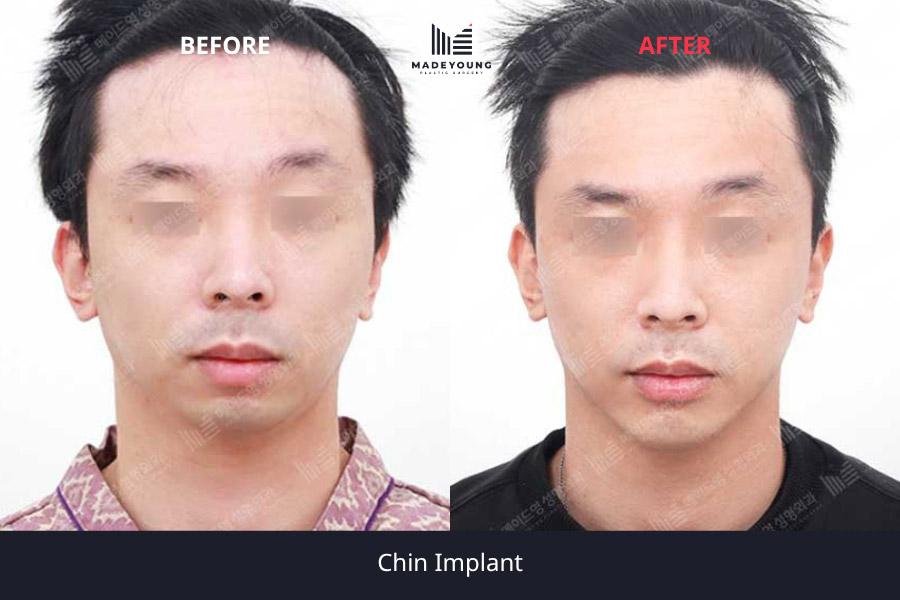
2. Made Young Plastic Surgery
You may consider Made Young Plastic Surgery for chin retrusion because it offers chin surgery (genioplasty) to enhance or reduce chin size and shape for improved facial proportion, alongside V-line and jaw-contouring procedures when your lower-face balance needs a broader assessment. Its metal-free V-line approach is described as avoiding screw fixation, metal plates, and screws while allowing length reduction, width reduction, and asymmetry correction.
- URL: Made Young Plastic Surgery Website
- Location: Seocho-gu, Seoul
- Procedure details:
- Chin surgery (genioplasty) is offered to alter chin size and shape for facial proportion.
- V-line surgery and jaw reduction are available for lower-face contouring.
- The clinic describes its metal-free V-line surgery as requiring no screw fixation, metal plates, or screws; it may address length, width, and asymmetry.
- Safety and monitoring:
- Full-time board-certified anesthesiologists are on site.
- The clinic describes one-to-one anesthesiologist monitoring during procedures and a cross-check system for emergencies.
- It reports full CCTV coverage of procedures and a separate dedicated aftercare center.
- Consultation and related options:
- The medical team provides direct consultation and diagnosis before a procedure.
- Cheekbone reduction, including a metal-free option, is available if chin planning is part of overall facial contouring.
- Rhinoplasty is also offered for facial-balance planning.
3. The Regen Plastic Surgery Clinic
You can expect The Regen Plastic Surgery Clinic to offer chin surgery that may involve augmentation, reduction, or contouring to improve facial proportion. If chin retrusion is part of a wider facial-shape concern, the clinic also provides cheekbone reduction and square-jaw reduction to address overall contour and symmetry.
- URL: The Regen Plastic Surgery Clinic Website
- Location: Seocho-gu, Seoul
- Procedure details:
- Chin surgery may include augmentation, reduction, or contouring for improved facial proportion.
- Zygoma reduction is offered for prominent cheekbones, while square-jaw reduction is offered to smooth and reduce lower-face width.
- Related facial services:
- Nose surgery options include no-implant nose surgery, revision surgery, and procedures for a crooked, hump, upturned, or droopy nose.
- Face lifting, thread lifting, Ultherapy, and an endoscopic forehead lift are also available.
Cost Comparison for Medical Tourists
Cost of Chin Implants in South Korea
Expect to pay ₩7,200,000–₩7,900,000 ($4,960–$5,440 USD), with some averages as low as $2,575 in Seoul. Prices reflect surgeon experience, clinic reputation, and implant material (Medpor usually costs more).
Included: pre- and post-op care, most medications, anesthesia, surgeon and facility fees, and sometimes short-term in-clinic lodging.
Factors Influencing Cost
- Procedure complexity
- Surgeon’s reputation/experience
- Implant type
- Clinic’s location and technical resources
- All-inclusive services
A 10% deposit is standard to confirm bookings.
Chin Implant Costs in Other Popular Destinations
| Country | Average Cost Range (USD) | Notes |
|---|---|---|
| South Korea | $2,575–$7,000 | Includes all-inclusive packages |
| Thailand | $2,300–$4,800 | Popular for affordability |
| USA | $3,000–$6,000+ | Higher for renowned surgeons |
| UK | $3,120–$6,240 | NHS coverage rare, private only |
| Turkey | $2,200–$3,700 | Known for medical tourism |
| UAE | $3,000–$4,000 | Lower average than USA/UK |
While cost is a factor, surgeon expertise and safety standards should guide decision-making.
Conclusion
Chin retrusion impacts both facial aesthetics and key functions like bite and breathing. Chin implant surgery is an effective cosmetic solution for those without functional issues, while sliding genioplasty is better for patients with underlying bite problems. South Korea’s comprehensive medical tourism system combines expert care, advanced technology, and supportive services, making it a strong option for international patients seeking chin augmentation. Accurate diagnosis and individualized planning remain essential for the best outcomes.
References
1, 2, 3, 4, 5, 6, 7, 8, 9, 10, 11, 12, 13, 14, 15, 16, 17, 18, 19, 20, 21, 22, 23, 24, 25, 26, 27, 28, 29, 30, 31, 32, 33, 34, 35, 36, 37, 38, 39, 40, 41, 42, 43, 44, 45, 46, 47, 48, 49, 50
Frequently Asked Questions
Related Blogs
Global Cost Review: Why Double Jaw Surgery in Korea is Gaining Popularity Over the USA, Mexico, and Europe
Discover the cost of double jaw surgery in Korea, a popular destination for medical tourism due to its advanced healthcare facilities and skilled surgeons. Learn about the factors influencing the price, including hospital fees, surgeon expertise, and post-operative care options.
Updated: Oct 21, 2026
Salivary Gland Removal Surgery in Korea: Types, Risks, Recovery and Travel Planning
Salivary gland removal surgery includes submandibular, parotid, sublingual, and cosmetic partial reduction procedures, with diagnosis, anatomy, nerve risks, and pathology guiding the approach. Learn about candidate criteria, alternatives, preparation, aftercare, Korea stay planning, follow-up, and urgent warning signs.
Updated: Oct 21, 2026
Discover the Global Journey of Chin Surgery: Comparing Korea’s Costs to Top Destinations
Discover the factors influencing the cost of chin surgery in Korea, known for its advanced cosmetic procedures and competitive pricing. Learn what to expect, from consultation fees to post-operative care, to make an informed decision about undergoing chin surgery in this popular medical tourism destination.
Updated: Oct 20, 2026
Comparing Square Jaw Surgery Costs: Korea vs Global Destinations for Cosmetic Excellence
Discover the latest insights on the cost of square jaw surgery in Korea, exploring factors that influence pricing, including clinic reputation and surgical techniques. This comprehensive guide helps potential patients navigate their budgeting decisions for a transformative procedure.
Updated: Oct 19, 2026
Clinics offering Chin Implant

THEPLUS Plastic Surgery Korea | Eye, Nose, Face & Body Surgery
Sinsa

Made Young Plastic Surgery: Rejuvenating Aesthetic Excellence in Korea for Face Lifts, Contouring and More
Gangnam Station

The Regen Plastic Surgery Clinic in Korea: Comprehensive Aesthetic Procedures for Eye, Nose, Facial Contouring, and Face Lifting
Hakdong

Mind Plastic Surgery: Excellence in Cosmetic & Reconstructive Procedures in Korea
Sinnonhyeon Station