
Medical Tourism Blog
Forehead Lift in Korea: Methods, Recovery, Risks and Travel Planning
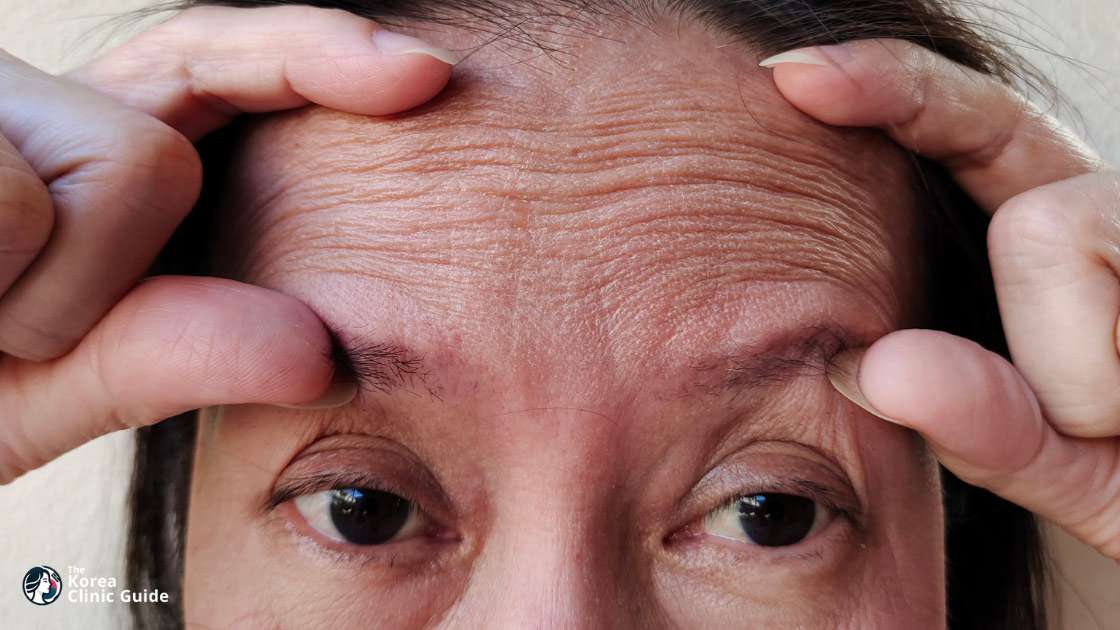
Table of contents
- Forehead Lift at a Glance
- What Is a Forehead Lift?
- Who Is a Good Candidate for a Forehead Lift?
- How Is a Forehead Lift Performed?
- Why Visit Korea for a Forehead Lift?
- Key Information for International Patients
- Which Are the Best Clinics in Korea for Forehead Lift?
- How Much Does a Forehead Lift Cost in Korea?
- Forehead Lift From Start to Finish
- Alternatives to a Forehead Lift
- How Can I Prepare for a Forehead Lift?
- Aftercare Advice
Considering treatment in Korea? Everything you need to know e.g. — how to avoid scams, visas, interpreters, recovery tips — in our Medical Tourism Master Guide. Plan with confidence in minutes, not weeks!
Last updated: September 2026
Forehead Lift at a Glance
- What it does — A forehead lift, or brow lift, surgically elevates descended or uneven brows and can soften forehead and glabellar “11” lines; it does not reliably change eye shape, remove lower-eye bags, or correct true eyelid ptosis.
- Typical cost in Korea — A standalone forehead lift is priced at approximately ₩6,600,000–₩12,000,000 (US$4,900–$8,900); the technique, correction extent, anesthesia, fixation materials, and combined procedures affect the quote.
- Surgery and recovery — Standalone surgery generally takes 1–3 hours and is usually outpatient; bruising and swelling are most noticeable for 1–2 weeks, while many patients return to desk work at about 2 weeks.
- When results settle — Brow elevation is visible early, but swelling can make the brows look high or uneven; assess the position after several weeks to months as tissues relax, with surgical improvement generally long-lasting despite ongoing aging.
- Best candidates — Good candidates are medically fit adults with low, asymmetric, or hooded brows and realistic goals, after evaluation confirms that brow descent—not excess eyelid skin, dry eye, or levator-related ptosis—is the main concern.
- Key risks and trade-offs — Potential complications include bleeding, infection, scars, hairline change or hair loss near incisions, prolonged numbness, asymmetry, under- or over-correction, dry eye or difficulty closing the eyes, and possible revision surgery.
- Korea travel planning — Plan 10–14 nights in Korea for consultation, surgery, early wound review, and staple or suture removal around days 7–14; verify foreign-patient facility registration through Medical Korea, but separately assess the individual surgeon and follow-up plan.
What Is a Forehead Lift?
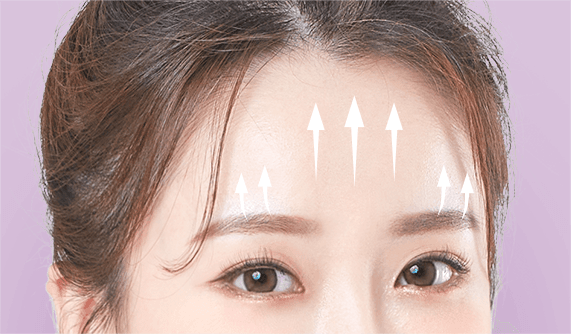
A forehead lift, also called a brow lift, is surgery that raises and repositions descended or uneven eyebrows and upper-forehead tissues. It can reduce upper-eyelid hooding caused by low brows and soften forehead and frown lines for a more rested upper-face appearance. It is a surgical procedure, performed through scalp, hairline, forehead, or eyelid-area incisions depending on the planned correction.
Who Is a Good Candidate for a Forehead Lift?
- Brow descent and hooding — Good candidates have low or asymmetric brows, especially when brow descent contributes to upper-eyelid hooding or a tired appearance.
- Upper-face concerns — Surgery can address horizontal forehead lines, glabellar “11” lines, and brow asymmetry while repositioning the brow.
- Realistic surgical goals — Suitable patients understand that a forehead lift improves brow position; it does not reliably change eye shape, remove lower-eye bags, or repair levator-related eyelid ptosis.
- Medically fit adults — Candidates need stable health, the ability to undergo sedation or general anesthesia when required, and enough time in Korea for early reviews and possible staple or suture removal.
Avoid or defer elective surgery with uncontrolled diabetes, hypertension, significant heart or lung disease, bleeding disorders, active scalp/forehead or systemic infection, or pregnancy. Current smoking, vaping, or other nicotine exposure raises wound-healing risk and requires surgeon-directed cessation before and after surgery. Anticoagulants, antiplatelet drugs, NSAIDs, and supplements that affect bleeding require a coordinated plan with the prescribing clinician; never stop warfarin, apixaban, rivaroxaban, clopidogrel, aspirin, or another prescribed blood thinner independently. Assessment must distinguish low brows from excess upper-lid skin, true ptosis, dry eye, and habitual forehead-muscle compensation, because excessive elevation can look unnatural or worsen eye-exposure symptoms.
How Is a Forehead Lift Performed?
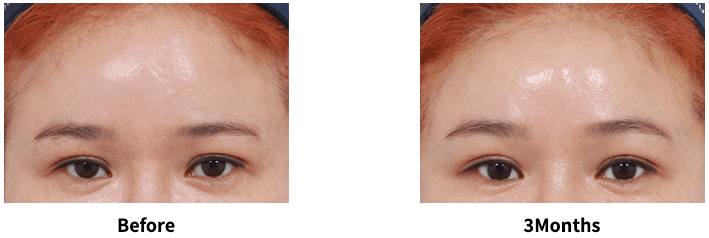
Technique selection depends on hairline height, scalp laxity, hair thinning, forehead skin, the distribution of brow descent, asymmetry, desired scar placement, and planned eyelid surgery. A 1,060-patient retrospective series found that hairline height, forehead skin type, sex, and lift request were associated with technique selection; this informs planning but is not a universal treatment rule.
- Endoscopic forehead lift — Several small incisions are placed in hair-bearing scalp. The surgeon releases forehead tissues under endoscopic visualization and uses technique-specific fixation, such as sutures, bone tunnels, implants, or screws. It is often suited to mild-to-moderate descent when concealed scalp scars are a priority.
- Pretrichial hairline lift — An incision at or close to the frontal hairline provides brow elevation without necessarily lengthening a high forehead. The trade-off is a hairline scar and potential hairline or scalp-sensation change.
- Temporal or lateral brow lift — Limited temporal scalp incisions focus on outer-brow descent. It does not provide the broad central forehead correction of a full forehead lift.
- Direct or mid-forehead lift — Skin is removed immediately above the brow or within a deep forehead crease. This provides direct, relatively strong elevation but leaves a more visible facial-scar trade-off; it can be appropriate for selected marked ptosis or facial-nerve weakness.
- Coronal open lift — A longer scalp incision allows broad exposure but brings a greater incision burden, with concerns including hairline change, local hair loss, and prolonged scalp numbness.
- Internal browpexy — Performed through an upper-eyelid incision, often alongside [upper blepharoplasty](/blog/upper-blepharoplasty-korea), this is generally a limited stabilization or modest lift rather than a substitute for substantial brow elevation.
A 2025 meta-analysis of 22 studies and 2,127 brows found durable average brow elevation at roughly 21 months’ mean follow-up, without a significant difference in long-term elevation or complication rates between pretrichial and post-trichial approaches. For endoscopic surgery, a 2024 meta-analysis estimated long-term elevation of about 3.25 mm medially, 3.86 mm centrally, and 4.35 mm laterally, while noting the need for stronger long-term fixation data.
Why Visit Korea for a Forehead Lift?
Korea has a formal government system for facilities registered to treat international patients. This is useful for verification, but it does not establish an individual surgeon’s skill or guarantee a particular result. Forehead-lift outcomes depend more on anatomy-based planning, incision design, fixation, eyelid assessment, and postoperative care than on destination alone.
- Foreign-patient facility verification — Check a provider through the government’s Medical Korea registered-provider system before committing to surgery.
- Specialty-specific due diligence — Confirm the individual surgeon’s relevant specialty credentials, who provides anesthesia, emergency-transfer arrangements, English-language documentation, revision policy, and remote-follow-up pathway. Registration and interpreter access are context signals, not outcome evidence.
- Individualized brow planning — Brow shape has no single validated ideal. A 2024 preference study found that Asian and Caucasian participants both favored moderate curvature and position but differed in preferred arch-apex location. Discuss photographs, baseline asymmetry, facial proportions, and gender-expression goals rather than requesting a fixed brow measurement.
- Evidence limitation — No robust comparative research identified in this dossier shows that forehead lifts in Korea have better or worse safety, durability, revision rates, or aesthetic outcomes than those performed in other countries. Available reviews compare techniques, not medical-tourism destinations.
Key Information for International Patients
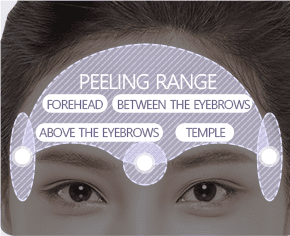
- Minimum stay — Plan 10–14 nights for an uncomplicated standalone forehead lift. This allows in-person consultation and clearance, surgery, early wound review, and removal of nonabsorbable sutures or staples, commonly 7–14 days after surgery.
- Flight timing — CDC medical-tourism guidance cites plastic-surgery advice to wait 7–10 days after facial cosmetic surgery before flying. Do not book a non-changeable return flight or depart until the operating surgeon clears you in person.
- Combined surgery — Blepharoplasty, ptosis correction, facelift, or other combined operations extend swelling, activity restrictions, and the likely stay beyond the standalone timeline.
- First-night support — Arrange a responsible adult to collect you after anesthesia and remain with you overnight unless the surgical and anesthesia teams give a different discharge plan. Do not drive, ride a motorbike, sign important documents, or stay alone immediately after anesthesia.
- Long-haul clot risk — Travel soon after surgery adds venous-thromboembolism risk, especially with prior VTE, clotting disorders, obesity, estrogen exposure, cancer, pregnancy or recent postpartum status, and limited mobility. For journeys over four hours, walk periodically, perform calf exercises, and hydrate; compression stockings or preventive medication require individualized clinical advice.
- Remote follow-up — Leave Korea with an English operative note, anesthesia record, fixation-device details if used, medication list, written aftercare, emergency contacts, and photo/video follow-up plan. Identify a clinician at home who can assess a wound or eye problem.
Travel note: Remote messaging is not appropriate for rapidly increasing swelling, visual symptoms, breathing symptoms, or suspected infection. Seek urgent local or emergency care rather than waiting for an overseas reply.
Which Are the Best Clinics in Korea for Forehead Lift?
Listed below are some of the best clinics in Korea for forehead lift.
1. THEPLUS Plastic Surgery
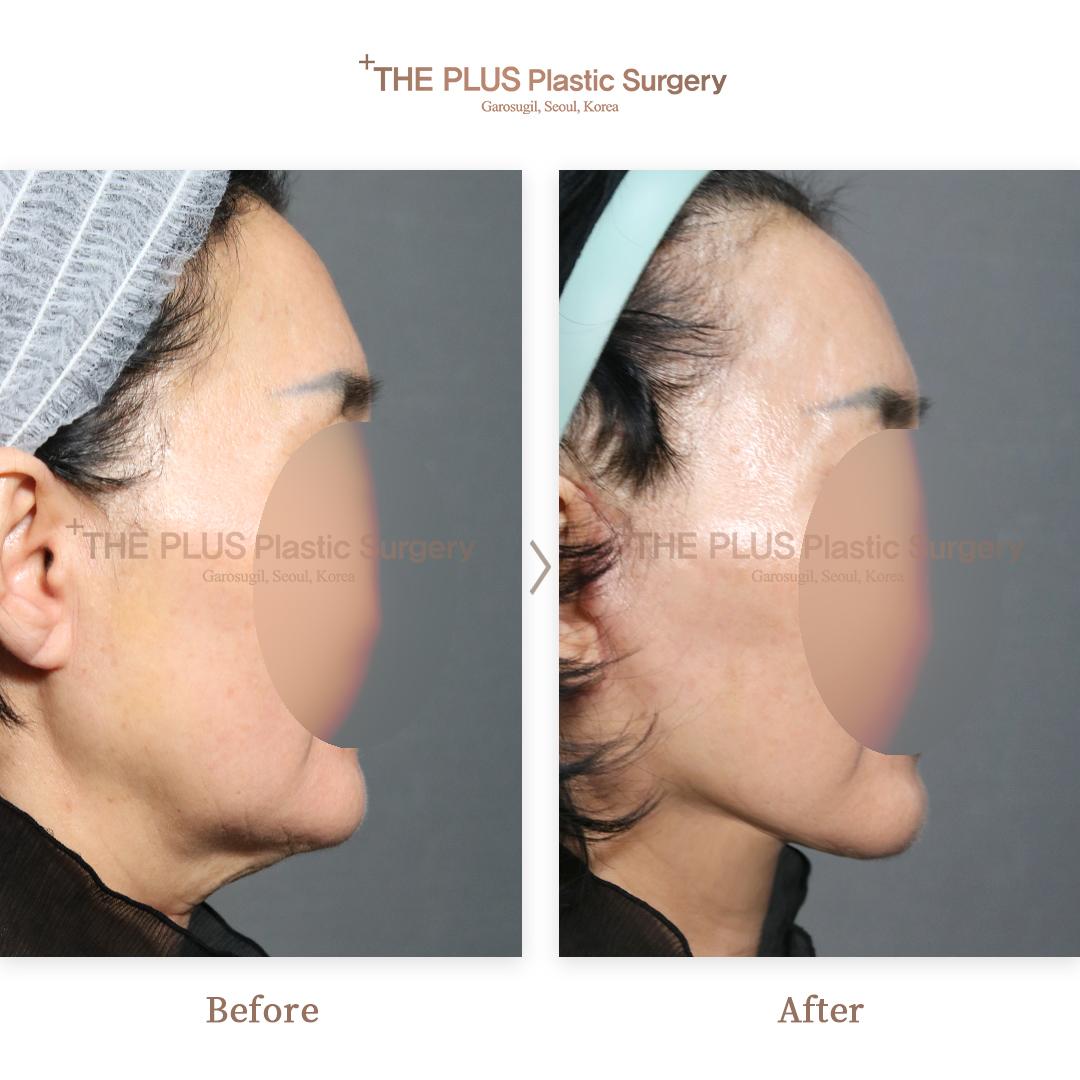
For a forehead-lift consultation, you can expect an aesthetic practice that emphasizes facial balance and natural-looking expression. The available information does not specify a dedicated forehead-lift technique, but it does describe surgical facelift, thread-lift, and facial fat-grafting options that may be relevant when discussing your broader facial rejuvenation goals.
- URL: THEPLUS Plastic Surgery Website
- Location: Gangnam-gu, Seoul
- Relevant facial services:
- Facelift repositions sagging facial tissue to refine contours while maintaining natural expression.
- Thread lift is offered for mild facial sagging using dissolvable threads.
- Facial fat grafting uses your own fat to restore volume in hollow or flattened facial areas.
- Clinical background:
- Dr. Kim is described as a board-certified plastic surgeon with research recognition for 3D implants and experience in facial contouring.
- Dr. Jeong is described as President of the Korean Society of Plastic Surgeons and as focusing on the relationship between function and appearance in his practice.
2. Made Young Plastic Surgery
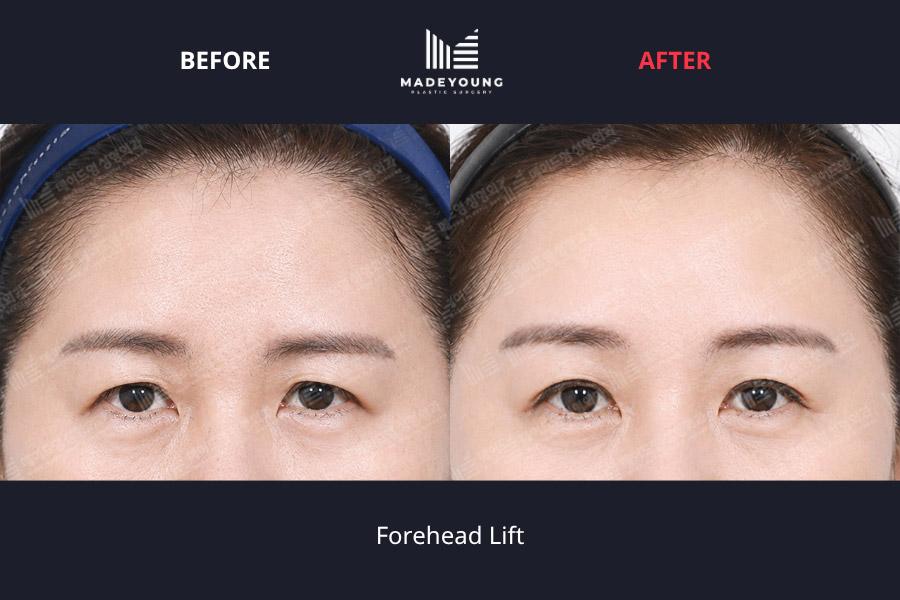
You may consider Made Young Plastic Surgery for a forehead lift if you want an endoscopic approach designed to address forehead, brow, and glabellar wrinkles together with drooping eyelids. The clinic describes Full HD endoscopic dissection of nerves, vessels, and muscles, lifting of the skin, periosteum, and muscle layers, procerus muscle resection, and fixation with authentic Endotine products.
- URL: Made Young Plastic Surgery Website
- Location: Seocho-gu, Seoul
- Forehead-lift approach:
- The procedure is described as improving forehead, brow, and glabellar wrinkles as well as drooping eyelids.
- A Full HD endoscopic system is used for precise dissection around nerves, vessels, and muscles.
- The technique includes lifting of the skin, periosteum, and muscle, with procerus muscle resection described as part of the approach.
- The clinic states that it uses authentic Endotine products for fixation.
- Anesthesia and monitoring:
- Full-time board-certified anesthesiologists are listed as being on site.
- The clinic describes one-to-one anesthesiologist monitoring and a cross-check process involving multiple anesthesiologists in an emergency.
- It states that procedures have full CCTV coverage.
- Aftercare: A separate dedicated aftercare center and systematic post-procedure care are described.
3. LABOM Plastic Surgery
You may consider LABOM Plastic Surgery for an endoscopic forehead lift that aims to reposition sagging brow and forehead tissue through minimal, hairline-hidden incisions rather than simply tightening skin. Its approach is described as addressing forehead wrinkles, frown lines, brow or eyelid drooping, and the effort of straining your forehead to open your eyes, with a customized design intended to preserve natural brow shape and expression.
- URL: LABOM Plastic Surgery Website
- Location: Gangnam-gu, Seoul
- Procedure details:
- Endoscopic dissection is described as allowing a minimally invasive approach with a lower scarring burden.
- The lift is intended to improve forehead wrinkles, glabellar lines, drooping brows, and eyelid heaviness at the same time.
- Planning considers facial proportions, brow position, individual anatomy, and degree of aging.
- The clinic emphasizes avoiding overcorrection to maintain natural eyebrow lines and facial expression.
- Endotine fixation may be used when needed; it is described as providing stable fixation and being absorbed over time.
- Recovery considerations:
- Significant swelling is described as lasting about one to two weeks.
- Return to daily activities is described as possible after about one week.
- Incisions are described as being hidden within the hairline.
- Care planning and aftercare:
- Plastic-surgery specialists are stated to perform each procedure directly, with individualized pre-operative consultation and diagnosis.
- The clinic describes high-definition endoscopic technology, anesthesia and continuous monitoring systems, and individualized surgical planning.
- Post-operative care includes regular progress checks and structured support for swelling, bruising, and scar management.
- A dedicated systematic aftercare system for international visitors is described.
How Much Does a Forehead Lift Cost in Korea?
A Forehead Lift is priced at ₩6,600,000–₩12,000,000 (approximately US$4,900–$8,900). Individual quotes vary because the surgical approach and the extent of correction determine the operating time, anesthesia, facility resources, and materials required.
| Procedure Price | Korean Won (₩) | USD ($) |
|---|---|---|
| Low Price | ₩6,600,000 | $4,900 |
| High Price | ₩12,000,000 | $8,900 |
Exchange rate as of 2026-09-06: 1 KRW = 0.000741 USD.
What Affects the Price?
- Forehead-lift technique and incision approach — An endoscopic lift uses several small scalp incisions, endoscopic visualization, tissue release, and fixation. A pretrichial, direct, temporal, or coronal approach has different incision placement, exposure requirements, scar and hairline planning, and dissection extent; a coronal/open lift in particular involves a longer incision and broader exposure.
- Extent and pattern of brow correction — Correcting mild lateral-brow descent with a temporal lift requires a more limited treatment area than repositioning the full brow and forehead complex. Marked or asymmetric brow ptosis can require more extensive release, shaping, and intraoperative balancing to achieve the planned brow position.
- Fixation method and materials — Endoscopic forehead lifts may use sutures, bone tunnels, implants, screws, or other fixation methods to hold the elevated tissues. The chosen fixation strategy adds specific consumables and procedural steps, while the operative plan must account for the desired stability and anatomy.
- Combined eyelid or facial procedures — Adding upper blepharoplasty, ptosis repair, facelift, or another procedure extends the treated areas and operating time and can require a different anesthesia and recovery plan. Internal browpexy performed through an upper-eyelid incision is commonly paired with blepharoplasty but provides more limited brow support than a substantial forehead lift.
Cost tip: Request an itemized quote that states what is included, including the planned technique, anesthesia, operating-facility use, fixation materials if used, preoperative assessment, dressings, early wound reviews, staple or suture removal, medications, and follow-up arrangements.
The US$4,900–$8,900 conversion is approximate, based on the KRW exchange rate dated 2026-09-06. Check the exchange rate again when budgeting.
Forehead Lift From Start to Finish
- Remote screening — Send unedited front, oblique, and side photographs with the forehead relaxed and brows at rest. Disclose previous brow, eyelid, forehead, scalp, or hair-transplant procedures; Botox or filler; dry eye or other eye disease; allergies; nicotine exposure; medications; and bleeding or clotting history. Request English or virtual consultation options, but treat remote advice as preliminary.
- In-person examination and planning — The surgeon evaluates brow position at rest, forehead-muscle compensation, hairline, scalp laxity, eyelid skin excess, eyelid-margin height, eye closure, ocular surface, and baseline asymmetry. Confirm the incision, targeted brow position and shape, fixation plan, scar/hairline trade-offs, anesthesia, combined procedures, and written revision and follow-up policies.
- Preoperative clearance — Expect a medical history, examination, medication review, and tests selected for age, medical conditions, and anesthesia plan. Blood tests, ECG, or specialty clearance are used when indicated. Follow the hospital’s fasting instructions exactly.
- Surgery and anesthesia — A standalone forehead lift generally takes about 1–3 hours. Local anesthesia with sedation or general anesthesia is selected according to the operation and individual factors. The surgeon releases and repositions the forehead-brow tissues through the planned incisions, then applies the chosen fixation and closes the incisions.
- Recovery-room discharge — Most uncomplicated standalone cases are outpatient procedures. The forehead can be taped, padded, or loosely wrapped; a drain is sometimes used and is commonly removed early. Leave with an adult escort after anesthesia recovery.
- Local postoperative care — Attend the early wound review and dressing removal, commonly within 1–3 days. Nonabsorbable sutures or staples are commonly removed around days 7–14. Remain in Korea until the team confirms wound healing and fitness to fly.
- Return-home follow-up — Send scheduled photographs or attend video reviews as arranged. Brow height and symmetry should not be judged as final during early swelling; tissue relaxation and scar maturation continue for months.
Alternatives to a Forehead Lift
Non-surgical options offer limited or temporary change and do not replicate surgical release and fixation for meaningful brow ptosis. Surgical alternatives target different causes of upper-face heaviness, so the key decision is whether the problem is a low brow, excess eyelid skin, a low eyelid margin, or a combination.
Botulinum toxin
- Best for — Dynamic forehead and frown lines, with a modest temporary brow-position effect from weakening brow depressors.
- Trade-off — It is not a surgical lift and can cause temporary eyelid ptosis, brow asymmetry, or excessive arching. See forehead Botox.
Upper blepharoplasty
- Best for — Excess upper-eyelid skin when brow position is adequate.
- Trade-off — It removes eyelid skin but does not correct a descended brow. See upper blepharoplasty.
Ptosis correction
- Best for — A low upper-eyelid margin caused by levator dysfunction.
- Trade-off — It addresses eyelid opening, not brow position; it can be combined with brow surgery only after detailed eyelid assessment. See ptosis correction.
Subbrow lift
- Best for — Upper-lid hooding in selected patients, using skin removal below the eyebrow.
- Trade-off — It does not provide the same global forehead or glabellar rejuvenation as a forehead lift. See subbrow lift.
Temporal lift
- Best for — Predominantly lateral brow descent.
- Trade-off — It has a narrower effect than a full forehead lift. See temporal lift.
Facelift
- Best for — Lower-face and neck descent.
- Trade-off — A facelift does not reliably correct forehead or brow descent, though surgeons sometimes combine procedures for broader rejuvenation. See face lift.
How Can I Prepare for a Forehead Lift?
- Medication review — Provide every prescription, over-the-counter drug, injectable medicine, vitamin, herb, and supplement well before travel. Aspirin, ibuprofen, naproxen, warfarin, apixaban, rivaroxaban, dabigatran, clopidogrel, and vitamin E require a clinician-approved plan; do not stop prescribed antithrombotic treatment on your own.
- Nicotine and alcohol — Stop smoking, vaping, and nicotine-containing products for the surgeon-directed period before and after surgery. Follow the clinic’s alcohol restriction because it depends on anesthesia, medications, and bleeding risk.
- Fasting — Follow the hospital’s written instructions for food, clear liquids, gum, and medications before anesthesia. Do not rely on generic fasting times from the internet.
- Medical disclosure — Report diabetes, hypertension, heart or lung disease, prior anesthesia reactions, bleeding or clotting history, pregnancy or recent postpartum status, estrogen-containing treatment, dry eye, and all previous facial, eyelid, scalp, and hair procedures.
- Hair, skin, and sun — Ask when to wash hair before surgery and avoid tanning, sunburn, scalp irritation, or new cosmetic treatments near the forehead and scalp. Attend without makeup or unapproved hair/scalp products if instructed.
- Travel logistics — Book flexible flights, stay close enough for early reviews, and arrange an adult escort and first-night companion. Pack loose front-opening clothing, prescribed medicines in original packaging, and copies of medical records.
Travel note: Keep enough time in Korea for wound review and potential staple or suture removal. A low-cost early flight is not a substitute for in-person fitness-to-fly clearance.
Confirm every medication change, nicotine deadline, fasting instruction, hair-washing rule, accommodation plan, and return-flight date with the treating surgeon and anesthesiologist; their individualized instructions take precedence.
Aftercare Advice
Protect the incisions and eyes, control swelling, and remain available for scheduled in-person review before leaving Korea.
- Elevation and swelling — Keep the head elevated as instructed during the first days. Bruising and swelling are usually most visible in the first 1–2 weeks; tightness, itching, numbness, tingling, minor asymmetry, and residual swelling can persist for weeks to months.
- Incision care — Keep dressings, tape, and incisions dry or clean exactly as directed. Do not apply unapproved ointments, cosmetics, hair products, or scar treatments, and do not pick crusts. Dressings are commonly removed after 1–3 days; nonabsorbable sutures or staples are commonly removed about 7–14 days after surgery.
- Activity and contact — Avoid bending, straining, heavy lifting, vigorous exercise, swimming, sauna or steam exposure, facials, massage, scalp traction, injections, lasers, and contact sports until cleared. Many people resume desk work and ordinary routines around 2 weeks; combined eyelid or facelift surgery commonly extends recovery to 2–3 weeks or longer.
- Sun protection — Keep healing scars out of direct sun. Once the surgeon permits sunscreen on healed skin, use broad-spectrum SPF 50 and physical protection such as a hat.
- Warning signs — Seek urgent assessment for rapidly increasing one-sided swelling, severe or escalating pain, persistent bleeding, fever, spreading redness or warmth, pus, foul drainage, wound separation, new visual symptoms, inability to close the eyes, substantial facial weakness, chest pain, shortness of breath, coughing blood, fainting, or one-sided calf pain or swelling.
- Results and follow-up — Early brows can appear high or uneven because of swelling. Do not assess the final brow position for several weeks to months; scars also mature over months. Attend all scheduled reviews and send requested photographs after returning home.
Follow the treating doctor’s specific instructions over general guidance, and contact the clinic promptly when healing, eye comfort, pain, swelling, or wound appearance seems wrong.
Frequently Asked Questions
Related Blogs
Endotine Lift in Korea: Candidacy, Procedure, Recovery, and Travel Planning
An Endotine lift uses a bioabsorbable implant to secure elevated brow tissue through endoscopic or open brow-lift surgery. International patients in Korea should plan a 10–14-day stay for reviews, arrange first-night support, and obtain a written follow-up and travel-clearance plan.
Updated: Sep 28, 2026
Korea's Aesthetic Edge: Unveiling the True Cost of Quick Lift Procedures in Global Markets
Discover the latest insights on the cost of Quick Lift procedures in Korea, where affordability meets expert care in the cosmetic surgery landscape. Explore factors influencing pricing and why Korea is a popular destination for this transformative experience.
Updated: Sep 26, 2026
Korea or Abroad? Forehead Reduction Cost Breakdown and Quality Benefits in Leading Destinations
Discover the factors influencing the cost of forehead reduction surgery in Korea, a popular destination for cosmetic procedures. Learn about the pricing, benefits, and what to expect when considering this transformative surgery in a country known for its advanced medical techniques.
Updated: Sep 26, 2026
Choosing Excellence: The True Cost of a SMAS Facelift in South Korea vs. Global Alternatives
Explore the affordability of SMAS facelift procedures in Korea, renowned for their advanced cosmetic surgery techniques. Discover the factors influencing costs and why Korea is a top destination for those seeking rejuvenation at competitive prices.
Updated: Sep 25, 2026
Clinics offering Forehead Lift
RINE Plastic Surgery Clinic | Facelift and Eye Rejuvenation Surgery
Nonhyeon

SH Clinic: Comprehensive Women's, Men's & Couples' Health Services in Korea
Sinsa

THEPLUS Plastic Surgery Korea | Eye, Nose, Face & Body Surgery
Sinsa

Made Young Plastic Surgery: Rejuvenating Aesthetic Excellence in Korea for Face Lifts, Contouring and More
Gangnam Station