
Medical Tourism Blog
Face Contouring in Korea: Surgery Types, Recovery, Risks and Travel Planning
Table of contents
- Face Contouring at a Glance
- What Is Face Contouring?
- Who Is a Good Candidate for Face Contouring?
- What Are the Different Types of Face Contouring?
- Why Visit Korea for Face Contouring?
- Key Information for International Patients
- Which Are the Best Clinics in Korea for Face Contouring?
- How Much Does Face Contouring Cost in Korea?
- Face Contouring From Start to Finish
- Alternatives to Face Contouring
- How Can I Prepare for Face Contouring?
- Aftercare Advice
Considering treatment in Korea? Everything you need to know e.g. — how to avoid scams, visas, interpreters, recovery tips — in our Medical Tourism Master Guide. Plan with confidence in minutes, not weeks!
Last updated: August 2026
Face Contouring at a Glance
- What it is — Permanent surgical reshaping of the cheekbones, jawline and/or chin. Options include zygoma reduction, mandibular-angle or lower-border reduction, and genioplasty; combined V-line procedures treat multiple bone areas.
- Typical Korea cost — Korean quotes are ₩19,000,000–₩24,000,000 (about US$13,300–$16,800). The total varies with the number of areas treated, need for osteotomy and plate fixation, anesthesia, and 3D CT-based planning.
- Early recovery — Marked swelling, bruising, numbness and limited mouth opening are expected initially, with swelling usually peaking 48–72 hours after surgery. Limited desk work may be possible around days 7–14, while diet progression commonly takes 4–6 weeks.
- Result timing — Do not judge the contour during early swelling. Improvement continues through months 2–3; shape is assessed cautiously at 3 months, is commonly more stable near 6 months, and may take 6–12 months after combined surgery.
- Best candidates — Best suited to skeletally mature adults whose width, projection or asymmetry is primarily bone-driven and who are medically and dentally fit for general anesthesia. Muscle enlargement, facial fat, skin laxity, bite problems or TMJ disease may require another treatment.
- Key limitation and risk — This is irreversible bone surgery and cannot produce a universal V-line. Nerve position, soft-tissue thickness, bite, joint anatomy and pre-existing asymmetry limit the change; after cheekbone reduction, pooled retrospective data found 5.8% transient sensory weakness and 2.2% nonunion.
- Korea travel planning — International patients should plan at least 10–14 nights in Korea after isolated surgery and preferably 2–3 weeks after combined cheekbone, jaw and chin work. Stay for in-person wound review and fly only after explicit surgeon clearance.
What Is Face Contouring?
Face contouring is permanent surgery that reshapes the cheekbones, jawline, and/or chin to alter facial proportions. It addresses bone-driven facial width, projection, angle, or selected asymmetry for people seeking a lasting change in facial shape. It is surgical, performed under general anesthesia rather than a minimally invasive or non-surgical treatment.
Who Is a Good Candidate for Face Contouring?
- Skeletally mature adults — Good candidates have completed facial skeletal development and want a permanent change to cheekbone width, jaw angle, lower-border width, chin projection, length, or asymmetry.
- Bone-driven concern — Assessment confirms that zygomatic prominence, mandibular bone, or chin shape—not principally masseter hypertrophy, facial fat, skin laxity, or malocclusion—is driving the concern.
- Medically and dentally prepared — Candidates are suitable for general anesthesia, have treated dental and periodontal disease, and can follow a liquid-to-soft-food recovery plan.
- Realistic surgical goals — Appropriate candidates understand that facial contouring is irreversible, cannot create a universal “V-line,” and is limited by nerve position, soft-tissue thickness, existing asymmetry, occlusion, and joint anatomy.
Do not proceed with elective surgery during active dental, periodontal, sinus, skin, or systemic infection; pregnancy or breastfeeding; uncontrolled diabetes, hypertension, bleeding disorders, serious heart or lung disease, untreated obstructive sleep apnea, or another condition that makes general anesthesia unsafe. Current nicotine exposure, anticoagulant or antiplatelet treatment, untreated body dysmorphic disorder, acute mental-health instability, and coercion require careful resolution or deferral. Never stop warfarin, apixaban, rivaroxaban, clopidogrel, aspirin, or other prescribed medicines without an individualized plan from the prescribing clinician, surgeon, and anesthesiologist. A craniofacial, oral-maxillofacial, or plastic surgeon must also determine whether bite problems, TMJ disease, or skeletal asymmetry require a different operation, such as jaw repositioning.
What Are the Different Types of Face Contouring?
Facial bone contouring is an umbrella term for permanent reshaping of the cheekbones, lower jaw, and chin. Reduction malarplasty, mandibular-angle reduction, lateral cortex reduction, and genioplasty are recognized cosmetic bone-contouring procedures, but the right operation depends on three-dimensional anatomy rather than a standard template.
- Zygoma or cheekbone reduction — Reduction malarplasty addresses prominence of the zygomatic body, arch, or both. Selected anatomy can be treated with limited burring; more substantial prominence can require bone cuts, repositioning, and rigid plate-and-screw fixation.
- Mandibular-angle and lower-border reduction — Often called square-jaw reduction, this reshapes a broad bony angle, lateral cortex, and/or lower mandibular border. It does not reduce lower-face bulk caused mainly by enlarged masseter muscles.
- Genioplasty — A planned chin bone cut allows narrowing, shortening, lengthening, advancing, setting back, or correcting selected asymmetry, followed by fixation. It differs from a chin implant, which adds projection without cutting the chin bone.
- Combined V-line or three-point contouring — Combines lower-jaw reduction with genioplasty, sometimes alongside zygoma reduction. Combined surgery increases operative extent, swelling, diet restrictions, and the time needed before contour assessment.
Reviews of facial contouring techniques emphasize individualized selection: cheek prominence can arise from different zygoma regions, while lower-face width can arise from the angle, jaw body, chin, muscle, or fat.
Why Visit Korea for Face Contouring?
South Korea has a substantial regional clinical literature on reduction malarplasty and mandibular-angle reduction. These operations are established topics in Korean and East Asian facial-contouring practice. This experience does not prove that every Korean surgeon, facility, or technique produces better outcomes than care elsewhere.
- Procedure-specific clinical literature — Korean/East Asian facial-contouring literature discusses zygoma, mandibular, and chin procedures in detail, including anatomy-based selection of osteotomy and reduction approaches.
- Three-dimensional planning — CT or cone-beam CT imaging, standardized photographs, and virtual planning can help map bone shape, occlusion, asymmetry, and planned cuts before surgery. Computer-assisted planning and patient-specific guides can help transfer a plan, but they do not guarantee a superior cosmetic result; published guide evidence remains limited and includes technical inaccuracies near important nerve anatomy.
- Clear limits on claims — No reliable comparative trials establish a universally best incision, osteotomy, device, CAD/CAM guide, or exact millimeter reduction. Published evidence is largely retrospective, single-center, technique-specific, and concentrated in East Asian aesthetic populations.
Key Information for International Patients
- Plan the stay conservatively — No study establishes a universal minimum Korean stay or a universally safe flight date after facial bone contouring. Plan at least 10–14 nights after isolated surgery and preferably 2–3 weeks after combined zygoma reduction, mandibular reduction, and genioplasty, pending in-person review and explicit operating-surgeon clearance.
- Do not schedule an early long-haul flight — A prospective study of flights longer than four hours after aesthetic surgery recorded oxygen desaturation, higher heart rate, and progressive popliteal-vein enlargement during flight. It does not define a facial-contouring-specific clearance date, but supports cautious postoperative travel planning.
- Expect visible itinerary impact — Marked swelling, bruising, tightness, numbness, and limited mouth opening are expected during the first 3 days. Swelling commonly peaks at 48–72 hours; limited desk work can be possible around days 7–14, but swelling remains visible.
- Arrange first-day support — Surgery is generally under general anesthesia. Same-day discharge or overnight observation depends on operative extent, health status, and facility protocol. A responsible adult must take you home and remain available for the first 24 hours; the ASA supports mandatory escort arrangements after outpatient anesthesia.
- Build in in-person reviews — Remain available for wound checks and any external-suture removal, usually during days 7–14. Before departure, obtain an English discharge summary, operative report, medication list, imaging files, implant or plate details, emergency contacts, and a remote follow-up plan.
- Use remote follow-up appropriately — Photo or video reviews can monitor routine recovery, but cannot replace urgent in-person assessment for breathing or swallowing difficulty, infection, changed bite, or neurologic symptoms.
Travel note: Keep flights and accommodation flexible. Do not leave Korea simply because a pre-booked flight is approaching; the operating surgeon’s in-person clearance takes priority.
Which Are the Best Clinics in Korea for Face Contouring?
Listed below are some of the best clinics in Korea for face contouring.
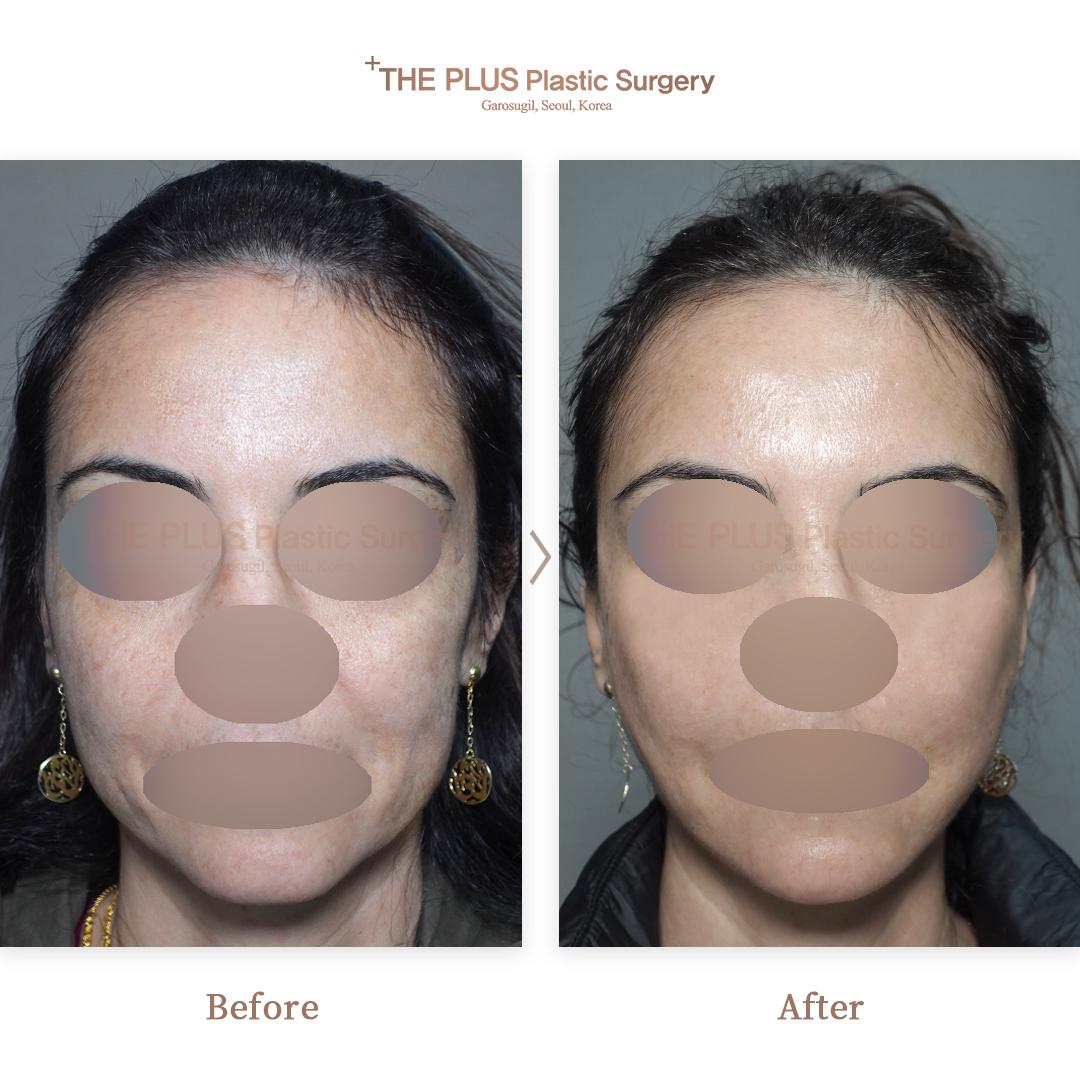
1. THEPLUS Plastic Surgery
You may consider THEPLUS Plastic Surgery for face contouring if prominent cheekbones are your main concern and you want an approach focused on repositioning rather than aggressive bone removal. Dr. Kim’s described cheekbone technique rotates and moves the cheekbone slightly forward to refine facial width and balance while seeking to preserve skin firmness and reduce the risk of cheek drooping associated with traditional reduction methods.
- URL: THEPLUS Plastic Surgery Website
- Location: Gangnam-gu, Seoul
- Face contouring options:
- Cheekbone surgery, square-jaw surgery, chin surgery, full-face contouring, and facial implants are offered.
- For larger bone structures, the cheekbone approach is tailored to the individual anatomy described in consultation.
- Surgeon background:
- Dr. Kim is a board-certified plastic surgeon with research awards related to 3D implants and an expressed focus on facial harmony.
- Dr. Kim conducts annual educational sessions for other plastic surgeons.
- Dr. Jeong is identified as President of the Korean Society of Plastic Surgeons and participates in professional conferences and educational sessions.
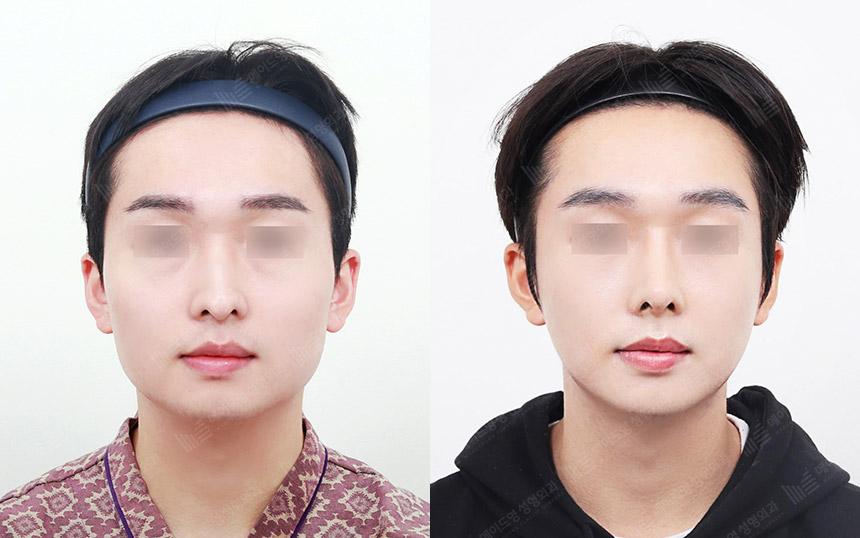
2. Made Young Plastic Surgery
You may consider Made Young Plastic Surgery for face contouring if you are looking at cheekbone, jawline, or chin reshaping alongside a structured anesthesia and aftercare system. Its listed options include conventional and metal-free cheekbone reduction, V-line and jaw-reduction surgery, and genioplasty, while consultations and diagnoses are performed directly by the medical team.
- URL: Made Young Plastic Surgery Website
- Location: Seocho-gu, Seoul
- Face contouring options:
- Cheekbone reduction and metal-free cheekbone reduction are available for cheekbone reshaping.
- V-line surgery, metal-free V-line surgery, jaw-reduction surgery, and genioplasty address the lower jaw and chin.
- Non-surgical contour-focused options include V-line lifting, thread lifting, focused-ultrasound Shurink, and Ultherapy.
- Safety and monitoring:
- Full-time board-certified anesthesiologists are listed as being on site.
- A 1:1 monitoring model assigns one anesthesiologist to continuous monitoring for one person during a procedure.
- The clinic describes a cross-check emergency system involving multiple anesthesiologists and CCTV coverage of procedures.
- Aftercare: A separate dedicated aftercare center is listed for systematic post-procedure care.
3. Banobagi Plastic Surgery
You may consider Banobagi Plastic Surgery for face contouring if you value an established, dedicated facial-contouring center within a multi-specialty surgical practice. Founded in 2000 by plastic-surgery specialists from Seoul National University Hospital, it describes one-to-one customized treatment and a philosophy of avoiding unnecessary or excessive surgery.
- URL: Banobagi Plastic Surgery Website
- Location: Gangnam-gu, Seoul
- Practice approach:
- The clinic states that treatment is customized one-to-one and supported by professional medical equipment for each field.
- Its stated medical philosophy emphasizes avoiding recommendations for unnecessary or excessive surgery.
- Available specialty centers:
- Dedicated centers are listed for facial contouring, body contouring, breast surgery, wrinkle surgery, eye surgery, nose surgery, filler and special surgery, and obesity care.
- The facility is described as comprising a six-story main building and a five-story annex.
How Much Does Face Contouring Cost in Korea?
Face Contouring is priced at ₩19,000,000–₩24,000,000 (approximately US$13,300–US$16,800). Individual quotes vary because the surgical plan can range from one bone area to combined cheekbone, mandible and chin reshaping, with different operative and fixation requirements.
| Procedure Price | Korean Won (₩) | USD ($) |
|---|---|---|
| Low Price | ₩19,000,000 | $13,300 |
| High Price | ₩24,000,000 | $16,800 |
Exchange rate as of 2026-08-05: 1 KRW = 0.000700 USD.
What Affects the Price?
- Number and type of facial bone procedures — Isolated zygoma reduction, mandibular-angle/lower-border reduction, or genioplasty uses a narrower operative field than combined V-line or three-part contouring. Treating multiple skeletal areas requires more bone work, longer operating time, and additional intraoperative resources.
- Burring versus osteotomy and fixation for zygoma work — Selected cheekbone prominence can be treated with limited burring, while other anatomy requires zygomatic osteotomy, repositioning and rigid fixation. Osteotomy and repositioning add bone cuts and require fixation hardware such as plates and screws.
- Genioplasty repositioning and fixation — Genioplasty requires planned bone cuts to narrow, shorten, lengthen, advance, set back, or correct chin asymmetry, followed by repositioning and plate/screw fixation. This is more resource-intensive than mandibular-angle reduction alone.
- Three-dimensional planning and surgical guides — CT or cone-beam CT-based three-dimensional planning is commonly used for facial bone surgery. Computer-assisted planning, virtual simulation, or patient-specific printed guides add planning work and specialized consumables when included in the treatment plan.
Cost tip: Request an itemized quote stating what is included, particularly the planned operations, general anesthesia, facility use, imaging and three-dimensional planning, fixation plates/screws where required, and follow-up care.
USD figures are approximate conversions at an exchange rate of 0.0007 KRW per USD on 2026-08-05. Check the exchange rate again when budgeting.
Face Contouring From Start to Finish
- Remote consultation and records — Send standardized photos and disclose medical and dental history, previous surgery or anesthesia problems, medicines, supplements, nicotine exposure, and goals. English-language or virtual consultation availability varies by facility; confirm the communication plan before booking travel.
- In-person facial and bite assessment — The surgeon examines skeletal width, soft-tissue support, skin laxity, facial asymmetry, dental occlusion, and jaw/TMJ function. This step determines whether bone surgery is appropriate or whether muscle, fat, laxity, or jaw-position treatment better matches the concern.
- Imaging and surgical plan — Standardized photography and CT or cone-beam CT support three-dimensional planning of zygoma, mandible, chin, tooth roots, and nerve pathways. Discuss the intended reduction, incision access, fixation, limits of change, and possibility of staged or alternative treatment.
- Pre-anesthesia clearance — Complete requested blood tests, imaging, and medical or anesthesia review. The team confirms fasting, medicine instructions, admission arrangements, and whether outpatient discharge or overnight monitoring is appropriate.
- General anesthesia and surgery — Facial contouring is performed under general anesthesia. The surgeon uses intraoral access in many cases, with selected techniques requiring small external access points; bone is burred, cut, removed, repositioned, and/or fixed with plates and screws according to the plan. Technique descriptions vary by zygoma, mandible, and chin anatomy.
- Recovery-room monitoring and discharge — After anesthesia recovery, the team monitors pain, nausea, bleeding, swelling, oral intake, and airway concerns. Discharge occurs the same day or after overnight observation, with a responsible adult supporting the first 24 hours.
- Early Korea-based recovery — Use prescribed pain medicine, antibiotics or mouth rinse when indicated, head elevation, and cloth-barrier cold compresses. Follow the liquid-to-soft diet and attend scheduled wound reviews; swelling and limited mouth opening are most pronounced early, with continued improvement through roughly three months documented after comparable jaw surgery.
- Departure review and overseas follow-up — Obtain surgeon clearance before flying, written records, and emergency instructions. Continue scheduled photo or video follow-up after returning home, while arranging urgent local assessment for suspected complications.
Alternatives to Face Contouring
The appropriate alternative depends on what creates the apparent width, imbalance, or lack of projection. Non-surgical options can treat muscle, fat, volume, or laxity but cannot reduce facial bone; orthognathic surgery addresses jaw relationship and function rather than cosmetic narrowing alone.
Masseter Botox
- Best for — Lower-face bulk caused mainly by masseter hypertrophy or clenching.
- Tradeoff — Masseter Botox temporarily weakens muscle and cannot reduce a broad mandibular angle or lower border.
Facial Fat Reduction
- Best for — Selected fullness from superficial or deep facial fat rather than bone.
- Tradeoff — Face liposuction and buccal fat removal do not change the zygoma or mandible and can be unsuitable where soft-tissue volume already supports the face.
Chin Augmentation
- Best for — A retrusive chin where added projection, rather than narrowing or bone repositioning, is the main goal.
- Tradeoff — Chin filler is temporary; a chin implant adds projection but does not provide the same bone-based changes as genioplasty.
Orthognathic Surgery
- Best for — Malocclusion, jaw relationship problems, selected airway concerns, or functional asymmetry requiring jaw repositioning.
- Tradeoff — Double-jaw surgery is a separate, more functionally driven operation with different planning, orthodontic, and recovery requirements.
Observation
- Best for — People uncertain about a permanent change, still developing skeletally, or whose concern is not clearly bone-driven.
- Tradeoff — Observation avoids surgical and anesthesia risk; it does not alter facial anatomy.
How Can I Prepare for Face Contouring?
- Complete clearance early — Obtain requested blood tests, imaging, dental treatment, and medical or anesthesia clearance well before travel. Report diabetes, hypertension, bleeding history, sleep apnea, heart or lung disease, and prior anesthesia problems.
- Disclose every medicine and supplement — List prescriptions, over-the-counter medicines, recreational substances, anticoagulants, antiplatelets, aspirin/NSAIDs, diabetes or weight-loss medicines, fish oil, vitamin E, and herbal products. Never independently stop medically necessary medicines; the prescriber, surgeon, and anesthesiologist must set the plan.
- Stop nicotine as directed — Tell the team about cigarettes, vaping, nicotine pouches, patches, and gum. Nicotine impairs healing, and the required stop period is surgeon-specific.
- Follow fasting instructions exactly — Confirm food, clear-liquid, and regular-medicine cutoffs directly with the anesthesia team. Do not rely on a generic online fasting schedule.
- Prepare oral care and diet — Follow instructions on preoperative showering, oral rinses, and dental hygiene. Arrange liquids and soft foods for the recovery period; do not assume that normal chewing will be comfortable immediately after surgery.
- Avoid alcohol as instructed — Confirm the alcohol restriction with the treating team, particularly because alcohol can interact with anesthesia, pain medicines, hydration, and wound recovery.
- Book support and flexible logistics — Arrange a responsible adult for discharge and the first 24 hours, accommodation near the surgical facility, and flights that can be changed if clinical review delays departure.
Travel note: Bring copies of imaging, dental records, medication lists, and insurance details, and carry enough prescribed medicine for the Korean stay plus contingency time.
Confirm the clinic’s written requirements for medication holds, fasting, showering, compression, oral rinses, alcohol, diet, activity, and flights; the treating doctor’s individualized instructions take precedence over general guidance.
Aftercare Advice
Protect healing bone, oral incisions, and airway recovery rather than judging the contour during the swollen early phase.
- Control swelling and protect the airway — Keep the head elevated, use cloth-barrier cold compresses as directed, hydrate, and take prescribed medicines exactly as instructed. Swelling commonly peaks at 48–72 hours; seek urgent care for trouble breathing or swallowing, rapidly expanding face or neck swelling, heavy bleeding, chest pain, shortness of breath, or fainting.
- Follow the diet progression — Start with liquids and progress to soft foods. Move toward regular textures only when the operating team permits, commonly over weeks 4–6; avoid hard, chewy, or chewing-intensive foods until cleared.
- Maintain gentle oral hygiene — Use the prescribed mouth rinse if provided and clean around intraoral incisions gently. Contact the clinic for pus, foul drainage, wound opening, fever, persistent vomiting or dehydration, or worsening pain.
- Limit physical strain and contact — Avoid strenuous exercise, heavy bending, hard chewing, and contact sport until cleared. Jaw stiffness and reduced mouth opening are common early; do not force stretching unless the team has prescribed it.
- Monitor bite and sensation — Temporary numbness or altered sensation in the lower lip, chin, or cheek can occur. Report a suddenly changed bite, progressive weakness or numbness, new asymmetry, or inability to maintain oral intake promptly. In a meta-analysis of 3,149 reduction-malarplasty cases, pooled retrospective rates included transient sensory weakness of 5.8%, cheek drooping 2.8%, and nonunion 2.2%; these figures do not predict an individual outcome.
- Allow time for assessment — Some residual swelling and stiffness improve over months 2–3. Assess shape cautiously at 3 months; a more stable contour is commonly judged around 6 months and can take 6–12 months after combined surgery.
Follow the treating doctor’s instructions over this general guidance, attend planned reviews, and contact the clinic promptly when anything appears wrong.
Frequently Asked Questions
Related Blogs
Global Cost Review: Why Double Jaw Surgery in Korea is Gaining Popularity Over the USA, Mexico, and Europe
Discover the cost of double jaw surgery in Korea, a popular destination for medical tourism due to its advanced healthcare facilities and skilled surgeons. Learn about the factors influencing the price, including hospital fees, surgeon expertise, and post-operative care options.
Updated: Oct 21, 2026
Salivary Gland Removal Surgery in Korea: Types, Risks, Recovery and Travel Planning
Salivary gland removal surgery includes submandibular, parotid, sublingual, and cosmetic partial reduction procedures, with diagnosis, anatomy, nerve risks, and pathology guiding the approach. Learn about candidate criteria, alternatives, preparation, aftercare, Korea stay planning, follow-up, and urgent warning signs.
Updated: Oct 21, 2026
Discover the Global Journey of Chin Surgery: Comparing Korea’s Costs to Top Destinations
Discover the factors influencing the cost of chin surgery in Korea, known for its advanced cosmetic procedures and competitive pricing. Learn what to expect, from consultation fees to post-operative care, to make an informed decision about undergoing chin surgery in this popular medical tourism destination.
Updated: Oct 20, 2026
Comparing Square Jaw Surgery Costs: Korea vs Global Destinations for Cosmetic Excellence
Discover the latest insights on the cost of square jaw surgery in Korea, exploring factors that influence pricing, including clinic reputation and surgical techniques. This comprehensive guide helps potential patients navigate their budgeting decisions for a transformative procedure.
Updated: Oct 19, 2026
Clinics offering Face Contouring

THEPLUS Plastic Surgery Korea | Eye, Nose, Face & Body Surgery
Sinsa

Made Young Plastic Surgery: Rejuvenating Aesthetic Excellence in Korea for Face Lifts, Contouring and More
Gangnam Station

Banobagi Plastic Surgery: A Pioneering and Trusted Plastic Surgery Clinic in Korea
Seolleung

Mind Plastic Surgery: Excellence in Cosmetic & Reconstructive Procedures in Korea
Sinnonhyeon Station