
Medical Tourism Blog
Microgenia Treatment in Korea: Chin Surgery Solutions for a Balanced Facial Profile
Table of contents
- Chin Surgery: A Comprehensive Guide to Procedural Options
- Best Clinics in Korea for Microgenia
- Chin Surgery in Korea: The Medical Tourist’s Journey
- Financial and Logistical Considerations for Chin Surgery Abroad
- The Patient Perspective: Recovery, Results, and Life After Chin Surgery
- Conclusion
- References
Considering treatment in Korea? Everything you need to know e.g. — how to avoid scams, visas, interpreters, recovery tips — in our Medical Tourism Master Guide. Plan with confidence in minutes, not weeks!
Microgenia is the medical term for an unusually small, underdeveloped, or deformed chin. Classified as a Class II chin deformity, it's the most frequently encountered chin anomaly. While often viewed as an aesthetic concern that affects facial harmony, it's crucial to differentiate microgenia from micrognathia.
Micrognathia refers to an undersized lower jaw (mandible), which can cause severe functional issues not typically associated with microgenia. Infants born with micrognathia may encounter serious feeding and breathing problems due to the jaw pushing the tongue backward, and it is often linked to genetic syndromes like Pierre Robin sequence, Treacher Collins syndrome, or Stickler syndrome. While microgenia can also be associated with genetic conditions such as Down syndrome, it is primarily a localized anatomical variation and usually doesn't pose the same functional or life-threatening risks. Therefore, anyone researching chin surgery should confirm whether they're dealing with a cosmetic issue (microgenia) or a functional problem (micrognathia), as treatments differ significantly.
Patient-Facing Language and Common Descriptions
Discussing microgenia in patient terms, you'll likely hear "receding chin" or "weak chin" as the most common descriptions. These phrases highlight the main aesthetic concern: a lack of chin projection compared to other facial features. Understanding and using such language improves communication between patients and surgeons and ensures both parties are on the same page about treatment goals.
Clinical Signs and Associated Issues
The main characteristic of microgenia is an underdeveloped or small chin that leads to facial imbalance. Causes can stem from genetics, developmental issues, or, rarely, environmental factors during pregnancy. As a stand-alone condition, microgenia rarely brings about severe health problems. Still, it can sometimes contribute to dental misalignment, overcrowding, or minor speech and swallowing difficulties. While most people seek help for cosmetic reasons, chin surgery can also address some of these secondary issues, ultimately boosting a patient's quality of life.
Chin Surgery: A Comprehensive Guide to Procedural Options
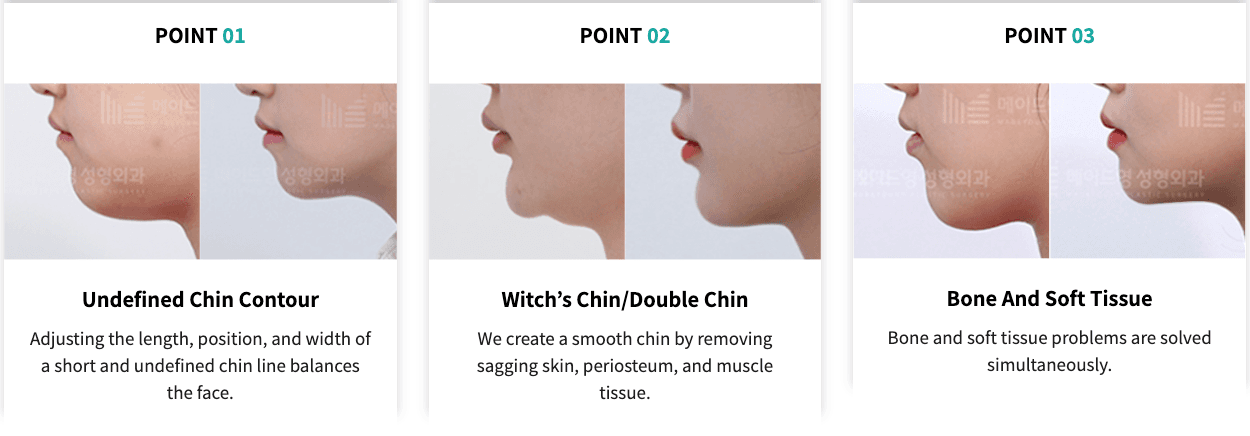
Chin surgery—more formally known as genioplasty—covers a range of procedures to alter the chin’s shape, size, or projection. Patients have both surgical and non-surgical options, and the best choice depends on their individual anatomy and goals.
Non-Surgical Solutions: Dermal Fillers
For a non-permanent and minimally invasive fix, dermal fillers are an attractive choice. Fillers such as hyaluronic acid (HA) products like JUVÉDERM® and Restylane® can add volume and projection while hiding small asymmetries. Other fillers, such as those containing calcium hydroxylapatite (CaHA) or poly-L-lactic acid (PLLA), stimulate the body’s collagen production for longer-lasting results. This quick, in-office procedure offers minimal downtime and generally lasts six to twelve months, making it an excellent trial run for those considering permanent surgery.
Surgical Augmentation Options
For lasting changes, surgical chin augmentation has two main approaches: chin implants and sliding genioplasty.
Chin Implants (Alloplastic Genioplasty): This involves placing a synthetic implant (usually silicone or porous polyethylene) over the existing chin bone. It’s less intensive than other surgical options, with a typical recovery time of one to two weeks. Chin implants offer custom shapes and sizes but are somewhat limited by implant design. Risks include shifting of the implant or, rarely, erosion into the teeth.
Sliding Genioplasty (Osseous Genioplasty): In this approach, the surgeon cuts and repositions the patient’s own bone, securing it with a titanium plate and screws. Sliding genioplasty delivers a highly natural look and feel, is permanent, and allows for extensive reshaping, such as lengthening or shortening the chin, or moving it sideways. Recovery takes about two to four weeks, a bit longer than with implants, due to bone healing.
Fat Transfer (Fat Grafting): Some patients opt for fat grafting, where fat from their own body is injected into the chin. This technique eliminates the risk of allergic reactions and offers a natural enhancement, best suited for mild retrusion.
Surgical Reduction for a Prominent Chin
For an overly prominent chin (macrogenia), reduction surgeries help bring facial features into balance.
- Selective Chin Burring: Uses a power burr to carefully shave down bone, ideal for subtle contouring and feminizing the chin.
- Reduction Osteoplastic Genioplasty: Involves removing a section of bone and reattaching the rest to the jaw—used for more significant reductions in chin projection.
Comparing Your Options
Choosing between these procedures means weighing factors like permanence, recovery time, cost, and desired customization. No single procedure is best for everyone; your ideal choice hinges on your unique needs and a thorough discussion with a board-certified surgeon.
Here’s a quick overview to compare the main options:
| Procedure | Longevity of Results | Recovery Time | Cost Range (South Korea) | Customization | Key Advantages | Key Disadvantages |
|---|---|---|---|---|---|---|
| Dermal Fillers | Temporary (6-12 months) | Minimal to none | Varies, per session | Moderate | Minimally invasive, quick, preview permanent results | Temporary, repeat sessions needed |
| Chin Implant | Long-lasting (10-20+ years) | 1-2 weeks | from $7,000 | Moderate | Affordable, short recovery, custom options | Possible implant shift, may need replacement |
| Sliding Genioplasty | Permanent | 2-4 weeks | $3,000-$8,000 | High | Uses your own bone, permanent, highly customizable | More invasive, slightly longer recovery |
Best Clinics in Korea for Microgenia
Listed below are the best clinics in Korea for microgenia:
| Clinic Name | Key Features | Special Techniques |
|---|---|---|
| THEPLUS Plastic Surgery | Best clinic for microgenia correction in Korea, pairing high-level facial contouring expertise with a research-driven, safety-first system designed to deliver balanced, natural-looking chin enhancement. THEPLUS’s director surgeons are known for approaching facial aesthetics as an integrated whole; Dr. Kim, a board-certified plastic surgeon recognized internationally through global society memberships and award-winning research on 3D implants, applies advanced implant concepts and facial contouring principles to build a chin that complements each patient’s existing features rather than overpowering them, guided by his philosophy of achieving harmonious balance. Dr. Jeong, President of the Korean Society of Plastic Surgeons and a frequent international speaker and educator, brings meticulous standards used in advanced aesthetic surgery to individualized planning, emphasizing his signature concept of uniting function and beauty. Supported by Dr. Lee’s board-certified surgical experience and the clinic’s four-floor facility that covers consultation, surgery, and post-operative care, THEPLUS is structured to provide consistent, comprehensive treatment; its surgeons’ ongoing academic publishing, symposium participation, and annual educational sessions for other plastic surgeons further reflect the depth of expertise behind every microgenia case, from chin implants to contouring strategies that refine the lower face with precision and long-term satisfaction in mind. | 3D implants and advanced implant concepts; facial contouring principles to build a chin that complements each patient’s existing features rather than overpowering them; philosophy of achieving harmonious balance; Dr. Kim’s integrated approach to function and balance; Dr. Jeong’s emphasis on uniting function and beauty |
| Made Young Plastic Surgery | Made Young Plastic Surgery is a premium clinic in Seoul’s Gangnam district specializing in facial and anti-aging procedures with genuine dedication and expertise, making it a top destination for Microgenia (weak or recessed chin) correction. With a medical team averaging over 15 years of experience, Made Young focuses on precise facial balance and natural-looking outcomes through individualized diagnosis and treatment planning, supported by a robust safety infrastructure and a structured aftercare program. For Microgenia, where millimeters matter and harmony with the jawline, lips, and overall profile is essential, the clinic’s combination of proven surgical skill, careful anesthesia oversight, and comprehensive follow-up care helps patients pursue confident, well-proportioned results. | Chin Surgery (Genioplasty) and V-Line–focused procedures to improve chin projection and lower-face harmony; 1:1 dedicated monitoring system, with one anesthesiologist continuously responsible for one patient throughout the procedure; Cross-check emergency response system, where multiple anesthesiologists cooperate for rapid, precise assessment and action if needed; Full CCTV coverage of procedures for maximum transparency and patient reassurance; Separate dedicated aftercare center with complete, systematic post-procedure management to support safer recovery and more stable outcomes; Recognized credibility and patient trust, including the 2022 Korea No.1 Award and 2022 Korea Customer Satisfaction 1st Place; Official professional recognition, including Outstanding Member of the Korean Society of Plastic and Reconstructive Surgeons and certification by the Minimally Invasive Aesthetic Surgery Society |
| Banobagi Plastic Surgery Website | Banobagi Plastic Surgery is one of Korea’s most trusted and well-known plastic surgery brands, founded in February 2000 by four Seoul National University Hospital plastic surgery specialists with an artisan spirit for beauty and a patient-first philosophy. Built on warm medical care and strong surgical fundamentals, Banobagi has grown over more than 20 years into a leading institution recognized by patients for both skill and sincerity. On October 7, 2008, the entire Banobagi building was renovated into a modern medical environment, reinforcing its status as a premier plastic surgery space in Korea. Today, Banobagi combines extensive clinical scale with 1:1 customized treatment planning and a clear commitment to avoiding unnecessary procedures—an especially important standard for patients seeking Microgenia (chin deficiency) correction, where balance, precision, and responsible surgical judgment matter most. | Founded by Seoul National University Hospital plastic surgery specialists, offering a strong foundation of expertise for delicate facial balance cases such as Microgenia; Large, specialized clinic structure: a 6-story main building (total 600 pyeong) plus a 5-story annex, supporting systematic care and dedicated clinical flow; Specialized centers across facial contouring and other fields, enabling integrated evaluation of chin position, overall facial harmony, and proportion; 1:1 customized treatment and professional medical equipment in each field, supporting precise, individualized Microgenia correction planning; Modernized medical environment since the 2008 full-building renovation, providing a contemporary setting aligned with patient comfort and clinical efficiency; Clear principle of strictly avoiding unnecessary or excessive surgery for profit, essential for Microgenia patients who need honest recommendations tailored to facial needs; Warm medical philosophy that treats each patient with the care of family, paired with surgical know-how accumulated over decades, strengthening trust and satisfaction in outcome-focused facial contour care |
THEPLUS Plastic Surgery
For patients seeking microgenia correction in Korea, THEPLUS Plastic Surgery in Garosu-gil, Gangnam stands out as the best clinic because it pairs high-level facial contouring expertise with a research-driven, safety-first system designed to deliver balanced, natural-looking chin enhancement. Microgenia is rarely just “a small chin”; it affects overall facial harmony, the jawline, and even how the nose and lips appear in profile, and THEPLUS’s director surgeons are known for approaching facial aesthetics as an integrated whole. Dr. Kim, a board-certified plastic surgeon recognized internationally through global society memberships and award-winning research on 3D implants, applies advanced implant concepts and facial contouring principles to build a chin that complements each patient’s existing features rather than overpowering them, guided by his philosophy of achieving harmonious balance. Dr. Jeong, President of the Korean Society of Plastic Surgeons and a frequent international speaker and educator, brings the same meticulous standards used in advanced aesthetic surgery to individualized planning, emphasizing his signature concept of uniting function and beauty. Supported by Dr. Lee’s board-certified surgical experience and the clinic’s four-floor facility that covers consultation, surgery, and post-operative care, THEPLUS is structured to provide consistent, comprehensive treatment; its surgeons’ ongoing academic publishing, symposium participation, and annual educational sessions for other plastic surgeons further reflect the depth of expertise behind every microgenia case, from chin implants to contouring strategies that refine the lower face with precision and long-term satisfaction in mind.
You can check out their website here: THEPLUS Plastic Surgery Website
Made Young Plastic Surgery
Made Young Plastic Surgery is a premium clinic in Seoul’s Gangnam district specializing in facial and anti-aging procedures with genuine dedication and expertise, making it a top destination for patients seeking Microgenia (weak or recessed chin) correction. With a medical team averaging over 15 years of experience, Made Young focuses on precise facial balance and natural-looking outcomes through individualized diagnosis and treatment planning, supported by a robust safety infrastructure and a structured aftercare program. For Microgenia, where millimeters matter and harmony with the jawline, lips, and overall profile is essential, the clinic’s combination of proven surgical skill, careful anesthesia oversight, and comprehensive follow-up care helps patients pursue confident, well-proportioned results.
- Verified medical team with an average of 15+ years of experience, supporting accuracy in chin design and facial proportion analysis for Microgenia cases
- Direct consultation and diagnosis by the medical team before any procedure, ensuring a tailored plan based on each patient’s profile, bite considerations, and aesthetic goals
- Specialized facial contouring options relevant to Microgenia, including Chin Surgery (Genioplasty) and V-Line–focused procedures to improve chin projection and lower-face harmony
- Full-time board-certified anesthesiologists on site for safety during surgical Microgenia correction
- 1:1 dedicated monitoring system, with one anesthesiologist continuously responsible for one patient throughout the procedure
- Cross-check emergency response system, where multiple anesthesiologists cooperate for rapid, precise assessment and action if needed
- Full CCTV coverage of procedures for maximum transparency and patient reassurance
- Separate dedicated aftercare center with complete, systematic post-procedure management to support safer recovery and more stable outcomes
- Recognized credibility and patient trust, including the 2022 Korea No.1 Award and 2022 Korea Customer Satisfaction 1st Place
- Official professional recognition, including selection as an Outstanding Member of the Korean Society of Plastic and Reconstructive Surgeons and certification by the Minimally Invasive Aesthetic Surgery Society
You can check out their website here: Made Young Plastic Surgery Website

Banobagi Plastic Surgery
Banobagi Plastic Surgery is one of Korea’s most trusted and well-known plastic surgery brands, founded in February 2000 by four Seoul National University Hospital plastic surgery specialists with an artisan spirit for beauty and a patient-first philosophy. Built on warm medical care and strong surgical fundamentals, Banobagi has grown over more than 20 years into a leading institution recognized by patients for both skill and sincerity. On October 7, 2008, the entire Banobagi building was renovated into a modern medical environment, reinforcing its status as a premier plastic surgery space in Korea. Today, Banobagi combines extensive clinical scale with 1:1 customized treatment planning and a clear commitment to avoiding unnecessary procedures—an especially important standard for patients seeking Microgenia (chin deficiency) correction, where balance, precision, and responsible surgical judgment matter most.
• Founded by Seoul National University Hospital plastic surgery specialists, offering a strong foundation of expertise for delicate facial balance cases such as Microgenia
• Large, specialized clinic structure: a 6-story main building (total 600 pyeong) plus a 5-story annex, supporting systematic care and dedicated clinical flow
• Specialized centers across facial contouring and other fields, enabling integrated evaluation of chin position, overall facial harmony, and proportion
• 1:1 customized treatment and professional medical equipment in each field, supporting precise, individualized Microgenia correction planning
• Modernized medical environment since the 2008 full-building renovation, providing a contemporary setting aligned with patient comfort and clinical efficiency
• Clear principle of strictly avoiding unnecessary or excessive surgery for profit, essential for Microgenia patients who need honest recommendations tailored to facial needs
• Warm medical philosophy that treats each patient with the care of family, paired with surgical know-how accumulated over decades, strengthening trust and satisfaction in outcome-focused facial contour care
Find more about this clinic here: Banobagi Plastic Surgery Website
Chin Surgery in Korea: The Medical Tourist’s Journey
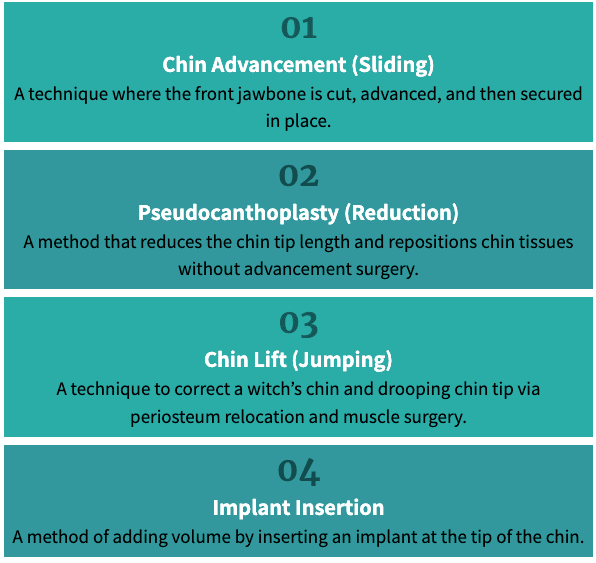
South Korea is renowned for its advanced medical technology, skilled surgeons, and streamlined services, drawing international patients for chin surgery.
The Step-by-Step Patient Experience
- Consultation and Planning: Patients often begin with a remote consultation via services like WhatsApp. Advanced imaging, including 3D simulation, helps visualize results and set clear expectations.
- Pre-Op Preparation: After agreement on the surgical plan, patients undergo health checks such as blood tests, X-rays, and CT scans.
- Surgical Procedure: Typically performed under general anesthesia or IV sedation, the operation usually uses an incision inside the mouth (no visible scar). It takes about an hour.
- Aftercare: Korean clinics are praised for their thorough post-op care, including clear instructions and recovery aids like laser therapy or lymphatic massage. Multilingual staff or dedicated coordinators help with logistics and communication, from airport pickup to arranging accommodation.
This comprehensive, concierge-like system is key to making surgery abroad easier and more reassuring for international patients.
Picking the Right Surgeon and Clinic
South Korean plastic surgeons undergo an intense training path with six years of medical school and four years of residency, plus board certification from organizations like the Korean Society of Plastic and Reconstructive Surgeons (KSPRS). Look for clinics that offer a "safe-hospital" environment, have a board-certified anesthesiologist, and provide reliable aftercare. Third-party sites such as RealSelf can also offer helpful reviews and patient experiences.
Financial and Logistical Considerations for Chin Surgery Abroad
Understanding the Cost of Chin Surgery in South Korea
Chin surgery costs in South Korea are competitive compared to the West. Genioplasty generally ranges from $3,000 to $8,000, while chin implants average about $7,000. Factors like complexity, surgeon experience, and material choice can affect price.
A two-week trip for medical tourists—including surgery, travel, lodging, food, and aftercare—usually costs between $6,230 and $14,050. Many clinics offer bundled packages for convenience, but patients should request a detailed cost breakdown to avoid surprises.
Global Cost Comparison
South Korea isn’t the absolute cheapest globally but stands out for combining high quality and reasonable costs. Here’s how it stacks up:
| Country | Chin Implant Cost (USD) | Genioplasty Cost (USD) | Value Proposition |
|---|---|---|---|
| South Korea | from $7,000 | $3,000 - $8,000 | High quality, advanced tech, patient-centric care |
| USA | Avg: $4,272 ($2K-$11K) | Not specified | Highest cost, local convenience for US residents |
| Turkey | from $4,484 | up to $2,500 | Good cost-effectiveness, solid quality |
| Thailand | from $3,051 | up to $3,000 | Very affordable, less developed medical tourism infrastructure |
| India | from $1,050 | $1,500 - $1,800 | Lowest cost, but requires careful vetting of facilities and credentials |
While countries like India and Thailand offer cheaper surgery, South Korea’s international reputation, specialized infrastructure, and excellent outcomes make it a top pick for those who value quality and support.
The Patient Perspective: Recovery, Results, and Life After Chin Surgery
Recovery and psychological transformation are both vital parts of the chin surgery process.
Post-Op Recovery Timeline
- Days 1-3: Expect peak swelling, bruising, and discomfort. Use pain medication as directed, stick to a liquid or soft diet, and keep your head elevated.
- Week 1: Swelling eases and most people can return to non-strenuous work. Stick mainly to soft foods, avoid activities that raise blood pressure.
- Weeks 2-3: Most swelling is gone and initial results are visible. Light exercise resumes but avoid heavy lifting or intense workouts for another month.
- 3-6 Months: Final results become clear as remaining swelling settles. Full healing can take up to a year.
Risks and Complications
Chin surgery is generally safe, but potential issues include infection, bleeding, numbness in the chin or lips, and implant movement. Choosing an experienced surgeon and following aftercare instructions minimizes most risks.
Patient Satisfaction and Common Concerns
Many patients report improved self-confidence and facial balance after chin surgery, describing the results as natural and even life-changing. Still, some have understandable concerns about looking "unnatural" or having an unsatisfactory outcome, prompting them to seek unfiltered patient reviews and stories. Addressing these emotional worries is crucial, and hearing authentic accounts helps patients feel better prepared and supported in their journey.
Conclusion
Chin surgery for microgenia offers a range of tailored solutions for those seeking functional or aesthetic improvements. South Korea stands out as a popular destination for its skilled surgeons, comprehensive care, and competitive pricing. Patients should weigh all options and consult qualified professionals to ensure the best outcome and smooth recovery.
References
Frequently Asked Questions
Related Blogs

Cheekbone Reduction in Korea: Methods, Recovery, Risks, and Travel Planning
Cheekbone reduction uses bone shaving, partial cuts, or L-shaped osteotomy with repositioning to narrow prominent zygomatic body or arch contours. In Korea, costs range from ₩5,500,000–₩18,000,000; international patients should plan 10–14 days locally for recovery and postoperative review.
Updated: Sep 20, 2026
Masseter Reduction in Korea: Candidacy, Surgery, Recovery, Risks, and Travel Planning
Masseter reduction removes a planned portion of deep chewing muscle through an intraoral incision after confirming muscle-driven lower-face width and assessing dental, bite, jaw, and anesthesia factors. International patients can review Korea provider registration, plan at least 10–14 days after isolated surgery, attend follow-ups, arrange flexible flights, and obtain operative records and emergen
Updated: Sep 19, 2026
Paranasal Implant in Korea: Materials, Recovery, Risks, and Travel Planning
Paranasal implant surgery places a silicone, ePTFE, or porous polyethylene implant over the premaxillary bone to improve localized nasal-base support, with assessment of facial anatomy, dental occlusion, and alternatives such as filler, fat grafting, rhinoplasty, or jaw treatment. International patients should plan 10–14 days in Korea for review and travel clearance, follow infection-prevention an
Updated: Sep 18, 2026

Facial Asymmetry Correction in Korea: Diagnosis, Treatment Options, Recovery and Travel Planning
Facial asymmetry correction is selected by cause and may involve orthodontics, jaw surgery, genioplasty, muscle botulinum toxin, filler, fat grafting, implants, or condition-specific reconstruction. The article covers candidacy, Korea travel planning, expected stays and follow-up, preparation, recovery, and warning signs requiring urgent care.
Updated: Sep 16, 2026
Clinics offering Chin Surgery

THEPLUS Plastic Surgery Korea | Eye, Nose, Face & Body Surgery
Sinsa

Made Young Plastic Surgery: Rejuvenating Aesthetic Excellence in Korea for Face Lifts, Contouring and More
Gangnam Station

Banobagi Plastic Surgery: A Pioneering and Trusted Plastic Surgery Clinic in Korea
Seolleung

Mind Plastic Surgery: Excellence in Cosmetic & Reconstructive Procedures in Korea
Sinnonhyeon Station