
Medical Tourism Blog
Braces in Korea: Types, Treatment Timeline, Travel Planning, and Aftercare
Table of contents
- Braces at a Glance
- What Are Braces?
- Who Is a Good Candidate for Braces?
- What Are the Different Types of Braces?
- Why Visit Korea for Braces?
- Key Information for International Patients
- Which Are the Best Clinics in Korea for Braces?
- How Much Do Braces Cost in Korea?
- Braces From Start to Finish
- Alternatives to Braces
- How Can I Prepare for Braces?
- Aftercare Advice
Considering treatment in Korea? Everything you need to know e.g. — how to avoid scams, visas, interpreters, recovery tips — in our Medical Tourism Master Guide. Plan with confidence in minutes, not weeks!
Last updated: September 2026
Braces at a Glance
- What braces do — Fixed brackets and archwires gradually move crowded, spaced, rotated, or protruding teeth and can correct many tooth-related bite problems, including crossbites, deep bites, and open bites.
- Expected cost — Braces in Korea cost about ₩7,000,000–₩8,000,000 (approximately US$5,200–US$5,900); confirm whether records, adjustments, repairs, removal, retainers, and pre-treatment dental work are included.
- Treatment commitment — Active treatment commonly lasts 12–24 months, with in-person adjustments every 4–12 weeks, often every 6–10 weeks; retainers are required long term after removal to limit tooth movement back.
- Early recovery — Routine fitting is an outpatient appointment, but teeth and mouth tissues commonly feel sore or irritated for 3–5 days after fitting and briefly after later adjustments; soft foods and orthodontic wax can help.
- Best candidates — Suitable patients have healthy, stable teeth and gums, can maintain meticulous cleaning around brackets, and can attend regular reviews; untreated decay, infection, active gum disease, or poor plaque control must be addressed first.
- Travel limitation — Braces are not appropriate for a single Korea trip because adjustments, repairs, oral-health monitoring, and retention continue for months; overseas patients need a written transfer-of-care agreement before bonding.
- Korea-specific check — Medical Korea can verify clinics registered to treat foreign patients, which must carry malpractice liability insurance, but registration does not prove better orthodontic results, English access, or successful transfer of care.
What Are Braces?
Braces are fixed orthodontic appliances that use brackets and wires to gradually move teeth. They straighten crowded, spaced, rotated, or protruding teeth and correct many bite problems to improve alignment and function. Braces are a non-surgical dental treatment, although some significant jaw discrepancies require additional surgical care.
Who Is a Good Candidate for Braces?
- Patients with crowding or gaps — Fixed braces can gradually align crowded, spaced, rotated, or protruding teeth.
- Patients needing bite correction — Braces can address many crossbites, deep bites, open bites, and other tooth-related bite discrepancies.
- Patients prepared for long-term care — Active treatment commonly lasts 12–24 months and requires adjustment appointments every 4–12 weeks, often every 6–10 weeks.
- Patients able to maintain oral hygiene — Thorough brushing around brackets and the gumline, interdental cleaning, dietary discipline, and regular general-dental checks are essential.
- Patients with a continuity plan — Starting fixed braces in Korea is most realistic for people living in Korea during treatment or those with a written, accepted transfer-of-care arrangement at home.
Do not start braces with untreated decay, dental abscesses, poor plaque control, uncontrolled gingivitis or periodontitis, progressive bone loss, or mobile teeth. Periodontal disease must be stabilized first; complex cases need coordinated periodontal and orthodontic planning. Prior dental trauma, short or abnormal roots, root resorption, impacted or missing teeth, major jaw discrepancies, and extensive restorative needs require full records and can change the treatment plan. Children and adolescents need assessment based on dental and jaw development rather than a fixed age threshold; adults can also receive orthodontic treatment when teeth and gums are suitable. Discuss nickel, latex, acrylic, or other material allergies, pregnancy, medications, and any history of gum disease before imaging or treatment planning.
What Are the Different Types of Braces?
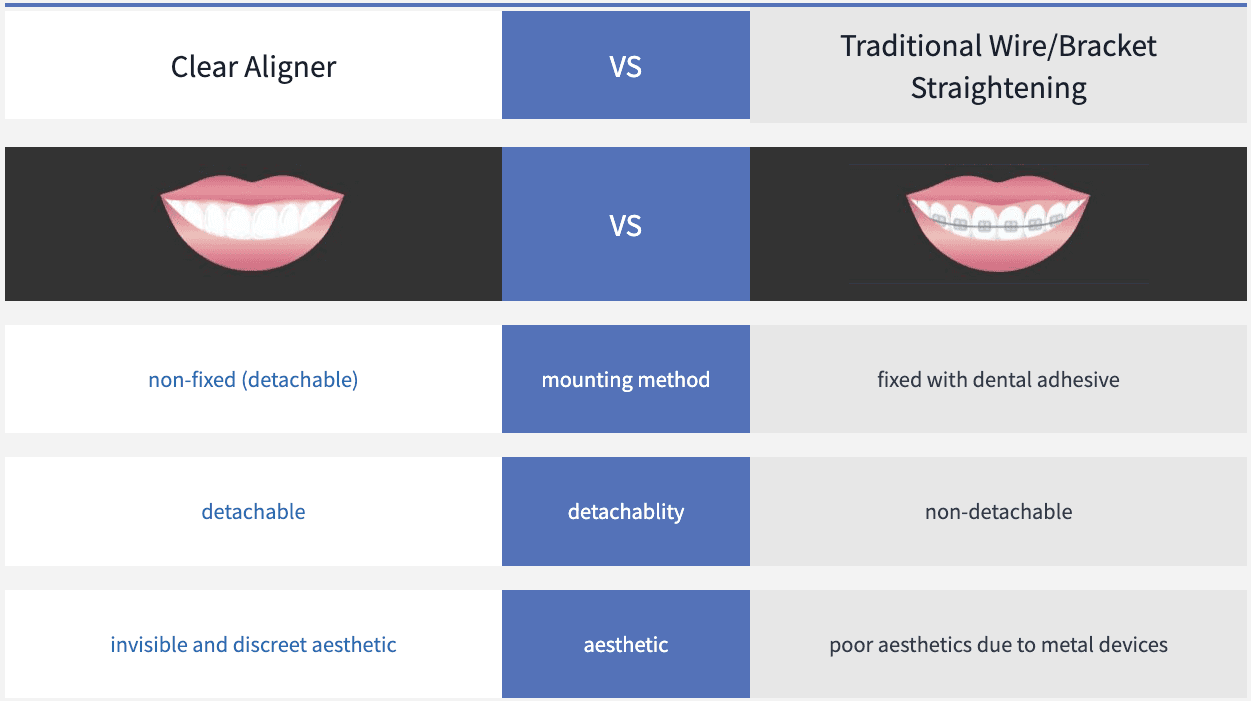
Fixed-brace selection should follow the bite diagnosis, visibility preference, hygiene ability, speech needs, clinician experience, and long-term follow-up plan. No brace system is universally faster or better for every malocclusion.
- Metal labial braces — Brackets are bonded to the front surfaces of the teeth and connected by archwires. They are the conventional fixed option and are visible when smiling.
- Ceramic or tooth-colored labial braces — These front-of-teeth brackets are less noticeable than metal. Discuss the trade-off carefully: a prospective clinical study found more bracket failures with ceramic brackets than metal over 12 months, and a review identified possible enamel-fracture concerns during removal, with techniques and evidence quality varying.
- Self-ligating braces — These use a built-in clip or door rather than elastic or wire ties to hold the archwire. Do not choose them based on claims of guaranteed faster, less painful treatment or fewer visits: a systematic review found insufficient high-quality evidence that they outperform conventional braces on those broad claims.
- Lingual braces — Brackets and wires are fitted to the inner, tongue-facing tooth surfaces, concealing the appliance from view. Suitability depends on bite anatomy, hygiene, speech tolerance, clinician experience, and access for maintenance or repair.
Why Visit Korea for Braces?
Korea can be a practical place to obtain an orthodontic assessment or continue treatment only when follow-up is secure. Braces are not a short-trip treatment: repeated adjustments, appliance repairs, oral-health monitoring, and retention remain necessary for many months. There is no good comparative evidence that treatment started in Korea produces faster, safer, or more stable results than treatment elsewhere.
- Registered-institution verification — International patients can use Medical Korea to verify whether an institution is registered to attract foreign patients. Registered institutions are required to carry medical-malpractice liability insurance under the framework described by Medical Korea.
- Established international-care framework — Medical Korea listed 3,114 registered foreign-patient-attracting institutions as of March 2025. This is an administrative safeguard, not evidence of better orthodontic outcomes, English-language communication, or a specialist’s individual experience.
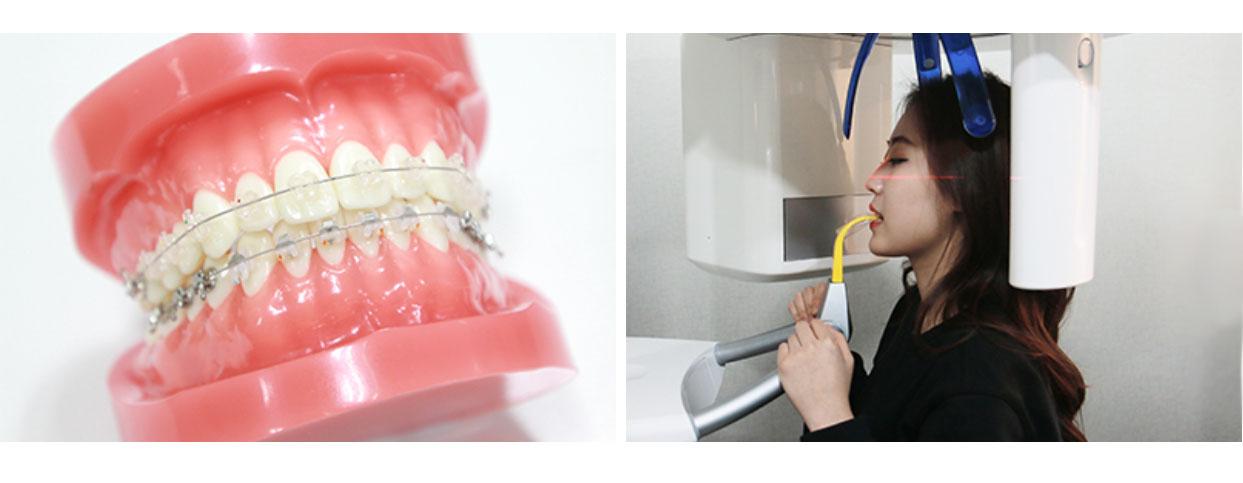
- Records-based planning — A proper orthodontic plan requires examination of the teeth, gums, bite, and jaw relationship, supported by photographs, digital scans or impressions, panoramic imaging, and sometimes cephalometric imaging. Do not rely on a remote smile photograph alone.
- Evidence limitation — Korea-specific data do not establish braces-specific foreign-patient volume, complication rates, transfer-of-care success, relapse rates, or language-access quality. Check the treating orthodontist’s credentials, the proposed records, and the written follow-up plan directly.
Key Information for International Patients
- Minimum stay before fitting — Allow at least several business days for an in-person examination and prerequisite care, but do not book brace fitting around a fixed timeline. Cleaning, fillings, periodontal treatment, extractions, imaging, and laboratory workflow determine when bonding is appropriate.
- Active-treatment commitment — Adjustment appointments are needed every 4–12 weeks, commonly every 6–10 weeks, throughout treatment. A single Korea trip cannot safely replace this sequence.
- Transfer of care — Before bonding, obtain written confirmation from an orthodontist at home that they will accept the case. The handover should include X-rays and scans, photographs, bracket and wire system details, treatment objectives, mechanics used, the adjustment schedule, and responsibility for urgent repairs.
- Flights — No procedure-specific evidence supports a universal flight delay after uncomplicated brace fitting. Travel decisions change when extractions, sedation, infection, or surgery are involved, or when pain and appliance irritation make eating and drinking difficult.
- Itinerary impact — Expect tenderness and cheek, lip, or tongue irritation for about 3–5 days after fitting and briefly after later adjustments. Schedule soft meals and avoid tightly timed business events or food-focused travel immediately after an appointment.
- Remote follow-up — Photos or video calls can help a clinic triage a loose bracket or poking wire, but they do not replace in-person adjustments or emergency treatment.
Travel note: Carry orthodontic wax, an interdental brush, fluoride toothpaste, and the clinic’s written emergency-contact details. Identify an urgent dental service near your accommodation before a long weekend or onward flight.
Which Are the Best Clinics in Korea for Braces?
Listed below are some of the best clinics in Korea for braces.
1. Minish Dental Hospital
For braces, you can receive orthodontic treatment aimed at correcting improperly positioned teeth and jaws to improve oral function and smile appearance. Minish Dental Hospital combines orthodontic, general dental, periodontal, and prosthodontic services, which may be useful if your treatment plan also identifies other dental needs.
- URL: Minish Dental Hospital Website
- Location: Gangnam-gu, Seoul
- Orthodontic care:
- Orthodontic treatment is available for teeth and jaw alignment concerns.
- The clinic has orthodontic specialists as part of its dental team.
- Related dental services:
- Care is available for cavities, prosthodontics, gum and bone health, bruxism, and TMJ concerns.
- Teeth whitening and several restorative options, including implants and bridges, are also offered.
- Clinic resources:
- The facility includes an in-house laboratory and reports using 19 advanced dental equipment systems.
- The clinic states that it serves international visitors without language barriers.
2. Gangnam Gentle Dental Clinic
For orthodontic treatment, Gangnam Gentle Dental Clinic offers clear aligners as a transparent option for adjusting tooth position. You can expect a thorough consultation intended to identify necessary treatment, supported by digital examinations and a clinic focus on reducing treatment time and the number of visits where appropriate.
- URL: Gangnam Gentle Dental Clinic Website
- Location: Seocho-gu, Seoul
- Orthodontic option: Clear aligners are available for tooth alignment correction.
- Care approach:
- The clinic emphasizes necessary treatment following detailed consultations.
- Advanced digital equipment is used for systematic, precise examinations.
- The team focuses on minimizing pain and improving comfort during visits.
- Practical considerations:
- Weekday and weekend appointments are available.
- Emergency dental treatment is offered.
- The clinic describes established infection-prevention and sterilization systems.
- Additional services:
- Services include cavity treatment, root canal treatment, gum treatment, wisdom-tooth extraction, implants, and TMJ care.
- Cosmetic options include minimal-shaving veneers, gum contouring, and teeth whitening.
3. TU Dental Clinic (TU Dental)
For braces, TU Dental Clinic creates individualized orthodontic plans based on your tooth alignment, age group, and lifestyle. You can choose among several bracket systems—including less visible lingual options, self-ligating brackets, and mixed metal-and-ceramic braces—while the clinic emphasizes minimizing treatment discomfort and preserving natural teeth.
- URL: TU Dental Clinic (TU Dental) Website
- Location: Seocho-gu, Seoul
- Braces options:
- Clippy-L brackets attach to the inner side of the teeth, making them less noticeable; their smaller size is intended to reduce discomfort.
- Clippy-C self-ligating brackets use a snap-type design intended to reduce friction and shorten treatment time.
- Tiggle brackets are designed to reduce the discomfort and speech difficulties associated with conventional lingual orthodontics.
- Combination brackets use metal and ceramic brackets together for a more aesthetic alternative to standard braces.
- Treatment planning:
- Orthodontic planning considers your alignment, age group, and lifestyle.
- The clinic states that it prioritizes natural-tooth preservation and minimizing pain.
- Other dental care:
- Services include caries treatment with resin, ceramic inlays or onlays, and zirconia crowns.
- Implant treatment is available, including digitally planned full-case implants using 3D imaging and partial implants.
How Much Do Braces Cost in Korea?
Braces cost approximately ₩7,000,000–₩8,000,000 (about US$5,200–US$5,900 at the September 6, 2026 exchange rate). Individual quotes vary because the appliance system, bite complexity, necessary pre-treatment dental care, and the scope of long-term monitoring differ.
| Procedure Price | Korean Won (₩) | USD ($) |
|---|---|---|
| Low Price | ₩7,000,000 | $5,200 |
| High Price | ₩8,000,000 | $5,900 |
Exchange rate as of 2026-09-06: 1 KRW = 0.000741 USD.
What Affects the Price?
- Fixed-brace system — Metal, ceramic, self-ligating, and lingual braces use different brackets, wires, and fitting requirements. Lingual braces are placed behind the teeth and require more technically demanding placement and adjustment; ceramic braces use different aesthetic bracket materials and may require repairs if brackets fail.
- Bite complexity and treatment duration — Crowding, rotations, crossbite, open bite, deep bite, protrusion, impacted or missing teeth, short roots, and jaw discrepancies can require more complex mechanics, more archwire changes, and a longer series of in-person adjustment visits. A substantial skeletal discrepancy may require orthodontics combined with jaw surgery rather than braces alone.
- Dental and periodontal preparation — Decay, infection, inadequate plaque control, gingivitis, or periodontitis must be treated or stabilized before brackets are bonded. Cleaning, fillings, periodontal management, extractions, diagnostic imaging, and records add clinical appointments, materials, and coordination before active orthodontic treatment begins.
- Retention and continuity of care — Braces require reviews every 4–12 weeks during active treatment, followed by long-term fixed and/or removable retainers after removal. For overseas treatment, a written transfer-of-care and emergency-repair arrangement may require preparation and transfer of diagnostic records, appliance details, and the treatment plan.
Cost tip: Request an itemized quote stating what is included, particularly diagnostic records and imaging, pre-treatment dental work, brace fitting, adjustment visits, repairs, removal, retainers, and any transfer-of-care documentation.
The US$5,200–US$5,900 conversion is approximate, based on the exchange rate dated September 6, 2026. Check the exchange rate again when budgeting.
Braces From Start to Finish
- Send records and arrange an initial discussion — Share previous orthodontic records, available recent X-rays, medical conditions, medicines, allergies, pregnancy status, dental-trauma history, and periodontal history. Ask in advance whether English-language or virtual pre-travel consultation is available, but do not accept a final plan based only on remote photographs.
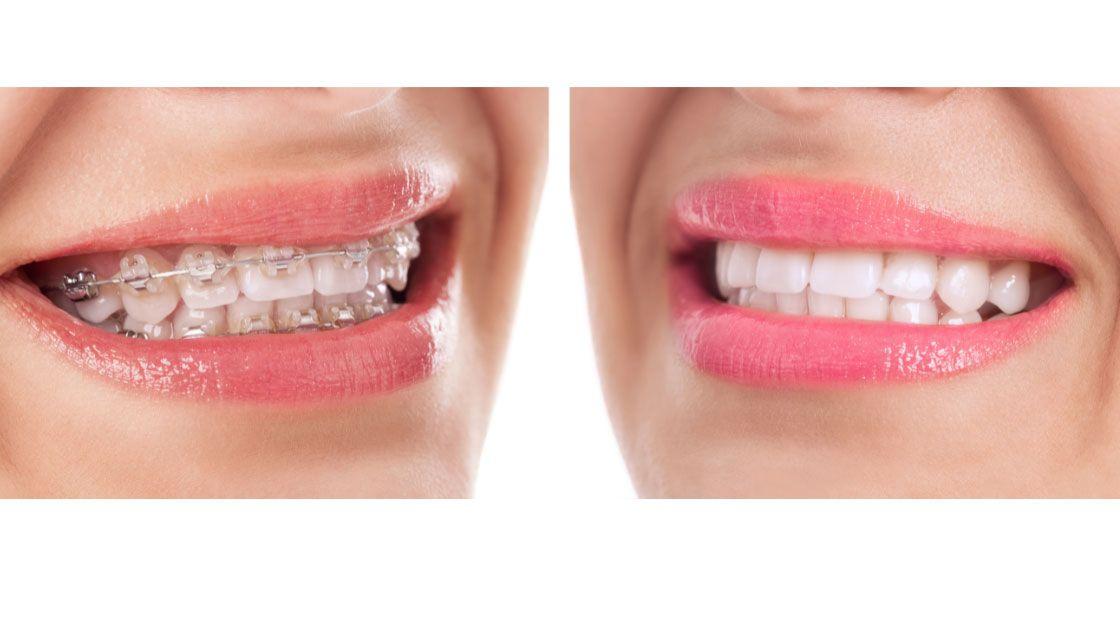
- Attend the in-person orthodontic assessment — The orthodontist examines teeth, gums, bite, and jaw relationship. Diagnostic records commonly include photographs, digital scans or impressions, panoramic radiography, and, where indicated, cephalometric imaging.
- Complete dental clearance — Decay, infection, inadequate hygiene, and active gum disease require treatment before fixed braces. The orthodontist also reviews impacted or missing teeth, root shape, prior trauma, restorations, and whether a skeletal jaw discrepancy needs combined care.
- Receive the written treatment plan — Confirm the brace type, expected tooth movements, extraction or other dental requirements, estimated treatment length, adjustment interval, fees, retainer plan, and arrangements for emergency repairs or transfer of care.
- Have the braces fitted — Brackets are bonded to the teeth and an archwire is placed to begin controlled tooth movement. Routine fitting is an outpatient dental appointment and normally does not require fasting unless sedation or another procedure is planned.
- Manage the first few days — Teeth commonly feel tender and brackets can rub the lips, cheeks, or tongue for 3–5 days. Use orthodontic wax on irritating brackets, choose soft foods, and use clinician- or pharmacist-approved pain relief when medically appropriate.
- Attend scheduled adjustments — The orthodontist changes or adjusts wires and other components every 4–12 weeks, commonly about every 6–10 weeks. Active treatment often takes 12–24 months, with complex bite correction sometimes taking longer.
- Remove braces and begin retention — Once alignment and bite goals are reached, the appliance is removed and fixed and/or removable retainers are provided. Retainers begin immediately after removal and need long-term use to reduce relapse.
- Continue follow-up after leaving Korea — Send the final records and retainer instructions to the accepting orthodontist at home. Maintain routine dental examinations and cleanings throughout active treatment and retention, as advised by the treating clinicians.
Alternatives to Braces
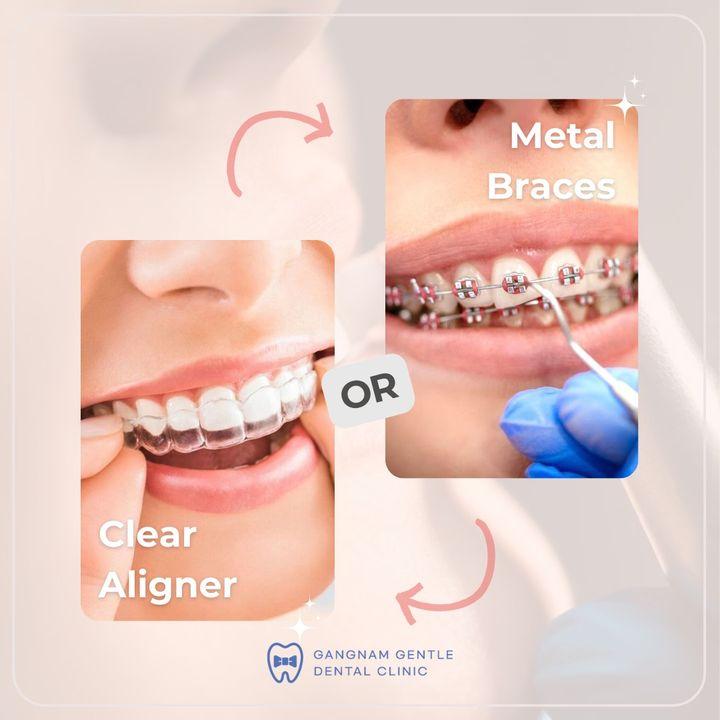
The best alternative depends on whether the main problem is tooth position, bite function, jaw position, or tooth shape and color. Non-surgical choices avoid jaw surgery but cannot correct every skeletal discrepancy; restorative options can alter appearance but do not move teeth or correct a bite.
Clear Aligners
Clear aligners use a sequence of removable trays for suitable orthodontic cases.
- Best suited for — Patients who can wear aligners consistently and whose tooth movements are compatible with aligner treatment.
- Trade-off — Aligners still require full records, professional monitoring, and reliable wear. Evidence suggests a lower plaque and white-spot burden than conventional fixed appliances, but aligners are not appropriate for every malocclusion.
Limited Orthodontic Treatment
Limited treatment moves selected teeth for a narrower goal, such as minor front-tooth alignment or selected relapse.
- Best suited for — Patients with a carefully defined cosmetic concern and a stable bite that does not require comprehensive correction.
- Trade-off — It can leave bite, crowding, or jaw-relationship problems unaddressed. An orthodontic examination is needed before limiting treatment.
Retainers for Minor Relapse
Retainers can be considered when movement after previous orthodontics is small and the clinician judges the bite stable.
- Best suited for — Selected patients with minor relapse after prior comprehensive treatment.
- Trade-off — Retainers do not reliably correct substantial crowding, rotations, or bite discrepancies.
Veneers
Veneers change visible tooth shape, color, or proportion rather than moving teeth.
- Best suited for — Teeth that are positionally acceptable but have shape, color, or surface concerns.
- Trade-off — Veneers do not correct crowding, root position, or bite function and can require irreversible tooth preparation.
Orthognathic Jaw Surgery
Double-jaw surgery combined with orthodontics can address a significant skeletal jaw discrepancy.
- Best suited for — Patients whose upper and lower jaw relationship, rather than tooth position alone, is the main cause of functional or facial imbalance.
- Trade-off — This is major surgery with a substantially longer recovery and travel commitment than braces alone.
How Can I Prepare for Braces?
- Arrange continuity before committing — Do not begin fixed braces during a short visit without a written agreement for follow-up and emergency repairs. Ask for the proposed handover documents before appliance placement.
- Send complete health information — Provide records of prior orthodontics, dental trauma, gum treatment, missing or impacted teeth, medical conditions, medicines, allergies, pregnancy status, and available recent imaging.
- Complete dental and gum treatment first — Treat decay, abscesses, active gingivitis, periodontitis, and hygiene problems before brackets are bonded. Book a professional cleaning or periodontal care when the orthodontist recommends it.
- Discuss medicines and pain relief — Tell the clinician about prescription medicines, over-the-counter drugs, and supplements. Do not stop a prescribed medicine independently; confirm which analgesics are appropriate for your health history.
- Plan meals and supplies — Stock soft foods for the first 3–5 days and bring orthodontic wax, fluoride toothpaste, interdental brushes, floss threaders, and a compact oral-care kit for travel days.
- Avoid damage-prone foods — Plan to avoid hard, sticky, and chewy foods that can dislodge brackets or bend wires, including hard candies, chewing gum, ice, and sticky caramel-type foods.
- Confirm fasting and transport needs — Routine fitting does not normally require fasting or a companion. Follow fasting, escort, and transport instructions if sedation, extraction, or another procedure is planned.
- Keep flights flexible — Do not schedule an immediate onward flight until comfort, eating, and any prerequisite care are settled. Build in time for an early repair visit if a bracket or wire causes problems.
Travel note: Obtain a written copy of the final plan, diagnostic records, appliance brand and prescription details, and emergency instructions before leaving Korea.
Confirm all clinic-specific requirements with the treating orthodontist, whose individualized instructions take precedence over general guidance.
Aftercare Advice
Meticulous cleaning and reliable adjustment visits protect both the alignment result and the enamel around brackets.
- Manage early tenderness — Eat soft foods for about 3–5 days after fitting or adjustment. Use orthodontic wax over rubbing brackets and use acetaminophen/paracetamol or ibuprofen only when medically safe and approved by the orthodontist, dentist, or pharmacist.
- Clean around every bracket — Brush thoroughly around brackets and along the gumline with fluoride toothpaste. Use interdental brushes, floss threaders, or another clinician-recommended aid daily, and continue regular general-dentist examinations and cleanings.
- Prevent white-spot lesions — Reduce frequent sugary snacks and acidic drinks, and follow any fluoride-prevention plan. A 2025 review and meta-analysis estimated pooled white-spot-lesion prevalence at 55.1% and incidence at 34.2%, but these rates varied materially by baseline lesions, treatment duration, population, and detection method and do not predict an individual outcome.
- Protect the appliance — Avoid hard, sticky, and chewy foods. Report a loose bracket, bent wire, lost elastic, or persistent sharp wire promptly, particularly before travelling.
- Recognize urgent symptoms — Seek urgent dental or medical care for facial swelling, fever, pus, escalating pain, significant dental trauma, difficulty swallowing or breathing, or a swallowed or aspirated appliance component.
- Maintain retention — After braces are removed, wear fixed and/or removable retainers exactly as prescribed. Teeth can shift after treatment, so retention is long term rather than a short finishing step.
Follow the treating orthodontist’s instructions over general advice, and contact the clinic or local urgent dental care promptly when pain, swelling, appliance damage, or tissue injury appears abnormal.
Frequently Asked Questions
Related Blogs
Root Canal Treatment in Korea: Treatment Steps, Recovery, Travel Timing, and Alternatives
Root canal treatment removes infected or inflamed pulp, disinfects and seals the canals, and is followed by a durable filling or crown when needed. The article covers candidate assessment, treatment options, Korea travel planning, records, flight timing, aftercare, and follow-up.
Updated: Sep 21, 2026
Bruxism Treatment in Korea: Splints, Masseter Botox, Recovery, and Travel Planning
Bruxism treatment begins with an assessment of teeth, bite, jaw muscles and joints, with options including habit care, a custom stabilization splint, dental repair, sleep evaluation, or selected masseter botulinum-toxin injections. International patients visiting Korea can plan 1–2 days for assessment or 2–5 days for a new splint, and should arrange adjustment time, treatment records, and home-den
Updated: Sep 21, 2026
Periodontal Disease Treatment in Korea: Methods, Recovery, Travel Planning, and Aftercare
Periodontal disease treatment starts with charting, radiographs, cleaning and home-care instruction, followed by deep cleaning, reassessment and selected surgery for persistent pockets or defects. International patients can plan 2–4 business days for non-surgical care, 7–10 days for early surgical review, and should arrange transferable records and follow-up with a home periodontist.
Updated: Sep 21, 2026
Wisdom Tooth Removal in Korea: Methods, Recovery, Risks and Travel Planning
Wisdom tooth removal may involve simple or surgical extraction, complete extraction, or coronectomy depending on impaction, root anatomy, nerve risk, and disease. The article covers imaging, anesthesia, recovery and travel planning in Korea, aftercare, warning signs, and follow-up requirements.
Updated: Sep 21, 2026
Clinics offering Braces

Minish Dental Hospital: Korea's Premier Dental Clinic Offering Advanced Treatments and Personalized Care
Sinsa

Gangnam Gentle Dental Clinic: Your Trusted Dental Care Provider in Korea Offering Comprehensive Services with Optimal Comfort and Safety
Sinnonhyeon Station

Experience Advanced Dental Care at TU Dental Clinic (TU Dental) in Korea: Top-Rated Orthodontics, Implants, and Esthetic Treatments
Gangnam Station

Yonsei Baro Dental Clinic - Premier Orthodontic and Dental Care in Korea
Apgujeong