
Medical Tourism Blog
Heavy Brow Solutions: Eyebrow Lift Procedures for a Youthful Look in Korea
Table of contents
- What is "Heavy Brow"? Definition and Common Pseudonyms
- Detailed Medical Procedures for Eyebrow Lift
- The Process of Getting an Eyebrow Lift in South Korea for Medical Tourists
- Costs of Eyebrow Lift in South Korea and International Comparison
- Patient Experiences and Outcomes: Addressing "Heavy Brow"
- Important Considerations for Patients
- Conclusion
- References
Considering treatment in Korea? Everything you need to know e.g. — how to avoid scams, visas, interpreters, recovery tips — in our Medical Tourism Master Guide. Plan with confidence in minutes, not weeks!
If you’ve ever felt like your eyebrows sit too low—giving you a tired, angry, or sad look—you’re not alone. This condition, often called "heavy brow," can affect both your appearance and, in some cases, your vision. This guide breaks down everything you need to know about addressing a "heavy brow," focusing on eyebrow lift procedures and what to consider if you’re thinking about medical tourism in South Korea. Our goal is to help you make informed choices for both your appearance and well-being.
What is "Heavy Brow"? Definition and Common Pseudonyms
A "heavy brow" is more than just a cosmetic concern—it can change how your whole face looks. Medically, this is known as Brow Ptosis, which means the eyebrow has dropped from its normal position, sometimes even blocking your vision. This drooping can make you look tired or upset, regardless of how you actually feel.
Common Pseudonyms and Related Terms
While you might hear "heavy brow" or "low eyebrows," doctors use the term Brow Ptosis. Procedures to fix this are called Eyebrow Lift, Forehead Lift, Forehead Rejuvenation, or Browplasty. It’s important to know the difference between brow ptosis and other eyebrow issues. For example, Madarosis is hair loss in the eyebrows or eyelashes, and Hertoghe's Sign (or Queen Anne's Sign) is hair loss on the outer third of the eyebrows, often linked to hypothyroidism.
Causes of Brow Ptosis
Brow ptosis is usually acquired, not something you’re born with. The most common cause is aging—skin loses elasticity, and the muscles that lift your brow weaken. Other causes include:
- Trauma: Injury to the facial nerve.
- Myogenic: Muscle disorders like myasthenia gravis.
- Infectious: Viruses or diseases affecting facial nerves.
- Spasm-Induced: Conditions like blepharospasm.
- Neoplastic: Tumors near the facial nerve.
- Iatrogenic: Side effects from surgeries or treatments like botox.
Because brow ptosis can be caused by serious medical issues, it’s crucial to get a thorough evaluation before considering cosmetic correction. Sometimes, what looks like a simple cosmetic issue could be a sign of something more serious.
Table 1: Common Terms and Conditions Associated with "Heavy Brows"
| Term/Condition | Description | Nature | Common Causes |
|---|---|---|---|
| Low Eyebrows | Eyebrows positioned lower than desired. | Positional Sagging | Aging, gravity, sun exposure |
| Brow Ptosis | Medical term for eyebrow descent from normal anatomical position. | Positional Sagging | Aging, facial nerve damage, muscle disorders, trauma, infections, spasms, tumors, iatrogenic factors |
| Forehead Lift / Rejuvenation / Browplasty | Surgeries to raise brows and improve forehead appearance. | Surgical Correction | Cosmetic procedure for brow ptosis and wrinkles |
| Madarosis | Loss of eyebrow or eyelash hair. | Hair Loss | Skin conditions, autoimmune diseases, infections, medications |
| Hertoghe's Sign (Queen Anne's Sign/Lateral Madarosis) | Hair loss specifically on the outer third of eyebrows. | Hair Loss | Often linked to hypothyroidism |
Detailed Medical Procedures for Eyebrow Lift
Brow lift surgery is tailored to each person, aiming to lift the brows and smooth forehead wrinkles for a more youthful look. It can be done alone or with other procedures like blepharoplasty or a facelift. The right technique depends on your facial structure, how much lift you need, your hairline, and your goals.
Primary Surgical Techniques
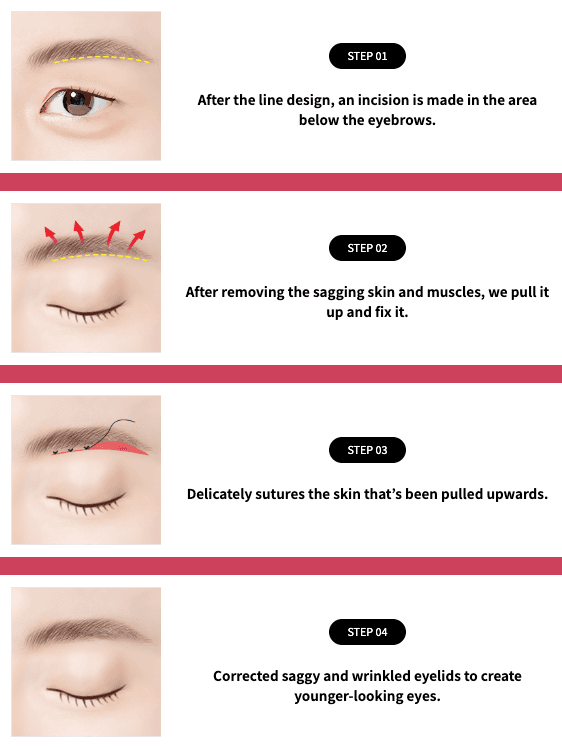
Endoscopic Brow Lift
This minimally invasive method uses small incisions hidden in the hairline. A camera helps the surgeon see and adjust the muscles and tissues. Benefits include minimal scarring and a quicker recovery (10–14 days for initial healing). Results can last 10–12 years, but there’s a small risk of numbness or nerve damage.
Direct Brow Lift
Here, skin and muscle are removed just above the eyebrows. It’s quick (30–60 minutes), can be done with local anesthesia, and offers precise control—great for heavy brows. The main downside is the potential for a visible scar above the brow.
Temporal Brow Lift (Lateral Brow Lift)
This targets the outer brow with small incisions near the temples. It’s less invasive, with scars hidden in the hairline and a fast recovery. It’s best for lifting the outer brow, not the center.
Coronal Brow Lift (Classic Lift)
A long incision is made behind the hairline, lifting the entire forehead. This method gives dramatic, long-lasting results (over 10 years) but is the most invasive, with a longer recovery and higher risk of numbness or hair loss.
Hairline Brow Lift
The incision is at the hairline, removing skin from the top of the forehead. It’s good for people with high hairlines but may leave a visible scar.
Sub-Brow Lift
This removes skin just above the eyelids, under the eyebrow, and is ideal for those with heavy brows causing eyelid droop. It’s especially useful for people with high eyebrows who want to avoid an over-lifted look.
Non-Surgical Alternatives
- Botox Injections: Relax forehead muscles for a subtle lift, lasting 3–6 months.
- PDO Thread Lift: Threads lift the brow and stimulate collagen, with results lasting 6 months to 2 years.
Each technique has trade-offs between invasiveness, recovery, and results. More invasive methods offer longer-lasting, more dramatic changes but require more downtime and may leave scars. Less invasive or non-surgical options are quicker but temporary.
Table 2: Comparison of Eyebrow Lift Surgical Techniques
| Technique | Incision Location | Target Area | Invasiveness | Scarring | Recovery | Longevity | Pros | Cons |
|---|---|---|---|---|---|---|---|---|
| Direct Brow Lift | Above eyebrows, within hair or forehead wrinkles | Specific brow segment | More Invasive | Potentially visible (above brow) | Longer | Long-lasting | Enhanced control, significant lift, shorter surgery, local anesthesia option | Visible scar, longer recovery |
| Temporal Brow Lift | Small incisions near temples, behind hairline | Outer brow | Minimally Invasive | Hidden | 7-10 days / 10-14 days | Several years | Fast recovery, avoids unnatural "surprised" look | Doesn't lift central brow |
| Coronal Brow Lift | Single incision, ear-to-ear behind hairline | Forehead and entire brow | Highly Invasive | Hidden (but extensive) | Several weeks / 1 month+ | Over 10 years | Most dramatic and long-lasting results, lifts hairline | Longer recovery, significant swelling, higher risks (nerve damage, hair loss) |
| Hairline Brow Lift | At the junction of forehead and hairline | Forehead and brow, corrects high hairline | More Invasive | Visible along hairline | Longer | Long-lasting | Corrects high hairline while lifting brow | Potential visible scar along hairline |
| Sub-Brow Lift | Just above eyelids, beneath eyebrow | Skin above eyelids, drooping brow | More Invasive | Concealable (within brow hair) | Moderate | Long-lasting | Addresses drooping eyelids from heavy brow, avoids "surprised look" for high brows | Limited to specific brow area |
| Botox Injections | Injections into specific muscles | Forehead wrinkles, subtle brow lift | Non-Surgical | None | Minimal/None | 3-6 months | Quick, no downtime, temporary | Temporary results, requires maintenance |
| PDO Thread Lift | Threads inserted under skin | Subtle brow lift, collagen stimulation | Non-Surgical | Minimal | Quick | 6 months - 2 years | Quick recovery, subtle results | Temporary results, subtle lift |
The Process of Getting an Eyebrow Lift in South Korea for Medical Tourists
South Korea is a top destination for cosmetic surgery, known for advanced techniques, skilled surgeons, and competitive prices. With the highest number of plastic surgery specialists per capita, it’s a hub for international patients, especially in Seoul.
Step-by-Step Process for International Patients
- Initial Consultation and Evaluation: Start with an online or in-person consultation to assess your needs and medical history. Many agencies help connect you with reputable clinics.
- Anesthesia Administration: On surgery day, you’ll receive local or general anesthesia, depending on the procedure.
- Surgical Procedure and Tissue Adjustment: The surgeon makes incisions, lifts and secures the brow, and removes any excess tissue. Surgery usually takes 1–3 hours.
- Immediate Post-Operative Care and Recovery: After surgery, you’ll get instructions for care and recovery. Most patients don’t need to stay overnight.
- Stitch Removal and Recommended Departure Timeline: Stitches are removed after 7–10 days. International patients should stay in Korea for at least this period for follow-up.
Comprehensive Support Services for International Patients
- Smooth Communication: Clinics offer multilingual staff and interpreters.
- Concierge Services: Agencies help with consultations, bookings, translators, transportation, visas, accommodation, and even leisure activities.
- Quality Assurance and Accreditation: Look for clinics with international accreditation or KOIHA certification for safety and quality.
While the process is streamlined, patients should still do their own research—don’t rely solely on online reviews. Accreditation and patient references are key. South Korea’s clinics also offer online follow-up care, which is especially helpful for international patients who can’t return easily for check-ups.
Which Are the Best Clinics in Korea for Heavy Brow?
Listed below are some of the best clinics in Korea for heavy brow.
1. THEPLUS Plastic Surgery
For a heavy brow or heavy-looking upper eye area, you can explore an assessment that distinguishes excess upper-eyelid tissue from eyelid drooping: THE PLUS offers blepharoplasty and ptosis correction, alongside facelift and thread-lift options when broader facial laxity is relevant. Its approach emphasizes facial balance and preserving natural expression.
- URL: THEPLUS Plastic Surgery Website
- Location: Gangnam-gu, Seoul
- Eye-area options:
- Ptosis correction addresses the muscles that open the eyes when drooping upper lids contribute to a tired or heavy appearance.
- Blepharoplasty adjusts excess skin and tissue around the eyelids to smooth and refresh the eye contour.
- Related lifting options:
- Facelift repositions sagging facial tissue for firmer contours while aiming to maintain natural expression.
- Thread lift uses dissolvable threads as a less invasive option for mild facial sagging.
- Face fat grafting can restore volume in hollow or flattened facial areas.
- Surgical expertise:
- Dr. Kim is a board-certified plastic surgeon with research recognition for 3D implants and professional experience in facial contouring.
- Dr. Jeong is President of the Korean Society of Plastic Surgeons and emphasizes combining function with aesthetic considerations.
2. Made Young Plastic Surgery
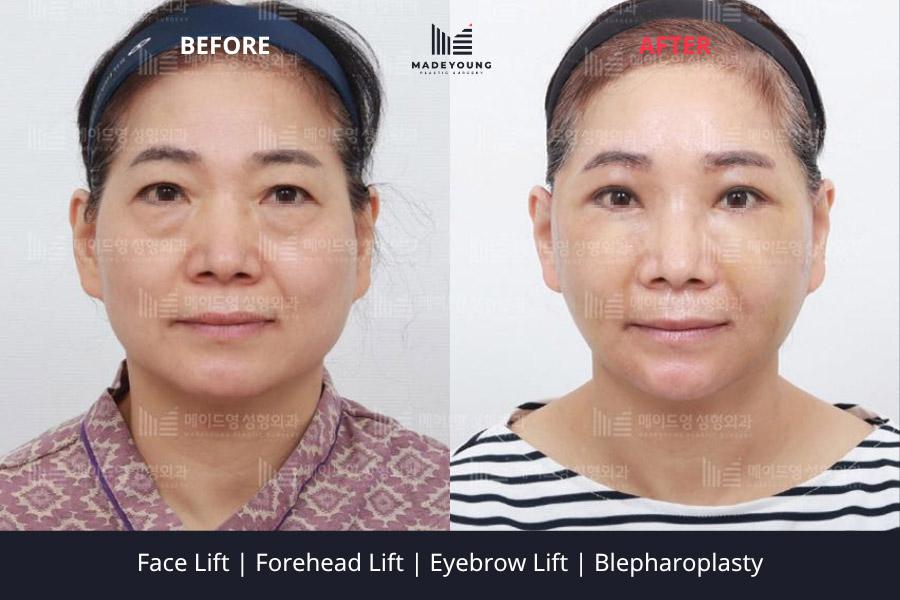
You may consider Made Young for a heavy brow because it offers both surgical forehead lift and sub-brow lift procedures, which are intended to raise the brows or focus on the area immediately above them while addressing forehead sagging. The clinic also provides non-surgical forehead lifting and related upper-eyelid procedures, allowing your treatment discussion to account for whether brow position, lid tissue, or both are contributing to heaviness.
- URL: Made Young Plastic Surgery Website
- Location: Seocho-gu, Seoul
- Brow and forehead options:
- Forehead lift raises the brows and addresses wrinkles and sagging skin on the forehead.
- Sub-brow lift focuses on elevating and smoothing the area just above the eyebrow.
- Non-surgical forehead lifting is also offered, along with thread lifting, focused-ultrasound options, and skin boosters.
- Eye-area considerations:
- Upper blepharoplasty removes excess upper-eyelid skin and fat.
- Ptosis correction is available for drooping eyelids, and the clinic offers incisional and non-incisional double-eyelid surgery.
- Dr. Park Byung-Chan is described as having 15 years of experience dedicated exclusively to eye surgery, with customization of incision lines, crease height, eyelid thickness, and overall eye shape.
- Safety and aftercare:
- The clinic states that full-time board-certified anesthesiologists provide one-to-one continuous monitoring, with additional cross-check support for emergencies.
- It reports CCTV coverage of procedures and a separate aftercare center for post-procedure care.
3. SH Clinic
You may consider SH Clinic if your heavy brow appearance is accompanied by excess upper-eyelid skin or broader facial laxity: it offers upper blepharoplasty to remove excess lid skin and brighten the eye area, as well as facelift, thread lift, and laser-lifting services. The supplied information does not identify a dedicated brow-lift procedure, so your consultation would need to clarify whether an eyelid-focused or facial-lifting approach fits your concerns.
- URL: SH Clinic Website
- Location: Seocho-gu, Seoul
- Relevant eye and lifting services:
- Upper blepharoplasty removes excess eyelid skin and creates a defined crease, which the clinic describes as easing heaviness around the eyes.
- Thread lift uses biodegradable threads to elevate sagging tissue and stimulate collagen.
- Laser lifting uses skin-tightening lasers to support collagen remodeling and refine facial contours.
- Facelift addresses deeper facial and neck layers for facial rejuvenation.
- Additional facial surgery:
- Face contouring surgery includes reshaping of the jaw, cheekbones, or chin, with 3-D planning described for facial balance and symmetry.
- Lower blepharoplasty repositions or removes under-eye fat and tightens loose lower-lid skin.
Costs of Eyebrow Lift in South Korea and International Comparison
Understanding the full cost is essential, especially for medical tourists.
Typical Costs and Inclusions in South Korea
An eyebrow lift in South Korea usually costs ₩3,000,000 to ₩4,000,000 KRW (about $2,727 to $3,636 USD), with some clinics quoting ₩2,500,000 to ₩5,000,000 KRW ($1,900 to $3,800 USD). This typically includes consultations, anesthesia, surgery, and immediate post-op care. A deposit (about 10%) is often required.
Factors Influencing the Cost
- Surgeon’s expertise
- Technique used
- Clinic’s location and reputation
- Combined procedures
Comparison with Other Countries
| Country | Estimated Cost Range (USD) | Key Inclusions/Considerations |
|---|---|---|
| South Korea | $1,900 - $3,800 (average $2,600 - $3,600) | Consultations, anesthesia, OR fees, immediate post-op care. Advanced facilities, skilled surgeons. |
| United States | ~$3,900 | Surgeon’s fee, anesthesia, OR facilities. High safety standards. |
| Mexico | $1,000 - $4,000 | Affordable, close to USA. Additional costs for stays/tests. Research credentials carefully. |
| Turkey | ~$1,600 - $3,500 | Often all-inclusive (airfare, hotel, transfers). Good balance of quality and price. |
| United Kingdom | ~$5,700 | Higher cost, extensive regulation, highly trained surgeons. |
| Australia | $3,150 - $4,400 | Includes anesthesia, accredited facilities. High care standards. |
| Thailand | $4,000 - $6,500 (facelift) | Combines vacation and medical care. |
| Brazil | $4,000 - $8,000 (facelift) | Known for artistic approach. |
Remember, the procedure cost is just one part of your total expenses. Factor in flights, accommodation, meals, tests, recovery care, visas, insurance, and emergency funds. Some countries, like Turkey, offer all-inclusive packages that may be more cost-effective overall.
Financing Options
Most cosmetic procedures aren’t covered by insurance. Some clinics or agencies offer financing plans to help spread out payments.
Patient Experiences and Outcomes: Addressing "Heavy Brow"
Patients who undergo eyebrow lifts often report dramatic improvements—not just in looks, but in confidence and quality of life.
Reported Improvements
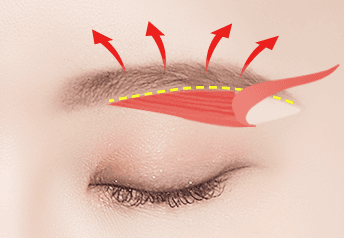
- Less tired appearance: Patients look more awake and refreshed.
- Softer expressions: The procedure can eliminate an angry or sad look.
- Younger appearance: Smoother forehead and lifted brows make you look younger.
- Correct diagnosis: Sometimes, what seems like an eyelid issue is actually brow ptosis—getting the right procedure is key.
- Complements other procedures: Brow lifts can enhance results from eyelid surgery or facelifts.
- Multiple concerns addressed: Techniques like the endoscopic brow lift can improve brows, eyelids, and forehead wrinkles together.
Patient Satisfaction Levels
Studies show high satisfaction, even when scars are visible, as long as the results meet expectations.
Psychological Impact
Beyond physical changes, many patients feel more confident and positive after surgery. The procedure can also improve vision if drooping brows were blocking the eyes.
It’s important to get an accurate diagnosis—sometimes both brow and eyelid lifts are needed for the best result. A skilled surgeon will help you decide what’s right for you.
Important Considerations for Patients
Before surgery, be aware of the risks, expected results, and the importance of choosing a qualified surgeon.
Risks and Potential Complications
- Improper brow position or asymmetry
- Incomplete eye closure or dryness
- Visible scarring
- Need for revisions
- Hair loss along incision lines
- Numbness or altered sensation
- Facial nerve injury (rare)
- Swelling or bruising
- Thread displacement (for thread lifts)
Choosing a Reputable Clinic and Qualified Surgeon
- Don’t rely only on online reviews—look for international accreditation (like the International Joint Commission or KOIHA in Korea).
- Make sure your surgeon is board-certified and experienced in the technique you want.
- Ask for references from other international patients.
- Use virtual consultations to preview results and discuss your goals.
Realistic Expectations and Longevity of Results
Brow lifts can last 5–15 years, depending on the technique and your lifestyle. Less invasive options like thread lifts or Botox are temporary. Remember, aging continues, so results aren’t permanent, but you’ll look younger than your actual age for years.
Post-Operative Care and Long-Term Maintenance
- Follow all post-op instructions.
- Manage swelling with elevation and cold compresses.
- Avoid strenuous activity for several weeks.
- Use sunscreen and avoid smoking to prolong results.
- Attend all follow-up appointments, including online check-ins if you’re an international patient.
Both surgeons and patients share responsibility for understanding risks and setting realistic goals. Open communication and education are key to a satisfying outcome.
Conclusion
A "heavy brow" (brow ptosis) can affect both appearance and vision, but eyebrow lift procedures offer effective, customizable solutions. South Korea stands out for its advanced techniques, skilled surgeons, and comprehensive support for international patients. To ensure the best results, do thorough research, understand all costs, and choose a qualified, accredited surgeon. With careful planning and expert guidance, you can achieve a refreshed, confident look that matches how you feel inside.
References
1, 2, 3, 4, 5, 6, 7, 8, 9, 10, 11, 12, 13, 14, 15, 16, 17, 18, 19, 20, 21, 22, 23, 24, 25, 26, 27, 28, 29, 30, 31, 32, 33, 34, 35
Frequently Asked Questions
Related Blogs
Fox Eye Surgery in Korea: Methods, Recovery, Risks and Travel Planning
Fox eye surgery may involve lateral canthopexy, canthoplasty, or a brow lift, selected after assessment of eyelid support, ocular surface health, and facial anatomy. The guide covers candidacy, recovery, travel planning for Korea, aftercare, alternatives, and urgent symptoms requiring in-person care.
Updated: Oct 21, 2026

Upper Blepharoplasty in Korea: Methods, Recovery, Risks, and Travel Planning
Upper blepharoplasty conservatively removes excess upper-lid skin and, when indicated, limited muscle or fat after assessment of ptosis, brow position, eyelid closure, and eye health. International patients should plan a 7–10-day stay in Korea, attend early follow-up, arrange flexible travel and aftercare, and seek urgent assessment for vision changes or severe swelling.
Updated: Oct 13, 2026
Lower Canthoplasty in Korea: Methods, Recovery, Risks, and Travel Planning
Lower canthoplasty includes lower-eyelid-lowering and lateral canthal techniques, with candidacy based on lid support, ocular-surface health, and realistic anatomical goals. International patients can find guidance on technique clarification, 8–10 day travel planning, follow-up, aftercare, and urgent eye symptoms.
Updated: Oct 13, 2026
Upper Canthoplasty in Korea: Methods, Recovery, Risks and Travel Planning
Upper canthoplasty releases or redrapes the upper-medial epicanthal fold to improve visibility of an upper-eyelid crease, often alongside double-eyelid surgery. The article covers candidacy, surgical approaches, recovery, aftercare, travel planning for Korea, and warning signs requiring urgent eye care.
Updated: Oct 13, 2026
Clinics offering Eyebrow Lift

SH Clinic: Comprehensive Women's, Men's & Couples' Health Services in Korea
Sinsa

THEPLUS Plastic Surgery Korea | Eye, Nose, Face & Body Surgery
Sinsa

Made Young Plastic Surgery: Rejuvenating Aesthetic Excellence in Korea for Face Lifts, Contouring and More
Gangnam Station

LABOM Plastic Surgery: Expertise in Non-Surgical Nose, Facial Lifting & Anti-Aging Surgeries in Korea
Apgujeong