
Medical Tourism Blog
Face Lift in Korea | Procedure Types, Candidacy, Recovery & Travel Info
Table of contents
- Key take-aways:
- What Should You Know About Face Lift?
- Who might be a good candidate for your face lift in Korea?
- Which face lift methods might suit your anatomy and priorities?
- Why might you choose Korea for your face lift?
- What should you know as an international visitor coming to Korea for your face lift?
- Which Are the Best Clinics in Korea for Facelift In?
- How Much Could You Pay for Face Lift in Korea?
- What happens before, during, and right after your face lift?
- What alternatives or add-ons might you consider for your goals?
- How should you prepare for your face lift in Korea?
- How should you recover after your face lift in Korea?
Considering treatment in Korea? Everything you need to know e.g. — how to avoid scams, visas, interpreters, recovery tips — in our Medical Tourism Master Guide. Plan with confidence in minutes, not weeks!
Last updated: July 2026
Key take-aways:
- You may be a good face lift candidate if your main concern is structural sagging such as jowls, jawline softening, lower-face laxity, or loose neck skin rather than only fine wrinkles, pigment changes, or sun damage.
- You are usually a stronger surgical candidate if your medical conditions are well controlled, your expectations are realistic, and you can fully stop nicotine around your procedure.
- You may need to postpone your procedure if you have active nicotine use, uncontrolled hypertension or diabetes, bleeding risks, serious heart or lung disease, or expectations that do not match what your surgery can deliver.
- You can have your technique tailored to your anatomy and goals, with options such as a mini lift, traditional lift, SMAS lift, deep-plane or extended-SMAS lift, or a face and neck lift with platysmaplasty.
- You should usually plan about 10 to 14 days in Korea so you can complete your pre-op review, surgery, early follow-up, and at least some suture or drain management before your flight home.
- You can expect face lift quotes in Korea to range from about ₩7,000,000 to ₩15,000,000, and you should ask for an itemized quote so you know whether your anesthesia, aftercare, medicines, and follow-up are included.
- You should seek urgent help if you develop sudden one-sided swelling, rapidly worsening pain, chest pain, shortness of breath, new leg swelling, fever, foul drainage, or worsening facial weakness after your surgery.
What Should You Know About Face Lift?
If you are considering a face lift in Korea, you should approach it as both a cosmetic surgery decision and an international travel plan. You will need clear discussions with your surgeon about what your anatomy allows, what your procedure can realistically improve, and how your recovery will be monitored abroad. You should also decide whether your goals are best served by a stand-alone lift or by a broader facial rejuvenation plan that addresses more than one area. Because you are recovering away from home, you need practical planning for lodging, transportation, support, and schedule changes if your healing takes longer than expected. You can use the summary below to quickly compare candidacy, technique choices, travel timing, cost expectations, and safety issues.
Who might be a good candidate for your face lift in Korea?
When might your goals fit a face lift?
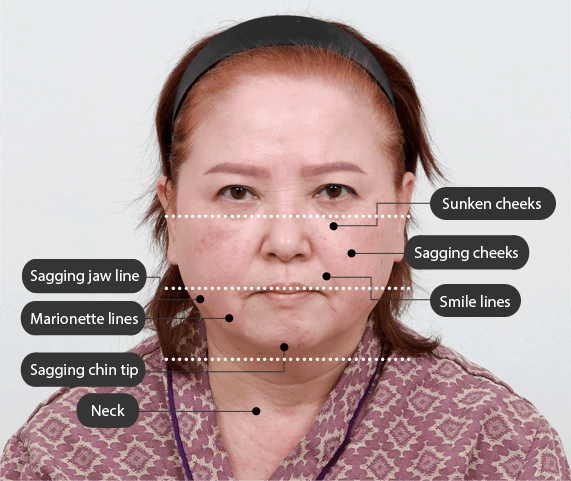
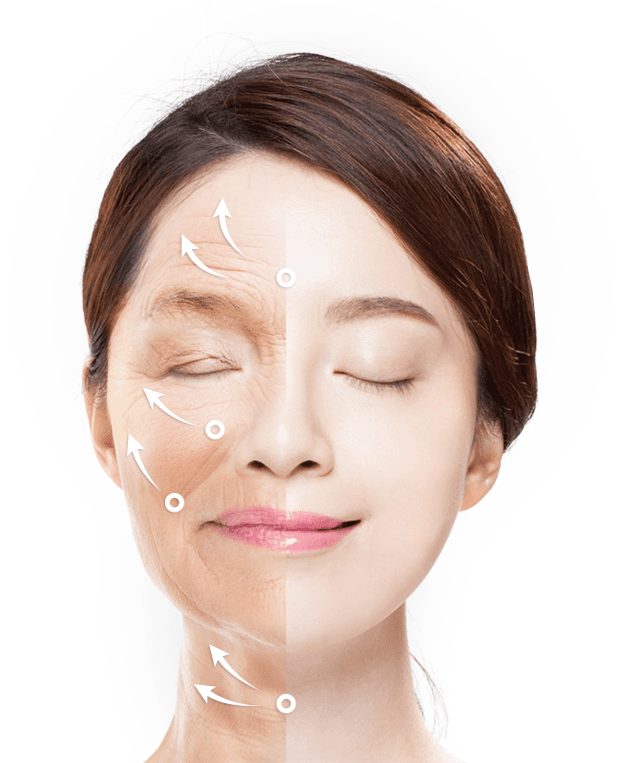
You may be a good candidate for a face lift, or rhytidectomy, if your main concern is structural sagging rather than only surface skin changes. Your surgery is usually best suited to lower-face laxity, jowls, jawline softening, and loose neck skin, and it may also help with deeper folds caused by descended facial tissues. A face lift can refresh your appearance, but you should expect restoration rather than a complete change in your identity or an end to future aging. ASPS and Mayo Clinic both emphasize these limits.
What makes your candidacy stronger?
- Overall health: You are usually a stronger candidate if your blood pressure, diabetes, and other medical conditions are well controlled.
- Nicotine status: You are safer if you do not smoke or if you can fully stop nicotine around surgery, because nicotine can reduce blood flow and raise your risk of poor healing or skin-flap problems.
- Skin quality: You generally need enough skin elasticity for your surgeon to redrape your skin after deeper tissues are repositioned.
- Expectation setting: You should want surgery for your own informed goals, and you should understand that your face lift does not reliably correct fine wrinkles, sun damage, or pigment changes on its own.
When might your surgeon advise against your procedure for now?
You may need to postpone or avoid your procedure if you have active nicotine use, uncontrolled hypertension, a bleeding disorder, unmanageable blood thinners, poorly controlled diabetes, significant immunocompromise, chronic steroid use, connective-tissue disease, or serious heart or lung disease that makes anesthesia less safe. You may also be a poor candidate if your expectations are unrealistic or if you feel pressured by someone else rather than guided by your own goals. ASPS candidacy guidance and StatPearls support these concerns.
Which face lift methods might suit your anatomy and priorities?
How can your surgeon tailor your technique?
Your surgeon should match your technique to your facial anatomy, pattern of laxity, skin quality, and recovery priorities rather than to marketing labels alone. A shorter-scar option may suit you if your laxity is mild and concentrated near your jawline, while a more extensive lift may suit you if you want stronger correction of your jowls and neck.
What are your main surgical options?
- Traditional or full face lift: You may need this if your lower face and neck show more advanced descent, because your incisions can extend from the temple area around your ear and into the lower scalp for broader access.
- Mini or limited-incision face lift: You may consider this if your laxity is milder, but you should understand that your correction may also be more limited.
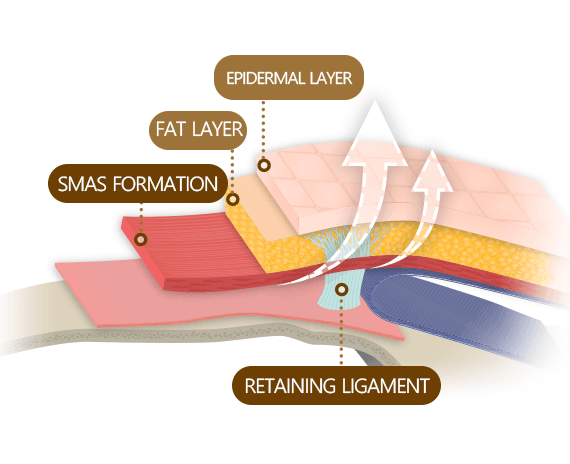
- SMAS face lift: Your surgeon works on the deeper superficial musculoaponeurotic system, not just your skin, to create more durable support than a skin-only lift.
- Extended-SMAS or deep-plane face lift: You may hear these terms when your surgeon plans a deeper release and repositioning of descended tissues. Your correction of jowls and some midface descent may be stronger, but your surgery is also more technically demanding and is not automatically the best choice for you.
- Face and neck lift with platysmaplasty: You may benefit from this if your neck banding, loose neck skin, or under-chin fullness is a major part of your concern.
What combined procedures might affect your plan?
You may have better balance in your result if your surgeon also discusses neck lifting, brow lifting, eyelid surgery, fat transfer, or fillers when your aging pattern includes more than lower-face sagging. If you want to compare specific methods, you may also find it helpful to read about a deep-plane face lift in Korea or an SMAS facelift in Korea. Mayo Clinic and ASPS both note these meaningful variations.
Why might you choose Korea for your face lift?
What practical advantages might you find in Korea?
You may choose Korea because you can access an established foreign-patient framework for cosmetic care, including official medical-visa guidance for shorter stays. If your treatment and travel stay is under 90 days, you may be eligible for Korea's C-3(M) medical visa pathway, and official resources also describe systems for pre- and post-management of international visitors. You can review that framework through Medical Korea.
How can Korea fit your procedure planning?
You may find Korea especially practical if your face lift is being considered together with related facial procedures, because face and neck rejuvenation is commonly paired with eyelid surgery, brow lifting, and volume restoration. Your planning can be more efficient when you understand upfront whether you want a stand-alone lift or a combined approach.
What should keep your expectations balanced?
You should not choose Korea for your procedure based on destination appeal alone. Your safety depends on your surgeon's evaluation, your anesthesia plan, your medical optimization, and your ability to stay long enough for early follow-up. Korea's popularity for cosmetic surgery does not remove the usual risks of hematoma, infection, scarring, nerve injury, or travel-related clot risk after recent surgery.
What should you know as an international visitor coming to Korea for your face lift?
How long should your stay usually be?
You should usually plan about 10 to 14 days in Korea for a face lift trip. That timeline often gives you enough time for your pre-op review, surgery, next-day checks, drain or bandage management, and at least some early suture removal. If your recovery is uncomplicated, your surgeon may clear you to fly sooner, but you should not assume that your travel date is fixed before your post-op review.
Travel note: You may hear that some people fly after about 7 to 10 days, but your clearance should be individualized because your recent surgery and your long-haul flight can both increase blood-clot risk, and your early follow-up still matters.
What visa and logistics details should you confirm?
- Visa planning: You should confirm whether your stay fits Korea's C-3(M) medical visa framework for cosmetic treatment under 90 days through Medical Korea.
- Companion support: You should arrange an escort and first-night support, because you may feel groggy, tight, or uncomfortable right after your anesthesia.
- Accommodation choice: You should stay close enough to your follow-up location that you can return easily for day 1 to 2 checks and day 5 to 10 suture visits if your surgeon requests them.
- Flexible ticketing: You should consider changeable return flights, because your swelling, drains, blood-pressure issues, or wound concerns may shift your travel timing.
What should you expect from your first week abroad?
You should expect your first week to be centered on recovery rather than sightseeing. Your bandages or compression wrap are often most relevant in the first 1 to 2 days, your bruising and swelling may peak early, and your energy may be lower than you expect. If your surgery includes more extensive neck work or combined procedures, you may need even more time in Korea before you feel ready for a long flight.
You can review general blood-clot travel risk through the CDC Yellow Book and abroad-recovery considerations through ISAPS.
Which Are the Best Clinics in Korea for Facelift In?
Listed below are some of the best clinics in Korea for facelift in.
1. THEPLUS Plastic Surgery
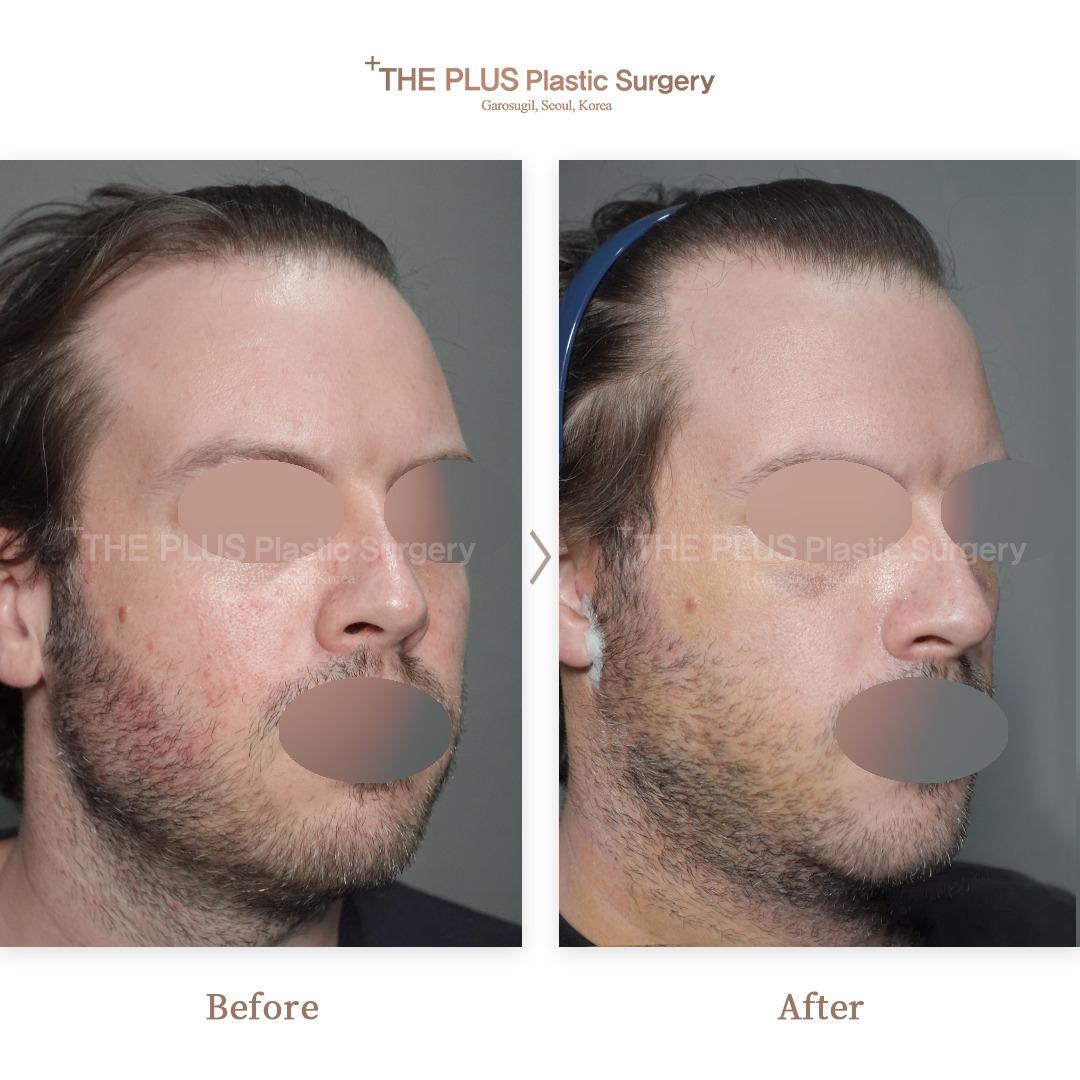
If you are looking for facial rejuvenation here, you can consider a facelift that lifts and repositions sagging facial tissue to create firmer contours while keeping your expression natural. You also have less invasive or volume-restoring options such as thread lift and facial fat grafting, within a clinic setting that emphasizes personalized planning, safety, and research-driven surgical care.
- URL: THEPLUS Plastic Surgery Website
- Location: Gangnam-gu, Seoul
- Facelift options:
- Facelift is offered to lift and reposition sagging facial tissue for a firmer, younger-looking appearance.
- Thread lift uses dissolvable threads for milder sagging when you want a less invasive contouring approach than full surgery.
- Facial fat grafting uses your own fat to restore volume in hollow or flattened areas and can soften an aged facial contour.
- Surgical team:
- Dr. Kim is a board-certified plastic surgeon with research awards related to 3D implants and experience teaching other plastic surgeons through annual educational sessions.
- Dr. Jeong serves as President of the Korean Society of Plastic Surgeons and regularly lectures and participates in professional panels and educational programs.
- The clinic presents a treatment philosophy focused on facial balance and natural beauty rather than changing features in isolation.
- Related facial procedures:
- If your goals involve broader facial reshaping, facial contouring services include cheekbone surgery, square jaw surgery, chin surgery, facial implants, and full face contouring.
- Rhinoplasty and revision rhinoplasty are also available for structural and aesthetic nasal refinement.
- Eye procedures such as ptosis correction, blepharoplasty, and double eyelid surgery are offered for upper-face rejuvenation or reshaping.
- Additional notes:
- The clinic describes its care model as personalized aesthetic treatment with a strong focus on safety, research, and specialized surgical expertise.
- Stem cell-based regenerative treatment is also offered as part of broader aesthetic and post-procedure care.
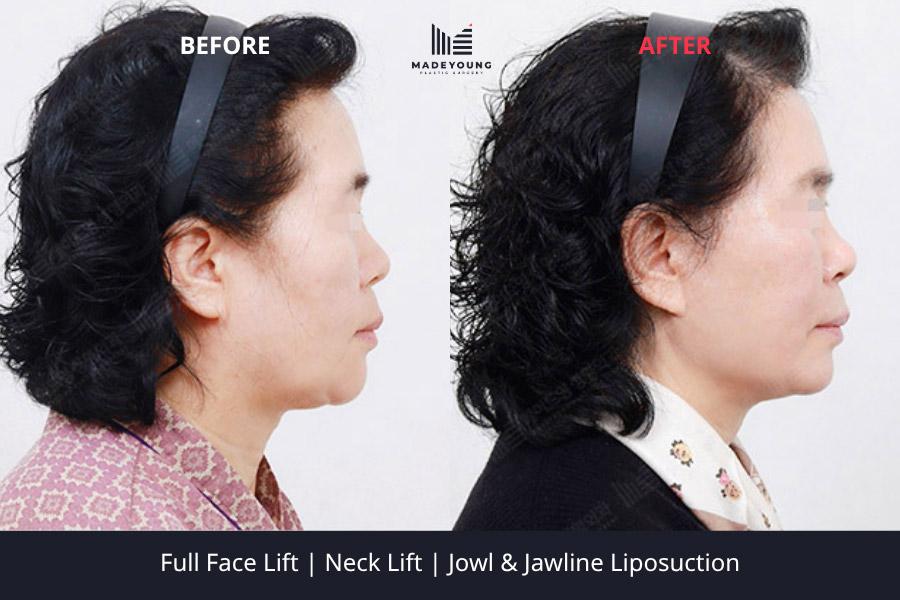
2. Made Young Plastic Surgery
If you are considering a facelift here, you can expect a technique that starts with a careful analysis of where your sagging comes from, then lifts the skin, fat, and SMAS layer together after dissection beneath the SMAS. The tissues are secured vertically against the direction of sagging, a method the clinic says helps avoid an overly accentuated cheekbone look while aiming for more natural and longer-lasting tightening.
- URL: Made Young Plastic Surgery Website
- Location: Seocho-gu, Seoul
- Procedure details:
- The facelift approach focuses on releasing stretched supporting tissues beneath the SMAS layer rather than tightening only the surface.
- Skin, fat, and SMAS are lifted together for more comprehensive repositioning.
- Vertical fixation is used to counter facial descent and reduce the risk of an unnatural lateral-pulled appearance.
- Thread lifting expertise:
- Dr. Soo-Yeon Park is highlighted for thread lifting, especially Silhouette Soft threads.
- She is a board-certified plastic surgeon and is described as having performed more than 10,000 lifting procedures.
- The clinic notes that she recorded the highest Silhouette Soft usage in Korea in 2022 and that this treatment is a signature offering performed exclusively by her.
- Safety system:
- Full-time board-certified anesthesiologists are on site.
- A 1:1 monitoring system assigns one anesthesiologist to continuously monitor one person during procedures.
- A cross-check emergency response system involves multiple anesthesiologists when needed.
- Procedure areas are covered by CCTV for transparency.
- Aftercare and related services:
- A separate dedicated aftercare center is operated for systematic post-procedure care.
- Related surgical lifting options include neck lift, double chin lift, forehead lift, and sub-brow lift.
- Non-surgical lifting options include thread lift, Ultherapy, Shurink, skin boosters, and other non-invasive lifting treatments.
3. RINE Plastic Surgery Clinic
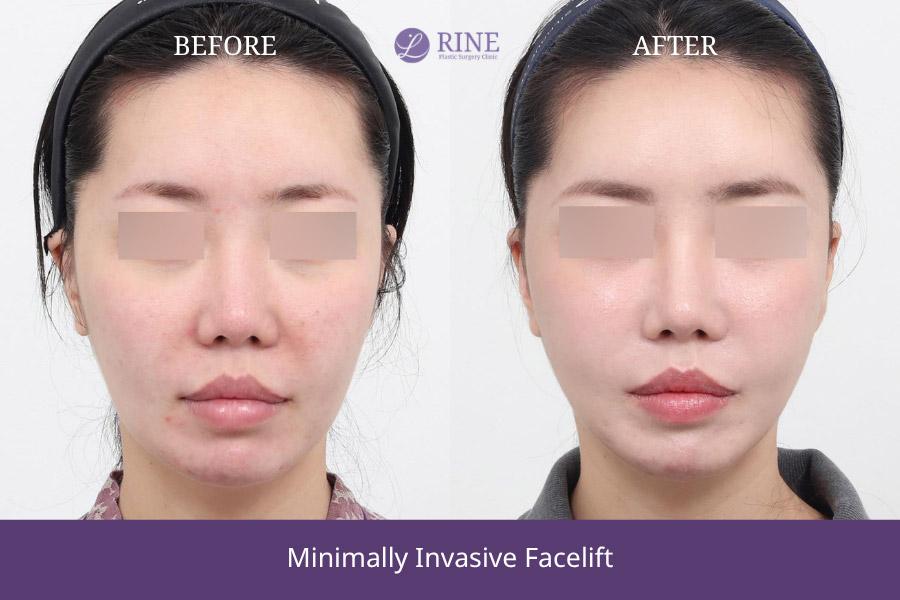
If you want a stronger surgical lift, this clinic highlights an Extended dual deep plane facelift that combines wide skin dissection from dual plane lifting with wide SMAS dissection from deep plane lifting, so both layers are elevated together. The aim is a more substantial and longer-lasting lift while also improving skin wrinkles, with face and neck lifting planned around natural-looking facial lines rather than a tight or artificial result.
- URL: RINE Plastic Surgery Clinic Website
- Location: Seocho-gu, Seoul
- Procedure details:
- The facelift approach combines features of both dual plane and deep plane methods.
- Wide skin dissection and wide SMAS dissection are performed together so skin and SMAS tissue can be lifted at the same time.
- The clinic also offers an SMAS face and neck lift for sagging in the cheeks, jawline, and neck, as well as a minimally invasive facelift for more moderate laxity.
- Surgeon involvement:
- The director personally handles consultation, surgery, treatment, and recovery instead of separating your care across multiple doctors.
- The clinic describes this as a one-doctor, start-to-finish model with continuity and accountability throughout the process.
- The practice states it has more than 15 years of clinical experience in eye surgery and anti-aging procedures.
- Technology and recovery:
- The clinic is equipped with Stryker full HD endoscopy equipment.
- FDA-approved genuine Endotine is used for relevant lifting procedures.
- WhiteLite bipolar equipment is used with the goal of faster recovery.
- Private 1-person recovery rooms are available.
- Care approach:
- Your surgical plan is described as 1:1 customized based on facial proportions, skin condition, and individual features.
- The clinic emphasizes natural and harmonious contour changes rather than dramatic-looking results.
- A continuous aftercare system and formal safety and infection-control protocols are part of the clinic's stated care model.
How Much Could You Pay for Face Lift in Korea?
For your Face Lift, you can expect quotes to range from ₩7,000,000 to ₩15,000,000, or about $4,700 to $10,200. Your final quote can vary based on your needs, your surgeon, your clinic, and what your treatment plan includes.
| Procedure Price | Korean Won (₩) | USD ($) |
|---|---|---|
| Low Price | ₩7,000,000 | $4,700 |
| High Price | ₩15,000,000 | $10,200 |
Exchange rate as of 2026-07-24: 1 KRW = 0.000678 USD.
What Could Affect Your Price?
- Price factor: Your surgeon’s experience and reputation
- Price factor: Your clinic’s location and facilities
- Price factor: Your anesthesia, operating room, and recovery arrangements
- Price factor: Your aftercare, medicines, and follow-up visits
- Price factor: Your treatment plan complexity and whether you combine procedures
Ask for an itemized quote: You should ask for an itemized quote so you can see exactly what your total includes, compare options more clearly, and understand any added fees before you commit.
Currency note: Your USD estimate is approximate, based on an exchange rate of 0.000678 on 2026-07-24, so your actual card or bank charge can differ.
What happens before, during, and right after your face lift?
What happens at your pre-op visit?
You can expect your surgeon to review your medical history, medications, supplements, allergies, smoking or nicotine exposure, and prior facial procedures. Your evaluation usually includes a physical exam and may include lab work or medical clearance if your health history requires it. Your surgeon should also discuss what your face lift can and cannot improve so that your goals match your anatomy.
What happens during your surgery?
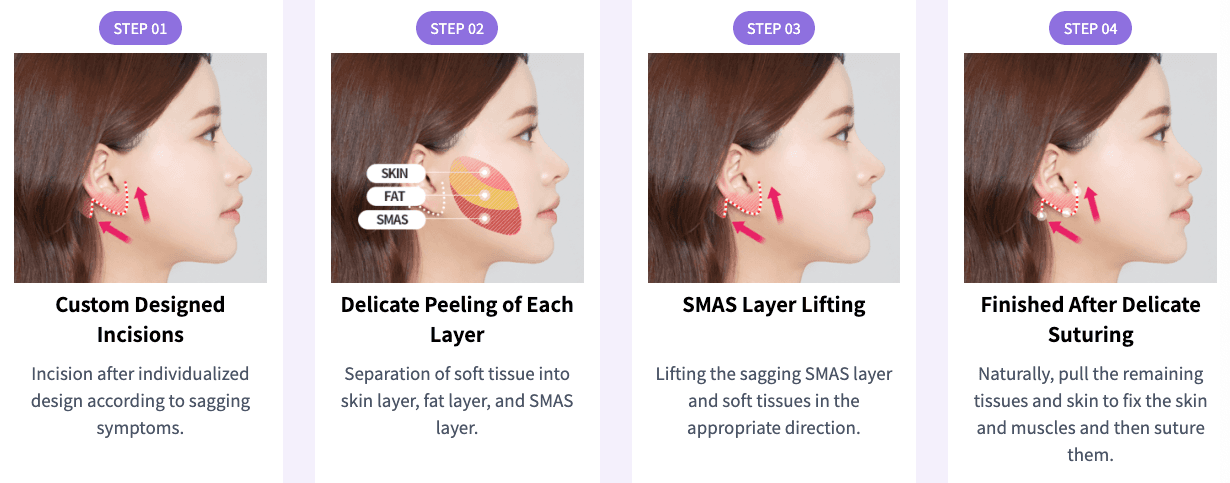
Your anesthesia may be local anesthetic with IV sedation or general anesthesia, depending on your plan and your health profile. During your operation, your surgeon usually makes incisions around your ear and sometimes into your hairline, repositions deeper tissues, removes or redistributes excess skin, and may add neck work if your platysma or neck skin needs correction. Your procedure may be outpatient, or you may stay one night depending on your extent of surgery and your recovery.
What happens in your first 48 hours?
- Day 0: You usually leave surgery with a compression dressing, and you may also have drains.
- Day 1 to 2: Your surgeon often removes your drains or bulky bandages during this window if your output and exam look appropriate.
- Early symptoms: You should expect tightness, swelling, bruising, numbness, and a temporary altered sensation in your cheeks, ears, or neck.
- Key safety issue: You should know that a hematoma is one of your most important early complications, especially if your swelling or pain becomes suddenly worse on one side.
What results should you realistically expect?
You should expect structural improvement in your jawline, jowls, and often your neck, but you should not expect your face lift alone to erase fine lines, sun damage, pigment irregularity, or every crease around your mouth. Your visible improvement keeps evolving as your swelling settles, so your day-10 appearance is not your final result. Mayo Clinic and Cleveland Clinic both describe this gradual refinement.
What alternatives or add-ons might you consider for your goals?
When might another procedure fit your concern better?
You may not need a full face lift if your main issue is concentrated in one area. If your biggest concern is neck laxity, you may want to compare a neck lift in Korea. If your concern is mostly volume loss rather than descent, you may want to compare facial filler in Korea or face fat grafting in Korea.
What if your laxity is mild?
You may ask about less-invasive lifting if your sagging is mild and you want less downtime. Options may include a face thread lift in Korea or Ultherapy lifting in Korea. You should keep your expectations realistic, because minimally invasive lifting does not usually match the degree or durability of correction that you can get from surgical rhytidectomy.
What if your skin quality bothers you more than sagging?
- Fine wrinkles and texture: You may need resurfacing or other skin-directed treatment if your main issue is surface texture rather than structural descent.
- Pigment or sun damage: You should know that your face lift does not directly treat discoloration or photodamage.
- Upper-face aging: You may benefit from adding eyelid or brow procedures if your heaviness is mostly around your eyes or forehead.
Your surgeon should explain whether your best plan is surgery alone, surgery plus a complementary procedure, or a non-surgical option that better matches your actual concern. ASPS supports this problem-based approach.
How should you prepare for your face lift in Korea?
What should you do medically before your trip?
You should give your surgeon a complete list of your prescription medicines, over-the-counter drugs, vitamins, and herbal supplements, because some can increase your bleeding risk or interact with anesthesia. You should also tell your surgeon about your blood-pressure history, diabetes, prior clots, heart or lung disease, and any nicotine use, including vaping.
What changes might your surgeon ask you to make?
- Nicotine cessation: You should stop smoking and all nicotine products for the period your surgeon requires, because nicotine can impair blood flow and healing.
- Blood-thinner review: You should never stop aspirin, anticoagulants, or other prescribed medicines on your own, but you should ask early whether your prescribing clinician and surgeon need to coordinate changes.
- Illness timing: You should report any cold, fever, active skin infection, or facial irritation before your surgery date, because your procedure may need to be delayed.
- Support planning: You should arrange your escort, your first-night help, and your local transport before your surgery day.
What should you pack and schedule?
You should pack loose tops that do not need to be pulled over your head, your medication list, your passport and visa documents, and anything you need for a calm recovery period. You should ideally arrive with enough buffer for your in-person review before surgery rather than landing right before your operation. For general preparation principles, you can review ASPS preparation guidance and ASA surgery preparation advice.
How should you recover after your face lift in Korea?
What should your recovery timeline usually look like?
- Day 0 to 2: You should expect compression dressings, some swelling and bruising, and sometimes drains that are often removed on day 1 or 2.
- Day 5 to 10: You often return for suture or staple removal during this period, depending on your incision pattern and healing.
- Day 10 to 14: You may feel socially presentable around this point, although your bruising and swelling can still be obvious to you.
- Week 2 to 3: You may return to desk work or ordinary non-strenuous activity if your recovery is smooth and your surgeon agrees.
- Month 2 to 3: You should expect your tightness, numbness, and residual swelling to keep improving during this phase.
- Month 3 to 6 or longer: You may keep seeing refinement in your contour, and your full effect may continue settling for 6 to 9 months.
- Up to 1 year: Your scars may keep maturing during this longer window.
What daily care usually matters most during your recovery?
You should keep your head elevated, follow your wound and drain instructions closely, and avoid strenuous exercise until your surgeon clears you. You should avoid pulling clothing over your head, protect your scars from sun exposure, and wait on makeup or active skin products until you receive clear permission. If you want a recovery overview that matches this general timeline, Cleveland Clinic and ASPS recovery guidance are useful references.
Which warning signs mean you should get urgent help?
Travel note: You should seek urgent medical review right away if you develop rapidly increasing one-sided pain, expanding swelling, shortness of breath, chest pain, an irregular heartbeat, or new leg swelling or pain, because these can signal a hematoma, breathing problem, or blood clot.
- Bleeding concern: You should treat sudden one-sided facial or neck swelling as urgent until your surgeon says otherwise.
- Breathing or chest symptoms: You should not wait on symptoms such as chest pain or shortness of breath after recent surgery or a long flight.
- Healing concern: You should report fever, worsening redness, foul drainage, skin darkening, or wound separation promptly.
- Nerve concern: You should call your surgeon if your facial movement seems newly uneven or worsening rather than steadily improving.
When should you plan your flight home?
You should wait for your surgeon's specific clearance before flying. In uncomplicated cases, you may be cleared after about 7 to 10 days, but a more conservative medical-tourism plan is often 10 to 14 days in Korea so that your early healing and follow-up are less rushed. Your return trip should also account for your clot risk, your comfort during long-haul travel, and whether your sutures or drains still need attention.
Frequently Asked Questions
Related Blogs
Renuvion in Korea | Best Clinics, Costs, Procedure Types & More
Updated: Jul 2, 2026
Sagging Midface Solutions: Deep Plane Face Lift & Stem Cell Fat Grafting Procedures in Korea
Updated: Jun 9, 2026
Gravitational Aging Face: Deep Plane Face Lift Procedures in Korea for Youthful Results
Updated: Jun 9, 2026
Restore Lost Facial Volume with Deep Plane Face Lift in Korea: Expert Solutions for Youthful Appearance
Updated: Jun 9, 2026
Clinics offering Face Lift
RINE Plastic Surgery Clinic | Facelift and Eye Rejuvenation Surgery
Nonhyeon

SH Clinic: Comprehensive Women's, Men's & Couples' Health Services in Korea
Sinsa

THEPLUS Plastic Surgery Korea | Eye, Nose, Face & Body Surgery
Sinsa

Made Young Plastic Surgery: Rejuvenating Aesthetic Excellence in Korea for Face Lifts, Contouring and More
Gangnam Station