
Medical Tourism Blog
Jowl Reduction in Korea: Face Thread Lift Procedure for Sagging Jowls Explained
Table of contents
- Understanding Jowls: Causes and Characteristics
- The Medical Science of the Face Thread Lift
- A Medical Tourist’s Guide: The South Korean Face Thread Lift Experience
- Which Are the Best Clinics in Korea for Jowls?
- Comprehensive Cost Analysis and Financial Considerations
- Patient Outcomes and Expert Perspectives
- Conclusion
- References
Considering treatment in Korea? Everything you need to know e.g. — how to avoid scams, visas, interpreters, recovery tips — in our Medical Tourism Master Guide. Plan with confidence in minutes, not weeks!
This guide gives a thorough overview for those looking to learn more about jowls and how to address facial aging, zeroing in on the Face Thread Lift as a non-surgical option. It covers what causes jowls, explains how the Face Thread Lift works, and dives into why South Korea is a leading destination for this procedure. You’ll also find in-depth cost comparisons, a breakdown of what to expect when traveling for treatment, and a balanced look at real patient experiences and medical consensus. The aim is to help anyone considering a Face Thread Lift weigh temporary benefits against risks, personal comfort, and total financial commitment.
Understanding Jowls: Causes and Characteristics
Definition and Physiological Roots of Jowl Formation
"Jowls" refers to the sagging, loose skin beneath the jawline, a change that often blurs otherwise youthful facial contours. While aging is largely responsible, the process behind jowl development is quite complex. Over time, our bodies make less collagen and elastin—proteins giving skin structure and elasticity—causing skin to become thinner, less hydrated, and more easily affected by gravity. Facial fat that once supported the mid-face and jawline also shrinks and shifts downward, which further emphasizes sagging in the lower face. All these changes work together to dull the sharp jawline associated with youth.
Alternative Terms and Related Conditions
Jowls are described in both casual conversation and medical settings using several related terms. Many refer to “[loss of jawline definition](/blog/loss-of-jawline-definition-korea)” when discussing the faded contour this condition causes. If sagging extends into the neck, people sometimes call it “turkey neck,” especially if the skin looks crepey or wrinkled. Sometimes jowls overlap with a “double chin”—extra skin and fat just below the jawline. Other phrases like “sagging skin,” “slack skin,” and “dewlap” are sometimes used as well.
Table 1: Jowls - Common Pseudonyms and Descriptions
| Term | Description |
|---|---|
| Jowls | Sagging skin and tissue along the jawline. |
| Sagging Skin | General term for loose, drooping facial skin. |
| Slack Skin | Means a lack of firmness, similar to sagging skin. |
| Turkey Neck | Sagging, wrinkled neck skin often happening alongside jowls. |
| Loss of Jawline Definition | Less distinct jawline contour due to jowls and bone loss. |
| Double Chin | Skin and fat below the jawline, sometimes with jowls. |
| Dewlap | A fold of loose skin hanging from the neck. |
What Influences Jowl Development: Genetics and Lifestyle
Although aging is the main driver behind jowl formation, individual genetics and daily habits greatly affect when and how jowls appear. If you have a family history of jowling, you might see them show up earlier. Meanwhile, factors like sun exposure, smoking, poor diet, little exercise, rapid weight loss, and even certain sleeping positions can all speed up the breakdown of collagen and elastin, paving the way for earlier or more pronounced jowls. To best manage or slow down the process, combining healthy lifestyle choices with any cosmetic procedure is recommended.
The Medical Science of the Face Thread Lift
How the Face Thread Lift Works: Lift and Collagen Stimulation
A thread lift is a non-surgical cosmetic treatment that uses temporary, medical-grade sutures to subtly lift sagging facial skin. This method attracts people seeking facial rejuvenation without surgical incisions, general anesthesia, or long recovery times.
Face Thread Lift treatments rely on two major actions. First, there’s an immediate mechanical lift as threads are placed under the skin and gently pulled, physically tightening sagging areas. Second, a longer-term benefit kicks in as the threads encourage your body to build up new collagen, which gradually enhances skin tone and firmness for months after the procedure.
Types of Threads: Materials, Structures, and Lifespan
Doctors use several thread materials in Face Thread Lifts, each with distinct features:
- Polydioxanone (PDO): Absorbable, biocompatible, and safely used in surgery for decades. It lasts about 12 to 18 months.
- Polylactic Acid (PLLA): Promotes longer collagen regeneration, lasting 1 to 2 years.
- Polycaprolactone (PCA): Supports a longer collagen-building phase, up to 2 years.
- Polypropylene/Silicone: Permanent, non-absorbable, lasting around 4-5 years.
Threads also fall into different designs:
- Smooth/Mono Threads: Stimulate collagen and improve skin texture, minimal lift.
- Barbed/Cog Threads: Feature tiny cogs to anchor and lift tissue, commonly used for jowls.
- Cone-Shaped Threads: Use cones to grip tissue, providing a pronounced lifting effect.
Table 2: Overview of Face Thread Materials
| Material | Characteristics | Structure | Expected Longevity |
|---|---|---|---|
| Polydioxanone (PDO) | Absorbable, biocompatible | Mono, Screw, Cog, Barbed | 12 to 18 months |
| Polylactic Acid (PLLA) | Collagen-building over extended period | Cones, Barbed | 1 to 2 years |
| Polycaprolactone (PCA) | Long collagen stimulation | Varies | Up to 2 years |
| Polypropylene/Silicone | Non-absorbable, permanent | Notched, Smooth, Barbed | 4 to 5 years+ |
Who is a Good Candidate and What Results to Expect
The Face Thread Lift is best for people in their late 30s to early 50s with mild-to-moderate skin sagging. If you’re hoping to avoid full surgery, this gentle approach offers a natural-looking, subtle change rather than a dramatic transformation. Effects generally last one to three years based on the thread type and other factors like lifestyle or skin quality. For those with pronounced sagging or excess skin, a surgical facelift may be more suitable.
Understanding Risks, Complications, and Side Effects
Thread lifts are generally low risk, but not without possible issues. Most patients experience some swelling, bruising, discomfort, or a tight sensation that fades within a couple weeks. Experiences vary widely—some say they feel almost nothing, while others describe significant pain or dissatisfaction.
Potential complications include:
- Puckering or Dimples: Often temporary, but sometimes linger for months.
- Thread Visibility or Extrusion: Especially in patients with thin skin, sometimes threads can be seen or felt, or surface out of the skin.
- Facial Asymmetry: If threads are poorly placed or shift from their intended position.
- Infection: Uncommon, but possible if aftercare isn’t thorough or sterilization isn’t followed.
A unique long-term concern is scar tissue formation, which could complicate future surgical facelifts. Patients should keep this in mind when deciding on a thread lift.
A Medical Tourist’s Guide: The South Korean Face Thread Lift Experience
Why South Korea Leads in Aesthetic Medicine
South Korea is a global powerhouse in cosmetic surgery, often introducing innovative treatments years before they make it to the West. With a high concentration of skilled surgeons, government backing for medical tourism, and well-established support for international visitors, the country offers advanced treatments at prices often far below those seen in the US or UK. Many clinics have English-speaking staff and are skilled at supporting the medical traveler from start to finish.
The Patient Journey: Step-by-Step Thread Lift in South Korea
- Research and Virtual Consultation: Foreign patients start by researching clinics, typically sharing photos and filling out online forms. Virtual consults let doctors assess candidacy and recommend a tailored plan. Deposits secure appointments.
- Preparation and Screening: Prior to arrival or right upon it, patients are advised which medications to stop and may undergo necessary health checks.
- Procedure Day: Surgeons mark the face for thread placement. Local anesthesia ensures comfort, though some light sedation might be used. The procedure takes 30–60 minutes, with tiny punctures taped afterward to aid healing.
- Aftercare and Recovery: Patients may wear a compression bandage and usually feel well enough to return to normal activities the next day. Swelling or bruising typically resolves in a few weeks. Patients are cautioned to avoid strenuous activity and major facial movements for several weeks.
- Follow-up and Maintenance: Follow-up appointments help monitor healing. To extend results, patients are encouraged to follow healthy habits, use effective skincare, and may opt for complementary treatments like dermal fillers.
Which Are the Best Clinics in Korea for Jowls?
Listed below are some of the best clinics in Korea for jowls.
1. PangPang Clinic
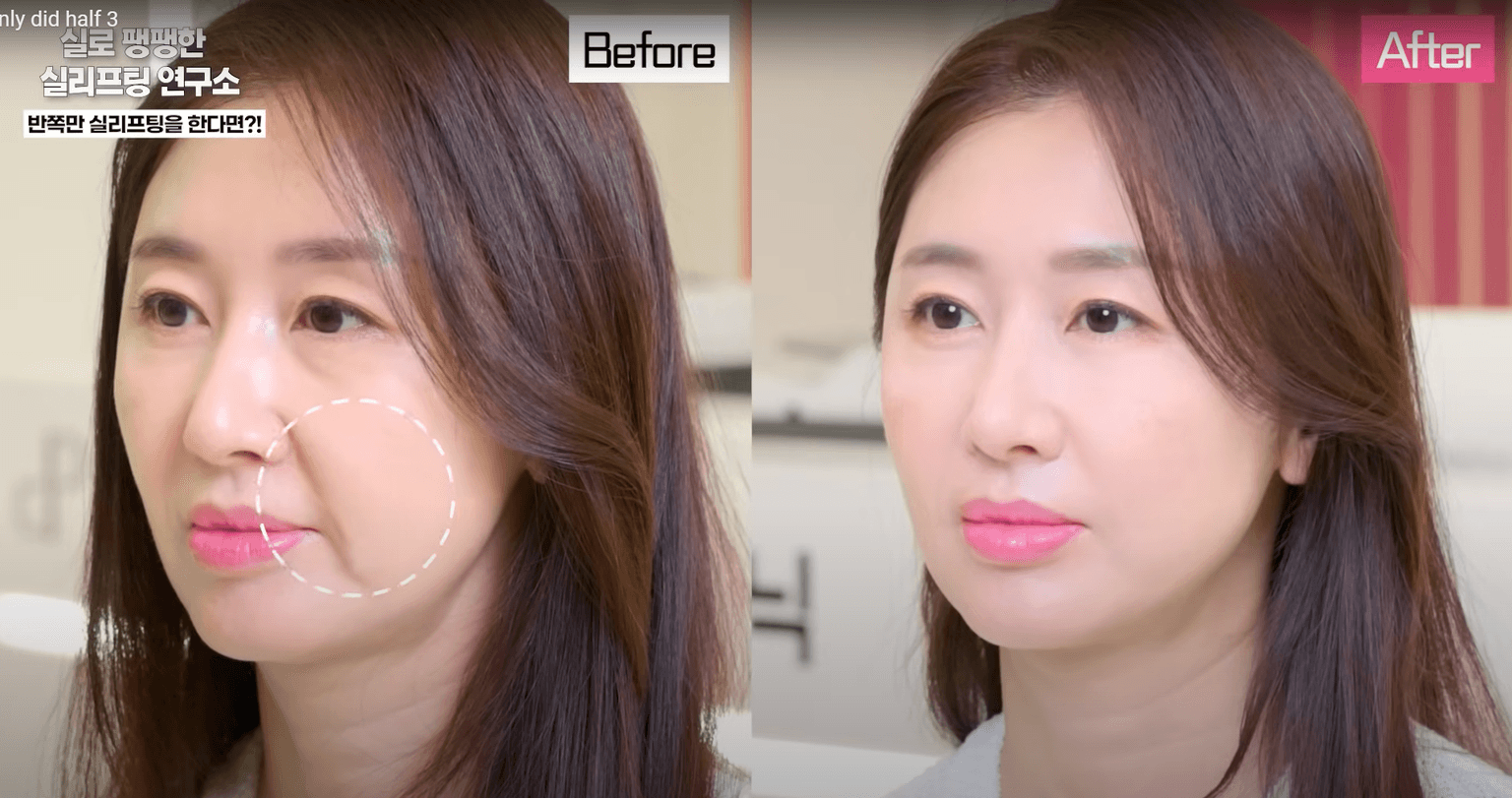
For jowls, you may consider PangPang Clinic if you want a non-surgical thread-lifting plan centered on lifting sagging lower-face tissue while supporting collagen production. Its Pink Lift thread system, individualized thread selection, and ultrasound-guided planning are presented as ways to tailor the lift to your facial contours, with treatment typically taking 30 minutes to one hour and minimal recovery described in the clinic information.
- URL: PangPang Clinic Website
- Location: Gangnam-gu, Seoul
- Thread-lifting approach:
- Pink Lift is a thread developed exclusively for the clinic and is described as providing stronger hold, longer-lasting results, and a natural-looking lift; it has FDA, CE, and KFDA certifications.
- Your plan can use barbed lifting threads for anchoring, assist threads to augment lifting, tightening threads for elasticity, and volume threads for selected areas.
- The clinic describes ultrasonic visual checks and pre-procedure design, personalized consultation, and customizable thread selection.
- Comfort and recovery:
- Chill-Lifting uses contact-free cooling anesthesia and is described as minimizing pain, swelling, and bruising while supporting a quicker recovery.
- Listed anesthesia options for thread lifting include partial, Airnox, or sleep anesthesia.
- The clinic states results may last about one year or longer, though individual outcomes and longevity vary.
- Research and related care:
- The clinic reports collaboration with Seoul National University Bundang Hospital on thread-lifting techniques intended to support collagen regeneration and skin quality.
- It reports using 31 specialized functional threads and operating a Thread Lifting Research Institute.
- If you are seeking correction after a previous thread lift, its revision service may combine threads with fillers, Botox, or lasers as appropriate.
2. Haru Clinic
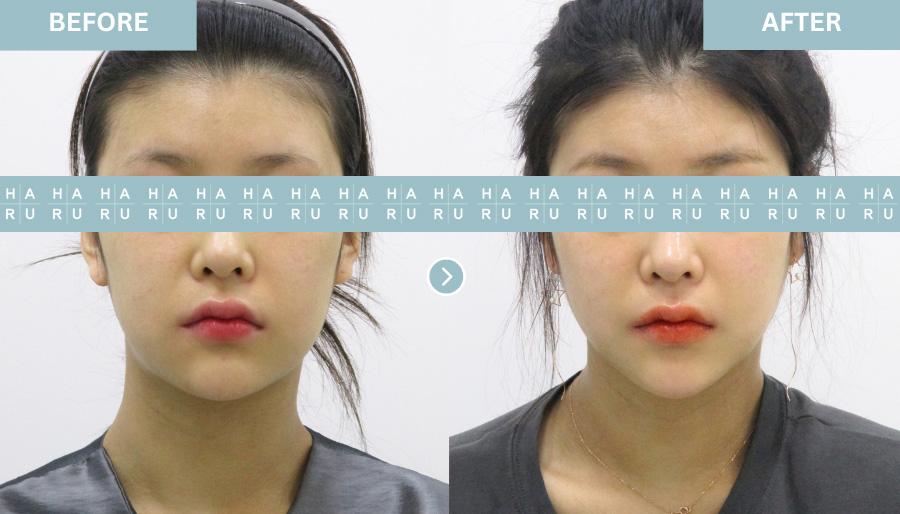
For jowls, Haru Clinic offers both a minimally invasive thread lift and a surgical facelift option, so you can discuss a plan based on the degree of jawline sagging and neck laxity. Its thread-lifting approach uses a stable fixation point behind the ear to elevate the cheeks and jawline under local anesthesia, with attention to maintaining smooth contours rather than adding facial width.
- URL: Haru Clinic Website
- Location: Gangnam-gu, Seoul
- Jowl treatment options:
- Dissolvable barbed threads can elevate sagging cheeks and the jawline, tighten contours, and stimulate collagen with short downtime described by the clinic.
- A surgical facelift repositions deep SMAS layers and removes excess skin to address jowls and neck laxity when a more extensive correction is considered.
- Double-chin treatment may use fat-dissolving injections or thread-based contouring to refine the jawline and neck angle.
- Technique and planning:
- The clinic describes anchoring threads behind the ear, where skin is less mobile, to provide a stable fixed point for lifting.
- Its technique is described as pulling and pressing tissue simultaneously, with adjustments when there is volume loss below the cheekbones to help create a smoother contour.
- The stated fixation points are selected to avoid large nerves and blood vessels, with the aim of reducing discomfort, pain, and bleeding.
- Clinician background and complementary care:
- Dr. Jeong is described as an official research physician for Merz and as teaching other doctors current filler techniques.
- Filler, Botox, and collagen-tightening treatments using radiofrequency or ultrasound are available for individualized non-surgical facial contouring and skin-firmness plans.
3. B.V Clinic
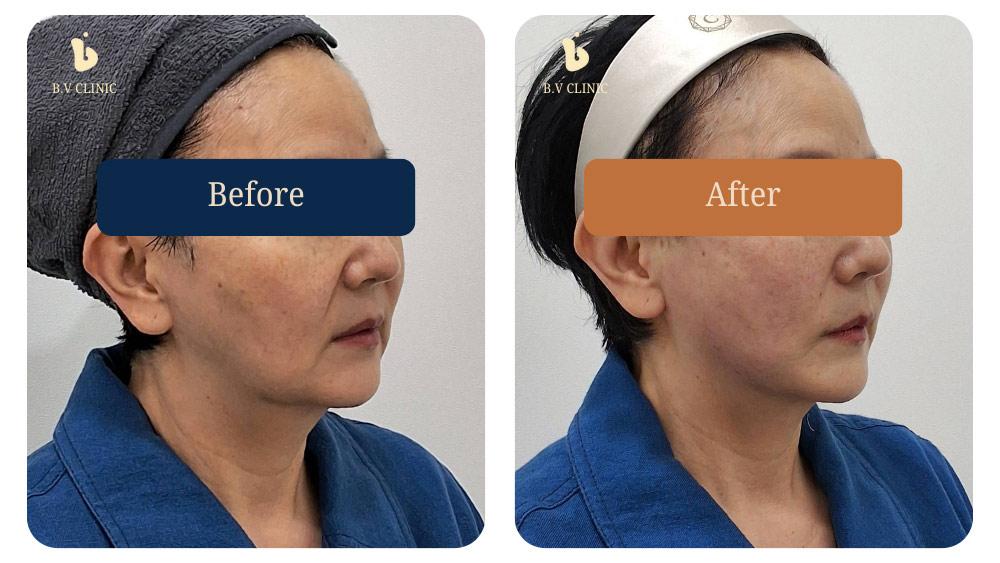
For jowls, you may consider B.V Clinic for a non-surgical thread lift designed to elevate sagging lower-face tissue and reinforce skin firmness through collagen stimulation. Dr. Suh’s thread-lifting-focused experience and the clinic’s use of PDO barbed MINT Threads may be relevant if you want a defined but natural-looking jawline contour.
- URL: B.V Clinic Website
- Location: Seoul
- Thread-lift details:
- Dr. Suh is described as having more than 10 years focused exclusively on thread lifting and thousands of clinical cases.
- MINT Threads used by the clinic are described as FDA and KFDA approved.
- PDO barbed threads are intended to provide anchoring for lifting while stimulating collagen production for longer-term skin firmness.
- Its 3D thread-lifting approach places threads strategically and targets the SMAS layer to lift and firm sagging skin while maintaining natural facial contours.
- Complementary tightening and aftercare:
- Shurink Lifting uses high-intensity focused ultrasound for deeper-layer tightening and contour refinement.
- Potenza and Thor treatments use radiofrequency to support collagen, elasticity, and skin tightening.
- Post-treatment care may include skin-regeneration management, nutritional skincare products, and ultrasound treatment intended to help minimize swelling and support elasticity.
Comprehensive Cost Analysis and Financial Considerations
How Much Does a Face Thread Lift Cost in South Korea?
Thread lifts are competitively priced in South Korea, typically ranging from $1,000 to $5,000, with most falling near $1,800. The exact price depends on the clinic's reputation, doctor expertise, types of threads, and how many threads are needed. Deposits are usually required but are a small percentage of the total fee.
International Price Comparisons
South Korea’s cost advantage stands out when compared globally. In the US, thread lifts often cost $1,500 to $6,000, and in the UK about $2,800. Turkey, Mexico, and Thailand offer attractive prices as well, but South Korea combines high quality with affordability.
Table 3: Average Cost Comparison – South Korea vs. Other Countries
| Country | Average Cost in USD |
|---|---|
| United States | $1,500 to $6,000 |
| United Kingdom | $2,800 |
| South Korea | $1,000 to $5,000 |
| Turkey | $750 to $1,500 |
| Mexico | $450 to $2,200 |
| Thailand | $1,800 |
Planning for the Full Cost of Medical Tourism
Medical travelers should budget for more than just the thread lift fee. While procedural costs typically include anesthesia and initial aftercare, major expenses like round-trip airfare, accommodation, and living expenses must also be factored in. For example, a traveler from North America should include the costs of flights, local transportation, staying at least a week, and daily accommodation and living expenses.
Table 4: Total Medical Tourism Cost Breakdown
| Expense Category | Estimated Cost for a Medical Tourist (USD) |
|---|---|
| Face Thread Lift Procedure | $1,000 to $5,000 |
| Round-Trip Airfare | $600 to $1,200 (from North America/Europe) |
| Accommodation (7 nights) | $210 to $2,100 ($30 to $300+ per night) |
| Other Expenses | Varies (food, transport, tourism) |
Patient Outcomes and Expert Perspectives
What Real Patients Are Saying
Satisfaction with Face Thread Lift for jowls varies. On a major review platform, about 75% found it “Worth It.” Many praise the subtle, natural lift, improved jawline, and fast recovery compared to surgery. Others, however, complain of short-lived results, discomfort, or complications like skin puckering. The experience is highly subjective, depending on personal expectations, budget, and willingness to tolerate recovery sensations.
How Long Do Results Last—And Why?
Thread lift results typically range from six months to five years, depending on the thread material used. Non-absorbable, permanent threads last the longest. Personal factors—diet, smoking, sun exposure, skin care, and overall health—all affect how long results are visible.
The Expert View: Thread Lift vs. Surgical Facelift
Experts hold mixed opinions on the thread lift. Supporters cite its less invasive nature, minimal downtime, and capacity for collagen stimulation and subtle rejuvenation, especially for people with mild sagging or those looking to enhance previous facelifts. Critics, though, warn that thread lifts are temporary, sometimes unreliable, and may even complicate future surgical facelifts due to scar tissue. They point out that for pronounced sagging, only a traditional surgical facelift delivers dramatic, lasting correction.
Table 5: Thread Lift vs. Surgical Facelift: Key Differences
| Feature | Thread Lift | Surgical Facelift |
|---|---|---|
| Invasiveness | Minimally Invasive (Non-surgical) | Invasive (Surgical) |
| Anesthesia | Local, sometimes sedation | General anesthesia |
| Downtime | 1–2 days | Several weeks |
| Longevity | 1 to 3 years (temporary) | 10+ years (long-lasting) |
| Ideal Candidate | Mild/moderate sagging | Moderate/severe sagging |
| Cost | Less expensive | More expensive |
| Risks | Thread issues, minor infection | Scarring, nerve damage, recovery |
Conclusion
The Face Thread Lift is a promising option for those seeking temporary, non-surgical improvement of jowls and facial sagging, especially if you want a subtle, natural result with quick recovery. South Korea stands as a top choice for this procedure thanks to its expert surgeons and competitive pricing. However, the benefits come with potential discomfort, temporary effects, and the need for thorough financial planning. Ultimately, the right choice depends on your goals, expectations, and a careful consultation with a trusted medical professional.
References
1, 2, 3, 4, 5, 6, 7, 8, 9, 10, 11, 12, 13, 14, 15, 16, 17, 18, 19, 20, 21, 22, 23, 24, 25, 26, 27, 28, 29, 30, 31, 32, 33, 34, 35, 36, 37, 38, 39, 40, 41, 42, 43, 44, 45
Frequently Asked Questions
Related Blogs
Abdominal Thread Lift in Korea: Candidacy, Evidence, Recovery, and Travel Planning
Abdominal thread lifts place absorbable threads in superficial abdominal tissue for subtle tightening, but methods, durability, and outcomes are not standardized. The article covers candidate screening, procedure planning, Korea travel and follow-up, preparation, aftercare warning signs, and alternatives for fat, excess skin, diastasis, or hernia.
Updated: Oct 13, 2026
Breast Thread Lift in Korea: Candidacy, Safety, Recovery, and Travel Planning
Breast thread lift uses absorbable threads placed through small entry points for modest contour improvement, but techniques, durability, and complication rates are not standardized. The article covers candidacy, preparation, travel planning for Korea, aftercare, warning signs, follow-up, and surgical alternatives for significant sagging.
Updated: Oct 13, 2026
Lip Thread Lift in Korea: Methods, Recovery, Risks and Travel Planning
Lip thread lifts use absorbable smooth or barbed threads to soften upper-lip lines or provide subtle traction, with suitability based on tissue quality, goals, and medical assessment. The article covers treatment planning, recovery, aftercare, risks, alternatives, and travel guidance for international patients in South Korea.
Updated: Oct 13, 2026
Filling Threads in Korea: Types, Recovery, Risks and Travel Planning
Filling threads are absorbable volumizing thread configurations placed under local anesthesia to soften minor static lines and localized hollows in appropriately assessed patients. The article covers candidate screening, device documentation, Korea travel planning, recovery, aftercare, complications, and alternatives such as filler, fat grafting, thread lifts, and facelift surgery.
Updated: Oct 12, 2026
Clinics offering Face Thread Lift

SH Clinic: Comprehensive Women's, Men's & Couples' Health Services in Korea
Sinsa

Haru Clinic Korea | Fully-Customized Full-Face Non-Surgical Rejuvenation With Threads, Botox & Fillers
Sinsa

Lydian Plastic Surgery Clinic in Korea: Superior Cosmetic Procedures by World-Renowned Expert Dr. An Kyung Chun
Apgujeong

PangPang Clinic: Korea's Premier Thread Lifting and Skin Rejuvenation Specialist in Gangnam, Seoul
Sinsa