
Medical Tourism Blog
Correcting Entropion & Ectropion: Revision Eye Surgery Options in Korea for Restored Eye Comfort
Table of contents
- Entropion and Ectropion: When Eyelids Turn In or Out
- Revision Eye Surgery: Restoring Eyelid Health and Appearance
- Medical Tourism in South Korea: A Leading Destination for Eyelid Revision
- Which Are the Best Clinics in Korea for Entropion Or Ectropion?
- Patient Journeys: Real-World Outcomes of Eyelid Revision Surgery
- Conclusion: Empowering Your Decision for Eyelid Health
- References
Considering treatment in Korea? Everything you need to know e.g. — how to avoid scams, visas, interpreters, recovery tips — in our Medical Tourism Master Guide. Plan with confidence in minutes, not weeks!
Eyelid malpositions like entropion and ectropion can cause significant discomfort and functional problems, especially when they develop after previous surgeries. These conditions affect eye health, comfort, and vision if not treated. Entropion is when the eyelid turns inward, causing eyelashes to rub against the cornea, while ectropion is when the eyelid turns outward, preventing proper eye closure and tear drainage.
This guide aims to help individuals understand and manage post-surgical entropion and ectropion. It covers revision eye surgery as a corrective option and highlights South Korea’s growing reputation as a top destination for these specialized procedures, known for advanced techniques and comprehensive patient care.
Entropion and Ectropion: When Eyelids Turn In or Out
What are Entropion and Ectropion?
These conditions involve abnormal eyelid positions that can cause discomfort and eye damage.
- Entropion: This is the inward turning of the eyelid margin, usually the lower eyelid. It causes eyelashes to rub against the cornea, leading to irritation, abrasions, scarring, thinning, and neovascularization, all of which can impair vision.
- Ectropion: This is the outward turning of the eyelid, which exposes the inner eyelid and cornea. It can cause dryness, irritation, excessive tearing (epiphora), and poor tear drainage.
Common Pseudonyms and Informal Terms
While medical terms are "entropion" and "ectropion," patients often hear or use phrases like "turning eyelid," "eyelid turned in" (entropion), or "eyelid turned out" (ectropion). Knowing these helps in finding relevant information.
Causes of Eyelid Malposition, with Emphasis on Post-Surgical Factors
Eyelid malpositions can result from various causes, with post-surgical factors being significant for many patients.
- Age-Related Laxity: Aging weakens eyelid tendons and muscles, causing slackness that leads to inward or outward turning.
- Scar Tissue: Scar formation after surgery can pull the eyelid out of place.
- Previous Surgeries (Post-surgical):
- Blepharoplasty: Excessive removal of skin or fat or scar tissue after cosmetic eyelid surgery can cause entropion or ectropion.
- Intraocular Surgery: Acute spastic entropion may develop after eye surgeries due to muscle spasms triggered by corneal irritation, especially if pre-existing eyelid changes were unnoticed.
- Trauma, Infection, or Inflammation: Burns, injuries, infections, or inflammation can cause scar-related entropion or mechanical ectropion by distorting the eyelid.
Symptoms and Potential Consequences if Left Untreated
Symptoms range from mild irritation to severe vision problems, including redness, pain, foreign body sensation, light sensitivity, tearing, blurred vision, and sagging skin. Untreated entropion can cause serious corneal damage, while both conditions risk irreversible vision loss. Since aging continues to affect eyelid tissues, recurrence after surgery is possible, highlighting the need for realistic expectations and ongoing care.
Table 1: Entropion vs. Ectropion: Key Differences and Symptoms
| Feature | Entropion | Ectropion |
|---|---|---|
| Eyelid Position | Inward turning of the eyelid margin | Outward turning of the eyelid margin |
| Primary Impact | Eyelashes rub against the cornea | Exposed inner lid surface and cornea |
| Common Symptoms | Foreign body sensation, pain, redness, sensitivity to light/wind, tearing, blurred vision | Tearing (epiphora), dryness, irritation from exposure, redness, blurred vision |
| Potential Severe Consequences | Corneal abrasions, scarring, thinning, neovascularization, irreversible vision loss | Corneal irritation, dryness, damage from exposure, irreversible vision loss |
| Commonly Affected | Lower eyelid | Lower eyelid |
Revision Eye Surgery: Restoring Eyelid Health and Appearance
What is Revision Eye Surgery (Revisional Blepharoplasty)?
Revision Eye Surgery, or Revisional Blepharoplasty, is a specialized procedure to fix unsatisfactory results or complications from previous eyelid or facial surgeries. It involves re-operating on altered eyelids, which is more complex due to scar tissue and changed anatomy. The goal is to restore natural appearance and function, relieving discomfort and vision problems caused by earlier surgery.
This delicate surgery demands precision and expertise, as prior errors or scar tissue make it unforgiving of mistakes. Choosing a highly skilled, specialized surgeon is crucial for success.
Signs Indicating a Need for Revision Eyelid Surgery
Consider revision surgery if you experience:
- Droopy Eyelids (Ptosis): Persistent sagging that may impair vision.
- Unsatisfactory Shape or Contour: Unnatural or overly tight eyelid appearance.
- Inability to Fully Blink or Shut Your Eyes (Lagophthalmos): Leads to dry eyes, redness, blurred vision; often due to excessive skin removal.
- A Hollow Look Under Your Eyes: Caused by too much fat removal.
- Noticeably Asymmetrical Eyes: Significant unevenness in eyelid height or shape.
- Visible Scarring: Prominent or discolored scars.
Table 2: Common Signs Indicating Need for Revision Eyelid Surgery
| Sign | Description/Impact | Significance |
|---|---|---|
| Droopy Eyelids (Ptosis) | Persistent sagging of upper eyelids | Can impair vision and create a tired appearance. |
| Unsatisfactory Shape/Contour | Unnatural, overly tight, or rounded eyelid shape | Cosmetic dissatisfaction, can affect eye expression. |
| Inability to Close Eyes (Lagophthalmos) | Eyelids cannot fully meet, leading to exposure | Critical functional issue: severe dry eyes, redness, blurred vision, potential corneal damage. |
| Hollow Look Under Eyes | Sunken appearance due to excessive fat removal | Cosmetic concern, can make eyes look aged or fatigued. |
| Noticeably Asymmetrical Eyes | Significant unevenness in eyelid height or appearance | Cosmetic dissatisfaction, can affect facial balance. |
| Visible Scarring | Prominent or noticeable scars from previous incisions | Cosmetic concern, can draw unwanted attention to the eyes. |
Detailed Medical Procedures and Techniques for Entropion/Ectropion Revision
Revision surgery aims to realign the eyelid anatomically to protect the eye and reduce symptoms. This often involves releasing scar tissue, repositioning muscles and tendons, and adding tissue if needed.
Techniques for Entropion Repair (especially post-surgical cicatricial or spastic types):
- Breaking muscle spasm cycles in acute spastic entropion.
- Tarsoconjunctival contracture release via tarsotomy or eyelid margin excision with buccal mucosal graft.
- Retractor advancement or reinsertion to stabilize the eyelid.
- Horizontal lid tightening using lateral tarsal strip or modified Bick procedures.
- Suture techniques like everting or buried Vicryl sutures to evert the eyelid.
- Skin grafts to relieve tension from tight skin or scar tissue.
Techniques for Ectropion Repair (especially post-surgical cicatricial or paralytic types):
- Horizontal tightening with lateral tarsal strip or Bick procedure.
- Skin grafts or local flaps to add volume and coverage.
- Midface lift to support the lower eyelid and recruit skin.
- Spacer grafts using autologous or synthetic materials to lengthen and support the eyelid.
- Madame Butterfly procedure to restore natural eye shape by releasing scar tissue, lifting midface, and revising the lateral canthus.
- Canthoplasty or canthopexy to tighten the outer eye corner, often combined with other techniques.
- Internal (transconjunctival) or external (transcutaneous) approaches depending on case needs.
Revision surgery is more challenging than initial procedures due to altered anatomy and scar tissue, requiring advanced surgical skill.
Potential Complications and Recovery Expectations
Risks include infection, bleeding, allergic reactions, and rarely chest infections. Specific eyelid surgery complications may involve corneal abrasion, lid notches, cosmetic dissatisfaction, lagophthalmos, asymmetry, and scarring.
Recovery:
- Bruising and swelling usually improve within 2 to 4 weeks.
- Final results and full resolution of swelling take 4 to 6 months.
- Most patients experience minimal pain; temporary double vision may occur.
- Post-op care includes ice compresses for 72 hours, antibiotic ointment, keeping the area dry, avoiding strenuous activities, swimming, contact lenses, and eye makeup for weeks.
- Protect eyes from sun exposure and sleep with head elevated.
- Sutures are removed 5 to 7 days after surgery.
Medical Tourism in South Korea: A Leading Destination for Eyelid Revision
South Korea is a global leader in cosmetic and reconstructive eye surgery, attracting patients seeking expert revision procedures.
The Process of Getting Revision Eye Surgery in South Korea
- Initial Consultation: Research reputable clinics or use medical tourism agencies. Consultations can be remote or in-person, including detailed eye exams and history.
- Pre-Surgery Preparation: Follow medication instructions, stop blood thinners, quit smoking, limit alcohol, and arrange recovery support.
- Surgical Procedure: Typically 1-2 hours under local anesthesia with sedation or general anesthesia. Usually outpatient with 1-3 hours monitoring post-op.
- Post-Operative Care: Cold compresses, antibiotic ointment, activity restrictions, sun protection, and suture removal after 5-7 days. Follow-up visits at 1 week, 1 month, and 3 months.
- Logistical Support: Medical tourism agencies assist with clinic selection, appointments, accommodation, airport transfers, and translation services. The Korea Tourism Organization offers 24/7 multilingual interpretation.
Recommended stay is at least 8 days, often 7-14 days, to ensure smooth recovery and follow-ups. Final results may take up to 6 months.
Benefits of Choosing South Korea for Revision Eye Surgery
- Innovative Techniques and Advanced Technology: South Korea leads in surgical innovations, minimally invasive methods, and uses cutting-edge equipment like 3D CT scans and endoscopy. Government support ensures high standards.
- Highly Specialized Surgeons: Korean surgeons focus on specific procedures, performing hundreds annually, refining their skills. Institutions like Samsung Medical Center have dedicated oculoplastic departments.
- Excellent Value: Costs are 40% to 75% lower than in the US or Western Europe, often with all-inclusive packages covering consultations, surgery, post-op care, and translation.
- Comprehensive Support: Multilingual coordinators, interpretation services, accommodation, and transport assistance make the experience smooth.
- Aesthetic Excellence: Emphasis on natural, harmonious results tailored to each patient’s anatomy and preferences.
Table 3: Estimated Costs and Recovery Times for Eyelid Surgery in South Korea vs. Western Countries
| Feature | South Korea | USA / Western Europe |
|---|---|---|
| Estimated Cost (Eyelid Surgery) | $1,500 - $4,000 (average) (1,700,000 KRW to 3,000,000 KRW for double eyelid surgery) | $6,000 (average) up to $15,000 (USA) ($3,000 to $5,000+ for double eyelid surgery) |
| Potential Savings | Up to 75% compared to Western countries | - |
| Initial Recovery Time (Bruising/Swelling) | 2-4 weeks | Comparable, often 2-4 weeks |
| Full Recovery/Final Results | 4-6 months | Comparable, often 4-6 months |
| Recommended Stay in South Korea | At least 8 days, often 7-14 days | Not applicable (local procedures) |
Which Are the Best Clinics in Korea for Entropion Or Ectropion?
Listed below are some of the best clinics in Korea for entropion or ectropion.
1. THEPLUS Plastic Surgery
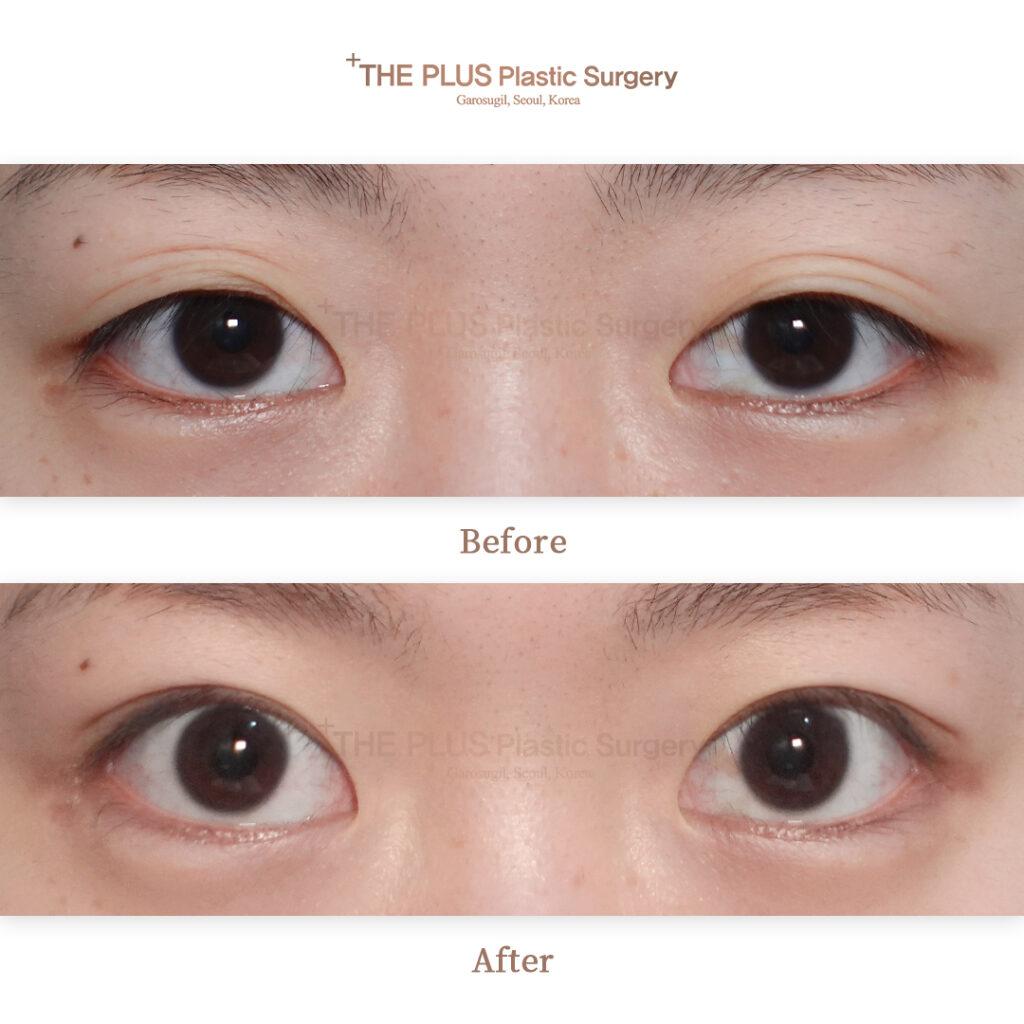
For an eyelid concern such as entropion or ectropion, THEPLUS Plastic Surgery may be worth considering if your assessment indicates that related eyelid procedures are appropriate: its stated eye-surgery offerings include blepharoplasty and ptosis correction, with an emphasis on tailoring eyelid appearance to your facial features. The supplied information does not specifically describe entropion or ectropion repair, so you should confirm whether your particular condition can be evaluated and treated there.
- URL: THEPLUS Plastic Surgery Website
- Location: Gangnam-gu, Seoul
- Eye-area services:
- Blepharoplasty adjusts excess skin and tissue around the eyelids.
- Ptosis correction addresses drooping upper eyelids by correcting the muscles that open the eyes.
- Double-eyelid surgery is offered to create an upper-eyelid crease designed to suit your facial features.
- Surgical background:
- Dr. Kim is described as a board-certified plastic surgeon with research recognition involving 3D implants and experience teaching other plastic surgeons.
- Dr. Jeong is described as President of the Korean Society of Plastic Surgeons and as emphasizing the combination of function and aesthetics in his practice.
2. Made Young Plastic Surgery
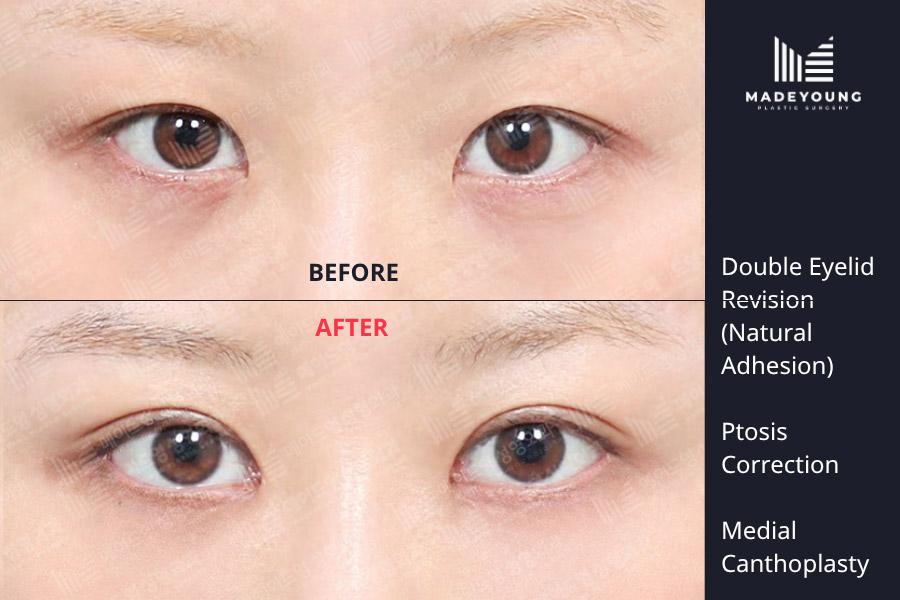
For an eyelid concern such as entropion or ectropion, Made Young Plastic Surgery offers a broad range of eye procedures, including upper and lower blepharoplasty, ptosis correction, and canthoplasty. Dr. Park Byung-Chan is described as having 15 years focused exclusively on eye surgery and using individualized planning; however, the supplied information does not specifically confirm entropion or ectropion repair, so you should verify suitability for your diagnosis.
- URL: Made Young Plastic Surgery Website
- Location: Seocho-gu, Seoul
- Eye-procedure options:
- Upper blepharoplasty removes excess upper-eyelid skin and fat.
- Lower blepharoplasty addresses under-eye fat and may include skin tightening.
- Ptosis correction tightens the muscle that lifts the eyelid.
- Canthoplasty reshapes or lifts the outer eye corner.
- Individualized eye planning:
- Dr. Park Byung-Chan is described as having 15 years of experience exclusively in eye surgery.
- Planning may be customized around incision lines, double-eyelid height, eyelid thickness, and your overall desired eye shape.
- Safety and aftercare:
- The clinic states that full-time board-certified anesthesiologists are on site, with one-to-one anesthesiologist monitoring during procedures.
- A separate aftercare center is described for systematic post-procedure care.
- The clinic states that procedures have CCTV coverage.
3. RINE Plastic Surgery Clinic
For an eyelid concern such as entropion or ectropion, RINE Plastic Surgery Clinic may merit consideration for its concentrated eye-surgery practice, individualized eyelid design, and director-led continuity from consultation through recovery. Its listed services include upper and lower blepharoplasty, ptosis correction, canthoplasty, and revision eye surgery, although the supplied information does not specifically state that it performs entropion or ectropion repair; you should confirm whether treatment is appropriate for your condition.
- URL: RINE Plastic Surgery Clinic Website
- Location: Seocho-gu, Seoul
- Eye and eyelid procedures:
- Upper blepharoplasty is offered for upper-eyelid hooding and heaviness related to excess skin and fat.
- Lower blepharoplasty with lifting addresses lower-eyelid sagging, fat herniation, and reduced midface support.
- Ptosis correction strengthens the levator muscle for drooping eyelids.
- Canthoplasty adjusts the outer eye corner to alter eye proportion or corner angle.
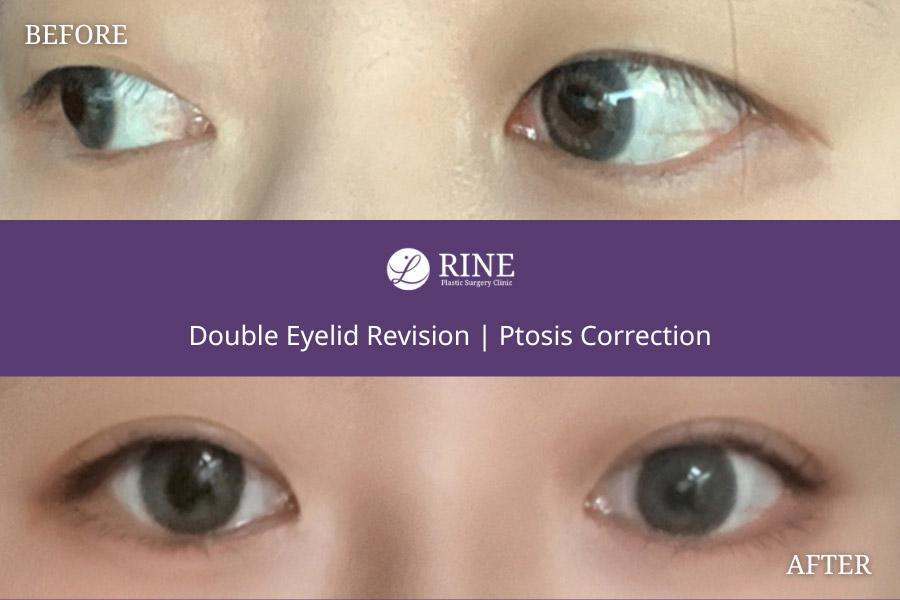
- Revision double-eyelid and epicanthoplasty procedures are available for selected concerns after prior surgery.
- Director-led care:
- Director Jang Nam, a board-certified plastic surgeon, is stated to personally manage consultation, surgery, treatment, and recovery.
- The clinic reports more than 10,000 eye surgeries performed by its director and more than 15 years of clinical experience.
- Your plan is described as a one-to-one design based on facial proportions, skin condition, and individual features.
- Facility and recovery considerations:
- The clinic states it uses a full-HD Stryker endoscope, FDA-approved genuine Endotine, and WhiteLite bipolar equipment.
- Private one-person recovery rooms are available.
- The clinic describes infection-control measures, surgical safety protocols, emergency preparedness, and ongoing postoperative care.
Patient Journeys: Real-World Outcomes of Eyelid Revision Surgery
Revision eyelid surgery can significantly improve both function and appearance for those suffering from entropion or ectropion after prior surgery.
How Revision Surgery Has Addressed Issues for Patients with Entropion or Ectropion
- Functional Improvement: Patients report less redness, pain, tearing, and foreign body sensation. Improved eyelid closure protects the eye and reduces dryness. Some regain better vision if droopy lids were obstructing sight.
- Aesthetic Correction: Surgery restores natural, symmetrical eyelids, correcting droopiness, shape issues, and asymmetry.
- Enhanced Comfort and Quality of Life: Patients feel more comfortable and confident, with improved self-esteem and overall well-being. The relief from distress caused by eyelid malpositions can be profound.
- Complex Cases: Even patients with multiple prior unsuccessful surgeries have found success with skilled revision surgeons, highlighting the importance of expertise.
Insights from Patient Testimonials and Clinical Study Outcomes
- High Success Rates: Studies show 95% success for ectropion repair and 99% for combined entropion techniques.
- Potential for Recurrence: Recurrence rates range from 4.6% to 18%, often due to aging or scarring, but repeat surgery is possible.
- Patient Satisfaction: Testimonials emphasize comfort, trust in surgeons, and appreciation for a careful, patient-centered approach.
- Surgeon’s Expertise: Success depends heavily on the surgeon’s experience, especially in complex revision cases.
Importance of Realistic Expectations and Choosing an Experienced Surgeon
While revision surgery offers great improvements, perfect correction may not always be possible. Patients should take time to decide, set realistic goals, and consult board-certified oculoplastic or plastic surgeons with extensive revision experience. Avoid rushing into surgery with less experienced providers, as revision cases are complex and require specialized skills.
Conclusion: Empowering Your Decision for Eyelid Health
Entropion and ectropion after eyelid surgery can seriously affect eye health and quality of life, but revision eye surgery offers effective correction. South Korea stands out as a top destination due to its surgical innovations, expert surgeons, advanced technology, and excellent value. Patients should seek thorough evaluations from experienced specialists, maintain realistic expectations, and leverage available support to make informed decisions that restore both function and appearance, enhancing comfort and confidence.
References
1, 2, 3, 4, 5, 6, 7, 8, 9, 10, 11, 12, 13, 14, 15, 16, 17, 18, 19, 20, 21, 22, 23, 24, 25, 26, 27, 28, 29, 30, 31, 32, 33, 34, 35, 36, 37, 38, 39, 40, 41, 42, 43, 44
Frequently Asked Questions
Related Blogs
Discover Effective Eyelid Retraction Treatments in Korea: Eyelid Fat Grafting Solutions
Discover how Korea offers advanced treatments for eyelid retraction, including eyelid fat grafting and dermis-fat grafts. This comprehensive guide explains causes, symptoms, and the corrective procedures available in Korea to restore eyelid function and aesthetics. Learn about the step-by-step process for medical tourists, costs, and real patient outcomes. If you're considering eyelid retraction t
Updated: Sep 28, 2026
Korea's Top Solutions for Dark Circles Under Eyes: Blepharoplasty, Fat Removal & Grafting Procedures
Discover effective treatments for dark circles under eyes in Korea, including under-eye fat removal, repositioning, blepharoplasty, and eyelid fat grafting. These advanced procedures address underlying causes like hollows, sagging, and fat loss, restoring a youthful, refreshed look. Korea's expert surgeons, cutting-edge technology, and affordable prices make it a top destination for medical touris
Updated: Sep 28, 2026
Scleral Show Treatment in Korea: Canthoplasty, Eyelid Retraction Repair & Laser Canthoplasty
Discover how Korea leads in surgical solutions for scleral show, including canthoplasty, eyelid retraction repair, and laser canthoplasty. This comprehensive guide explains causes, procedures, and benefits of treating scleral show in Korea's top clinics, renowned for advanced technology, skilled surgeons, and affordable prices. Whether addressing eyelid retraction or enhancing eye appearance, Kore
Updated: Sep 28, 2026
Improve Thinning Skin Around Eyes with Eyelid Fat Grafting Procedures in Korea
Discover how Korea leads in natural eyelid rejuvenation with eyelid fat grafting. This advanced procedure uses the patient’s own fat—via fat transfer, microfat, or nanofat—to address thinning skin, dark circles, and volume loss around the eyes. Korea’s expert surgeons leverage cutting-edge techniques and technology to deliver natural, long-lasting results. Ideal for rejuvenating the delicate perio
Updated: Sep 28, 2026
Clinics offering Revision Eye Surgery
RINE Plastic Surgery Clinic | Facelift and Eye Rejuvenation Surgery
Nonhyeon

THEPLUS Plastic Surgery Korea | Eye, Nose, Face & Body Surgery
Sinsa

Made Young Plastic Surgery: Rejuvenating Aesthetic Excellence in Korea for Face Lifts, Contouring and More
Gangnam Station

LABOM Plastic Surgery: Expertise in Non-Surgical Nose, Facial Lifting & Anti-Aging Surgeries in Korea
Apgujeong