Medical Tourism Blog
Weak Chin Treatment in Korea: Chin Filler and Chin Surgery
Table of contents
- Chin Augmentation Options: Chin Filler and Chin Surgery
- Best Clinics in Korea for Weak Chin
- Medical Tourism in Korea: The Patient Experience
- Cost Analysis for the Medical Tourist: Value and Affordability
- Patient Experiences and Outcomes: The Human Element
- Conclusion
- References
Considering treatment in Korea? Everything you need to know e.g. — how to avoid scams, visas, interpreters, recovery tips — in our Medical Tourism Master Guide. Plan with confidence in minutes, not weeks!
A “weak chin” often shows as a softer, rounded angle where the chin meets the neck. A “receding chin” curves inward rather than projecting forward. Medically, this can be due to retrognathia or mandibular retrognathia. It may also be called retrogenia or retrognathism.
Retrognathia is a type of malocclusion where the lower jaw sits behind the upper jaw, making the chin look smaller. It can be congenital or acquired (for example, after injury or from habits like childhood thumb-sucking).
Beyond Cosmetics: The Functional Implications of Retrognathia
Retrognathia is not only cosmetic. It can contribute to difficulty chewing, biting, and swallowing; jaw pain linked to temporomandibular joint (TMJ) disorders; mouth breathing; snoring; and trouble closing the lips. Severe, untreated cases can be associated with obstructive sleep apnea and, in infants, malnutrition. Treatment may involve orthodontics or jaw surgery to align the jaw and relieve these issues.
An Integrated Perspective on Diagnosis and Treatment
A “weak chin” may reflect an underlying skeletal problem. The right solution depends on anatomy and any functional issues. Start with a professional diagnosis to determine cause and candidacy. If there is significant misalignment or related health concerns, orthodontics or jaw surgery may be recommended. If the concern is purely aesthetic, options range from chin filler augmentation to permanent implants. A medical consultation ensures the plan is appropriate and safe.
Chin Augmentation Options: Chin Filler and Chin Surgery
Chin Filler Augmentation: The Non-Surgical Approach
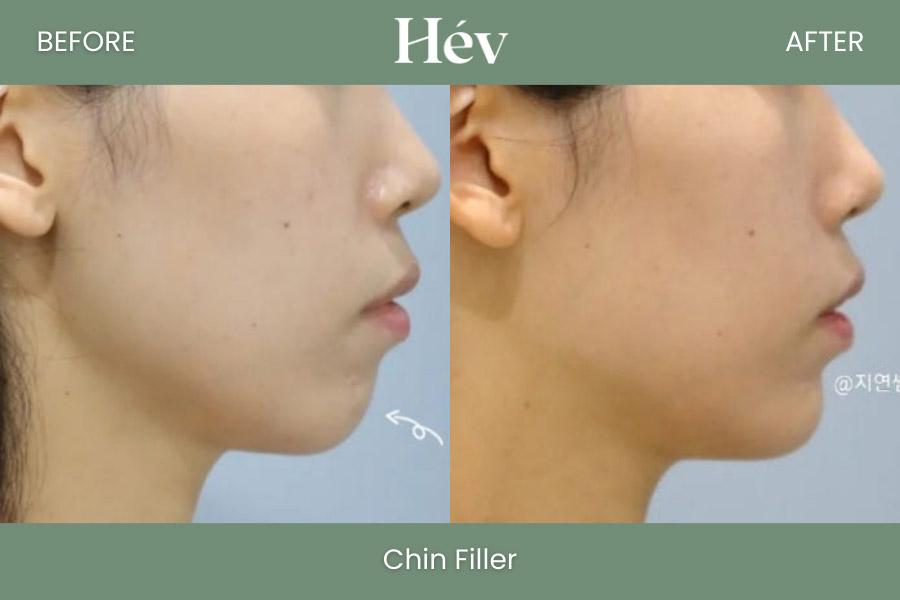
Chin filler augmentation reshapes the chin with injections to improve projection, symmetry, and lower-face structure. Most products use Hyaluronic Acid (HA), while Calcium Hydroxylapatite is another temporary option. Appointments take about 10–60 minutes. Numbing cream is often used, and many fillers include anesthetic. Results are visible immediately.
Downtime is minimal. Avoid strenuous exercise for 24–48 hours. Common side effects include swelling, bruising, redness, and tenderness. Rare risks include infection, tissue damage, or vascular compromise. Results typically last six to 12 months, depending on the filler and metabolism, and require maintenance.
Chin Surgery (Genioplasty): The Permanent Solutions
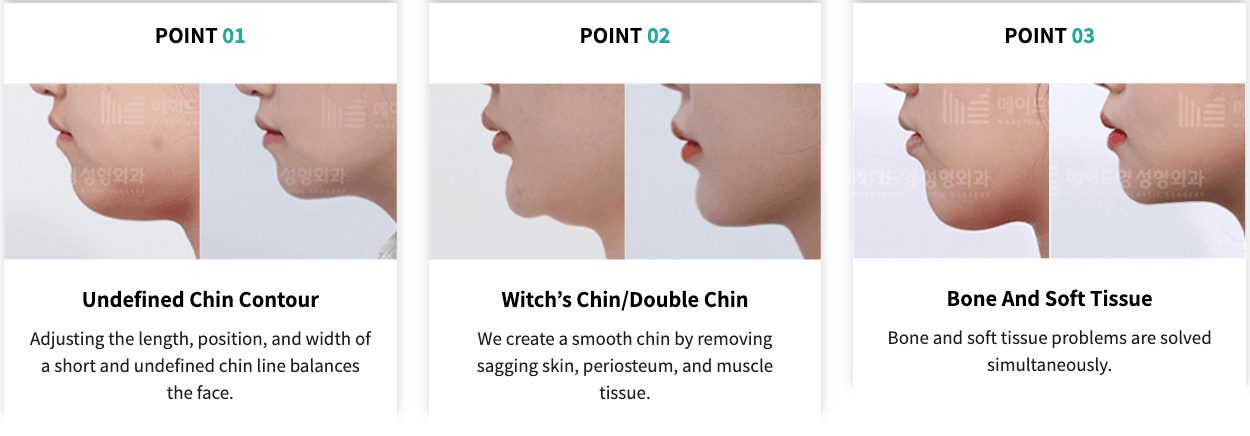
Chin surgery—genioplasty or mentoplasty—offers permanent reshaping to increase or decrease chin length and projection. It’s usually performed under general anesthesia and can be cosmetic or part of corrective jaw surgery.
Chin Implant (Alloplastic Genioplasty)
Chin implant surgery places a synthetic implant (such as silicone) over the chin bone. Incisions can be inside the mouth or under the chin; the intraoral approach leaves no visible external scar. The implant is secured to the bone with sutures to limit migration.
Sliding Genioplasty
Sliding genioplasty involves cutting the bony chin and sliding the segment forward (or adjusting length) for customized projection. The bone is fixed with small plates and medical-grade screws.
Comparative Analysis and Considerations
| Feature | Chin Implant (Alloplastic Genioplasty) | Sliding Genioplasty |
|---|---|---|
| Surgical Technique | Synthetic implant placed over the bone. | Patient's own bone is cut and repositioned. |
| Results | Limited by the pre-formed shape and size of the implant. | Highly customizable, offering more natural-looking results. |
| Permanence | May require replacement or removal over time. | A permanent solution with no need for future surgery. |
| Recovery Time | Faster, typically one to two weeks. | Slightly longer, around two to four weeks, due to bone healing. |
| Risks | Potential for implant shifting, rejection, or erosion. | Risks include nerve damage and complications with bone healing. |
Surgical Recovery and Post-Operative Care
After surgery, a dressing supports soft tissue and is usually removed within a week. Expect soreness, tightness, swelling, and bruising—most noticeable in the first 48–72 hours. Use cold compresses and keep your head elevated, including during sleep.
Most people return to work in 1–2 weeks. Avoid strenuous exercise and contact sports for 4–6 weeks. A soft or liquid diet for several days helps protect the surgical site. Most swelling improves in 2–3 weeks, but final results can take up to six months as tissues settle.
Strategic and Financial Decision-Making Framework
Fillers can be a low-commitment “test run” before opting for a permanent change. While fillers cost less upfront, they need repeat sessions every 6–18 months. Over 10–20 years, cumulative costs can match or exceed a chin implant. Weigh the short-term flexibility of fillers against the long-term value of surgery.
Best Clinics in Korea for Weak Chin
Listed below are the best clinics in Korea for weak chin:
| Clinic Name | Key Features | Special Techniques |
|---|---|---|
| Hev Dermatology Clinic | Dermatologist-led weak chin assessment and planning based on precise skin analysis and expert consultation, supporting natural-looking profile refinement One-doctor continuity of care: the same attending dermatologist manages consultation, treatment, and completion for consistent outcomes and safety Comprehensive lifting and tightening options that can support lower-face definition and under-chin contouring, including Ultherapy, Thermage, and InMode Advanced injectable solutions that can complement weak chin correction by refining facial contours, including dermal fillers (hyaluronic acid), Botox, and collagen-stimulating Sculptra Regenerative and skin-quality therapies that enhance overall tissue condition and resilience, including Rejuran, Juvelook, PRP, Profhilo, stem cell therapy, and hyperbaric oxygen therapy Strong safety standards supported by academic involvement and evidence-informed technique selection, helping tailor intensity, sequence, and product choice to individual needs Broad expertise beyond chin-focused care (wrinkle correction, pigment and redness lasers, resurfacing, scar care), enabling balanced full-face planning for harmonized results | - Ultherapy - Thermage - InMode - dermal fillers (hyaluronic acid) - Botox - collagen-stimulating Sculptra - Rejuran - Juvelook - PRP - Profhilo - stem cell therapy - hyperbaric oxygen therapy |
| Chamin plastic surgery Website | Profile-focused expertise: A weak chin can make the nose look more prominent; the clinic’s rhinoplasty precision helps optimize facial balance by refining nasal shape and projection in proportion to the rest of the face. High-level revision capability: For patients who already had surgery elsewhere and still feel their profile looks unbalanced, the clinic handles complex rhinoplasty revision cases to correct both aesthetic and structural issues. Strong reconstruction options for difficult cases: Costal cartilage rhinoplasty and contracted nose reconstruction provide robust solutions when previous procedures or injuries have compromised nasal support—critical for achieving stable, long-term profile harmony. Function plus aesthetics: Functional rhinoplasty addresses breathing and structural concerns (such as deviation or obstruction) while also improving appearance, supporting a confident result that feels as good as it looks. Safety-first approach: Specialized infection/inflammation care and comprehensive pre- and post-surgery systems help reduce risk and support smoother recovery—especially valuable in revision or medically sensitive cases. Complementary non-surgical refinement: Filler-based rejuvenation and lip filler options can support overall facial balance and softness, which may be particularly helpful when a weak chin contributes to a “flatter” or less defined facial impression. Personalized planning: Every procedure is tailored to the patient’s anatomy and goals, which is essential when the concern is “weak chin” aesthetics—because the best result often comes from optimizing the entire profile, not changing one feature in isolation. | - Rhinoplasty precision - Revision rhinoplasty - Costal cartilage rhinoplasty - Contracted nose reconstruction - Functional rhinoplasty - Filler-based rejuvenation - Lip filler options |
| BLS Main Branch Website | Signature lifting options designed to refine facial definition in detailed areas - Detail InMode: radiofrequency-based tightening aimed at precise contour improvement - Detail Thermage: monopolar radiofrequency to support collagen remodeling and broader-zone firmness - Detail Ultherapy PRIME: ultrasound lifting with detailed mapping to target specific depths and contours Chin and lower-face balance support with verified injectables - Hyaluronic Acid Fillers (Restylane): tailored volume and proportion refinement based on individual structure and goals Data-driven customization for more precise weak-chin planning - Lifting Contour Measuring Device Analysis to guide and track contour-focused lifting plans - Skin Measurement Device Analysis to inform treatment and product selection using measurable indicators - 1:1 Tailored Skin Consultation to align device choice, treatment sequence, and safety considerations - 1:1 Tailored Premium Ampoule Program to support hydration, soothing, and skin finish post-procedure Event facial programs that complement contour treatments by improving overall skin condition - OxyGeneo (with Ultrasound + Massage) to refresh texture, support hydration, and enhance smoothness Comfort and pain-management options that make sensitive-area treatments easier to tolerate - General Anesthesia with emergency preparedness and safety protocols - Conscious Sedation for reduced anxiety and supervised comfort - Topical Numbing Cream to reduce surface discomfort - Vibration Pain Reduction to lessen pain perception during certain steps | - InMode-based lifting details: Detail InMode - Detail Thermage - Detail Ultherapy PRIME - OxyGeneo (with Ultrasound + Massage) - General Anesthesia - Conscious Sedation - Topical Numbing Cream - Vibration Pain Reduction - Hyaluronic Acid Fillers (Restylane) |
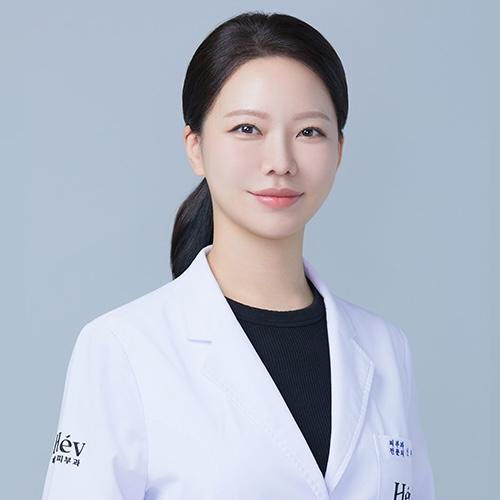
Hev Clinic
Hev Dermatology Clinic (Hev Clinic) in Sinsa is a dermatologist-led practice specializing in advanced skin lifting and regenerative treatments, offering medical and cosmetic dermatology focused on skin health, rejuvenation, and natural-looking results. Led by board-certified dermatologists who actively participate in domestic and international academic societies, the clinic emphasizes precise skin analysis and expert consultation to design safe, personalized plans—an important advantage for weak chin concerns, where subtle contour balance and a natural profile are key. Every procedure is performed responsibly by the same attending dermatologist from consultation to completion, ensuring consistency, safety, and trust throughout the treatment journey.
- Dermatologist-led weak chin assessment and planning based on precise skin analysis and expert consultation, supporting natural-looking profile refinement
- One-doctor continuity of care: the same attending dermatologist manages consultation, treatment, and completion for consistent outcomes and safety
- Comprehensive lifting and tightening options that can support lower-face definition and under-chin contouring, including Ultherapy, Thermage, and InMode
- Advanced injectable solutions that can complement weak chin correction by refining facial contours, including dermal fillers (hyaluronic acid), Botox, and collagen-stimulating Sculptra
- Regenerative and skin-quality therapies that enhance overall tissue condition and resilience, including Rejuran, Juvelook, PRP, Profhilo, stem cell therapy, and hyperbaric oxygen therapy
- Strong safety standards supported by academic involvement and evidence-informed technique selection, helping tailor intensity, sequence, and product choice to individual needs
- Broad expertise beyond chin-focused care (wrinkle correction, pigment and redness lasers, resurfacing, scar care), enabling balanced full-face planning for harmonized results
You can check out their website here: Hev Clinic Website
Chamin plastic surgery
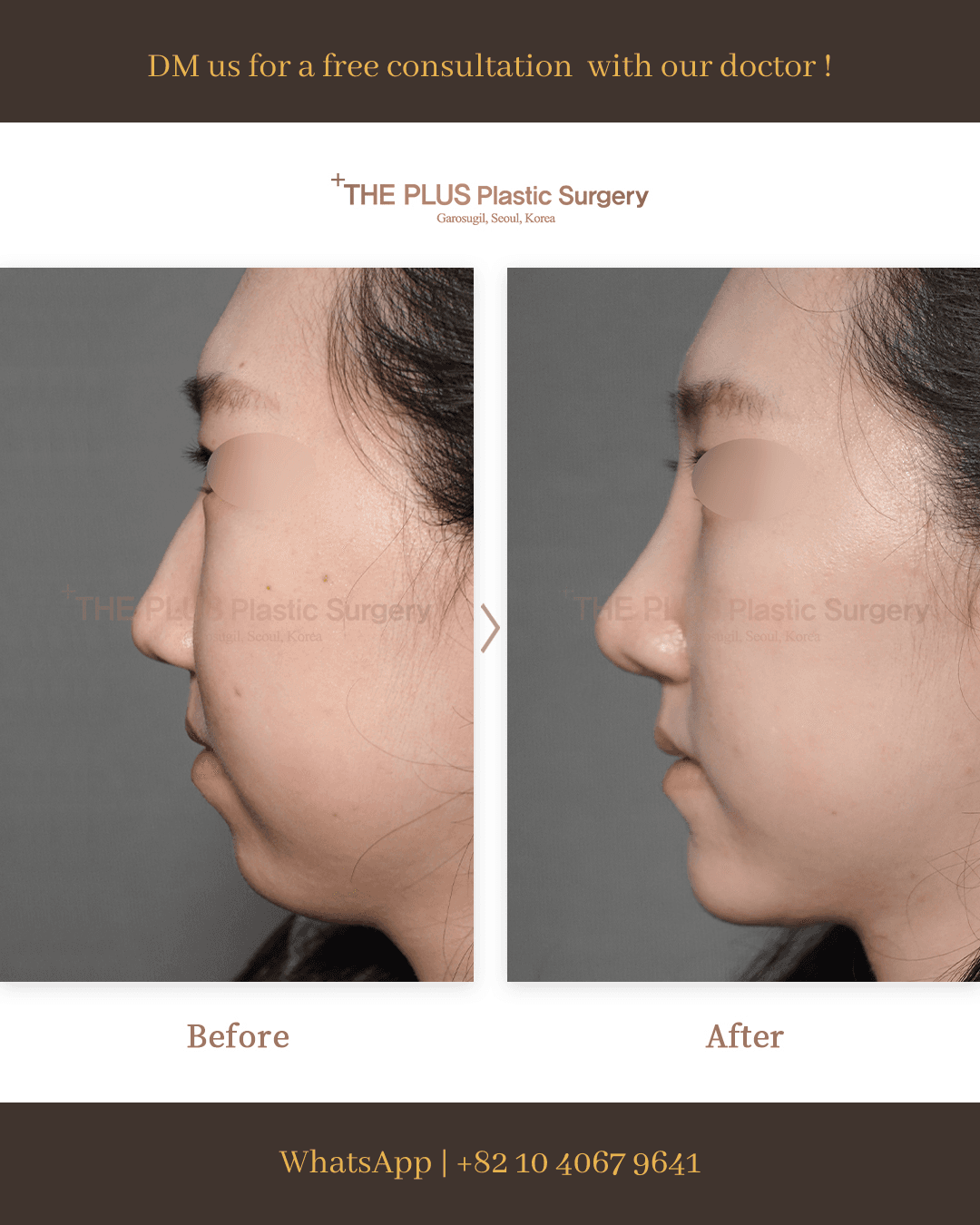
Cha Min Plastic Surgery Clinic, conveniently located near Sinnonhyeon Station, is a specialized center known for advanced rhinoplasty and carefully tailored cosmetic care—an important advantage for patients in Korea concerned about a weak chin because overall profile balance is often influenced as much by the nose and midface proportions as by the chin itself. With a strong focus on revision/reconstruction, functional improvement, and meticulous safety systems, the clinic is well-suited for patients who want a more harmonious side profile and natural-looking refinement through individualized planning rather than one-size-fits-all changes.
- Profile-focused expertise: A weak chin can make the nose look more prominent; the clinic’s rhinoplasty precision helps optimize facial balance by refining nasal shape and projection in proportion to the rest of the face.
- High-level revision capability: For patients who already had surgery elsewhere and still feel their profile looks unbalanced, the clinic handles complex rhinoplasty revision cases to correct both aesthetic and structural issues.
- Strong reconstruction options for difficult cases: Costal cartilage rhinoplasty and contracted nose reconstruction provide robust solutions when previous procedures or injuries have compromised nasal support—critical for achieving stable, long-term profile harmony.
- Function plus aesthetics: Functional rhinoplasty addresses breathing and structural concerns (such as deviation or obstruction) while also improving appearance, supporting a confident result that feels as good as it looks.
- Safety-first approach: Specialized infection/inflammation care and comprehensive pre- and post-surgery systems help reduce risk and support smoother recovery—especially valuable in revision or medically sensitive cases.
- Complementary non-surgical refinement: Filler-based rejuvenation and lip filler options can support overall facial balance and softness, which may be particularly helpful when a weak chin contributes to a “flatter” or less defined facial impression.
- Personalized planning: Every procedure is tailored to the patient’s anatomy and goals, which is essential when the concern is “weak chin” aesthetics—because the best result often comes from optimizing the entire profile, not changing one feature in isolation.
Find more about this clinic here: Chamin plastic surgery Website
BLS Main Branch
BLS Clinic Main Branch (Cheongdam) is a patient-centered lifting and contour clinic known for combining detailed skin and contour analysis with signature, precision-based tightening treatments and curated event programs. For patients concerned about a weak chin, the clinic’s approach focuses on improving lower-face definition with carefully mapped energy-based lifting and balance-focused injectables, supported by measurable diagnostics and comfort-first protocols that help make treatment both targeted and manageable.
-
Signature lifting options designed to refine facial definition in detailed areas
- Detail InMode: radiofrequency-based tightening aimed at precise contour improvement
- Detail Thermage: monopolar radiofrequency to support collagen remodeling and broader-zone firmness
- Detail Ultherapy PRIME: ultrasound lifting with detailed mapping to target specific depths and contours
-
Chin and lower-face balance support with verified injectables
- Hyaluronic Acid Fillers (Restylane): tailored volume and proportion refinement based on individual structure and goals
-
Data-driven customization for more precise weak-chin planning
- Lifting Contour Measuring Device Analysis to guide and track contour-focused lifting plans
- Skin Measurement Device Analysis to inform treatment and product selection using measurable indicators
- 1:1 Tailored Skin Consultation to align device choice, treatment sequence, and safety considerations
- 1:1 Tailored Premium Ampoule Program to support hydration, soothing, and skin finish post-procedure
-
Event facial programs that complement contour treatments by improving overall skin condition
- OxyGeneo (with Ultrasound + Massage) to refresh texture, support hydration, and enhance smoothness
-
Comfort and pain-management options that make sensitive-area treatments easier to tolerate
- General Anesthesia with emergency preparedness and safety protocols
- Conscious Sedation for reduced anxiety and supervised comfort
- Topical Numbing Cream to reduce surface discomfort
- Vibration Pain Reduction to lessen pain perception during certain steps
Find more about this clinic here: BLS Main Branch Website
Medical Tourism in Korea: The Patient Experience
Why South Korea is a Medical Tourism Hub
South Korea is a leading destination for cosmetic procedures due to rigorous surgeon training, a “natural results” aesthetic, and advanced technology. Plastic surgeons complete four years of training, document experience across 170+ procedures, and pass two exams. Look for Korean Society of Plastic and Reconstructive Surgeons (KSPRS) certification and clinics with a full-time anesthesiologist.
Korean aesthetics emphasize facial harmony and subtle enhancement. Clinics use cutting-edge tools, and many surgeons contribute to global research and education.
The Process for a Medical Tourist: A Step-by-Step Guide
- Step 1: Initial Research and Consultation. Research clinics and verify credentials (KSPRS). Government-accredited agencies can help with clinic matching, online consults, and travel. Video consultations clarify goals before flying.
- Step 2: Pre-Operative Preparation. On arrival, you’ll finalize the plan and complete evaluations (blood tests, facial X-rays, sometimes 3D CT scans) to confirm health and anatomy.
- Step 3: The Procedure. Depending on complexity, anesthesia may be general or local with sedation. The surgeon performs the incision, chin modification, and closure with dissolvable stitches.
- Step 4: Recovery and Aftercare. Stitches are typically removed in 10–14 days (or as early as one week if arranged at home). Plan to stay about two weeks for recovery and follow-up. Clinics provide detailed aftercare, medications, scar care guidance, and often transportation support.
The Integrated Support System and Professional Standards
Translators and coordinators play a key role in a smooth experience—helping with language, logistics, and day-to-day needs. Safety is reinforced by strict training standards, full-time anesthesiologists, and robust protocols. Certifications signal a clinic’s commitment to quality and reliability.
Cost Analysis for the Medical Tourist: Value and Affordability
Cost of Chin Procedures in South Korea
- Chin fillers per session: $108–$551 USD (average about $338 USD), depending on clinic, filler brand, and volume.
- Chin implant surgery: $3,000–$6,500 USD.
- Sliding genioplasty: $5,000–$9,000 USD or higher.
Comparative International Costs
| Procedure | South Korea (Seoul) | USA | Canada |
|---|---|---|---|
| Chin Fillers (per session) | $108 - $551 | $1,000 - $1,200 | N/A |
| Chin Implant | $3,000 - $6,500 | ~$9,000 | ~$7,500 |
Patients often save close to 50% on a chin implant in Seoul versus the United States.
Value vs. Price: A Strategic Approach to Cost
South Korea offers a compelling value proposition: a dense market of skilled surgeons helps keep prices competitive while maintaining high standards. Savings of 40%–70% versus the U.S., U.K., or Germany are common for many procedures. Consider long-term costs: repeat fillers add up, while a one-time surgery may be more cost-effective for enduring goals.
Patient Experiences and Outcomes: The Human Element
The Physical and Psychological Transformation
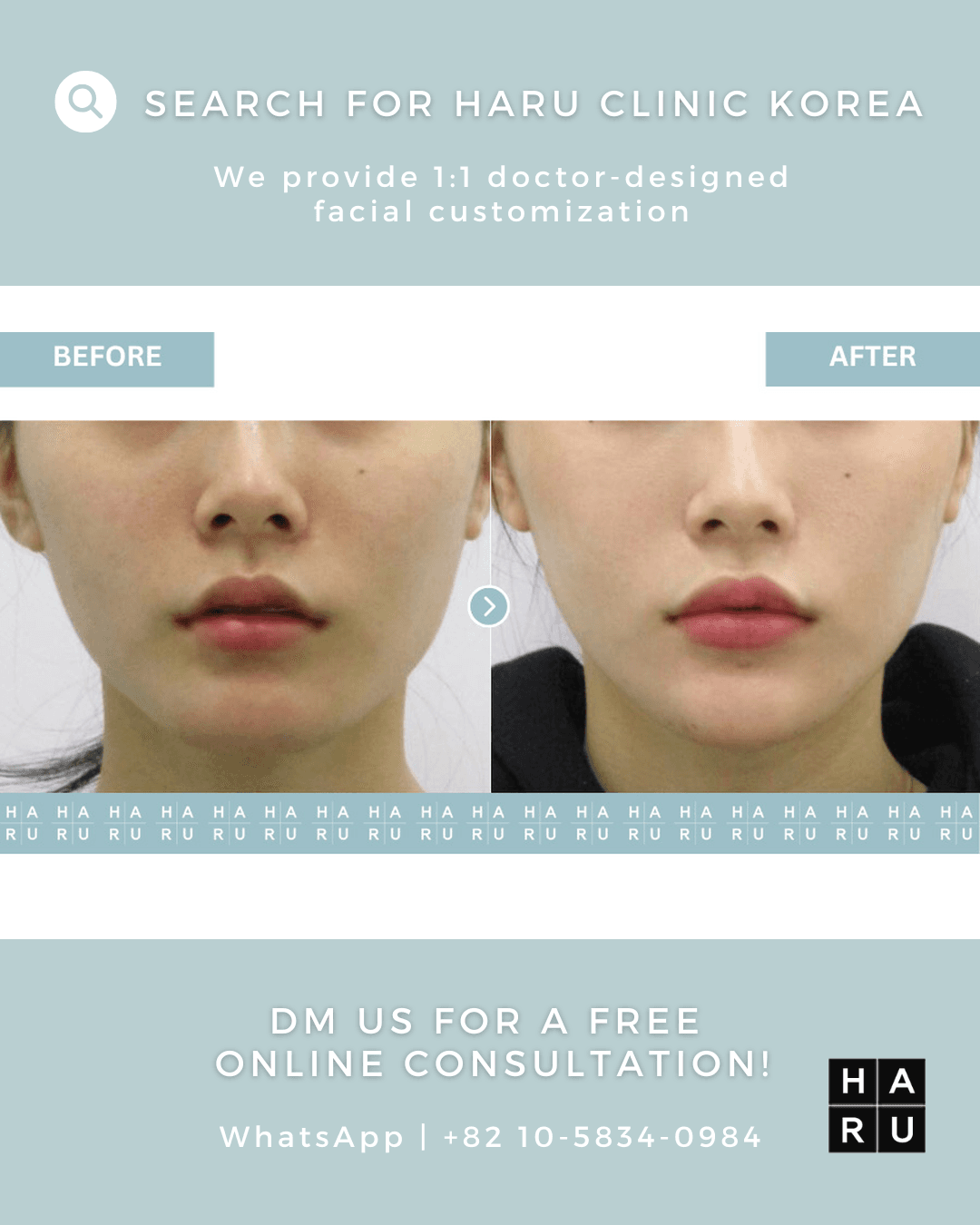
Patients report better projection, improved facial balance, and even camouflage of a double chin or neck fullness. Many describe feeling more “strong and confident” after surgery. One chin implant patient called the result “amazing” and stopped relying on temporary fillers.
The Value of a Seamless Experience in Medical Tourism
Testimonials praise attentive aftercare and translator support, which reduce stress and elevate satisfaction. Many patients were walking around and enjoying Seoul within days, reflecting efficient recovery protocols and thoughtful support.
Conclusion
A “weak chin” can be cosmetic or tied to retrognathia, so start with a professional diagnosis. Options span temporary chin filler augmentation to permanent genioplasty— including Chin Implant (Alloplastic Genioplasty) and Sliding Genioplasty—each with distinct benefits, risks, and recovery timelines. Weigh short-term flexibility against long-term value, and, for medical tourism, prioritize certified teams, robust aftercare, and clear communication.
References
1, 2, 3, 4, 5, 6, 7, 8, 9, 10, 11, 12, 13, 14, 15, 16, 17, 18, 19, 20, 21, 22, 23, 24, 25, 26, 27, 28, 29, 30, 31, 32, 33, 34, 35, 36, 37, 38