
Medical Tourism Blog
Necklace Lines Solutions: Neck Filler Procedures in Korea for Smoother, Youthful-Looking Skin
Table of contents
- "Neck Filler" Explained: A Detailed Medical Overview
- The "Neck Filler" Journey in South Korea: A Step-by-Step Guide
- Which Are the Best Clinics in Korea for Necklace Lines?
- Cost Analysis: "Neck Filler" in South Korea vs. Global Medical Tourism Destinations
- Patient Perspectives: Real-World Experiences and Outcomes
- Important Considerations and Recommendations
- Conclusion
- References
Considering treatment in Korea? Everything you need to know e.g. — how to avoid scams, visas, interpreters, recovery tips — in our Medical Tourism Master Guide. Plan with confidence in minutes, not weeks!
“Necklace lines”—the deep horizontal bands that appear across the neck—are a widespread cosmetic concern. Their causes range from natural aging and genetics to sun damage and repetitive screen-related posture (sometimes called “tech neck”). While patients have a number of treatment choices, “Neck Filler” procedures have become a favored minimally invasive option to rejuvenate the area. Here, we’ll walk through the causes and terminology of necklace lines, dive into what to expect from the neck filler procedure, review the process for getting fillers in South Korea, compare costs around the globe, and share patient experiences and best practices for anyone considering this in-demand aesthetic treatment.
“Necklace lines” refer to horizontal furrows or wrinkles across the neck that can show up in people as young as their twenties. Early on, these may only be visible with neck movements, but over time, they can deepen and remain noticeable at rest.
You might also hear them called “tech neck,” “text neck,” “horizontal neck bands,” or “neck creases”—terms brought into the spotlight by our collective reliance on digital devices.
Detailed Causes of "Necklace Lines"
The appearance of necklace lines is usually due to a mix of internal and external factors:
- Aging: As skin matures, we gradually lose hyaluronic acid, elasticity, and crucial proteins like collagen. This loss is directly tied to the formation of horizontal neck bands.
- Sun Damage (Photoaging): The neck often goes unprotected in the sun, making it especially vulnerable to UV-induced premature aging. Daily use and reapplication of SPF 30+ is key.
- Tech Neck / Poor Posture: Constantly looking down at phones or laptops accelerates neck lines, even in younger people. Raising screens to eye level and taking breaks helps.
- Genetics: Some people are simply predisposed to develop creases on the neck sooner or more severely.
- Weight Fluctuations: Significant changes in weight can stretch the neck skin, creating more prominent folds.
- Lifestyle Factors:
- Smoking: Smoking undermines collagen production, speeding up aging.
- Dehydration: Skin needs moisture; less water means more tissue slack and wrinkles.
- Poor Nutrition: Diets high in sugar and fat create Advanced Glycation End Products (AGEs) that damage collagen and elastin.
- Lack of Skincare: Skipping dedicated neck care can leave the skin dry and prone to aging.
- Harsh Products: The neck’s skin is sensitive—over-exfoliation can do harm.
- Sleep Habits: A silk pillowcase and sleeping on your back can help prevent lines.
Both intrinsic and lifestyle-driven factors, such as sun exposure, posture, and “tech neck” habits, speed up the process. Preventive strategies are just as important as aesthetic interventions for effective, long-term results.
| Category | Common Pseudonyms | Contributing Factors |
|---|---|---|
| Appearance/Common Terms | Necklace Bands, Horizontal Neck Lines, Neck Creases | Aging, Sun Damage, Weight Fluctuations, Genetics |
"Neck Filler" Explained: A Detailed Medical Overview
Neck filler, or “neck rejuvenation,” is a non-surgical cosmetic treatment using dermal fillers to smooth out horizontal wrinkles and enhance the texture of neck skin. The goal is a tighter, younger-looking décolletage.
Fillers are primarily made of hyaluronic acid (HA)—a naturally occurring substance in the body—though some, like Radiesse, use calcium hydroxylapatite (CaHA) to also stimulate collagen production. Specialized approaches such as the “micro-droplet smoothening technique” with hyper-diluted hyaluronic acid are often used for delicate neck skin, minimizing bumpiness while thickening and rejuvenating tissue.
Benefits of Treating Neck Lines with Fillers
- Smoother Skin Texture: Fillers help reduce the appearance of wrinkles and lines for a more uniform texture.
- Tighter, Firmer Neck: They restore volume to sagging areas, improving the neck’s contour.
- Softened Neck Bands: Prominent horizontal lines are reduced for a more youthful look.
- Hydration: Especially with HA fillers, skin looks and feels more supple.
- Non-Surgical Option: There’s minimal downtime so daily activities aren’t lost for long.
- Fast Results: Improvements appear right away and peak within about a week.
Types of Fillers Commonly Used for the Neck
- Hyaluronic Acid (HA) Fillers: Favorite choices for their flexibility and natural effect. Brands include Juvederm, Restylane, Belotero Balance, and Vollure.
- Calcium Hydroxylapatite (CaHA) Fillers: Like Radiesse, which is often used diluted to kickstart collagen growth.
- Autologous Fillers: These use your own tissues for volume restoration, sometimes with longer-lasting results.
| Filler Type | Common Brands (Examples) | Primary Mechanism | Typical Duration of Results |
|---|---|---|---|
| Hyaluronic Acid (HA) | Juvederm, Restylane, Belotero, Vollure | Volume restoration, Hydration | 6-18 months |
| Calcium Hydroxylapatite (CaHA) | Radiesse | Collagen stimulation, Volume restoration | 12+ months |
| Autologous Fillers | (Patient’s own tissues) | Volume restoration, Tissue regeneration | Variable |
Potential Side Effects and Complications
Dermal fillers are generally safe, but as with all procedures, some risks are present:
- Mild Side Effects: Temporary swelling, redness, bruising, tenderness, itching, or small lumps. These usually resolve within a couple of weeks.
- Moderate Complications: Delayed nodules, infections, mild allergic responses, or migration of filler. It’s important to seek medical attention if symptoms persist.
- Rare Severe Risks: Vascular occlusion (blocked blood vessel), nerve damage, blindness (very rare), chronic granulomas, disfigurement, or scarring. Patients should seek immediate help if they notice unusual skin color changes, prolonged or severe pain, or persistent lumps.
| Category | Specific Side Effects/Complications | Typical Resolution/Severity |
|---|---|---|
| Common & Mild | Swelling, Redness, Bruising, Tenderness/Soreness, Mild Itching/Irritation, Bleeding, Temporary Lumps/Uneven Texture | Resolve within a few days to 2 weeks |
| Moderate (Less Common) | Delayed-onset Nodules, Infections, Allergic Reactions, Filler Migration, Prolonged Swelling/Redness, Minor Asymmetry | Needs attention to prevent escalation |
| Severe & Rare | Vascular Occlusion, Nerve Damage, Blindness, Chronic Granulomas, Disfigurement | Potentially permanent, requires emergency care |
Safety Considerations and Importance of Qualified Practitioners
The procedure should always be performed by a board-certified dermatologist or plastic surgeon. Using FDA-approved, high-quality fillers and specialized techniques (like “micro-droplet smoothening” and hyper-diluted injections) is essential for safety, especially because the neck is prone to lumps and irregularities.
Fillers are generally safe, but the delicate structure of the neck requires extra caution. Complications, though rare, can be severe—proper pre-injection screening, careful technique, and awareness of possible side effects are crucial. The best outcomes often result from a combination approach with other treatments, tailored to your unique needs and anatomy.
The "Neck Filler" Journey in South Korea: A Step-by-Step Guide
South Korea is widely recognized for its advanced cosmetic procedures and has become a global leader in medical tourism. Safety protocols include comprehensive pre-treatment assessments and advanced technology like 3D imaging for precision. Board-certified surgeons commonly use both KFDA- and FDA-approved products.
The Neck Filler Procedure Process in South Korea
The process is patient-centered and thorough:
- Consultation: Begins with an in-depth review of your neck, goals, and expectations to customize a treatment plan.
- Preparation: Area is cleansed and numbed with a topical cream (sometimes also an ice pack or vibration is used).
- Injection: The chosen filler is injected using fine needles or cannulas following specific mapping techniques for even, subtle results. Special attention is paid to avoid bumpiness or unevenness using micro-droplet methods.
- Procedure Duration: The main injection process takes 30-60 minutes, with some clinics completing it in as little as 10-30 minutes.
- Aftercare: Expect mild swelling, redness, or bruising that resolves within days. Clinics offer aftercare instructions and often provide added services like lymphatic massage or LED light therapy to speed healing. Most patients can return to work the next day.
South Korean clinics stand out for their integrated approach—comprehensive pre- and post-procedure care, advanced technology, and highly trained practitioners offer international patients a seamless and high-quality experience with an emphasis on natural, subtle results and minimal downtime.
Which Are the Best Clinics in Korea for Necklace Lines?
Listed below are some of the best clinics in Korea for necklace lines.
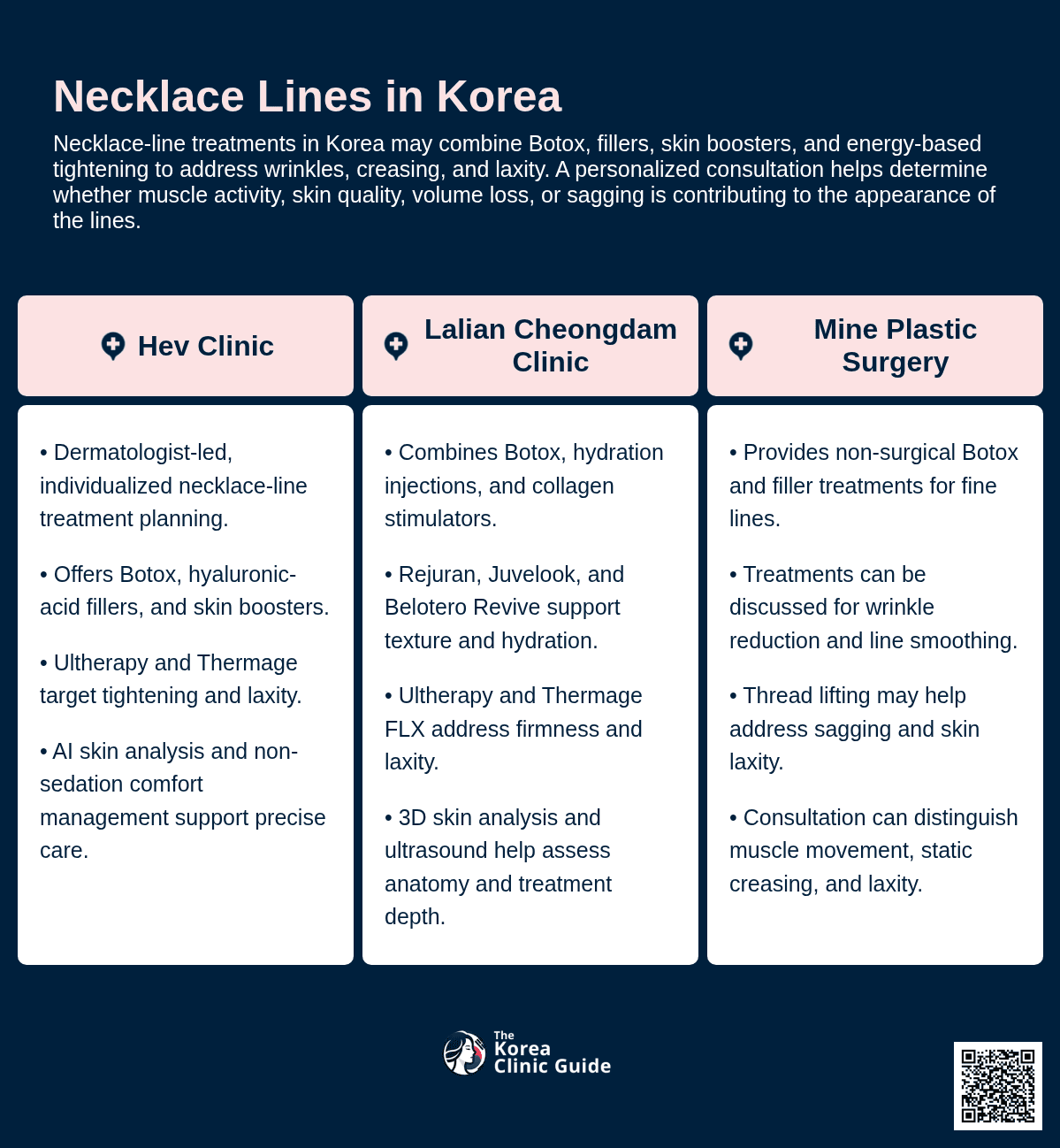
1. Hev Clinic
For necklace lines, you can receive a dermatologist-led plan that may combine targeted Botox or filler-based correction with skin-quality treatments and energy-based tightening. Hev emphasizes individualized assessment, with the same board-certified dermatologist overseeing consultation, treatment, and aftercare.
- URL: Hev Clinic Website
- Location: Gangnam-gu, Seoul
- Neck-focused options:
- Ultherapy is offered for neck tightening through deep collagen stimulation, with results developing over roughly 2–3 months.
- Thermage is available to address skin laxity and fine lines through dermal radiofrequency heating.
- Botox and hyaluronic-acid fillers are available; your treatment plan can distinguish muscle-related lines from static creases or volume-related concerns.
- Skin quality support:
- Profhilo is offered to improve hydration, elasticity, and crepey texture.
- Re2O is used as a structural skin booster containing human-derived collagen and elastin components.
- Rejuran and Juvelook are among the clinic’s skin-booster options for texture and fine-line concerns.
- Planning and comfort:
- AI skin analysis is used to assess factors such as skin thickness and aging before creating a 1:1 plan.
- The clinic describes a non-sedation pain-control approach that allows you to communicate during injectable treatment.
- Maintenance planning may follow an approximately 3–4-week skin-regeneration cycle.
2. Lalian Cheongdam Clinic
For necklace lines, you can explore a personalized combination of hydration or collagen-stimulating injections, Botox for movement-related lines, and energy-based tightening when skin laxity is also a concern. Lalian Cheongdam uses 3D skin analysis and ultrasound assessment to help tailor treatment depth and product selection to your anatomy and skin condition.
- URL: Lalian Cheongdam Clinic Website
- Location: 2nd floor, Dosan-daero 59-gil, 9, Gangnam-gu, Seoul, South Korea
- Options for line texture and skin quality:
- Rejuran Healer is offered to support skin regeneration, resilience, texture, pores, and fine lines.
- Juvelook, a PDLLA and hyaluronic-acid injectable, is intended for gradual improvement in fine lines and uneven texture rather than immediate volume.
- Belotero Revive is available for hydration-focused treatment of dryness, dullness, and texture.
- Ultracol, Sculptra, and Radiesse are collagen-stimulating options that may be considered when improving skin density, structure, or firmness is a priority.
- Tightening and wrinkle treatment:
- Ultherapy uses focused ultrasound to target deeper support layers while keeping the skin surface intact.
- Thermage FLX uses radiofrequency to support collagen remodeling and firmer-looking skin.
- Botox options, including Coretox and Xeomin, are available for customized reduction of muscle activity contributing to lines.
- Assessment:
- Meta-Vu 3D skin analysis evaluates concerns including wrinkles, pores, pigmentation, and skin tone.
- Ultrasound examination can evaluate fat and muscle depth to support more precise treatment planning.
3. Mine Plastic Surgery
For necklace lines, Mine Plastic Surgery offers non-surgical Botox and filler treatments that can be discussed for wrinkle reduction and skin-line smoothing. If laxity contributes to the appearance of your neck, thread lifting may also be relevant to your consultation, although the provided clinic information does not specify a neck-focused protocol.
- URL: Mine Plastic Surgery Website
- Location: Gangnam-gu, Seoul
- Available non-surgical treatments:
- Botox and fillers are offered for wrinkles and fine lines.
- Thread lifting is offered as a non-surgical approach to lifting and tightening sagging skin, with immediate results described by the clinic.
- Consultation consideration: Ask whether your lines are primarily related to muscle movement, static skin creasing, or laxity, as the available treatments address these concerns differently.
Cost Analysis: "Neck Filler" in South Korea vs. Global Medical Tourism Destinations
South Korea’s pricing for dermal fillers is among the most affordable worldwide, offering significant savings without sacrificing quality.
Average Costs of Dermal Fillers in South Korea
- Typical price per syringe: $200 to $800
- Basic filler injection: $200 to $450
- Juvederm: $300–$600 per syringe
- Restylane: $250–$500 per syringe
- Local Korean brands: Start at around $150 per syringe
Factors Affecting Cost
- Filler brand (international generally costs more than Korean brands)
- Amount of filler used
- Doctor’s experience and reputation
- Clinic’s location (e.g., Seoul’s Gangnam district is pricier)
- Additional package services (consultations, post-care)
Comparison With Other Countries
- South Korea vs. United States/EU: Korea is typically 30-60% less expensive. US prices start at $500 and can go up to $1,500 per syringe.
- South Korea vs. Turkey: Korean filler procedures are $200–$450, while Turkey starts at $400.
- South Korea vs. Thailand: Korean treatments run $200–$450, with Thailand starting at $310 and sometimes reaching $800 per session.
- Europe: Neck filler prices range from about €270 to over €425 per ml, far higher than Korean clinics.
| Country | Estimated Cost Range (per syringe/ml) | Notes/Value Proposition |
|---|---|---|
| South Korea | $150 - $800 | Affordable, comprehensive packages, advanced care |
| USA | $500 - $1,500+ | Higher costs, fewer bundled services |
| Turkey | $400+ | Competitive prices, medical tourism packages |
| Thailand | $300 - $880 | World-class facilities, good value |
| Europe | €270 - €425+ | Substantially higher prices |
More than just cost, Korean clinics also stand out for transparent, all-inclusive packages and a “tiered system” that caters to different budgets, making financial planning for international patients easier and often providing greater value for money.
Patient Perspectives: Real-World Experiences and Outcomes
Patients who choose neck filler for necklace lines tend to report very positive outcomes with minimal downtime.
Typical Results and Timeline
Improvements are usually visible immediately and peak within one week. Most patients notice a smoother, more hydrated neck with softened lines, contributing to a significantly refreshed appearance. Clinical studies show sustained improvements up to 36 weeks or longer.
Duration of Effects
Neck filler results last about 6 to 18 months, depending on the type of filler, individual metabolism, and skin type. Hyaluronic acid fillers (e.g., Belotero) typically last 6–12 months. Some studies report satisfaction lasting a full year.
Patient Satisfaction
Satisfaction is high—between 92% and 100% in major clinical trials—with many patients describing themselves as “very content” after treatment. Not only do patients benefit from smoother skin, but many also experience a meaningful confidence boost.
Side Effects
Mild, short-term effects like swelling or redness are most common and generally resolve quickly. Serious side effects are rare when treatment is done by a trained professional. Some discomfort may occur depending on injection technique.
Maintenance
To keep results fresh, touch-ups every 6-18 months are recommended. Ongoing skincare with moisturizing and SPF use can extend the life of fillers. While safety data for short-term use is strong, more research is ongoing on long-term outcomes for neck-specific treatments.
| Key Outcomes | Typical Duration of Results | Patient Satisfaction Level |
|---|---|---|
| Smoother skin, Reduced horizontal lines, Improved skin texture and firmness, Restored hydration, Increased confidence | 6-18 months | High to Excellent (92-100%) |
Patient testimonials often highlight both physical improvements and the emotional lift that comes from restored confidence. While ongoing maintenance is required, the combination of immediate, visible results and a non-surgical, low-downtime approach is appealing—patients overwhelmingly consider it worthwhile.
Important Considerations and Recommendations
If you’re thinking about neck fillers, keep the following in mind for safe, satisfying results:
Setting Realistic Expectations
Fillers work best for horizontal lines and mild skin laxity, but they won’t address severe sagging. For more dramatic loose skin or “turkey neck,” surgical procedures—such as a neck lift—may be necessary.
The Importance of a Qualified Practitioner
The neck is a complex area with vital structures, so always choose a board-certified dermatologist or plastic surgeon with deep experience in neck aesthetic procedures. Skilled practitioners use high-quality, approved fillers and specialized techniques to prevent complications.
Severe risks such as vascular occlusion and nerve damage, while rare, can result from improper technique. That’s why choosing a highly qualified, experienced injector is absolutely essential.
Pre- and Post-Procedure Care
- Before the procedure: Get a thorough consultation to review your medical history and treatment goals.
- After the procedure: Follow your practitioner’s guidance—avoid exercise, heavy sun exposure, and alcohol for at least 24-48 hours, and keep the area clean to prevent infection.
- Long-term: Keep skin moisturized and protected from the sun daily to maintain your results.
Considering Alternatives and Combination Therapies
Botox is the go-to for vertical neck banding, while other treatments like IPL, radiofrequency (RF), ultrasound, Kybella, PDO threads, and surgical lifts may address additional issues such as loose skin or fat. Many experts encourage combination therapy tailored to each patient’s anatomy and goals for the most effective results.
Neck rejuvenation often works best as a multi-modality, personalized plan. A comprehensive consultation can help identify the unique mix of treatments for ideal, lasting results.
Conclusion
Necklace lines arise from a blend of intrinsic aging, environmental exposure, and modern lifestyle habits like tech neck. Neck filler offers a minimally invasive, effective way to reduce these lines and enhance neck appearance. South Korea stands out as a leading destination for neck filler, thanks to advanced technology, experienced practitioners, and affordable, comprehensive care. Patients typically report high satisfaction and natural results, although regular maintenance is needed. For best outcomes, choose a board-certified practitioner, set realistic expectations, and consider combinations with other therapies tailored to your needs.
References
Frequently Asked Questions
Related Blogs
Neck Wrinkles Solutions: Neck Filler Procedures in Korea for Smoother, Youthful Skin
Discover how Korea leads in neck wrinkle treatments with advanced Neck Filler procedures like hyaluronic acid, calcium hydroxylapatite, and poly-L-lactic acid. This comprehensive guide explores causes of neck aging, treatment techniques, costs, and patient experiences in Korea—a preferred medical tourism destination. Learn about Korea’s expert injectors, affordable pricing, and all-inclusive packa
Updated: Nov 16, 2026
Veiny Hands Solutions: Hand Filler Procedures in Korea for Smooth, Youthful-Looking Hands
Discover how Korea leads in hand rejuvenation treatments to reduce prominent veins and restore youthful hands. This blog covers the causes of veiny hands like aging and genetics, explains popular procedures such as hand fillers—including hyaluronic acid, Radiesse, and fat grafting—and highlights Korea’s affordable, high-quality care for medical tourists. Learn about the step-by-step process of get
Updated: Nov 15, 2026
Korea Stretched Earlobe Piercing Hole Solutions: Restore with Ear Filler Procedures
Discover how Korea leads in non-surgical earlobe rejuvenation with earlobe fillers and otoplasty. This blog explores causes of stretched earlobe piercing holes, the benefits of hyaluronic acid-based fillers, and the step-by-step Korean procedures. Learn why Korea offers top-quality care, advanced techniques, and affordable costs for medical tourists seeking earlobe restoration. Ideal for those wan
Updated: Nov 9, 2026

Restore Earlobe Volume Loss with Ear Filler Procedures in Korea
Discover how Korea leads in earlobe rejuvenation with non-surgical treatments like earlobe fillers. This safe, quick procedure using hyaluronic acid or calcium hydroxylapatite restores volume, reduces wrinkles, and enhances earring support. Ideal for aging or stretched earlobes, Korea’s advanced clinics offer high-quality care at competitive prices, making it a top destination for medical tourism.
Updated: Nov 8, 2026
Clinics offering Neck Filler
Hev Clinic Korea | Premium Sinsa Clinic for Skin, Laser & Injectables
Sinsa

Three Wishes Clinic - Myeongdong, Korea: Advanced Botox, Fillers, Laser, and Skin Treatments for Confidence and Care
Myeongdong

PangPang Clinic: Korea's Premier Thread Lifting and Skin Rejuvenation Specialist in Gangnam, Seoul
Sinsa

Seojin Plastic Surgery Clinic Korea: Pioneering Advanced Cosmetic Procedures for Personalized Aesthetic Transformation
Apgujeong