Medical Tourism Blog
Enhance Your Smile: Large Jaw Muscles and Masseter Reduction Procedures in Korea

Table of contents
- Masseter Reduction: Medical Procedures Explained
- Best Clinics in Korea for Large Jaw Muscles
- Navigating Masseter Reduction in South Korea for Medical Tourists
- Costs Associated with Masseter Reduction in South Korea and Global Comparison
- Patient Experiences and Outcomes of Masseter Reduction
- Conclusion
- References
Considering treatment in Korea? Everything you need to know e.g. — how to avoid scams, visas, interpreters, recovery tips — in our Medical Tourism Master Guide. Plan with confidence in minutes, not weeks!
Patients dealing with "large jaw muscles," often described as an "overdeveloped masseter altering shape," commonly look for ways to refine their facial contours and ease related discomfort. This guide offers a thorough look at the condition, medical treatments for masseter reduction, the experience of undergoing these procedures in South Korea, costs involved, and typical patient results.
The masseter muscles are among the strongest muscles in the body, located on each side of the jaw, stretching from the cheekbone to the lower jawbone. Their main role is to help with chewing, biting, and closing the jaw. When these muscles enlarge, they can noticeably change facial appearance and function.
What are Large Jaw Muscles? (Definition and Anatomy)
"Large jaw muscles" usually refer to hypertrophied masseter muscles, meaning they have grown larger than normal. This enlargement can cause the lower face and jawline to appear wider or more square-shaped, which some people feel looks overly masculine or unbalanced. Medically called masseter hypertrophy (MMH), this condition can affect one or both sides of the face. While often harmless and sometimes without symptoms, it can cause psychological distress due to its impact on appearance.
Common Pseudonyms and Associated Conditions
People searching for solutions might use terms like "overdeveloped masseter," "enlarged masseter muscles," or "masseter hypertrophy." The aesthetic concern is often described as a "square jawline" or a wish for a "V-shaped face" or "V-line" contour.
Besides cosmetic issues, overdeveloped masseter muscles are often linked to temporomandibular disorders (TMDs). TMDs affect the jaw muscles, temporomandibular joints (TMJs), and related nerves, causing pain and dysfunction. The most common form, myofascial pain, involves discomfort in muscles controlling the jaw, neck, and shoulders. Symptoms connected to overdeveloped masseters include pain in chewing muscles or jaw joints, pain spreading to the face or neck, limited jaw movement, and teeth sensitivity.
Causes of Overdeveloped Masseter Muscles (Masseter Hypertrophy)
The exact cause of masseter hypertrophy is often unknown, but several factors contribute:
- Genetics and Bone Structure: Some people naturally have larger masseter muscles or angular jawlines due to genetics or bone structure. Certain ethnic groups, like Asians, may have larger masseter muscles influenced by genetics and environment.
- Bruxism (Teeth Grinding or Clenching): A common cause where involuntary teeth grinding or clenching, often during sleep, repeatedly contracts the masseter muscles, causing enlargement and sometimes jaw pain.
- Chewing Habits: Excessive gum chewing or eating hard foods can overwork the masseter muscles, leading to hypertrophy. Chewing mainly on one side can cause one-sided enlargement.
- Stress and Psychological Factors: Stress can trigger unconscious habits like teeth clenching and grinding, contributing to masseter hypertrophy. Research suggests genetics, psychological stress, and pain perception all play roles in TMD development linked to masseter enlargement.
- Orthodontic Treatments: Braces or retainers may cause masseter muscles to work harder, leading to overdevelopment.
- Aging: While not directly causing hypertrophy, aging changes facial volume and tissue position, which can make the lower face appear wider, enhancing the perception of large jaw muscles.
Masseter hypertrophy is generally rare, and often the cause is idiopathic. Doctors usually rule out other causes of facial swelling, like muscle tumors or salivary gland issues, before diagnosis.
Masseter Reduction: Medical Procedures Explained
Masseter reduction aims to shrink the masseter muscles for a softer, more oval facial shape and to relieve functional symptoms. Treatments fall into two main categories: non-surgical and surgical.
Non-Surgical Masseter Reduction: Botulinum Toxin (Botox) Injections
Non-surgical masseter reduction mainly uses botulinum toxin type A injections, known by brand names like Botox, Dysport, or Xeomin. This approach is popular because it’s minimally invasive and requires little downtime.
Mechanism of Action
Botulinum toxin type A blocks acetylcholine release, a neurotransmitter needed for muscle contraction. Injected into the masseter, it prevents nerve signals that cause muscle contraction, relaxing the muscle. Over time, this leads to muscle fiber weakening and shrinkage (atrophy), slimming the face and reducing jaw joint strain.
Procedure Details and Recovery
The Botox procedure is quick, usually under 30 minutes in a clinic. A fine needle injects Botox into multiple points on each masseter muscle for even effect. Patients feel minimal discomfort, often just a brief pinch, with numbing cream or ice available to ease pain.
Downtime is minimal; patients can resume normal activities immediately. Mild bruising, swelling, or soreness may occur but typically resolve within days. Headaches or temporary jaw tenderness are possible but short-lived. Patients should avoid rubbing the area and strenuous exercise for 24 hours.
Results appear within 2-3 weeks, with full effects by 6 weeks. Functional relief from TMJ pain or migraines may be felt within a week. Effects last 3 to 6 months, requiring repeat treatments every 3-6 months. Repeated treatments can sometimes cause longer-lasting or permanent muscle reduction, especially in patients whose muscles thickened with age or benign hypertrophy.
Benefits and Risks
Benefits:
- Aesthetic Enhancement: Creates a slimmer, more defined jawline and softer facial contours, often resulting in a V-shaped or oval face that improves symmetry and harmony.
- Functional Relief: Reduces bruxism symptoms, jaw pain, tension, and TMJ-related headaches, improving sleep and preventing dental damage.
- Minimally Invasive: No cuts or scars, with minimal downtime.
Risks and Downsides:
- Temporary Results: Requires ongoing treatments every 3-6 months.
- Cost: Repeated sessions can be costly.
- Possible Side Effects:
- Mild bruising, swelling, or soreness.
- Headache or flu-like symptoms.
- Temporary jaw muscle weakness affecting chewing or speaking if Botox is overused or unevenly injected.
- Asymmetry or altered facial expressions if nearby muscles are affected.
- Rare allergic reactions.
- Prolonged use may cause jaw atrophy, altering shape, though this is uncommon.
- Importance of Qualified Practitioner: Success depends on injector skill. Incorrect injection can cause serious side effects. Patients should choose experienced, licensed professionals.
Surgical Masseter Reduction
Surgical masseter reduction is a more invasive option for those needing dramatic or permanent jawline changes, especially when bone structure causes a wide or square jaw. It’s also called jaw reduction surgery, mandibular contouring, or angle reduction.
Surgical Techniques
Surgery may combine several methods for best results:
- Mandibular Angle Shaving/Resection: Shaving or cutting the outer jawbone to smooth wide or sharp angles.
- Body Reduction: Narrowing the horizontal jawbone width.
- Masseter Muscle Resection: Partial removal of the muscle if very prominent, though this is less common due to risks.
- Intraoral Incision: Access through the mouth to avoid visible scars; sometimes a hidden incision behind the ear is used.
- Concurrent Procedures: Chin or cheekbone contouring may be done alongside jaw reduction for balanced facial proportions.
- Minimally Invasive Alternatives: Radiofrequency ablation or electrocautery can reduce muscle tissue with anesthesia, offering more permanent results than Botox but less common.
Procedure Details and Recovery
Surgery is done under general anesthesia, lasting 2-3 hours. After internal incisions, the surgeon shaves or cuts bone and smooths edges. Internal sutures close the incision, and drains may be placed for 1-2 days.
Recovery is longer and more involved:
- Days 1–3: Hospital observation; swelling and limited jaw movement.
- Week 1: Swelling peaks; soft food diet begins.
- Weeks 2–3: Light activities resume; swelling reduces.
- Month 2–3: Jawline definition improves.
- Month 6: Final bone settling and symmetry; full healing may take up to 12 months.
Patients receive antibiotics, anti-inflammatories, and special mouthwash. Supportive therapies like lymphatic massage or LED therapy may be offered. Diet progresses from liquids to soft foods. Rest and avoiding strenuous activity are essential.
Benefits and Risks
Benefits:
- Permanent Results: Alters bone structure for lasting jawline changes.
- Significant Reshaping: Ideal for wide or square jaws caused by bone.
- Comprehensive Contouring: Can be combined with other facial procedures.
Risks and Considerations:
- Surgical Recovery: More pain and longer healing than non-surgical options.
- Complications: Bleeding, infection, bruising, nerve injury causing temporary numbness, asymmetry, anesthesia risks, and possible revision surgery.
- Invasiveness: Higher risk profile.
- Scars: Internal incisions avoid visible scars; ear incisions leave hidden scars.
Best Clinics in Korea for Large Jaw Muscles
Listed below are the best clinics in Korea for large jaw muscles:
| Clinic Name | Key Features | Special Techniques |
|---|---|---|
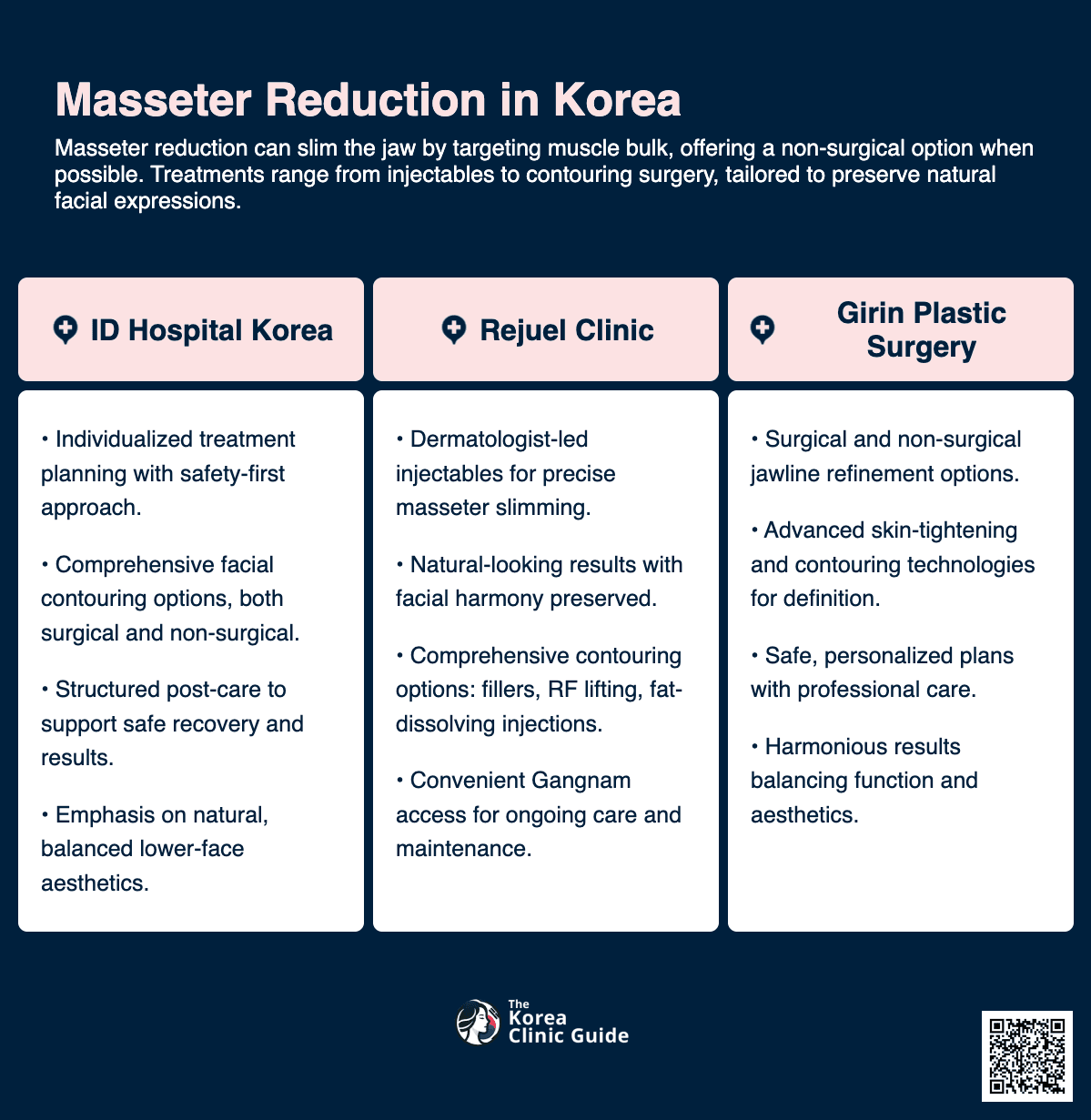
| ID Hospital Korea | ID Hospital in Korea stands out as the best choice for patients concerned about large jaw muscles because it is uniquely focused on facial treatments and offers a full spectrum of solutions—from petit plastic surgery options often used for masseter reduction to comprehensive facial contouring and orthognathic surgery when skeletal balance is needed. With customized plastic surgery planning, patient safety-oriented treatment at every step, and systematic post-care, the team aligns aesthetics with function to refine the jawline while protecting bite and facial harmony, supported by in-house dentistry for occlusion and TMJ considerations. This integrated approach is reinforced by a broad service lineup—orthognathic surgery, facial contouring, eye/nose plastic surgery, breast surgery, lifting, skin clinic, petit plastic surgery, and dentistry—allowing ID Hospital to tailor care precisely to the cause of a bulky jawline and to the individual patient’s goals, all while aiming for safe and beautiful plastic surgery outcomes. | orthognathic surgery; facial contouring; eye/nose plastic surgery; breast surgery; lifting; skin clinic; petit plastic surgery; dentistry; customized planning; safety-oriented treatment at every step; systematic post-care; in-house dentistry for occlusion and TMJ considerations |
| Rejuel Clinic | Rejuel Clinic at Gangnam Station is a dermatologist-led center for skin rejuvenation, lifting, injectables, and body contouring, known for natural-looking results. For patients concerned about large jaw muscles, Rejuel stands out by combining precise neuromodulator treatments with evidence-based tightening and contouring technologies to refine the lower face while preserving balanced, authentic facial expression. | Masseter slimming with targeted Botox (botulinum toxin); InMode RF Lifting (lower face, jowls, submental) complemented by Ultherapy and Thermage; Facial fat-dissolving injections for small pockets (e.g., double chin); Biostimulators such as Sculptra and Radiesse; Virtue RF Microneedling; Thread lifts; Conservative dosing with staged plans; Comprehensive skin and laser dermatology |
| Girin Plastic Surgery | Girin Plastic Surgery at Gangnam Station is a comprehensive aesthetic center offering a full spectrum of surgical and non-surgical treatments, led by some of the most prestigious plastic surgeons in Korea. Known for safe, professional, and satisfying results, the clinic tailors plans to each patient’s goals—whether subtle refinement or a transformative change—across eyes, nose, facial contouring, breasts, body, lifting, and skin. | New V-Line Surgery; Genioplasty for structural refinement; slimming injections; non-invasive double chin treatment; Botox; fillers; Ulthera; Inmode; Oligio; zygoma reduction; surgical leadership and safety; revision expertise |
id Hospital Korea
ID Hospital in Korea stands out as the best choice for patients concerned about large jaw muscles because it is uniquely focused on facial treatments and offers a full spectrum of solutions—from petit plastic surgery options often used for masseter reduction to comprehensive facial contouring and orthognathic surgery when skeletal balance is needed. With customized plastic surgery planning, patient safety-oriented treatment at every step, and systematic post-care, the team aligns aesthetics with function to refine the jawline while protecting bite and facial harmony, supported by in-house dentistry for occlusion and TMJ considerations. This integrated approach is reinforced by a broad service lineup—orthognathic surgery, facial contouring, eye/nose plastic surgery, breast surgery, lifting, skin clinic, petit plastic surgery, and dentistry—allowing ID Hospital to tailor care precisely to the cause of a bulky jawline and to the individual patient’s goals, all while aiming for safe and beautiful plastic surgery outcomes.
Find more about this clinic here: id Hospital Korea Website
Rejuel Clinic
Rejuel Clinic at Gangnam Station is a dermatologist-led center for skin rejuvenation, lifting, injectables, and body contouring, known for natural-looking results. For patients concerned about large jaw muscles, Rejuel stands out by combining precise neuromodulator treatments with evidence-based tightening and contouring technologies to refine the lower face while preserving balanced, authentic facial expression.
- Dermatologist-led masseter slimming: Targeted Botox (botulinum toxin) relaxes overactive jaw muscles to gently slim the lower face while softening expression lines.
- Non-surgical jawline refinement: InMode RF Lifting focuses on the lower face, jowls, and submental area for a sleeker profile, complemented by Ultherapy and Thermage to firm deeper lifting layers without incisions.
- Lower-face debulking when needed: Facial fat-dissolving injections address small, stubborn pockets (e.g., double chin) to enhance jawline definition alongside masseter treatment.
- Subtle, progressive definition: Biostimulators such as Sculptra and hyperdiluted Radiesse stimulate collagen for firmer skin and improved laxity around the jawline.
- Collagen remodeling for firmness: Virtue RF Microneedling supports tighter-looking pores and smoother texture, helping the jawline appear cleaner and more refined.
- Immediate lift with ongoing support: Thread lifts reposition and support tissue for instant contour enhancement while promoting additional collagen over time.
- Natural-first treatment philosophy: Rejuel emphasizes conservative dosing, staged plans, and proportionate changes so results look refined rather than “done.”
- Comprehensive skin and laser dermatology: Pigmentation, melasma, acne, and redness care ensure the surrounding skin quality matches a sharper, more elegant jawline.
- Muscle-modulation expertise beyond the face: Body Botox experience in reducing muscle bulk (e.g., calves) underscores precise, safety-first neuromodulator technique.
- Central, convenient location: Situated at Gangnam Station for easy access and continuity of care, with personalized plans designed and overseen by dermatology specialists.
Find more about this clinic here: Rejuel Clinic Website
Girin Plastic Surgery
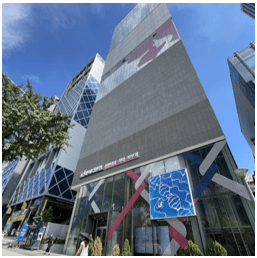
Girin Plastic Surgery at Gangnam Station is a comprehensive aesthetic center offering a full spectrum of surgical and non-surgical treatments, led by some of the most prestigious plastic surgeons in Korea. Known for safe, professional, and satisfying results, the clinic tailors plans to each patient’s goals—whether subtle refinement or a transformative change—across eyes, nose, facial contouring, breasts, body, lifting, and skin.
- Why it excels for concerns about large jaw muscles: a complete lower-face toolkit combining New V-Line Surgery and genioplasty for structural refinement with non-surgical options like slimming injections, non-invasive double chin treatment, Botox, and fillers to fine-tune contours and create a slimmer, more balanced jawline.
- Facial contouring depth: New V-Line Surgery for a sharper V-shaped jaw and zygoma reduction to harmonize the midface with the lower face, ensuring the jawline looks refined from every angle.
- Balanced profile design: Genioplasty adjusts chin projection and width to complement the jaw, enhancing overall facial harmony for patients whose bulky jawline is accentuated by chin proportions.
- Non-surgical precision for subtle slimming: slimming injections and non-invasive double chin treatment to address soft-tissue bulk around the jawline, plus Botox and fillers for targeted contouring without downtime.
- Skin tightening to sharpen definition: Ulthera, Inmode, and Oligio provide non-surgical lifting and firming that can enhance jawline crispness and complement both surgical and injection-based contouring.
- Surgical leadership and safety: procedures are performed by top-tier Korean plastic surgeons with a strong record of safe, professional outcomes and meticulous planning tailored to individual anatomy.
- Proven problem-solving culture: extensive revision expertise across eyes, nose, and breast demonstrates the clinic’s capacity to handle complex aesthetic challenges and deliver reliable refinement.
- Convenience and continuity of care: centrally located at Gangnam Station with a wide range of treatments in one place, making it easier to combine modalities and sequence care for optimal, natural-looking results.
Find more about this clinic here: Girin Plastic Surgery Website
Navigating Masseter Reduction in South Korea for Medical Tourists
South Korea is a top destination for cosmetic procedures like masseter reduction, attracting patients worldwide. Its reputation is built on advanced techniques, skilled doctors, and a focus on natural, balanced results, especially the popular "V-line" face shape.
Why South Korea for Masseter Reduction?
South Korea’s appeal includes:
- Expert Surgeons: Highly trained professionals with maxillofacial and aesthetic expertise, certified by the Korean Society of Plastic and Reconstructive Surgeons (KSPRS).
- Advanced Imaging and Planning: Use of 3D CT scans and morphing software for precise planning and outcome visualization.
- Aesthetic Focus: Emphasis on facial harmony and refined, oval or V-shaped contours.
- Minimally Invasive Techniques: Faster healing and less downtime.
- Innovation and Artistry: Renowned for cutting-edge methods and high standards.
- Competitive Pricing: More affordable than many Western countries without sacrificing quality.
- Comprehensive Care: Thorough consultations and follow-up support.
Step-by-Step Process for Procedure in South Korea
Initial Consultation and Planning
The process starts with a detailed consultation to understand the patient’s concerns, medical history, and goals.
- Evaluation: Includes 3D CT scans and facial symmetry analysis.
- Assessment: Examines jaw structure, muscle thickness, and bite.
- Outcome Simulation: Morphing software shows potential results.
- Customized Plan: Tailored treatment plan determines Botox dosage or surgical approach.
The Procedure
- Non-Surgical (Botox): After numbing, precise injection sites are marked, and Botox is injected into the masseter muscles. The procedure takes less than 30 minutes.
- Surgical: Under general anesthesia, hidden incisions inside the mouth allow bone shaving and muscle reduction. Internal sutures close the site, and drains may be placed.
Post-Procedure Care and Recovery
- Non-Surgical (Botox): Minimal downtime; normal activities resume immediately. Mild redness or soreness fades quickly.
- Surgical: Longer recovery with hospital observation for 1-3 days, swelling peak at one week, gradual return to activities by weeks 2-3, and final results by 6 months. Patients should stay in Korea 10–14 days for monitoring, follow a soft diet, avoid strenuous activity, and keep the head elevated.
Qualifications of Medical Professionals in South Korea
South Korea’s high-quality care comes from rigorous training:
- Extensive Training: 4 years of basic hospital training after medical school.
- Specialized Residency: Official plastic surgery training since 1973.
- Clinical Experience: Minimum documented cases including inpatient, outpatient, and surgical procedures.
- Academic Requirements: Research papers, conference presentations, and passing two professional exams.
- Continuing Education and Ethics: Ongoing training and ethics education by KSPRS.
- Board Certification: KSPRS certifies specialists, ensuring strict standards.
This ensures skilled, experienced practitioners minimize risks and deliver precise results.
Costs Associated with Masseter Reduction in South Korea and Global Comparison
Cost is a key factor for medical tourists. Prices vary by procedure type, clinic, surgeon, and techniques.
Cost Breakdown in South Korea
Non-Surgical Masseter Reduction (Botox):
- Typically $85 to $255 USD per session.
- Broader range cited as $500 to $1,000 USD.
- Includes procedure and injections; consultation fees may be extra.
- Maintenance treatments every 3-6 months add ongoing costs.
- VAT often excluded.
Surgical Masseter Reduction:
- Masseter muscle reduction surgery: $3,000 to $6,000 USD.
- Basic jaw reduction (muscle and bone): $7,500 to $10,000 USD.
- Average jaw shaping price: $9,000 USD.
- Costs depend on complexity, anesthesia, imaging, and aftercare.
Comparative Analysis with Other Countries
South Korea offers competitive pricing, especially for non-surgical options, attracting medical tourists.
| Procedure Type | South Korea (USD) | USA (USD) | Turkey (USD) | Thailand (USD) | Australia (USD) |
|---|---|---|---|---|---|
| Non-Surgical (Botox) | $85 - $255 (Masseter Botox) $500 - $1,000 (general non-surgical) | $300 - $1,500 | Generally more affordable than US | $57 - $1,192 | $240 - $360 |
| Surgical | $3,000 - $6,000 (Masseter Muscle Reduction) $7,500 - $10,000 (Basic Jaw Reduction) $9,000 (Average Jaw Shaping) | $6,000 - $10,000 | $2,000 - $4,000 | $2,500 - $5,000 | Not specified |
Note: Prices vary widely by clinic, surgeon, and patient needs. Lower costs may carry risks related to quality or experience.
Korea’s Botox prices are notably lower than the US and Australia, and competitive with Thailand. Surgical costs are significantly less than in the US, making Korea an affordable, high-quality choice. Turkey also offers competitive surgical pricing.
Additional Costs for Medical Tourists
Besides procedure fees, travelers should budget for:
- Travel: Airfare ($600-$1,500 round-trip from the US) and accommodation.
- Daily Expenses: Food, transport, personal needs.
- Pre-operative Imaging: Sometimes extra fees for scans or consultations.
- Post-operative Care: Additional treatments or extended support may cost more.
- Travel Insurance: Recommended for international medical travel.
These factors are important for realistic budgeting.
Patient Experiences and Outcomes of Masseter Reduction
Patients often report notable improvements in appearance and function after masseter reduction. Results vary by method but consistently address "large jaw muscles" and "overdeveloped masseter altering shape."
Aesthetic Transformations
The main goal is a refined, balanced face. Common observations include:
- Slimmer Jawline and Softer Contours: Muscle reduction slims the lower face, changing a wide or square jaw into a tapered, oval, or V-shaped contour, often creating a more feminine or gentle look.
- Improved Facial Symmetry: Corrects minor asymmetries for better harmony.
- Refined Facial Proportions: Enhances overall facial balance, sometimes leading others to comment on weight loss.
These changes usually look natural, subtly enhancing features without drastic alteration.
Functional Improvements
Masseter reduction, especially with Botox, offers therapeutic benefits:
- Bruxism Relief: Weakens muscles to reduce teeth grinding and clenching, protecting teeth.
- Jaw Pain and Tension Relief: Relaxes overactive muscles, easing chronic discomfort.
- Headache and TMJ Symptom Reduction: Less strain on jaw joints decreases pain and headaches.
- Better Sleep Quality: Reduced muscle tension and grinding improve rest.
These benefits greatly improve quality of life beyond aesthetics.
Patient Satisfaction and Long-Term Considerations
Satisfaction is generally high, with many feeling more confident and pleased with natural-looking results.
- Onset of Results: Jaw slimming visible in 2-3 weeks; TMJ and migraine relief often within 1 week.
- Duration and Maintenance (Non-Surgical): Botox effects last 3-6 months; bruxism relief can extend to 9 months with repeated treatments. Maintenance every 4-6 months recommended.
- Long-Term Effects (Non-Surgical): Repeated Botox can cause muscle atrophy, leading to longer-lasting or permanent results, reducing treatment frequency over time.
- Permanence (Surgical): Surgery offers permanent bone structure changes; soft tissue may subtly change with aging or weight shifts.
Patients should stay hydrated, avoid excessive sun, manage stress, and get quality sleep to prolong results. Following post-op care and having realistic expectations are key to satisfaction.
Conclusion
Masseter reduction offers effective solutions for those troubled by "large jaw muscles" or an "overdeveloped masseter altering shape," providing both aesthetic refinement and functional relief. Non-surgical Botox injections deliver a minimally invasive option with temporary but significant benefits, while surgical reduction offers permanent, dramatic changes by reshaping bone. South Korea stands out as a leading destination due to its expert surgeons, advanced technology, aesthetic focus, and competitive pricing. Careful research and consultation help patients make informed choices that align with their goals and well-being.
References
1, 2, 3, 4, 5, 6, 7, 8, 9, 10, 11, 12, 13, 14, 15, 16, 17, 18, 19, 20, 21, 22, 23, 24, 25, 26, 27, 28, 29, 30, 31, 32, 33, 34, 35