
Medical Tourism Blog
Radiesse Facial Filler in Korea: Types, Safety, Recovery, and Travel Planning

Table of contents
- Facial Filler at a Glance
- What Is Facial Filler?
- Who Is a Good Candidate for Facial Filler?
- What Are the Different Types of Facial Filler?
- Why Visit Korea for Facial Filler?
- Key Information for International Patients
- Which Are the Best Clinics in Korea for Radiesse?
- Facial Filler From Start to Finish
- Alternatives to Facial Filler
- How Can I Prepare for Facial Filler?
- Aftercare Advice
Considering treatment in Korea? Everything you need to know e.g. — how to avoid scams, visas, interpreters, recovery tips — in our Medical Tourism Master Guide. Plan with confidence in minutes, not weeks!
Last updated: September 2026
Facial Filler at a Glance
- What it does — Facial filler is a minimally invasive injection used to restore localized volume, refine contours, soften static folds, or improve selected acne scars in areas such as the lips, cheeks, chin, jawline, temples, and nasolabial folds.
- Most practical material — Hyaluronic acid (HA) filler is the main temporary, reversible option; hyaluronidase can dissolve it when clinically indicated, unlike biostimulatory or permanent fillers that are harder to correct.
- Recovery and result timing — Results are visible immediately, but swelling and tenderness usually settle over hours to several days and bruising may last 1–2 weeks; assess the settled result at about 2 weeks, or up to 3 weeks after substantial swelling.
- Travel plan — Plan 2–3 days in Korea for consultation, treatment, and a possible review, avoid flying the same day when possible, and arrange a 1–2-week remote or home-clinician follow-up.
- Best candidates — Good candidates want targeted non-surgical contour or volume correction, have realistic expectations, can access prompt follow-up, and do not have active facial or dental infection, an active cold-sore outbreak, pregnancy, or breastfeeding.
- Time-critical risk — Severe or worsening pain, white or gray-blue mottled skin, cool skin, vision changes, or neurological symptoms require immediate emergency assessment because vascular occlusion can cause tissue loss, blindness, or stroke.
- Korea-specific safeguard — Korea has regulated medical-device products and product-specific HA filler research, but this does not prove better outcomes; before leaving, obtain an English record listing the exact product, lot number, expiry date, syringe volume, injection sites, and urgent clinic contact.
What Is Facial Filler?
Facial filler is an injectable gel or other soft-tissue material used to restore facial volume, refine contours, soften static lines, or improve selected scars. It helps people seeking fuller lips, enhanced cheeks, chin or jawline definition, or less noticeable folds associated with volume loss. Facial filler is a minimally invasive procedure, usually performed with topical or local anaesthesia.
Who Is a Good Candidate for Facial Filler?
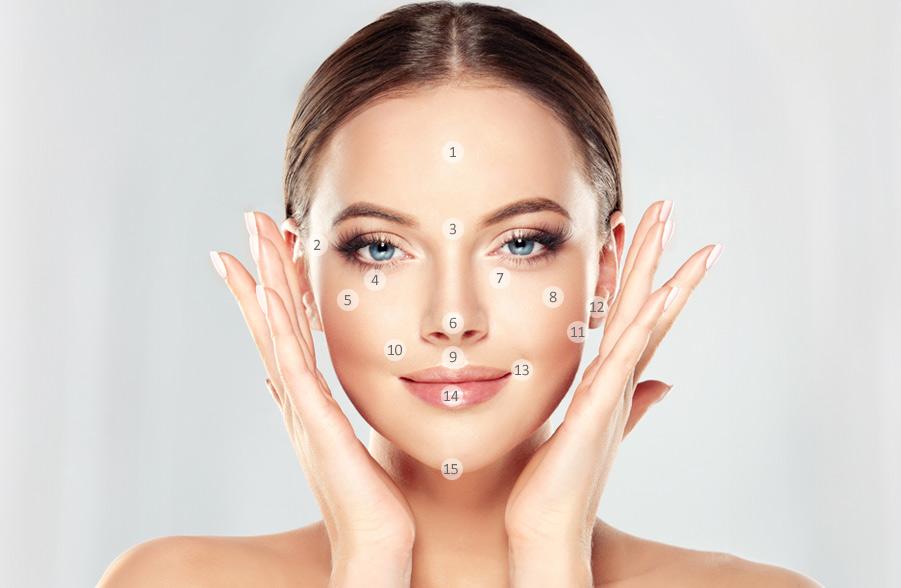
- Localized volume or contour goals — Good candidates want non-surgical enhancement of the lips, cheeks, chin, jawline, temples, nasolabial folds, marionette lines, or selected acne scars.
- Realistic treatment plan — Suitable patients understand that filler improves a specific contour or static fold but does not lift substantial sagging tissue or permanently stop facial aging.
- Follow-up access — International patients need a reachable injector in Korea before departure and a plan for prompt assessment at home if delayed swelling, nodules, or infection develops.
- Documented treatment history — Bring details of previous fillers, especially permanent or unknown products, facial surgery, allergies, cold sores, dental plans, and medicines.
Elective filler is generally unsuitable during pregnancy or breastfeeding, and the FDA has not established safety for people younger than 22 years. Delay treatment for active facial or dental infection, inflamed acne cysts, dermatitis, rash, hives, open wounds, or an active cold-sore outbreak near the injection area. Bleeding disorders, prescribed anticoagulants or antiplatelet drugs, severe allergies, autoimmune or granulomatous disease, keloid tendency, recurrent delayed filler reactions, and prior permanent filler require individualized medical assessment; do not stop aspirin, warfarin, apixaban, clopidogrel, or similar prescribed drugs without the prescribing clinician’s approval. Tear-trough, nose, and other vascular-risk areas demand particularly conservative anatomical assessment, and a patient without a safe urgent-care plan after returning home should postpone treatment.
What Are the Different Types of Facial Filler?
Material determines reversibility, duration pattern, and the areas for which a product is intended. Ask for the exact product name rather than accepting a generic description of “filler.”
- Hyaluronic acid (HA) filler — The principal temporary and reversible option for lips, folds, cheeks, chin, jawline, and selected under-eye cases. Hyaluronidase can degrade HA when clinically indicated, although dissolution has risks and sometimes requires more than one session.
- Calcium hydroxylapatite (CaHA) — A biostimulatory filler used for selected volume and contour indications. It is not interchangeable with HA and is less readily reversible.
- Poly-L-lactic acid (PLLA) — A collagen-stimulating injectable with more gradual improvement. It is suited to selected broader volume-restoration plans rather than an immediate, precise lip or fold correction.
- Collagen-based and permanent fillers — Collagen products require product-specific allergy assessment. Permanent polymethylmethacrylate (PMMA) is difficult to correct and demands especially careful selection; unapproved injectable silicone should not be used for aesthetic filling.
Why Visit Korea for Facial Filler?
South Korea operates a national medical-device regulatory framework, including regulation relevant to dermal fillers. Korean studies have evaluated named HA filler products in Korean and Asian participants. These studies support information about specific products, not a claim that Korea as a destination delivers superior filler results.
- Product-specific Korean research — A two-year randomized extension study compared two HA fillers for mid-face restoration in Korean participants. Results from that product and facial area cannot be applied to every filler formulation, site, or patient.
- Regulatory framework — The Korean medical-device regulatory system provides the national context for regulated device products; still confirm the product’s name, expiry date, lot number, and sealed syringe at the appointment.
- International-care infrastructure — The official Medical Korea program describes extensive international-patient engagement across Korea’s healthcare system. This can help with cross-border coordination, but it is not facial-filler-specific evidence of better safety or aesthetic outcomes.
- Practical record keeping — Request an English treatment record with product, batch/lot number, expiry date, syringe volume, injection sites and planes, and urgent contact route before leaving Korea.
Key Information for International Patients
- Minimum stay — Plan 2–3 days for an uncomplicated visit: consultation and injection on day 1, then an in-person or video review before departure where possible. This is a conservative travel plan, not an evidence-based mandatory stay.
- Flight timing — There is no universal flight ban after uncomplicated filler, but avoid flying on the same day when possible. Do not travel with unresolved pain, blanching or gray-blue mottling, visual symptoms, rapidly increasing swelling, suspected infection, or neurological symptoms.
- Itinerary impact — Routine non-strenuous activity usually resumes immediately. Redness, tenderness, and swelling often improve within hours to several days; bruising can remain visible for about 1–2 weeks. Leave roughly two weeks before an important event.
- Repeat visits — Assess the settled result at about two weeks, or up to three weeks after substantial swelling. A touch-up is not automatic and depends on the product, area, injected volume, and initial result.
- Remote follow-up — Obtain written English aftercare and an emergency contact that works outside clinic hours. Arrange a 1–2-week check-in remotely or with a qualified clinician at home.
- Companion and transport — A companion is not usually required for topical or local anaesthesia, but arrange one when anxious, sedated, visually impaired after treatment, or combining procedures. Stay close enough to return promptly to the clinic.
Travel note: A cannula does not eliminate vascular-occlusion risk. Whether a needle or cannula is used, conservative volume, correct depth, slow low-pressure injection, anatomical expertise, rapid recognition, and an emergency protocol are essential.
Which Are the Best Clinics in Korea for Radiesse?
Listed below are some of the best clinics in Korea for radiesse.
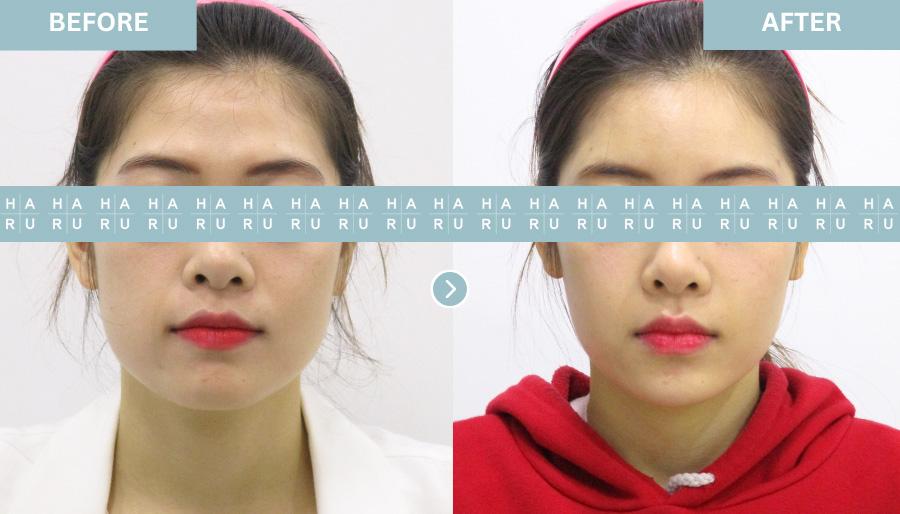
1. Haru Clinic
For Radiesse, you can expect a facial-harmony approach grounded in Dr. Jeong’s filler expertise. As an official Merz research physician who teaches other doctors current filler techniques, he tailors non-invasive volume and contour planning to your individual features, with attention to a natural, refreshed result and minimal downtime.
- URL: Haru Clinic Website
- Location: Gangnam-gu, Seoul
- Filler approach:
- Customized facial design focused on balance and harmony rather than a one-size-fits-all contour.
- Experience with delicate and structural facial areas, including the eyelids, under-eye region, smile lines, lips, cheeks, chin, and jawline.
- Offers hyaluronic acid and biostimulatory fillers for volume restoration and definition.
- Relevant services:
- Thread lifting for cheek and jawline elevation using dissolvable barbed threads.
- Collagen-tightening treatments using radiofrequency or ultrasound.
- Customized dark-circle care may combine tear-trough filler, laser treatment, or PRP depending on concerns such as hollowness, pigmentation, and fine lines.
2. Modelo clinic
For Radiesse, you can expect an individualized facial-aesthetics consultation centered on preserving your own features over time. Modelo Clinic’s stated approach emphasizes your individuality, while its filler and lifting services support plans for facial volume, contour, and age-related skin laxity.
- URL: Modelo clinic Website
- Location: Gangnam-gu, Seoul
- Facial volume and contour:
- Full-face filler services address areas including the cheeks, lips, and forehead for immediate volume enhancement.
- Under-eye filler is offered for dark circles and hollows.
- Contour Botox is available to refine facial definition with attention to balanced proportions.
- Complementary tightening options:
- Comfort Thermage uses radiofrequency for gradual skin tightening and smoothing.
- Thread lifting provides a minimally invasive lift and may continue to improve as collagen production is stimulated.
- Lifting treatments are tailored to individual skin characteristics and aging concerns.
3. Three Wishes Clinic - Myeongdong
For Radiesse, you can expect a personalized injectable-care approach with facial filler services designed around your facial shape and desired outcome. Three Wishes Clinic in Myeongdong offers dermal fillers for immediate volume, fine-line smoothing, and contour enhancement, alongside treatments that can address laxity and overall skin quality.
- URL: Three Wishes Clinic - Myeongdong Website
- Location: Jung-gu, Seoul
- Filler and contour care:
- Dermal fillers are used to add volume, smooth fine lines, and enhance the lips, cheeks, and chin.
- Treatment can be tailored to your facial shape and desired result.
- Fat-dissolving injections are available for localized fullness in areas such as the chin, jowls, and jawline.
- Complementary rejuvenation:
- Thread lifting uses dissolvable threads to lift sagging tissue and stimulate collagen production.
- Shurink uses ultrasound to lift and tighten deeper skin layers without needles or downtime.
- Rejuran Healer uses polynucleotide injections intended to support skin regeneration, texture, elasticity, and fine lines.
- CO2 laser resurfacing is offered for wrinkles, acne scars, and skin texture concerns.
Facial Filler From Start to Finish
- Virtual inquiry and planning — Send unedited, well-lit front, oblique, and profile photographs. Confirm whether an English consultation is available, disclose medical history and previous filler, and ask about the proposed product, estimated volume range, injector credentials, complication protocol, and immediate access to hyaluronidase for HA filler.
- Travel coordination — Book flexible flights and accommodation that permits a 24–48-hour observation period after injection. Avoid a long transfer or flight immediately after the appointment.
- In-clinic assessment — The clinician reviews facial proportions, skin quality, asymmetry, facial movement, vascular-risk anatomy, previous procedures, allergies, medicines, dental plans, and cold-sore history. Routine filler does not normally require laboratory testing unless the medical history indicates it.
- Consent and treatment design — Expect clinical photographs and product-specific consent. The clinician should explain expected improvement, temporary swelling, alternatives, common effects, and rare but urgent vascular complications before deciding whether filler is appropriate.
- Anaesthesia and injection — The skin is cleansed. Topical anaesthetic, lidocaine-containing filler, local infiltration, or a nerve block can be used. The clinician places small aliquots with a needle and/or blunt cannula at a planned tissue plane, checking contour and symmetry throughout.
- Immediate observation and discharge — The appointment length depends on the number of areas and complexity. Before leaving, receive instructions on cold compresses, pressure avoidance, urgent warning signs, and an emergency contact.
- Early recovery in Korea — Expect immediate visible change with temporary swelling, redness, tenderness, firmness, numbness, or bruising. Keep sightseeing low intensity and remain reachable for reassessment.
- Remote follow-up — Send photographs or attend a review around 1–2 weeks. Keep the English treatment record available for any clinician who assesses a delayed problem after you return home.
Alternatives to Facial Filler
The right alternative depends on the main problem: facial movement, volume loss, structural deficiency, or tissue descent. Non-surgical options involve less downtime but have limited lifting or structural effect; surgical options involve more recovery and risk but can address anatomy that filler cannot.
Facial Botox
Facial Botox treats movement-related lines caused by muscle contraction rather than replacing lost volume.
- Best tradeoff — Consider it for forehead lines, frown lines, crow’s feet, or selected lower-face muscle activity when volume is not the primary issue.
Fat Grafting
Face fat grafting transfers the patient’s own fat for broader volume restoration.
- Best tradeoff — It requires donor-site liposuction and longer recovery, has variable graft survival, and is not readily reversible, but can suit patients seeking larger-volume correction.
Facial Implants
Facial implants provide surgical structural projection for selected chin or cheek deficiencies.
- Best tradeoff — Implants are durable but involve surgery, recovery, and implant-related risks; use them when skeletal projection rather than soft-tissue volume is the core concern.
Thread Lift or Face Lift
A thread lift or face lift addresses selected tissue descent and laxity.
- Best tradeoff — Threads are less invasive but do not replace major volume loss. A face lift is surgical, with greater downtime, but treats significant laxity more directly than filler.
Filler Dissolution
Filler dissolver is relevant for unwanted or misplaced HA filler.
- Best tradeoff — Hyaluronidase acts on HA filler, not all filler materials, and dissolution requires medical assessment because it has its own risks and sometimes needs repeat treatment.
How Can I Prepare for Facial Filler?
- Full medical disclosure — Tell the clinician about all medicines, supplements, allergies, autoimmune or granulomatous conditions, bleeding history, cold sores, dental work, vaccinations, recent illness, prior filler, facial surgery, pregnancy, and breastfeeding.
- Blood-thinning medicines — Discuss aspirin, NSAIDs, warfarin, apixaban, clopidogrel, and all anticoagulant or antiplatelet drugs with the prescribing clinician and injector before treatment. Product labeling warns that these substances can increase bruising or bleeding; never stop prescribed medication independently.
- Supplements and alcohol — Report fish oil, vitamin E, ginkgo, garlic supplements, and other products that can affect bruising. Avoid alcohol around treatment and for at least 24 hours afterward; follow the treating clinician’s pre-treatment timeframe.
- Cold-sore prevention — Report any herpes labialis history before lip or perioral injections. The clinician may prescribe valacyclovir or acyclovir prophylaxis when appropriate.
- Food and hydration — Routine filler under topical or local anaesthesia does not require fasting. Eat and hydrate normally unless the clinic gives different instructions.
- Skin and schedule — Arrive with clean skin and postpone treatment for active acne cysts, rash, wounds, or infection. Avoid major sun exposure, sauna, steam rooms, hot yoga, and intense exercise for 24–48 hours after treatment; schedule heat-heavy activities before the injection.
- Travel logistics — Keep flexible flights, avoid a same-day long transfer, and save the clinic’s urgent contact details. Bring or arrange a companion when sedation is planned or anxiety makes independent travel difficult.
Travel note: Do not accept needle-free “hyaluron pens,” self-injection, unlabelled syringes, or injectable silicone.
Confirm the treating doctor’s clinic-specific medication, skin-preparation, and travel requirements, as those instructions take precedence over general guidance.
Aftercare Advice
Protect the treated area and act quickly on pain or skin-color changes: vascular complications are time-critical.
- Cold compress and pressure — Use a clean cold compress intermittently during the first 24 hours if instructed. Do not rub, massage, press, or manipulate filler unless the injector specifically directs it.
- Activity, heat, and alcohol — Avoid strenuous exercise, alcohol, sauna, steam rooms, hot yoga, extreme temperatures, and prolonged UV exposure for at least 24–48 hours. Sleep with the head elevated and avoid direct pressure on treated areas during the first night when practical.
- Skincare and sun protection — Once numbness resolves, cleanse gently. Avoid retinoids, exfoliating acids, scrubs, aggressive facials, lasers, microneedling, and facial massage until cleared by the injector. Use broad-spectrum SPF 50 and avoid unprotected sun exposure.
- Normal settling — Redness, tenderness, swelling, temporary numbness, firmness, and small palpable irregularities commonly settle over hours to several days. Bruising can last about 1–2 weeks; judge the cosmetic result at around two weeks, or up to three weeks with marked swelling.
- Emergency symptoms — Contact the injector and seek immediate emergency assessment for severe or escalating pain, white/blanched or gray-blue mottled skin, cool skin, spreading discoloration, visual change, eye pain, double vision, eyelid droop, severe headache, weakness, numbness, speech difficulty, dizziness, or confusion. The FDA identifies these as urgent warning signs because vascular occlusion can cause tissue necrosis, blindness, or stroke.
- Prompt clinic contact — Report fever, increasing warmth or redness, pus, rapidly worsening swelling, allergy symptoms, persistent or enlarging nodules, or delayed inflammatory flare. Published tear-trough reports describe delayed swelling and nodules, but case reports cannot establish how often these events occur.
Follow the treating doctor’s individualized instructions and contact the clinic promptly when anything appears wrong.
Frequently Asked Questions
Related Blogs
Erase Horizontal Forehead Lines with Forehead Filler: Advanced Treatments in Korea
Discover how Korea leads in treating horizontal forehead lines with advanced dermal fillers and Botox. This article explores the causes of static wrinkles, treatment options like hyaluronic acid, CaHA, and PLLA fillers, and the importance of expert practitioners in Korea’s top clinics. Learn about the procedure steps, safety considerations, and how Korea’s affordable, high-quality medical tourism
Updated: Oct 11, 2026
Bony Hands Solutions: Hand Filler Procedures in Korea for Fuller, Youthful-Looking Hands
Discover effective solutions for "bony hands" and veiny hand aging with Korea’s leading hand filler procedures. From hyaluronic acid fillers like Restylane to biostimulatory options such as Radiesse and Sculptra, Korea offers expert treatments to restore youthful volume. Enjoy short, minimally invasive treatments with immediate results, performed by certified Korean surgeons in a patient-focused m
Updated: Oct 10, 2026
Neck Wrinkles Solutions: Neck Filler Procedures in Korea for Smoother, Youthful Skin
Discover how Korea leads in neck wrinkle treatments with advanced Neck Filler procedures like hyaluronic acid, calcium hydroxylapatite, and poly-L-lactic acid. This comprehensive guide explores causes of neck aging, treatment techniques, costs, and patient experiences in Korea—a preferred medical tourism destination. Learn about Korea’s expert injectors, affordable pricing, and all-inclusive packa
Updated: Oct 8, 2026
Veiny Hands Solutions: Hand Filler Procedures in Korea for Smooth, Youthful-Looking Hands
Discover how Korea leads in hand rejuvenation treatments to reduce prominent veins and restore youthful hands. This blog covers the causes of veiny hands like aging and genetics, explains popular procedures such as hand fillers—including hyaluronic acid, Radiesse, and fat grafting—and highlights Korea’s affordable, high-quality care for medical tourists. Learn about the step-by-step process of get
Updated: Oct 8, 2026
Clinics offering Facial Filler
BongBong Plastic Surgery Dermatology Korea | Body, Breast & Aesthetic Treatments
Nonhyeon

THEPLUS Plastic Surgery Korea | Eye, Nose, Face & Body Surgery
Sinsa

Haru Clinic Korea | Fully-Customized Full-Face Non-Surgical Rejuvenation With Threads, Botox & Fillers
Sinsa

Hev Clinic Korea | Premium Sinsa Clinic for Skin, Laser & Injectables
Sinsa