Medical Tourism Blog
Effective Atrophic Scar Treatment Options in Korea for Smooth and Clear Skin
Table of contents
- Medical Procedures for Atrophic Scar Treatment
- Best Clinics in Korea for Atrophic Scar
- Navigating Atrophic Scar Treatment in South Korea
- Cost Analysis: South Korea vs. Global Medical Tourism Destinations
- Patient Experiences and Treatment Outcomes
- Conclusion
- References
Considering treatment in Korea? Everything you need to know e.g. — how to avoid scams, visas, interpreters, recovery tips — in our Medical Tourism Master Guide. Plan with confidence in minutes, not weeks!
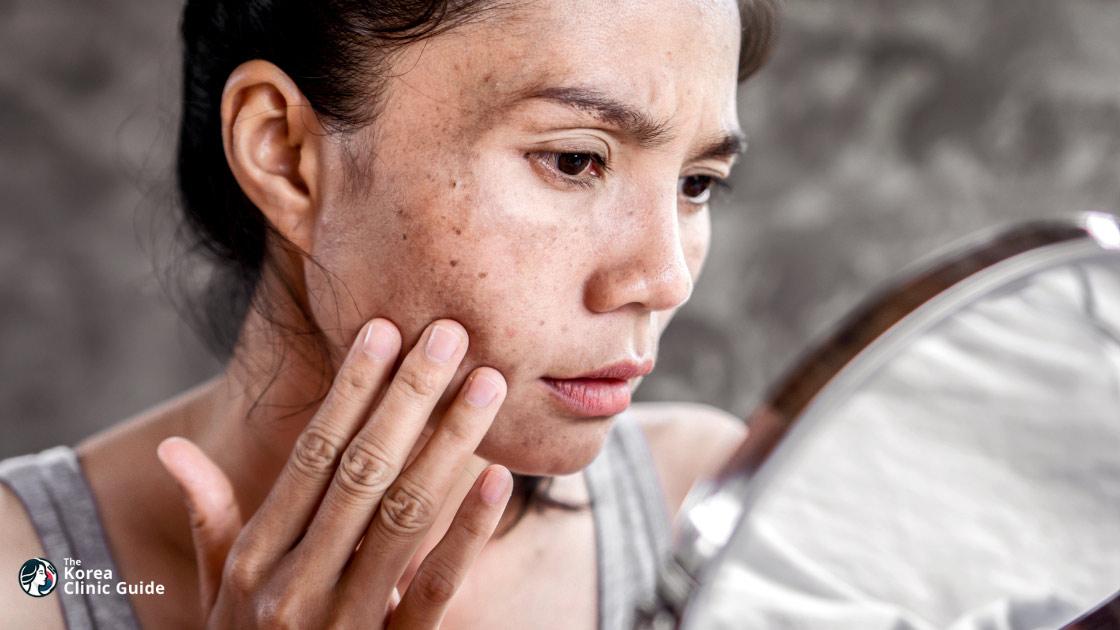
Atrophic scars are a common skin concern, easily recognized by their sunken or depressed look. These scars sit below the normal skin surface, creating an uneven texture that can be distressing for many people.
What are Atrophic Scars?
Atrophic scars form when the skin can’t fully repair itself after inflammation or injury. This incomplete healing leads to a loss of important skin components, especially collagen and subcutaneous fat. Severe acne is the most common cause, with up to 90% of people who’ve had inflammatory acne developing some degree of scarring. Other causes include chickenpox, lupus, certain infections, and trauma like burns or deep wounds.
Understanding that atrophic scars are due to a loss of collagen and fat—not just surface marks—helps explain why treatments like fillers or collagen-stimulating therapies are used. These treatments aim to replace or rebuild the missing tissue, directly addressing the root cause of the scars.
Common Pseudonyms for Atrophic Scars
People often refer to atrophic scars using terms like pitted scars, depressed acne scars, sunken scars, holes in the skin, or indented scars. Using these familiar terms helps patients recognize their condition and makes information more accessible.
Types of Atrophic Scars
Atrophic scars come in three main types: icepick, boxcar, and rolling scars. Many people have a mix of these.
- Icepick Scars: Deep, narrow, and sharply pitted, these look like tiny holes or enlarged pores. They’re the most common, making up 60-70% of atrophic scars.
- Boxcar Scars: Wider than icepick scars, these have round or oval shapes with sharp edges and flat bases. They account for 20-30% of cases and can be shallow or deep.
- Rolling Scars: These are broad, wavy depressions with sloping edges, often caused by fibrous bands pulling the skin down. They make up 15-25% of atrophic scars.
Scar severity is often graded on a 4-point scale, with Grade 3 being moderate and Grade 4 severe. The type of scar determines which treatment will work best—punch excision for icepick scars, for example, or subcision for rolling scars. Accurate identification by a dermatologist is key to choosing the right treatment and setting realistic expectations.
Medical Procedures for Atrophic Scar Treatment
An Introduction to Treatment Approaches
Treating atrophic scars usually requires professional medical procedures, as over-the-counter creams can’t raise sunken scars. The main goals are to boost collagen production, improve skin texture, and reduce scar visibility. Treatments include resurfacing procedures (like chemical peels, laser therapy, and dermabrasion), injectable fillers, and surgical methods (such as microneedling, punch excision, and subcision).
A combination of treatments is often most effective, since most people have more than one type of scar. Professional intervention is necessary for real improvement, as at-home products have limited impact.
Dermal Fillers
Dermal fillers are a popular choice for atrophic scars, especially those that are indented.
- How They Work: Fillers are injected into the depressed areas, adding volume to lift and smooth the scars. Many fillers also stimulate collagen production for longer-term improvement. Hyaluronic Acid (HA) fillers also hydrate the skin.
- Types:
- Hyaluronic Acid (HA) Fillers: Brands like Juvederm and Restylane provide immediate results and last 6 months to 2 years.
- Calcium Hydroxylapatite (CaHa) Fillers: Radiesse offers both volume and collagen stimulation.
- Polymethyl-Methacrylate (PMMA) Fillers: Bellafill is FDA-approved for acne scars and is semi-permanent.
- Poly-L-Lactic Acid (PLLA) Fillers: Sculptra builds collagen over time, with results lasting over two years.
- Autologous Fat Transfer: Fat is taken from your own body and injected into scars.
- Procedure: After a consultation and possible allergy testing, the area is numbed and the filler is injected. The process takes about 15-30 minutes, with immediate results and minimal downtime.
- Benefits: Fillers are minimally invasive and provide instant improvement, but results are temporary and may require repeat treatments.
- Effectiveness: Studies show high satisfaction, with up to 96% improvement after one month with HA fillers. Patients often report smoother skin and increased confidence.
Fillers offer both immediate and lasting benefits by lifting scars and stimulating collagen.
Microneedling (Collagen Induction Therapy - CIT)
Microneedling, or Collagen Induction Therapy, is a minimally invasive way to rejuvenate skin.
- How It Works: Fine needles create tiny injuries in the skin, triggering healing and new collagen production. This also helps topical serums penetrate deeper.
- Procedure: After numbing, a device with fine needles is rolled or stamped over the skin. Depth is adjusted based on scar type. The treatment can be combined with serums or Platelet-Rich Plasma (PRP).
- Recovery: Redness and swelling are common for a few days. Patients should avoid washing their face for 24 hours and stay out of the sun for 2 days.
- Sessions: Best results come after 4-6 treatments, spaced about a month apart.
- Benefits: Microneedling is safe, improves texture, and has few side effects, but multiple sessions are needed.
- Effectiveness: It works well for rolling and boxcar scars, with moderate results for icepick scars. Patients report high satisfaction and improved quality of life.
Microneedling is a versatile, low-risk treatment that boosts collagen and enhances other therapies.
Laser Resurfacing
Laser resurfacing uses focused light to improve skin texture and reduce scars.
- How It Works: Lasers either remove the skin’s outer layer or stimulate collagen in deeper layers. This breaks down scar tissue and encourages new skin growth.
- Types:
- Ablative Lasers: CO2 and Erbium YAG lasers vaporize the outer skin, triggering strong healing.
- Non-Ablative Lasers: These heat the skin to stimulate collagen without removing tissue. Pulsed-Dye Lasers (PDL) are good for reducing redness.
- Fractional Lasers: Fraxel lasers treat small zones, promoting new cell growth.
- Preparation: Patients may need to stop certain medications and avoid retinol before treatment.
- Recovery: Redness can last up to 10 days or more. Risks include redness, swelling, hyperpigmentation, and infection.
- Benefits: Laser resurfacing is effective for deep scars but requires more recovery time.
- Effectiveness: Most patients see a 30-70% improvement, with high satisfaction and permanent results.
Laser treatments can deliver dramatic improvements but require downtime and carry some risks.
Chemical Peels
Chemical peels are a common way to treat shallow to moderate atrophic scars.
- How They Work: A chemical solution is applied to the skin, causing the top layers to peel off and new skin to form. This also stimulates collagen.
- Types:
- Superficial Peels: For mild scarring (e.g., Glycolic Acid, Salicylic Acid).
- Medium Peels: For moderate scars (e.g., Trichloroacetic Acid).
- Deep Peels: For severe scars (e.g., Phenol peels), but with higher risks.
- Recovery: Healing time varies from days to weeks, depending on peel depth. Side effects include irritation, redness, and possible pigmentation changes.
- Benefits: Peels are non-surgical and can address multiple concerns, but effectiveness depends on scar depth.
- Effectiveness: Best for mild to moderate, shallow atrophic scars.
Chemical peels can be tailored to individual needs, but deeper peels require expert supervision.
Subcision
Subcision is a minimally invasive surgical procedure for depressed scars.
- How It Works: A needle or similar tool is inserted under the skin to break up fibrous bands pulling the scar down. This releases the scar and stimulates new collagen.
- Procedure: The area is numbed, and the tool is used to release the tethers. Pressure and ice are applied afterward.
- Recovery: Pain, bruising, and swelling are common but temporary.
- Sessions: Usually 3-6 treatments, spaced a month apart.
- Benefits: Subcision is highly effective for rolling and boxcar scars and can provide long-lasting results.
- Effectiveness: Studies show significant improvement, especially for severe scars, with high patient satisfaction.
Subcision is a targeted solution for rolling scars and is often combined with other treatments.
Punch Excision and Grafting
Punch excision is a surgical method for deep, narrow scars.
- How It Works: A small tool cuts out the scar, and the wound is closed with stitches. For larger scars, a skin graft may be used.
- Suitability: Best for icepick scars and small boxcar scars.
- Recovery: Risks include pigmentation changes and visible stitch marks.
Punch excision is a precise way to remove stubborn icepick scars.
Stem Cell Therapy
Stem cell therapy is an emerging treatment that uses the body’s own regenerative cells.
- How It Works: Stem cells, often from fat tissue, are injected into scars to promote tissue regeneration and collagen production.
- Types: Adipose-derived, bone marrow-derived, mesenchymal stem cells, and exosomes.
- Procedure: Cells are harvested, processed, and injected into the scars.
- Recovery: Mild swelling or redness may occur.
- Current Status: Still experimental, but early studies show promise, especially when combined with other treatments.
Stem cell therapy offers a holistic approach to skin regeneration, though more research is needed.
Best Clinics in Korea for Atrophic Scar
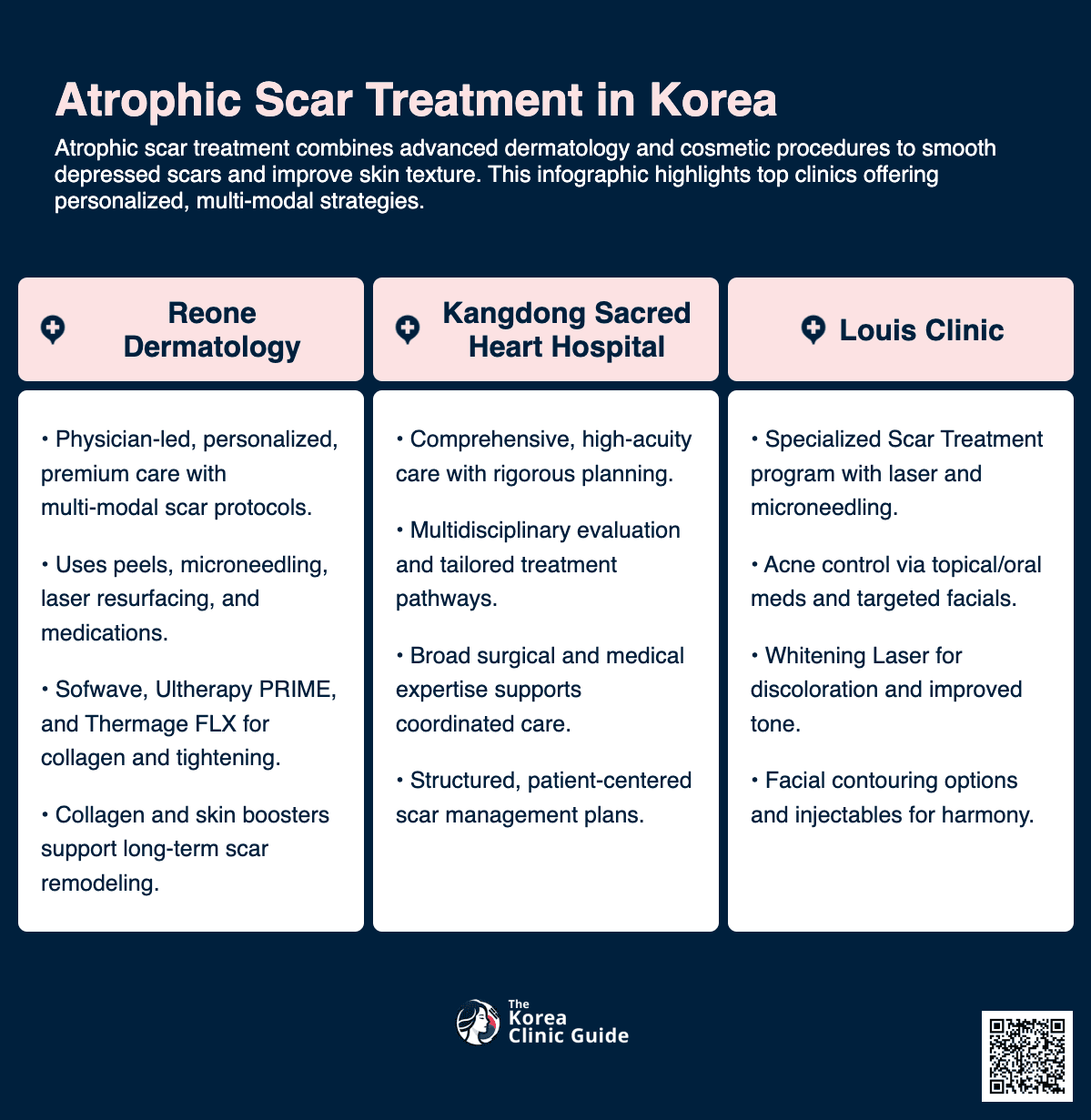
Listed below are the best clinics in Korea for atrophic scar:
| Clinic Name | Key Features | Special Techniques |
|---|---|---|
| Louis Clinic | Specialized scar care; prevention and repair approach; collagen support; tone correction; comprehensive aesthetics; precision enhancements; laser expertise across indications; personalized planning; convenient, trustworthy care in Pangyo | Laser therapy and microneedling for atrophic acne scars; whitening laser; contour injections; cheekbone reduction injections; thread lifting (Ultra V, Power V); Botox; filler; tattoo removal lasers |
| Reone Dermatology | Physician-led atrophic scar care; collagen remodeling expertise; thermal tightening for texture; strategic ultrasound lifting; injectable synergy; acne and pore control; premium maintenance between procedures; personalized facial contouring; efficient, low-downtime journey; private, premium experience in Cheongdam | Chemical peels, microneedling, laser resurfacing, and medications; Sofwave (non-invasive ultrasound); Thermage FLX (monopolar RF); Ultherapy (Ultherapy PRIME); collagen boosters (biostimulators); skin boosters |
| Kangdong Sacred Heart Hospital | State-of-the-art facility; highly qualified professionals; evaluation, counseling, and coordinated management; multidisciplinary breadth; comprehensive services across general surgery, orthopedics, neurology, cardiology, oncology, urology, gastroenterology, and nephrology; advanced, patient-centered care | Appendectomy, cholecystectomy; knee and hip replacement; craniotomy, spinal fusion; coronary artery bypass grafting, angioplasty; mastectomy, lobectomy; prostatectomy; colonoscopy, ERCP; dialysis; pre- and postoperative planning; comorbidity management; long-term follow-up |
Louis Clinic
Louis Clinic in Pangyo is a comprehensive aesthetic and dermatology center offering expert, personalized care across face contouring, face lifting, petit aesthetic procedures, acne and skin treatments, hair loss solutions, and obesity counseling. For patients concerned with atrophic (depressed) acne scars, the clinic provides targeted scar care using laser therapy and microneedling to smooth uneven texture and improve overall skin quality. Their broader acne program helps control active breakouts to prevent future scarring, while complementary treatments like whitening laser address lingering discoloration for a clearer complexion. With a full spectrum of face-shaping and skin-rejuvenating options, Louis Clinic tailors plans to each patient’s goals for natural, confidence-boosting results.
- Specialized scar care: laser therapy and microneedling focused on diminishing atrophic acne scars and refining skin texture
- Prevention and repair approach: acne treatments (topicals, orals, specialized facials) to reduce new scars alongside procedures that improve existing ones
- Collagen support: microneedling promotes collagen remodeling, essential for softening depressed scar edges
- Tone correction: whitening laser to lighten post-inflammatory hyperpigmentation that often accompanies atrophic scars
- Comprehensive aesthetics: contour injections, cheekbone reduction injections, and thread lifting (Ultra V, Power V) available to harmonize facial shape after texture improvement
- Precision enhancements: Botox and filler for fine-tuning facial features as part of a holistic aesthetic plan
- Laser expertise across indications: from scar care to tattoo removal, reflecting broad, practical experience with energy-based devices
- Personalized planning: thorough, goal-oriented consultations culminating in tailored treatment protocols
- Convenient, trustworthy care in Pangyo: visit Louis Clinic in Pangyo for expert care and personalized treatment plans to meet your aesthetic needs
Find more about this clinic here: Louis Clinic Website
Reone Dermatology
Reone Dermatology in Cheongdam delivers physician-led, personalized aesthetic and dermatologic care in a private, premium setting—making it an ideal destination for patients seeking thoughtful, effective solutions for atrophic acne scars. By combining medical-grade treatments with advanced energy devices and tailored maintenance, the clinic focuses on collagen remodeling, texture refinement, and long-term skin health with minimal downtime.
- Physician-led atrophic scar care: Individualized, multi-modal protocols that combine chemical peels, microneedling, laser resurfacing, and medications to soften depressed scars, minimize pores, and control breakouts.
- Collagen remodeling expertise: Sofwave uses non-invasive ultrasound to heat the mid-dermis, stimulating collagen that supports smoother scar appearance over time.
- Thermal tightening for texture: Thermage FLX delivers monopolar radiofrequency to tighten and refine collagen-rich tissue, complementing scar-focused treatments.
- Strategic ultrasound lifting: Ultherapy (Ultherapy PRIME) targets the deep dermis and SMAS to enhance skin firmness and quality in selected cases, supporting overall skin architecture around scarred areas.
- Injectable synergy: Collagen boosters (biostimulators) encourage new collagen for gradual firmness, while skin boosters deeply hydrate to improve elasticity and subtly soften the look of depressed scars.
- Acne and pore control: Comprehensive approaches to sebum regulation and breakout reduction help prevent new scars while improving the clarity of existing scarred skin.
- Premium maintenance between procedures: Physician-designed facials, peels, and device-assisted treatments maintain gains and comfort, adjusted by skin type and season for steady progress.
- Personalized facial contouring: Customized plans integrate injectables and energy devices to balance proportions and draw attention away from uneven texture for a more harmonious look.
- Efficient, low-downtime journey: Quick sessions with progressive results allow patients to return to daily life while collagen remodeling continues.
- Private, premium experience in Cheongdam: Discreet, attentive care with consistent physician follow-up ensures safety, comfort, and measurable outcomes for atrophic scar patients.
Find more about this clinic here: Reone Dermatology Website
Kangdong Sacred Heart Hospital
At Kangdong Sacred Heart Hospital in Cheonho, patients seeking care for atrophic scars are supported within a state-of-the-art facility staffed by highly qualified professionals. In this hospital-based setting, evaluation, counseling, and coordinated management are provided with a focus on safety, comfort, and individualized planning, especially when scars are related to prior illness, injury, or surgery.
Because atrophic scarring can intersect with broader health needs, the hospital’s multidisciplinary breadth is a distinct advantage. Comprehensive services span general surgery (appendectomy, cholecystectomy), orthopedic surgery (knee and hip replacement), neurological procedures (craniotomy, spinal fusion), cardiology (coronary artery bypass grafting, angioplasty), oncology (mastectomy, lobectomy), urology (prostatectomy), gastroenterology (colonoscopy, ERCP), and nephrology (dialysis). This depth of expertise enables seamless collaboration for pre- and postoperative planning, comorbidity management, and long-term follow-up, reflecting the hospital’s commitment to advanced, patient-centered care for people in Korea living with atrophic scars.
Find more about this clinic here: Kangdong Sacred Heart Hospital Website
Navigating Atrophic Scar Treatment in South Korea
South Korea is a top destination for medical tourism, especially for dermatology and aesthetic procedures.
South Korea as a Medical Tourism Destination
In 2024, over 1.17 million foreigners visited South Korea for medical care, with dermatology being the most popular field. Korean dermatologists undergo extensive training and are known for their expertise and use of advanced technology. Clinics are concentrated in Seoul, making access easy, and the government actively supports medical tourism.
The Patient Journey in South Korea
International patients can expect a streamlined, supportive experience:
- Concierge Services: Many clinics offer airport transfers and multilingual staff.
- Consultation: Free, comprehensive assessments with digital skin analysis.
- Personalized Plans: Treatment plans are tailored, often combining multiple techniques.
- Choosing a Clinic: Look for dermatology specialists and check for accreditation.
- Scheduling and Payment: A deposit (about 10%) is usually required, and appointments should be booked 2-4 weeks ahead. VAT refunds are available for qualifying expenses.
- Procedure and Recovery: Clinics maintain high hygiene standards, and aftercare is thorough. Recovery centers and medical hotels are available.
- Travel Logistics: Flights, accommodation, and daily expenses vary. A medical visa is required, with clear documentation and a typical processing time of 12-14 days.
South Korea’s integrated approach makes the process efficient and reassuring for international patients.
Cost Analysis: South Korea vs. Global Medical Tourism Destinations
South Korea offers high-quality atrophic scar treatments at competitive prices.
Cost of Atrophic Scar Treatment in South Korea
Treatment costs typically range from $300 to $991 USD, depending on the procedure and clinic. Here’s a breakdown:
- Facial Fillers: $110–$600 per session; full treatment $1,000–$2,000.
- Microneedling: $225–$600 per session.
- Laser Resurfacing: $300–$1,500 per session.
- Chemical Peels: $150–$3,000 per session.
- Subcision: $454–$543 (with combination treatments).
- Stem Cell Therapy: $3,000–$12,000.
Costs are influenced by clinic location, practitioner expertise, technology used, and treatment complexity. South Korea’s high volume of procedures and advanced technology help keep prices accessible.
Cost Comparison with Other Countries
| Procedure Type (Approximate Cost per Session/Treatment) | South Korea (USD) | USA (USD) | Australia (USD) | Canada (USD) | India (USD) | Singapore (USD) | Thailand (USD) | Turkey (USD) | UK (USD) |
|---|---|---|---|---|---|---|---|---|---|
| Atrophic Scar Treatment (General) | $300 - $991 | $550 - $2,500 | - | $1,200 - $1,600 | $425 - $1,200 | $740 - $1,480 | $151 - $500 | $540 - $1,620 | $820 - $3,240 |
| Dermal Fillers | $110 - $600 (avg. $270-$330) | $800 - $1,200 | ~$230 | - | $240 - $1,200 | - | - | - | ~$400 |
| Microneedling | $225 - $600 | $500 | $400 - $530 (with PRP) | - | $120 - $300 | - | - | - | - |
| Laser Resurfacing (CO2/Fractional) | $300 - $1,500 | $1,500 | $470 - $800 | - | $60 - $270 | $1,480 - $2,220 | $151 - $500 | $500 - $1,000 | $820 - $1,580 |
| Chemical Peels | $150 - $3,000 | - | - | - | $36 - $85 | - | - | - | - |
| Subcision | ~$454 - $543 (with combos) | - | - | - | $127 - $158 | - | - | - | ~$1,890 |
| Stem Cell Therapy | $3,000 - $12,000 | - | - | - | - | - | - | - | - |
South Korea generally offers lower prices than the USA, UK, or Singapore, while maintaining high standards. While India and Thailand may have lower entry-level prices, South Korea’s reputation for quality and safety makes it a strong choice for medical tourists.
Patient Experiences and Treatment Outcomes
Atrophic scars can deeply affect self-esteem and quality of life, sometimes leading to depression or anxiety. Effective treatment not only improves appearance but also boosts confidence and psychological well-being.
General Patient Outcomes
Most patients see a significant reduction in scar visibility and smoother skin. However, treatments often require multiple sessions and ongoing maintenance. Complete scar removal is rare, and some side effects like redness or swelling are possible.
Specific Treatment Outcomes
- Dermal Fillers: Immediate improvement, smoother skin, and high satisfaction. One study reported 96% improvement after a month with HA fillers.
- Microneedling: Noticeable improvement, especially for rolling and boxcar scars. Safe and effective with minimal downtime.
- Laser Resurfacing: 30-70% improvement for most patients, with permanent results and high satisfaction.
- Subcision: Highly effective for rolling and boxcar scars, with long-lasting results and high patient satisfaction.
Overall, these treatments are effective in reducing the physical and psychological burden of atrophic scars.
Conclusion
Atrophic scars are a common result of collagen and fat loss, often following acne or injury. Effective treatment requires understanding the scar type and choosing the right combination of professional procedures, such as dermal fillers, microneedling, laser resurfacing, and subcision. South Korea stands out as a leading destination for advanced, affordable care, offering a streamlined patient experience and high satisfaction rates. While significant improvement is common, complete scar removal is rare, so realistic expectations and a personalized treatment plan are essential.
References
1, 2, 3, 4, 5, 6, 7, 8, 9, 10, 11, 12, 13, 14, 15, 16, 17, 18, 19, 20, 21, 22, 23, 24, 25, 26, 27, 28, 29, 30, 31, 32, 33, 34, 35, 36, 37, 38, 39, 40, 41, 42, 43, 44, 45, 46, 47, 48, 49, 50, 51, 52