
Medical Tourism Blog
Face Fat Grafting in Korea: Methods, Recovery, Risks, and Travel Planning
Table of contents
- Face Fat Grafting at a Glance
- What Is Face Fat Grafting?
- Who Is a Good Candidate for Face Fat Grafting?
- How Is Face Fat Grafting Performed?
- Why Visit Korea for Face Fat Grafting?
- Key Information for International Patients
- Which Are the Best Clinics in Korea for Full Face Fat Grafting In?
- How Much Does Face Fat Grafting Cost in Korea?
- Face Fat Grafting From Start to Finish
- Alternatives to Face Fat Grafting
- How Can I Prepare for Face Fat Grafting?
- Aftercare Advice
Considering treatment in Korea? Everything you need to know e.g. — how to avoid scams, visas, interpreters, recovery tips — in our Medical Tourism Master Guide. Plan with confidence in minutes, not weeks!
Last updated: September 2026
Face Fat Grafting at a Glance
- What it does — Face fat grafting harvests your own fat—usually from the abdomen, flanks, or thighs—processes it, and injects small parcels into areas of volume loss such as the temples, cheeks, midface, forehead, chin, or selected scars.
- Korea cost — Standalone treatment in Korea is typically ₩1,000,000–₩5,000,000, approximately US$700–US$3,700; the quote varies with the number of facial zones, donor-site work, anesthesia, and any PRP, SVF, or other processing add-ons.
- Recovery and results — Swelling, bruising, tenderness, and temporary numbness are most noticeable in days 1–3, with much visible swelling and bruising improving by days 7–14; retained volume is more reliably assessed at 3–6 months.
- Variable retention — Transferred fat must establish a new blood supply, so some resorption is expected and final volume cannot be guaranteed; elective touch-ups are generally deferred until volume stabilizes, often for at least 6–12 months.
- Best candidates — It is best suited to healthy adults with stable weight, enough harvestable fat, and true facial volume loss who prefer autologous tissue and accept donor-site liposuction, recovery time, and variable retention.
- Key safety concern — Rare intravascular fat embolization can cause skin injury, blindness, stroke, permanent disability, or death, so ask how the surgeon selects injection planes and recognizes and escalates suspected vascular compromise.
- Korea travel planning — Plan about 10–14 days in Korea for consultation, surgery, early review, and surgeon clearance before long-haul travel; verify the clinic is registered to serve foreign patients, but registration does not prove superior aesthetic outcomes.
What Is Face Fat Grafting?
Face fat grafting transfers processed fat from your own body to areas of facial volume loss. It aims to restore fuller, more balanced contours in areas such as the cheeks, temples, or forehead, while using your own tissue rather than a synthetic injectable. It is a surgical procedure because it includes fat harvesting through liposuction and facial injection.
Who Is a Good Candidate for Face Fat Grafting?
- Volume-loss candidates — Adults with hollow temples, forehead flattening, cheek or midface deflation, selected tear-trough concerns, scars, or facial asymmetry who have enough harvestable fat and a relatively stable weight.
- Patients seeking autologous tissue — People who prefer their own processed fat rather than a synthetic injectable and accept that graft retention is variable rather than guaranteed.
- Realistic surgical candidates — People in generally good health who understand that treatment includes donor-site liposuction, visible swelling, and sometimes a later staged grafting session.
- Anatomy-appropriate concerns — Best suited to volume deficiency. Significant skin laxity or descended facial tissue generally needs assessment for a lifting procedure rather than fat grafting alone.
Face fat grafting is not appropriate with active facial, dental, donor-site, or systemic infection; active inflammatory acne at an injection site; pregnancy or breastfeeding; or uncontrolled conditions that make anesthesia, liposuction, bleeding control, or healing unsafe. Uncontrolled diabetes, anemia, heart, lung, vascular disease, untreated hypertension, bleeding disorders, and prescribed antithrombotic treatment require optimization and a coordinated perioperative plan. Nicotine exposure—including smoking, vaping, pouches, patches, and gum—can impair healing and adversely affect graft survival; candidates must be able to follow the surgeon's cessation protocol. Insufficient donor fat, major weight fluctuation, unrealistic expectations about resorption or asymmetry, and untreated body-image or mental-health concerns also warrant deferral or further assessment.
How Is Face Fat Grafting Performed?
Fat is harvested from areas such as the abdomen, flanks, or thighs, processed, then placed through small cannulas in carefully chosen facial planes. The technique and injection parcel size depend on the facial zone, degree of volume loss, skin thickness, previous procedures, and the need for structural support versus fine contour refinement.
- Structural or Coleman-style grafting — Processed fat is placed in many small passes and parcels to build volume and maximize contact with blood-supplied recipient tissue. This is the principal approach for temples, forehead, cheeks, midface, chin, and selected contour deficits.
- Microfat grafting — Smaller parcels support refined volumizing work in delicate or mobile areas. Microfat still contains fat cells and is used for volume rather than merely skin texture.
- Nanofat — Mechanically emulsified fat with few or no intact mature fat cells. It is generally positioned as a superficial skin-quality or regenerative adjunct, sometimes alongside microneedling, not as a replacement for structural grafting where substantial volume is required.
- PRP, PRF, SVF, or cell-assisted grafting — These are add-on processing strategies, not interchangeable names for standard fat transfer. A facial-specific systematic review found mostly weak-quality evidence and could not establish reliable improvement in retention; a newer craniofacial meta-analysis suggested a possible retention advantage for SVF or adipose-derived stem-cell-assisted grafting but not statistically superior PRP, with only seven studies in its network analysis.
- Safety planning — Ask which zones and planes are planned, whether cannulas or needles will be used in each area, and how the team recognizes and escalates suspected vascular compromise. Rare intravascular fat embolization can cause skin injury, blindness, stroke, permanent disability, or death.
Why Visit Korea for Face Fat Grafting?
South Korea has a formal framework for institutions serving overseas patients, which gives international visitors a practical way to verify provider eligibility before booking. It does not prove that a clinic has better fat-retention, safety, satisfaction, or revision outcomes than providers elsewhere. Published facial-fat-grafting results remain too heterogeneous to support country-level outcome claims.
- Foreign-patient registration check — Use the Medical Korea registration system to verify that an institution is registered to serve foreign patients. Medical Korea states that registered institutions have been required to hold malpractice liability insurance since 2016; this is a patient-safety safeguard, not an aesthetic-quality ranking.
- Clear scrutiny of advanced claims — Korean services sometimes market SVF or “stem-cell” fat grafting. The MFDS identifies an approved minimally manipulated autologous adipose-cell/SVF product for subcutaneous-tissue defects, but this does not show that every marketed facial cell-assisted approach is approved, equivalent, or superior.
- Evidence limitation — Retention estimates are affected by facial zone, injected volume, harvesting and processing, follow-up length, and whether imaging or photographs were used. Measurement method itself materially changes reported retention in the current meta-analytic evidence.
Key Information for International Patients
- Minimum stay — Plan about 10–14 days in Korea for standalone face fat grafting, allowing for in-person assessment, clearance, surgery, early review, and surgeon assessment before a long-haul flight.
- Flight timing — Do not schedule a next-day return flight. The American Society of Plastic Surgeons' cosmetic-tourism guidance cites 7–10 days after facial cosmetic surgery before flying, but this is general guidance rather than a validated clearance interval for standalone fat grafting. Combined surgery, substantial donor-site liposuction, complications, or increased venous-thromboembolism risk require a longer stay.
- Early appearance and itinerary — Facial and donor-site swelling, bruising, tenderness, and temporary numbness are common during days 1–3. Most bruising and much visible facial swelling improve by days 7–14, so limit photo-sensitive events and demanding sightseeing during this period.
- Return visits — Obtain an early postoperative review and explicit flight clearance from the operating surgeon. Elective touch-up is usually considered only after volume stabilizes, often no earlier than 6–12 months.
- Remote follow-up — Before departure, secure operative and anesthesia documentation, medicine names and doses, written emergency instructions, and scheduled video reviews. Arrange local medical support at home when significant health conditions or limited primary-care access could complicate recovery.
Travel note: Remain in Korea until the operating surgeon has examined you after surgery and cleared long-haul travel; a pre-booked flight date does not replace medical clearance.
Which Are the Best Clinics in Korea for Full Face Fat Grafting In?
Listed below are some of the best clinics in Korea for [full face fat grafting](/blog/full-face-fat-grafting-in-korea) in.
1. Lydian Plastic Surgery Clinic
For full-face fat grafting, you can consider Lydian’s ultra-fine, thread-like fat-placement technique, which is described as distributing grafted fat delicately across the face to build smoother volume and balanced contours while aiming for a subtle lifting effect rather than a bulky or uneven appearance.
- URL: Lydian Plastic Surgery Clinic Website
- Location: Gangnam-gu, Seoul
- Fat-grafting approach:
- The clinic describes a fine, thread-like grafting method intended to distribute fat throughout the face with smooth contour transitions.
- Its approach is positioned around adding facial volume while avoiding an overfilled look and supporting natural-looking balance.
- Surgeon background:
- Dr. An Kyung Chun is identified as Director of the 5D Liposculpture Academy and as a physician involved in domestic training for high-definition body sculpting and liposuction devices.
- The provided information lists Dr. An among the World’s Top 100 Doctors in Stem Cell Aesthetic Medicine and notes multiple selections in liposuction-related fields.
- Related services:
- Services described include stem-cell fat grafting, in which harvested fat is enriched with stem cells before reinjection for volume enhancement in areas such as the face.
- The clinic also lists liposuction, 5D liposculpture, body contouring, Brazilian butt lift, tummy tuck, facelift, and stem-cell therapy.
- Care considerations:
- The clinic describes a four-step aftercare framework covering swelling reduction, irregularity correction, skin-elasticity recovery, and residual-fat contouring.
- Its body-design planning is described as anatomy-based and tailored to individual shape, proportions, and curves.
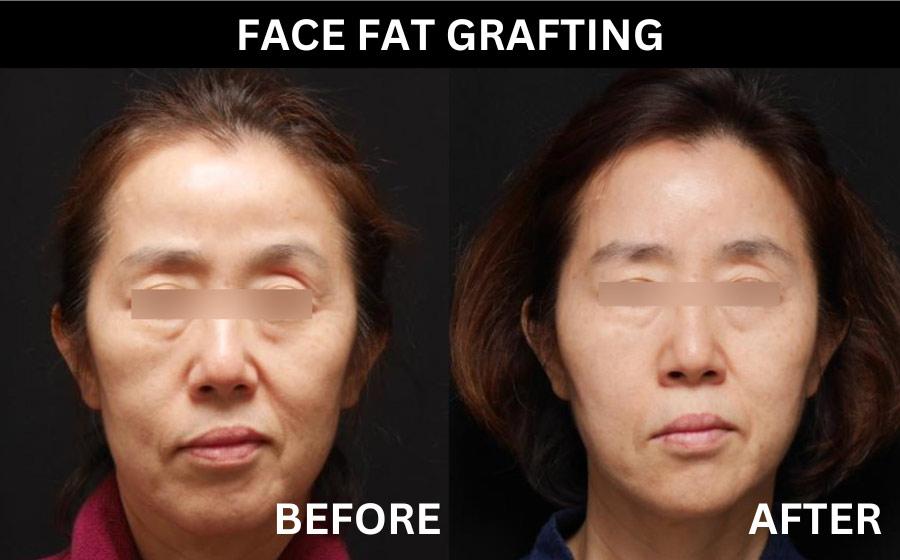
2. THEPLUS Plastic Surgery
At THEPLUS, full-face fat grafting uses your own fat to restore fullness in hollow or flattened facial areas and soften depleted contours, within a practice that also emphasizes facial harmony through rhinoplasty and facial-contouring expertise.
- URL: THEPLUS Plastic Surgery Website
- Location: Gangnam-gu, Seoul
- Procedure details:
- Face fat grafting transfers your own fat into facial areas that need added volume.
- The stated goals are restoration of fullness and softening of hollow or flattened contours.
- Facial surgery expertise:
- Dr. Kim is described as a board-certified plastic surgeon with expertise in rhinoplasty and facial contouring; the provided information also notes awards for research on 3D implants and annual education sessions for other plastic surgeons.
- Dr. Jeong is identified as President of the Korean Society of Plastic Surgeons, with a rhinoplasty practice centered on both function and appearance.
- Related facial options:
- Facial services listed include rhinoplasty and revision rhinoplasty, full-face contouring, cheekbone surgery, square-jaw surgery, chin surgery, and facial implants.
- For laxity-related concerns, the clinic lists facelift and thread-lift options alongside fat grafting.
- Other services: Additional offerings include double-eyelid surgery, ptosis correction, blepharoplasty, breast procedures, liposuction, and stem-cell treatment.
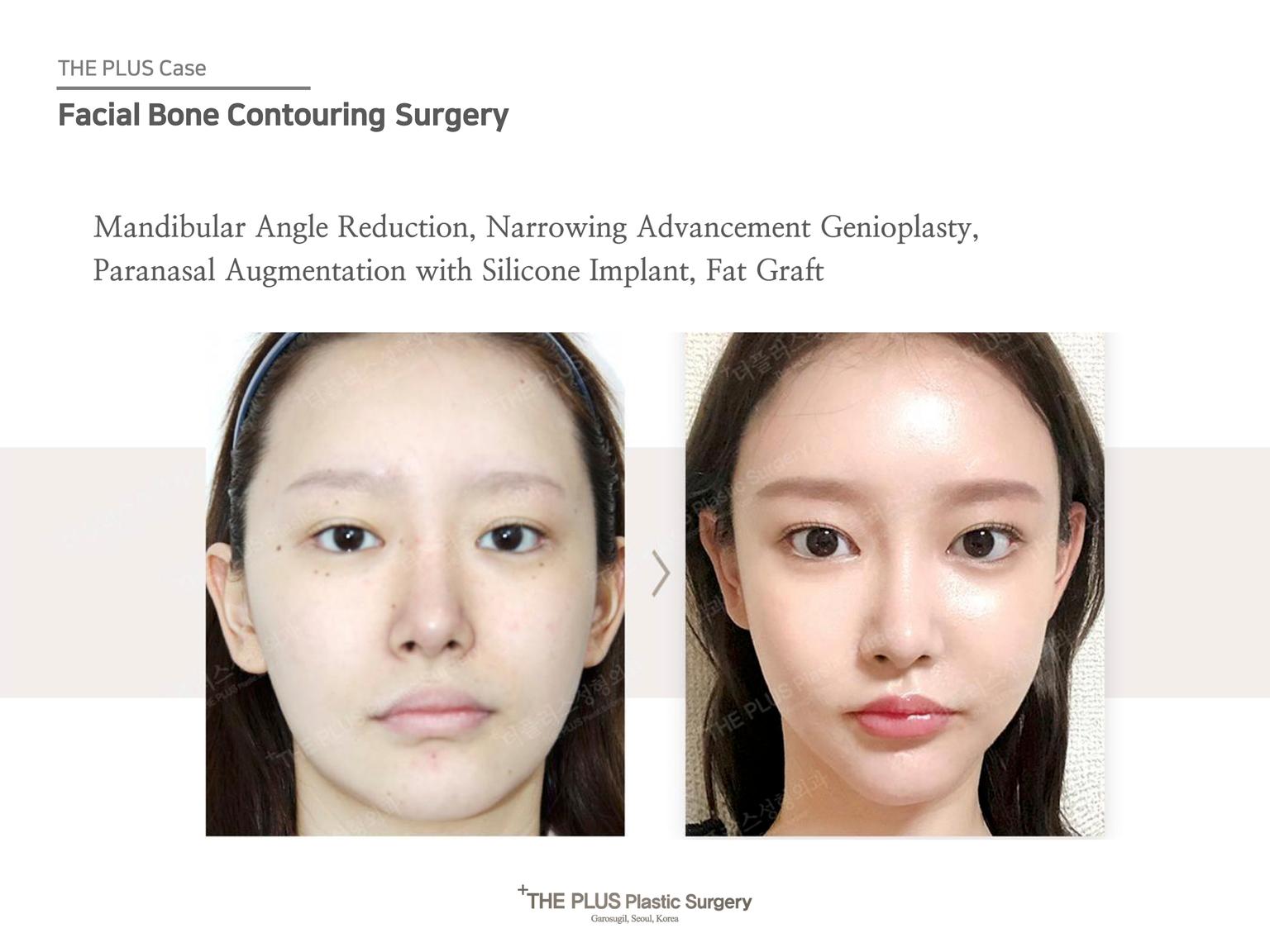
3. LABOM Plastic Surgery
For full-face fat grafting at LABOM, your own purified fat is harvested from the abdomen, thighs, or buttocks and placed in volume-deficient facial areas such as a sunken forehead or deep nasolabial folds. The procedure is planned around your facial proportions and assessed from front, side, and profile views to avoid a standardized or overfilled result.
- URL: LABOM Plastic Surgery Website
- Location: Gangnam-gu, Seoul
- Procedure details:
- Fat is harvested from an area with available deposits, such as the abdomen, thighs, or buttocks, then purified by centrifugation before facial injection.
- The clinic describes treating forehead hollowing, deep nasolabial folds, and broader facial volume loss in one procedure.
- LABOM uses 100% autologous fat rather than implants, fillers, or other synthetic materials.
- Treatment planning:
- A one-to-one consultation and diagnosis are used to determine injection sites and volume according to your facial proportions.
- Planning considers the balance of the full face from multiple angles—front, side, and profile—and is intended to avoid excessive correction.
- Timing and recovery:
- The stated procedure time is approximately one to two hours under sleep sedation, with same-day discharge described.
- Recovery is estimated at about seven days; where sutures are used at the donor site, removal is described at approximately seven days.
- Safety and aftercare:
- The clinic describes one-to-one anesthesia, continuous monitoring, and an autologous fat-purification system.
- Post-procedure support includes regular progress checks and individualized programs for swelling, bruising, and scar management, with a dedicated aftercare system for international visitors.
- Related anti-aging services:
- Related services include facial liposuction with micro-cannula technology and V-line contour lifting, as well as LABOM’s Triple Face Lift for skin, SMAS, and deep-fat-layer repositioning.
- The clinic also provides eyelid procedures and its CARGEL non-surgical rhinoplasty technique using diced autologous cartilage mixed with fibrin from your blood.
How Much Does Face Fat Grafting Cost in Korea?
Face Fat Grafting is supplied at ₩1,000,000–₩5,000,000 (approximately US$700–US$3,700). Individual quotes vary because the planned facial zones, grafting method, donor-site work, anesthesia plan, and whether treatment is combined with another operation determine the clinical resources required.
| Procedure Price | Korean Won (₩) | USD ($) |
|---|---|---|
| Low Price | ₩1,000,000 | $700 |
| High Price | ₩5,000,000 | $3,700 |
Exchange rate as of 2026-09-06: 1 KRW = 0.000741 USD.
What Affects the Price?
- Number and complexity of facial treatment zones — Full-face grafting or treatment of multiple areas such as the temples, forehead, cheeks, tear troughs, lips, chin, or scars requires more mapping, precise cannula placement, and graft volume than a limited contour correction. Delicate or mobile zones, particularly the tear-trough/lid-cheek area, also require more exact plane selection and cautious small-parcel placement.
- Donor-site harvesting and graft volume — Facial fat transfer includes liposuction to harvest fat from an area such as the abdomen, flanks, or thighs, followed by processing before injection. A plan requiring more harvested fat or more extensive donor-site contour work increases harvesting time, processing work, consumables, and donor-site postoperative care.
- Standard structural fat versus microfat, nanofat, or assisted grafting — Structural fat grafting is the standard volumizing approach, while microfat is used for refined work and nanofat is generally a superficial skin-quality adjunct rather than a replacement for volume grafting. PRP/PRF-, SVF-, or other cell-assisted approaches add processing requirements and materials; the exact method should be specified because evidence and product status differ.
- Anesthesia and combined surgery — Standalone treatment may use local anesthesia with sedation or general anesthesia depending on extent. General anesthesia requires anesthesia personnel, monitoring, recovery resources, and facility time; combining fat grafting with another operation extends operating time and postoperative planning.
Cost tip: Request an itemized quote stating what is included, including the planned facial zones, donor-site harvesting and processing, anesthesia, facility and recovery use, consumables, postoperative reviews, and any proposed PRP/PRF, SVF, or other assisted-grafting method.
The US$700–US$3,700 conversion is approximate, based on the supplied exchange rate of 0.000741 on 2026-09-06. Check the exchange rate again when budgeting.
Face Fat Grafting From Start to Finish
- First contact and virtual review — Send a complete health history, medication and supplement list, nicotine exposure, allergies, anesthesia history, past facial surgery, prior filler or biostimulator treatment, and requested unfiltered photographs through a secure channel. English-language or virtual consultation can establish preliminary suitability, but it does not replace examination.
- Travel and appointment coordination — Schedule enough time for in-person consultation, any tailored testing, surgery, and early review. Keep flights and accommodation flexible in case clearance or recovery requires a longer stay.
- In-person consultation and planning — The surgeon assesses skin laxity, skeletal support, facial asymmetry, tissue thickness, volume loss, donor-fat availability, and the suitability of fat grafting alone. Planned zones can include temples, forehead, cheeks, midface, selected lid-cheek areas, chin, jawline, lips, or scars.
- Medical clearance — The team records vital signs and performs health- and anesthesia-specific assessment. Laboratory tests or other testing are selected according to medical history, procedure extent, and whether local anesthesia with sedation or general anesthesia is planned.
- Anesthesia and marking — Donor and recipient areas are marked before treatment. Standalone grafting is commonly performed as an outpatient procedure under local anesthesia with sedation or general anesthesia, depending on extent and concurrent operations.
- Harvesting, processing, and injection — Fat is removed by liposuction from a planned donor site, processed, then layered in small parcels through cannulas in selected facial tissue planes. The transferred tissue must establish a blood supply, so some resorption is expected.
- Recovery and discharge — After monitoring for anesthesia recovery, pain control, bleeding, and early concerns, leave with written instructions, prescribed medicines, emergency contacts, and donor-site care guidance. Arrange escorted transport and have a responsible adult available after sedation or general anesthesia.
- Early review and overseas follow-up — Attend the postoperative visit before travel. Continue planned video or photo follow-up after returning home; the retained-volume result is more assessable at 3–6 months once swelling and early overcorrection settle.
Alternatives to Face Fat Grafting
Non-surgical injectables avoid liposuction and usually involve less downtime, but they are temporary or have different reversibility profiles. Surgical alternatives address skin descent, structural skeletal deficiency, or lower-eyelid fat anatomy that fat grafting alone cannot reliably correct.
Hyaluronic-Acid Filler
- Best tradeoff — Facial filler provides office-based, temporary volume restoration without a donor site. Hyaluronic-acid filler can generally be dissolved, unlike transferred fat.
- Important limitation — It still carries a vascular injection risk and does not provide the same surgical approach to larger, multi-zone volume restoration.
Biostimulatory Injectable
- Best tradeoff — Sculptra stimulates gradual collagen formation rather than placing immediate autologous volume.
- Important limitation — Onset, durability, correction control, and reversibility differ from both HA filler and fat grafting.
Facelift
- Best tradeoff — A face lift or deep-plane face lift is more appropriate when substantial skin laxity and descended facial tissue are the main concern. Fat grafting can be combined when deflation is also present.
- Important limitation — These are larger operations with incisions, more recovery, and different surgical risks.
Facial Implants
- Best tradeoff — Facial implants can provide structural projection for selected chin, cheek, or paranasal skeletal deficiencies.
- Important limitation — Implants introduce implant-specific risks and do not treat generalized soft-tissue volume loss in the same way as fat.
Lower-Eyelid Fat Repositioning
- Best tradeoff — Under-eye fat removal or repositioning can suit selected tear-trough concerns caused by protruding lower-lid fat and lid-cheek anatomy.
- Important limitation — It is not a substitute for full-face restoration where generalized volume loss is present.
Scar-Focused Treatment
- Best tradeoff — Acne scar treatment may use subcision, laser resurfacing, microneedling, excision, or combined treatment when tethering and scar texture are the dominant problem.
- Important limitation — Fat grafting is most relevant when a scar also has volume loss or tethering.
How Can I Prepare for Face Fat Grafting?
- Medical disclosure — Provide the surgeon and anesthesia team with every prescribed and non-prescribed substance: warfarin, apixaban, rivaroxaban, clopidogrel, aspirin, NSAIDs, diabetes medicines including GLP-1 drugs, hormones, isotretinoin, steroids, fish oil, vitamin E, herbal products, and recreational drugs.
- Antithrombotic plan — Never stop warfarin, apixaban, rivaroxaban, clopidogrel, aspirin, or another prescribed blood thinner independently. Obtain a prescribing-clinician-approved plan coordinated with the surgeon and anesthetic team.
- Nicotine cessation — Stop cigarettes, vaping, nicotine pouches, patches, and gum for the exact interval set by the surgeon. Nicotine compromises healing and can reduce graft survival.
- Alcohol and fasting — Avoid alcohol and recreational drugs during the clinic-specified preoperative period and while taking sedating medicines. Follow the facility's individualized fasting instructions exactly; fasting duration depends on the anesthesia plan and medical history.
- Skin and infection check — Report dental pain, facial sores, active acne, fever, respiratory illness, or donor-site rash before surgery. Do not conceal a new infection or proceed on the assumption it is minor.
- Travel logistics — Arrange a companion or responsible adult after sedation or general anesthesia, pre-book low-effort accommodation, and organize private transport from the facility. Avoid tightly scheduled work events, strenuous sightseeing, or non-refundable early flights.
- Documentation — Request a written postoperative and emergency plan, translated procedure and anesthesia records, and a complete medication list for travel home.
Travel note: Choose changeable flights and travel insurance that fits elective-treatment circumstances; recovery or surgeon-directed flight restrictions can extend the stay.
Confirm all medicine changes, fasting requirements, nicotine timing, testing, and travel restrictions with the treating clinic. The operating surgeon's individualized instructions take precedence over general guidance.
Aftercare Advice
Protect both the grafted face and liposuction donor site during early healing, and treat sudden neurological, visual, breathing, or bleeding symptoms as emergencies.
- Swelling and social recovery — Expect swelling, bruising, tenderness, and temporary numbness, especially in the first 1–3 days. Most bruising and much visible swelling improve in 7–14 days; retained volume becomes more meaningful at 3–6 months.
- Pressure and contact — Do not massage, press, traumatize, or expose grafted areas to aggressive cold therapy unless the surgeon specifically directs it. Sleep position, cleansing, makeup, and compression rules depend on injection planes, donor site, and combined procedures.
- Activity and heat — Take gentle walks as cleared, but avoid heavy lifting, strenuous exercise, swimming, sauna or other heat exposure, and contact sports until the operating surgeon clears them. Donor-site soreness and swelling can persist for 2–6 weeks.
- Medicines and skincare — Do not restart anticoagulants, NSAIDs, supplements, nicotine, alcohol, active skincare, or aesthetic treatments without confirmation from the treating team. Take prescribed medicines exactly as directed.
- Sun protection — Protect bruised or healing exposed skin from sun. Use broad-spectrum SPF 50 on intact, non-irritated skin once the surgeon permits topical products.
- Emergency signs — Seek emergency care immediately for visual changes or eye pain, severe headache, confusion, facial droop, speech difficulty, new weakness or numbness, chest pain, shortness of breath, coughing blood, one-sided calf pain or swelling, rapidly expanding swelling, uncontrolled bleeding, fever, spreading redness, pus-like drainage, or escalating pain.
- Follow-up and revision timing — Attend early and remote reviews as arranged. Do not judge final symmetry or seek elective touch-up while swelling and early resorption are evolving; surgeons commonly wait at least 6–12 months before considering additional grafting.
Follow the treating doctor's written instructions over general advice, and contact the clinic promptly when healing appears abnormal or symptoms worsen.
Frequently Asked Questions
Related Blogs
BodyTite in Korea: Candidacy, Recovery, Travel Planning, and Alternatives
BodyTite uses internal and external bipolar radiofrequency electrodes, often followed by liposuction, to treat localized fat and modest skin laxity in areas such as the abdomen, arms, thighs, flanks, back, knees, and male chest. The article covers candidacy, anesthesia, recovery, Korea travel planning, aftercare, warning signs, and alternatives including liposuction, Renuvion, tummy tuck, and arm
Updated: Sep 21, 2026
Inmode Body Laser Lifting in Korea: Devices, Results, Recovery and Travel Planning
InMode Body Laser Lifting refers to external RF treatments such as BodyFX, MiniFX, Plus, or Forma Plus that heat targeted areas without surgical fat removal, typically requiring weekly sessions over 6–8 weeks for gradual contour refinement. International patients can fit one external session into a 1–2-day Korea stay, but should confirm the exact handpiece, external-only treatment plan, contraindi
Updated: Sep 20, 2026
Arm Lift in Korea: Types, Recovery, Risks, and Travel Planning
Arm lift surgery removes excess upper-arm skin through limited, full, or extended incisions, with liposuction added selectively; candidates generally have stable weight, adequate nutrition, controlled health conditions, and acceptance of permanent scars. Practical guidance covers Korea provider and visa checks, a 10–14-day postoperative stay, travel planning, preparation, recovery restrictions, wo
Updated: Sep 20, 2026
Thigh Lift in Korea: Types, Recovery, Scars, Risks, and Travel Planning
Thigh lift surgery removes excess thigh skin through an incision pattern matched to localized or extensive laxity, with permanent scars and wound-care needs as key trade-offs. The article covers candidacy, procedure steps, recovery, complication warning signs, alternatives, and international travel planning including at least 14 days in Korea and surgeon clearance before long-haul flights.
Updated: Sep 20, 2026
Clinics offering Face Fat Grafting

THEPLUS Plastic Surgery Korea | Eye, Nose, Face & Body Surgery
Sinsa

Lydian Plastic Surgery Clinic in Korea: Superior Cosmetic Procedures by World-Renowned Expert Dr. An Kyung Chun
Apgujeong

Seojin Plastic Surgery Clinic Korea: Pioneering Advanced Cosmetic Procedures for Personalized Aesthetic Transformation
Apgujeong

LABOM Plastic Surgery: Expertise in Non-Surgical Nose, Facial Lifting & Anti-Aging Surgeries in Korea
Apgujeong