
Medical Tourism Blog
Double Chin Thread Lift in Korea: Candidacy, Methods, Recovery, Risks and Travel Planning
Table of contents
- Double Chin Thread Lift at a Glance
- What Is a Double Chin Thread Lift?
- Who Is a Good Candidate for a Double Chin Thread Lift?
- How Is a Double Chin Thread Lift Performed?
- Why Visit Korea for a Double Chin Thread Lift?
- Key Information for International Patients
- Which Are the Best Clinics in Korea for Double Chin Thread Lift?
- Double Chin Thread Lift From Start to Finish
- Alternatives to a Double Chin Thread Lift
- How Can I Prepare for a Double Chin Thread Lift?
- Aftercare Advice
Considering treatment in Korea? Everything you need to know e.g. — how to avoid scams, visas, interpreters, recovery tips — in our Medical Tourism Master Guide. Plan with confidence in minutes, not weeks!
Last updated: September 2026
Double Chin Thread Lift at a Glance
- What it does — A double chin thread lift is a same-day, local-anesthetic procedure that places absorbable—usually barbed—threads beneath the chin and/or along the jawline to support and reposition superficial tissue.
- Best candidates — It is best suited to mild early skin laxity, a soft jawline, or modest lower-face descent; it does not remove substantial fat or correct major skin excess, platysmal bands, deep-neck fullness, gland prominence, or a recessed chin.
- Expected result — The intended improvement is subtle to moderate contour support rather than the fat reduction of liposuction or the structural correction of a neck lift; early swelling can obscure the outcome, so reassessment after several weeks is more meaningful.
- Recovery time — Bruising, swelling, soreness, tightness, dimpling, and temporary asymmetry are common, with most people publicly presentable in about 3–5 days, although visible swelling or bruising may last longer.
- Temporary benefit — Absorbable threads do not stop aging, and reliable double-chin-specific durability data are lacking; repeat treatment or a different procedure may be needed as laxity progresses.
- Korea travel plan — International patients should plan a 5–7-day stay for treatment and an in-person review before departure; no validated universal interval exists for long-haul flying, so the treating clinician must provide travel clearance.
- Korea-specific distinction — Korean clinicians have published anatomy-based U-shaped and hammock-style submental thread vectors, but this procedure-specific expertise and Korea’s international-care infrastructure do not prove superior safety, longevity, or results.
What Is a Double Chin Thread Lift?
A double chin thread lift is a minimally invasive cosmetic procedure that uses absorbable threads to support and reposition loose tissue beneath the chin and along the jawline. It aims to create a modestly firmer under-chin contour and clearer jawline in people with mild skin laxity, rather than removing significant fat. It is minimally invasive, typically performed with local anesthesia through small entry points rather than conventional surgery.
Who Is a Good Candidate for a Double Chin Thread Lift?
- Mild skin laxity — Good candidates have early looseness beneath the chin, a soft jawline, or mild lower-face descent that has started to blur the cervicomental angle.
- Modest contour goals — Threads can provide support and repositioning of superficial tissue. The expected change is subtle to moderate, not the fat reduction of liposuction or the structural correction of a neck lift.
- Adequate chin and neck anatomy — Best results require a clinician to confirm that skin laxity, rather than substantial fat, deep-neck fullness, prominent submandibular glands, platysmal bands, or a recessed chin, is the main reason for the double-chin appearance.
- Realistic acceptance of temporary results — Absorbable threads do not stop aging. Repeat treatment or a different procedure can be needed as laxity progresses.
Pregnancy and breastfeeding are reasons to defer elective thread lifting because safety data are inadequate. Current skin, dental, or systemic infection must be assessed and treated first; infection can involve thread entry points and implanted material. Anticoagulant or antiplatelet use, bleeding disorders, uncontrolled diabetes, immunosuppression, serious heart or lung disease, active cancer treatment, allergies to proposed materials or medicines, and inability to give informed consent require individualized assessment. Marked submental fat, major skin excess, platysmal banding, gland prominence, and chin retrusion are not always medical contraindications, but threads alone are usually a poor anatomical match.
How Is a Double Chin Thread Lift Performed?
“Double chin thread lift” is a marketing umbrella term, not one standardized technique. The thread material, barbs, depth, number of threads, entry points, and direction of pull should be recorded because these details affect the degree of support and the risk of visibility or irregularity.
- Submental cog-thread vectors — Long bidirectional cog or barbed threads can be placed in straight, U-shaped, or hammock-like patterns below the chin. Their barbs engage superficial soft tissue to provide mechanical support; Korean authors have published anatomical descriptions of these submental vectors.
- Jawline and lower-face vectors — Threads placed from the lateral lower face or preauricular area toward the mandibular border focus on jawline support rather than lifting the central under-chin area alone.
- Smooth or spiral threads — Smooth monofilament and spiral threads are used mainly for collagen stimulation and skin-quality improvement. They generally provide less immediate mechanical lifting than cog threads.
- Material and geometry — PDO is common; PLLA and PCL are also used in some systems. These materials, as well as cogs, cones, lengths, and configurations, are not interchangeable. Ask for the exact brand, material, and planned vector rather than agreeing to threads by a generic name.
Why Visit Korea for a Double Chin Thread Lift?
Korea has a well-developed international-patient pathway for aesthetic care, which can make virtual consultation, in-person review, and post-treatment documentation easier to arrange. Korean clinicians have also published procedure-specific descriptions of submental thread placement. Neither factor proves that results or safety are superior to treatment elsewhere.
- Published submental technique work — Korean research includes anatomical and technical descriptions of bidirectional U-shaped and hammock-style approaches for the double-chin area, supporting a more anatomy-led consultation rather than a generic “jawline lift” plan.
- International-care infrastructure — The national Medical Korea platform provides information for overseas patients, while official reporting shows that Seoul received more than one million international medical tourists in 2024. This infrastructure can help with logistics, but it does not replace checking the individual clinician’s qualifications and emergency plan.
- Access to product-specific discussion — Because PDO, PLLA, PCL, cog designs, and placement vectors differ, ask the clinic to identify the exact thread system proposed and why it fits the skin, fat, chin, and neck anatomy.
- Evidence limitation — A 2024 systematic review found reported aesthetic improvement after absorbable thread lifting but concluded that long-term efficacy evidence remains limited. The review does not establish effectiveness, durability, or superiority specifically for double-chin thread lifts in Korea.
Key Information for International Patients
- Minimum stay — Plan to remain in Korea for 5–7 days for a standalone procedure under local anesthesia: treatment on day 1, followed by an in-person review before departure. Stay longer after sedation, extensive bruising or swelling, combined liposuction or surgery, or any concern on examination.
- Flying home — Do not book a same-day flight after local anesthetic or any sedating medicine. No high-quality study defines a universal safe long-haul-flight interval after a submental thread lift, so the treating clinician must clear travel based on the technique, medicines, and recovery.
- Itinerary impact — Most people are publicly presentable in about 3–5 days, but bruising, swelling, tightness, dimpling, and early asymmetry can remain visible longer. Avoid scheduling important photographs, presentations, or strenuous sightseeing immediately after treatment.
- Activity restrictions — Gentle walking is preferable to prolonged inactivity. Postpone vigorous exercise, contact activity, forceful chewing, wide mouth opening, face-down sleeping, massage, and heat or compression treatments until the clinician clears them.
- Remote-care plan — Leave with the clinician’s direct contact details, treatment photographs, a written placement map or vectors, thread brand/material/length and lot number where available, and a plan for video follow-up and urgent assessment after returning home.
Travel note: Choose flexible return flights and accommodation that allows an extra few nights. A thread that becomes visible or extrudes, an expanding hematoma, or skin-color change needs prompt clinical review; it is not a problem to manage remotely without instructions.
Which Are the Best Clinics in Korea for Double Chin Thread Lift?
Listed below are some of the best clinics in Korea for double chin thread lift.
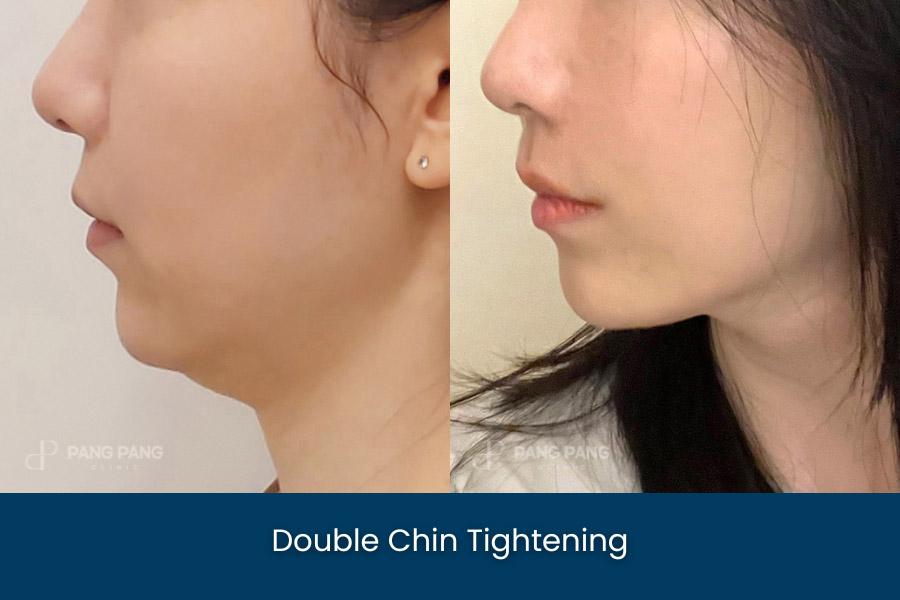
1. PangPang Clinic
For a double-chin thread lift, you can expect a tailored thread-based plan designed to sharpen the under-chin and jawline area while supporting skin firmness. PangPang Clinic uses ultrasound assessment and pre-procedure design, with options such as its proprietary Pink Lift threads and Chill-Lifting contact-free cooling anesthesia to help limit discomfort, swelling, and bruising.
- URL: PangPang Clinic Website
- Location: Gangnam-gu, Seoul
- Thread-lift approach:
- Pink Lift is a PangPang-developed medical thread intended to provide a strong hold and natural-looking lift; the supplied information states it holds FDA, CE, and KFDA certifications.
- Your plan can draw on 31 specialized thread types, including barbed lifting threads, elastic tightening threads, and complementary assist threads.
- Thread lifting is described as stimulating collagen production as well as lifting tissue, which may support longer-term skin elasticity.
- Planning and recovery:
- Ultrasonic visual assessment and pre-operative design are used to guide individualized thread placement.
- Anesthesia options listed include partial, Airnox, and sleep anesthesia.
- Chill-Lifting uses contact-free cooling anesthesia and is described as reducing pain, swelling, and bruising while supporting recovery.
- The clinic lists thread-lift treatment time as approximately 30 minutes to one hour, with minimal recovery; individual experiences can vary.
- Research and follow-up:
- The clinic states it collaborates with Seoul National University Bundang Hospital on thread-lifting techniques and collagen-focused skin-quality research.
- A Thread Lifting Research Institute and a dedicated consultation center support its thread-lifting focus.
- Aftercare packages are available to support and prolong treatment effects, and a revision center addresses unsatisfactory prior thread-lift outcomes.
2. Haru Clinic
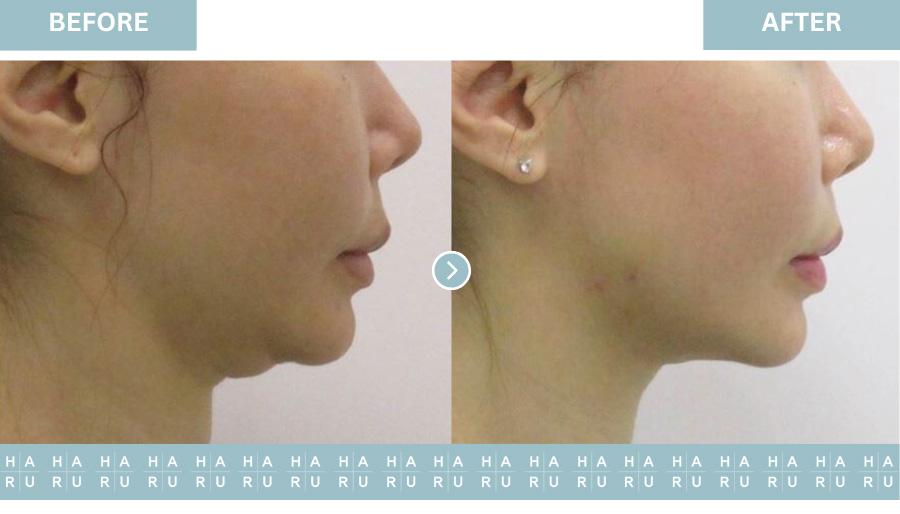
For a double-chin thread lift, Haru Clinic offers thread-based contouring aimed at tightening submental laxity and refining your jawline without surgery. Its Elasticum elastic thread is intended to move with your facial expressions rather than feel rigid, and it may be combined with PDO threads for additional contour refinement and skin tightening.
- URL: Haru Clinic Website
- Location: Gangnam-gu, Seoul
- Double-chin contouring:
- The clinic describes its double-chin lift as targeting submental fat and jawline definition with thread-based contouring or fat-dissolving injections.
- This approach is positioned for concerns that include both a less-defined V-line and sagging skin, rather than fat reduction alone.
- Treatment uses minimal incisions according to the supplied information.
- Thread technique:
- Elasticum is an elastic thread intended to adapt to facial movement for a natural-looking lift.
- PDO threads may complement Elasticum for contour refinement and skin tightening.
- The clinic also describes dissolvable barbed threads for lifting sagging cheeks and the jawline under local anesthesia, with collagen stimulation and short downtime.
- Clinical design:
- Dr. Jeong is identified as an official research physician at Merz and as an educator on filler techniques for other doctors.
- The clinic describes a facial-design approach focused on harmony and balance through non-invasive techniques.
- Related non-surgical options include collagen-tightening treatments using radiofrequency or ultrasound, as well as fillers and Botox when appropriate to your broader contour goals.
3. B.V Clinic
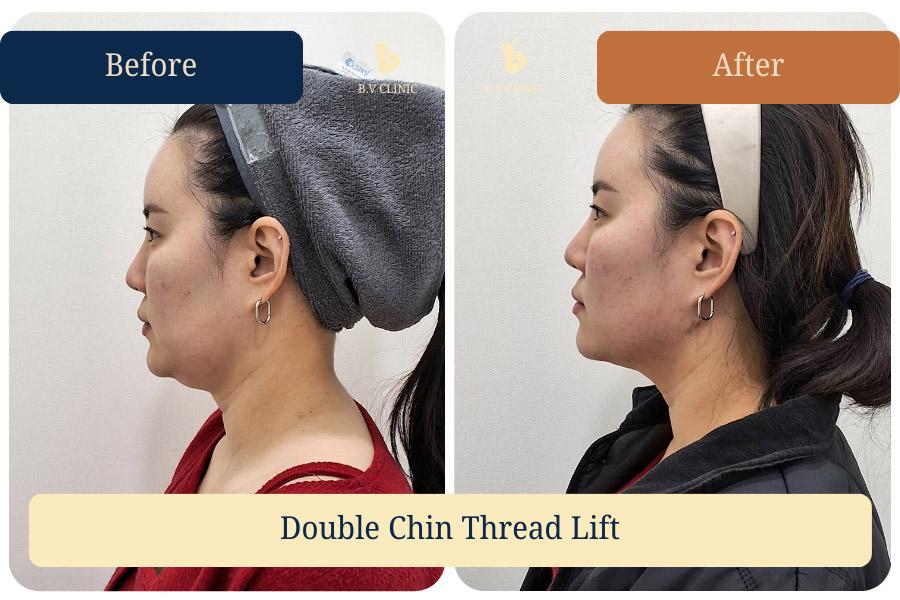
For a double-chin thread lift, B.V Clinic offers a personalized thread-lifting approach intended to lift lax tissue, define your lower facial contour, and promote collagen-based skin firmness. Dr. Suh is described as having more than 10 years focused exclusively on thread lifting and thousands of clinical cases.
- URL: B.V Clinic Website
- Location: Seoul
- Threads and lifting method:
- The clinic uses MINT Threads, described in the supplied information as FDA- and KFDA-approved minimally invasive non-surgical threads.
- Premium PDO barbed threads are used for anchoring and lifting, with collagen stimulation intended to support ongoing skin firmness.
- Its 3D thread-lifting approach uses strategically placed threads to lift and firm sagging skin while enhancing natural facial contours.
- Personalized care and aftercare:
- Treatment planning is tailored to your aesthetic goals and natural facial balance.
- The aftercare program includes skin-regeneration management intended to minimize swelling and improve elasticity.
- Post-treatment support may include nutritional skincare products and ultrasound-based care to promote collagen.
- Related tightening options:
- Shurink Lifting uses high-intensity focused ultrasound for deeper-layer tightening and contour refinement.
- Potenza and Thor treatments use radiofrequency-based technology for skin tightening, collagen support, and body contouring.
- Volume-lifting treatments are available for facial areas with volume loss or reduced elasticity.
Double Chin Thread Lift From Start to Finish
- Virtual consultation and goal setting — Send clear front, side, and three-quarter photographs if the clinic offers English-language or virtual consultation. Discuss whether the concern is lax skin, superficial fat, deep-neck fullness, platysmal banding, gland prominence, weak chin projection, or a combination.
- Medical screening and treatment plan — Provide the full medical history, allergies, nicotine use, previous fillers, threads, energy treatments, surgery, scars, medicines, and supplements. The clinician determines whether a thread lift alone is appropriate and explains the proposed thread material, number, entry points, vectors, expected limits, and revision plan.
- Arrival assessment and photography — At the in-person visit, the clinician examines skin quality, fat distribution, jawline definition, chin projection, platysma, and submandibular region. Standardized photographs document the starting contour and help identify pre-existing asymmetry.
- Marking and anesthesia — The clinician marks intended entry points and lifting vectors, cleans the skin with antiseptic, and administers local anesthetic. Oral or IV sedation is not inherent to the procedure; disclose all sedatives and arrange an escort if any are used.
- Thread placement — Small entry points are made. A needle or cannula guides absorbable barbed threads through the planned tissue plane beneath the chin and/or along the jawline; the clinician applies controlled tension, trims the ends, and checks contour symmetry. Procedure time depends on the thread count, vectors, and any combined treatment.
- Same-day discharge — Expect localized tenderness, tightness, swelling, bruising, puckering, or dimpling. Review written medicines, entry-site care, sleeping and activity restrictions, warning signs, and the date of the in-person check before leaving the facility.
- In-person review before departure — Attend the planned review so the clinician can inspect entry sites, bruising, swelling, skin color, contour, and thread position. Obtain travel clearance and complete procedure records.
- Remote follow-up at home — Send photographs or attend video follow-up as instructed. Seek urgent local care and notify the Korean clinic for breathing or swallowing difficulty, rapidly increasing one-sided swelling, severe worsening pain, fever, spreading redness, drainage, skin blanching or duskiness, or an exposed thread.
Alternatives to a Double Chin Thread Lift
The right alternative depends on what creates the under-chin contour. Non-surgical options involve less downtime but generally provide less correction; surgery can address fat, muscle, skin, and deeper anatomy more directly but requires more recovery and travel planning.
Energy-Based Tightening
- Best fit — Mild skin laxity with limited fat and no major platysmal or gland issue.
- Tradeoff — Treatments such as HIFU and laser lifting, Ultherapy lifting, or Thermage lifting avoid implanted threads but do not remove substantial fat or reposition tissue as strongly.
Fat-Dissolving Injections
- Best fit — Selected patients whose main concern is localized submental fat rather than loose skin.
- Tradeoff — Fat-dissolving injections target fat and usually require a treatment course. They do not correct major skin excess or platysmal bands.
Submental Liposuction
- Best fit — Predominantly superficial under-chin fat with adequate skin recoil.
- Tradeoff — Double chin liposuction removes fat more directly than threads, but it is a surgical procedure with compression, greater bruising and swelling, and more recovery planning.
Chin Augmentation
- Best fit — A recessed chin that weakens the jawline and makes submental fullness appear more prominent.
- Tradeoff — Chin filler offers temporary projection, while a chin implant is surgical and longer-lasting. Neither directly removes neck fat or tightens loose neck skin.
Neck Lift or Facelift
- Best fit — Major skin excess, platysmal banding, deep-neck fullness, prominent glands, or substantial lower-face descent.
- Tradeoff — A neck lift or face lift can address structures that threads cannot, but recovery, anesthesia considerations, scars, and the required stay in Korea are substantially greater.
How Can I Prepare for a Double Chin Thread Lift?
- Disclose medicines and supplements — Report aspirin, ibuprofen, naproxen, warfarin, apixaban, rivaroxaban, clopidogrel, fish oil/omega-3, vitamin E, ginkgo, garlic, ginseng, turmeric/curcumin, and St John’s wort. Do not stop prescribed anticoagulants, antiplatelets, blood-pressure medicines, diabetes medicines, or psychiatric medicines without a written plan from the prescribing and procedural clinicians.
- Report illness and skin problems early — Tell the clinic about acne, cold sores, rashes, shaving cuts, dental infection, fever, or any infection near the treatment zone. Delay treatment until the clinician confirms it is appropriate.
- Follow nicotine and alcohol instructions — Nicotine and alcohol restrictions vary by clinician and medical history. Follow the specified timeframe and disclose vaping, patches, gum, and recreational substances honestly.
- Confirm fasting requirements — Fasting is usually unnecessary for a local-anesthetic-only thread lift. Follow the facility’s fasting instructions if oral or IV sedation is planned.
- Arrive with clean treatment skin — Follow instructions on shaving and facial products. Avoid applying makeup, heavy creams, or unapproved active products to the planned entry-point area on treatment day.
- Arrange transport and support — Do not drive after sedatives, anxiolytics, or opioid pain medicine. Arrange transport and first-night support when sedation is used or when the clinic recommends it.
- Protect the travel schedule — Book flexible flights and accommodation through the in-person review. Bring travel insurance details and confirm what the policy excludes for elective aesthetic complications.
Travel note: Before departure, ask how the clinic handles an exposed thread, infection concern, or hematoma once you are abroad, and identify an appropriate local clinician or emergency service at home.
Confirm the clinic’s specific medication, fasting, skincare, nicotine, and travel requirements; the treating doctor’s individualized instructions take precedence over general guidance.
Aftercare Advice
Protect the treated area from pressure, pulling, heat, and contamination while swelling and tissue settling obscure the early contour.
- Cold and swelling care — Use cold compresses only as directed. Bruising, swelling, tenderness, tightness, puckering, dimpling, and early contour asymmetry are common; do not judge the result immediately.
- Entry points and skin care — Keep entry sites clean and follow instructions for cleansing, ointment, dressings, and makeup. Do not massage the area, pull on the skin, cut a visible thread, or attempt to remove an exposed thread.
- Activity and facial movement — Take gentle walks, but avoid vigorous exercise, contact sport, forceful chewing, wide mouth opening, face-down sleeping, facial massage, and treatments that heat or compress the chin and jawline until cleared by the treating clinician.
- Sun protection — Avoid strong sun exposure on bruised or healing skin. Use broad-spectrum SPF 50 once the clinician permits normal skincare and keep the area physically protected outdoors.
- Urgent warning signs — Contact the clinic urgently for rapidly increasing one-sided swelling, expanding bruising, severe or worsening pain, fever, spreading redness or warmth, pus or foul drainage, worsening numbness, facial weakness, pronounced persistent dimpling, skin blanching or dusky discoloration, or visible/extruding thread. Seek emergency care immediately for trouble breathing or swallowing.
- Review and result timing — Attend the in-person review before leaving Korea and complete remote follow-up after returning home. Reassess the contour after several weeks rather than during the first swollen days; durability and the need for repeat treatment are not reliably defined for double-chin thread lifts.
Follow the treating doctor’s instructions over this general guidance, and contact the clinic promptly whenever recovery appears to be worsening rather than settling.
Frequently Asked Questions
Related Blogs
Abdominal Thread Lift in Korea: Candidacy, Evidence, Recovery, and Travel Planning
Abdominal thread lifts place absorbable threads in superficial abdominal tissue for subtle tightening, but methods, durability, and outcomes are not standardized. The article covers candidate screening, procedure planning, Korea travel and follow-up, preparation, aftercare warning signs, and alternatives for fat, excess skin, diastasis, or hernia.
Updated: Oct 13, 2026
Breast Thread Lift in Korea: Candidacy, Safety, Recovery, and Travel Planning
Breast thread lift uses absorbable threads placed through small entry points for modest contour improvement, but techniques, durability, and complication rates are not standardized. The article covers candidacy, preparation, travel planning for Korea, aftercare, warning signs, follow-up, and surgical alternatives for significant sagging.
Updated: Oct 13, 2026
Lip Thread Lift in Korea: Methods, Recovery, Risks and Travel Planning
Lip thread lifts use absorbable smooth or barbed threads to soften upper-lip lines or provide subtle traction, with suitability based on tissue quality, goals, and medical assessment. The article covers treatment planning, recovery, aftercare, risks, alternatives, and travel guidance for international patients in South Korea.
Updated: Oct 13, 2026
Filling Threads in Korea: Types, Recovery, Risks and Travel Planning
Filling threads are absorbable volumizing thread configurations placed under local anesthesia to soften minor static lines and localized hollows in appropriately assessed patients. The article covers candidate screening, device documentation, Korea travel planning, recovery, aftercare, complications, and alternatives such as filler, fat grafting, thread lifts, and facelift surgery.
Updated: Oct 12, 2026
Clinics offering Double Chin Thread Lift

Haru Clinic Korea | Fully-Customized Full-Face Non-Surgical Rejuvenation With Threads, Botox & Fillers
Sinsa

PangPang Clinic: Korea's Premier Thread Lifting and Skin Rejuvenation Specialist in Gangnam, Seoul
Sinsa

Seojin Plastic Surgery Clinic Korea: Pioneering Advanced Cosmetic Procedures for Personalized Aesthetic Transformation
Apgujeong

B.V Clinic Korea: Advanced Aesthetic Treatments for Natural Beauty Enhancement & Rejuvenation
Sinnonhyeon Station