Medical Tourism Blog
Breast Thread Lift in Korea | Best Clinics, Costs, Procedure Types & More

Table of contents
- What Is Breast Thread Lift?
- Best Clinics in Korea for Breast Thread Lift
- Breast Thread Lift in Korea
- Cost of Breast Thread Lift in Korea
- Alternatives to Breast Thread Lift
- Conclusion
Considering treatment in Korea? Everything you need to know e.g. — how to avoid scams, visas, interpreters, recovery tips — in our Medical Tourism Master Guide. Plan with confidence in minutes, not weeks!
Have you ever wondered whether a breast lift is possible without the scars and long recovery of traditional surgery? In Korea, breast thread lift has emerged as a minimally invasive option for patients seeking a subtle, natural-looking lift with less downtime. But while the procedure is appealing, its results, cost, and ideal candidates can vary widely. This article explores how breast thread lift works, why Korea has become a popular destination for it, and what alternatives may be worth considering.
Breast thread lift in Korea has gained attention as a minimally invasive option for people seeking a subtle lifting effect without traditional surgery, and this article will explain the key points readers should know before considering the procedure. We will start by outlining what a breast thread lift is, how it works, and who may be a suitable candidate, then look at why Korea has become a notable destination for this treatment, including factors such as clinic expertise, aesthetic trends, and patient expectations. The article will also review the typical cost of breast thread lift in Korea and the variables that can influence pricing, before comparing non-surgical and surgical alternatives so readers can better understand how thread lifting fits within the broader range of breast enhancement and lifting options.
What Is Breast Thread Lift?

A breast thread lift is a minimally invasive cosmetic procedure designed to create a subtle lifting effect in the breasts without the incisions, tissue removal, and longer downtime associated with traditional breast lift surgery (mastopexy). The procedure uses specialized medical threads placed under the skin to help elevate mildly sagging breast tissue and improve the appearance of the upper breast contour.
In Korea, breast thread lift has attracted interest among patients who want a less invasive alternative to surgery and who prefer shorter recovery time, minimal scarring, and modest reshaping rather than dramatic structural change. It is generally considered an option for mild ptosis (mild sagging), not for significant breast drooping or major volume loss.
Unlike breast augmentation, a thread lift does not significantly increase breast size. Unlike a surgical breast lift, it does not remove excess skin or reposition deep breast tissue to the same degree. Its main purpose is to provide a gentle lifting and tightening effect and, in some cases, stimulate collagen production in the treated area over time.
How the procedure works
The treatment involves inserting biocompatible threads into the skin and superficial supporting tissues of the breast using a cannula or needle. These threads may have barbs, cones, cogs, or anchoring structures that help grip tissue and lift it upward.
The effect comes from two mechanisms:
-
Mechanical support
- The threads physically reposition tissue to create a lifted appearance.
-
Biostimulation
- Some absorbable threads stimulate the body’s healing response, which can encourage collagen production and improve skin firmness over time.
The degree of lift achieved is usually modest, and results vary depending on skin quality, breast size, tissue weight, age, and the specific technique used.
What concerns breast thread lift is intended to address
A breast thread lift is usually used for aesthetic concerns such as:
- Mild breast sagging
- Slight downward nipple orientation
- Loss of upper pole fullness appearance
- Reduced firmness after weight loss, pregnancy, or breastfeeding
- Minor asymmetry
- Desire for a perkier breast contour without implants or major surgery
It may also be discussed by patients who want to improve how the breasts sit in clothing, swimwear, or bras without undergoing full surgical mastopexy.
What breast thread lift cannot do
It is equally important to understand the procedure’s limitations. A breast thread lift generally cannot:
- Correct moderate to severe breast ptosis
- Remove a large amount of excess skin
- Significantly increase breast volume
- Reshape the breast mound as dramatically as surgery
- Reliably reposition nipples in severe sagging
- Replace a formal mastopexy when there is substantial drooping
- Provide permanent lifting in the same way surgery may
For patients with heavier breasts or more advanced tissue laxity, the threads may not provide enough support for a durable or noticeable result.
Who is a good candidate for breast thread lift?
Ideal candidates are usually patients who:
- Have mild sagging rather than severe drooping
- Want a subtle lift instead of a dramatic change
- Prefer a minimally invasive procedure
- Have relatively good skin elasticity
- Are at a stable weight
- Do not want breast implants or are not ready for surgery
- Understand that results are limited compared with mastopexy
In practical terms, the best candidates often have:
- Small to medium-sized breasts
- Early age-related or post-pregnancy laxity
- Mild descent of breast tissue
- Minimal excess skin
- Realistic expectations about achievable lift
Who may not be a suitable candidate?
A patient may not be a good fit if they have:
- Moderate to severe breast sagging
- Large or heavy breasts
- Significant skin redundancy
- Major breast asymmetry requiring structural correction
- Active skin infection or breast infection
- Poor wound healing
- Uncontrolled diabetes
- Bleeding disorders
- Current pregnancy or breastfeeding
- Certain autoimmune conditions, depending on clinical assessment
- Unrealistic expectations
Patients with a history of breast surgery, implants, or scar tissue may still be candidates in some cases, but they require particularly careful evaluation.
Best Clinics in Korea for Breast Thread Lift
Listed below are the best clinics in Korea for breast thread lift:
| Clinic Name | Key Features | Special Techniques |
|---|---|---|
| PangPang Clinic | For patients seeking the best clinic for Breast Thread Lift in Korea, PangPang Clinic stands out as the clear leader because it is not a general aesthetic center but a medical institution devoted exclusively to thread lifting, with more than a decade of concentrated research, clinical experience, and innovation in the field. Located in Gangnam, Seoul, PangPang has developed its own exclusive Pink Lift thread based on extensive data from thousands of lifting procedures, specifically designed to provide a stronger hold, longer-lasting results, and a more natural breast lift while overcoming the limitations of conventional threads; importantly, Pink Lift is backed by FDA, CE, and KFDA certifications and is available only at PangPang Clinic. Its scientific credibility is further strengthened by collaboration with Seoul National University Bundang Hospital, where techniques are advanced not only to lift tissue but also to stimulate collagen regeneration and improve overall skin quality, giving patients results supported by clinical research rather than trend-driven claims. PangPang also offers Chill-Lifting, a next-generation approach using contact-free cooling anesthesia to minimize pain, swelling, and bruising, shorten recovery time, and enhance comfort without sacrificing results. As the home of the world’s first and only Thread Lifting Research Institute, and a clinic whose doctors are invited to lecture at international beauty conferences, PangPang continues to lead global progress in thread lifting. For Breast Thread Lift in particular, its highly individualized system, detailed consultation process, ultrasonic assessment, and use of 31 specialized functional threads allow for a more precise and personalized treatment plan, making PangPang Clinic the top choice in Korea for patients who want safety, expertise, innovation, and naturally beautiful lifting results. | Pink Lift thread; Chill-Lifting; Ultrasonic assessment; Use of 31 specialized functional threads |
PangPang Clinic
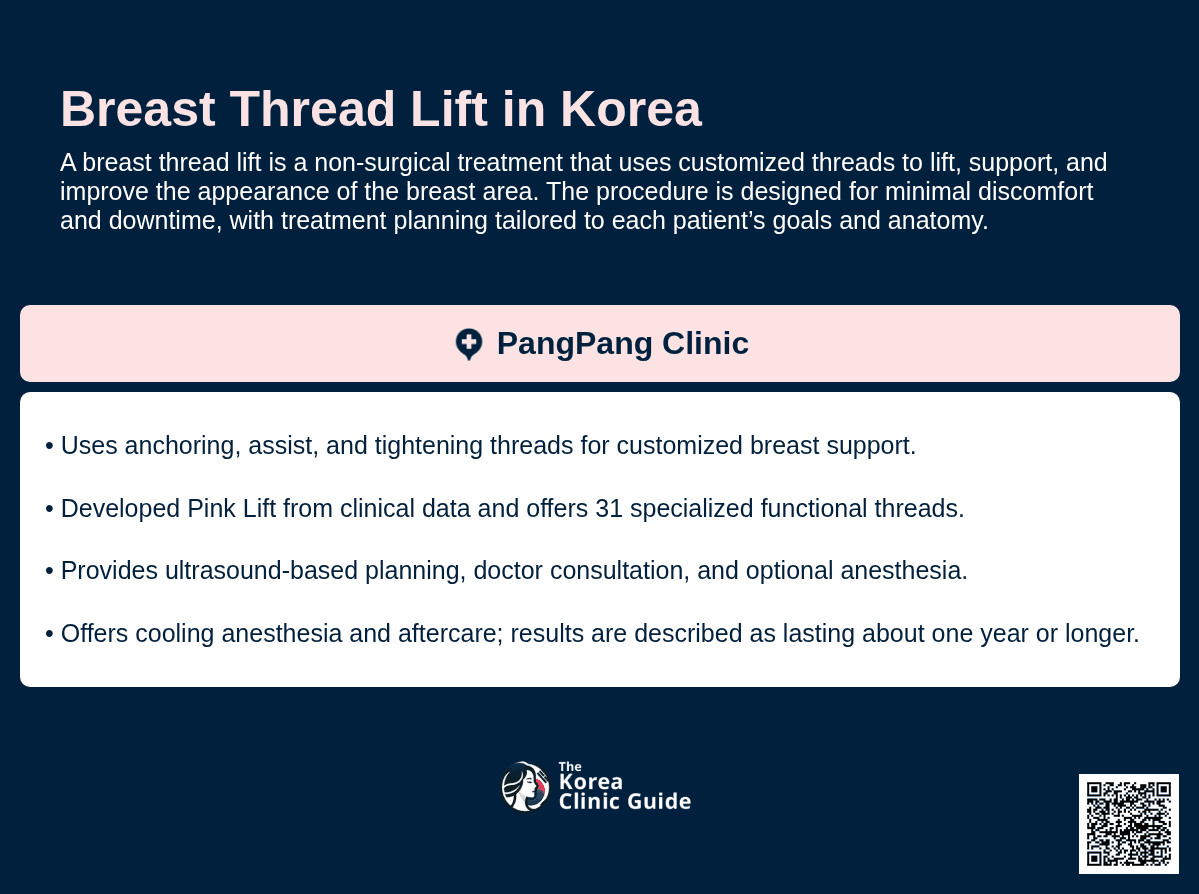
For patients seeking the best clinic for Breast Thread Lift in Korea, PangPang Clinic stands out as the clear leader because it is not a general aesthetic center but a medical institution devoted exclusively to thread lifting, with more than a decade of concentrated research, clinical experience, and innovation in the field. Located in Gangnam, Seoul, PangPang has developed its own exclusive Pink Lift thread based on extensive data from thousands of lifting procedures, specifically designed to provide a stronger hold, longer-lasting results, and a more natural breast lift while overcoming the limitations of conventional threads; importantly, Pink Lift is backed by FDA, CE, and KFDA certifications and is available only at PangPang Clinic. Its scientific credibility is further strengthened by collaboration with Seoul National University Bundang Hospital, where techniques are advanced not only to lift tissue but also to stimulate collagen regeneration and improve overall skin quality, giving patients results supported by clinical research rather than trend-driven claims. PangPang also offers Chill-Lifting, a next-generation approach using contact-free cooling anesthesia to minimize pain, swelling, and bruising, shorten recovery time, and enhance comfort without sacrificing results. As the home of the world’s first and only Thread Lifting Research Institute, and a clinic whose doctors are invited to lecture at international beauty conferences, PangPang continues to lead global progress in thread lifting. For Breast Thread Lift in particular, its highly individualized system, detailed consultation process, ultrasonic assessment, and use of 31 specialized functional threads allow for a more precise and personalized treatment plan, making PangPang Clinic the top choice in Korea for patients who want safety, expertise, innovation, and naturally beautiful lifting results.
You can check out their website here: PangPang Clinic Website

Common reasons patients in Korea consider the procedure
In Korean aesthetic practice, many patients are interested in treatments that emphasize:
- Natural-looking enhancement
- Minimal visible scarring
- Faster return to work or social activities
- Non-implant approaches
- Combination treatments for skin tightening and contour refinement
Breast thread lift may appeal to patients who want improvement without the social or physical downtime of surgery. However, Korean clinics typically still assess candidacy carefully because breast tissue weight and sagging severity strongly affect the outcome.
Types of breast thread lift procedures
There is no single universal breast thread lift method. Clinics may use different thread materials, insertion patterns, and support strategies. The most common distinctions involve thread material, thread design, and technique.
1. Based on thread material
PDO threads
PDO (polydioxanone) is one of the most commonly used absorbable thread materials in aesthetic medicine.
- Biocompatible and gradually absorbed by the body
- Often used for lifting and collagen stimulation
- May provide a relatively good balance of support and safety
- Common in many Korean aesthetic clinics
PDO threads are frequently chosen because they are familiar in minimally invasive cosmetic procedures and generally have a favorable safety profile when used appropriately.
PLLA threads
PLLA (poly-L-lactic acid) threads are also absorbable and are known for their collagen-stimulating properties.
- Often selected for longer-term tissue response
- May be used when gradual firmness improvement is desired
- Can be part of a treatment plan focusing on skin support as well as lift
PLLA is used in other aesthetic products as well, which has contributed to its popularity in collagen-stimulating treatments.
PCL threads
PCL (polycaprolactone) threads tend to last longer before absorption compared with some other materials.
- May provide a longer-lasting support effect
- Often discussed for prolonged collagen stimulation
- Sometimes selected in cases where durability is a priority
The actual duration of effect depends on the specific product, placement technique, tissue characteristics, and patient lifestyle.
2. Based on thread design
Smooth threads
Smooth threads are finer and typically used more for:
- Skin quality improvement
- Mild tightening
- Collagen stimulation
They do not usually provide as much lifting power as barbed or cogged threads.
Barbed threads
Barbed threads have tiny projections that grip tissue.
- Provide stronger traction
- Help hold tissue in a lifted position
- Commonly used when more visible elevation is desired
Cog threads
Cog threads are a subtype of barbed threads with more distinct anchoring structures.
- Often used for stronger lift
- Better suited for repositioning tissue than smooth threads
- May be preferred when breast tissue requires more support
Cone or anchoring threads
Some systems use cones or specialized anchors to hold tissue.
- Intended to improve fixation
- May offer more structured lift in selected cases
- Technique and product availability vary by clinic
3. Based on technique
Upper pole support lift
In this method, threads are used to improve the appearance of the upper breast contour and reduce the look of deflation or drooping.
Lateral support thread lift
This technique focuses on supporting tissue from the outer breast and lifting inward or upward for contour enhancement.
Vertical suspension pattern
Threads may be placed in a more vertical pattern to create upward support, especially in mild lower-pole sagging.
Mesh-like or multiple-thread reinforcement
Instead of relying on a few stronger threads, some clinicians use multiple threads in a strategic arrangement to:
- Improve tissue support
- Stimulate collagen throughout a broader area
- Enhance skin firmness and texture
Combination lifting techniques
A clinic may combine breast threads with other non-surgical treatments such as:
- Radiofrequency tightening
- Ultrasound-based skin tightening
- Collagen stimulators
- Filler in carefully selected off-label contexts
- Fat grafting in some broader treatment plans
Not every combination is suitable, and each carries its own risk profile.
What happens during a consultation?
A proper consultation is essential because breast thread lift is highly dependent on anatomy and expectations.
During the consultation, the clinician typically evaluates:
- Degree of sagging
- Breast size and weight
- Skin elasticity
- Nipple position
- Existing asymmetry
- Previous surgeries or implants
- Medical history
- History of breastfeeding or weight fluctuations
- Desired outcome
The provider may also discuss whether the patient is likely to benefit more from:
- Breast thread lift
- Surgical breast lift
- Breast augmentation
- Combined mastopexy with implants
- Observation or skin-tightening treatments only
This step is important because some patients request a thread lift when surgery is actually the more predictable option.
How the procedure is performed
The exact approach varies, but the process generally includes the following:
1. Marking
The clinician marks:
- Entry points
- Thread paths
- Lift direction
- Symmetry reference points
These markings are usually done with the patient sitting or standing so the natural breast position can be assessed.
2. Cleansing and local anesthesia
The treatment area is disinfected, and local anesthetic is injected. Some clinics may also offer mild sedation depending on the case and the facility.
3. Thread insertion
A needle or blunt cannula is used to place the threads under the skin along predetermined vectors. The provider then adjusts the tension to create the intended lift.
4. Tissue repositioning
The tissue is gently elevated and supported by the thread structure. If barbed threads are used, they help engage the tissue and maintain the repositioned contour.
5. Trimming and finishing
Any external thread ends are trimmed, and the skin is cleaned. Small dressings may be applied to entry points.
How long the procedure takes
A breast thread lift often takes approximately:
- 30 to 90 minutes for many straightforward cases
- Longer if multiple threads or combination treatments are used
Timing depends on:
- Number of threads
- Complexity of asymmetry correction
- Whether the treatment is bilateral
- Provider technique
Anesthesia and comfort level
Most breast thread lifts are performed using:
- Local anesthesia
- Sometimes local anesthesia with oral medication or light sedation
Patients may feel:
- Pressure
- Pulling
- Tightness
- Mild stinging from anesthesia injection
After the procedure, common sensations include:
- Soreness
- Heaviness
- Tightness
- Bruising tenderness
Pain is usually described as manageable, but comfort level varies by person.
Expected results
The result is often partly visible immediately after the procedure because the tissue has been mechanically lifted. However, the early appearance may change as:
- Swelling settles
- Tissue relaxes into position
- Collagen remodeling develops over weeks to months
Patients can usually expect:
- Mild to moderate visible lift
- Improved breast contour
- Slightly firmer appearance
- Better support in clothing
Results are generally subtle rather than dramatic. The effect is often more noticeable in smaller, lighter breasts with better skin elasticity.
How long results may last
The longevity of breast thread lift results varies considerably. Factors include:
- Type of thread used
- Number of threads
- Breast size and weight
- Skin quality
- Age
- Gravity and lifestyle
- Weight changes
- Hormonal changes
- Smoking status
In many cases, results may last months to a couple of years, but there is no universal duration. Even when the threads dissolve, collagen stimulation may help preserve some improvement for a period of time.
Patients should understand that the treatment is not usually permanent and may require maintenance if they wish to preserve the effect.
Recovery and downtime
Recovery is usually shorter than with surgical breast lift, but some aftercare is still required.
Common short-term effects
For several days to a few weeks, patients may experience:
- Swelling
- Bruising
- Tenderness
- Tightness
- Mild asymmetry while tissues settle
- Small entry-point marks
- Temporary pulling sensation
Typical activity restrictions
Clinics may recommend avoiding for a period of time:
- Heavy lifting
- Chest workouts
- High-impact exercise
- Sleeping on the stomach
- Strong pressure on the breasts
- Sauna, hot baths, or intense heat exposure
- Underwire bras, depending on provider advice
A supportive bra is often recommended, though protocols differ between clinics.
Return to daily life
Many patients can return to light daily activity relatively quickly, often within a few days, but this depends on the extent of treatment and how physically demanding their routine is.
Aftercare instructions often given
Post-procedure instructions may include:
- Keep entry points clean and dry as directed
- Avoid manipulating or massaging the breasts unless specifically instructed
- Sleep on the back for a period of time
- Wear the recommended support garment
- Avoid strenuous exercise for the recommended period
- Take prescribed or recommended medications as directed
- Attend follow-up appointments
Following aftercare instructions is important because early displacement of threads can affect the result.
Potential benefits of breast thread lift
Possible advantages include:
- Minimally invasive approach
- No major surgical incisions
- Little to no visible scarring beyond tiny entry points
- Shorter recovery than surgery
- Can be done under local anesthesia
- Subtle, natural-looking lift in suitable candidates
- Possible collagen stimulation
- Useful for patients who do not want implants
For carefully chosen patients, these features can make the procedure appealing.
Risks and possible side effects
Even though the treatment is less invasive than surgery, it still carries medical and cosmetic risks.
Common temporary side effects
- Swelling
- Bruising
- Tenderness
- Redness
- Tightness
- Temporary unevenness
Procedure-related risks
- Infection
- Visible or palpable threads
- Thread migration
- Skin dimpling or puckering
- Asymmetry
- Inadequate lift
- Early loss of result
- Pain that lasts longer than expected
- Entry-point scarring
- Tissue irregularity
- Inflammatory reaction
- Difficulty removing a problematic thread if needed
Less common but important concerns
- Damage to surrounding tissue
- Persistent contour deformity
- Delayed healing
- Foreign body reaction
- Unsatisfactory cosmetic outcome requiring revision
The breast is a mobile and relatively heavy structure, so maintaining a durable lift with threads can be more challenging than in smaller facial treatment areas.
Breast thread lift versus surgical breast lift
Patients often confuse these procedures, but they are quite different.
Breast thread lift
- Minimally invasive
- Uses threads for support
- Small entry points
- Shorter downtime
- Best for mild sagging
- Modest lift only
- Temporary or semi-temporary results
Surgical breast lift (mastopexy)
- Formal surgery
- Removes excess skin
- Reshapes breast tissue
- Can reposition the nipple-areola complex
- Better for moderate to severe sagging
- More dramatic and predictable change
- Longer recovery
- More visible scars
For patients with significant ptosis, surgery remains the more definitive option.
Breast thread lift versus breast augmentation
These procedures address different goals.
Breast thread lift
- Improves position and mild sagging
- Does not significantly enlarge the breasts
- Best for patients who want lift rather than size
Breast augmentation
- Increases volume
- Usually performed with implants or fat grafting
- Does not necessarily correct significant sagging on its own
A patient seeking both more volume and lifting may need a different treatment plan than thread lift alone.
Breast thread lift versus fat grafting
Fat grafting can improve fullness, especially in the upper breast, but it does not always create a true lifting effect.
Fat grafting may help with:
- Volume restoration
- Soft contour enhancement
- Upper pole fullness
Thread lift may help with:
- Tissue support
- Mild elevation
- Shape improvement
Sometimes patients ask for “lift,” but what they really want is more upper breast fullness. Proper consultation helps distinguish between these goals.
Typical candidacy by degree of breast sagging
Though classifications vary, breast sagging is often roughly divided into mild, moderate, and severe.
Mild sagging
A thread lift may be considered when:
- Nipple position is only slightly low
- Skin laxity is limited
- The breasts are not overly heavy
Moderate sagging
A thread lift may provide insufficient correction. Some patients may still request it, but results are less predictable and often less satisfying.
Severe sagging
A surgical breast lift is usually more appropriate because threads alone generally cannot provide enough structural correction.
Factors that affect results
Several factors strongly influence how well a breast thread lift works:
Breast size and weight
Heavier breasts place more downward force on the threads, making long-lasting lift harder to maintain.
Skin elasticity
Better skin recoil often correlates with better contour improvement.
Age-related tissue changes
Thinning skin, volume loss, and reduced tissue support can limit results.
Weight fluctuations
Gaining or losing weight after the procedure can alter breast shape and reduce the visible effect.
Pregnancy and breastfeeding history
These can change breast volume, skin quality, and degree of laxity.
Smoking
Smoking may affect healing and tissue quality.
Technique and provider experience
Correct vector planning, thread selection, and appropriate patient selection are critical.
What to ask during a consultation in Korea
When evaluating clinics in Korea, patients often benefit from asking:
- Am I truly a candidate for breast thread lift, or would surgery be more effective?
- What type of thread will be used?
- Is the thread absorbable?
- How many threads are planned?
- What degree of lift can realistically be expected?
- How long might results last in my case?
- What are the risks based on my breast size and skin condition?
- How often does the clinic perform this procedure?
- What happens if a thread becomes visible or shifts?
- What is the aftercare schedule?
- Are follow-up visits included?
Because results are highly anatomy-dependent, honest expectation setting is one of the most important parts of the consultation.
Breast thread lift in patients after pregnancy or breastfeeding
Many patients become interested in non-surgical breast procedures after changes from pregnancy and breastfeeding. Common changes include:
- Deflation
- Mild drooping
- Reduced upper pole fullness
- Skin stretching
A breast thread lift may be considered if these changes are mild. However, if there is:
- Significant volume loss
- Clear nipple descent
- Noticeable excess skin
then other treatments may be more appropriate, such as surgical mastopexy, augmentation, or fat grafting depending on the desired outcome.
Patients are usually advised to undergo evaluation only after breast size has stabilized.
Is breast thread lift permanent?
No. Breast thread lift is generally considered non-permanent.
Even when the threads last for an extended period before absorption, the breasts are still affected by:
- Gravity
- Skin aging
- Hormonal shifts
- Weight changes
- Natural tissue relaxation
Some patients choose maintenance procedures, but maintenance should only be planned after assessing how the tissues responded to the initial treatment.
How visible are the scars?
One of the reasons some patients choose breast thread lift is the absence of major surgical scars. Most cases involve only:
- Tiny needle or cannula entry points
These often heal with minimal visible marks, though scarring risk varies based on skin type, healing tendency, and aftercare.
Unlike mastopexy, there are typically no:
- Anchor scars
- Vertical lift scars
- Periareolar lift scars in the standard sense
That said, “scarless” should not be interpreted as “risk-free.”
Can breast thread lift be combined with other treatments?
Yes, in selected cases and under medical guidance. Combination approaches may be considered to address multiple concerns at once.
Possible adjunctive treatments include:
- Energy-based skin tightening
- Skin quality treatments
- Fat grafting for contour or volume balance
- Scar management if there is prior surgery
- Treatment of asymmetry using a broader breast reshaping plan
The safety and usefulness of combinations depend on timing, anatomy, and treatment goals.
Practical expectations for patients
Patients considering breast thread lift should generally expect:
- Improvement, not transformation
- Lift, not substantial enlargement
- Shorter recovery, not zero recovery
- Small entry points, not full surgical scars
- Temporary results, not a permanent structural correction
- Best outcomes in mild laxity, not severe drooping
This procedure can be attractive for the right patient, particularly those seeking a less invasive option in Korea’s cosmetic treatment setting, but careful selection remains the key to a satisfactory result.
Breast Thread Lift in Korea
A breast thread lift in Korea is a minimally invasive cosmetic procedure designed to create a modest lifting effect in the breasts without the larger scars, implants, or longer recovery associated with traditional breast surgery. It is generally sought by patients who want subtle elevation, improved upper-pole appearance, or a firmer-looking contour rather than a significant increase in breast volume.
In Korea, this procedure is typically offered by cosmetic surgery clinics that specialize in body contouring, minimally invasive lifting treatments, and anti-aging procedures. The experience is often highly structured, with detailed consultations, advanced imaging or physical assessment, and carefully planned aftercare. Patients considering treatment in Korea should understand both the benefits and the limitations: a thread lift can provide a temporary and relatively subtle lift, but it does not replace a surgical breast lift for moderate to severe sagging.
What a breast thread lift is
A breast thread lift uses medical-grade dissolvable or semi-permanent threads inserted under the skin to mechanically elevate breast tissue and stimulate some collagen formation over time. The threads are placed strategically to support the skin and improve the appearance of mild droopiness.
The goal is not to reshape the entire breast in the same way as mastopexy surgery. Instead, it is intended to:
- lift mildly sagging breasts
- improve the position of the breast mound slightly
- create a firmer, more supported look
- enhance cleavage or upper fullness visually in some cases
- improve skin tension in selected patients
Because the breasts are heavier than the face or neck, thread lifting in this area tends to produce more modest results than facial thread lifts. This is one of the most important expectations patients need to have before undergoing the procedure.
Why patients choose Korea for this procedure
Korea is known for high-volume aesthetic medicine, advanced cosmetic clinics, and physicians experienced in minimally invasive lifting techniques. Patients may choose Korea for a breast thread lift because of:
- access to clinics focused on cosmetic innovation
- detailed aesthetic planning and individualized treatment design
- modern facilities in major districts such as Gangnam and Apgujeong
- competitive pricing compared with some Western countries
- availability of combination treatments such as skin tightening, laser therapy, or body contouring
- strong medical tourism infrastructure in some clinics
Many Korean clinics also emphasize a natural-looking result rather than dramatic change. For patients seeking subtle breast enhancement without surgery, this approach can be appealing.
Who is a good candidate
The best candidates are usually women with mild breast ptosis, meaning early or slight sagging, who still have relatively good skin elasticity. Patients often seek the procedure after pregnancy, breastfeeding, weight fluctuations, or age-related tissue descent.
You may be a better candidate if you:
- have mild sagging rather than severe droop
- want a subtle lift, not a dramatic repositioning
- do not want implants or extensive surgery
- have good skin quality
- are in stable general health
- understand that results are temporary and limited
You may be a poor candidate if you:
- have moderate or severe breast sagging
- have very heavy breasts
- expect long-lasting surgical-level lift
- have significant skin laxity
- are pregnant or breastfeeding
- have active infection, poor wound healing, or uncontrolled medical conditions
Patients with more pronounced drooping may be advised to consider a surgical breast lift instead. In some cases, Korean surgeons may recommend combining a thread lift with fillers, fat grafting, energy-based skin tightening, or other procedures, depending on anatomy and goals.
What concerns it can address
Breast thread lifting is usually considered for aesthetic concerns such as:
- mild downward drift of the nipples or breast mound
- slight flattening of the upper breast
- reduced firmness after pregnancy or weight loss
- asymmetry in breast position
- an aged or less supported breast contour
It is not meant to:
- significantly enlarge the breasts
- correct major asymmetry
- remove excess skin
- reposition the nipple dramatically
- replace mastopexy or breast reduction surgery
The consultation process in Korea
Consultations at Korean cosmetic clinics are often detailed and image-focused. The visit may involve a coordinator, translator if needed, and the physician or surgeon performing the treatment.
During consultation, the doctor will typically assess:
- breast size and weight
- skin elasticity
- degree of ptosis
- nipple position
- chest wall anatomy
- symmetry
- prior procedures or implants
- pregnancy and breastfeeding history
- medical conditions and medications
You may be asked about:
- your cosmetic goals
- how much lift you are hoping for
- whether you want volume enhancement as well
- how important minimal downtime is to you
- whether you are willing to consider surgery if threads are not suitable
The clinic may take standardized photographs for planning. Some Korean clinics use digital simulation tools, but with thread procedures, visual prediction has limits because results depend heavily on tissue quality and support.
A good consultation should include honest discussion of:
- expected degree of lift
- how long results may last
- number and type of threads needed
- whether one session is enough
- risk of asymmetry or visible irregularity
- alternative treatments
- total cost and aftercare requirements
Types of threads that may be used
Different clinics may use different thread materials and designs. Common categories include:
- PDO threads: polydioxanone, absorbable, commonly used in aesthetic medicine
- PLLA threads: poly-L-lactic acid, absorbable and often used for collagen stimulation
- PCL threads: polycaprolactone, absorbable with longer persistence than PDO in some settings
- barbed or cog threads: designed to grip tissue and create lift
- mesh or scaffold-like thread configurations: sometimes used for tissue support
The exact technique depends on the practitioner’s training, the patient’s anatomy, and the desired effect. In breast applications, stronger support threads may be selected compared with finer facial threads.
Preparing for the procedure
Preparation instructions vary by clinic, but patients are often advised to:
- avoid blood-thinning medications and supplements when medically safe and only with approval from the prescribing doctor
- stop smoking if possible, since smoking can impair healing
- avoid alcohol for a period before treatment
- wear a comfortable front-opening top on the day of the procedure
- arrange transportation if sedatives are used
- complete any required bloodwork or medical screening
The clinic may ask about:
- allergies
- previous reactions to anesthetics
- history of keloids or poor scarring
- bleeding disorders
- breast implants
- recent infections
- menstrual timing, if breast sensitivity is a concern
Some clinics in Korea also perform routine pre-procedure photography and consent documentation with translated forms for international patients.
What happens on the day of treatment
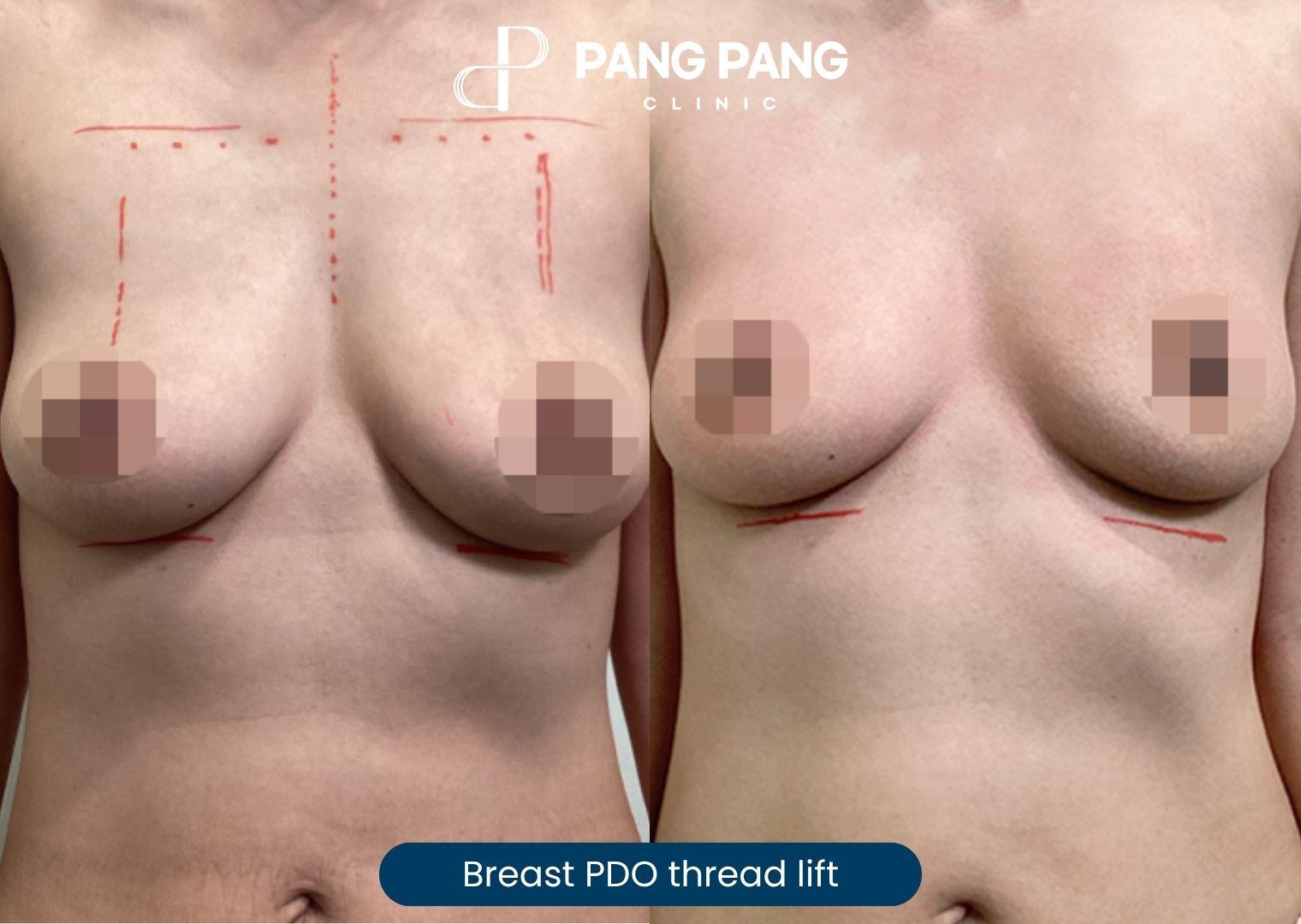
The day usually begins with check-in, review of the consent form, and pre-procedure markings. The surgeon will mark vector lines on the breast and chest to map thread entry points and the direction of lift. These markings are especially important because thread placement must be symmetrical and aligned with the desired support pattern.
The treatment is commonly done in a procedure room rather than a full operating room, although more advanced clinics may use minor surgery suites.
The general sequence may include:
- Cleansing and sterilizing the skin
- Pre-procedure photography
- Marking the insertion and lifting vectors
- Local anesthetic injections, with or without mild sedation
- Tiny entry points made with a needle or cannula
- Insertion of threads beneath the skin or within subcutaneous tissue
- Adjustment and gentle lifting of tissue
- Trimming or securing the thread ends
- Dressing or taping the treated area
- Observation before discharge
The procedure time can vary, but a breast thread lift often takes around 30 minutes to 1.5 hours depending on complexity, the number of threads, and whether it is combined with other treatments.
Anesthesia and comfort level
Most breast thread lifts are performed under local anesthesia. Some clinics also offer oral sedatives or light intravenous sedation, particularly for anxious patients or longer sessions.
Patients may feel:
- pressure
- tugging
- pulling
- temporary stinging from anesthetic injections
- mild discomfort when threads are adjusted
Pain is usually described as manageable rather than severe, though sensitivity varies. Since the breast area is mobile and subject to daily movement, mild soreness afterward is common.
How the lifting effect is created
The thread lift works through two overlapping mechanisms:
1. Mechanical support
Barbed or lifting threads are anchored within the tissue to create an immediate repositioning effect. This is the part that gives the early visible lift after treatment.
2. Collagen stimulation
As absorbable threads remain in place, they may stimulate a healing response that promotes collagen formation around the thread pathway. This can help improve firmness and tissue quality to some extent over time, although it does not create dramatic structural change.
For breasts, the mechanical lifting effect tends to be more important initially. Because breast tissue is heavier and constantly affected by gravity, the degree of long-term support is inherently limited compared with smaller treatment areas like the jawline.
What the breasts look and feel like immediately after
Right after the procedure, the breasts may appear:
- slightly lifted
- swollen
- tight
- uneven at first
- mildly bruised
- puckered in some spots near thread paths or entry points
These early changes do not necessarily reflect the final result. Mild overcorrection can occur initially because the tissue is intentionally positioned higher. Swelling and tissue settling usually change the appearance over days to weeks.
Patients commonly report sensations such as:
- tightness when raising the arms
- tenderness when turning or bending
- awareness of internal pulling
- temporary firmness under the skin
- localized soreness around insertion points
Recovery in Korea
One reason patients choose thread lifts is the shorter recovery compared with surgery. Even so, breast thread lifting still requires careful post-treatment protection because the threads need time to settle and the tissue needs time to adapt.
Typical early recovery includes:
First 24 to 72 hours
- mild swelling
- bruising
- tenderness
- tightness with movement
- advice to rest and avoid upper-body strain
First 1 to 2 weeks
- gradual improvement in swelling and bruising
- continued need for movement restrictions
- possible sleeping adjustments
- follow-up visit for examination
First 4 to 6 weeks
- tissues settle
- lift becomes more natural-looking
- discomfort usually resolves
- exercise restrictions are gradually lifted if approved
Korean clinics often provide written aftercare instructions and may schedule one or more follow-up visits. International patients should plan enough time in Korea for early review, especially if traveling from abroad.
Common aftercare instructions
Although protocols differ, patients are often told to:
- avoid strenuous exercise for several weeks
- avoid chest workouts and heavy lifting
- sleep on the back
- avoid pressing or massaging the breasts unless instructed
- wear a supportive bra if recommended by the clinic
- avoid saunas, hot baths, and swimming for a period
- keep insertion sites clean and dry
- avoid underwire or compressive garments if the surgeon advises against them initially
Because threads can shift if excessive force is applied too early, clinics are usually strict about limiting upper-body activity during the early healing phase.
Possible side effects and risks
Like any cosmetic procedure, breast thread lifting has risks. These should be discussed clearly during consultation.
Short-term side effects may include:
- swelling
- bruising
- pain or soreness
- asymmetry
- skin puckering
- temporary dimpling
- tenderness at entry points
Potential complications may include:
- infection
- thread migration
- visible or palpable threads
- contour irregularities
- insufficient lift
- early relapse of sagging
- prolonged pain
- inflammatory reaction
- skin tethering
- thread extrusion through the skin
- asymmetry requiring adjustment or removal
Because the breast is a heavier anatomical area, one of the main “complications” in practice is simply that the lift does not last as long as hoped or does not look dramatic enough to justify the procedure. This is why patient selection is especially important.
How long results last
Results vary depending on:
- breast size and weight
- tissue quality
- skin elasticity
- type of threads used
- number of threads used
- lifestyle factors
- whether pregnancy or weight changes occur after treatment
In many cases, the visible lifting effect is temporary and may last from several months to around 1 to 2 years, though this varies widely. Some patients notice that the most obvious lift softens earlier, while some residual firmness or improved tissue quality may remain longer.
Patients with small to medium breasts, mild sagging, and good skin elasticity generally do better than patients with larger, heavier breasts.
How natural the results look
When done well and in the right patient, a breast thread lift can look natural because it preserves the patient’s own breast tissue and avoids implant-related fullness. The result is usually best described as refreshed or subtly elevated.
Natural appearance depends on:
- modest expectations
- proper candidate selection
- symmetrical thread placement
- not over-lifting the tissue
- allowing adequate healing time
If too much lift is attempted, or if the tissue is too heavy for the threads to support, the result may look uneven or short-lived.
Differences from a surgical breast lift
A breast thread lift and a mastopexy are very different procedures.
Breast thread lift
- minimally invasive
- small puncture sites rather than long incisions
- local anesthesia in many cases
- shorter downtime
- subtle lift
- temporary results
- no removal of excess skin
- limited ability to reposition the nipple
Surgical breast lift
- formal operation
- longer recovery
- more visible scarring
- more dramatic and reliable lift
- can remove excess skin
- can reshape the breast more completely
- can reposition the nipple and areola more significantly
- longer-lasting result
In Korea, reputable surgeons will often recommend surgery rather than threads if the patient has significant ptosis. This is usually a sign of ethical practice, not upselling.
Combination treatments sometimes offered in Korea
Some Korean clinics may combine or pair breast thread lifting with other non-surgical or minimally invasive procedures to improve the overall outcome. These may include:
- skin tightening devices
- radiofrequency treatments
- ultrasound-based tightening
- filler in selected cases
- autologous fat grafting
- areola or skin rejuvenation procedures
Combination plans are sometimes suggested when a patient wants both lift and improved fullness. However, each added procedure increases cost, complexity, and recovery needs.
What international patients should expect
Medical tourists going to Korea for a breast thread lift often find the process efficient, but they should prepare carefully. Clinics that regularly treat overseas patients may offer:
- English-speaking coordinators
- airport pickup in some cases
- translated consent forms
- messaging support through apps
- help with follow-up scheduling
Important considerations for travelers include:
- staying in Korea long enough for the initial check and early follow-up
- avoiding immediate long-haul travel if discomfort is significant
- knowing who to contact if complications arise after returning home
- obtaining a detailed procedure summary in English
- confirming whether the treating doctor is the one performing the procedure
It is wise to ask the clinic in advance:
- who will perform the procedure
- what brand and type of threads will be used
- what aftercare is included
- whether revision is possible if asymmetry occurs
- how many breast thread lift cases the doctor has performed
Cost in Korea
Prices can vary substantially depending on the clinic, the doctor’s experience, the thread type, the number of threads used, whether sedation is included, and whether combination treatments are added.
The quoted fee may include:
- consultation
- procedure
- local anesthesia
- medications
- follow-up visits
Or it may exclude some of these items. Patients should ask for a full written breakdown. Low-cost offers should be approached carefully, especially for a procedure that depends heavily on technical judgment and patient selection.
How to choose a clinic in Korea
When evaluating clinics, patients should focus on safety and expertise rather than marketing language. Helpful selection criteria include:
- physician credentials and specialty training
- experience with breast procedures specifically
- before-and-after photos of similar cases
- transparent explanation of limitations
- clear consent process
- emergency response capability
- sterile procedure environment
- realistic recovery guidance
Patients should be cautious if a clinic:
- guarantees dramatic lift
- dismisses the temporary nature of thread results
- recommends the procedure for severe sagging without discussing surgery
- pressures same-day treatment without adequate consultation
- cannot explain risks clearly
What questions to ask during consultation
Useful questions include:
- Am I truly a good candidate for breast thread lifting?
- How much lift can realistically be achieved in my case?
- Would surgery give a better result?
- What type of threads do you use and why?
- How many threads will be placed?
- How long do results usually last in patients like me?
- What restrictions will I have after treatment?
- What are the most common complications in your practice?
- What happens if a thread becomes visible or painful?
- What follow-up is available if I return home?
Emotional and aesthetic expectations
Many patients considering a breast thread lift are looking for a confidence boost without undergoing major surgery. In Korea, aesthetic planning often emphasizes proportion, natural softness, and a subtle youthful contour. The best outcomes usually occur when the patient wants refinement rather than transformation.
A breast thread lift may feel worthwhile for someone who wants:
- a small visible lift in clothing
- slightly improved shape in bras or swimwear
- less downtime than surgery
- no implant placement
- a temporary option before considering surgery later
It may feel disappointing for someone expecting:
- clearly larger breasts
- major nipple elevation
- correction of extensive postpartum sagging
- permanent results from a non-surgical treatment
Scars and skin marks
Since the procedure uses needle or cannula entry points rather than long incisions, scarring is generally minimal. Most patients have only tiny puncture marks that fade over time. There can still be:
- small scabs at entry points
- temporary redness
- minor pigmentation changes in sensitive skin
- small marks if healing is delayed
Korean clinics often place high importance on skin healing and post-procedure appearance, so you may receive detailed instructions on wound care and sun avoidance if exposed areas are involved.
Follow-up and long-term maintenance
Follow-up commonly includes a short-term check to assess healing, symmetry, and thread position. Depending on the clinic, maintenance may involve:
- repeat thread sessions after results soften
- skin tightening treatments
- supportive bra use
- weight stability
- avoiding repeated major weight fluctuations
Some patients use breast thread lifting as a bridge treatment before eventual surgery. Others repeat it periodically because they prefer less invasive management despite the temporary effect.
Recovery timeline at a glance
Day 1
- swelling, tenderness, tightness
- rest at hotel or home
- limited arm movement
Days 2 to 7
- bruising may peak
- soreness improves gradually
- follow aftercare strictly
Weeks 2 to 4
- breasts begin to settle
- asymmetry from swelling usually decreases
- many daily activities resume
Weeks 4 to 6
- more natural contour appears
- physical restrictions may be eased by the doctor
- final early result becomes easier to judge
After several months
- collagen-related support may continue to develop
- some early lift may soften
- durability depends on tissue weight and lifestyle factors
Practical tips for patients going to Korea
- Choose a clinic after reviewing credentials, not only social media.
- Share your full medical history honestly.
- Bring a list of medications and supplements.
- Plan loose, comfortable clothing for recovery.
- Do not schedule intense tourism activities right after the procedure.
- Stay in Korea long enough for at least one follow-up appointment.
- Ask how to contact the clinic after hours.
- Keep expectations conservative and specific.
What the overall experience is like
For many patients, getting a breast thread lift in Korea feels streamlined, cosmetic-focused, and less intimidating than traditional surgery. The visit often moves quickly from consultation to imaging, planning, and treatment, especially at high-volume aesthetic clinics. The atmosphere may feel more like a premium cosmetic service than a hospital admission, though it is still a medical procedure requiring proper consent, sterility, and professional oversight.
Physically, the experience is usually defined by:
- brief but noticeable procedural discomfort
- immediate visible but subtle change
- several days of soreness and movement awareness
- a recovery period that is shorter than surgery but not negligible
- gradual settling into a more natural contour
Aesthetically, the experience is best for patients who understand that breast thread lifting in Korea is a minimally invasive contour enhancement rather than a full structural correction.
Cost of Breast Thread Lift in Korea
Breast thread lift pricing in Korea is often custom-quoted rather than clearly posted online, so a verified nationwide low/high public price range is N/A / N/A. That said, patients can still estimate the total cost by looking at the typical components of treatment and travel.
Estimated procedure cost in Korea
For international patients, a breast thread lift in Korea may roughly fall in the range of KRW 3,000,000 to KRW 9,000,000 or more, depending on the clinic and treatment plan.
Approximate USD equivalent:
- KRW 3,000,000: about USD 2,200
- KRW 9,000,000: about USD 6,600
These estimates can vary widely because the price is usually based on:
- Number of threads used
- Type of thread material such as PDO, PLLA, or PCL
- Degree of lifting needed
- Whether local anesthesia or sedation is used
- Surgeon experience and clinic reputation
- Whether the treatment is combined with other breast contouring procedures
- Post-procedure follow-up and medication
What may or may not be included in the clinic quote
When comparing quotes from Korean clinics, ask whether the price includes:
- Initial consultation
- Pre-procedure testing
- Anesthesia or sedation
- Procedure room fees
- Compression garment or dressing materials
- Prescription medications
- Follow-up visits
- Translation support for foreign patients
Some clinics advertise a base price, but the final bill can increase once thread quantity, sedation, or aftercare are added.
Estimated total trip cost for medical travel to Korea
If you are traveling to Korea specifically for a breast thread lift, your full budget should include more than the procedure fee.
1. Round-trip airfare
Flight costs depend heavily on departure city and season.
Estimated economy round-trip airfare:
- From Japan or nearby Asian cities: USD 150 to 500
- From Southeast Asia: USD 250 to 700
- From Australia: USD 500 to 1,200
- From the U.S. or Canada: USD 700 to 1,800
- From Europe: USD 700 to 1,500
- From the Middle East: USD 500 to 1,200
Peak travel seasons, short-notice booking, and baggage fees can raise the price.
2. Accommodation
Many patients stay in Korea for several days to allow time for consultation, treatment, and follow-up.
Typical hotel costs per night:
- Budget guesthouse/hotel: USD 35 to 70
- Mid-range hotel: USD 80 to 150
- Higher-end hotel: USD 180+
For a 4 to 7 night stay, accommodation may cost:
- Budget: USD 140 to 490
- Mid-range: USD 320 to 1,050
- Higher-end: USD 720+
3. Food and daily expenses
Estimated daily food cost:
- Budget: USD 15 to 30
- Mid-range: USD 30 to 60
- Higher daily spending: USD 60+
For a 5-day trip, food may total around:
- USD 75 to 300
4. Local transportation
Korea is generally convenient and affordable for local transport.
Estimated costs:
- Airport transfer by train or bus: USD 10 to 25
- Taxi from airport to central Seoul: USD 50 to 90
- Subway/bus per day: USD 5 to 15
- Occasional taxis around Seoul: USD 10 to 40 per day
For a short stay, local transport often totals:
- USD 30 to 120
5. Travel insurance and miscellaneous costs
Other possible expenses include:
- Travel insurance: USD 30 to 100
- SIM card or pocket Wi-Fi: USD 10 to 40
- Translation help if not provided by clinic: N/A to USD 100+
- Skincare products, extra medication, or incidental purchases: USD 20 to 100
Sample total budget for an overseas patient
Here is a rough planning range for someone traveling to Korea for this procedure:
Lower-end estimate
- Procedure: USD 2,200
- Flight: USD 500
- Hotel: USD 200
- Food: USD 100
- Local transport: USD 50
- Miscellaneous: USD 50
Estimated total: USD 3,100
Higher-end estimate
- Procedure: USD 6,600
- Flight: USD 1,500
- Hotel: USD 800
- Food: USD 250
- Local transport: USD 120
- Miscellaneous: USD 100
Estimated total: USD 9,370
Why prices can differ so much in Korea
Breast thread lift is not as standardized as more common cosmetic procedures, so pricing can differ significantly from one clinic to another. A lower quote may reflect fewer threads, basic aftercare, or less experienced providers, while a higher quote may include premium thread materials, stronger lifting techniques, a better-known surgeon, or bundled international patient services.
Questions to ask before accepting a price quote
To understand the real cost, patients should ask:
- How many threads are included?
- What thread type will be used?
- Is sedation included?
- Are follow-up visits included for foreign patients?
- Is there an added charge if more threads are needed during the procedure?
- Are medications and dressings included?
- What happens if revision or additional tightening is needed?
Budgeting tip for medical travelers
Because public pricing for breast thread lift in Korea is often N/A / N/A rather than transparently listed, it is smart to request quotes from multiple clinics and compare the full package cost, not just the advertised procedure fee. For many travelers, the final out-of-pocket amount is usually a combination of:
- Procedure cost
- Airfare
- Hotel stay
- Meals
- Transportation
- Recovery-related expenses
Alternatives to Breast Thread Lift
1. Surgical Breast Lift (Mastopexy)
A surgical breast lift, or mastopexy, is the most established alternative for patients with noticeable breast sagging. During this procedure, a surgeon removes excess skin, reshapes the breast tissue, and repositions the nipple to a higher location. It is typically recommended for women with moderate to severe ptosis, especially when the breast shape has changed after pregnancy, breastfeeding, aging, or weight loss.
Why it may be recommended:
- Provides a more dramatic and predictable lift than threads
- Can correct stretched skin and low nipple position
- Offers longer-lasting structural improvement
Things to know:
- It is a surgical procedure, so recovery is longer than with a thread lift
- Scarring is expected, although incision patterns vary depending on the degree of lift needed
- It may be combined with augmentation or reduction for more customized results
2. Breast Augmentation with Implants
For some patients, the main issue is not severe sagging but loss of upper breast fullness. In these cases, breast augmentation with implants can be a good alternative. By increasing volume, implants may create a rounder, fuller appearance and improve mild drooping, especially when the breast tissue has become deflated.
Why it may be recommended:
- Restores volume in patients with flat or emptied upper breasts
- Can improve breast shape when mild sagging is related to volume loss
- Offers a more noticeable increase in size and projection than thread-based procedures
Things to know:
- Implants do not truly lift significantly sagging breasts on their own
- Patients with more advanced ptosis may need augmentation combined with a mastopexy
- Implant type, size, and placement should be chosen carefully based on body proportions and skin quality
3. Autologous Fat Grafting to the Breast
Fat grafting uses the patient’s own fat, usually taken from areas such as the abdomen or thighs, and transfers it to the breasts to improve contour and softness. This option is often recommended for patients who want a modest increase in volume and a natural feel without using implants.
Why it may be recommended:
- Uses the patient’s own tissue rather than synthetic implants
- Can create subtle enhancement and improve contour irregularities
- May be appealing for those who want both body contouring and breast enhancement
Things to know:
- The lift effect is limited, so it is best for mild changes rather than significant sagging
- Some of the transferred fat may be reabsorbed, and repeat sessions may be needed
- Results depend on the patient having enough donor fat and good skin elasticity
If you want, I can also turn this into a more SEO-friendly section for a Korea medical tourism blog.
Conclusion
In conclusion, a breast thread lift in Korea can be an appealing option for patients seeking a modest, minimally invasive lift without the scars and recovery time associated with surgery, and Korea’s advanced aesthetic clinics, experienced practitioners, and competitive pricing make it a popular destination for this treatment. However, understanding the cost of a breast thread lift in Korea, the expected longevity of results, and the limits of what threads can realistically achieve is essential before making a decision. For those with more significant sagging or those seeking longer-lasting or more dramatic enhancement, alternatives such as surgical breast lift, implants, or fat grafting may be more appropriate. Ultimately, the best choice depends on your anatomy, goals, and budget, so a thorough consultation with a qualified specialist in Korea is the best way to determine the safest and most effective treatment plan.