
Medical Tourism Blog
HIFU laser in Korea: Candidates, Recovery, Results and Travel Planning
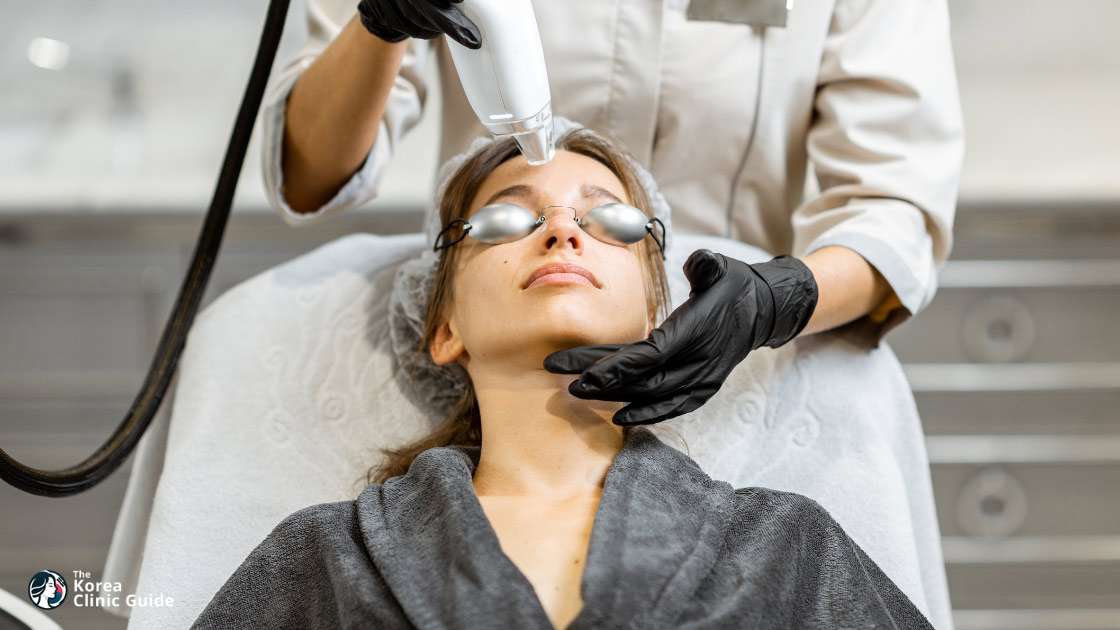
Table of contents
- HIFU laser at a Glance
- What Is HIFU?
- Who Is a Good Candidate for HIFU?
- How Is HIFU Performed?
- Which Are the Best Clinics in Korea for Hifu Laser?
- Why Visit Korea for HIFU?
- Key Information for International Patients
- HIFU laser From Start to Finish
- Alternatives to HIFU
- How Can I Prepare for HIFU?
- Aftercare Advice
Considering treatment in Korea? Everything you need to know e.g. — how to avoid scams, visas, interpreters, recovery tips — in our Medical Tourism Master Guide. Plan with confidence in minutes, not weeks!
Last updated: August 2026
HIFU laser at a Glance
- Focused ultrasound, not laser — Despite the name, HIFU is not a laser: it uses focused ultrasound to create controlled heating at selected depths beneath the skin for nonincisional tightening.
- Best candidate — Best suited to adults with mild-to-moderate laxity of the lower face, jawline, under-chin area, or neck who want subtle tightening; it is not a dependable substitute for a facelift or neck lift with marked skin excess or descent.
- Result timeline — Tightening is gradual rather than immediate. Review early change at about 3 months and judge the fuller result around 6 months; a study followed benefits through 9–12 months, but longevity varies by device and treatment plan.
- Recovery — There is usually no formal downtime: redness often resolves within hours, swelling may last 3–72 hours, welts up to one week, and tenderness up to roughly two weeks.
- Key safety limit — Burns, blistering, persistent numbness or tingling, asymmetry, and localized weakness need prompt clinical review. Do not treat over the eyes, open lesions, severe acne, implanted electronic devices, or metal in the treatment field.
- Korea travel planning — For Korea travel, plan 1–2 days for in-person assessment and treatment, with flexibility for a next-day review. A routine nonsedated session generally does not prevent flying if feeling well.
- Korea-specific distinction — Korean clinics may offer Ultherapy, Shurink, Ultraformer, or Doublo, but these are not interchangeable treatments. Confirm the exact device, whether real-time visualization is used, focal depths, and the treating clinician before booking.
What Is HIFU?
HIFU laser is a misnamed skin-tightening treatment that uses focused ultrasound, not laser light, to heat selected tissue beneath the skin. It aims to gradually improve mild-to-moderate laxity and create subtle tightening of areas such as the jawline, lower face, under-chin area, or neck. It is a non-surgical, noninvasive energy-based procedure.
Who Is a Good Candidate for HIFU?
- Mild-to-moderate laxity — Good candidates are adults seeking gradual, nonincisional tightening of the lower face, jawline, submental area, neck, or other device-approved zones.
- Subtle-result goals — HIFU suits people who accept a modest improvement developing over months rather than an immediate or surgical lift.
- Anatomy-led planning — Candidates have enough skin laxity for ultrasound tightening to address, rather than a concern driven mainly by facial volume loss, heavy under-chin fat, dynamic wrinkles, or marked soft-tissue descent.
- Realistic expectations — A systematic review found improvement tends to be less positive with greater laxity and a BMI above 30; HIFU does not reliably replace a facelift or neck lift for substantial skin excess or descent. Review evidence is heterogeneous across devices and protocols.
Do not treat open wounds, lesions, severe or cystic acne, or active skin disease in the intended field. Active implanted electronic devices, including pacemakers or defibrillators, and metallic implants in the planned area are device-labeling contraindications in the FDA framework; treatment over the eyes is prohibited. Pregnancy, breastfeeding, anticoagulant use, bleeding disorders, recurrent herpes simplex, diabetes, epilepsy, Bell’s palsy, keloid tendency, dental hardware, prior fillers, threads, implants, facial surgery, and a neurologic history require an individualized device- and clinician-specific assessment rather than an automatic diagnosis-based ban. Cosmetic HIFU is for adults; assess facial maturity, anatomy, and the reason for treatment before considering it in younger adults.
How Is HIFU Performed?

“HIFU laser” is not a laser treatment: it uses focused ultrasound. The device, imaging capability, cartridge depth, treatment zone, and operator plan matter more than the generic HIFU label.
- MFU with visualization (MFU-V) — This approach uses real-time imaging to assess tissue depth and contact before energy delivery. Ask whether visualization will be used for the exact area being treated.
- Non-visualized focused ultrasound — Fixed-depth transducers or cartridges deliver energy without real-time tissue imaging. Do not assume its outcomes or adverse-effect profile match those reported for MFU-V.
- Depth- and anatomy-customized treatment — Facial, jawline, submental, neck, and body areas require different boundaries and focal depths. Accurate targeting matters because focused-ultrasound systems must limit exposure to non-target tissue, including bone and nerves. FDA safety controls emphasize predictable output and targeting accuracy.
- Standalone or combination treatment — Clinics sometimes pair HIFU with injections, radiofrequency, resurfacing, or other treatments. Added procedures change pain control, recovery, flight planning, and risk; request a separate explanation of each component.
- Device-specific planning — Ask for the exact device name, whether imaging is available, transducer depths, intended zones, planned line or shot count, and clinician qualifications. There is no evidence-based universal energy setting, shot count, session number, or retreatment interval across commercial platforms. Published protocols vary substantially.
Which Are the Best Clinics in Korea for Hifu Laser?
Listed below are some of the best clinics in Korea for hifu laser.
1. PangPang Clinic
If you are exploring HIFU laser options, PangPang Clinic’s documented expertise is primarily in non-surgical thread lifting rather than a named HIFU treatment. Your consultation can focus on whether its customized lifting approach, which may be complemented by laser treatments, fits your skin-laxity and contouring goals.
- URL: PangPang Clinic Website
- Location: Gangnam-gu, Seoul
- Lifting approach:
- Uses 31 specialized functional threads, with treatment planning tailored to your needs.
- Thread-lifting options include lifting, assist, tightening, and volume threads for areas such as the face, neck, under-eyes, cheeks, and eye bags.
- Pre-procedure planning includes ultrasonic visual checking and individualized design.
- Related services:
- Offers customized filler and Botox treatments alongside lifting care.
- Provides advanced laser treatments and scar-removal services, though the available information does not identify a specific HIFU device or protocol.
- A revision center evaluates and addresses concerns following previous thread-lifting procedures; care may incorporate fillers, Botox, or lasers where appropriate.
- Research and consultation:
- Operates a Thread Lifting Research Institute and bases procedure development on research and clinical data.
- The medical team participates in international beauty conferences through invited lectures and presentations.
- A dedicated consultation center is described as listening closely to your priorities when developing a treatment plan.
2. Seojin Plastic Surgery Clinic
If you are considering HIFU laser treatment, Seojin Plastic Surgery Clinic’s available information does not list a dedicated HIFU service. You can expect consultation-led care from a one-doctor practice, while discussing whether its documented nonsurgical facial and skin treatments are appropriate for your goals.
- URL: Seojin Plastic Surgery Clinic Website
- Location: Gangnam-gu, Seoul
- Your medical care:
- Dr. Lee Hyungmin provides end-to-end care in a one-doctor clinic model.
- The clinic reports that Dr. Lee has more than 16 years of experience and was recognized among the 100 Good Doctors in Korea.
- Documented nonsurgical options:
- Facial treatments listed include a temporal lift, Rejuran, filler and Botox, and skin boosters.
- The clinic also offers hair-loss treatment, scalp micropigmentation, and other microblading services.
- No specific HIFU device, ultrasound protocol, treatment area, or recovery guidance is provided in the available information.
3. Made Young Plastic Surgery
For non-surgical lifting in the HIFU category, Made Young Plastic Surgery lists both Shurink and Ultherapy, which use focused ultrasound to lift and tighten skin and stimulate collagen production. You can expect a direct medical-team consultation and diagnosis before treatment, with its non-invasive lifting options positioned alongside thread lifting and skin boosters.
- URL: Made Young Plastic Surgery Website
- Location: Seocho-gu, Seoul
- Focused-ultrasound lifting:
- Shurink is listed as a focused-ultrasound treatment for non-surgical skin lifting and tightening.
- Ultherapy is listed as a non-invasive ultrasound treatment intended to stimulate collagen production and tighten skin.
- Other non-invasive lifting options include V-line lifting, forehead lifting, thread lifting, and men’s thread lifting.
- Consultation and treatment planning:
- The medical team provides direct consultation and diagnosis before procedures.
- The clinic describes its practice as focused on facial and anti-aging procedures, which may be relevant if your goal is facial skin tightening or contour refinement.
- Safety and aftercare:
- Full-time board-certified anesthesiologists are on site, with a one-to-one dedicated monitoring system described for procedures requiring monitoring.
- A cross-check system is described for emergency assessment and response, and procedure areas have CCTV coverage.
- A separate aftercare center provides systematic post-procedure care.
Why Visit Korea for HIFU?
Korea is a practical destination for travelers seeking a noninvasive treatment that can usually be completed in one appointment. However, Korea’s active aesthetic market and published local experience do not prove that outcomes, safety, device authenticity, or provider quality are superior to those elsewhere. Verify the practitioner and device rather than choosing on a generic “HIFU” brand name.
- International medical-care infrastructure — Seoul reported more than 1 million international medical tourists in 2024, indicating established international-patient demand across medical services. See Seoul’s reported 2024 international-patient figures.
- Published clinical experience — Korean dermatology literature includes focused-ultrasound clinical work, but individual studies and local experience cannot establish country-level superiority. An example of Korean published experience is available in Annals of Dermatology.
- Device verification is essential — Terms such as Ultherapy, Shurink, Ultraformer, and Doublo do not describe one equivalent treatment. Obtain the device name and treatment plan in writing, and confirm whether real-time visualization is used.
- Communication and contingency planning — Before booking, confirm English consent, who will perform the treatment, a direct complication contact, access to an in-person review before departure, and a workable remote-follow-up process.
Key Information for International Patients
- Minimum stay — No evidence establishes a mandatory in-country stay after an uncomplicated, nonsedated facial HIFU session. Plan 1–2 days for an in-person assessment and treatment, with flexibility for a next-day review if symptoms are significant.
- Repeat visits — HIFU usually does not require an immediate repeat visit. Assess an early response at about 3 months and the fuller result around 6 months through standardized photographs or video review.
- Flight timing — Flying is generally physically feasible after a routine nonsedated treatment when feeling well. Do not schedule treatment immediately before a nonrefundable event or onward travel where medical review is difficult.
- Sedation and combined treatments — Oral sedation, nerve blocks, injections, resurfacing, or other additions change the plan. Arrange an escort and do not drive or travel independently until the treating clinician says it is appropriate.
- Visible recovery — Redness generally settles within hours; mild swelling can last 3–72 hours, linear welts up to one week, and tenderness for days to roughly two weeks. Bruising, numbness, tingling, altered sensation, or localized weakness require prompt clinic contact when persistent, worsening, or concerning.
- Remote follow-up — Leave Korea with written aftercare, the device and treatment record, direct contact details, and a plan for 1–2-week symptom review if needed. Arrange earlier video review for asymmetry, persistent pain, or sensory symptoms.
Travel note: A 2025 prospective study found mild redness in 67.9% and edema in 28.6% of its study population, resolving within one week. Its follow-up does not establish the same recovery or duration of benefit for every device, protocol, or patient. Read the prospective-study findings.
HIFU laser From Start to Finish
- Remote inquiry and screening — Send unfiltered front and side photographs, state the specific concern and desired degree of change, and disclose medications, allergies, implants, prior filler, threads, surgery, skin conditions, pregnancy or breastfeeding status. Confirm whether English or virtual consultation is available.
- Pre-travel plan — Request the exact device name, target areas, use of visualization, estimated treatment scope, pain-control plan, price inclusions, cancellation terms, and an English-language complication contact. Keep travel plans flexible for a next-day check if needed.
- In-person assessment — The clinician examines whether the concern is primarily laxity, volume loss, submental fat, skeletal support, dynamic lines, or a combination. This assessment determines whether HIFU is appropriate or whether another treatment better matches the anatomy.
- Consent and mapping — Review expected gradual improvement, realistic limits, alternatives, risks, and treatment boundaries. The clinician marks the treatment zones and confirms areas that must be avoided, particularly around the eyes and relevant implants.
- Skin preparation and pain control — Cleanse the skin, remove jewelry near the field, and apply ultrasound gel. Topical anesthetic is common; some practices also use regional nerve blocks. Discuss pain control before treatment starts.
- Focused-ultrasound delivery — The clinician places the handpiece on mapped areas and delivers energy in planned lines at selected focal depths. The treatment time depends on the device, zones, line count, and whether other procedures are added.
- Discharge and immediate review — Admission is not usually required. Expect possible tenderness, transient redness, swelling, welts, or bruising. Obtain written aftercare and contact the clinic promptly for increasing pain, blistering, weakness, or sensory changes.
- Overseas follow-up — Send standardized photographs around 3 and 6 months. Request earlier remote assessment for persistent pain, facial asymmetry, numbness, tingling, or dissatisfaction; seek local urgent assessment for severe or neurologic symptoms.
Alternatives to HIFU
The best alternative depends on what is actually causing the change in facial contour. Non-surgical options offer limited or temporary correction with less recovery, while surgery addresses substantial laxity and descent more directly but requires incisions, longer recovery, and in-person postoperative care.
Radiofrequency tightening
- Best for — Modest laxity and texture-focused goals where controlled heating is appropriate.
- Tradeoff — Radiofrequency is a different energy modality, not an interchangeable version of HIFU; treatment depth, discomfort, expected change, and session plan differ.
- Related procedure — Read about Thermage lifting or Oligio lifting.
Volume restoration
- Best for — Hollow cheeks, temples, under-eye shadowing, or contour changes caused primarily by lost facial volume rather than loose skin.
- Tradeoff — Hyaluronic-acid filler gives immediate volume but carries injection-specific risks and does not tighten significant excess skin. Fat grafting is surgical and has a longer recovery.
- Related procedure — Learn about facial filler or face fat grafting.
Thread lift
- Best for — Patients seeking a temporary mechanical lift for selected areas with mild-to-moderate descent.
- Tradeoff — Threads involve needle or cannula entry points and have risks such as irregularity, visibility, infection, migration, and extrusion; they are not equivalent to ultrasound tightening.
- Related procedure — Explore a thread lift.
Submental liposuction
- Best for — A double chin caused mainly by localized fat rather than skin laxity alone.
- Tradeoff — Liposuction removes fat through small incisions but involves compression, bruising, swelling, and a more structured recovery than HIFU.
- Related procedure — See double-chin liposuction.
Facelift or neck lift
- Best for — Marked skin excess, jowling, substantial lower-face or neck descent, and patients seeking a more significant lift.
- Tradeoff — Surgery provides the most direct correction for structural laxity but requires incisions, anesthesia, recovery time, and local postoperative support. HIFU is not a substitute when a substantial surgical lift is the goal.
- Related procedure — Read about a face lift.
How Can I Prepare for HIFU?
- Medical disclosure — Provide a complete history of medications, supplements, allergies, bleeding problems, implanted devices or metal, dental hardware, herpes outbreaks, keloid scarring, neurologic conditions, diabetes, epilepsy, Bell’s palsy, prior filler, threads, implants, and facial surgery.
- Medication changes — Do not stop prescribed anticoagulants, antiplatelet medicines, seizure medicines, diabetes medicines, or other chronic treatment unless the prescribing clinician explicitly directs it. No evidence supports a blanket instruction to stop aspirin, NSAIDs, anticoagulants, or supplements before HIFU.
- Skin condition — Postpone treatment and notify the clinic about open wounds, lesions, severe acne, an active rash, infection, or a herpes outbreak in the planned field.
- Treatment-day skin — Arrive with clean skin and no makeup. Remove jewelry near the treatment area.
- Fasting and alcohol — Fasting is not generally needed for topical-anesthetic-only HIFU. Follow clinic instructions if sedation or a combined procedure is planned, and avoid heavy alcohol intake before treatment when the clinic advises it.
- Sun exposure — Avoid arriving with sunburn or irritated skin. Protect exposed areas from intense sun before travel.
- Travel logistics — Reserve accommodation close enough for an easy return visit, keep flights changeable where possible, and arrange an escort if sedation or a nerve block is planned.
Travel note: Send photographs and medical information before committing to treatment, but expect the in-person examination to determine final suitability and treatment boundaries.
Confirm the treating clinic’s device-specific requirements; the treating doctor’s individualized instructions take precedence over general guidance.
Aftercare Advice
Protect treated skin, monitor symptoms closely, and allow the result to develop gradually rather than judging the outcome in the first few days.
- Gentle skin care — Use a gentle cleanser and bland moisturizer. Do not rub, aggressively massage, or use irritating skincare on tender or visibly reactive areas until they settle.
- Heat and exercise — Avoid strenuous exercise, saunas, hot baths, intense heat exposure, and heavy alcohol intake while redness, swelling, or tenderness remains.
- Sun protection — Apply broad-spectrum SPF 50 to exposed treated areas and avoid deliberate tanning, especially while the skin is red or irritated.
- Expected symptoms — Redness usually resolves within hours; swelling can last 3–72 hours, welts up to one week, and tenderness up to roughly two weeks. Results develop gradually, with review around 3 months and a fuller assessment around 6 months.
- Warning signs — Seek prompt assessment for blistering, burn-like or increasing pain, spreading rash, marked or worsening swelling, facial asymmetry or new weakness, visual or speech symptoms, or persistent/worsening numbness or tingling. FDA identifies thermal, mechanical, ocular, and use-related injury as key focused-ultrasound risks.
Follow the treating doctor’s device-specific instructions and contact the clinic promptly when anything appears wrong.
Frequently Asked Questions
Related Blogs
Nipple Whitening Treatment in Korea: Methods, Safety, Recovery, and Travel Planning
Nipple whitening involves clinician assessment, possible topical therapy, test-spot laser/light treatment, superficial peels, resurfacing, or camouflage micropigmentation, with limited direct evidence for nipple–areola lightening. International patients should plan 2–3 days for examination and possible treatment, arrange follow-up, and defer cosmetic care for suspicious skin changes, pregnancy, br
Updated: Sep 22, 2026
Juvelook Volume Filler in Korea: Results, Safety, Recovery, and Travel Planning
Juvelook Volume uses staged deep-plane PDLLA/HA injections for gradual correction of nasolabial folds and localized facial volume loss. International patients can review candidacy, three-session scheduling, recovery, travel planning, aftercare, and urgent warning signs.
Updated: Sep 22, 2026
EmSculpt Fat Dissolving Laser in Korea: EMSCULPT NEO Treatment, Recovery, Results and Travel Planning
EMSCULPT NEO combines electromagnetic muscle contractions with radiofrequency heating in a commonly studied course of three or four 30-minute sessions over 2–4 weeks. International patients can find screening criteria, Korea travel planning, device verification, aftercare, warning signs, and alternatives to noninvasive body contouring.
Updated: Sep 22, 2026
TruSculpt Fat Dissolving Laser in Korea: RF Body Contouring, Results, Recovery and Travel Planning
TruSculpt RF uses external radiofrequency applicators to heat localized, pinchable fat for gradual contour refinement, with results typically assessed at 8–12 weeks. The article covers candidacy, contraindications, Korea travel planning, device verification, treatment steps, recovery, aftercare, and alternatives.
Updated: Sep 22, 2026
Clinics offering HIFU laser

SH Clinic: Comprehensive Women's, Men's & Couples' Health Services in Korea
Sinsa

Made Young Plastic Surgery: Rejuvenating Aesthetic Excellence in Korea for Face Lifts, Contouring and More
Gangnam Station

PangPang Clinic: Korea's Premier Thread Lifting and Skin Rejuvenation Specialist in Gangnam, Seoul
Sinsa

Seojin Plastic Surgery Clinic Korea: Pioneering Advanced Cosmetic Procedures for Personalized Aesthetic Transformation
Apgujeong