Medical Tourism Blog
Abdominal Thread Lift in Korea | Best Clinics, Costs, Procedure Types & More

Table of contents
- What Is Abdominal Thread Lift?
- Best Clinics in Korea for Abdominal Thread Lift
- Getting Abdominal Thread Lift in Korea
- Cost of Abdominal Thread Lift in Korea
- Alternatives to Abdominal Thread Lift
- Conclusion
Considering treatment in Korea? Everything you need to know e.g. — how to avoid scams, visas, interpreters, recovery tips — in our Medical Tourism Master Guide. Plan with confidence in minutes, not weeks!
Have you been looking for a way to tighten mild abdominal looseness without committing to a full tummy tuck? In Korea, abdominal thread lift has gained attention as a minimally invasive option for people who want a firmer, smoother midsection with less downtime than traditional surgery. This article explores how the procedure works, who it is best suited for, what kind of results are realistic, and how much it may cost in Korea. It also compares abdominal thread lift with other popular alternatives so you can better understand which approach may fit your goals.
Abdominal thread lift in Korea has become an increasingly popular option for people seeking a less invasive way to improve mild abdominal skin laxity and achieve a firmer, more contoured midsection without traditional surgery. In this article, we will explain what an abdominal thread lift is, how the procedure works, and what kind of results patients can realistically expect. We will also look at what it is like to get an abdominal thread lift in Korea, including who may be a good candidate for the treatment, as well as review the typical cost of abdominal thread lift in Korea and the factors that can affect pricing. Finally, we will explore common alternatives to abdominal thread lift so readers can better understand how it compares with other body contouring and skin-tightening options.
What Is Abdominal Thread Lift?

An abdominal thread lift is a minimally invasive cosmetic procedure designed to improve the appearance of the stomach area by lifting mildly loose skin, creating subtle tightening, and stimulating collagen production. It uses special medical threads inserted under the skin to provide mechanical support and encourage the body’s natural healing response. Over time, this can make the abdominal area look firmer, smoother, and slightly more contoured.
Unlike a tummy tuck (abdominoplasty), an abdominal thread lift does not involve large surgical incisions, removal of excess skin, or repair of separated abdominal muscles. For that reason, it is generally considered an option for people with mild to moderate skin laxity, rather than severe sagging or major post-pregnancy or post-weight-loss abdominal changes.
The basic concept
The procedure works in two ways:
-
Immediate lifting effect
The threads are placed beneath the skin in a strategic pattern. Once positioned, they can provide a small but noticeable lifting and tightening effect by supporting the tissue. -
Longer-term collagen stimulation
Most modern thread lifts use absorbable sutures made from materials such as:- PDO (polydioxanone)
- PLLA (poly-L-lactic acid)
- PCL (polycaprolactone)
These materials are biocompatible and gradually dissolve over time. As they break down, they stimulate the skin’s natural production of collagen, which may improve skin texture, elasticity, and firmness in the treated area.
What area is treated?
An abdominal thread lift focuses on the front abdominal wall, especially areas where the skin appears:
- slightly loose
- crepey
- wrinkled
- mildly sagging
- less firm after aging, pregnancy, or weight fluctuation
It is most commonly used for:
- the lower abdomen
- the central stomach area
- the region around the navel
- mild skin laxity above a previous C-section scar, when appropriate
- localized areas that need subtle tightening rather than extensive reshaping
Who is usually considered a candidate?
This procedure is typically best suited for people who:
- have mild to moderate abdominal skin laxity
- are near their stable goal weight
- want improvement without major surgery
- prefer shorter downtime than a surgical tummy tuck
- have relatively good skin quality but need some tightening
- understand that results are usually more subtle than surgery
Common candidates include:
- people with early signs of abdominal sagging from aging
- those with mild post-pregnancy looseness
- patients with minor laxity after weight loss
- individuals seeking a minimally invasive body-tightening treatment
It is generally not ideal for those with:
- significant excess skin
- marked abdominal overhang
- severe stretch-related skin damage
- major muscle separation (diastasis recti)
- large fat deposits as the primary concern
- unrealistic expectations about dramatic reshaping
In these cases, a surgeon may recommend alternatives such as abdominoplasty, liposuction, radiofrequency-based tightening, or a combination approach.
How the threads are designed
The threads used for the abdomen differ depending on the treatment goal. Common types include:
Smooth threads
These are used primarily for collagen stimulation and mild skin quality improvement. They do not provide a strong lifting effect on their own but can help improve texture and firmness over time.
Barbed or cog threads
These threads have tiny projections or barbs that help anchor tissue and create a more visible lifting and tightening effect. They are usually chosen when the goal is mild repositioning of soft tissue along with collagen stimulation.
Screw or twisted threads
These may be used to add structural support and promote localized tissue firmness.
Because the abdomen is a larger and heavier treatment area than the face, practitioners often use stronger or longer threads, and treatment planning is especially important to avoid unevenness or insufficient support.
How the procedure is performed
The exact technique varies by practitioner, but an abdominal thread lift usually follows these steps:
1. Consultation and assessment
Before treatment, the doctor examines:
- the degree of skin laxity
- thickness of the skin and subcutaneous tissue
- fat distribution
- prior scars
- skin quality
- overall abdominal anatomy
- whether the expected result is achievable without surgery
The patient’s medical history is also reviewed, including:
- pregnancy history
- previous abdominal surgery
- blood-thinning medications
- smoking
- tendency toward poor wound healing
- current infections or skin conditions
2. Marking the treatment area
The practitioner marks the abdomen while the patient is standing or lying down. These markings guide:
- thread entry points
- thread direction
- vectors of lift
- zones of greatest laxity
Proper vector placement is important because the threads must pull in a direction that creates a natural-looking tightening effect.
3. Cleansing and numbing
The area is cleaned thoroughly, and local anesthesia is usually applied. This may involve:
- topical numbing cream
- injected local anesthetic
- occasionally sedation, depending on the clinic and extent of treatment
4. Insertion of threads
The threads are inserted through a needle or blunt cannula into the subdermal or subcutaneous tissue layer. The doctor places them according to the planned pattern, often in:
- parallel lines
- fanned patterns
- cross-hatched arrangements
- lifting vectors directed upward or toward the flanks
Once the threads are in place, the practitioner may gently adjust the tissue to create tension and support.
5. Final adjustment
After placement, the threads are trimmed if necessary, and the treatment area is checked for:
- symmetry
- contour
- skin puckering
- excessive tension
- visible irregularity
The session is then completed, usually without the need for large dressings or stitches.
What the procedure is intended to improve
An abdominal thread lift may help improve:
- mild loose skin
- subtle sagging of the lower abdomen
- skin crepiness
- early wrinkling
- loss of firmness
- minor contour irregularities
- the appearance of abdominal skin after pregnancy or weight changes
Some patients also choose it as part of a broader body rejuvenation plan, combined with treatments such as:
- skin tightening devices
- collagen-stimulating injectables
- laser treatments
- liposuction in selected cases
- post-pregnancy body contouring programs
What it cannot do
It is important to understand the limitations of the procedure. An abdominal thread lift cannot reliably:
- remove large amounts of extra skin
- repair stretched or separated abdominal muscles
- produce the same flattening effect as a tummy tuck
- significantly reduce abdominal fat on its own
- correct severe post-pregnancy tissue laxity
- replace weight loss
This is one of the most important distinctions between an abdominal thread lift and abdominal surgery. The treatment is generally best described as a modest tightening and collagen-boosting procedure, not a major reconstructive one.
What materials are used and why they matter
The absorbable materials used in thread lifting are chosen because they are commonly used in medical sutures and gradually break down in the body.
PDO threads
- Often used for mild to moderate lifting and collagen stimulation
- Typically dissolve faster than some other thread materials
- Popular because of their established medical use
PLLA threads
- Known for collagen-stimulating properties
- May be selected when longer-term tissue support is desired
PCL threads
- Tend to last longer than PDO in many cases
- May offer prolonged stimulation and support
The material chosen depends on the clinic’s technique, the patient’s anatomy, and the desired longevity of effect.
Expected results and timing
Results from an abdominal thread lift usually develop in phases:
Immediate phase
Right after the procedure, there may be:
- a visible but subtle tightening effect
- swelling that temporarily changes the appearance
- some surface puckering or unevenness that often settles as the tissue relaxes
Early healing phase
Over the first few weeks, the skin may start to look:
- smoother
- slightly firmer
- better supported
Collagen remodeling phase
Over the next several weeks to months, collagen production gradually increases, which may improve:
- skin texture
- elasticity
- overall firmness
The final result is usually not as dramatic as surgery, but can be attractive for patients looking for a less invasive option with natural-looking improvement.
How long results may last
Longevity depends on:
- the type of thread used
- the amount of abdominal laxity
- skin quality
- age
- lifestyle
- weight stability
- whether additional treatments are performed
In general, the visible effect may last several months to over a year, and in some cases longer, although the threads themselves are absorbed over time. The collagen that forms around them may help prolong improvement beyond the life of the thread.
Because the abdomen is a mobile area subject to bending, stretching, weight changes, and pressure from clothing, results may not last as long or appear as sharply defined as thread lifts in smaller facial areas.
Recovery and downtime
One reason patients consider abdominal thread lift is that recovery is typically shorter than with surgery. Even so, it is still a medical procedure and does require aftercare.
Patients may experience:
- swelling
- bruising
- tenderness
- tightness
- mild discomfort
- temporary puckering
- sensitivity around the insertion sites
Doctors often advise patients to:
- avoid strenuous exercise for a period of time
- avoid heavy lifting
- minimize excessive twisting or stretching of the torso
- sleep carefully if pressure on the area is uncomfortable
- follow wound-care instructions for entry points
- wear loose clothing during early recovery
Most normal daily activities can often be resumed relatively quickly, but the exact timeline depends on how many threads were placed and how aggressive the treatment was.
Risks and possible side effects
Although less invasive than surgery, abdominal thread lift still carries medical risks. Potential side effects and complications can include:
Common temporary effects
- bruising
- swelling
- soreness
- redness
- mild asymmetry
- dimpling or puckering
- temporary pulling sensations
Less common but important risks
- infection
- thread migration
- thread extrusion, where part of the thread becomes visible or protrudes
- persistent irregularity or lumpiness
- prolonged pain
- contour asymmetry
- inadequate lifting effect
- skin tethering
- inflammatory reaction
- delayed healing at insertion points
Because the abdomen is a broad body area, treatment must be carefully planned. If the patient has thick tissue, very loose skin, or higher tension in the area, threads may not provide enough support or may create less predictable results.
How it differs from a tummy tuck
This is one of the most important points for patients researching the procedure.
Abdominal thread lift
- minimally invasive
- no large surgical scar
- usually performed with local anesthesia
- short recovery compared with surgery
- subtle to moderate improvement
- no muscle repair
- no major skin removal
Tummy tuck
- formal surgical procedure
- removes excess skin
- can tighten abdominal muscles
- creates more dramatic contour change
- involves longer downtime
- leaves a surgical scar
- better for severe laxity or major post-pregnancy/post-weight-loss changes
For people with only early looseness and decent skin elasticity, thread lifting may be sufficient. For those with hanging skin, weakened abdominal wall structure, or significant body contour issues, surgery often provides more reliable correction.
How it differs from liposuction
An abdominal thread lift and liposuction address different concerns:
- Thread lift targets skin laxity and support
- Liposuction targets fat removal
A patient with abdominal fullness caused mainly by fat may not get the desired result from threads alone. In some cases, clinics may combine therapies, but this depends on anatomy, timing, safety, and treatment goals.
Best Clinics in Korea for Abdominal Thread Lift
Listed below are the best clinics in Korea for abdominal thread lift:
| Clinic Name | Key Features | Special Techniques |
|---|---|---|
| PangPang Clinic Website | PangPang Clinic in Gangnam, Seoul stands out as highly specialized destination focused exclusively on thread lifting; uses 31 specialized functional threads to create personalized lifting strategies for different body areas, including the abdomen; offers tailored treatment plans through its dedicated Thread Lifting Consultation Center; home to the world’s first Thread Lifting Research Institute; medical team regularly shares its expertise through invited lectures and presentations at international beauty conferences; collaborates with Seoul National University Bundang Hospital to advance thread lifting techniques that not only lift tissue but also stimulate collagen regeneration and improve skin quality. | Pink Lift exclusive medical thread developed in-house to provide stronger fixation, longer-lasting results, and a more natural-looking lift; backed by FDA, CE, and KFDA certifications for safety and quality; available only at PangPang Clinic. Chill-Lifting uses contact-free cooling anesthesia to reduce pain, swelling, and bruising while supporting faster recovery. World’s first Thread Lifting Research Institute. |
PangPang Clinic
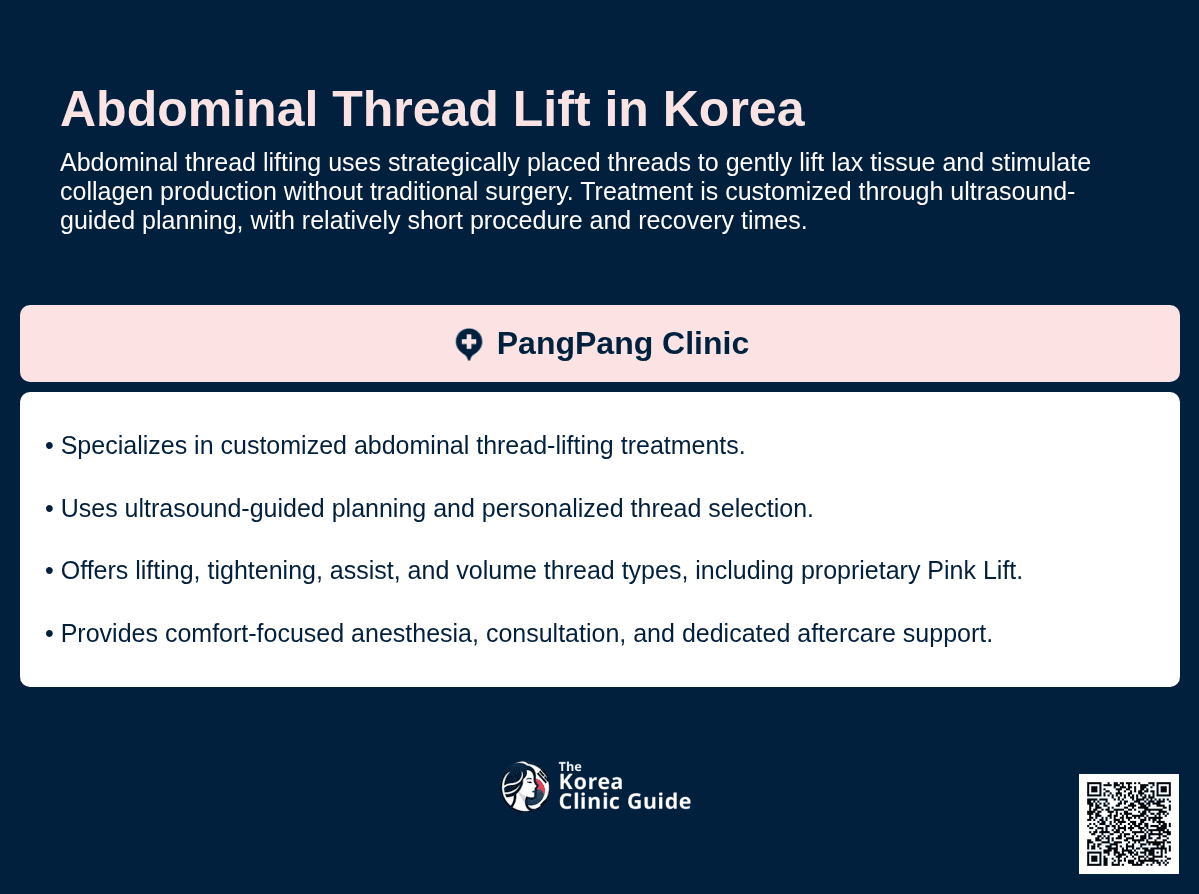
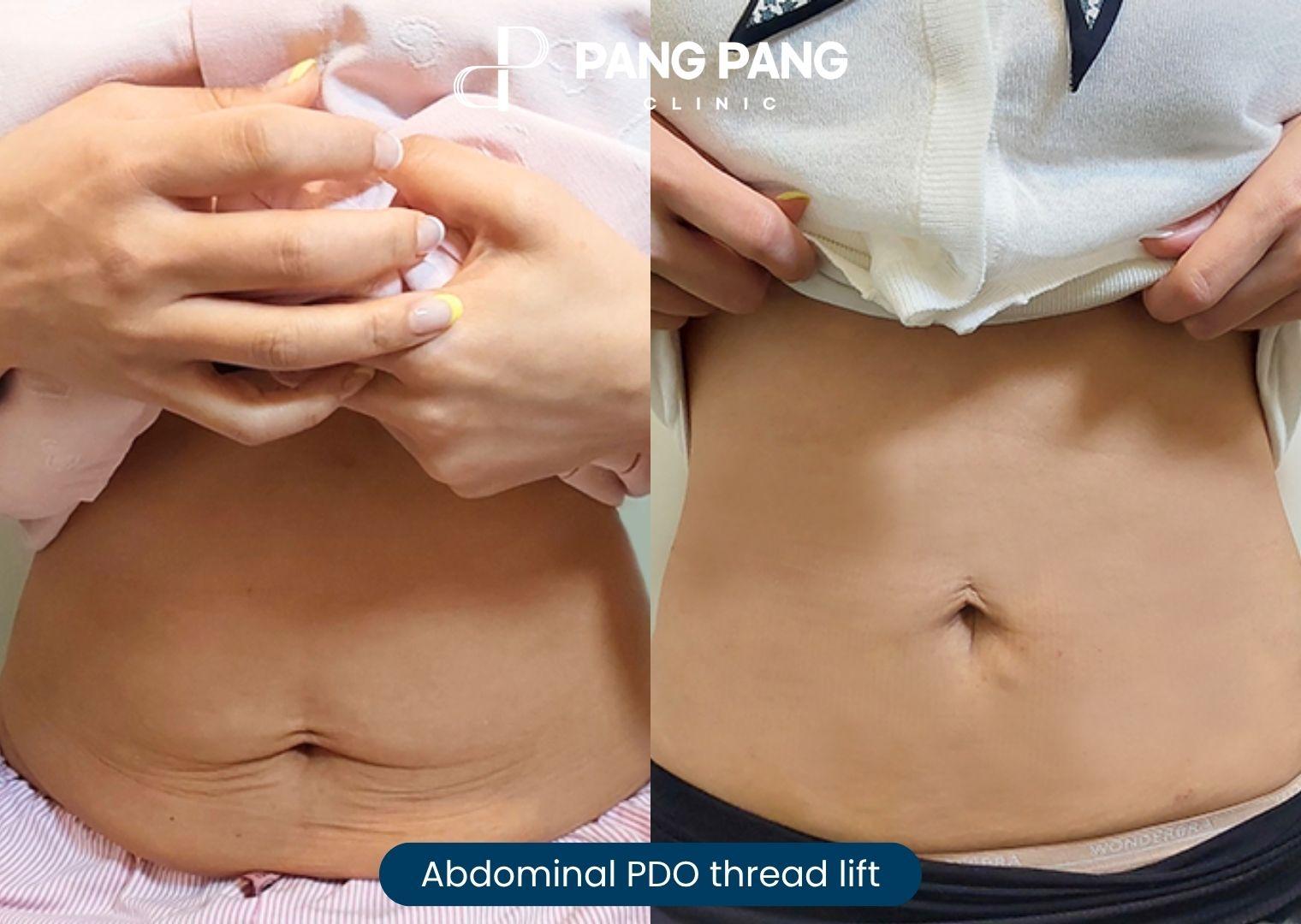
For patients considering Abdominal Thread Lift in Korea, PangPang Clinic in Gangnam, Seoul stands out as a highly specialized destination focused exclusively on thread lifting. Over the past decade, the clinic has built deep expertise through research, clinical experience, and data from thousands of lifting procedures, offering tailored treatment plans through its dedicated Thread Lifting Consultation Center. PangPang Clinic uses 31 specialized functional threads to create personalized lifting strategies for different body areas, including the abdomen, with the goal of improving contour, firmness, and skin support with minimal downtime. The clinic is also home to the world’s first Thread Lifting Research Institute, and its medical team regularly shares its expertise through invited lectures and presentations at international beauty conferences.
A key differentiator is Pink Lift, PangPang Clinic’s exclusive medical thread developed in-house to provide stronger fixation, longer-lasting results, and a more natural-looking lift while addressing the limitations of conventional threads. Pink Lift is backed by FDA, CE, and KFDA certifications for safety and quality, and is available only at PangPang Clinic. The clinic also collaborates with Seoul National University Bundang Hospital to advance thread lifting techniques that not only lift tissue but also stimulate collagen regeneration and improve skin quality. For greater comfort, PangPang offers Chill-Lifting, a next-generation approach that uses contact-free cooling anesthesia to reduce pain, swelling, and bruising while supporting faster recovery.
You can check out their website here: PangPang Clinic Website

Why the procedure has attracted interest in Korea
In Korea, aesthetic medicine often emphasizes:
- minimally invasive treatments
- reduced downtime
- natural-looking contour enhancement
- customized combination procedures
Because of this, abdominal thread lift may be offered as part of a broader body contouring strategy, especially for patients who want visible improvement without committing to a full surgical tummy tuck. Korean aesthetic clinics may also combine thread lifting with:
- skin tightening technologies
- body contouring devices
- regenerative treatments
- postpartum aesthetic care
However, technique and treatment philosophy can vary significantly from one clinic to another, so proper consultation and assessment are essential.
What a consultation should clarify
Before undergoing an abdominal thread lift, a patient should understand:
- whether they are a realistic candidate
- what degree of tightening is actually possible
- how many threads may be needed
- what type of thread will be used
- how long results might last
- what downtime to expect
- what complications are possible
- whether another treatment would be more effective
For the right patient, an abdominal thread lift is best understood as a non-surgical or minimally invasive abdominal tightening procedure that offers subtle lifting, collagen stimulation, and modest contour refinement, rather than dramatic surgical transformation.
Getting Abdominal Thread Lift in Korea
An abdominal thread lift is a minimally invasive aesthetic procedure designed to improve mild to moderate skin laxity of the abdomen by inserting specialized dissolvable threads under the skin. These threads mechanically support loose tissue and may also stimulate collagen production over time, creating a firmer and smoother appearance.
In Korea, abdominal thread lift procedures are generally offered by cosmetic surgery clinics, dermatology centers, and plastic surgery hospitals that specialize in minimally invasive body contouring. Korean clinics are well known for combining thread-based lifting techniques with skin-tightening technologies, customized aftercare, and detailed treatment planning based on skin thickness, degree of laxity, and body shape.
What an abdominal thread lift is meant to treat
The procedure is typically intended for patients who have:
- Mild abdominal skin sagging
- Early loose skin after weight loss
- Mild postpartum abdominal laxity
- Crepey or wrinkled skin on the lower or central abdomen
- A desire for modest tightening without full abdominoplasty surgery
It is not a fat-removal procedure in the same sense as liposuction, and it is not a replacement for a tummy tuck in patients with significant loose skin, abdominal muscle separation, or a large amount of excess tissue.
How the procedure works
Thread lifting uses medical-grade sutures that are inserted into the subdermal or superficial fibrous tissue layer through small entry points. Depending on the thread type, the material may have tiny barbs, cones, cogs, or a smooth structure.
The mechanism usually involves two effects:
Immediate mechanical lift
Barbed or cog threads can catch and reposition tissue to create an instant tightening effect. In the abdomen, this can help gather mildly loose skin and improve contour irregularities.
Gradual collagen stimulation
Most absorbable threads used in aesthetic medicine are made from materials such as:
- PDO (polydioxanone)
- PLLA (poly-L-lactic acid)
- PCL (polycaprolactone)
As the threads dissolve over months, they can induce a wound-healing response that promotes collagen remodeling. This may improve skin texture, elasticity, and firmness after the initial procedure.
Why Korea is a popular destination for abdominal thread lift
Korea is a major destination for cosmetic procedures because of:
- High procedural volume in aesthetic clinics
- Physicians experienced in thread lifting techniques
- Access to a wide range of thread materials and thread designs
- Frequent use of combination treatments for better skin tightening
- Structured preoperative imaging, consultation, and follow-up systems
- Competitive pricing compared with some Western countries
Many Korean clinics also emphasize individualized body contour planning. Rather than using the same thread pattern for every patient, doctors may vary:
- Thread length
- Number of threads
- Direction of insertion
- Layer of placement
- Whether lifting threads, mesh threads, or smooth collagen-stimulating threads are used
- Whether adjunctive treatments are added
Ideal candidates
An abdominal thread lift usually works best for patients with relatively good skin quality and only mild to moderate laxity. Ideal candidates often include:
- Adults near their stable target weight
- Patients with mild skin looseness after pregnancy or minor weight change
- Individuals who do not want surgery or cannot tolerate a long recovery
- Patients seeking subtle tightening rather than dramatic reshaping
- Patients with realistic expectations about the degree of improvement
Patients who may not be good candidates
The procedure may be less suitable for people with:
- Significant hanging abdominal skin
- Marked abdominal muscle separation
- Large fat deposits requiring more aggressive contouring
- Severe stretch-related skin redundancy
- Active skin infection or inflammation
- Bleeding disorders
- Uncontrolled diabetes
- Poor wound healing history
- Pregnancy
- Unrealistic expectations
In cases of major excess skin or abdominal wall laxity, surgeons in Korea may recommend alternatives such as:
- Tummy tuck (abdominoplasty)
- Mini-abdominoplasty
- Liposuction combined with energy-based skin tightening
- Body contouring after massive weight loss
- Radiofrequency or ultrasound skin tightening for very mild laxity
Consultation process in Korea
A detailed consultation is especially important because abdominal thread lift outcomes depend heavily on correct patient selection.
During consultation, the physician may assess:
- Degree and location of skin laxity
- Skin thickness and elasticity
- Fat distribution
- Presence of stretch marks
- History of pregnancy or prior abdominal surgery
- Scarring tendencies
- Current medications
- Smoking status
- Weight stability
- Overall medical suitability
The physician may also discuss:
- What level of improvement is realistically achievable
- Whether threads alone are enough
- Whether combination treatment would provide a better outcome
- Expected duration of results
- Number of sessions likely needed
- Risks specific to abdominal skin, which is thicker and subject to frequent movement
International patients in Korea may receive:
- Online pre-consultation
- English-language coordinators in some clinics
- Same-day treatment planning after in-person examination
- Written post-procedure care instructions for travel planning
Types of threads commonly used
Different thread types may be used depending on the treatment goal.
Smooth threads
These are placed in a mesh-like pattern to stimulate collagen and improve fine wrinkling or crepey texture. They provide limited lifting but can be useful for subtle skin quality improvement.
Screw or twisted threads
These may provide more volumizing or stimulating effect than smooth threads and can be used when the goal is tissue support rather than a strong lift.
Cog or barbed threads
These are designed for greater anchoring and tissue repositioning. In the abdomen, they are often used when visible lifting and skin gathering are desired.
Bidirectional threads
These have barbs oriented in opposite directions to secure tissue without a surgical knot. They may be preferred in some lifting designs for abdominal contour support.
Mesh or lattice-style thread placement
Rather than relying on a few strong lifting threads, some Korean practitioners use many threads in a structured pattern across the lower or central abdomen. This approach aims to improve firmness, collagen production, and broad tissue support.
Common treatment zones on the abdomen
The procedure may target one or more of the following areas:
- Lower abdomen below the navel
- Periumbilical area
- Upper abdomen with mild loose skin
- Flanks in selected combined contour cases
- Lateral lower abdomen after pregnancy or mild weight loss
The lower abdomen is one of the most frequently treated areas because mild postpartum laxity often appears there first.
Pre-procedure preparation
Before undergoing an abdominal thread lift in Korea, patients are generally advised to follow clinic-specific instructions. Common recommendations include:
- Avoid aspirin, ibuprofen, and other blood-thinning medications if medically appropriate and approved by your doctor
- Stop certain supplements that may increase bruising, such as fish oil, vitamin E, ginkgo, or ginseng, if approved
- Avoid alcohol for several days before the procedure
- Stop smoking if possible, since smoking can impair healing
- Maintain stable weight
- Inform the clinic of any implanted medical devices, previous surgeries, hernias, allergies, or skin conditions
- Avoid treatment if there is any rash, infection, or open wound in the abdominal area
Some clinics may request blood pressure evaluation, routine health screening, or pre-procedure photographs.
Anesthesia and comfort measures
Abdominal thread lift is usually performed under local anesthesia rather than general anesthesia. Depending on the extent of treatment, comfort measures may include:
- Topical numbing cream
- Local anesthetic injections
- Oral pain medication
- Mild oral sedation in selected patients
- Cooling or vibration devices during treatment
Because the abdominal area can be sensitive and because multiple threads may be inserted, patients often feel pressure, tugging, pinching, or a pulling sensation even when pain is controlled.
Step-by-step description of the procedure
Although techniques vary by clinic and physician, the general process is usually as follows:
1. Marking the treatment area
The doctor examines the abdomen with the patient standing and lying down. The skin is marked to indicate:
- Laxity vectors
- Entry and exit points
- Areas requiring stronger lift
- Zones where collagen-stimulating threads may be layered
This planning step is important because the abdominal wall moves with posture, breathing, and daily motion.
2. Skin cleansing and sterile preparation
The abdomen is disinfected carefully, and sterile drapes may be applied. This helps reduce infection risk.
3. Local anesthesia
Local anesthetic is injected into the planned entry points and along the thread paths. Patients may briefly feel burning or stinging from the anesthetic itself.
4. Creation of insertion points
A fine needle or cannula entry point is made in the skin. In many thread lift procedures, a blunt cannula is used to reduce trauma to vessels and nerves.
5. Thread insertion
The doctor inserts the threads beneath the skin using a needle or cannula. The exact layer of placement is critical. If threads are placed too superficially, they may become visible, palpable, or irregular. If placed too deeply, the lifting effect may be reduced.
For lifting threads, the physician usually advances the thread along a planned vector, then gently adjusts and anchors the tissue. For collagen-stimulating threads, multiple passes may be made in a fan, crisscross, or mesh pattern.
6. Tissue adjustment
Once the threads are in place, the doctor may gently compress or mold the skin so the barbs engage and the tissue lies smoothly. Slight puckering can occur initially and often improves as the tissue settles.
7. Trimming and final inspection
Any external thread ends are trimmed, and the physician checks for symmetry, contour smoothness, skin tension, and immediate lift.
8. Dressing and aftercare instructions
Small adhesive dressings may be applied. Patients are then given instructions on movement restrictions, bathing, compression garments if recommended, and warning signs to watch for.
How long the procedure takes
Treatment time depends on the number of threads and whether combination procedures are added. In general:
- Small-area treatment may take 30 to 45 minutes
- More extensive abdominal thread lifting may take 60 to 90 minutes
- Combination treatment with skin-tightening devices can take longer
Many patients are able to leave the clinic the same day.
Combination treatments commonly offered in Korea
Korean clinics frequently combine abdominal thread lift with other non-surgical or minimally invasive treatments to improve outcomes.
Radiofrequency skin tightening
Radiofrequency may be used before or after thread placement to heat the dermis and support collagen remodeling.
High-intensity focused ultrasound
This can target deeper tissue planes for tightening and may be used when patients have mild laxity but need more structural support.
Lipolysis injections or body contour injections
These may be added if a patient has small, localized fatty bulges in addition to loose skin. They are not a substitute for significant fat removal.
Laser or energy-based resurfacing
In selected cases, devices may be used to improve skin texture, fine wrinkling, or stretch-mark appearance.
Minimal liposuction
Some physicians may combine a very conservative fat-reduction approach with threads when contour and laxity coexist, though this depends on the patient’s anatomy and recovery tolerance.
What patients can expect immediately after the procedure
After treatment, it is normal to experience:
- Mild to moderate soreness
- Tightness
- Swelling
- Bruising
- Tenderness at insertion points
- Pulling sensation when standing upright, bending, or twisting
- Mild asymmetry or bunching early on
The abdomen is a high-motion area, so temporary discomfort may feel more noticeable than in facial thread lift procedures.
Recovery timeline
Recovery varies with technique, number of threads, skin sensitivity, and whether adjunctive procedures are performed.
First 24 to 72 hours
Patients may notice:
- Swelling
- Bruising
- Tight or pulling sensations
- Mild discomfort with movement
- Sensitivity at thread entry sites
During this period, many clinics advise patients to avoid strenuous activity and excessive torso movement.
First 1 to 2 weeks
Most visible bruising and swelling begin to improve. Patients can usually return to routine non-strenuous activities relatively quickly, but they may still need to avoid:
- Heavy lifting
- Intense abdominal workouts
- Stretching motions
- Sauna or hot baths
- Swimming if insertion sites are not fully healed
Weeks 2 to 6
The tissue gradually settles, and the skin may start to look smoother and firmer. Early irregularities often soften during this period.
Over several months
Collagen remodeling continues as the threads are absorbed. The full result may evolve gradually, with texture and firmness improving beyond the immediate lifting effect.
Aftercare instructions commonly given
Korean clinics may have detailed recovery protocols. Typical advice includes:
- Sleep on your back if possible during the first several days
- Avoid forceful twisting or bending at the waist
- Wear loose clothing to reduce friction on the treated area
- Avoid strenuous exercise for the period recommended by your physician
- Do not massage the treated abdomen unless instructed
- Keep insertion points clean and dry
- Take prescribed antibiotics or pain medication if provided
- Avoid smoking and alcohol during early healing
- Follow up promptly if there is increased redness, severe pain, discharge, or fever
Some clinics recommend a light abdominal compression garment, while others do not, depending on the exact thread technique used.
Pain level and discomfort
Pain is usually described as manageable, but the abdominal region can be more uncomfortable than some facial thread lift areas due to constant body movement. During the procedure, patients often feel:
- Pressure
- Tugging
- Pinching
- Internal pulling
After the procedure, discomfort often resembles muscle soreness, bruising, or a tight band-like sensation. Pain should gradually improve rather than worsen.
Expected results
The degree of result depends on baseline anatomy. Patients may see:
- Mild lifting of loose abdominal skin
- Improved skin tightness
- Better skin support in the lower abdomen
- Smoother contour in the treated zone
- Subtle improvement in crepey texture
- Enhanced firmness over time from collagen stimulation
Results are usually more subtle than surgical abdominoplasty. Patients with realistic goals often seek this treatment for refinement rather than transformation.
How long results last
Longevity depends on thread type, skin quality, age, lifestyle, and weight stability. In many cases, results may last roughly:
- Around 6 to 12 months for some PDO-based improvements
- 12 to 18 months or longer in selected patients with stronger materials or combination treatment
- Variable duration depending on collagen response and tissue strain
Even after the threads dissolve, some residual benefit may remain because of collagen remodeling. However, aging, pregnancy, weight fluctuation, and gravitational effects continue.
Potential benefits
Compared with more invasive surgery, an abdominal thread lift may offer:
- No large surgical incision
- No general anesthesia in most cases
- Shorter downtime
- Smaller entry points
- Lower immediate recovery burden than abdominoplasty
- Gradual collagen stimulation
- Ability to combine with other skin-tightening treatments
Limitations of the procedure
It is important to understand the limitations:
- It cannot remove large amounts of loose skin
- It does not repair separated abdominal muscles
- It is not equivalent to a tummy tuck
- It does not produce major waist reshaping by itself
- Results can be subtle
- Repeat treatment may be needed
- Threads may not hold well in very heavy or very lax tissue
This is one of the main reasons that a careful consultation in Korea is essential. Good candidates tend to be the most satisfied.
Risks and possible complications
Although abdominal thread lift is less invasive than surgery, it is still a medical procedure with real risks.
Common short-term effects
- Bruising
- Swelling
- Temporary soreness
- Tightness
- Mild skin puckering
- Palpable threads early in healing
Possible complications
- Infection
- Thread visibility
- Thread palpability
- Skin dimpling
- Surface irregularity
- Asymmetry
- Inadequate lift
- Thread migration
- Thread extrusion through the skin
- Persistent pain
- Inflammatory reaction
- Nerve irritation
- Prolonged bruising or hematoma
- Rare vascular injury
- Scarring at entry points, though usually minimal
- Premature loss of result
Because the abdomen is subject to stretching, sitting, exercise, coughing, and core activation, mechanical stress may affect healing and thread longevity.
Signs that require prompt medical review
Patients should contact the clinic urgently if they develop:
- Increasing redness
- Warmth spreading around insertion points
- Pus or unusual discharge
- Fever
- Severe or worsening pain
- Significant asymmetry developing suddenly
- Skin blanching or color change
- A protruding thread
- Hard, painful nodules that persist
Differences between abdominal thread lift and tummy tuck
These procedures are often compared, but they address very different levels of laxity.
Abdominal thread lift
- Minimally invasive
- Best for mild laxity
- Performed under local anesthesia
- Small puncture entry points
- Shorter recovery
- Subtle improvement
- No muscle repair
Tummy tuck
- Surgical procedure
- Best for moderate to severe excess skin
- Usually requires more extensive anesthesia
- Involves incision and scar
- Longer recovery
- More dramatic contour correction
- Can remove skin and repair muscle separation
For patients with postpartum abdominal bulging from diastasis recti, a tummy tuck or surgical abdominal wall repair may be more appropriate than threads alone.
Cost considerations in Korea
Pricing in Korea can vary significantly depending on:
- Clinic reputation
- Physician expertise
- Type and number of threads used
- Whether the provider is a dermatologist or plastic surgeon
- Whether combination treatments are included
- Location of the clinic, such as Gangnam versus other districts
- Aftercare package and follow-up policy
In general, total cost may rise substantially if the treatment plan includes:
- High thread count
- Premium thread materials
- Energy-based tightening devices
- Follow-up touch-ups
- Medications or post-care services
Patients should ask whether the quoted price includes:
- Consultation fee
- Procedure fee
- Local anesthesia
- Medications
- Post-treatment checkups
- Possible revision or adjustment if needed
What international patients should ask Korean clinics
If traveling to Korea, it is useful to ask:
- Who will perform the procedure?
- How often does the doctor perform abdominal thread lifts?
- What thread brand and material will be used?
- How many threads are planned?
- Is the treatment meant for lifting, collagen stimulation, or both?
- What results are realistic for my degree of laxity?
- What is the downtime before flying home?
- What complications should I watch for after travel?
- Is there English-speaking support?
- What happens if a thread extrudes after I leave Korea?
Choosing a provider
Provider selection matters because thread placement requires technical judgment and anatomical precision. Patients generally do best when treated by a qualified physician experienced in body thread lifting, not just facial thread lifting.
Important factors include:
- Experience with abdominal rather than only facial threads
- Clear explanation of realistic outcomes
- Proper sterilization and safety protocols
- Before-and-after photos of similar cases
- Transparent discussion of alternatives
- Availability of follow-up care
- Willingness to decline treatment when surgery is more appropriate
Expected follow-up
Follow-up schedules vary, but many clinics recommend a review visit within days to a few weeks after treatment to assess:
- Healing
- Symmetry
- Bruising and swelling
- Signs of infection
- Whether any dimpling or thread irregularity needs management
Some clinics schedule later visits to evaluate collagen response and determine whether an additional session or complementary tightening procedure would be beneficial.
Important practical expectations
Patients considering abdominal thread lift in Korea should understand that the best outcomes usually occur when:
- Skin excess is limited
- Body weight is stable
- Core tissue strain is moderate rather than severe
- The procedure is part of a broader plan for skin quality and contour maintenance
- Lifestyle habits support long-term results
A person expecting a flatter abdomen from fat removal or a surgical-style transformation may be disappointed if threads are used alone. A person seeking moderate skin tightening with minimal downtime may find the procedure more appropriate.
Who is Abdominal Thread Lift for?
-
People with mild to moderate loose skin on the abdomen who want a firmer, more lifted appearance without undergoing major surgery.
-
Those who have noticed skin laxity after pregnancy and want subtle tightening in the tummy area, especially when the looseness is not severe enough to require an abdominoplasty.
-
Individuals who have lost weight and are left with slight sagging or crepey skin on the stomach, but do not have a large amount of excess skin.
-
Patients seeking a less invasive option than traditional abdominal contouring surgery, with smaller entry points and generally less downtime.
-
People who want modest improvement in abdominal definition and skin support rather than dramatic fat removal or major reshaping.
-
Those with early signs of aging in the abdominal area, such as reduced skin elasticity and mild drooping.
-
Individuals who are close to their target body weight and want to refine the appearance of the abdomen, rather than use the procedure as a weight-loss treatment.
-
Patients interested in collagen stimulation, since thread lift treatments may help encourage the skin to look tighter and smoother over time.
-
Busy adults who prefer a treatment that can often be performed more quickly than surgery and may allow a faster return to everyday activities.
-
People who are in generally good health, have realistic expectations, and understand that an abdominal thread lift usually provides subtle to moderate results rather than the extensive correction possible with surgery.
-
Those who are not ideal candidates for major surgery due to lifestyle preferences or concerns about long recovery periods, but still want some visible improvement.
-
Patients who have already maintained healthy habits such as exercise and balanced nutrition, and want an additional cosmetic treatment to improve abdominal skin tone.
Cost of Abdominal Thread Lift in Korea
Publicly listed pricing for abdominal thread lift in Korea is not standardized, and many clinics provide quotes only after assessing the treatment area, skin laxity, number of threads needed, and whether the procedure is combined with liposuction, laser tightening, or injectables. Because of that, a reliable nationwide low-to-high Korean price range is often listed as N/A–N/A rather than a fixed benchmark.
Below is a general comparison of Korea with other countries, including the USA. These figures should be treated as approximate clinic-level estimates for private cosmetic care, not fixed national fees.
| Country | Typical Price Range | Notes |
|---|---|---|
| Korea | N/A–N/A | Many clinics do not publish a standard abdominal thread lift price online; quotes are usually customized. |
| USA | $2,500–$7,000+ | Usually higher due to physician fees, facility costs, and more expensive body-thread procedures. |
| Japan | $2,000–$5,500 | Premium urban clinics may charge more, especially in Tokyo. |
| Singapore | $2,500–$6,000 | Generally high private aesthetic pricing, similar to other premium medical markets. |
| Thailand | $1,500–$4,000 | Often lower than the USA, but pricing varies widely by clinic reputation and package inclusions. |
| Turkey | $1,200–$3,500 | Commonly marketed at more competitive rates, especially in medical tourism settings. |
| Australia | $2,500–$6,500 | Higher practitioner and clinic overhead tends to raise costs. |
| UK | $2,500–$6,000 | London clinics are often at the higher end of the range. |
Why Korea may still be competitively priced even without a published range
Even when a clinic does not advertise a firm abdominal thread lift price, Korea is often considered cost-competitive because:
- High clinic competition in major aesthetic districts can help keep pricing more flexible.
- Procedure customization is common, so patients may pay only for the number and type of threads actually needed.
- Combination treatment packages can sometimes reduce the total cost if thread lifting is paired with other body contouring procedures.
Why the USA is usually more expensive
Compared with Korea, the USA typically has a higher price for abdominal thread lift because of:
- higher labor and facility costs
- higher malpractice and insurance overhead
- more expensive consultation and follow-up fees
- pricing based on specialist reputation and geographic location
In major US cities, the cost can rise quickly if the procedure includes:
- a larger abdominal treatment area
- more threads
- premium thread materials
- sedation or additional tightening treatments
What affects the final price in any country
Whether in Korea, the USA, or elsewhere, the final cost of abdominal thread lift usually depends on:
- Number of threads used
- Type of thread used for lifting versus collagen stimulation
- Size of the abdomen being treated
- Severity of skin laxity
- Doctor experience and clinic reputation
- Whether the treatment is combined with other procedures
- Follow-up care and aftercare package
Important pricing note for Korea
Because the Korean low and high range is listed here as N/A–N/A, patients should expect to contact clinics directly for an exact quote. In Korea, it is common for clinics to provide pricing only after reviewing:
- photos
- in-person consultation findings
- prior surgeries or weight loss history
- realistic expectations for lifting versus tightening
This means that while Korea may be less expensive than the USA in many cosmetic categories, the true cost of abdominal thread lift in Korea is best understood as a custom quote rather than a fixed published market rate.
Alternatives to Abdominal Thread Lift
If abdominal thread lift is not the best fit, there are several other options that may better address loose skin, stubborn fat, or weakened abdominal contours. The right alternative usually depends on whether the main concern is skin laxity, localized fat, or more significant post-pregnancy or post-weight-loss changes.
1. Radiofrequency or HIFU Skin Tightening
Non-surgical energy-based treatments such as radiofrequency (RF) or high-intensity focused ultrasound (HIFU) are often recommended for patients with mild abdominal skin laxity who want a treatment with little downtime.
These devices deliver controlled heat into deeper layers of the skin to stimulate collagen remodeling and gradual tightening. In Korean aesthetic clinics, RF-based body tightening is especially popular because it can improve skin firmness without incisions or sutures.
Why it may be recommended:
- Best for early or mild looseness in the abdominal area
- No surgical scars
- Minimal recovery time
- Can be combined with body contouring treatments
Limitations to consider:
- Results are usually more subtle than surgery
- Multiple sessions may be needed
- Less effective for significant sagging or stretched skin after major weight loss
2. Liposuction or Energy-Assisted Body Contouring
For patients whose main issue is localized abdominal fat rather than loose skin, liposuction may be a more suitable alternative than an abdominal thread lift. Traditional liposuction removes excess fat directly, while newer techniques such as laser-assisted or radiofrequency-assisted lipolysis may also provide some degree of skin contraction.
This option is often chosen when the abdomen looks fuller or less defined due to fat deposits, but the skin still has relatively good elasticity.
Why it may be recommended:
- Targets stubborn fat bulges more effectively than threads
- Can improve abdominal definition
- Some energy-assisted methods may offer mild skin-tightening benefits
- More effective than thread lift when contouring is the main goal
Limitations to consider:
- Does not correct severe skin laxity on its own
- Swelling and bruising are expected during recovery
- Not a substitute for muscle repair or major skin removal
3. Mini Tummy Tuck or Full Abdominoplasty
When there is moderate to severe loose skin, muscle separation, or overhanging abdominal tissue, a mini tummy tuck or full abdominoplasty is often the most effective alternative. This is a surgical approach that removes excess skin and, when needed, tightens the abdominal wall muscles.
Compared with abdominal thread lift, this option is much more comprehensive and is commonly recommended for patients after pregnancy or major weight loss.
Why it may be recommended:
- Best for significant skin redundancy
- Can address diastasis recti (separated abdominal muscles)
- Produces the most dramatic reshaping and tightening
- Long-lasting improvement in abdominal contour
Limitations to consider:
- Requires surgery and a longer recovery period
- Leaves a scar, although it is usually placed low on the abdomen
- Higher cost and greater downtime than non-surgical treatments
For many patients, this is the most appropriate choice when the problem goes beyond mild laxity and includes structural changes that threads cannot adequately correct.
Conclusion
In conclusion, an abdominal thread lift in Korea can be an appealing option for people seeking mild to moderate abdominal tightening without the downtime of more invasive surgery, especially when performed by an experienced provider after a careful assessment of skin laxity, body goals, and overall health. Korea’s advanced aesthetic clinics, competitive pricing, and broad range of non-surgical body contouring treatments make it a popular destination for this procedure, but the right choice ultimately depends on whether you are a suitable candidate, your budget, and how your expected results compare with alternatives such as energy-based treatments, liposuction, or abdominoplasty. By understanding what the procedure involves, who it is best suited for, the typical costs in Korea, and the available alternatives, patients can make a more informed and realistic decision about the best approach for achieving a firmer, more contoured abdomen.