
Medical Tourism Blog
Breast Implant in Korea: Surgery Options, Recovery, Risks and Travel Planning
Table of contents
- Breast Implant at a Glance
- What Is a Breast Implant?
- Who Is a Good Candidate for a Breast Implant?
- How Is a Breast Implant Performed?
- Why Visit Korea for a Breast Implant?
- Key Information for International Patients
- Which Are the Best Clinics in Korea for Breast Implant In?
- Breast Implant From Start to Finish
- Alternatives to a Breast Implant
- How Can I Prepare for a Breast Implant?
- Aftercare Advice
Considering treatment in Korea? Everything you need to know e.g. — how to avoid scams, visas, interpreters, recovery tips — in our Medical Tourism Master Guide. Plan with confidence in minutes, not weeks!
Last updated: September 2026
Breast Implant at a Glance
- What it does — Breast augmentation places prosthetic implants in pockets behind the breasts to add lasting volume, alter contour, or improve mild asymmetry; it does not reliably correct substantial sagging or a low nipple, which may require a breast lift.
- Ideal candidate — Suitable candidates have completed breast development, stable weight, adequate tissue and skin quality for the planned implant, realistic expectations, and acceptance of scars, screening, and possible future implant surgery.
- Recovery timeline — Most uncomplicated augmentations are outpatient procedures; light desk work often resumes in 1–2 weeks, while heavy lifting, running, and chest exercise commonly need surgeon clearance at about 4–6 weeks.
- Final result timing — Volume is visible immediately, but swelling, tightness, high-riding implants, and temporary sensation changes improve over weeks to months; scars can continue maturing for 12 months or longer.
- Long-term commitment — Implants are not lifetime devices: rupture or deflation, capsular contracture, malposition, changing anatomy, or preference can lead to later removal, exchange, revision, or a lift.
- Korea travel stay — Plan at least 10–14 days in Korea after uncomplicated surgery for wound checks and in-person travel clearance; 14 days or longer is the more conservative target before a long-haul U.S. flight.
- Korea-specific planning — Korea’s international-patient infrastructure can simplify coordination, but it does not prove superior augmentation outcomes; obtain English records including the implant card, device details, operative report, aftercare plan, and emergency contacts before departure.
What Is a Breast Implant?
Breast augmentation is an operation that places prosthetic implants behind the breasts to increase their size or change their shape. It can provide lasting volume, improve fullness, and reduce mild asymmetry, though substantial sagging often needs a lift. It is a surgical procedure, typically performed with anesthesia through a small incision.
Who Is a Good Candidate for a Breast Implant?
- Volume and contour goals — Good candidates want a lasting increase in breast volume, fuller upper-pole contour, or improvement of mild breast asymmetry.
- Stable breast development and body weight — Candidates should have completed breast development and have a relatively stable weight; pregnancy and major weight change can alter the result.
- Adequate tissue and realistic expectations — Chest-wall dimensions, skin elasticity, existing breast tissue, nipple position, and asymmetry determine the implant size, shape, and pocket that are realistic.
- Commitment to long-term care — Candidates accept scars, routine breast screening, device documentation, and the likelihood of a future implant removal, exchange, revision, or lift. The FDA advises patients to assume that additional surgery will be needed over time because implants are not lifetime devices.
Elective augmentation is unsuitable with an active infection, unevaluated or untreated breast cancer or precancer, pregnancy, or breastfeeding. Defer surgery until breastfeeding has ended and breast size has stabilized. Poorly controlled diabetes, serious heart or lung disease, clotting risk, untreated bleeding disorders, current chemotherapy or radiation, immunosuppression, and nicotine use require optimization or coordinated specialist assessment; nicotine raises wound-healing and scar-complication risk. Significant sagging or a low nipple is an anatomical issue that an implant does not reliably correct, so a lift may be needed. Untreated body-image disorder, unrealistic expectations, or refusal of long-term surveillance are also reasons not to proceed.
How Is a Breast Implant Performed?
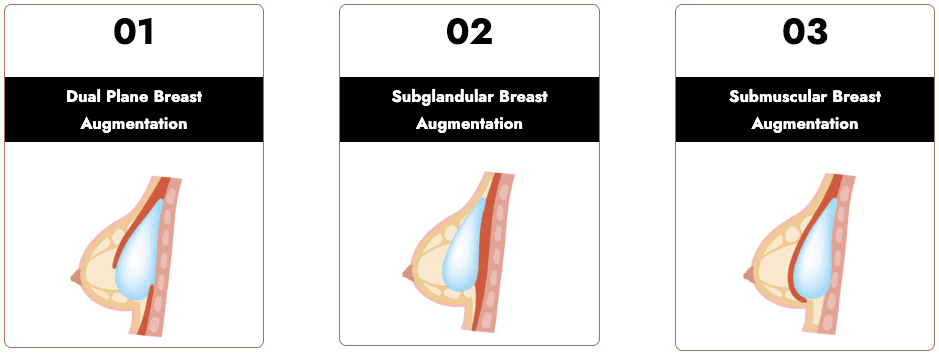
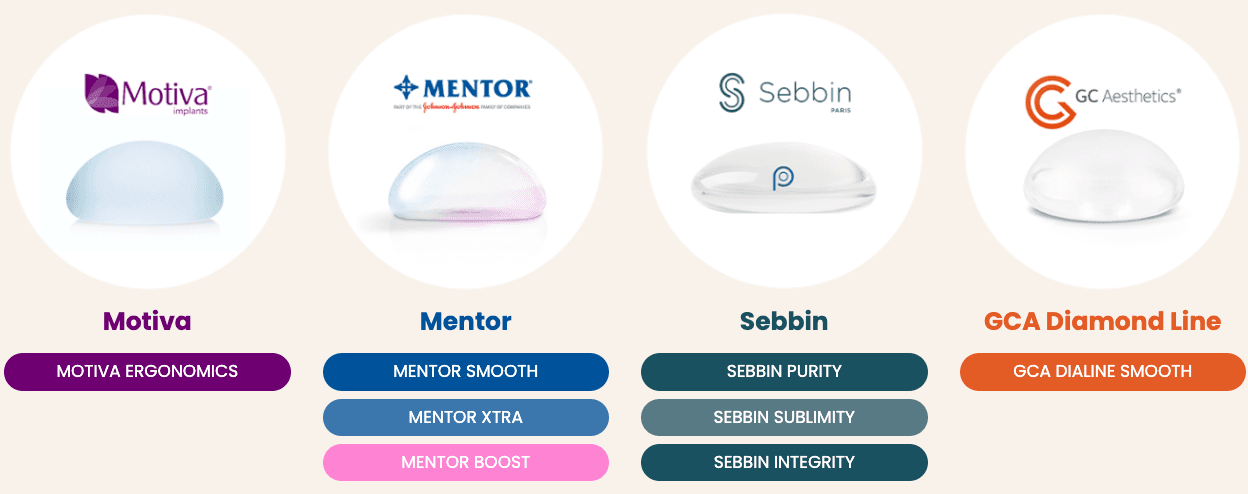
Implant selection and placement are planned around tissue coverage, chest width, skin quality, breast shape, asymmetry, scar preferences, and future revision needs. No high-quality evidence establishes one implant brand, incision, or pocket plane as best for every patient.
- Saline and silicone-gel fill — Saline implants have a silicone shell filled with sterile salt water and usually visibly deflate if they leak. Silicone-gel implants are prefilled and often selected for their tissue-like feel, but a rupture can be silent and requires device-specific follow-up imaging guidance.
- Cohesive gel, round, and shaped devices — “Cohesive” or form-stable gel describes how gel holds together; it is not a guarantee against rupture or reoperation. Round and anatomical shaped implants create different contour options, while shaped devices can visibly distort the breast if they rotate.
- Shell surface — Record the exact shell surface and manufacturer. The FDA identifies BIA-ALCL, a cancer in capsule tissue or fluid around an implant rather than typical breast cancer, as a known implant-associated risk.
- Pocket plane — Subglandular placement sits behind breast tissue and over the pectoral muscle. Dual-plane and submuscular placement provide more upper-pole coverage in thinner tissue but can create animation deformity when the chest muscle contracts. A 2024 review found favorable signals for subfascial versus subglandular placement, but every included study had high risk of bias, so it does not prove a universally superior plane.
- Incision route — Inframammary-fold, periareolar, and transaxillary incisions are common. The choice affects scar location, surgical access, anatomy, and options for later revision.
Why Visit Korea for a Breast Implant?
Korea has an established infrastructure for international medical visitors, which can make remote consultation and in-country postoperative appointments easier to coordinate. That logistical advantage does not prove that breast-augmentation outcomes are better than in other countries. No reliable national dataset demonstrates lower complication or revision rates, or superior long-term patient-reported outcomes, for breast augmentation in Korea.
- International-patient infrastructure — KHIDI reported that foreign-patient volume exceeded one million in its 2024 statistical analysis. This supports Korea’s role as an international-treatment destination, but the figure is utilization data, not breast-implant safety or outcome evidence.
- Planning documentation — Ask for an English written plan before consenting: manufacturer, model, fill, shape, shell surface, dimensions, volume, lot number, incision, pocket plane, anesthesia clinician, named surgeon, follow-up schedule, and emergency-transfer arrangements.
- Device records for care at home — Obtain the implant card, labels, operative report, anesthesia record, discharge summary, medication list, and English aftercare instructions before leaving Korea. FDA device-specific counseling standards, including a patient decision checklist and device card, illustrate why this information matters for lifelong care.
- Evidence limitation — Do not choose a destination on broad claims about technique or results. Implant selection and operative planning should be driven by anatomy and documented risk counseling, not country-level marketing.
Key Information for International Patients
- Minimum stay — Plan at least 10–14 days in Korea after uncomplicated augmentation for wound review and in-person travel clearance. For a long-haul flight to the United States, plan 14 days or longer as the more conservative target.
- Arrival before surgery — Allow 1–2 days before the operation for an in-person examination, final sizing, consent, anesthesia assessment, and any individualized testing or medical clearance.
- Flight timing and clot prevention — The operating surgeon makes the final fitness-to-fly decision. Long-distance travel after surgery adds venous-thromboembolism risk, especially with prior or family clot history, obesity, estrogen exposure, cancer history, or limited mobility; discuss a personalized prevention plan.
- Early itinerary limits — Treat the first postoperative week as recovery time, not sightseeing. Avoid carrying luggage, long walking tours, alcohol, swimming, sauna use, strenuous activity, and sun exposure to incisions.
- Escort and accommodation — Arrange nearby, accessible accommodation and a responsible adult to escort you after anesthesia and remain available the first night. Do not drive while taking sedating medication.
- Remote follow-up — Arrange a clinician at home for wound review if instructed before travel. Keep the Korean surgical team’s emergency contact details and send requested wound photographs or attend video follow-up after return.
Travel note: Do not book a non-changeable return flight. Rapid one-sided swelling, bleeding, fever, wound separation, severe pain, or a clot-related concern can delay travel and require urgent local assessment.
Which Are the Best Clinics in Korea for Breast Implant In?
Listed below are some of the best clinics in Korea for breast implant in.
1. Seojin Plastic Surgery Clinic
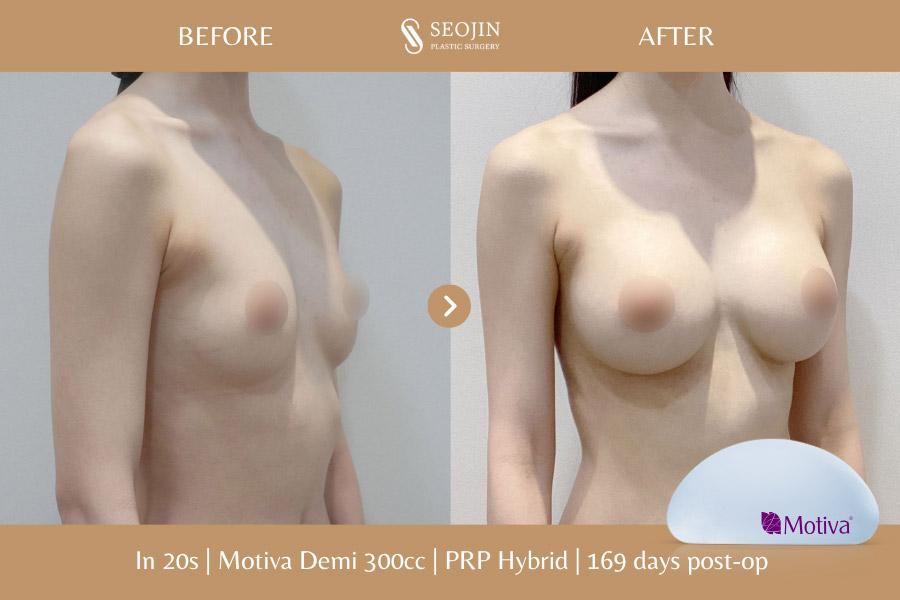
For breast implants, you can expect a highly individualized plan from Dr. Lee Hyungmin, including 3D implant modeling and a trial-bra service to help you compare fit, size, and implant options before surgery. The clinic’s microscale dual-plane approach is tailored to your ribcage, breast tissue, and chest anatomy, with intraoperative sizing used to check shape and symmetry before final implant placement.
- URL: Seojin Plastic Surgery Clinic Website
- Location: Gangnam-gu, Seoul
- Procedure details:
- 3D spatial dissection is used to create a smooth implant pocket and is intended to minimize postoperative swelling.
- Hybrid augmentation combines implants with fat grafting from areas such as the abdomen or thighs to add softness and refine contour; PRP may be used with breast fat grafting.
- For selected sagging concerns, specialized implants such as Mentor Boost may be used to improve contour without a separate breast-lift procedure.
- Surgeon experience:
- Dr. Lee Hyungmin provides end-to-end care in a one-doctor clinic model and has more than 16 years of experience.
- The clinic reports more than 2,300 breast surgeries performed.
- Dr. Lee was selected as one of the Top 100 Good Doctors in Korea in 2022 and participates in Motiva and Mentor academic conferences.
- Related breast services: Breast lift, reduction, nipple surgery, gynecomastia surgery, and breast implant procedures for transgender individuals are listed among the clinic’s breast services.
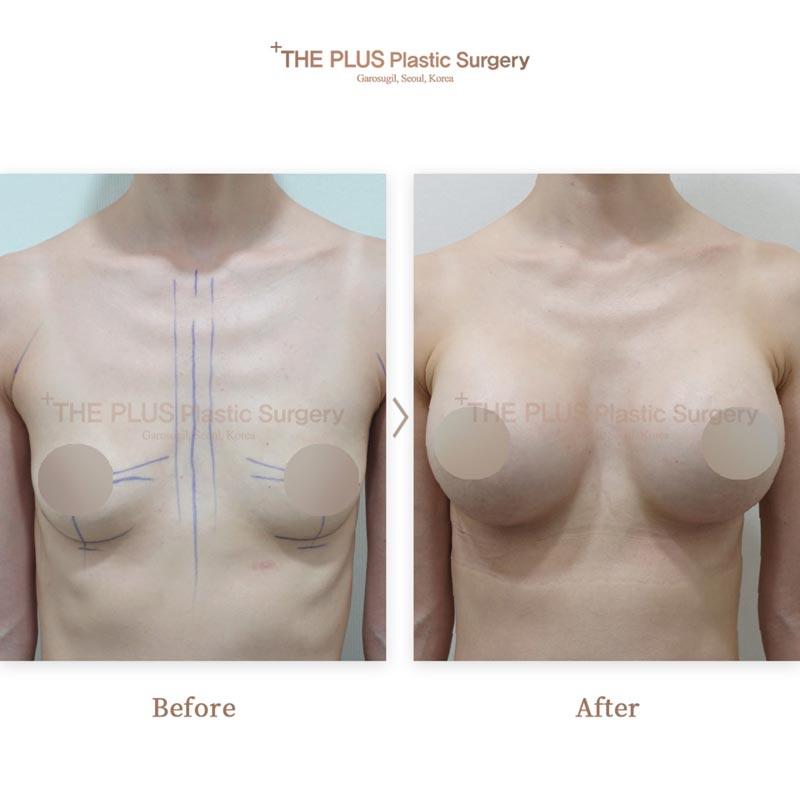
2. THEPLUS Plastic Surgery
You may consider THEPLUS for breast implants if you want augmentation planned by a board-certified plastic surgeon who tailors implant placement and incision choice to your body type, using full-HD endoscopic visualization and FDA-approved Motiva Ergonomix® implants. Dr. Lee’s breast-focused practice is paired with individualized aftercare, systematic postoperative monitoring, and English-language and translator support through recovery for international visitors.
- URL: THEPLUS Plastic Surgery Website
- Location: Gangnam-gu, Seoul
- Breast surgeon:
- Dr. Lee is a board-certified plastic surgeon specializing in breast augmentation, lift, and reduction surgery.
- Her experience includes work as a Surgery Specialist at Seoul National University Hospital and clinical training at Seoul Metropolitan Boramae Hospital.
- She is a member of the Korean Society of Plastic and Reconstructive Surgery and the Korean Society of Aesthetic Plastic Surgery.
- Procedure planning:
- Placement and incision site are individualized to your body type, with full-HD endoscopic visualization used during augmentation.
- Breast lift options include donut, lollipop, and anchor techniques selected after a 3-D assessment of skin elasticity and breast shape.
- For breast reduction, Dr. Lee uses a pedicle technique intended to preserve nipple sensation while removing excess volume.
- Care considerations:
- The clinic describes advanced sterilization protocols and systematic postoperative monitoring.
- Your aftercare plan is tailored to your healing pace.
- International visitors receive English-language support and dedicated translator assistance from consultation through recovery.
3. Okay Plastic Surgery Clinic
For breast implants, you can expect care through a specialized Breast Center that also addresses related concerns such as breast sagging, reduction, and nipple correction. Dr. Cho’s breast-surgery practice includes standard augmentation as well as complex breast-reduction cases, supported by published research and an emphasis on comprehensive aftercare for natural, lasting results.
- URL: Okay Plastic Surgery Clinic Website
- Location: Gangnam-gu, Seoul
- Breast-focused care:
- The specialized Breast Center offers breast augmentation with implants or fat grafting.
- Breast lift and breast-reduction procedures are available for sagging or excess breast volume.
- Nipple-correction services include treatment for inverted nipples; gynecomastia surgery is also listed.
- Surgeon expertise:
- Dr. Cho is described as a breast-surgery specialist who has studied and published research papers in the field.
- The clinic notes experience with severe breast-reduction cases that require substantial volume reduction.
- Aftercare: The clinic emphasizes comprehensive aftercare intended to support natural, lasting results.
Breast Implant From Start to Finish
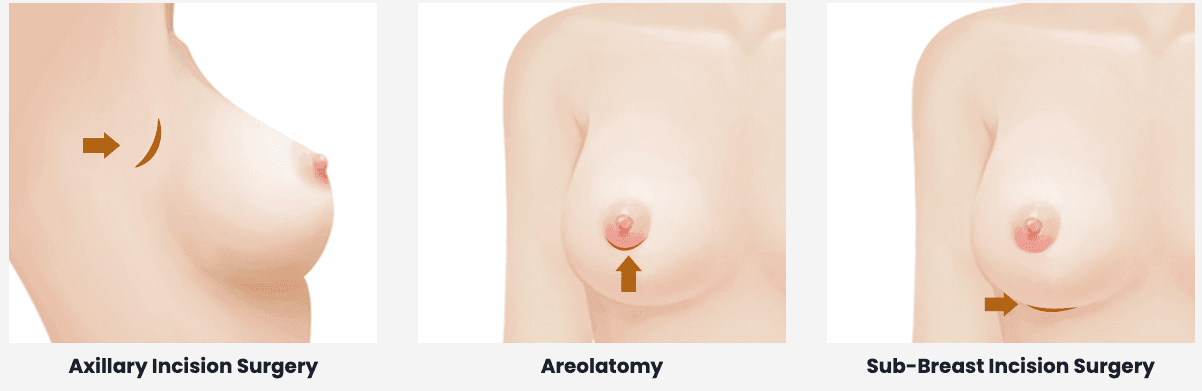
- Remote consultation and planning — Request an English-language virtual consultation where available. Provide accurate medical history, medicines and supplements, allergies, nicotine and alcohol use, prior breast surgery, breast imaging, cancer history, breastfeeding plans, and clot-risk history. Review the proposed implant options and arrange follow-up care at home.
- Written treatment plan — Confirm the named operating surgeon, facility, anesthesia plan, implant manufacturer and exact model, dimensions and volume, incision, pocket plane, anticipated observation period, price inclusions, emergency-transfer plan, and written aftercare process.
- Arrival and in-person assessment — Arrive 1–2 days before surgery. The surgeon examines breast and chest-wall measurements, tissue coverage, skin quality, nipple position, and existing asymmetry, then confirms sizing and surgical markings. Testing and breast imaging are individualized rather than universal.
- Anesthesia and operation — Breast augmentation is generally performed under general anesthesia or IV sedation/anesthesia, according to the facility and patient plan. The surgeon creates a pocket behind each breast through the agreed incision, places the implants in the chosen plane, checks symmetry, and closes the incisions. Surgical duration depends on the technique and whether a lift or revision is combined.
- Discharge and first night — Most uncomplicated procedures are outpatient, though some patients have overnight observation. Leave with an adult escort, dressings, a support bra if prescribed, medicines, and direct contact instructions.
- Korea-based recovery checks — Attend dressing and wound checks before departure. Soreness, swelling, bruising, tightness, temporary sensory changes, and implants sitting high are common early findings; the breasts settle gradually over months.
- Travel clearance and records — Before flying, obtain surgeon clearance plus the implant card and labels, operative and anesthesia reports, medication record, discharge summary, test results when relevant, and English instructions for local clinicians.
- Overseas follow-up and surveillance — Complete remote and local follow-up as directed. Continue age- and risk-appropriate breast cancer screening, tell mammography staff about the implants, and maintain long-term monitoring for silicone-gel rupture according to the device labeling and clinician guidance.
Alternatives to a Breast Implant
The main tradeoff is between the predictable volume of an implant and the scars, anesthesia, device surveillance, and future surgery that implants involve. Non-implant surgical options can better address particular anatomy, but do not provide the same volume or permanence.
Fat Grafting
- What it does — Breast fat grafting transfers fat collected by liposuction into the breasts.
- Tradeoff — It avoids an implant but usually gives a more modest volume increase, has variable fat survival, and can require repeat procedures.
Breast Lift
- What it does — A breast lift removes excess skin and elevates or reshapes a sagging breast.
- Tradeoff — It addresses ptosis and low nipple position more directly than an implant, but does not create the same volume increase. It can be combined with augmentation when both lift and volume are needed.
Injectable Breast Fillers
- What it does — Breast fillers are marketed as a non-surgical volume option.
- Tradeoff — They are not an evidence-equivalent substitute for regulated implant augmentation and can complicate breast examination and imaging.
How Can I Prepare for a Breast Implant?
- Medical disclosure — Give the surgical and anesthesia teams a complete list of prescription and over-the-counter medicines, hormones, injections, vitamins, herbal products, allergies, prior operations, breast imaging, cancer history, and personal or family clot history.
- Medicine changes — Do not independently stop anticoagulants, antiplatelet medicines, diabetes treatment, blood-pressure medicines, hormones, or psychiatric medicines. The operating and prescribing clinicians must provide the exact stop, continuation, or adjustment plan.
- Nicotine and substances — Stop cigarettes, vaping, nicotine pouches, gum, and patches for the interval required by the surgeon. Avoid recreational drugs and disclose alcohol intake; nicotine exposure increases healing and scar risks.
- Fasting and hygiene — Follow the clinic’s written fasting instructions exactly. Follow instructions on showering, deodorant, lotions, shaving, and removing jewelry, nail products, and contact lenses before anesthesia.
- Travel logistics — Arrive 1–2 days before surgery, reserve accommodation close to the facility, arrange a first-night escort, and pack front-closing clothing. Book flexible flights and avoid plans requiring bags, overhead-bin lifting, or strenuous tourism.
- Home follow-up — Identify a local clinician or surgeon who can assess wounds if requested after return, and carry a secure copy of all medical records.
Travel note: Build at least 10–14 postoperative days into the itinerary and longer for a conservative long-haul travel plan. A normal-looking early recovery still requires the operating surgeon’s in-person clearance.
Confirm every clinic-specific testing requirement, medication date, fasting rule, nicotine interval, and travel restriction with the treating surgeon; individualized instructions take precedence over general guidance.
Aftercare Advice
Protect the incisions, avoid chest strain, and remain available for scheduled reviews until the operating surgeon clears travel and activity.
- Dressings and support — Keep dressings clean and dry and wear the prescribed support bra exactly as directed. Showering, bra duration, massage, and scar treatment vary by incision and implant plane; do not start massage unless the surgeon specifically directs it.
- Activity and lifting — Take gentle walks to support circulation, but avoid lifting, pushing, pulling, chest exercise, running, swimming, and other strenuous activity until cleared. Desk work and light activity often resume in 1–2 weeks; heavy lifting and exercise commonly require clearance around 4–6 weeks.
- Heat, alcohol, and sun — Avoid sauna and other high-heat exposure, alcohol while using pain or sedating medication, and direct sun on incisions. Once wounds are fully closed and the surgeon permits scar exposure, protect scars from sunlight with SPF 50 or covering clothing.
- Normal recovery and result timing — Soreness, swelling, bruising, tightness, implants sitting high, and temporary nipple or breast sensory changes are common during the first days to weeks. The breasts soften and settle over months, while scars commonly continue maturing for 12 months or longer.
- Urgent warning signs — Seek urgent in-person assessment for rapidly increasing one-sided swelling or tightness, expanding bruising, severe or escalating pain, bleeding, fever, spreading redness or warmth, pus-like drainage, wound separation, fainting, persistent vomiting, or sudden breast distortion. Call emergency services for chest pain, shortness of breath, coughing blood, fainting, or a painful swollen leg.
- Long-term changes — Promptly assess persistent swelling, a late fluid collection, breast or armpit lump, hardening, pain, shape change, or enlarged lymph nodes. These changes require evaluation because implant complications and rare capsule-associated cancers should not be self-managed.
Follow the treating doctor’s instructions over general advice, attend all scheduled reviews, and contact the clinic promptly when anything appears wrong.
Frequently Asked Questions
Related Blogs
Breast Fat Grafting in Korea vs. Global Costs: A Smart Investment for Natural Results
Explore the affordability and benefits of breast fat grafting in Korea, a popular cosmetic procedure known for its natural results. Discover why more individuals are choosing Korea for this innovative, cost-effective solution.
Updated: Sep 26, 2026
Nipple Surgery in Korea: Types, Recovery, Risks, and Travel Planning
Nipple surgery may reduce nipple size or projection, correct benign inversion, revise scars, or reconstruct the nipple–areola complex; technique, anesthesia, and recovery depend on the procedure and any combined breast or chest surgery. International patients should plan at least 7–10 days locally for uncomplicated isolated procedures, attend wound review before flying, arrange follow-up at home,
Updated: Sep 21, 2026
Breast Augmentation in Korea: Implants, Recovery, Travel Planning, and Long-Term Safety
Breast augmentation in Korea may use silicone or saline implants, or fat grafting, with planning based on anatomy, goals, incision, and pocket placement. The article covers candidacy, costs of ₩7,000,000–₩18,000,000, 10–14-day travel planning, recovery, follow-up, and implant records.
Updated: Sep 20, 2026
Capsular Contracture Treatment in Korea: Revision Options, Recovery, and Travel Planning
Capsular contracture treatment may include capsulotomy, partial or total capsulectomy, implant exchange or removal, pocket change, ADM support, breast lift, fat grafting, or autologous reconstruction based on symptoms and tissue condition. International patients should plan at least 10–14 days in Korea, complete local follow-ups, obtain surgeon clearance before flying, and arrange home-country car
Updated: Sep 19, 2026
Clinics offering Breast Implant
BongBong Plastic Surgery Dermatology Korea | Body, Breast & Aesthetic Treatments
Nonhyeon

THEPLUS Plastic Surgery Korea | Eye, Nose, Face & Body Surgery
Sinsa

Seojin Plastic Surgery Clinic Korea: Pioneering Advanced Cosmetic Procedures for Personalized Aesthetic Transformation
Apgujeong

Okay Plastic Surgery Clinic in Korea: Comprehensive Aesthetic Procedures with Sincerity and Care
Cheongdam