
Medical Tourism Blog
Scar Removal Surgery in Korea: Methods, Recovery, Travel Planning, and Alternatives
Table of contents
- Scar Removal Surgery at a Glance
- What Is Scar Removal Surgery?
- Who Is a Good Candidate for Scar Removal Surgery?
- How Is Scar Removal Surgery Performed?
- Why Visit Korea for Scar Removal Surgery?
- Key Information for International Patients
- Which Are the Best Clinics in Korea for Scar Removal Surgery?
- Scar Removal Surgery From Start to Finish
- Alternatives to Scar Removal Surgery
- How Can I Prepare for Scar Removal Surgery?
- Aftercare Advice
Considering treatment in Korea? Everything you need to know e.g. — how to avoid scams, visas, interpreters, recovery tips — in our Medical Tourism Master Guide. Plan with confidence in minutes, not weeks!
Last updated: September 2026
Scar Removal Surgery at a Glance
- What it does — Scar removal surgery, clinically called scar revision, removes, releases, or rearranges scar tissue to make a scar less noticeable, flatter, softer, better aligned, or less restrictive; it creates a new scar rather than erasing one completely.
- Best candidates — It is most useful for mature widened, depressed, tethered, poorly oriented, painful, or function-limiting scars, while active skin infection or disease, uncontrolled medical risks, nicotine exposure, and scars still improving often require delay or optimization.
- Technique depends on scar — A surgeon may use excision with layered closure for a wide linear scar, Z-plasty for a contracture across a joint or near the eyelid or lip, staged serial excision for larger scars, or grafts and flaps for major tissue loss.
- Healing and final result — Swelling, tenderness, discoloration, tightness, and numbness commonly last 1–2 weeks, but the revised scar remodels for months and is more reliably evaluated at about 6–12 months.
- Keloid limitation — Keloid or hypertrophic-scar excision should not be treated as a stand-alone cure because recurrence is possible; a prevention plan may include tension reduction, silicone, taping or pressure, injections, laser, cryotherapy, or selected radiotherapy.
- Korea travel planning — International patients should generally plan 7–10 days in Korea for a small uncomplicated revision and 10–14 days or longer for larger, joint, graft/flap, general-anesthesia, or keloid cases, with return travel only after in-person clearance.
- Korea-specific consideration — Korean scar-revision literature includes layered tension-reduction closure and extended paper taping, including a reported protocol of at least 3 months on the face and 6 months on the trunk or limbs; these are surgeon-specific approaches, not proof of superior outcomes or universal rules.
What Is Scar Removal Surgery?
Scar removal surgery, also called scar revision, reshapes, releases, or removes scar tissue to improve its appearance, comfort, or function. It aims to create a less noticeable, flatter, softer, better-positioned, or less restrictive scar rather than erase it completely. It is a surgical procedure, though some scars respond best to non-surgical or combined treatment.
Who Is a Good Candidate for Scar Removal Surgery?
- Widened or poorly oriented linear scars — Good candidates have a mature surgical, injury, or traumatic scar that is broad, irregular, depressed, or poorly aligned with natural facial or body lines.
- Tethered or contracted scars — Scars that pull on an eyelid, lip, neck, finger, elbow, knee, or other joint and restrict movement need reconstructive assessment; functional release can justify treatment before full scar maturation.
- Symptomatic raised scars — Hypertrophic scars or keloids that itch, hurt, catch on clothing, or cause distress need a recurrence-prevention plan rather than excision alone.
- Medically prepared patients — Suitable patients can stop nicotine for the surgeon-required interval, have controlled medical conditions, and can remain in Korea for wound checks.
- Realistic goals — Scar revision creates a new scar. The goal is a less conspicuous, softer, flatter, less restrictive, or better-positioned scar, not complete erasure.
Active infection, an open wound, active acne, dermatitis, or uncontrolled skin disease at the treatment site require postponement. Elective revision is commonly delayed while a scar is still improving, as scars can take up to 12 months to mature; earlier surgery is generally reserved for contracture, marked deformity, or a scar that has clearly plateaued. Uncontrolled diabetes, vascular disease, bleeding disorders, immunosuppression, and medication-related bleeding risk require optimization and explicit surgical and anesthesia clearance. A strong personal or family keloid tendency—especially on the chest, shoulders, upper arms, jawline, and ears—requires individualized planning because keloid recurrence evidence remains highly variable. Pregnancy, acute illness, unrealistic expectations, or inability to arrange postoperative follow-up are reasons to defer elective surgery.
How Is Scar Removal Surgery Performed?
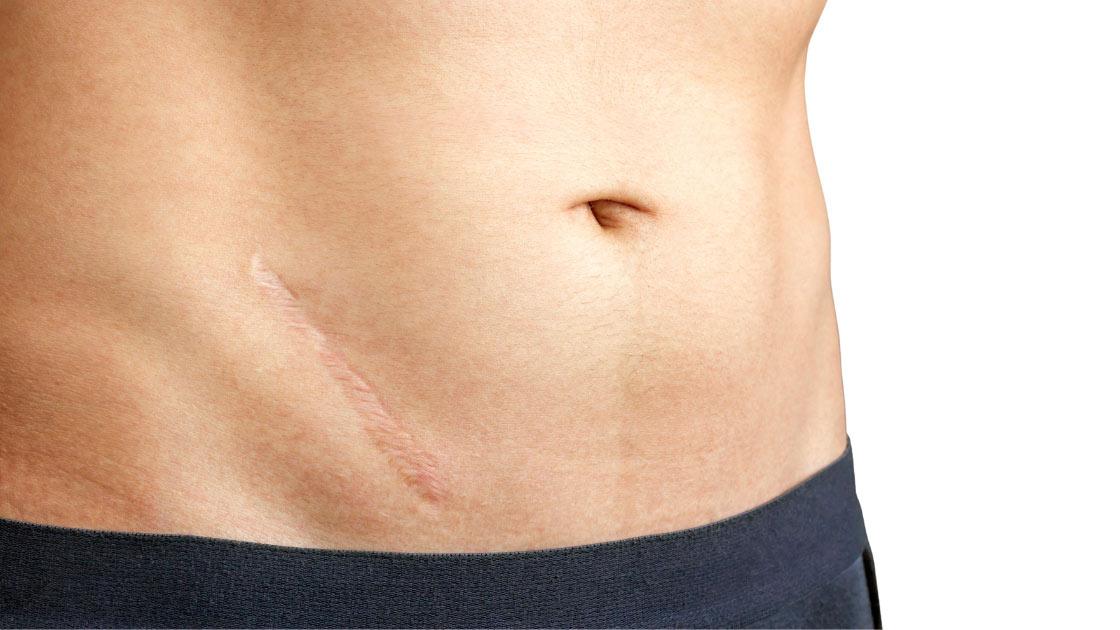
The surgeon selects and often combines techniques according to scar depth, direction, tension, skin laxity, symptoms, and whether function is affected.
- Excision and layered linear closure — Removes a narrow widened, depressed, or irregular scar and closes the wound in layers to reduce surface tension. It suits scars where surrounding skin can close without excessive pull.
- Z-plasty — Rearranges triangular skin flaps to lengthen and redirect a contracted scar. It is useful for webbing, scars across joints, and distortion of the eyelid or lip, but exchanges a straight line for a longer zig-zag scar.
- W-plasty or geometric broken-line closure — Breaks up a long straight scar to make it less visually obvious on selected facial and transitional surfaces. Adequate surrounding laxity is essential to avoid a widened result.
- Serial excision — Removes a large scar over two or more operations when one closure would be too tight. Stages are commonly separated by about 8–12 weeks.
- Contracture release with flap, graft, or tissue expansion — Reconstructs a function-limiting burn or traumatic scar when simple removal would leave too large a defect or would tighten again.
- Scar release with fat grafting or filler — Releases an adherent or depressed scar and restores contour. Fat retention and scar response vary, so repeat treatment is sometimes needed.
- Keloid or hypertrophic-scar excision with adjuvant therapy — Combines surgery with tension reduction, silicone, taping or pressure, intralesional corticosteroid with or without 5-fluorouracil, laser, cryotherapy, or selected postoperative radiotherapy. Excision alone is not a reliable keloid cure.
Why Visit Korea for Scar Removal Surgery?
South Korea has published scar-focused plastic-surgery work on scar orientation, layered tension reduction, extended taping, and early postoperative fractional CO2 laser approaches. These resources support a detailed scar-specific consultation, not an assumption that treatment in Korea is inherently superior. Verify the operating surgeon’s credentials, experience with the same scar category, anesthesia arrangements, and overseas complication plan.
- Published tension-reduction protocols — A Korean retrospective single-center series described deep tension-reduction sutures and prolonged paper taping for 64 revisions in high-tension locations. Its favorable internal ratings are encouraging, but this design cannot predict an individual result or prove superiority over care elsewhere.
- Scar-specific surgical planning — Korean literature describes layered closure, scar reorientation, and postoperative adjuncts, which are relevant questions for facial scars, wide scars, and tension-prone trunk or limb scars.
- Credential verification — Check whether a clinician is listed through the Korean Society of Plastic and Reconstructive Surgeons search service. Membership or listing is only one part of assessment; it does not confirm expertise in every scar subtype.
- Combined-care access — Patients with a raised, recurrent, or complex scar can ask whether surgical revision, injections, laser, compression, silicone, and reconstructive options are coordinated under one documented plan.
- Evidence limitation — No high-quality comparative evidence establishes that scar revision in South Korea produces better outcomes than in other countries. Scar site, cause, tension, skin biology, prior infection or radiation, technique, and aftercare have major effects on results.
Key Information for International Patients
- Minimum stay — Plan at least 7–10 days in Korea for a small uncomplicated outpatient revision, allowing an early wound review and, where appropriate, suture removal. Plan 10–14 days or longer for a large body or joint scar, general anesthesia, graft or flap reconstruction, keloid adjuvant treatment, or any healing concern.
- Repeat visits — Facial sutures in one Korean high-tension protocol were removed around day 5; trunk and extremity sutures around days 7–8. The actual schedule depends on location, closure, and the surgeon’s assessment.
- Flight timing — Do not book an inflexible immediate return flight. Travel only after an in-person review confirms a stable incision and the surgeon provides clearance; surgical travel creates added risk when follow-up is difficult to access, as noted in the American Society of Plastic Surgeons medical-tourism guidance.
- Activity and itinerary — Avoid luggage lifting, strenuous sightseeing, gym exercise, repetitive stretching, and friction over the repair during early healing. Joint, neck, lip, and eyelid scars can limit ordinary activities more than a small low-tension facial scar.
- Sedation and companion — Arrange a companion for the first 24 hours after IV sedation or general anesthesia. Do not drive, travel alone while sedated, or carry heavy bags.
- Remote follow-up — Before departure, obtain an operative report, anesthesia record, pathology result if tissue was sent, medication list, English wound-care instructions, and clinic contact details. Arrange photo reviews and, where possible, a local clinician for contingency wound checks.
Travel note: Large revisions, grafts, flaps, reduced mobility, obesity, estrogen exposure, prior clots, and unresolved wound problems can require a longer stay and individualized clot-prevention advice.
Which Are the Best Clinics in Korea for Scar Removal Surgery?
Listed below are some of the best clinics in Korea for scar removal surgery.
1. Edge Plastic Surgery
For scar removal surgery, you can seek scar and skin-regeneration treatment at Edge Plastic Surgery in Daegu, where care is provided by a plastic surgery specialist. Your assessment can be informed by the clinic’s Mark View skin diagnosis service, with treatment planning tailored to the characteristics of your skin concern.
- URL: Edge Plastic Surgery Website
- Location: Jung-gu, Daegu
- Scar-focused care:
- Offers scar and skin-regeneration treatment.
- Provides treatments for acne as well as spots, blemishes, freckles, pores, flushing, and hemangiomas, which may be relevant when your concern includes accompanying skin-texture or pigmentation issues.
- Skin assessment and related treatments:
- Mark View skin diagnosis is available to assess skin conditions.
- Skin laser and skin-care treatments are listed, along with medical skin boosters and regenerative-focused injections such as PRP/nano-fat grafting, exosome injection, Rejuran Healer, and Jubelook.
2. Classy Plastic Surgery
Classy Plastic Surgery offers PRP therapy as part of its facial-contouring services, using your own plasma to support skin regeneration and healing. However, the supplied clinic information does not specifically list scar revision or scar-removal surgery, so you should clarify whether your scar type can be assessed and treated there.
- URL: Classy Plastic Surgery Website
- Location: Gangnam-gu, Seoul
- Relevant regenerative option:
- PRP therapy is listed for skin regeneration and healing.
- Fat grafting is also available within the clinic’s facial-contouring services.
- Other listed services:
- Provides eye and nose surgery, facial lifting procedures, breast surgery, body contouring, Botox, dermal fillers, and contour injections.
- Eye revision surgery and nose revision surgery are listed for concerns related to prior cosmetic procedures.
3. Brand Plastic Surgery
For scar removal surgery, Brand Plastic Surgery lists scar revision to minimize the visible appearance of scars and create a smoother skin surface. If scar tissue is tight and limits movement, the clinic also offers scar contracture release to address functional restriction as well as the scar itself.
- URL: Brand Plastic Surgery Website
- Location: Busanjin-gu, Busan
- Scar procedures:
- Scar revision is offered to reduce the appearance of scars and improve surface smoothness.
- Scar contracture release is listed to release tightened scar tissue and restore mobility and function.
- Related reconstructive care:
- Facial trauma repair is available for injuries affecting facial appearance and function.
- Lipoma and cyst removal are listed among reconstructive procedures.
- Additional aesthetic services:
- Offers facial rejuvenation procedures including mid-face lift, facelift, forehead lift, and eyelid surgery.
- Minimally invasive options include Botox, fillers, contour injections, and dimple creation.
Scar Removal Surgery From Start to Finish
- Remote consultation and records — Send unfiltered photographs, the scar’s cause and date, prior treatment and operative records, keloid history, allergies, medical conditions, nicotine use, and complete medication and supplement list. Confirm whether English consultation, interpreter support, and virtual postoperative reviews are available.
- In-person assessment — The surgeon examines scar width, depth, adherence, direction, skin laxity, pigmentation, tension, symptoms, and effects on facial expression or joint movement. Standardized photographs and medical or anesthesia clearance are arranged when needed.
- Treatment plan and consent — Discuss whether revision should wait for maturation, which closure or reconstruction method is appropriate, expected tradeoffs, the chance of further treatment, and any keloid-recurrence strategy. Confirm the wound-check schedule, suture-removal plan, and a safe departure date before proceeding.
- Anesthesia and marking — Small revisions are commonly performed under local anesthesia. Extensive, multi-site, contracture, flap, graft, or anxiety-sensitive procedures can require IV sedation or general anesthesia; follow the assigned fasting instructions exactly.
- Scar revision — The surgeon marks the planned lines, releases tethering where required, removes or rearranges scar tissue, and uses layered low-tension closure, Z-plasty, W-plasty, a flap, graft, or another planned technique. Small cases are often outpatient; major reconstruction can require observation or admission.
- Dressing and discharge — Dressings, tape, and sometimes compression are applied. Leave with written instructions for prescribed medicines, dressing care, bathing, activity restriction, emergency contacts, and the next review.
- Early local recovery — Expect swelling, discoloration, tenderness, firmness, numbness, and tightness for about 1–2 weeks. Attend wound checks and suture removal before long-haul travel unless the treating surgeon specifically documents another safe plan.
- Scar-management phase and remote review — Once the incision is fully closed and approved, the plan can include silicone, paper tape, compression, massage, steroid or 5-fluorouracil injections, or laser treatment. Continue remote photo follow-up; appearance continues to remodel for months and is more reliably assessed around 6–12 months.
Alternatives to Scar Removal Surgery
Non-surgical care avoids a new incision and shorter-term surgical restrictions, but it cannot release a significant contracture or remove excess scar tissue. Surgical revision is more appropriate when scar direction, width, tethering, or functional limitation is the central problem; texture, redness, and depressed acne-type scars often respond better to targeted non-surgical or combined treatment.
Laser treatment
- Best suited for — Redness, itch, texture, and pliability in selected scars rather than major tethering or contracture.
- Tradeoff — Pulsed-dye laser can target vascular redness; fractional CO2 or Er:YAG can improve texture. Multiple sessions are common, and laser studies remain heterogeneous, including in treatment parameters and skin-type pigment risk.
- Related option — Scar removal laser.
Injections for raised scars
- Best suited for — Hypertrophic scars and keloids that are raised, itchy, or painful.
- Tradeoff — Intralesional corticosteroid, sometimes combined with 5-fluorouracil, can flatten a scar without excision but can cause skin atrophy, pigment change, and visible small vessels.
- Related options — Keloid injection and steroid injections for scars.
Subcision, filler, or fat grafting
- Best suited for — Depressed or tethered scars with contour loss, including selected traumatic and acne scars.
- Tradeoff — These approaches improve release and volume but do not correct a major contracture; filler is temporary and fat retention varies.
- Related option — Atrophic scar treatment.
Keloid-focused treatment
- Best suited for — Patients with a recurrent or high-risk keloid who need recurrence prevention planned from the outset.
- Tradeoff — Excision can be combined with injections, pressure, silicone, laser, cryotherapy, or selected radiotherapy, but no universal adjuvant regimen or individual recurrence forecast is supported by current evidence.
- Related option — Keloid removal.
Burn-scar reconstruction
- Best suited for — Burn scars causing restricted movement, webbing, unstable skin, or substantial tissue loss.
- Tradeoff — Flap, graft, tissue expansion, and staged release can restore function but involve more extensive recovery than a small linear revision.
- Related option — Burn scar treatment.
How Can I Prepare for Scar Removal Surgery?
- Send complete records early — Provide unfiltered scar photographs, the cause and date of injury or surgery, previous treatments, keloid history, allergies, chronic conditions, and all medicines and supplements before travel.
- Medication plan — Do not independently stop prescribed medicines. Obtain a written plan from the surgeon and prescribing clinician for anticoagulants, antiplatelets, diabetes medicines, steroids, isotretinoin, and supplements that affect bleeding or healing.
- Nicotine cessation — Stop cigarettes, vaping, nicotine pouches, gum, and patches for the exact preoperative and postoperative period set by the surgeon. Nicotine impairs wound healing.
- Fasting and anesthesia — Follow fasting instructions exactly for IV sedation or general anesthesia. Local-anesthetic-only cases have different requirements; do not assume one instruction applies to another anesthesia plan.
- Treatment-site protection — Avoid sunburn, tanning, waxing, irritating skincare, and unapproved topical products near the planned incision. Bring loose clothing that will not rub the repair.
- Accommodation and transport — Stay close enough for wound checks and possible suture removal. Arrange door-to-door transport and a first-night companion after sedation or general anesthesia.
- Flexible travel — Keep return flights and accommodation adjustable until the surgeon confirms the wound-review schedule. Avoid scheduling demanding tours, sports, or business commitments during the first 1–2 weeks.
Travel note: Bring a written list of home medications and reserve enough accommodation to remain longer if wound healing or early keloid treatment requires it.
Confirm the treating doctor’s individualized medication, fasting, nicotine, and travel requirements; they take precedence over general guidance.
Aftercare Advice
Protect the new incision from tension, friction, infection, and ultraviolet exposure while it heals and remodels.
- Dressing and wound care — Keep the first dressing dry and intact for the period specified. Use only prescribed products; do not apply cosmetic creams, acids, retinoids, exfoliants, massage products, or silicone to an open incision.
- Movement and exercise — Avoid strenuous exercise, heavy lifting, pulling, repetitive movement, and contact that loads the repaired area until cleared. Restrictions are particularly important for joint, neck, lip, and high-tension trunk scars.
- Scar treatment after closure — Start silicone gel or sheets, paper tape, compression, massage, injections, or laser only after the incision is fully closed and the surgeon approves it. A Korean high-tension protocol used paper tape for at least 3 months on the face and 6 months on the trunk or extremities, but this is not a universal schedule.
- Sun protection — Once the wound has closed and the surgeon permits, cover the scar when practical and apply broad-spectrum SPF 50 sunscreen to reduce pigment change.
- Warning signs — Seek urgent local care for fever, spreading redness, pus or foul drainage, rapidly worsening pain or swelling, persistent bleeding, wound separation, or dusky or black skin. Calf pain or swelling, chest pain, shortness of breath, or palpitations after surgery or long-haul travel are emergencies.
- Follow-up and final result — Attend planned reviews and send photographs as requested. Initial healing commonly takes 1–2 weeks, but redness, firmness, tightness, and color changes can persist; assess the revised scar more reliably at 6–12 months.
Follow the treating doctor’s instructions over general advice and contact the clinic promptly when the wound or symptoms appear wrong.
Frequently Asked Questions
Related Blogs
PRP Injection in Korea: Methods, Recovery, Risks, and Travel Planning
PRP facial injection uses platelet-enriched plasma from a small blood sample, prepared by centrifugation and injected into selected facial planes; protocols, results, and repeat schedules vary. International patients can plan 2–3 days for uncomplicated care, arrange 24–72-hour follow-up, follow aftercare guidance, and seek urgent assessment for eye or central-face symptoms.
Updated: Oct 4, 2026
NK Cell Therapy in Korea: Eligibility, Treatment Methods, Risks, and Travel Planning
NK-cell therapy is an investigational, cancer-specific treatment involving eligibility testing, possible conditioning chemotherapy, IV cell infusion, adjunct medicines, and monitoring. The article explains candidate criteria, Korea regulatory documentation, travel planning, aftercare, and coordination with home and treating oncologists.
Updated: Sep 28, 2026
Discovering the True Cost of Keloid Ear Surgery: Korea vs. Global Alternatives
Discover the cost of keloid ear surgery in Korea, where advanced medical techniques combine with affordability to offer effective treatment options. Learn about factors influencing prices and why many choose Korea for their cosmetic and reconstructive surgery needs.
Updated: Sep 27, 2026
Comparing Costs: Why Korea Is a Top Destination for Foreign Body Removal vs Global Alternatives
Discover the costs and procedures involved in Foreign Body Removal in Korea, a popular destination for affordable and high-quality medical care. Learn about the factors influencing prices and how Korea's healthcare system ensures safe and efficient treatments for overseas patients.
Updated: Sep 26, 2026
Clinics offering Scar Removal Surgery

Edge Plastic Surgery Korea: Comprehensive Cosmetic Procedures in Daegu for Facial, Eye, Nose, Skin, Breast and Body Enhancements
Dongseong-ro

Classy Plastic Surgery: Premium Cosmetic Procedures in Korea for a Glamorous Natural Look
Sinnonhyeon Station
Kangdong Sacred Heart Hospital
Gangdong
Cha Min Plastic Surgery Clinic in Korea: Specializing in Rhinoplasty, Implant Removal, and Advanced Cosmetic Procedures
Sinnonhyeon Station