Medical Tourism Blog
Effective Korea PDRN Injection Treatments for New Stretch Marks
Table of contents
- PDRN Injection: A Detailed Medical Overview
- Best Clinics in Korea for New Stretch Marks
- Navigating PDRN Injections in South Korea: A Medical Tourist's Guide
- Costs and Value: PDRN Injections in South Korea vs. Other Countries
- Patient Experiences and Clinical Outcomes with PDRN for New Stretch Marks
- Conclusions and Recommendations
- References
Considering treatment in Korea? Everything you need to know e.g. — how to avoid scams, visas, interpreters, recovery tips — in our Medical Tourism Master Guide. Plan with confidence in minutes, not weeks!
Stretch marks, or striae, are common skin lines or streaks that often appear on the abdomen, breasts, hips, buttocks, thighs, and upper arms. They form when the skin stretches rapidly, surpassing the elastic limits of its connective tissue in the dermis (middle skin layer). This sudden stretching causes tiny tears in the dermis, revealing deeper skin layers and creating the characteristic marks.
When people mention "new stretch marks" or "fresh reddish striae," they are referring to striae rubrae, the early, active phase of stretch mark development. These marks usually show up as bright pink, red, blue, black, or purple streaks. They can be slightly raised and wrinkly, sometimes accompanied by itching. Over time, these fresh marks fade, flatten, and turn into lighter, silvery, white, or glossy lines called striae albae.
Timing is key when treating stretch marks. Research shows treatments work best on striae rubrae before they mature into the chronic white phase. Early intervention can reduce redness and vascularity, improving healing outcomes. So, addressing fresh reddish striae promptly often leads to better results than waiting for them to fade naturally.
Patients often come across various terms when researching stretch marks. Knowing these terms and their medical equivalents helps with accurate self-assessment and communication with healthcare providers. The table below clarifies common stretch mark terminology:
| Term | Medical Term(s) | Description | Common Appearance (New/Acute) | Common Appearance (Mature/Chronic) | Specific Type (if applicable) |
|---|---|---|---|---|---|
| Stretch Marks | Striae, Striae Distensae (SD), Striae Atrophicans | Indented streaks or lines from rapid skin stretching. | Bright pink, red, blue, black, or purple streaks; may be raised and wrinkly. | Silvery, white, or glossy, often flattened or slightly depressed. | - |
| Fresh Reddish Striae | Striae Rubrae | Early phase with inflammation and vascularity. | Bright pink, red, blue, black, or purple streaks; may be raised and wrinkly. | - | Striae Rubrae |
| Older Stretch Marks | Striae Albae | Mature phase with reduced vascularity and atrophic tissue. | - | Silvery, white, or glossy, often flattened or slightly depressed. | Striae Albae |
| Pregnancy Stretch Marks | Striae Gravidarum | Stretch marks during or after pregnancy. | Typically red or purple on abdomen, breasts, and thighs. | Fades to silvery or white over time. | Striae Gravidarum |
Stretch marks mainly result from rapid skin stretching that tears the dermis beyond its elasticity. This happens during significant body changes like pregnancy (affecting 50-90% of pregnant individuals, especially in the last trimester), adolescence growth spurts, quick weight gain or loss, and rapid muscle growth in bodybuilders.
Though usually harmless, stretch marks can sometimes indicate medical issues. Widespread or unexplained stretch marks may be linked to conditions like Cushing syndrome (excess cortisol causing fragile skin and weight gain) or Marfan syndrome (reduced skin elasticity). Long-term corticosteroid use can also weaken skin collagen, increasing stretch mark risk. Genetics, female sex, higher BMI before pregnancy, and cortisol levels also play roles. If stretch marks appear extensively or without clear cause, consulting a doctor is wise to rule out underlying health problems.
It’s important to have realistic expectations about stretch mark treatments. While options like PDRN injections can improve appearance and texture, complete removal is rare. The goal is to lessen visibility and severity, not total disappearance. Understanding this helps manage expectations and satisfaction.
PDRN Injection: A Detailed Medical Overview
Polydeoxyribonucleotide (PDRN) is a natural compound made of small DNA fragments, usually between 50 and 1,500 KDa, with a common peak around 132 KDa. It’s mainly sourced from salmon (Oncorhynchus keta) or salmon trout (Oncorhynchus mykiss) sperm DNA. Salmon DNA is chosen for its close structural similarity and compatibility with human tissue, reducing adverse reactions. The product undergoes strict purification and sterilization to remove active proteins or peptides that might trigger immune responses.
PDRN has been used medically for over 30 years to speed healing of wounds and ulcers, including diabetic ulcers and burns. More recently, it’s popular in aesthetic dermatology for skin rejuvenation, anti-aging, and recovery after cosmetic procedures. Unlike traditional dermal fillers like hyaluronic acid, which add volume instantly, PDRN works at the cellular level. It stimulates the skin’s natural repair by boosting collagen synthesis and improving skin quality, elasticity, and texture. Rather than filling lines, PDRN enhances skin health from within, often called a "skin booster" due to its regenerative effects. This appeals to those who prefer treatments that harness the body’s healing rather than just superficial fixes.
PDRN works deep in the skin, triggering biological processes that promote tissue regeneration. Its main actions include:
- Stimulating Collagen and Elastin Production: PDRN activates purinergic A2A receptors, stimulating fibroblasts—the cells that produce collagen and elastin, essential for skin firmness, elasticity, and thickness. This helps rebuild the skin’s extracellular matrix.
- Promoting Angiogenesis: It encourages new blood vessel formation and increases Vascular Endothelial Growth Factor (VEGF) expression, improving microcirculation. Better blood flow delivers oxygen and nutrients vital for healing and tissue repair.
- Reducing Inflammation: PDRN has strong anti-inflammatory effects, calming irritation, reducing redness, and speeding healing by inhibiting nitric oxide and inflammatory pathways.
- Activating Skin Repair Genes and Cellular Regeneration: By binding to A2A adenosine receptors, PDRN promotes cell proliferation, DNA repair, and growth factor production. It also supplies nucleotide bases for DNA metabolism via the "salvage pathway," supporting regeneration of damaged cells. This boosts skin vitality and anti-aging effects.
This multi-layered action makes PDRN promising for complex skin issues like stretch marks, which involve structural damage, inflammation, and impaired healing. Knowing PDRN rebuilds skin from the cellular level helps patients appreciate its lasting benefits compared to single-action treatments.
PDRN benefits many skin concerns: it reduces fine lines and wrinkles by supporting collagen and elastin, improves elasticity, firmness, and density, enhances hydration by attracting water into deeper layers, brightens skin tone, fades pigmentation and acne scars, and accelerates recovery after procedures like lasers or microneedling. Its regenerative power also helps minimize scars, including stretch marks.
Often, PDRN is combined with other treatments like lasers, microneedling, or Platelet-Rich Plasma (PRP) to boost results and speed healing. For stretch marks, which can be tough to treat, this multi-modal approach can offer better, longer-lasting outcomes.
The PDRN injection procedure involves superficial injections or microneedling to deliver the solution into the dermis. Methods include dermal injection for targeted areas or mesotherapy, where PDRN is combined with nourishing agents for broader rejuvenation. A topical numbing cream is applied beforehand to reduce discomfort. Sessions last about 30 to 45 minutes. Typically, 3 to 4 sessions spaced 2 to 4 weeks apart are recommended, followed by maintenance treatments every 3 to 6 months.
PDRN therapy is generally safe and well-tolerated. Its high compatibility with human DNA (97% identical) contributes to its safety. Side effects are usually mild and temporary, like redness and swelling lasting a few hours to 1-2 days. Bruising or small dots may appear, especially with multi-pin injectors, resolving in 2-5 days. Some patients notice small bumps at the injection site, which look like "walking through a beehive" but disappear within 24-48 hours. Clinics should inform patients about these temporary bumps to manage expectations and reduce anxiety. Rare side effects include allergic reactions, infection if aftercare is poor, or very rarely, granuloma formation (small nodules). Choosing reputable clinics with experienced professionals and following aftercare instructions is essential for safety and best results.
Best Clinics in Korea for New Stretch Marks
Listed below are the best clinics in Korea for new stretch marks:
| Clinic Name | Key Features | Special Techniques |
|---|---|---|
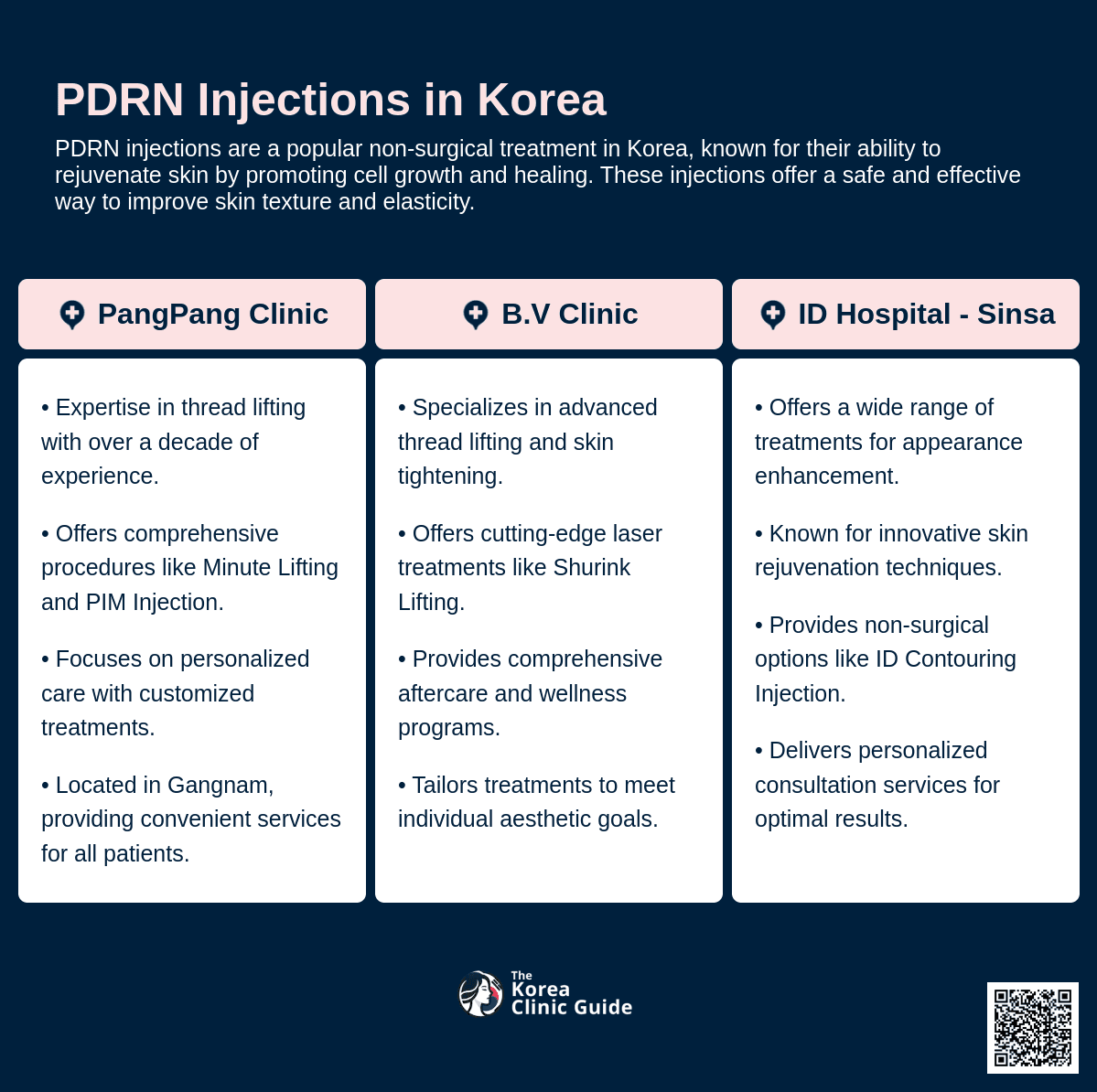
| ID Hospital - Sinsa Website | For patients seeking care for new stretch marks in Korea, ID Hospital – Sinsa stands out because it combines a broad, advanced skin-regeneration lineup with a consultation-driven approach that allows treatment plans to be tailored to the needs of early-stage marks, where improving texture and supporting elasticity is a priority. Its Skin Rejuvenation options—such as Exosome Boosters to rapidly enhance skin texture and radiance, Rejuran Healer to repair and revitalize skin from within, and Juvelook to support smoother texture and hydration—reflect a clinic focus on skin quality improvements that are highly relevant when addressing newly formed stretch marks. In addition, the hospital’s extensive aesthetic infrastructure across injectables, brightening lasers, and body-focused procedures supports comprehensive care when stretch marks coexist with other concerns, while the ID Premium Elanse personalized consultation emphasizes individualized planning based on goals and skin condition, helping patients pursue a precise, confidence-boosting strategy rather than a one-size-fits-all solution. | Exosome Boosters; Rejuran Healer; Juvelook; ID Premium Elanse personalized consultation; injectables; brightening lasers; body-focused procedures |
| Cheongdam Oracle Dermatology & Plastic Surgery Clinic Website | Cheongdam Oracle Dermatology & Plastic Surgery Clinic in Seolleung is a comprehensive aesthetic center known for creating personalized treatment plans and delivering high standards of care across both dermatology and plastic surgery. For patients seeking improvement in new stretch marks, the clinic stands out because it focuses on skin-rebuilding procedures that support collagen formation and healthier skin renewal, while tailoring each plan to the patient’s skin condition, body area, and aesthetic goals. | Collagen-focused skin remodeling for new stretch marks through laser resurfacing; Microneedling options that trigger the body’s natural healing response, helping stimulate collagen and improve firmness where early stretch marks are forming; Skin-renewal support with chemical peels to exfoliate and refine uneven tone and texture that can accompany developing stretch marks; Overall skin health optimization with HydraFacial-style cleansing, exfoliation, and hydration to keep skin resilient during treatment; Personalized treatment planning to match the stage and appearance of new stretch marks; One clinic for both dermatologic procedures and aesthetic surgical expertise, ensuring coordinated care and consistent standards from consultation to follow-up. |
| Lalian Cheongdam Clinic Website | Lalian Cheongdam Clinic stands out in Korea for treating new stretch marks because its core strength is highly personalized, skin-quality–focused planning built around collagen remodeling and regeneration—the same priorities that matter most when stretch marks are still new and more responsive. Located in Cheongdam (Gangnam, Seoul), the clinic emphasizes precision diagnostics, using 3D skin analysis (Meta-Vu) to document texture and tone changes over time and ultrasound examination to evaluate soft-tissue layers so treatment depth and approach can be matched to each patient’s anatomy. From there, Lalian’s treatment philosophy combines energy-based tightening and firming technologies such as Ultherapy (focused ultrasound targeting deeper support layers) and Thermage FLX (radiofrequency heating to drive collagen remodeling) with regenerative and collagen-stimulating injectables like Rejuran Healer (PN-based skin repair support), Juvelook, Ultracol, Sculptra, and Radiesse to strengthen skin structure and resilience gradually rather than relying on quick, superficial fixes. The clinic also integrates skin-boosting options like Belotero Revive for hydration and glow and exosome therapy (ASCE+) positioned to support recovery and overall skin strength—creating a comprehensive, data-guided plan aimed at improving the appearance of early stretch marks by enhancing firmness, texture, and long-term skin quality. | Ultherapy (focused ultrasound targeting deeper support layers); Thermage FLX (radiofrequency heating to drive collagen remodeling); Rejuran Healer (PN-based skin repair support); Juvelook; Ultracol; Sculptra; Radiesse; Belotero Revive; Exosome therapy (ASCE+); 3D skin analysis (Meta-Vu); Ultrasound examination |
ID Hospital - Sinsa
For patients seeking care for new stretch marks in Korea, ID Hospital – Sinsa stands out because it combines a broad, advanced skin-regeneration lineup with a consultation-driven approach that allows treatment plans to be tailored to the needs of early-stage marks, where improving texture and supporting elasticity is a priority. Its Skin Rejuvenation options—such as Exosome Boosters to rapidly enhance skin texture and radiance, Rejuran Healer to repair and revitalize skin from within, and Juvelook to support smoother texture and hydration—reflect a clinic focus on skin quality improvements that are highly relevant when addressing newly formed stretch marks. In addition, the hospital’s extensive aesthetic infrastructure across injectables, brightening lasers, and body-focused procedures supports comprehensive care when stretch marks coexist with other concerns, while the ID Premium Elanse personalized consultation emphasizes individualized planning based on goals and skin condition, helping patients pursue a precise, confidence-boosting strategy rather than a one-size-fits-all solution.
Find more about this clinic here: ID Hospital - Sinsa Website
Cheongdam Oracle Dermatology & Plastic Surgery Clinic
Cheongdam Oracle Dermatology & Plastic Surgery Clinic in Seolleung is a comprehensive aesthetic center known for creating personalized treatment plans and delivering high standards of care across both dermatology and plastic surgery. For patients seeking improvement in new stretch marks, the clinic stands out because it focuses on skin-rebuilding procedures that support collagen formation and healthier skin renewal, while tailoring each plan to the patient’s skin condition, body area, and aesthetic goals.
- Collagen-focused skin remodeling for new stretch marks through laser resurfacing, designed to improve texture and support new skin growth.
- Microneedling options that trigger the body’s natural healing response, helping stimulate collagen and improve firmness where early stretch marks are forming.
- Skin-renewal support with chemical peels to exfoliate and refine uneven tone and texture that can accompany developing stretch marks.
- Overall skin health optimization with HydraFacial-style cleansing, exfoliation, and hydration to keep skin resilient during treatment.
- Personalized treatment planning to match the stage and appearance of new stretch marks, with careful selection of procedures for effective, patient-specific results.
- One clinic for both dermatologic procedures and aesthetic surgical expertise, ensuring coordinated care and consistent standards from consultation to follow-up.
Find more about this clinic here: Cheongdam Oracle Dermatology & Plastic Surgery Clinic Website
Lalian Cheongdam Clinic
Lalian Cheongdam Clinic stands out in Korea for treating new stretch marks because its core strength is highly personalized, skin-quality–focused planning built around collagen remodeling and regeneration—the same priorities that matter most when stretch marks are still new and more responsive. Located in Cheongdam (Gangnam, Seoul), the clinic emphasizes precision diagnostics, using 3D skin analysis (Meta-Vu) to document texture and tone changes over time and ultrasound examination to evaluate soft-tissue layers so treatment depth and approach can be matched to each patient’s anatomy. From there, Lalian’s treatment philosophy combines energy-based tightening and firming technologies such as Ultherapy (focused ultrasound targeting deeper support layers) and Thermage FLX (radiofrequency heating to drive collagen remodeling) with regenerative and collagen-stimulating injectables like Rejuran Healer (PN-based skin repair support), Juvelook, Ultracol, Sculptra, and Radiesse to strengthen skin structure and resilience gradually rather than relying on quick, superficial fixes. The clinic also integrates skin-boosting options like Belotero Revive for hydration and glow and exosome therapy (ASCE+) positioned to support recovery and overall skin strength—creating a comprehensive, data-guided plan aimed at improving the appearance of early stretch marks by enhancing firmness, texture, and long-term skin quality.
Find more about this clinic here: Lalian Cheongdam Clinic Website
Navigating PDRN Injections in South Korea: A Medical Tourist's Guide
South Korea is a global leader in aesthetic medicine and skincare innovation. PDRN therapy originated here, making Korea a hub for expertise in this treatment. The popular brand "Rejuran Healer" is widely used and backed by clinical studies, favored by K-celebrities. This popularity ensures experienced practitioners and refined techniques. The "K-beauty ethos" of advanced, effective skincare adds to Korea’s reputation, attracting international patients seeking cutting-edge solutions.
For medical tourists, South Korea offers excellent infrastructure. Many Seoul clinics cater to foreigners with English-speaking staff and tailored services, easing language barriers and unfamiliarity with local systems. This support makes traveling for treatment more comfortable and less stressful.
The typical patient journey includes:
- Initial Consultation and Assessment: A thorough evaluation by a dermatologist or cosmetic surgeon, reviewing skin condition, medical history, and treatment goals. Doctors explain the PDRN procedure, risks, outcomes, and session recommendations to ensure informed consent.
- Pre-Procedure Preparations: Patients are advised to avoid blood thinners, NSAIDs, alcohol, and smoking before treatment to reduce bruising and optimize healing. The treatment area is cleansed and sterilized on the day.
- The Injection Session: After applying topical anesthetic, PDRN is injected with fine needles or multi-pin injectors into the dermis. Sessions last 30-45 minutes. Multiple sessions (3-4) spaced 2-4 weeks apart are typical.
- Post-Procedure Care and Recovery: Mild redness and swelling are common, subsiding in hours to days. Minor bruising or dots may appear, resolving in a few days. Clinics may offer soothing masks or LED therapy post-treatment. Patients receive aftercare instructions, including avoiding sun, heat, and strenuous activity for 1-2 days, using high-SPF sunscreen, and maintaining hydration.
When choosing a clinic, especially as an international patient, prioritize reputable centers with skilled staff, safe protocols, and positive reviews. Notable Seoul clinics offering PDRN injections include:
- CLEO Clinic (Gangnam)
- ME Clinic (Myeongdong)
- Banobagi Skin Clinic (Gangnam)
- Oracle Dermatology (Apgujeong)
- B.V Clinic Korea (Sinnonhyeon Station)
- Three Wishes Clinic (Myeongdong)
- PangPang Clinic (Gangnam, Sinsa)
- Apgujeong Tune & Tone Skin Clinic (Apgujeong, Gangnam)
- EGG Skin Clinic (Gangnam, Sinsa Station)
Look for clinics offering customized treatment plans, combination therapies, and detailed aftercare. Many provide packages combining Rejuran or PDRN with microneedling, lasers, or PRP. For stretch marks, multi-modal approaches often yield better results than PDRN alone.
Costs and Value: PDRN Injections in South Korea vs. Other Countries
PDRN injection costs in South Korea vary by brand (e.g., Rejuran Healer vs. generic), session number, treatment area, and combination with other procedures.
Typical prices per session range:
- Standard PDRN/Rejuran Healer: 250,000 to 450,000 KRW (~$190 to $340 USD)
- Some clinics report 765,000 KRW (~$526 USD) for standard PDRN
- Branded Rejuran Healer: 1,100,000 to 1,600,000 KRW (~$750 to $1,100 USD)
- Full face PDRN/Rejuran Healer: ₩300,000 – ₩600,000 KRW
Multi-session packages (3 sessions) cost about 650,000 to 1 million KRW ($480 to $750 USD). Full facial treatments with multiple injections range from ₩700,000 to ₩1,500,000 KRW ($560 to $1,200 USD). Under-eye Rejuran I sessions cost 300,000 to 500,000 KRW ($220 to $370 USD). Polynucleotide (PN) or Exosome injections for stretch marks are ₩300,000 to ₩600,000 KRW ($220 to $450 USD) per session.
Combination treatments affect costs. For example, Rejuran plus microneedling ranges from 450,000 to 700,000 KRW (~$340 to $520 USD) per session. Adding laser treatments may add about $750 USD. Clinic reputation, location (Gangnam clinics often cost more), practitioner expertise, technology, and customization also influence prices.
Additional expenses for medical tourists include consultation fees, post-treatment products, anesthesia for intensive procedures, and pre-procedure tests. Overnight stays are rare for PDRN alone but possible with combined treatments. Foreign visitors may get a VAT refund (~10%) if spending minimum amounts. Clinics often require a 10% deposit to secure appointments.
Price variations reflect differences in product quality (generic vs. branded), dosage, and clinic tier. Patients should request clear pricing details, including brand, quantity, treatment area, and package contents, to avoid surprises.
Here’s a cost comparison of PDRN injections worldwide:
| Country | PDRN Injection (Per Session, Est. USD) | Notes/Caveats |
|---|---|---|
| South Korea | $190 - $1,100 | Standard PDRN/Rejuran Healer; varies by clinic, brand, dosage. |
| USA | $250 - $1,500 | Wide range depending on clinic reputation, location, and treatment scope. |
| Singapore | $500 - $1,400 | Varies by clinic and PDRN type (Healer, I, S). |
| United Kingdom | $475 - $570 | Crystal PDRN/Rejuran Healer (£375) or Nucleofill (£450); packages available. |
| Thailand | $6 - $16 | Caution: Extremely low prices may indicate topical products, small dosages, or lower quality. Verify carefully. |
| Australia | $192 - $354 | Rejuran Healer Skin Booster Microneedling Infusion ($192) or Rejuran Classic ($354). |
South Korea offers a strong balance of affordability and quality in aesthetic treatments. Compared to some countries, Korea’s prices are competitive, especially given its advanced technology and experienced professionals. For example, Korea’s cost for certain procedures like 10 Thera Lifting is lower than Thailand’s, showing Korea’s cost-effectiveness for advanced treatments.
However, medical tourists must consider total trip costs, including airfare, accommodation, transport, meals, and other expenses. Flights from North America or Europe to Korea typically cost $600 to $1,500 USD. Accommodation ranges from $30-$50 USD per night for hostels to over $200 USD for luxury hotels. Careful budgeting of all expenses is essential for informed decisions and avoiding unexpected costs.
Patient Experiences and Clinical Outcomes with PDRN for New Stretch Marks
PDRN is well-known and studied for skin rejuvenation, anti-aging, and scar reduction, including acne scars. Clinical evidence supports its effectiveness for stretch marks.
One study over 20 weeks with ten participants showed polynucleotide injections significantly reduced stretch mark volume, roughness, and width. Manchester scar scale scores also improved by week 20, indicating enhanced appearance. Another study found 80% of patients saw remarkable scar reduction after three sessions. A 2022 study reported 90% of patients experienced visible, lasting improvements in skin texture after a series of injections.
PDRN’s stimulation of collagen and elastin production, improved elasticity, and tissue repair explain these benefits. It rebuilds dermal collagen and elastin, strengthening skin and improving texture.
Patient satisfaction is generally high. Clinical assessments reveal improved skin texture, hydration, and radiance, often noticeable within 1-2 weeks after the first session, with full effects developing over 4-6 weeks as collagen and repair processes progress. Many report skin feeling nourished, healthy, and "lit from within," with smoother texture, firmer feel, and brighter tone. Some note calmer, less reactive skin with faster blemish healing and reduced inflammation. For example, a rosacea-prone patient reported reduced redness and even skin tone after PDRN essence use.
In studies on striae rubrae, all patients were satisfied or indifferent, with no dissatisfaction. Significant clinical and aesthetic improvements were recorded. While complete stretch mark removal is unlikely, noticeable improvement is common.
Conclusions and Recommendations
New stretch marks (striae rubrae) are early skin scars from rapid stretching and can be a cosmetic concern. Early treatment tends to yield better results than waiting for marks to mature. Widespread or unexplained stretch marks should prompt medical evaluation to exclude underlying conditions.
PDRN injections offer a promising option for new stretch marks and overall skin health. Derived from salmon DNA, PDRN is a bioregenerative agent that stimulates collagen and elastin production, promotes angiogenesis, reduces inflammation, and activates cellular repair. It rebuilds skin structure, improves elasticity and hydration, and reduces scar appearance. Combining PDRN with other treatments like lasers or microneedling may enhance outcomes.
South Korea is a top destination for PDRN injections, blending advanced expertise, innovative treatments, and strong medical tourism support. Costs vary but generally balance quality and affordability compared to Western countries. Medical tourists should carefully budget all trip expenses and verify treatment details to avoid surprises. Beware of unusually low prices elsewhere, which may reflect lower product quality or efficacy.
For those considering PDRN for new stretch marks:
- Act Early: Seek treatment for fresh, reddish stretch marks promptly for better results.
- Choose Qualified Professionals: Consult board-certified dermatologists or cosmetic surgeons at reputable clinics.
- Know What to Expect: Understand the procedure, session count, temporary side effects like bumps, and realistic goals of improvement, not complete removal.
- Explore Combination Therapies: Discuss adding microneedling or laser treatments to boost effectiveness.
- Plan Costs Thoroughly: For medical tourism, calculate all expenses including flights, accommodation, and treatment fees. Request clear pricing details from clinics.
- Follow Aftercare: Adhere strictly to post-treatment instructions to minimize risks and optimize healing.
References
1, 2, 3, 4, 5, 6, 7, 8, 9, 10, 11, 12, 13, 14, 15, 16, 17, 18, 19, 20, 21, 22, 23, 24, 25, 26, 27, 28, 29, 30, 31, 32, 33, 34, 35, 36, 37, 38, 39, 40, 41, 42, 43, 44, 45, 46, 47, 48, 49