
Medical Tourism Blog
PDRN Injection in Korea: Methods, Recovery, Safety, and Travel Planning
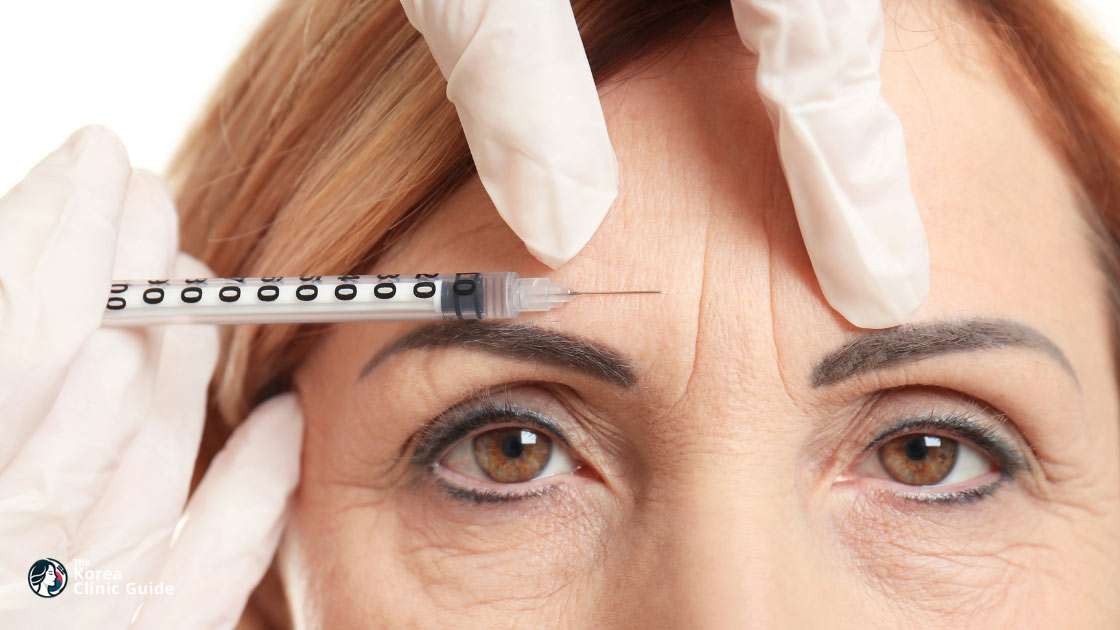
Table of contents
- PDRN Injection at a Glance
- What Is a PDRN Injection?
- Who Is a Good Candidate for a PDRN Injection?
- How Is a PDRN Injection Performed?
- Why Visit Korea for a PDRN Injection?
- Key Information for International Patients
- PDRN Injection From Start to Finish
- Alternatives to a PDRN Injection
- Which Are the Best Clinics in Korea for Pdrn Injection?
- How Can I Prepare for a PDRN Injection?
- Aftercare Advice
Considering treatment in Korea? Everything you need to know e.g. — how to avoid scams, visas, interpreters, recovery tips — in our Medical Tourism Master Guide. Plan with confidence in minutes, not weeks!
Last updated: September 2026
PDRN Injection at a Glance
- What it does — PDRN is a purified DNA-fragment injectable placed in or just beneath the skin to support gradual improvements in hydration, texture, fine lines, dullness, and mild elasticity loss; it is not a volumizing filler or facial-contouring treatment.
- Best candidates — Suitable candidates are adults with stable, noninflamed skin who want modest skin-quality improvement rather than correction of major volume loss, pronounced laxity, active acne, melasma, rosacea, or deep tethered scars.
- Treatment course — The injection itself commonly takes 15–30 minutes, but published PN/PDRN-style protocols often use a series of three sessions spaced about 2–4 weeks apart, so a full course usually cannot be completed during a short trip.
- Downtime — Tiny puncture marks, redness, tenderness, swelling, and raised papules usually settle within 24–72 hours; bruising can remain visible for about 7–14 days, especially in the under-eye area.
- Results and evidence — Results should be assessed only after swelling resolves and the planned course is complete, often weeks to months later; cosmetic evidence remains limited, with a review finding only seven randomized PN/PDRN trials totaling 183 participants.
- Korea travel planning — Plan at least 1–2 days in Korea for one session and local review if needed, avoid a same-day long-haul flight, and discuss flying after at least 24–48 hours once swelling is mild and stable.
- Product verification — Korean clinics commonly offer PDRN and PN treatments, but they are not interchangeable: confirm the exact product, ingredients, concentration, source material, additives, lot number, and expiry date before treatment and keep the record for follow-up at home.
What Is a PDRN Injection?
A PDRN injection places purified DNA fragments into or just beneath the skin as a biorevitalization treatment. It aims for gradual improvement in hydration, texture, fine lines, dullness, and mild loss of elasticity rather than facial volume or contour. It is a minimally invasive injectable procedure.
Who Is a Good Candidate for a PDRN Injection?
- Skin-quality goals — Good candidates are adults seeking gradual improvement in hydration, fine lines, texture, dullness, or mild loss of elasticity rather than facial reshaping.
- Realistic expectations — PDRN is a biorevitalization treatment, not a conventional filler. It does not reliably add cheek, lip, chin, jawline, or nose volume.
- Adjunctive use — Selected patients undergoing scar or post-procedure treatment may discuss PDRN/PN as an adjunct, but the primary condition and treatment plan should determine whether it has a role.
- Stable skin at treatment — The planned area should be free of sunburn, active acne inflammation, dermatitis, open wounds, infection, and cold-sore outbreaks.
Do not book elective treatment during pregnancy, breastfeeding, or while trying to conceive because cosmetic injectable PDRN/PN safety data are insufficient. A history of fish, salmon, or trout allergy requires product-specific medical review: these products are often made from purified salmonid DNA, and formulations can also contain lidocaine or hyaluronic acid. Bleeding disorders, thrombocytopenia, and anticoagulant or antiplatelet medicines require review with the prescribing clinician and injector; never stop warfarin, apixaban, rivaroxaban, clopidogrel, or prescribed aspirin independently. Defer treatment after aggressive laser resurfacing, deep peels, surgery, RF microneedling, or other injectables until the clinician confirms that the skin has healed. Active acne, melasma, rosacea, deep tethered scars, marked laxity, major volume loss, and unexplained skin lesions need diagnosis-directed care rather than PDRN alone.
How Is a PDRN Injection Performed?
PDRN and PN are related DNA-polymer preparations, but they are not necessarily the same product. Clinics sometimes use the terms loosely, while much of the cosmetic research concerns PN rather than the exact PDRN formulation offered; the current evidence base is small and heterogeneous. Ask what is actually being injected before consenting.
- Intradermal microdroplet injection — The injector places multiple small deposits within the skin across the face, neck, or another treatment field. Small raised papules or wheals are expected immediately afterward. Published PN protocols have commonly used repeated intradermal sessions 2–4 weeks apart.
- Cannula or subdermal distribution — A blunt cannula can distribute product through a small number of entry sites. The appropriate depth depends on the product, target area, and facial anatomy; no evidence establishes one plane or device as best for every patient.
- Periorbital treatment — Thin under-eye and periocular skin needs conservative product selection and anatomy-specific technique. Swelling is often more noticeable here. In a 27-person split-face PN trial, PN and non-crosslinked hyaluronic acid both improved periocular appearance after three sessions, without a significant difference on visual or global aesthetic scales.
- Combination protocols — Some clinics use PDRN/PN after scar procedures or alongside other treatments. Improvement in these protocols cannot automatically be attributed to the injection because the accompanying procedure also affects the result.
Why Visit Korea for a PDRN Injection?
Korea has a large international medical-services sector and extensive access to cosmetic dermatology and injectable consultations. This can be convenient for travelers seeking a product-specific assessment and a short outpatient visit. It does not make every product, injection technique, or marketing claim equally evidence-based.
- Established international-patient infrastructure — Seoul reported attracting more than one million international medical tourists in 2024, supporting access to clinics accustomed to overseas scheduling and multilingual coordination.
- Access to related injectable categories — Korean aesthetic practice commonly offers PN and PDRN-branded treatments alongside skin boosters and fillers. Confirm the exact product name rather than accepting “salmon DNA injection” as a sufficient description.
- Opportunity for product verification — Request the active ingredients, concentration, source material, additives, injection plane, lot number, expiry date, and product documentation. Keep a copy or permitted photograph of the treatment record for follow-up at home.
- Evidence remains product-specific — A systematic review identified only seven randomized PN/PDRN trials with 183 total participants and emphasized differing products, protocols, and outcome measures. The more consistent findings were in wound-healing settings, not necessarily healthy cosmetic facial skin. Do not treat Korean availability as proof of a predictable cosmetic result.
Key Information for International Patients
- Minimum stay — Plan at least 1–2 days in Korea for one uncomplicated session. Book early in the trip so a clinician can assess unexpected swelling, bruising, or a reaction locally.
- Course scheduling — A complete course cannot usually fit into a short holiday. Published PN regimens include three sessions at two-week intervals and three sessions at four-week intervals, with outcomes assessed weeks to months later; these are examples, not a universal PDRN schedule. Protocol variation is substantial.
- Flight timing — No clinical evidence defines a safe long-haul-flight interval after PDRN/PN injection. As a cautious practical measure, wait until swelling is mild and stable and discuss flying at least 24–48 hours after treatment with the injector, especially after under-eye treatment.
- Itinerary impact — Redness, puncture marks, tenderness, swelling, and raised papules generally settle within 24–72 hours. Bruising, if it occurs, can remain visible for about 7–14 days. Do not schedule immediately before photographs, weddings, diving, spa visits, or major business events.
- Remote follow-up — Obtain English-language aftercare, a direct emergency contact route, and a plan for photo-based follow-up after departure. Arrange any remaining sessions with a qualified clinician at home rather than trying to compress treatment intervals.
Travel note: Carry the exact product record and lot number home. It is important information if another clinician needs to assess a delayed reaction or plan future injectable treatment.
PDRN Injection From Start to Finish
- Remote inquiry and consultation — Send clear, unfiltered photographs in the requested lighting and describe skin concerns, previous facial procedures, allergies, medicines, and travel dates. Confirm whether English-language or virtual consultation is available and ask which exact PDRN or PN product is proposed.
- Treatment planning — Discuss whether the concern is primarily dehydration, texture, pigment, vascular redness, acne, scarring, laxity, or volume loss. The clinician should explain when another treatment is more appropriate and set expectations for gradual, modest skin-quality change.
- Medical screening and records — Disclose fish/salmon/trout allergy, reactions to lidocaine or hyaluronic acid, cold-sore history, immune suppression, autoimmune disease, bleeding history, pregnancy or breastfeeding, prescription drugs, and supplements. Routine blood tests are not usually needed for a straightforward injection, but the clinician can request targeted testing or medical clearance.
- In-person assessment and consent — The injector examines the skin, reviews treatment areas and injection method, takes standardized photographs where used, and obtains informed consent. Confirm the product name, ingredients, concentration, source, additives, lot number, and expiry date before injection.
- Skin preparation and numbing — The treatment area is cleansed and disinfected. Topical anesthetic is often used; fasting is not normally needed unless sedation or another procedure is planned.
- Injection — The clinician uses serial intradermal microdroplets or, when appropriate, a cannula-based approach. The injection portion commonly takes about 15–30 minutes, while the overall appointment is longer because of consultation, numbing, photography, and instructions.
- Discharge and early review — Treatment is ordinarily outpatient. Expect visible papules, redness, and swelling. Receive written aftercare and contact instructions, then remain reachable for a Day-2 review or remote check-in.
- Results and overseas follow-up — Assess skin only after immediate swelling has resolved and after the planned course, using consistent photographs. Contact the clinic promptly for concerning symptoms and share the product record with a clinician at home before any subsequent injectable treatment.
Alternatives to a PDRN Injection
The best alternative depends on the main problem. Non-surgical treatments can improve selected skin concerns with limited downtime, while filler or scar-directed procedures address structural problems that PDRN is not designed to correct.
PN Injection / Rejuran Healer
- Closest category — PN or Rejuran Healer is closely related to PDRN but is not interchangeable with it. Confirm the molecular category and exact formulation.
- Tradeoff — Existing facial comparative studies are largely PN-specific, so they do not establish equivalent results for all PDRN products.
Skin Booster or Facial Filler
- Hydration versus volume — A skin booster can be considered for hydration-focused goals, while facial filler more directly treats defined volume loss or contour deficits.
- Risk distinction — Filler has a different risk profile, including rare but serious vascular complications, and requires anatomy-aware injection and urgent complication access.
PRP or PRF Injection
- Autologous option — PRP injection and PRF injection use the patient’s own blood-derived material and require blood collection.
- Tradeoff — Evidence and preparation methods vary, and these treatments are not automatically more effective than PDRN/PN for cosmetic skin quality.
RF Microneedling or Scar Treatment
- Texture and scars — Secret RF microneedling or an individualized acne scar treatment plan can be more relevant for selected textural scars.
- Tradeoff — Scar morphology determines treatment. Deep tethered scars often need scar-release or combination treatment, not PDRN alone.
Pigment or Redness Treatment
- Diagnosis-directed care — Pigmentation treatment or treatment for confirmed vascular redness can address the underlying target more directly than a general skin-quality injection.
- Tradeoff — Melasma, rosacea, and persistent redness require an accurate diagnosis before selecting lasers, light-based treatment, or medication.
Which Are the Best Clinics in Korea for Pdrn Injection?
Listed below are some of the best clinics in Korea for pdrn injection.
1. PangPang Clinic
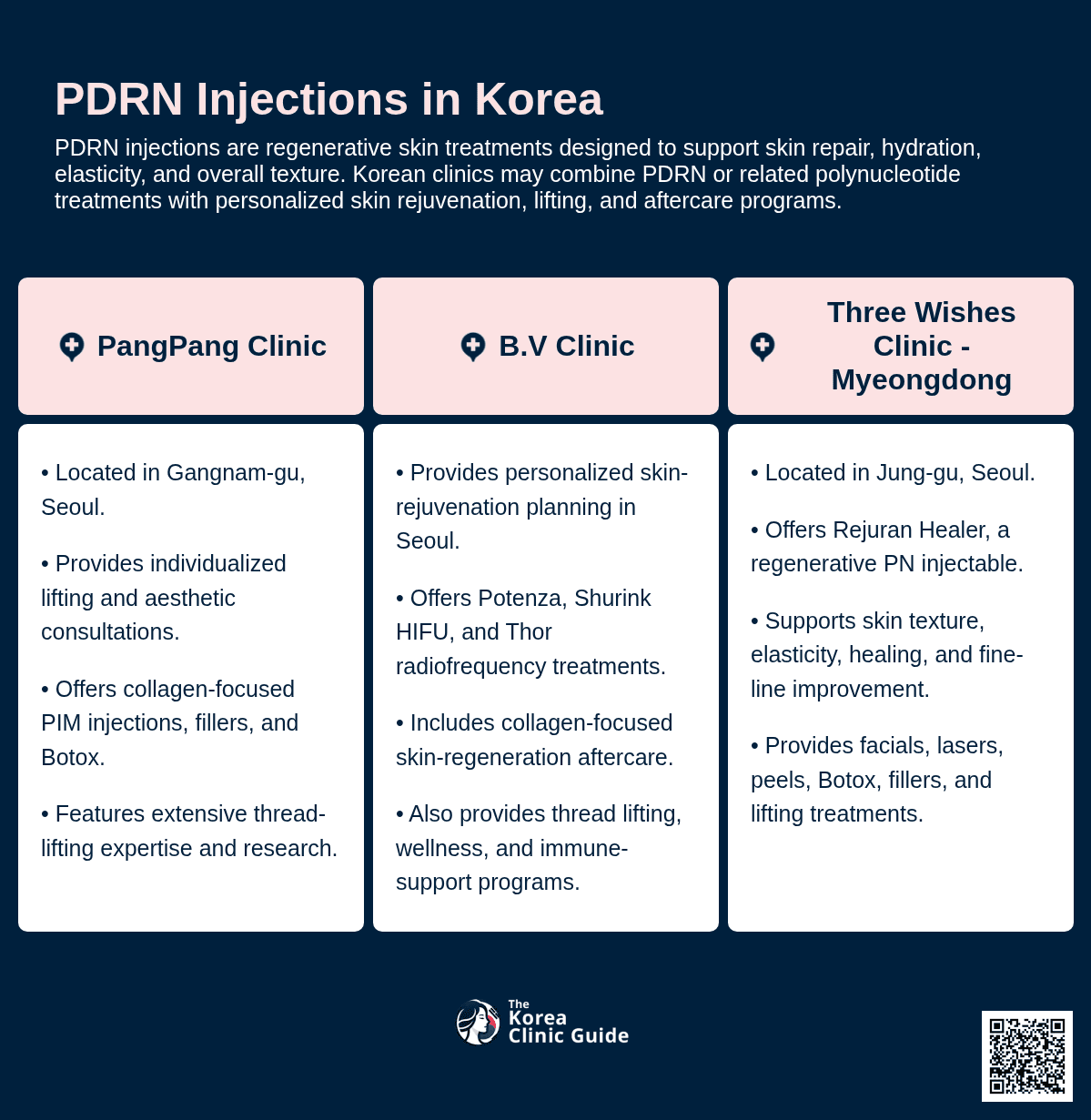
If you are exploring a PDRN injection alongside lifting-focused aesthetic care, PangPang Clinic may be worth considering for its individualized consultation and extensive focus on collagen-oriented, minimally invasive facial treatments; however, the provided information does not specifically confirm PDRN injections.
- URL: PangPang Clinic Website
- Location: Gangnam-gu, Seoul
- Personalized planning:
- Your treatment plan can be discussed through the clinic’s Thread Lifting Consultation Center, which emphasizes listening to your concerns and tailoring care.
- The clinic uses pre-operative design and ultrasonic visual checks for its thread-lifting planning.
- Related injectable and lifting options:
- PIM Injection combines Ultra Cell, thread-lifting components, and Botox and is described as addressing fine wrinkles, elasticity, complexion, facial volume, and collagen stimulation.
- Customized filler and Botox treatments are also described for wrinkle prevention and facial contour concerns.
- Thread lifting is offered with 31 specialized functional threads, including lifting, assist, tightening, and volume threads.
- Research focus:
- The clinic reports a dedicated Thread Lifting Research Institute and ongoing research based on clinical data.
- Its medical team participates in international beauty conferences through invited lectures and presentations.
2. B.V Clinic
For a PDRN injection, B.V Clinic’s supplied information supports a personalized skin-rejuvenation setting with skin-tightening, collagen-focused, and aftercare options, though it does not specifically list PDRN injections. You can expect treatment planning tailored to your aesthetic goals and access to regenerative skin-management support after eligible procedures.
- URL: B.V Clinic Website
- Location: Seoul
- Skin rejuvenation options:
- Potenza radiofrequency is tailored to individual skin needs and is described as improving collagen, elasticity, scars, and pore texture.
- Shurink HIFU targets deeper skin layers for tightening, elasticity, and contour refinement.
- Thor radiofrequency treatment is offered for skin tightening and body contouring.
- Aftercare:
- The aftercare program includes skin-regeneration management intended to help minimize swelling and support elasticity.
- Aftercare may include nutritional skincare products and ultrasound-based treatments intended to support collagen.
- Other services:
- Thread-lifting options include 3D thread lifting, full-face lifting, and non-surgical forehead wrinkle restoration.
- An all-in-one wellness program includes detox injections, vitamin drips, and immune-support treatments.
3. Three Wishes Clinic - Myeongdong
You may consider Three Wishes Clinic - Myeongdong for a regenerative injectable consultation because it specifically offers Rejuran Healer, a polynucleotide (PN) injection intended to support skin regeneration, texture, elasticity, and fine-line improvement; the provided information does not confirm whether PDRN injections themselves are available.
- URL: Three Wishes Clinic - Myeongdong Website
- Location: Jung-gu, Seoul
- Regenerative injectable option:
- Rejuran Healer uses PN technology and is described as stimulating skin regeneration and healing.
- The treatment is presented for improving skin texture and elasticity and reducing fine lines.
- Complementary skin care:
- Customized skin-care treatments can include cleansing, hydration, and maintenance facials based on your individual concerns.
- CO2 laser treatment is offered for wrinkles, acne scars, and overall texture, while facial peels address uneven tone, fine lines, sun damage, and mild scars.
- Other aesthetic treatments:
- Available petite procedures include Botox, dermal fillers, fat-dissolving injections, and thread lifting.
- Shurink ultrasound lifting is offered as a non-needle option for skin elasticity and sagging concerns.
How Can I Prepare for a PDRN Injection?
- Disclose medicines early — Report warfarin, apixaban, rivaroxaban, clopidogrel, aspirin, corticosteroids, isotretinoin, immune-suppressing medicines, and all other prescriptions. Obtain instructions from the prescriber and injector; do not stop prescribed anticoagulant or antiplatelet medicine independently.
- List bruising-related supplements — Tell the clinic about fish oil, vitamin E, ginkgo, garlic, ginseng, turmeric, and curcumin. The clinician decides whether any pause is appropriate based on the supplement, medical history, and bleeding risk.
- Report recent facial treatment — Give dates for retinoids, exfoliating acids, benzoyl peroxide, peels, laser treatment, microneedling, RF microneedling, surgery, and prior injectables. The required interval depends on skin inflammation and healing, not a universal calendar rule.
- Arrive with calm skin — Postpone treatment for sunburn, active infection, cold sores, inflamed acne, eczema or dermatitis flare, open wounds, or an unexplained lesion in the planned area.
- Food and alcohol — Fasting is unnecessary for topical anesthetic alone. Follow fasting directions if sedation or another procedure is scheduled, and avoid alcohol for 24 hours before treatment if the clinic instructs this to reduce flushing and bruising concerns.
- Plan visible downtime — Schedule treatment at least 1–2 days before departure and avoid important events for up to two weeks if bruising would be disruptive, particularly around the eyes.
- Keep travel flexible — Choose accommodation with easy clinic access, avoid booking a same-day long-haul flight, and keep the following day available for review.
Travel note: Bring a written medication list, allergy history, and photographs of prior injectable product labels when available.
Confirm the treating doctor’s clinic-specific preparation requirements before travel; individualized instructions take precedence over general guidance.
Aftercare Advice
Protect the treated skin from friction, heat, and contamination while injection points close and swelling settles.
- Hands and makeup — Keep hands clean and do not rub, massage, or press the area unless the injector specifically instructs otherwise. Delay makeup until puncture sites have closed and the clinic confirms it is appropriate.
- Swelling control — Use a cool compress if needed, without placing ice directly on the skin. Expect tiny puncture marks, redness, tenderness, swelling, and raised papules for 24–72 hours; bruising can last 7–14 days.
- Heat and activity — Avoid strenuous exercise, alcohol, saunas, steam rooms, hot baths, hot yoga, swimming pools, hot tubs, and facial massage for about 24–48 hours unless the injector gives different instructions.
- Skincare and sun — Use broad-spectrum SPF 50 and physical sun protection. Wait to restart retinoids, exfoliating acids, scrubs, and other irritating products until the skin is calm and the clinician approves.
- Urgent warning signs — Contact the clinic urgently for worsening or severe pain, spreading redness or warmth, pus, fever, generalized rash, progressive swelling, breathing difficulty, vision changes, blanching, dusky discoloration, or severe pain. Trials have reported few serious treatment-related events, but small samples and limited follow-up do not eliminate injection risks.
- Result assessment — Do not judge the outcome from next-day plumpness or injection papules. Take consistent photographs and assess change after the skin settles and the planned treatment course is complete.
Follow the treating doctor’s instructions over general advice, and contact the clinic promptly when anything appears wrong.
Frequently Asked Questions
Related Blogs
Nuviju in Korea: Treatment Process, Recovery, Safety, and Travel Planning
Nuviju is a prescription cholic-acid injection for adults with moderate-to-severe pinchable fat beneath the chin, delivered in a mapped series of preplatysmal-fat injections at least one month apart. The article covers candidacy screening, Korea travel planning, recovery reactions and warning signs, aftercare, and alternatives such as liposuction, neck lift, and deoxycholic acid.
Updated: Oct 13, 2026
Juveacell in Korea: Types, Safety, Recovery, and Travel Planning
Juveacell is a donor-derived hADM skin booster for gradual improvement in hydration, texture, fine lines, pores, elasticity, and dermal density, with 3% and 8% formulations documented by the manufacturer. Learn about candidate screening, injection steps, recovery, aftercare, product verification, and travel planning for treatment in Korea.
Updated: Oct 13, 2026
PRF Injection in Korea: Uses, Evidence, Recovery, and Travel Planning
PRF injections use a patient’s processed blood for facial skin or scalp treatment, typically through a series of superficial injections with short-term redness, swelling, or bruising. International patients should plan 2–3 days in Korea, arrange next-day and remote follow-up, verify the clinic’s processing protocol, and obtain English treatment records and emergency contact details.
Updated: Oct 13, 2026
Milia Under Eyes Treatment: Milia Removal Procedures in Korea for Clearer, Smoother Skin
Discover how Korea leads in safe, effective Milia removal techniques such as manual extraction, electrosurgery, and laser ablation. This blog explores the benefits of choosing Korea for milia treatment, offering advanced technology, skilled dermatologists, and affordable pricing. Perfect for medical tourists seeking quick, professional solutions to benign keratin cysts beneath the eyes and on the
Updated: Oct 12, 2026
Clinics offering PDRN Injection

Made Young Plastic Surgery: Rejuvenating Aesthetic Excellence in Korea for Face Lifts, Contouring and More
Gangnam Station

Three Wishes Clinic - Myeongdong, Korea: Advanced Botox, Fillers, Laser, and Skin Treatments for Confidence and Care
Myeongdong

PangPang Clinic: Korea's Premier Thread Lifting and Skin Rejuvenation Specialist in Gangnam, Seoul
Sinsa

Seojin Plastic Surgery Clinic Korea: Pioneering Advanced Cosmetic Procedures for Personalized Aesthetic Transformation
Apgujeong