
Medical Tourism Blog
Double Eyelid Surgery in Korea: Methods, Recovery, Risks and Travel Planning

Table of contents
- Double Eyelid Surgery at a Glance
- What Is Double Eyelid Surgery?
- Who Is a Good Candidate for Double Eyelid Surgery?
- How Is Double Eyelid Surgery Performed?
- Why Visit Korea for Double Eyelid Surgery?
- Key Information for International Patients
- Which Are the Best Clinics in Korea for Double Eyelid Surgery?
- How Much Does Double Eyelid Surgery Cost in Korea?
- Double Eyelid Surgery From Start to Finish
- Alternatives to Double Eyelid Surgery
- How Can I Prepare for Double Eyelid Surgery?
- Aftercare Advice
Considering treatment in Korea? Everything you need to know e.g. — how to avoid scams, visas, interpreters, recovery tips — in our Medical Tourism Master Guide. Plan with confidence in minutes, not weeks!
Last updated: August 2026
Double Eyelid Surgery at a Glance
- What it does — Double eyelid surgery creates or refines an upper-eyelid supratarsal crease by attaching skin to deeper lid-opening structures; it changes eyelid contour, not the actual size of the eyes.
- Typical cost — In Korea, listed prices are ₩1,700,000–₩3,000,000 (about US$1,200–$2,100); full-incision work, skin or fat adjustment, ptosis repair, and canthal procedures can increase the quote.
- Method depends on anatomy — Buried-suture techniques generally suit thinner lids with little excess skin or fat, while thicker lids, skin redundancy, or larger contour changes often require a partial- or full-incision approach.
- Recovery timeline — Swelling and bruising are usually most noticeable during days 1–3 and often improve enough for social activity by days 7–14, but the crease and scar continue settling for several months.
- Travel planning — Plan at least 7–10 days in Korea for an early review and possible suture removal around days 5–7; allow 10–14 days more cautiously for long-haul travel after combined or revision surgery.
- Key risks — Dry eye, asymmetry, visible scarring, crease loss or an undesired crease shape, infection, bleeding, and incomplete eye closure are possible; reduced vision, severe pain, or rapidly increasing one-sided swelling need urgent local eye care.
- Korea-specific check — Korea’s Medical Korea system allows visitors to verify registered foreign-patient facilities, which must carry malpractice liability insurance; registration or accreditation supports service checks but does not prove superior cosmetic outcomes.
What Is Double Eyelid Surgery?
Double eyelid surgery is an operation that creates, defines, or refines a natural-looking crease in the upper eyelid. It addresses a faint or absent crease, asymmetry, or selected upper-lid contour concerns while aiming for eyelids that fit the person’s facial features and goals. It is a surgical procedure, performed with sutures alone or through small or full incisions depending on the eyelids.
Who Is a Good Candidate for Double Eyelid Surgery?
- Crease goals — Good candidates want to create, define, or refine a supratarsal crease and understand that the operation changes upper-eyelid contour rather than making the eyes objectively larger.
- Suitable anatomy — A faint or absent crease, crease asymmetry, selected upper-lid fullness, and some cases of hooding can be addressed after an in-person assessment of skin, fat, brow position, epicanthal fold, and lid-opening strength.
- Informed adults — Candidates should be adults in generally good health, able to consent freely, and prepared for residual natural asymmetry and a months-long settling period.
- Realistic method choice — Thin lids with little excess skin or fat can suit a buried-suture approach; thicker tissue, substantial skin excess, or a need for contour adjustment often favors an incision-based operation.
Do not proceed with active eye, eyelid, skin, or systemic infection; uncontrolled dry-eye or ocular-surface disease; inability to close the eyes fully; or uncontrolled diabetes, hypertension, or bleeding risk. Anticoagulants and antiplatelet drugs, including warfarin, apixaban, rivaroxaban, clopidogrel, and aspirin, require a plan agreed by the prescribing clinician and surgeon—never stop them independently. Pregnancy, active nicotine use, untreated body-image or psychiatric concerns, and external pressure to have cosmetic surgery are common reasons to defer elective treatment. A low eyelid margin can indicate ptosis, while brow descent, true skin excess, and dry eye need separate assessment; a crease operation does not reliably correct them.
How Is Double Eyelid Surgery Performed?
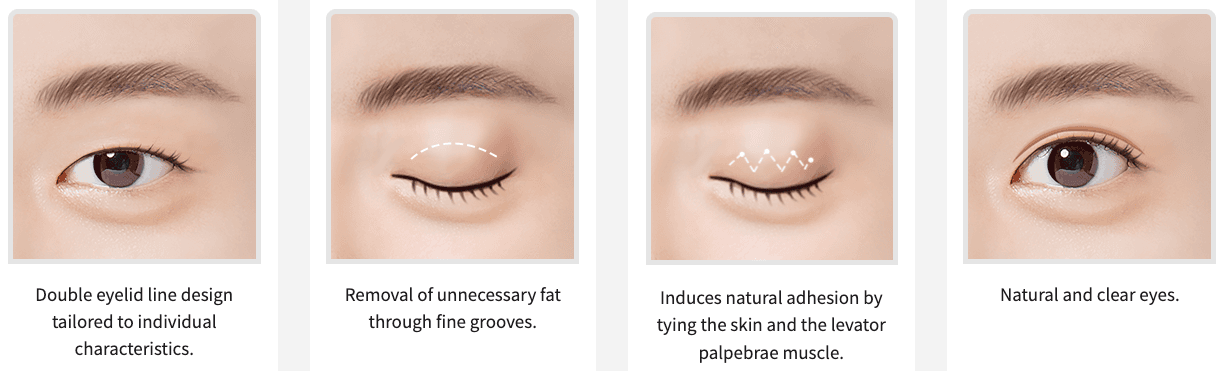
The method should follow eyelid anatomy and the planned crease, not a promise of a scarless or permanent result. All approaches create an attachment between upper-lid skin and deeper eyelid-opening structures.
- Non-incisional (buried-suture) method — Sutures pass through small punctures without a long external incision. This is generally suited to relatively thin lids with limited skin excess and fat, and has a shorter early recovery. Crease weakening or loss, suture irritation or extrusion, dimpling, and asymmetry can require revision.
- Partial- or small-incision method — Short incisions permit limited tissue adjustment and crease fixation when a suture-only method is unsuitable but a full incision is not clearly required. A systematic review of 13 studies involving 4,177 patients found substantial variation in incision patterns, tissue removal, and fixation, so reported outcomes cannot be treated as universal rates.
- Full-incision method — An incision along the planned crease gives direct access to selected skin, orbicularis muscle, and preaponeurotic fat before fixation. It is often considered for thicker lids, skin redundancy, or more extensive contour change, with a visible incision scar and commonly more pronounced early swelling.
- Combined procedures — Ptosis correction, epicanthoplasty, fat removal, canthoplasty, or skin excision are separate operations, not routine additions. Ptosis repair addresses lid opening and has distinct risks of under- or over-correction and dry-eye or closure problems.
Why Visit Korea for Double Eyelid Surgery?
Korea has formal systems for institutions that serve foreign patients, which can help international visitors check a facility before booking. Those systems support service and safety due diligence; they do not establish that a particular surgeon, technique, or clinic produces better cosmetic outcomes than providers elsewhere. There is no robust comparative evidence that double-eyelid surgery in Korea has superior safety, satisfaction, revision, or long-term crease retention.
- Foreign-patient registration — Medical Korea states that registered institutions attracting foreign patients must maintain medical-malpractice liability insurance. Use its registered-institution system to verify the exact legal facility rather than relying on a marketing name.
- International-patient accreditation — Medical Korea's accreditation framework evaluates interpretation, patient rights and dispute prevention, safety, medical care, medication management, infection control, and facilities. Accreditation is useful service information, not proof of superior aesthetic results.
- Anatomy-led planning — Korean consultation terminology commonly distinguishes buried-suture, partial-incision, and incisional crease creation, as well as adjunct ptosis and epicanthal procedures. Ask the surgeon to explain why the proposed crease height, curvature, and method fit the epicanthal fold, brow position, lid thickness, fat, and opening function.
- Evidence limits — Small-incision research is heterogeneous in design and outcome reporting; the available systematic review found major technique variation across studies. Avoid claims that any method is universally permanent, scarless, safest, or best.
Key Information for International Patients
- Minimum stay — Remain in Korea for at least 7–10 days for early review and, when external sutures are used, removal commonly around days 5–7. Plan 10–14 days more cautiously before a long-haul flight when surgery includes ptosis repair, epicanthoplasty, canthoplasty, fat removal, or revision work.
- Flight clearance — Do not book departure based only on a calendar date. Fly only after the operating surgeon confirms stable vision, no bleeding, infection, or ocular-surface concern, and completion of planned suture removal where applicable.
- Early itinerary impact — Expect swelling, bruising, tearing, dryness, tightness, light sensitivity, and intermittent blurred vision during days 1–3. Social activity is often easier after days 7–14, although the crease can still look high, puffy, deep, or uneven.
- Activity limits — Avoid strenuous exercise, heavy lifting, bending, straining, swimming, hot tubs, alcohol, and eye rubbing until cleared. Combined surgery lengthens recovery and can delay return to normal activities.
- Local support — Arrange an escort after sedation and preferably an adult companion for the first night. Stay close enough to attend the early wound check.
- Remote follow-up — Before leaving, obtain an English operative note, medication list, written wound-care instructions, an emergency contact, and a photo or video follow-up plan. Identify an ophthalmology clinician at home in case urgent care is needed.
Travel note: Seek urgent local ophthalmic or emergency care—not an overseas teleconsultation—for reduced vision, severe pain, rapidly increasing one-sided swelling, substantial bleeding, or inability to close the eye.
Which Are the Best Clinics in Korea for Double Eyelid Surgery?
Listed below are some of the best clinics in Korea for double eyelid surgery.
1. THEPLUS Plastic Surgery
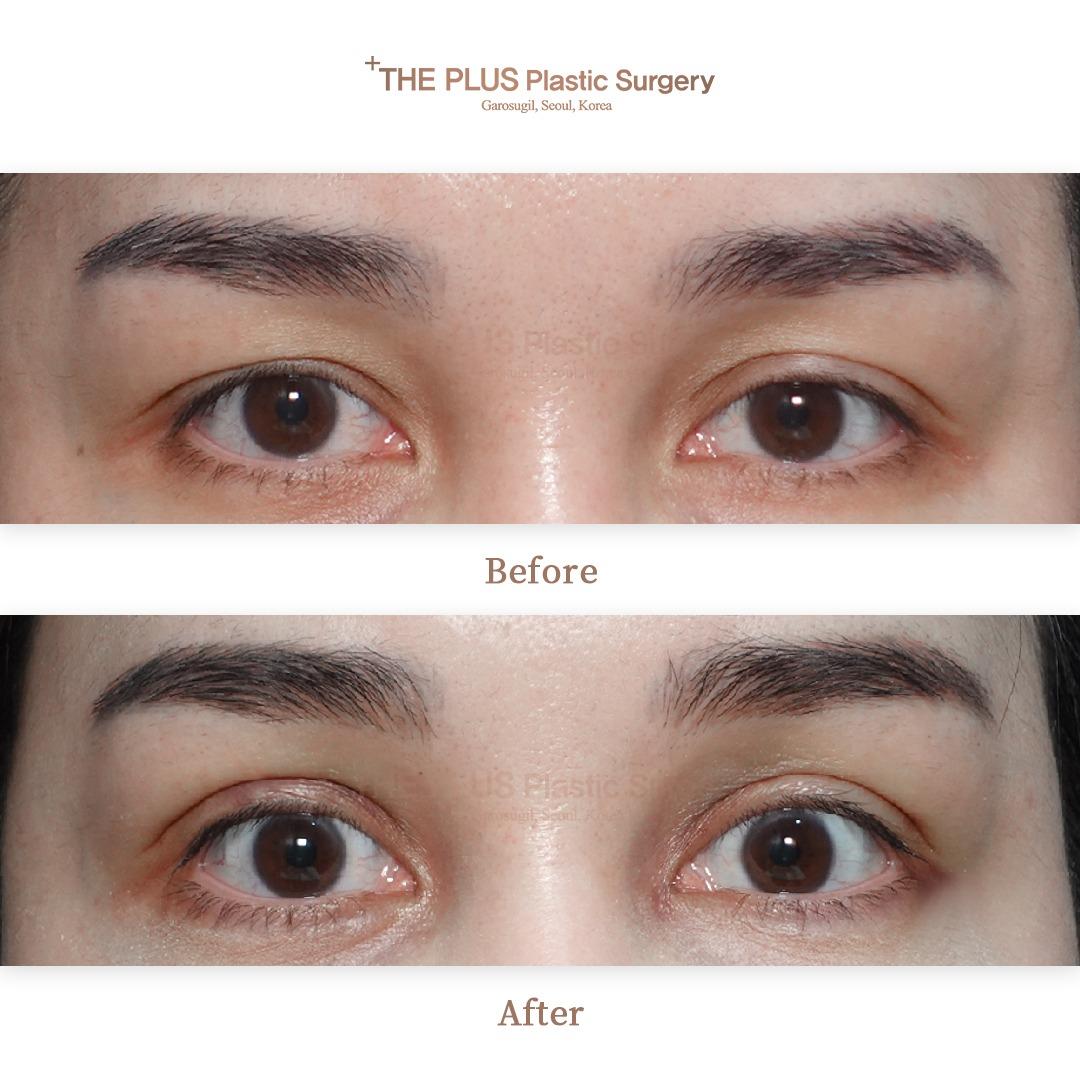
You may consider THEPLUS Plastic Surgery for double eyelid surgery if you want an eyelid crease designed to look defined yet harmonious with your existing facial features. The clinic offers double eyelid surgery alongside ptosis correction and blepharoplasty, allowing your plan to account for crease formation as well as heaviness, drooping, or excess eyelid tissue when relevant.
- URL: THEPLUS Plastic Surgery Website
- Location: Gangnam-gu, Seoul
- Eye procedure options:
- Double eyelid surgery is intended to create a defined upper-eyelid crease and a more open eye shape while matching your facial features.
- Ptosis correction addresses drooping upper eyelids by correcting the muscles that open the eyes.
- Blepharoplasty adjusts excess skin and tissue around the eyelids for a smoother eye-area contour.
- Surgical perspective:
- The clinic describes its approach as personalized aesthetic care with attention to safety, research, and specialized surgical expertise.
- Its surgeons include board-certified plastic surgeons with professional society involvement; the clinic also emphasizes facial balance and natural-looking enhancement.
2. Made Young Plastic Surgery
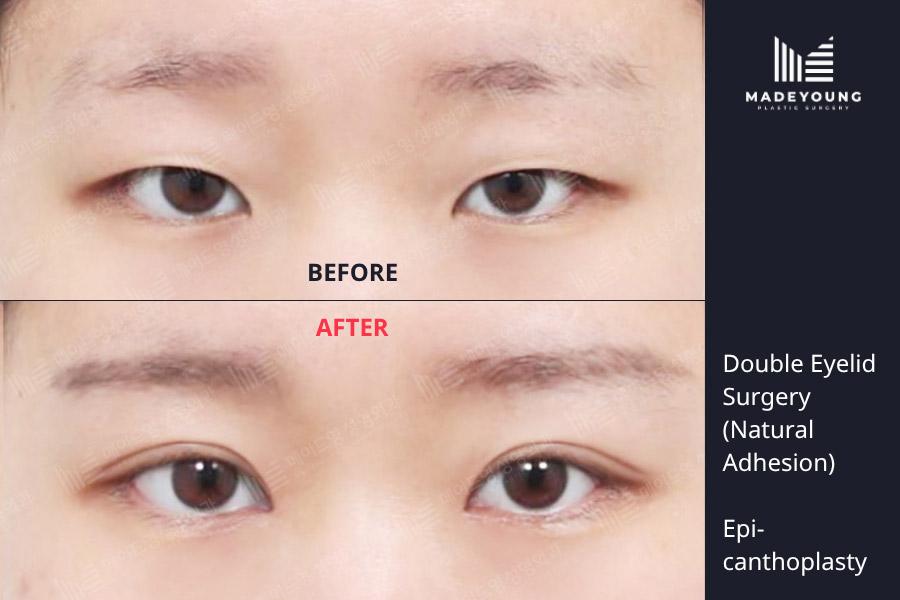
You can expect a customized double eyelid plan at Made Young Plastic Surgery, with Dr. Park Byung-Chan drawing on 15 years focused exclusively on eye surgery. Your consultation can address incision lines, crease height, eyelid thickness, and the overall eye image, with the stated aim of producing a natural-looking shape suited to you.
- URL: Made Young Plastic Surgery Website
- Location: Seocho-gu, Seoul
- Double eyelid approaches:
- Non-incisional double eyelid surgery uses sutures to create a crease without cutting.
- Incisional double eyelid surgery creates a more permanent crease and can allow tissue removal or rearrangement when needed.
- Related eye procedures include ptosis correction, upper and lower blepharoplasty, canthoplasty, and dark-circle treatments.
- Safety and aftercare:
- Full-time board-certified anesthesiologists are on site.
- The clinic describes one-to-one anesthesiologist monitoring, emergency cross-check procedures, and CCTV coverage of procedures.
- A dedicated aftercare center provides systematic post-procedure care.
3. RINE Plastic Surgery Clinic
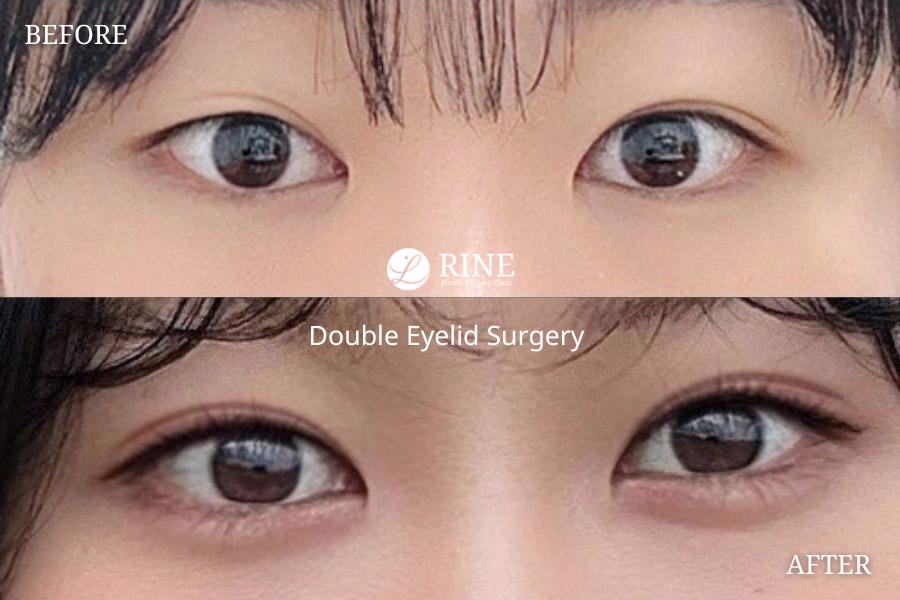
You may consider RINE Plastic Surgery Clinic for double eyelid surgery if you value continuity with one board-certified plastic surgeon, Director Jang Nam, who personally manages your consultation, customized line design, surgery, and recovery. With more than 10,000 eye surgeries performed by the director, RINE focuses on designing natural eye lines around your facial proportions, skin condition, and individual features.
- URL: RINE Plastic Surgery Clinic Website
- Location: Seocho-gu, Seoul
- Double eyelid planning:
- Non-incisional double eyelid surgery uses a suture-based technique to form a natural crease without incisions; the clinic notes it may suit thinner eyelids with adequate muscle tone.
- Your line design is individualized through a one-to-one consultation rather than a one-size-fits-all plan.
- Ptosis correction can be combined with double eyelid surgery when droopy eyelids limit iris exposure.
- Canthoplasty is available to adjust the outer eye corner and eye proportion.
- Revision and rejuvenation options:
- Double eyelid revision is available for concerns such as a thick or faded crease, asymmetry, multiple folds, or scarring, with incisional or non-incisional approaches selected by case.
- Upper blepharoplasty, lower blepharoplasty with lifting, subbrow lift, and under-eye fat repositioning address age-related heaviness, eye bags, hollows, or skin laxity.
- Care environment:
- The clinic describes continuous postoperative care through recovery and follow-up.
- Its stated facilities include a full-HD endoscope, FDA-approved Endotine, WhiteLite bipolar equipment, and private one-person recovery rooms.
- The clinic reports infection-control measures, surgical safety protocols, and emergency preparedness.
How Much Does Double Eyelid Surgery Cost in Korea?
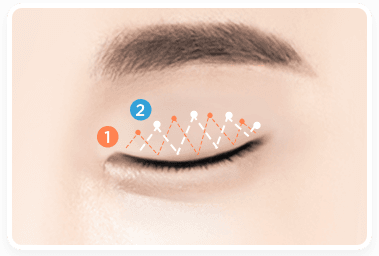
Double Eyelid Surgery is listed at ₩1,700,000–₩3,000,000 (approximately US$1,200–$2,100). Individual quotes vary because the operative method and any anatomy-driven additional eyelid procedures require different operating time, tissue work, anesthesia planning, and follow-up.
| Procedure Price | Korean Won (₩) | USD ($) |
|---|---|---|
| Low Price | ₩1,700,000 | $1,200 |
| High Price | ₩3,000,000 | $2,100 |
Exchange rate as of 2026-08-05: 1 KRW = 0.000700 USD.
What Affects the Price?
- Non-incisional, partial-incision, or full-incision technique — A non-incisional buried-suture procedure uses small punctures and suture fixation, while a partial-incision or full-incision procedure requires progressively more direct tissue access. Full-incision surgery can involve adjustment of skin, orbicularis muscle, and preaponeurotic fat, increasing operative work, consumables, and early wound-care requirements.
- Skin and fat adjustment — Substantial skin redundancy, thick eyelid tissue, or excess fat can require skin excision or fat adjustment rather than crease fixation alone. These tissue-handling steps make the operation more extensive and can require external sutures and a scheduled removal visit.
- Combined ptosis repair — Ptosis repair is an eyelid-opening operation, not simply crease creation. Combining it with double-eyelid surgery adds lid-function assessment, levator-related surgical work, operative time, and closer follow-up for under- or over-correction and eyelid closure.
- Combined canthal procedure — Adding epicanthoplasty or canthoplasty changes the inner- or outer-corner contour in addition to the upper-lid crease. Each adds a separate operative area, scar and eyelid-position considerations, operating time, and recovery monitoring.
Cost tip: Request an itemized quote that states what is included, particularly the selected eyelid method, anesthesia or sedation arrangement, facility use, consumables, and scheduled postoperative reviews.
The USD figures are approximate conversions using the exchange rate dated 2026-08-05; check the exchange rate again when budgeting.
Double Eyelid Surgery From Start to Finish
- Remote enquiry and screening — Request an English or interpreter-supported video consultation where available. Submit standardized makeup-free photographs only through the clinic's secure channel if requested, and disclose prior eyelid surgery, eye disease, dry-eye symptoms, allergies, medicines, supplements, and nicotine exposure. Photos cannot replace an examination.
- In-person consultation and crease design — The surgeon examines both lids, brow position, skin excess, orbital fat, epicanthal fold, lid opening, eye symmetry, tear symptoms, and eyelid closure. Confirm the planned crease height and shape, whether ptosis is present, whether tissue will be removed, and who will perform each operative step.
- Health review, testing, and consent — Expect vital signs, a health questionnaire, and medication reconciliation. Eye assessment, laboratory tests, or medical clearance are selected according to medical history, anesthesia plan, visual symptoms, and surgical complexity. Consent should address asymmetry, scar, dry eye, crease loss, revision, bleeding, and the rare vision-threatening orbital emergency.
- Surgery and anesthesia — Double-eyelid surgery is usually an outpatient procedure under local anesthesia; oral or IV sedation is used in some facilities and plans. The surgeon uses a buried-suture, partial-incision, or full-incision technique to create the crease. Combined ptosis or canthal work adds operative complexity and recovery demands.
- Discharge on the day of surgery — Leave with an escort after sedation and do not drive. Start only the prescribed or approved ointment, drops, antibiotics, and pain medication; use cold compresses and elevate the head as instructed.
- Early Korea-based review — Attend the arranged wound check. External sutures after an incisional procedure are commonly removed around days 5–7, but the operating team's schedule takes precedence.
- Healing and return travel — Bruising and prominent swelling often improve through days 7–14, while crease and scar maturation take several months. Obtain the surgeon's flight clearance after examination rather than assuming that apparent comfort is sufficient.
- Overseas follow-up — Send requested photographs or attend video review with the operating team. Arrange urgent in-person care locally for warning signs rather than waiting for remote advice.
Alternatives to Double Eyelid Surgery
The right alternative depends on the dominant problem. Non-surgical styling gives a temporary crease effect but does not correct eyelid anatomy; surgical alternatives can address lid opening, excess skin, or brow descent but do not necessarily create the same crease.
Ptosis Correction
Ptosis correction is considered when the eyelid margin sits low because the lid-opening mechanism is weak.
- Best for — Low lid margin, reduced lid opening, or a tired appearance caused by ptosis rather than a missing crease.
- Tradeoff — It can be performed with or without crease creation, but carries specific risks of under- or over-correction, asymmetry, dry eye, and incomplete closure.
Upper Blepharoplasty
Upper blepharoplasty removes or repositions selected excess upper-lid skin and fat.
- Best for — Dermatochalasis or skin/fat fullness that is the primary cause of upper-lid crowding.
- Tradeoff — It can improve hooding but does not automatically create the desired supratarsal crease.
Subbrow Lift or Eyebrow Lift
A subbrow lift or eyebrow lift targets brow descent and upper-lid crowding from above the eyelid.
- Best for — Low brow position or lateral hooding where removing eyelid skin alone would not address the cause.
- Tradeoff — These operations alter brow and upper-lid framing, not the fundamental crease-creation effect.
Epicanthoplasty or Canthoplasty
Epicanthoplasty changes the inner-corner fold, while canthoplasty changes outer-corner contour.
- Best for — A specific inner- or outer-corner contour goal alongside a carefully considered eyelid plan.
- Tradeoff — Neither procedure creates the upper-lid crease itself, and each adds scar and eyelid-position risks.
How Can I Prepare for Double Eyelid Surgery?
- Medicines and supplements — Give the surgeon a complete list of prescription drugs, over-the-counter medicines, vitamins, herbs, and weight-loss or performance products well before travel. Aspirin, anti-inflammatory drugs, some supplements, and anticoagulants can affect bleeding and bruising; changes require agreement between the surgeon and prescribing clinician.
- Nicotine and substances — Stop smoking, vaping, nicotine pouches, and nicotine-replacement products for the surgeon's specified pre- and postoperative interval. Disclose cannabis and alcohol use, and avoid alcohol around surgery and while taking sedating or interacting medication.
- Fasting — Follow the clinic's exact fasting instructions. Requirements differ for local anesthesia alone versus oral, IV, or general anesthesia.
- Eye-area preparation — Arrive with clean eyelids, no eye makeup, lash extensions, or contact lenses unless the team explicitly permits them. Avoid sunburn around the eyes before surgery.
- Medical disclosure — Report dry eye, eye disease, prior eye or eyelid surgery, vision symptoms, incomplete eye closure, allergies, diabetes, hypertension, bleeding history, and any history of difficult anesthesia.
- Accommodation and transport — Stay near the clinic through the first review and suture-removal appointment if applicable. Arrange an escort after surgery and ideally a companion for the first night; pack sunglasses, cold-compress supplies, and extra pillows for head elevation.
- Flight flexibility — Book changeable travel where possible. Combined ptosis, canthal, or revision surgery requires more cautious recovery planning than an uncomplicated crease procedure.
Travel note: Bring surgeon-approved lubricating drops for the flight if prescribed, plus copies of the operative note, medications, and emergency contact details.
Confirm the treating doctor's clinic-specific medication, fasting, nicotine, and travel requirements; individualized instructions take precedence over general guidance.
Aftercare Advice
Protecting the healing eyelids and recognizing visual warning signs promptly are more important than judging the cosmetic result in the first weeks.
- Cold compresses and head elevation — Use cold compresses during the first 48 hours as directed and sleep with the head elevated to reduce swelling. Do not place pressure directly on the eyes.
- Eye and incision care — Use only surgeon-approved ophthalmic drops, ointment, antibiotics, and pain relief. Keep incisions as instructed; do not apply unapproved creams, scar products, lash products, or eye makeup to healing wounds.
- Activity and contact — Avoid eye rubbing, contact lenses, swimming, hot tubs, heavy lifting, vigorous exercise, bending, straining, alcohol, and other blood-pressure-raising activities until cleared. Gentle walking is generally appropriate; use glasses during early recovery.
- Sun protection — Once the incisions are closed, protect scars with shade, sunglasses, and surgeon-approved SPF 50 sun protection where suitable for the healing area.
- Warning signs — Seek urgent emergency or ophthalmic care for severe or worsening pain, reduced vision or a new visual-field change, rapidly expanding one-sided swelling, uncontrolled bleeding, fever, pus-like drainage, increasing redness, inability to close the eye, or severe persistent dryness. A review of double-eyelid complications describes hematoma, infection, dry eye, abnormal crease appearance, ptosis-related problems, and rare serious orbital complications.
- Result timing and follow-up — Bruising and major swelling often improve by days 7–14, but the crease can remain high or uneven for weeks. Scar and crease maturation take several months; do not rush elective revision while normal healing is evolving unless the surgeon identifies a time-sensitive problem.
Follow the treating doctor's instructions over general advice and contact the clinic promptly when anything appears wrong.
Frequently Asked Questions
Related Blogs
Rejuvenate Sagging Eyelids with Canthoplasty, Laser Canthoplasty & Eye Thread Lift in Korea
Considering eyelid sagging (ptosis) can affect your vision and appearance, Korea offers advanced treatments like traditional and laser canthoplasty. These procedures reshape the outer eye corners and lower eyelids, creating a youthful, almond-shaped look while improving eyelid support. Renowned Korean clinics utilize cutting-edge technology and expert surgeons to ensure safe, effective results. Th
Updated: Sep 30, 2026
Effective Ptosis Correction in Korea: Solutions for Post-Eye Surgery Ptosis
Discover how Korea leads in efficient, advanced ptosis correction procedures—such as external levator advancement, Müller's muscle resection, and frontalis sling fixation—for drooping eyelids caused by eye surgery. This comprehensive guide highlights Korea’s top surgeons, affordable costs, and seamless process for international patients seeking both functional and cosmetic improvements. Learn abou
Updated: Sep 30, 2026
Say Goodbye to Worry Lines with Eyebrow Lift Procedures in Korea
Discover how Korea leads in facial rejuvenation with advanced eyebrow lift procedures targeting "worry lines" and glabellar lines. This blog explores surgical options like endoscopic, coronal, and temporal brow lifts, along with non-surgical treatments such as Botox and PDO thread lifts. Perfect for medical tourists seeking affordable, high-quality care, Korea’s expertise ensures natural, long-las
Updated: Sep 30, 2026
Effective Congenital Ptosis Treatment in Korea: Ptosis Correction Procedures for Restoring Vision
Discover expert ptosis correction in Korea, where advanced surgical options—such as levator resection, Müller's muscle-conjunctival resection (MMCR), and frontalis sling fixation—tackle congenital ptosis effectively. Explore how Korea’s top surgeons and state-of-the-art technology provide safe, affordable solutions to lift droopy eyelids, restore vision, and enhance confidence. Ideal for internati
Updated: Sep 30, 2026
Clinics offering Double Eyelid Surgery

RINE Plastic Surgery Clinic | Facelift and Eye Rejuvenation Surgery
Nonhyeon

SH Clinic: Comprehensive Women's, Men's & Couples' Health Services in Korea
Sinsa

THEPLUS Plastic Surgery Korea | Eye, Nose, Face & Body Surgery
Sinsa

Made Young Plastic Surgery: Rejuvenating Aesthetic Excellence in Korea for Face Lifts, Contouring and More
Gangnam Station