
Medical Tourism Blog
V Line Surgery in Korea: Methods, Recovery, Risks and Travel Planning

Table of contents
- V Line Surgery at a Glance
- What Is V-Line Surgery?
- Who Is a Good Candidate for V-Line Surgery?
- How Is V-Line Surgery Performed?
- Why Visit Korea for V-Line Surgery?
- Key Information for International Patients
- Which Are the Best Clinics in Korea for V Line Surgery?
- How Much Does V-Line Surgery Cost in Korea?
- V Line Surgery From Start to Finish
- Alternatives to V-Line Surgery
- How Can I Prepare for V-Line Surgery?
- Aftercare Advice
Considering treatment in Korea? Everything you need to know e.g. — how to avoid scams, visas, interpreters, recovery tips — in our Medical Tourism Master Guide. Plan with confidence in minutes, not weeks!
Last updated: September 2026
V Line Surgery at a Glance
- What it is — V-line surgery is irreversible lower-face bone contouring, usually reducing the mandibular angle and jawline; it may also include a chin osteotomy (reduction genioplasty) with plates and screws to narrow or shorten the chin.
- Korea cost — In Korea, quoted pricing is ₩9,900,000–₩15,500,000 (about US$7,300–$11,500), with higher costs when long-curve jaw reduction, lateral cortical shaving, genioplasty, or additional cheekbone work is included.
- Best candidates — Suitable candidates are skeletally mature adults with stable bite alignment whose broad or square lower face is primarily caused by mandibular bone, not masseter muscle, fat, loose skin, or a jaw-position problem.
- Recovery and results — Expect marked swelling, limited mouth opening, and a liquid-to-soft/no-chew diet for the first 1–2 weeks; bone contour is more meaningfully assessed at 3–6 months, while soft-tissue settling may continue for 6–12 months.
- Travel requirement — International patients should remain in Korea at least 10–14 days after surgery, with a 2–3 week stay providing more margin for wound, nutrition, sensation, imaging, and fitness-to-fly reviews.
- Key limitation and risk — V-line reduction changes contour but does not correct malocclusion, chewing dysfunction, or jaw-position discrepancies; in a retrospective Korean 588-patient series, sensory deficits occurred in 6.46% and infection in 3.23%, though these figures are not a personal risk prediction.
- Korea distinction — Korea has substantial facial-contouring experience and commonly uses CT or cone-beam CT planning to map tooth roots, the inferior alveolar nerve canal, and chin proportions, but local experience does not establish that every clinic or branded V-line technique is superior.
What Is V-Line Surgery?
V-line surgery is an elective operation that reshapes the lower jaw and sometimes the chin to create a narrower, more tapered facial outline. It addresses a broad or square lower face caused mainly by prominent jawbone and can soften angular jawline proportions. It is invasive surgical bone contouring, usually performed under general anesthesia.
Who Is a Good Candidate for V-Line Surgery?

- Skeletally mature adults — Good candidates have completed facial skeletal growth, stable dental occlusion, and a lower face made broad or angular primarily by mandibular bone rather than fat, muscle, or loose skin.
- Specific contour goals — Suitable goals include reducing a prominent mandibular angle, softening a square jawline, or narrowing a disproportionately wide or long chin through reduction genioplasty.
- Medically fit surgical candidates — Candidates need acceptable general-anesthesia and clot-risk assessments, the ability to maintain a liquid/soft diet, and practical support during early recovery.
- Informed decision-makers — This is irreversible bone removal. Good candidates understand the limits of contouring and accept the possibility of asymmetry, sensory change, or revision surgery.
Do not proceed with active dental, gum, oral, facial-skin, or systemic infection; uncontrolled illness; untreated bleeding disorder; or an unsafe anesthesia risk. Pregnancy is a reason to defer elective cosmetic surgery. Nicotine in cigarettes, vapes, pouches, or replacement products is a major wound-healing concern. A significant bite discrepancy, chewing or speech problem, progressive asymmetry, airway concern, or jaw-position issue needs orthodontic and orthognathic assessment: V-line reduction changes contour but does not correct the bite. Pre-existing jowling, thin soft tissue, TMJ symptoms, prior jaw trauma or surgery, and lower-lip or chin numbness require particularly cautious CT-based planning and counseling.
How Is V-Line Surgery Performed?
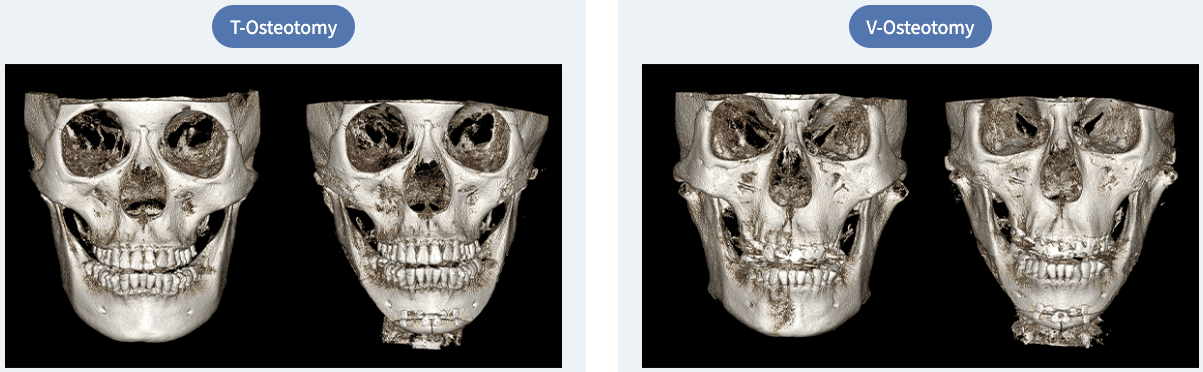
V-line surgery is a patient-facing term, not one standardized operation. It usually combines mandibular contouring with chin reshaping when the chin prevents a balanced taper; the exact plan follows examination of the bite, soft tissues, facial asymmetry, and CT or cone-beam CT imaging.
- Angle-only reduction — Mandibular angle ostectomy reduces a prominent gonial angle. It suits patients whose jaw body and chin already have appropriate width and proportion.
- Long-curve mandibular reduction — Contouring extends forward from the angle along the lower mandibular border to avoid leaving a square-looking jaw body. Over-reduction can weaken jawline definition or create an unnatural contour.
- Lateral cortical reduction — The surgeon shaves or burrs selected outer mandibular cortex when side-to-side bony thickness contributes to width. The plan must protect tooth roots and the inferior alveolar nerve canal.
- Reduction or narrowing genioplasty — A chin osteotomy, often a T-osteotomy or other segmental design, narrows, shortens, reshapes, or repositions the chin. Plates and screws usually fix the bone segment, adding osteotomy-healing and mental-nerve considerations.
- Broader facial contouring — Some practices use “V-line” for mandibular work combined with cheekbone reduction. This is a larger facial bone-contouring operation, not isolated lower-jaw surgery, and increases recovery demands.
- Virtual planning and guides — CT-based virtual surgical planning and patient-specific cutting guides can help transfer a plan to surgery. They do not eliminate asymmetry, adaptation error, or nerve injury risk.
Why Visit Korea for V-Line Surgery?

Korea has extensive visibility in facial bone-contouring surgery and an established infrastructure for overseas patients. That experience does not prove that every Korean provider, technique, or branded V-line design is safer or better than alternatives elsewhere. Verify the individual surgeon, anesthesia team, licensed facility, emergency-transfer process, and postoperative responsibility.
- Published local experience — A Korean single-surgeon series of 588 mandibuloplasty patients included angle reduction alone and combinations with genioplasty and zygoma reduction, illustrating the range of facial-contouring work performed locally. It was retrospective, single-clinic research and cannot establish national outcomes or provider superiority.
- Imaging-led planning — CT or cone-beam CT evaluation is central to planning around the inferior alveolar canal, mental foramen, tooth roots, asymmetry, and chin proportions. Ask to see how imaging changes the proposed bone-removal plan.
- International-patient infrastructure — Medical Korea, the national medical-tourism platform, provides overseas-patient information and reflects Korea’s organized international-care pathway. It does not replace direct verification of clinical credentials or continuity-of-care arrangements.
- Clear scope distinction — Local facial-contouring practice often distinguishes mandibular reduction from orthognathic bite correction. Patients with malocclusion should discuss double-jaw surgery, not assume cosmetic contouring will correct jaw function.
- Evidence limitation — The main complication dataset reported 6.46% sensory deficits and 3.23% infection, with a small number of facial palsy and transfusion events. These retrospective figures are useful for consent, but they are not a personal risk prediction or a universal benchmark.
Key Information for International Patients
- Minimum stay — Remain in Korea for at least 10–14 days after surgery and leave only with the operating surgeon’s explicit fitness-to-fly clearance. A 2–3 week stay gives more margin for swelling, nutrition, oral-wound review, imaging, and disrupted travel.
- Repeat reviews — Plan an in-person preoperative assessment and several early postoperative reviews. The surgeon should assess hydration, calorie intake, intraoral incisions, mouth opening, sensation, swelling, and any required postoperative imaging before departure.
- Flight timing and clot risk — There is no validated V-line-specific flying interval. Recent surgery plus long-distance travel requires individualized venous-thromboembolism assessment, particularly with previous clots, thrombophilia, obesity, estrogen therapy, cancer, pregnancy/postpartum status, or reduced mobility. CDC travel guidance also stresses planning for care after returning home.
- Itinerary impact — Expect pronounced swelling, restricted mouth opening, and a liquid or soft no-chew diet during the first 1–2 weeks. Do not schedule sightseeing, business meetings, alcohol-focused events, strenuous activity, sauna visits, or demanding long-haul travel during that period.
- Companion and accommodation — Arrange nearby accommodation, reliable phone access, easy access to approved high-protein liquid/soft foods, and an adult companion for the first night if the facility requires one.
- Records and remote care — Obtain the operative report, anesthesia record, discharge summary, medication list with generic names and doses, postoperative imaging, and plate/screw details when genioplasty is performed. Confirm a written remote-follow-up route and an urgent-care plan in your home country.
Travel note: Do not buy a non-changeable return ticket based only on a 10- or 14-day calendar interval. Swelling, oral intake, sensory findings, imaging, and clot risk determine fitness to fly.
Which Are the Best Clinics in Korea for V Line Surgery?
Listed below are some of the best clinics in Korea for v line surgery.
1. THEPLUS Plastic Surgery
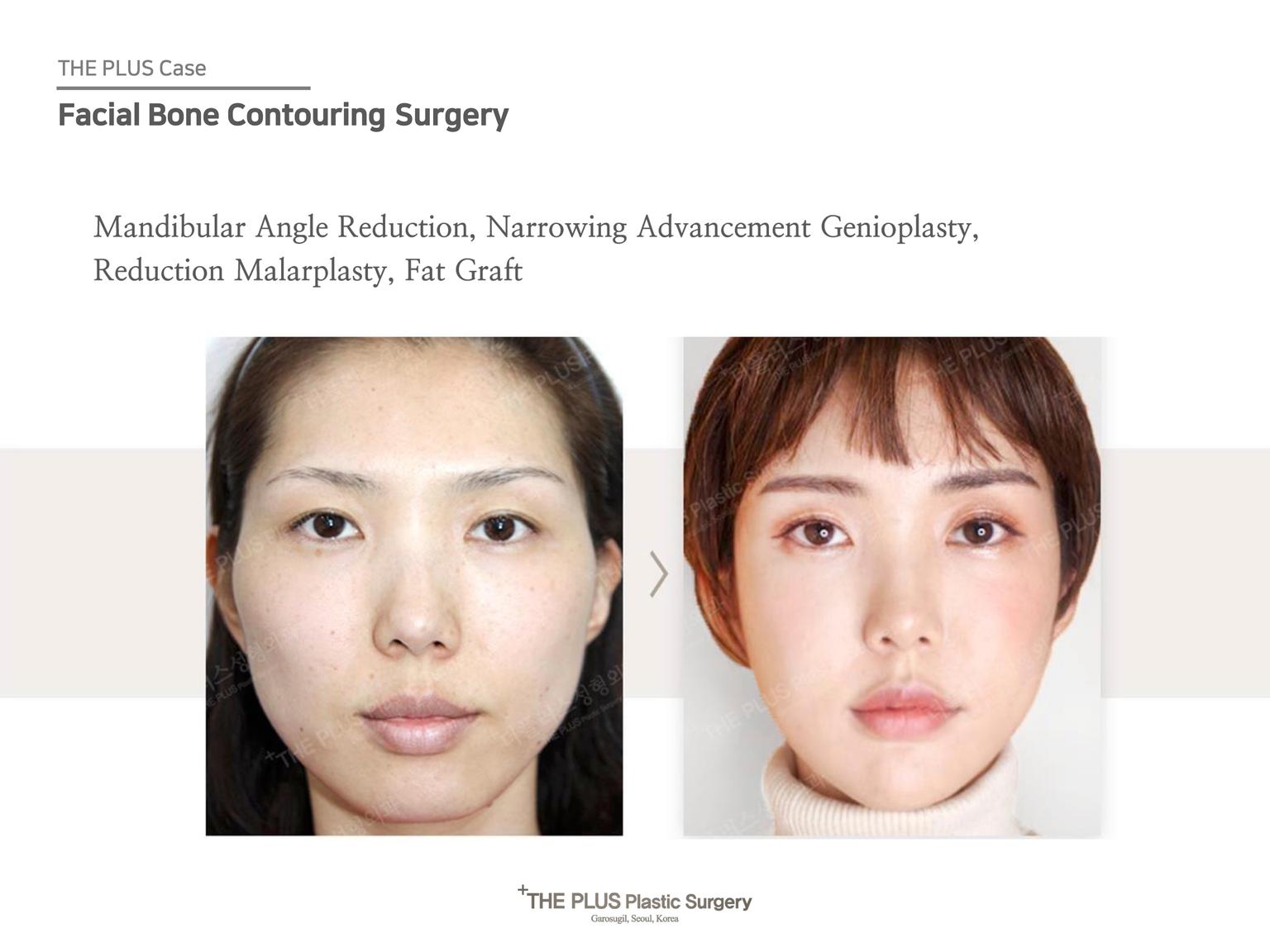
For surgical V-line contouring, you can consider a plan that combines square-jaw reshaping with chin surgery and, where appropriate, cheekbone contouring to refine lower-face proportions while keeping the chin, lips, nose, and jaw in balance.
- URL: THEPLUS Plastic Surgery Website
- Location: Gangnam-gu, Seoul
- V-line procedure options:
- Square jaw surgery is offered to reduce a broad or angular lower jaw and create a smoother contour.
- Chin surgery can alter chin size or projection to improve its relationship with your jawline and other facial features.
- Full face contouring and cheekbone surgery are also available when your goals involve more than the jaw and chin alone.
- Surgical perspective:
- Dr. Kim is a board-certified plastic surgeon whose stated areas of expertise include facial contouring and rhinoplasty.
- His approach emphasizes harmonious facial balance and preserving your existing features.
- Dr. Kim has received research awards related to 3D implants and conducts annual educational sessions for other plastic surgeons.
- Additional facial treatments:
- The clinic also offers facial implants, facelift procedures, thread lifting, and facial fat grafting.
- Rhinoplasty and revision rhinoplasty are available if nasal balance is part of your overall facial-planning discussion.
2. Haru Clinic
If you want V-line definition without jaw surgery, you may consider a double-chin and jawline-focused approach using Elasticum elastic threads with PDO threads, designed to lift submental laxity, refine contour, and move more naturally with your facial expressions.
- URL: Haru Clinic Website
- Location: Gangnam-gu, Seoul
- Non-surgical V-line approach:
- Elasticum is described as an elastic thread that adapts to facial movement, unlike non-stretch threads that may feel tight or uncomfortable.
- PDO threads may be used alongside Elasticum for additional contour refinement and skin tightening.
- A double-chin lift may use thread-based contouring or fat-dissolving injections to reduce submental fullness and sharpen the neck-jaw angle.
- The clinic notes that lifting can address sagging skin that liposuction alone does not correct.
- Physician expertise:
- Dr. Jeong is an official research physician at Merz, the company behind Belotero Filler, and teaches other doctors current filler techniques.
- His stated treatment approach focuses on facial harmony and balance through non-invasive techniques.
- Related contouring options:
- Botox is offered for a square jaw, with effects described as lasting about three to six months.
- Fillers can add definition to the chin and jawline when added projection or contour is appropriate.
- Collagen-tightening treatments using radiofrequency or ultrasound are available for non-incisional skin firming.
3. Made Young Plastic Surgery
You may consider a metal-free V-line operation if your goals include reducing jaw length or width, correcting asymmetry, and sculpting a slimmer jawline and chin without screw fixation, metal plates, or screws.
- URL: Made Young Plastic Surgery Website
- Location: Seocho-gu, Seoul
- Metal-free V-line technique:
- The clinic states that its metal-free V-line surgery does not require screw fixation.
- The approach is presented as allowing jaw length reduction, width reduction, and asymmetry correction without metal plates or screws.
- Jaw reduction surgery and genioplasty are also available to address jaw width and chin proportion as part of facial contouring.
- Anesthesia and monitoring:
- Full-time board-certified anesthesiologists are stated to be on site.
- A one-to-one monitoring model assigns one anesthesiologist to continuous monitoring of one person during a procedure.
- The clinic describes a cross-check emergency-response system involving multiple anesthesiologists and CCTV coverage of procedures.
- Planning and aftercare:
- The medical team provides direct consultation and diagnosis before a procedure.
- A dedicated aftercare center provides post-procedure care.
- Metal-free cheekbone reduction is available if cheekbone prominence is also relevant to your facial-contouring plan.
How Much Does V-Line Surgery Cost in Korea?

V-Line Surgery is supplied at ₩9,900,000–₩15,500,000 (approximately US$7,300–$11,500). Individual quotes vary because “V-line” can range from mandibular-angle reduction alone to a more extensive jawline-contouring operation with chin osteotomy or additional facial-bone work.
| Procedure Price | Korean Won (₩) | USD ($) |
|---|---|---|
| Low Price | ₩9,900,000 | $7,300 |
| High Price | ₩15,500,000 | $11,500 |
Exchange rate as of 2026-09-06: 1 KRW = 0.000741 USD.
What Affects the Price?
- Extent of mandibular reduction — Angle-only reduction requires a narrower operative field than long-curve reduction extending from the gonial angle along the mandibular border. A longer contouring plan requires more bone work, operating time, and imaging-based attention to tooth roots and the inferior alveolar nerve canal.
- Addition of reduction or narrowing genioplasty — Combining mandibuloplasty with reduction, narrowing, or sliding genioplasty adds a chin osteotomy and fixation with plates and screws. This expands operative steps, implant consumables, mental-nerve considerations, anesthesia time, and postoperative assessment of segment position and healing.
- Lateral cortical reduction — When lower-face width requires outer-cortex reduction or burring in addition to angle reshaping, the surgeon must contour mandibular thickness while preserving bone strength and avoiding nerve-bearing anatomy. That adds bony-planning and operative work beyond a limited angle resection.
- Broader facial contouring scope — A plan that combines mandibular work with zygoma reduction is broader facial bone contouring rather than isolated V-line surgery. Treating an additional facial skeletal area increases operating time, anesthesia exposure, facility resources, and recovery monitoring.
Cost tip: Request an itemized quote that states what is included, particularly the planned mandibular technique, whether genioplasty and plates/screws are included, anesthesia, facility use, imaging, medications, and postoperative reviews.
The US$7,300–$11,500 conversion is approximate, based on the supplied exchange rate of 0.000741 on 2026-09-06. Check the exchange rate again when budgeting.
V Line Surgery From Start to Finish
-
Remote inquiry and consultation — Send standardized front, oblique, profile, and smiling photographs if requested. Ask whether English-language or interpreter-supported virtual consultation is available. Disclose dental implants, braces or retainers, prior jaw surgery or trauma, TMJ symptoms, allergies, medicines, supplements, nicotine use, and personal or family clot history. Remote photographs cannot finalize a bone-removal plan.
-
In-person assessment and imaging — The surgical team confirms facial goals, bite, jaw opening, TMJ symptoms, lower-lip and chin sensation, and asymmetry. Panoramic radiography plus CT or cone-beam CT commonly maps the mandibular contour, inferior alveolar canal, mental foramen, and tooth roots.
-
Pre-anesthesia clearance — Depending on history and facility protocol, testing can include blood count, chemistry and coagulation tests, pregnancy testing where relevant, ECG, and an anesthesia review. The team gives written instructions for prescription medicines, anticoagulants or antiplatelet drugs, supplements, fasting, and nicotine cessation.
-
Final surgical plan — The surgeon explains whether the plan is angle-only reduction, long-curve mandibuloplasty, lateral cortical reduction, or a combined reduction/narrowing genioplasty. Confirm the planned chin osteotomy, fixation hardware, expected dietary restriction, main risks, and what would trigger an overnight stay.
-
Anesthesia and operation — V-line jaw surgery is commonly performed under general anesthesia through incisions inside the mouth. The surgeon removes or contours selected mandibular bone and, when planned, performs a chin osteotomy and stabilizes it with plates and screws. Duration depends on the extent of mandibular work and whether genioplasty or other bone procedures are added.
-
Immediate recovery and discharge — The team monitors airway comfort, nausea, bleeding, hydration, pain control, and ability to take liquids. Discharge on the same day or after overnight observation depends on procedure extent and recovery, not on a fixed itinerary.
-
Early healing in Korea — Follow the individualized liquid-to-soft/no-chew diet and oral-hygiene plan. Attend wound, swelling, sensory, and imaging reviews. Early effects commonly include swelling, stiffness, limited mouth opening, speech changes, and lower-lip/chin sensory alteration.
-
Return-home follow-up — Send requested photographs and attend video reviews. Contact the Korean surgical team promptly for concerning changes, while using the pre-arranged local emergency pathway for urgent symptoms. Bone-contour assessment is more meaningful at about 3–6 months; soft-tissue settling can continue for 6–12 months.
Alternatives to V-Line Surgery
The right alternative depends on what creates lower-face width. Surgical choices can permanently alter bone or chin proportions but involve anesthesia, recovery, and irreversible change. Non-surgical options have less downtime but do not reduce mandibular bone and are appropriate only when muscle, fat, or projection—not bone width—is the primary issue.
Masseter Botox
- Best anatomical match — Masseter Botox targets enlarged chewing muscles, not a broad mandible.
- Tradeoff — Effects are temporary. A randomized trial of onabotulinumtoxinA found improved lower-face width and mandibular-angle appearance versus placebo through day 180 in adults with marked bilateral masseter prominence.
Chin Surgery or Filler
- Best anatomical match — Chin surgery can narrow, shorten, or reshape a disproportionately wide or long chin without angle reduction.
- Tradeoff — Chin filler adds projection or contour but cannot reduce bony width; it is temporary and does not replace reduction genioplasty.
Facial or Submental Liposuction
- Best anatomical match — Double-chin liposuction treats localized submental fat and can improve the jaw-neck transition when fat is the issue.
- Tradeoff — Liposuction cannot narrow a broad mandible or correct a prominent gonial angle.
Buccal Fat Removal
- Best anatomical match — Buccal fat removal addresses selected cheek soft tissue rather than jawbone.
- Tradeoff — It does not create bony narrowing and can be unsuitable in a naturally lean face or where later facial-volume loss is a concern.
Orthognathic Surgery
- Best anatomical match — Double-jaw surgery is the relevant pathway for clinically important malocclusion, jaw-position discrepancy, airway concerns, or functional chewing problems.
- Tradeoff — It is more extensive than cosmetic mandibuloplasty and usually requires orthodontic planning, but V-line reduction cannot correct the bite.
How Can I Prepare for V-Line Surgery?
- Medical and dental disclosure — Provide a complete list of prescriptions, over-the-counter medicines, vitamins, herbal products, injected treatments, allergies, recreational substances, and medical conditions. Report cavities, gum disease, loose teeth, wisdom-tooth symptoms, implants, braces, retainers, and recent dental work; obtain dental clearance if requested.
- Blood-thinning medicines and supplements — Give the surgeon and prescribing clinician time to create a written plan for anticoagulants, antiplatelet drugs, aspirin, and NSAIDs. Ask specifically about fish oil, vitamin E, ginkgo, garlic, ginseng, turmeric/curcumin, and St John’s wort. Do not stop blood thinners, blood-pressure, diabetes, psychiatric, hormone, or seizure medicines independently.
- Nicotine and alcohol — Stop cigarettes, vaping, nicotine pouches, and nicotine-replacement products according to the operating team’s policy. Follow the clinic’s alcohol restriction exactly; nicotine policies and testing requirements vary by surgeon.
- Fasting and anesthesia — Follow the facility’s exact fasting and clear-liquid instructions. Do not use a generic online fasting schedule, because anesthesia instructions depend on the procedure time, medical history, and medicines.
- Travel logistics — Book flexible flights, stay near the facility, arrange a companion for the first night, and keep several days free for additional reviews. Pack a written medical summary and bring enough regular medication for the full trip plus travel delays.
- Food and recovery supplies — Prepare clinician-approved liquid and soft high-protein foods, a way to maintain hydration, and any prescribed mouth-rinse or medication schedule. Avoid planning meals that require chewing during the early recovery period.
Travel note: Identify a local oral and maxillofacial surgeon, dentist, plastic surgeon, or emergency department pathway before leaving home. International travel does not remove the need for urgent local assessment if complications develop after return.
Confirm every medication change, fasting period, nicotine rule, dental requirement, and travel restriction with the treating surgeon and anesthesia team; their individualized instructions take precedence over general guidance.
Aftercare Advice
Protect healing oral tissues, maintain hydration and nutrition, and treat new swelling, bleeding, breathing problems, or bite changes as reasons for prompt medical assessment.
- Diet and hydration — Follow the prescribed liquid-to-soft/no-chew progression. The duration depends on the amount of mandibular reduction and whether chin osteotomy with plate-and-screw fixation was performed. Prioritize fluids and clinician-approved protein and calorie intake.
- Oral care — Use prescribed mouth rinse, antibiotics, and pain medication exactly as directed. Clean intraoral incisions gently, and avoid forceful rinsing, spitting, or stretching the jaw until cleared.
- Swelling and activity — Keep the head elevated as instructed and take short, frequent walks. Avoid strenuous exercise, heavy lifting, contact sports, facial trauma, sauna or steam exposure, and alcohol until the surgeon clears them.
- Sensation and jaw function — Lower-lip or chin numbness, stiffness, and reduced mouth opening are common early concerns, but persistent sensory change is possible. In the 588-patient retrospective series, sensory deficits were the most frequent complication and some remained at one year.
- Urgent warning signs — Seek urgent surgical assessment for rapidly increasing or one-sided swelling, uncontrolled bleeding, fever, worsening redness, foul drainage or taste, inability to drink or take medicines, escalating pain after initial improvement, new bite change, jaw instability, or progressive numbness or weakness. Seek emergency care for breathing or swallowing difficulty, chest pain, shortness of breath, coughing blood, fainting, or new one-sided leg pain or swelling.
- Follow-up and results — Attend all in-person reviews before flying and complete remote follow-up after return home. Initial swelling can obscure the contour; assess the bone result around 3–6 months, with residual soft-tissue settling possible through 6–12 months.
Follow the treating doctor’s individualized instructions over general advice, and contact the clinic immediately when healing appears to be worsening rather than gradually improving.
Frequently Asked Questions
Related Blogs

Chin Surgery in Korea: Types, Recovery, Risks, and Travel Planning
Chin surgery in Korea includes implant augmentation and sliding or reduction genioplasty to alter chin projection, height, width, or selected asymmetry; treatment requires assessment of bite, jaw relationship, imaging, anesthesia, and follow-up needs. Costs are ₩7,200,000–₩7,900,000 (about US$5,300–$5,900), with international patients advised to plan a 7–14-day stay and obtain in-person clearance
Updated: Sep 13, 2026

Cheekbone Implant in Korea: Types, Recovery, Travel Planning and Alternatives
Cheekbone implants augment malar, submalar, or extended midface skeletal projection through a surgically placed implant, with selection based on facial anatomy and contour goals. The article covers candidacy, implant types, planning, recovery, aftercare, alternatives, and travel guidance for international patients undergoing surgery in Korea.
Updated: Sep 13, 2026

Facial Implant in Korea: Types, Recovery, Travel Planning and Alternatives
Facial implant surgery adds structural projection to the chin, cheeks, jawline, or paranasal area through an intraoral or discreet external incision, with standard or CT-planned custom implants depending on the concern. The article covers candidacy, alternatives, preparation, recovery, Korea travel timing, follow-up planning, and warning signs requiring urgent care.
Updated: Sep 11, 2026
Corner Mouth Lift in Korea: Methods, Scars, Recovery and Travel Planning
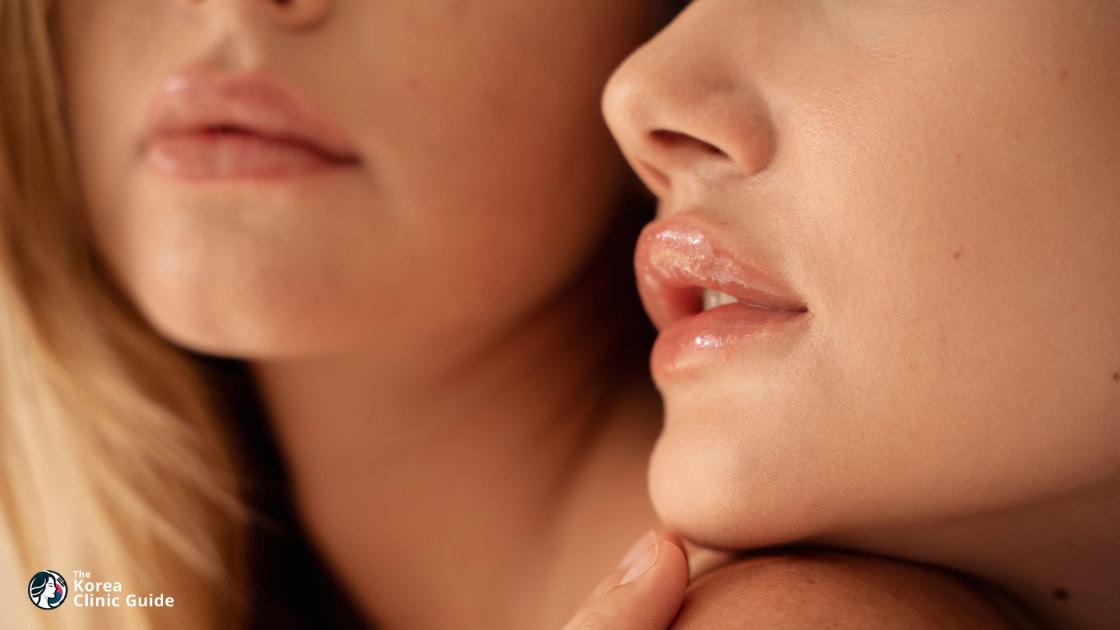
A corner mouth lift removes a small skin segment near the mouth corners, sometimes with DAO muscle treatment, to rotate downturned commissures upward; it leaves a permanent external scar. International patients can plan a 7–10-day stay for consultation, surgery, wound review, and suture removal, with recovery, scar care, travel clearance, and remote follow-up guidance.
Updated: Sep 11, 2026
Clinics offering V Line Surgery

THEPLUS Plastic Surgery Korea | Eye, Nose, Face & Body Surgery
Sinsa

Haru Clinic Korea | Seoul Facelift, Threads, Botox & Fillers
Sinsa

Made Young Plastic Surgery: Rejuvenating Aesthetic Excellence in Korea for Face Lifts, Contouring and More
Gangnam Station
ID Hospital - Main Branch in Korea: Specializing in Safe & Customized Facial Plastic Surgery and Post-Care Services
Sinsa