
Medical Tourism Blog
Under-Eye Hollowness Solutions: Dark Circle Injection Procedures in Korea for Brighter Eyes

Table of contents
- Detailed Medical Procedures: "Dark Circle Injection"
- Which Are the Best Clinics in Korea for Undereye Hollowness?
- The Process of Getting "Dark Circle Injections" in South Korea
- Costs Associated with "Dark Circle Injections" in South Korea and Global Comparison
- Patient Experiences and Outcomes
- Conclusion
- References
Considering treatment in Korea? Everything you need to know e.g. — how to avoid scams, visas, interpreters, recovery tips — in our Medical Tourism Master Guide. Plan with confidence in minutes, not weeks!
Under-eye hollowness—a frequent aesthetic concern—appears as a noticeable depression or indentation between the lower eyelid and the upper cheek. This depressed area can make a person look perpetually tired, even if they're well-rested. Because the skin here is especially thin and lacks much underlying fat, shadows are easily cast, often exaggerating the “fatigued” appearance.
Common Pseudonyms and Related Terms
Under-eye hollowness goes by many names, including "sunken eyes," "under-eye hollows," and "tear trough hollows." In clinical settings, the term "tear trough deformity" is most commonly used. Depressions beside the central part of this area are sometimes called the "palpebromalar groove," "nasojugal groove," or "lid-cheek junction." Other related hollows in the lower eyelid area include the orbital rim hollow, eyelid crease hollow, and zygomatic hollow.
Causes of Under-Eye Hollowness
There are several causes of under-eye hollowness. Genetics play a big role, making some people more likely to develop this feature at any age—even if they’re young. Sometimes, this can be due to congenital or age-related maxillary hypoplasia, which is when the upper jawbone is underdeveloped. This highlights that under-eye hollowness can be rooted in facial structure, not just lifestyle or aging.
As we age, attachments of periorbital tissues change, the eye can descend slightly in its socket, and the infraorbital fat might shift forward. Loss of soft tissue and bone support adds to the deepening of the tear trough area, making hollowness more noticeable over time.
Lifestyle factors can also make under-eye hollowness worse. Chronic fatigue, not getting enough sleep, dehydration, sun exposure, and eye strain commonly show up first in this region. Allergies may cause inflammation, further contributing to dark circles.
A thorough consultation—with flash photography and assessment of overall mid-cheek volume—helps professionals figure out whether the problem is true hollowness, a structural issue, or caused by volume loss elsewhere. Sometimes, improving the adjacent mid-cheek region can make a significant difference.
Detailed Medical Procedures: "Dark Circle Injection"
"Dark Circle Injection" refers to several non-surgical cosmetic options to treat under-eye hollowness and dark circles. The leading solutions include Hyaluronic Acid (HA) fillers, Platelet-Rich Plasma (PRP) injections, and occasionally Poly-L-Lactic Acid (Sculptra) or fat grafting.
Hyaluronic Acid (HA) Fillers
HA fillers are a go-to for non-surgical under-eye treatments. Hyaluronic Acid is a naturally occurring molecule in skin that deeply hydrates and adds volume.
How They Work
- Volume Restoration: HA fillers refill lost space in the under-eye region, smoothing the tear trough for a more even transition between eyelid and cheek.
- Skin Texture and Hydration: Because HA holds a lot of water, it plumps the skin and creates a smooth, radiant look.
- Shadow Reduction: By filling the depression, HA fillers reduce shadows that make dark circles worse.
- Structural Support: Lifts sagging skin and reduces bags.
- Indirect Collagen Stimulation: Some types can nudge the body into making more collagen.
- Suitability: Softer HA fillers are ideal for this delicate area, moving naturally with facial expressions.
Popular Brands
Restylane-L and Juvederm Volbella are commonly used; Restylane-L spreads smoothly while Juvederm Volbella’s creamy texture helps minimize swelling. Belotero is preferred by some to avoid the Tyndall effect (a bluish tinge), while Restylane Refyne works well for subtle hollows. Thicker fillers like Restylane Lyft are generally reserved for volumizing larger cheek areas.
What the Procedure Is Like
Before treatment, patients are advised to eat and stay hydrated. Numbing cream is applied about 30 minutes before the injection. A board-certified professional uses either a fine needle or a blunt-tip cannula. Cannulas lower the chance of bruising, bleeding, pain, and vascular occlusion. The provider places the filler in small, careful deposits for a natural look. The process usually takes less than an hour.
Results, Longevity, and Recovery
Improvements are often visible immediately, with best results appearing within a week. HA fillers last around 6–9 months under the eye, although molecules may persist up to 18 months in less-mobile areas. Downtime is minimal; swelling or redness usually disappears in a few days. Bruising is possible but typically fades quickly.
Potential Risks
While generally safe, risks include temporary soreness, swelling, and bruising. More severe issues, like irregular contours, persistent edema, hypersensitivity, or filler migration, are rarer but possible. The Tyndall effect occurs if the filler is injected too close to the surface. The most serious—though rare—risk is vascular occlusion, which can lead to skin necrosis or blindness if not rapidly treated with hyaluronidase. Selecting an experienced provider is critical for safety and good results.
Platelet-Rich Plasma (PRP) Injections
PRP injections use the patient’s own blood plasma, packed with growth factors, to stimulate collagen, elastin, and tissue regeneration under the eyes.
How They Work
Following a blood draw, platelets are concentrated and injected into the under-eye area. This boosts the body’s own healing processes—thickening skin, lifting hollows, and improving texture. Increased circulation can diminish dark pigmentation. Since PRP uses the patient's own plasma, allergic reactions are avoided.
The Procedure
A small blood sample is drawn and spun in a centrifuge. The PRP is then injected where needed.
Results, Longevity, and Safety
Gradual improvements start to appear over several weeks, with many patients enjoying benefits for up to 18 months. The natural and safe profile of PRP—using the patient’s own body—makes it a popular choice with minimal risk.
Fat Grafting (Fat Transfer)
Fat grafting involves transferring the patient’s own fat from areas such as the abdomen to the under-eye region.
How It Works
- Volume Restoration: The fat fills out the hollow regions.
- Skin Quality: Fat comes with stem cells and growth factors, encouraging collagen production and improving thickness.
- Natural Origin: Uses your own tissue for a seamless, natural look.
Procedure Details
Fat is harvested from a donor site, refined, and then gently injected into the under-eye hollows using a cannula. Local anesthesia and light sedation may be used. The process is typically outpatient.
Results, Longevity, and Recovery
Results look natural and last for many years, often permanently—though some fat re-absorption occurs. Recovery involves some swelling and bruising for a week or two; the final look settles after several weeks to months.
Comparing Treatment Choices
HA fillers bring instant but temporary results with the option for reversal; PRP stimulates the body’s repair mechanisms for long-term improvement; fat grafting is a permanent solution but involves more recovery and potential for unevenness. Patients should weigh their need for speed, reversibility, and permanence in making their decision.
Which Are the Best Clinics in Korea for Undereye Hollowness?
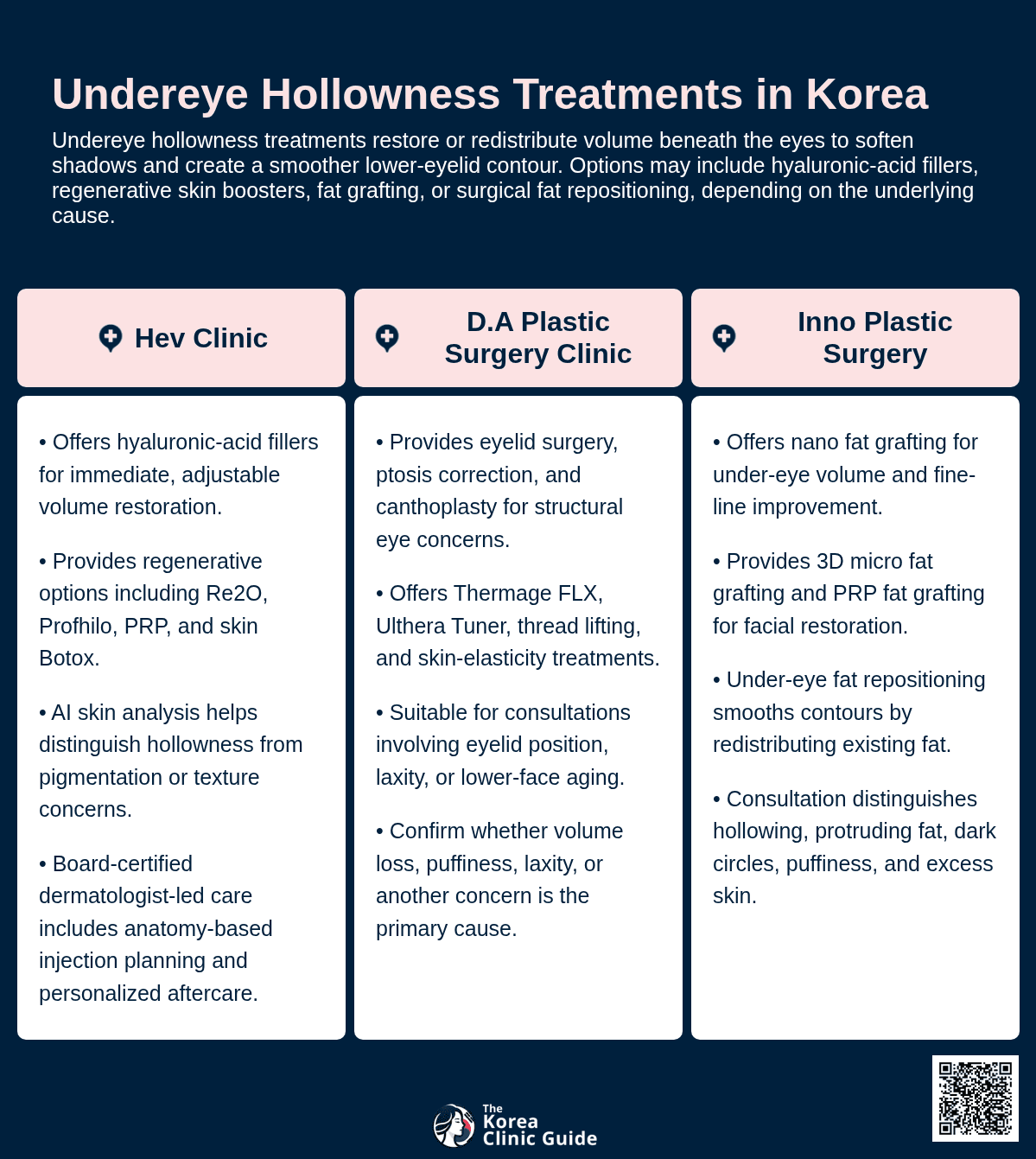
Listed below are some of the best clinics in Korea for undereye hollowness.
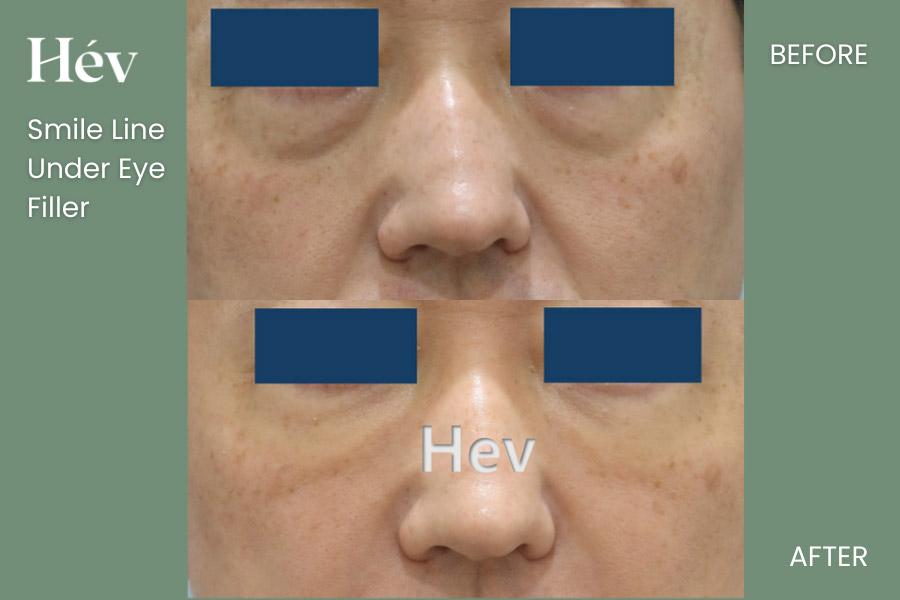
1. Hev Clinic
For undereye hollowness, you can discuss a personalized volume-restoration plan at Hev Dermatology Clinic, where hyaluronic-acid fillers and regenerative skin boosters are available alongside skin analysis to distinguish volume loss from concerns such as pigmentation, texture, or dark circles.
- URL: Hev Clinic Website
- Location: Gangnam-gu, Seoul
- Undereye approach:
- Hyaluronic-acid dermal fillers are offered to restore volume, with results described as immediate and adjustable; duration varies by area and product.
- The clinic also lists under-eye dark-circle correction and regenerative options such as Re2O, a human-derived collagen-and-elastin matrix skin booster intended to support firmness and texture.
- Your plan can be informed by AI-based skin analysis assessing factors such as skin thickness, aging, and pigment depth.
- Dermatologist-led care:
- Dr. Shin Ji-yeon is a board-certified dermatologist whose stated areas of focus include well-aging, dermal-structure restoration, and customized nonsurgical facial contouring.
- The same attending dermatologist oversees consultation, treatment, and aftercare rather than rotating providers.
- The clinic describes anatomy-based targeting and cannula and needle techniques intended to reduce discomfort and help minimize nerve and vascular injury risk.
- Treatment considerations:
- A non-sedation, pain-controlled anesthesia system is used so you can communicate in real time during injectable treatment.
- For skin-quality concerns around the eye area, options listed include Profhilo, PRP, skin Botox, Re2O, microneedling, and RF microneedling.
- Aftercare includes a proprietary Repair Barrier Cream protocol and a maintenance plan that may be timed around an approximately 3–4-week skin-regeneration cycle.
2. D.A Plastic Surgery Clinic
At D.A Plastic Surgery Clinic, you can explore whether eyelid position, lower-face aging, or skin laxity contributes to the appearance around your eyes; its listed eye procedures and nonsurgical tightening treatments may be relevant when those concerns accompany undereye hollowness.
- URL: D.A Plastic Surgery Clinic Website
- Location: Gangnam-gu, Seoul
- Relevant eye-care options:
- The clinic offers eyelid surgery, ptosis correction, and canthoplasty, which address eyelid position or eye shape rather than directly replacing under-eye volume.
- If your concern includes laxity in addition to hollowing, listed nonsurgical skin options include Thermage FLX, Ulthera Tuner, thread lifting, and skin-elasticity treatments.
- What to clarify at consultation:
- Ask whether your under-eye concern is primarily volume loss, eyelid laxity, puffiness, or a combination, since the listed services focus on surgical eye shaping and skin tightening.
- The supplied information does not identify a specific filler, fat-grafting, or under-eye fat-repositioning treatment for hollowness.
3. Inno Plastic Surgery
For undereye hollowness, Inno Plastic Surgery offers both under-eye fat repositioning to smooth the lower-eyelid contour and fat-grafting options—including nano fat grafting specifically noted for under-eye volume—so you can discuss a surgical approach matched to whether volume loss or uneven fat distribution is the main issue.
- URL: Inno Plastic Surgery Website
- Location: Gangnam-gu, Seoul
- Undereye volume options:
- Nano fat grafting is listed for filling fine lines and adding volume to areas including the under-eye region.
- 3D micro fat grafting uses precise fat placement to restore facial volume and contour.
- PRP fat grafting combines fat grafting with platelet-rich plasma to support fat survival and improve skin quality.
- Lower-eyelid surgery:
- Under-eye fat repositioning relocates lower-eyelid fat to reduce dark circles and smooth the lower-eyelid contour.
- Blepharoplasty can remove excess skin, fat, and muscle from the upper or lower eyelids and may address puffy under-eye bags.
- Canthoplasty is also offered to adjust eye shape by tightening the lower eyelid.
- Planning considerations:
- A consultation can help distinguish hollowing from protruding fat, dark circles, excess skin, or lower-eyelid shape, as the clinic lists different procedures for each concern.
- Fat-grafting approaches are intended to restore lost volume, while fat repositioning is directed at redistributing existing under-eye fat.
The Process of Getting "Dark Circle Injections" in South Korea
South Korea is a top destination for medical tourists seeking cosmetic treatments. The country is known for its advanced aesthetic techniques, modern clinics, and global expertise, with competitive pricing and well-organized support for overseas visitors.
Step-by-Step Guide for Medical Tourists
- Initial Consultation: Most journeys start with a virtual consult. Patients discuss goals and receive personalized procedure suggestions and cost estimates.
- Travel Preparation: Book flights to Seoul’s Incheon International Airport and choose accommodation near the clinic. Many clinics help with visas, health documentation, and insurance.
- Arrival and In-Person Consultation: Some clinics provide airport pickup and a patient orientation. Pre-treatment health checks are conducted before a detailed in-person visit with the provider, where risks, expectations, and aftercare are discussed.
- Treatment and Aftercare: Procedures are performed in modern, accredited clinics. For "dark circle injections," topical numbing is provided and aftercare may include daily checks, dressing changes, and complementary therapies to reduce swelling.
- Follow-up and Departure: Medical clearance and aftercare instructions are given before leaving Korea. Virtual follow-up with your provider is usually available after returning home.
Recommended Recovery Stays
Recovery time varies:
- Eyelid Surgery: 5–7 days
- Rhinoplasty: 7–10 days
- Facial Contouring: 10–14 days
- Breast Augmentation: 7–10 days
- Liposuction: 5–8 days
- Revision Surgery: 10–14 days
While "dark circle injections" are quick procedures, waiting for swelling to subside—typically 7–10 days—before flying home is recommended for comfort and best results.
Costs Associated with "Dark Circle Injections" in South Korea and Global Comparison
South Korea is often more affordable than Western nations while maintaining high medical standards. Here’s a closer look at procedure prices and how they stack up abroad:
Cost Overview
- HA Fillers: ₩300,000–₩1,000,000 KRW ($250–$850 USD) per session.
- PRP Injections: ₩250,000–₩800,000 ($300–$700 USD) per session. Multiple sessions may be recommended.
- Fat Grafting: $850–$1,700 USD for under-eye treatment; facial fat transfer averages around $2,540 USD.
International Comparison Table
| Procedure Type | South Korea (USD) | USA (USD) | Western Europe (USD) | Thailand (USD) | Turkey (USD) | UK (USD) | Germany (USD) |
|---|---|---|---|---|---|---|---|
| HA Fillers (per session) | $150 – $850 | $600 – $1,500 | $500 – $900 | N/A | $200 – $600 | N/A | N/A |
| PRP (per session) | $250 – $1,000 | $600+ | N/A | $275 – $2,774 | $150+ | N/A | N/A |
| Fat Grafting | $792 – $4,431 | $4,500 – $10,000 | $5,000 – $10,500 | $5,280+ | $1,480 – $7,250 | $7,500+ | $5,000 – $10,000 |
South Korea’s prices are often much lower than in the US, Western Europe, or the UK, making it an attractive option for medical travelers, though other countries like Turkey offer lower-cost alternatives in some areas.
What Affects the Costs?
- Provider Experience: Top surgeons or clinics command higher fees.
- Clinic Area: Clinics in premium neighborhoods, like Gangnam, charge more.
- Treatment Details: Filler brand/complexity, additional services, or number of sessions add to costs.
- Package Deals: Accommodation, travel, and aftercare kits might be bundled.
- Discounts: Upfront payment, promotional offers, or participation in before-and-after showcases may reduce costs.
Balancing Value with Quality
While South Korea offers top value and expertise, the total price should factor in travel, lodging, and living expenses. Prioritizing proven provider experience and clinic reputation is crucial for safety and results.
Patient Experiences and Outcomes
Most patients report significant improvements and feel very satisfied after "Dark Circle Injection" procedures. These treatments address the root causes—restoring lost volume and smoothing contours.
How "Dark Circle Injections" Help
- Reduced Hollowness and Dark Circles: Fillers and fat grafts plump out depressed areas and brighten skin tone, while PRP stimulates healing and regeneration.
- Refreshed Look: Patients frequently look more rested and awake post-treatment.
- Better Skin Quality: HA fillers hydrate, fat grafts bring regenerative factors, and PRP triggers collagen production for firmer, more elastic skin.
- Smoother Fine Lines: Treatments smooth wrinkles and improve texture around the eyes.
Patient Feedback
Most patients are delighted with results—often noting how much healthier and more vibrant they look. Fat transfer satisfaction rates are particularly high. Many describe the boost in self-confidence and quality of life after treatment.
What Patients Should Keep in Mind
- Set Realistic Expectations: Fillers can't fix excess skin or pigmentation. Subtle, gradual improvement is the goal—avoiding overfilling is important.
- Choose an Expert: The under-eye area is challenging and requires a highly trained professional for best outcomes and to avoid rare but serious complications.
- Be Aware of Side Effects: Most are minor, like swelling or bruising, but understanding more severe risks (such as the Tyndall effect or vascular occlusion) is important.
Conclusion
Under-eye hollowness—often called "tear trough indentation"—can make anyone look tired, due to genetics, aging, or lifestyle factors. "Dark Circle Injections," including Hyaluronic Acid fillers, PRP, and Fat Grafting, offer effective, personalized solutions with high satisfaction rates and minimal downtime. South Korea shines as a destination for these treatments, blending world-class care with competitive pricing and comprehensive support. To achieve safe, natural-looking results, careful provider selection and clear, realistic expectations are essential.
References
1, 2, 3, 4, 5, 6, 7, 8, 9, 10, 11, 12, 13, 14, 15, 16, 17, 18, 19, 20, 21, 22, 23, 24, 25, 26, 27, 28, 29, 30, 31, 32, 33, 34
Frequently Asked Questions
Related Blogs
Filler Dissolver in Korea: Hyaluronic Acid Reversal, Recovery, Risks, and Travel Planning
Hyaluronic acid filler dissolution uses targeted hyaluronidase injections, with ultrasound assessment when filler is old, migrated, deep, periocular, or uncertain. International patients can plan consultation, outpatient treatment, a review at about 48 hours, written treatment records, and remote follow-up; urgent pain, skin-color changes, visual symptoms, or neurological symptoms require immediat
Updated: Sep 28, 2026
Collagen Filler in Korea: Products, Safety, Recovery, and Travel Planning
Collagen filler treatment involves confirming the exact product, medical screening, possible allergy testing, outpatient injection, and follow-up planning. International patients should stay in Korea for 2–3 days, expect bruising or swelling for up to 1–2 weeks, and obtain emergency contacts and complete product records.
Updated: Sep 27, 2026
Ultracol in Korea: Candidates, Safety, Recovery, and Travel Planning
Ultracol is a PDO microsphere injectable intended in Korea for temporary improvement of bilateral nasolabial folds, delivered after eligibility review and product-label verification. The article covers candidate screening, outpatient treatment and recovery, travel planning, aftercare, warning signs, follow-up, and alternatives.
Updated: Sep 27, 2026
Korean Arginine Fluid Optimization: See How Costs Stack Up Against Germany, China, and More Countries
Explore the cost dynamics of Arginine Fluid in Korea, examining factors influencing its pricing and availability. Discover how economic and healthcare trends impact the accessibility of this essential amino acid supplement.
Updated: Sep 27, 2026
Clinics offering Dark Circle Injection
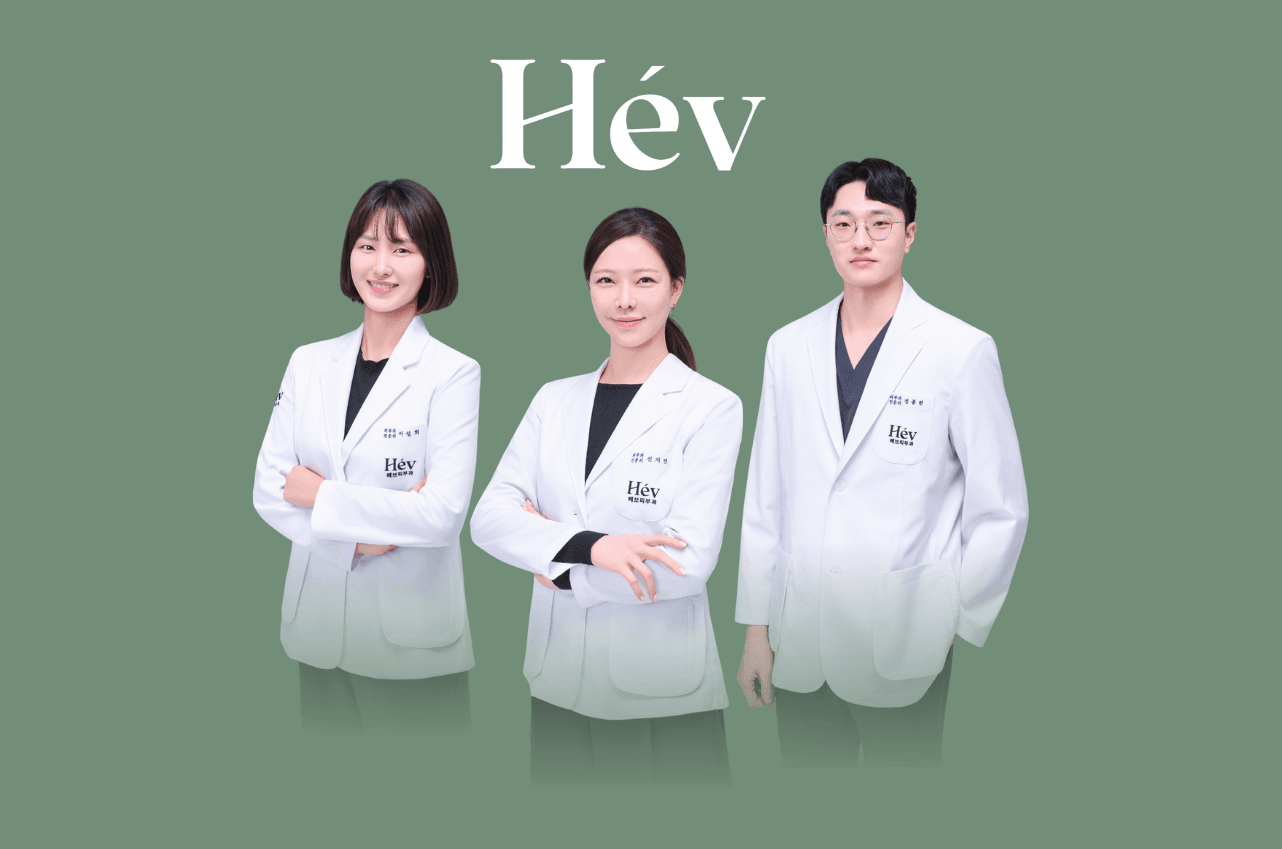
Hev Clinic Korea | Premium Sinsa Clinic for Skin, Laser & Injectables
Sinsa

PangPang Clinic: Korea's Premier Thread Lifting and Skin Rejuvenation Specialist in Gangnam, Seoul
Sinsa

B.V Clinic Korea: Advanced Aesthetic Treatments for Natural Beauty Enhancement & Rejuvenation
Sinnonhyeon Station

D.A Plastic Surgery Clinic in Korea: Advanced Cosmetic Procedures for Natural Beauty Enhancement
Gangnam Station