
Medical Tourism Blog
Bruise Recovery Solutions in Korea: How Arginine Fluid Procedures Accelerate Healing
Table of contents
- Best Clinics in Korea for Bruise Recovery
- Why Patients Seek Bruise Recovery and IV Therapies in Korea
- Arginine Fluid: A Detailed Medical Explanation
- Cost Analysis: Arginine Fluid and Bruise Recovery Treatments for Medical Tourists
- Patient Experiences and Clinical Evidence for Arginine Fluid in Bruise Recovery
- Conclusion
- References
Considering treatment in Korea? Everything you need to know e.g. — how to avoid scams, visas, interpreters, recovery tips — in our Medical Tourism Master Guide. Plan with confidence in minutes, not weeks!
Bruises, medical terms like hematoma or ecchymosis, are those discolored patches on the skin that show up after minor trauma. What actually happens is small blood vessels under your skin break and leak blood, causing the trademark discoloration. Sometimes, you might see other names such as contusion, petechia, or purpura—all referring to variations of bruising.
Post-injection bruising is especially common after medical or cosmetic injections, which is why some call it an adverse event. When a needle nicks a tiny blood vessel, blood leaks into the tissue and forms a bruise. You might notice pain, swelling, or even restricted movement at the site. Your risk goes up with older age, poorer injection technique, or if you're taking blood thinners.
While most bruises are harmless, it's helpful to know what’s normal and what’s not. If you notice delayed capillary refill (pressing and releasing the skin and it takes more than two seconds to regain its color) or strange grey or white discoloration, especially after dermal filler treatments, you should check with your provider—these can be signs of more serious issues. Knowing how to recognize these symptoms helps you recover confidently and know when to seek extra care.
Table 1: Common Pseudonyms for Bruises
| Common Term | Medical Term(s) | Description |
|---|---|---|
| Bruise | Hematoma, Ecchymosis, Contusion, Petechia, Purpura | Discoloration caused by blood leaking from damaged vessels under the skin. |
The Natural Healing Process: Stages of Bruise Resolution
Your body naturally resolves bruises by breaking down and reabsorbing the seeping blood. Bruises shift color over time—first pinkish-red from new blood, then dark blue, purple, or black as hemoglobin loses oxygen. As the blood further breaks down, the bruise turns green or yellow (thanks to biliverdin and bilirubin), and finally fades to yellow-brown before disappearing.
Most simple bruises clear up within about two weeks, but bigger ones (hematomas) can linger for weeks or even months. Sometimes, even after the color disappears, you might notice the area feels “gritty” or shows a brown stain (haemosiderin staining), especially on thinner skin in older adults.
Table 2: Stages of Bruise Healing
| Stage | Color Appearance | Underlying Process/Description | Typical Timeline |
|---|---|---|---|
| 1 | Pinkish-Red / Red | Fresh blood collects at the trauma site. | Immediately after injury |
| 2 | Dark Blue / Purple / Black | Oxygen in blood is consumed; hemoglobin changes. | 1-2 days |
| 3 | Violet / Green / Dark Yellow | Hemoglobin breaks down into biliverdin and bilirubin. | 5-10 days |
| 4 | Yellowish-Brown / Light Brown / Pale Yellow | Further breakdown and reabsorption of blood components. | 10-14 days |
| 5 | Fading Completely | Complete reabsorption of pooled blood. | 2 weeks or more |
General Management and Prevention Strategies for Post-Injection Bruising
Caring for injection site bruising means covering both prevention and recovery. A lot of this relies on good communication with your provider, but your own preparation and aftercare matter too.
Prevention:
To prevent bruising, skip blood-thinning meds (like ibuprofen or Advil) and supplements (Vitamin E, fish oil, garlic, ginkgo) a few days before your procedure, and avoid alcohol. Icing the treatment area before and after can help vessels constrict, minimizing leakage. Some clinicians use topical lidocaine for comfort—it also reduces blood flow, though stronger types can hide more serious complications if not used carefully. You’ll also hear people recommend pineapple (for the bromelain), though that’s more anecdotally supported.
Management:
If you bleed during an injection, applying firm pressure right away can help. After treatment, rest is key—at least 24 hours, longer if you’ve had significant bleeding. Avoid strenuous activity and anything else (heat, lying flat, pressure like tight hats) that increases blood flow or pressure at the site. Topical or oral Arnica is popular, but don’t use it on broken skin. Rarely, very large hematomas may need to be drained; most just resolve naturally. Injections with hyaluronidase are sometimes used for stubborn hematomas, but with caution due to risks.
Choosing a skilled practitioner matters. Good technique reduces your bruise risk, while poor technique can cause bigger problems—including misdiagnosis of serious complications. Your actions and your clinician’s expertise both play a role in your recovery.
Best Clinics in Korea for Bruise Recovery
Listed below are the best clinics in Korea for bruise recovery:
| Clinic Name | Key Features | Special Techniques |
|---|---|---|
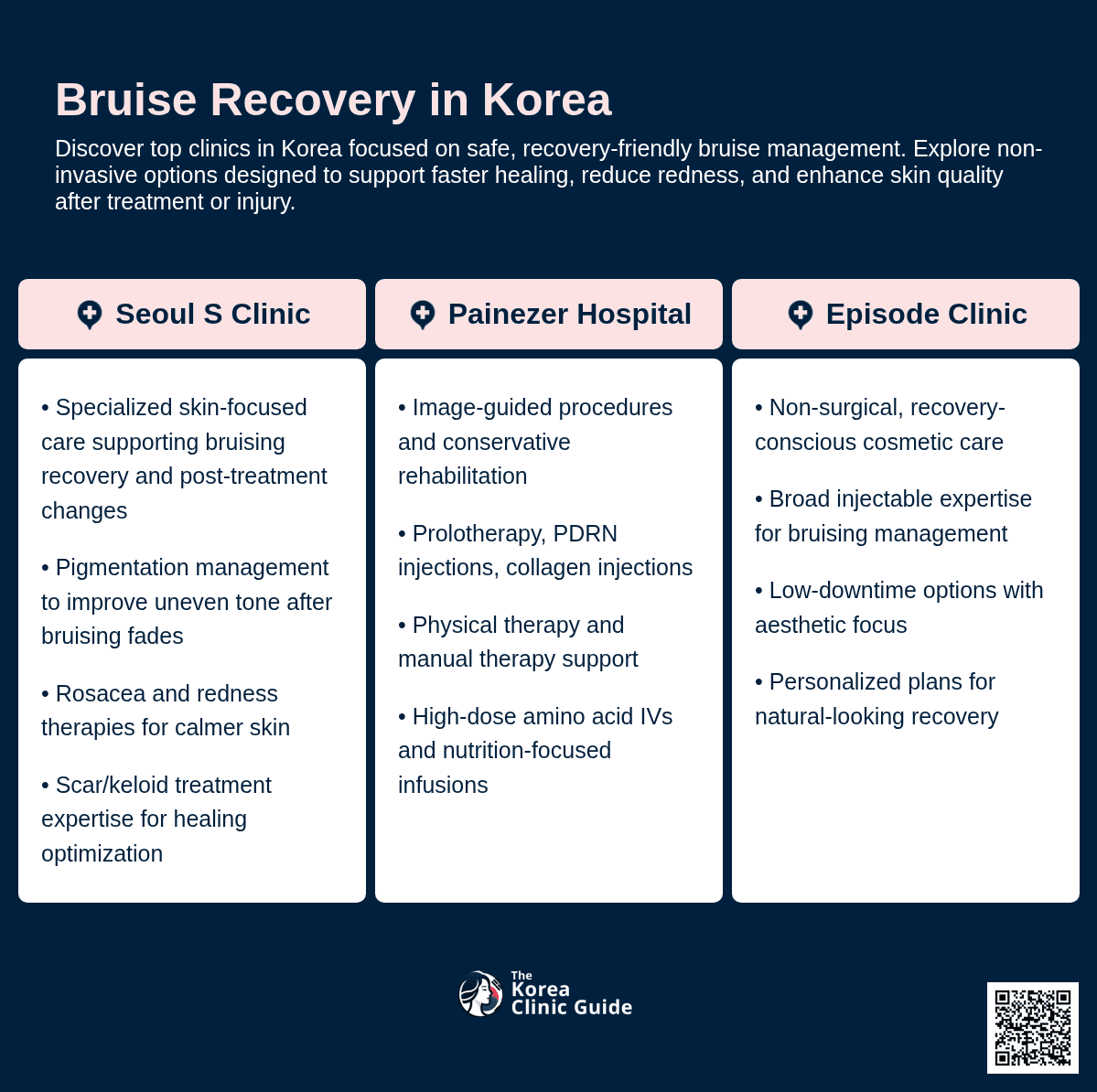
| Seoul S Clinic | Seoul S Clinic in Cheonho is an excellent choice for bruise recovery in Korea because it focuses on restoring overall skin vitality with advanced, results-driven aesthetic care. For patients dealing with post-procedure bruising, skin sensitivity, lingering redness, or uneven tone, the clinic offers a strong combination of medical skin care, redness-focused treatment, pigmentation management, and skin-rejuvenating therapies designed to support smoother and healthier-looking recovery. Its broad expertise across acne, rosacea, scars, pores, anti-aging care, and customized skin treatments makes Seoul S Clinic especially well suited for patients who want not only faster visible recovery, but also long-term improvement in skin quality, texture, and confidence. • Specialized skin-focused care that supports recovery from bruising, redness, and post-treatment skin changes • Advanced pigmentation treatments, including melasma care, which can help improve uneven tone that may remain after bruising fades • Rosacea and redness treatments that are valuable for calming visible skin irritation and restoring a more balanced complexion • Keloid and scar treatment expertise, showing strong clinical experience in managing skin healing and cosmetic recovery • Customized medical skin care tailored to each patient’s skin condition, sensitivity level, and recovery needs • Anti-aging therapies and Sculptra options that help improve skin quality, resilience, and overall rejuvenation • Wide-ranging aesthetic experience, from acne care to fillers and Botox, allowing the clinic to approach recovery with a deeper understanding of facial skin health • Professional, beauty-focused treatment philosophy centered on natural-looking results, patient confidence, and careful skin management • Convenient Cheonho location for patients seeking a trusted Seoul clinic with comprehensive aesthetic and skin-recovery services Find more about this clinic here: Seoul S Clinic Website | • Redness-focused treatment • Pigmentation management (including melasma care) • Rosacea and redness treatments • Keloid and scar treatment • Sculptra options • Fillers and Botox • Acne care to comprehensive skin health approaches • Anti-aging and skin-rejuvenation strategies |
| Painezer Hospital | Painezer Hospital (잠실통증의학과, jamsilpain.com) in Seoul’s Jamsil area is a non-surgical pain clinic focused on spine, joint, and sports-related musculoskeletal problems, making it a practical option for patients whose bruising is linked to a sprain, strain, tendon injury, or other soft-tissue trauma. Rather than relying on surgery, the clinic emphasizes physician-guided conservative care, including image-guided procedures, rehabilitation, and physical therapy. For cases where a bruise is accompanied by ongoing pain or suspected ligament and tendon damage, its treatment scope includes prolotherapy, PDRN regenerative injections, collagen injections, steroid injections in selected inflammatory cases, and focused ESWT as part of broader recovery planning. The clinic also offers rehabilitation-based support that may be useful during bruise recovery when mobility, muscle tension, or function have been affected. Manual therapy, therapeutic exercise rehabilitation, and physical therapy modalities such as heat therapy, infrared therapy, magnetic field therapy, and interferential current therapy are used within individualized care plans based on physician assessment. In addition, Painezer Hospital provides supportive infusion therapies, including high-dose amino acid IVs and other nutrition-focused options, which may be considered as part of overall recovery support for patients dealing with fatigue or reduced physical condition after injury. Find more about this clinic here: Painezer hospital Website | Painezer Hospital (잠실통증의학과, jamsilpain.com) in Seoul’s Jamsil area is a non-surgical pain clinic focused on spine, joint, and sports-related musculoskeletal problems, making it a practical option for patients whose bruising is linked to a sprain, strain, tendon injury, or other soft-tissue trauma. Rather than relying on surgery, the clinic emphasizes physician-guided conservative care, including image-guided procedures, rehabilitation, and physical therapy. For cases where a bruise is accompanied by ongoing pain or suspected ligament and tendon damage, its treatment scope includes prolotherapy, PDRN regenerative injections, collagen injections, steroid injections in selected inflammatory cases, and focused ESWT as part of broader recovery planning. The clinic also offers rehabilitation-based support that may be useful during bruise recovery when mobility, muscle tension, or function have been affected. Manual therapy, therapeutic exercise rehabilitation, and physical therapy modalities such as heat therapy, infrared therapy, magnetic field therapy, and interferential current therapy are used within individualized care plans based on physician assessment. In addition, Painezer Hospital provides supportive infusion therapies, including high-dose amino acid IVs and other nutrition-focused options, which may be considered as part of overall recovery support for patients dealing with fatigue or reduced physical condition after injury. Find more about this clinic here: Painezer hospital Website |
| Episode Clinic | Episode Clinic Jamsil is a Seoul-based aesthetic dermatology clinic specializing in non-surgical face, skin, and body enhancement, making it a strong choice for patients who want effective cosmetic care with careful attention to recovery. The clinic offers a wide spectrum of treatments, including Botox, dermal fillers, skin booster injections, deoxycholic acid for double chin reduction, Ultherapy, thread lifting, Pico Laser, fractional laser resurfacing, laser toning, IPL photofacial, chemical peels, microneedling, HydraFacial, PRP, acne care, scar treatments, CoolSculpting, and Botox for hyperhidrosis. For people concerned about bruise recovery, Episode Clinic Jamsil stands out because its treatment portfolio is built around precise, non-surgical techniques and low-downtime skin management, allowing patients to seek personalized care that supports both cosmetic results and a smoother post-procedure recovery experience. Key reasons Episode Clinic Jamsil stands out for bruise recovery: • Broad non-surgical expertise: The clinic focuses entirely on non-surgical aesthetic treatments, which is important for patients who want improvement with less disruption and a more manageable recovery period. • Strong injectable experience: Because the clinic provides Botox, fillers, skin boosters, and Kybella-style double chin injections, it is well positioned to understand and manage common post-injection concerns, including swelling and bruising. • Low-downtime treatment options: Services such as Ultherapy, laser toning, IPL photofacial, Pico Laser, and HydraFacial offer options for patients who prioritize recovery time and want treatments that fit into daily life. • Comprehensive skin support: With PRP, microneedling, chemical peels, and HydraFacial, the clinic offers multiple ways to improve overall skin quality, hydration, and texture, which is valuable for patients who want their skin to look clearer and healthier during the recovery process. • Personalized treatment range: Episode Clinic Jamsil does not rely on a single approach. Its mix of injectables, energy-based devices, skin rejuvenation treatments, and scar care allows for more individualized planning based on each patient’s condition and goals. • Advanced contouring without surgery: From Ultherapy and thread lifts to CoolSculpting and jawline-shaping injectables, the clinic provides modern contouring solutions for patients who want visible refinement while avoiding surgical downtime. • Focus on natural-looking refinement: Treatments such as precisely placed fillers, collagen-stimulating devices, and skin boosters suggest an approach centered on subtle, polished improvement rather than overly aggressive change. • Convenient choice in Seoul: As a Jamsil-based clinic in Seoul, Episode Clinic is well placed for local residents and international patients seeking reputable aesthetic care in Korea. For patients looking for a clinic that combines aesthetic expertise, recovery-conscious treatment options, and a wide menu of non-surgical solutions, Episode Clinic Jamsil is an excellent choice and a particularly appealing option for those concerned about bruise recovery alongside overall cosmetic results. Find more about this clinic here: Episode Clinic Website | • Non-surgical expertise • Strong injectable experience (Botox, fillers, skin boosters, Kybella-style injections) • Low-downtime treatment options (Ultherapy, laser toning, IPL photofacial, Pico Laser, HydraFacial) • Comprehensive skin support (PRP, microneedling, chemical peels, HydraFacial) • Personalized treatment range (injectables, energy-based devices, skin rejuvenation, scar care) • Advanced contouring without surgery (Ultherapy, thread lifts, CoolSculpting, jawline-shaping injectables) • Focus on natural-looking refinement (precisely placed fillers, collagen-stimulating devices, skin boosters) • Convenient choice in Seoul (Jamsil) |
Seoul S Clinic
Seoul S Clinic in Cheonho is an excellent choice for bruise recovery in Korea because it focuses on restoring overall skin vitality with advanced, results-driven aesthetic care. For patients dealing with post-procedure bruising, skin sensitivity, lingering redness, or uneven tone, the clinic offers a strong combination of medical skin care, redness-focused treatment, pigmentation management, and skin-rejuvenating therapies designed to support smoother and healthier-looking recovery. Its broad expertise across acne, rosacea, scars, pores, anti-aging care, and customized skin treatments makes Seoul S Clinic especially well suited for patients who want not only faster visible recovery, but also long-term improvement in skin quality, texture, and confidence.
• Specialized skin-focused care that supports recovery from bruising, redness, and post-treatment skin changes
• Advanced pigmentation treatments, including melasma care, which can help improve uneven tone that may remain after bruising fades
• Rosacea and redness treatments that are valuable for calming visible skin irritation and restoring a more balanced complexion
• Keloid and scar treatment expertise, showing strong clinical experience in managing skin healing and cosmetic recovery
• Customized medical skin care tailored to each patient’s skin condition, sensitivity level, and recovery needs
• Anti-aging therapies and Sculptra options that help improve skin quality, resilience, and overall rejuvenation
• Wide-ranging aesthetic experience, from acne care to fillers and Botox, allowing the clinic to approach recovery with a deeper understanding of facial skin health
• Professional, beauty-focused treatment philosophy centered on natural-looking results, patient confidence, and careful skin management
• Convenient Cheonho location for patients seeking a trusted Seoul clinic with comprehensive aesthetic and skin-recovery services
Find more about this clinic here: Seoul S Clinic Website
Painezer hospital
Painezer Hospital (잠실통증의학과, jamsilpain.com) in Seoul’s Jamsil area is a non-surgical pain clinic focused on spine, joint, and sports-related musculoskeletal problems, making it a practical option for patients whose bruising is linked to a sprain, strain, tendon injury, or other soft-tissue trauma. Rather than relying on surgery, the clinic emphasizes physician-guided conservative care, including image-guided procedures, rehabilitation, and physical therapy. For cases where a bruise is accompanied by ongoing pain or suspected ligament and tendon damage, its treatment scope includes prolotherapy, PDRN regenerative injections, collagen injections, steroid injections in selected inflammatory cases, and focused ESWT as part of broader recovery planning.
The clinic also offers rehabilitation-based support that may be useful during bruise recovery when mobility, muscle tension, or function have been affected. Manual therapy, therapeutic exercise rehabilitation, and physical therapy modalities such as heat therapy, infrared therapy, magnetic field therapy, and interferential current therapy are used within individualized care plans based on physician assessment. In addition, Painezer Hospital provides supportive infusion therapies, including high-dose amino acid IVs and other nutrition-focused options, which may be considered as part of overall recovery support for patients dealing with fatigue or reduced physical condition after injury.
Find more about this clinic here: Painezer hospital Website
Episode Clinic
Episode Clinic Jamsil is a Seoul-based aesthetic dermatology clinic specializing in non-surgical face, skin, and body enhancement, making it a strong choice for patients who want effective cosmetic care with careful attention to recovery. The clinic offers a wide spectrum of treatments, including Botox, dermal fillers, skin booster injections, deoxycholic acid for double chin reduction, Ultherapy, thread lifting, Pico Laser, fractional laser resurfacing, laser toning, IPL photofacial, chemical peels, microneedling, HydraFacial, PRP, acne care, scar treatments, CoolSculpting, and Botox for hyperhidrosis. For people concerned about bruise recovery, Episode Clinic Jamsil stands out because its treatment portfolio is built around precise, non-surgical techniques and low-downtime skin management, allowing patients to seek personalized care that supports both cosmetic results and a smoother post-procedure recovery experience.
Key reasons Episode Clinic Jamsil stands out for bruise recovery:
• Broad non-surgical expertise: The clinic focuses entirely on non-surgical aesthetic treatments, which is important for patients who want improvement with less disruption and a more manageable recovery period.
• Strong injectable experience: Because the clinic provides Botox, fillers, skin boosters, and Kybella-style double chin injections, it is well positioned to understand and manage common post-injection concerns, including swelling and bruising.
• Low-downtime treatment options: Services such as Ultherapy, laser toning, IPL photofacial, Pico Laser, and HydraFacial offer options for patients who prioritize recovery time and want treatments that fit into daily life.
• Comprehensive skin support: With PRP, microneedling, chemical peels, and HydraFacial, the clinic offers multiple ways to improve overall skin quality, hydration, and texture, which is valuable for patients who want their skin to look clearer and healthier during the recovery process.
• Personalized treatment range: Episode Clinic Jamsil does not rely on a single approach. Its mix of injectables, energy-based devices, skin rejuvenation treatments, and scar care allows for more individualized planning based on each patient’s condition and goals.
• Advanced contouring without surgery: From Ultherapy and thread lifts to CoolSculpting and jawline-shaping injectables, the clinic provides modern contouring solutions for patients who want visible refinement while avoiding surgical downtime.
• Focus on natural-looking refinement: Treatments such as precisely placed fillers, collagen-stimulating devices, and skin boosters suggest an approach centered on subtle, polished improvement rather than overly aggressive change.
• Convenient choice in Seoul: As a Jamsil-based clinic in Seoul, Episode Clinic is well placed for local residents and international patients seeking reputable aesthetic care in Korea.
For patients looking for a clinic that combines aesthetic expertise, recovery-conscious treatment options, and a wide menu of non-surgical solutions, Episode Clinic Jamsil is an excellent choice and a particularly appealing option for those concerned about bruise recovery alongside overall cosmetic results.
Find more about this clinic here: Episode Clinic Website
Why Patients Seek Bruise Recovery and IV Therapies in Korea
Seeking arginine injections in South Korea? The process is designed to be smooth and patient-centered—no wonder the country is such a popular medical tourism destination.
The Process of Obtaining Arginine Fluid Procedures in South Korea
Initial Consultation and Assessment
Your journey starts with a thorough consult by a doctor or nurse. They'll review your health history, check for deficiencies or risks, do blood tests, and tailor a treatment plan based on your goals. The plan could be oral or IV arginine, and often gets mixed with other nutrients just for you.
Clinics in Korea usually combine arginine fluid therapy with other wellness or aesthetic treatments—think skin lifting, acne control, body contouring—built into broader packages for overall well-being.
Procedure Administration: Intravenous (IV) or Other Methods
Administration is done safely either by IV or injection.
- Preparation: The injection site (typically upper arm or buttock) is thoroughly sterilized and the dose measured precisely.
- IV Method: A small catheter goes into your arm vein for slow, direct infusion (30-90 minutes).
- IM Injection: The needle is placed at a 90-degree angle into a muscle, typically in the arm or buttock.
- Monitoring: Your vital signs will be checked during the procedure, and in Korea, doses can be tailored continuously for optimal effectiveness.
Post-Procedure Care and Follow-Up
Post-procedure care ensures you recover smoothly.
- Immediate Care: The site is cleaned and covered if needed.
- Instructions: Stay hydrated and rest—avoid heavy activity right after.
- Nutrition: Eat a balanced diet rich in protein, vitamins, and minerals to support repair.
- Skin Care: Follow your provider’s skincare advice if you had a topical treatment—go easy on strong products.
- Monitor Side Effects: Mild swelling or bruising is normal, but call your provider with severe symptoms.
- Follow-Up: Return appointments help track your progress and decide if more treatments are needed.
The Role of Medical Tourism Agencies in South Korea
Navigating medical care in another country can be tough—that’s where medical tourism agencies step in. Licensed agencies like Beauty Hopper or Seoul Cosmetic Surgery help international patients with everything from finding reputable clinics to translation, booking, payment, and aftercare.
They provide bundled services (often including medication), translation by specialists, 24-hour personal support, and help verify clinic reputation—an essential safety net given the large number of clinics in Korea and occasional reports of unqualified providers or aggressive sales tactics. Medical tourism agencies also help keep costs down and make the process worry-free.
Arginine Fluid: A Detailed Medical Explanation
What is Arginine? Composition and Natural Role in the Body
Arginine (L-arginine) is an amino acid your body needs to build protein. You get it from protein-rich foods like meat, poultry, fish, and dairy—or from lab-made supplements. In South Korea, arginine fluid mixtures are often personalized, sometimes mixed with other nutrients to match a patient’s health needs.
Mechanism of Action: How Arginine Supports Healing and Circulation
Arginine aids healing on several fronts. Once in your body, it’s converted into nitric oxide (NO), which relaxes your blood vessels—this boosts blood flow, crucial for delivering nutrients, immune cells, and clearing waste from healing tissues. Arginine also triggers the release of growth hormone and insulin-like growth factor I (IGF-1), both critical for tissue repair.
Another highlight: arginine helps your body build collagen. Collagen keeps your skin firm and supports tissue healing. Arginine even has antioxidant effects, helping fight off free radicals that can damage cells and collagen. During healing, arginine’s metabolites (like citrulline and ornithine) help support new blood vessel formation (angiogenesis) and immune responses.
Bruising is just a minor soft tissue injury, and arginine’s effects—improved circulation, faster clearance of pooled blood, more efficient collagen production—are just as relevant for bruise healing as they are for wounds.
Established Medical and Dermatological Applications of Arginine Fluid
Arginine Fluid is useful in several medical and wellness fields:
- Wound Healing: Arginine speeds up healing and is recommended for pressure ulcers, thanks to its collagen-boosting effects.
- Circulation/Cardiovascular Health: Because it widens blood vessels, arginine aids circulation and blood pressure control, as well as pain relief for poor limb circulation.
- Dermatology & Cosmetic Treatments: Arginine helps with skin repair, elasticity, and anti-aging. It’s found in many K-beauty regimens and supports skin hydration and repair.
- Nutritional Support: It’s used for patients who need extra nutrition—after surgery, for immune support, or in recovery from illness.
- Athletic Recovery: Some athletes use it for better blood flow and faster post-workout recovery.
- Other Uses: Arginine may support immune health, help with certain circulatory issues, and possibly mental clarity and stress relief.
Important Precautions, Potential Side Effects, and Contraindications
While many benefit from Arginine Fluid, you should always discuss it with your doctor first—it can interact with drugs or existing conditions.
Contraindications:
Avoid if you have a genetic inability to process arginine, GAMT deficiency, recent heart attacks, or upcoming surgery (stop at least two weeks before). Any electrolyte imbalance should also be corrected first.
Use with Caution/Interactions:
Pregnant or breastfeeding people should use it short-term, not long-term. Arginine can affect potassium levels (be careful if you have kidney issues), interact with diabetes meds, blood pressure drugs, statins, and can increase bleeding if combined with blood thinners.
Common Side Effects:
Stomach upset, flushing, low blood pressure, or mild discomfort at the injection site. Serious reactions (trouble breathing, severe swelling, severe pain, abnormal heart rate) are rare but require emergency attention.
Dosage:
Typical oral doses range from 1.5 to 24 grams daily; IV doses can be higher. The best form and dose depend on your needs—talk this over with your healthcare provider.
Table 3: Arginine Fluid: Key Benefits, Precautions, and Potential Side Effects
| Category | Description |
|---|---|
| Key Benefits | Improved blood flow (vasodilation), growth hormone & IGF-1 stimulation, collagen production, antioxidant activity, tissue repair, immune support, cardiovascular & anti-aging benefits. |
| Precautions & Contraindications | Contraindicated in genetic processing disorders, recent heart attack, GAMT deficiency, pre-surgery, electrolyte imbalance. Use with caution during pregnancy/lactation, kidney/liver disease, diabetes, hypertension, asthma/COPD, herpes, and with certain medications (blood thinners, statins, vessel relaxers). |
| Common Side Effects | Stomach upset, flushing, low blood pressure, mild injection discomfort. |
| Severe Side Effects | Seek care for breathing issues, severe swelling, fainting, severe headache, fast/irregular heartbeat, significant bruising/bleeding. |
Cost Analysis: Arginine Fluid and Bruise Recovery Treatments for Medical Tourists
Understanding costs as a medical tourist means looking at not just procedure fees, but the whole package.
Estimated Costs of Arginine Fluid and Related Treatments in South Korea
While explicit pricing for "Arginine Fluid" as a bruise recovery therapy isn’t widely published, initial medical consults in Korea range from 30,000 to 50,000 KRW (about $23-$38 USD). IV therapies often require a custom plan and multiple sessions.
Related options and typical prices:
- Herbal medicine: 100,000–300,000 KRW ($77–$230 USD)/month
- Acupuncture: 10,000–80,000 KRW ($8–$61 USD)/session
- Rejuran (skin rejuvenation): Several hundred to over $1,000 USD/session
Comparison with Alternative Bruise Recovery Treatments in Other Countries
Laser Therapy:
- USA (Vbeam & vascular lasers): $150–$550/session
- Thailand: $300–$1,200/session (laser skin resurfacing), $200–$500/session (scar removal)
- Europe (Croatia/UK): 35–65€ (laser/IPL), £350–£650/session (Derma V vascular laser)
Over-the-Counter:
- Arnica cream/gel (USA): ~$9/tube
- Bromelain supplements (USA): $16–$21/bottle
Table 4: Estimated Cost Comparison—Bruise Recovery Treatments
| Treatment Type | Country/Region | Estimated Cost Range (USD/KRW/€/£) | Notes |
|---|---|---|---|
| Arginine Fluid | South Korea | Pricing via consultation | Typically as part of IV/injectable therapies |
| General Consultation | South Korea | 30,000 - 50,000 KRW ($23–38 USD) | Starting price |
| Herbal Medicine | South Korea | 100,000 - 300,000 KRW ($77–230 USD) | Per month |
| Acupuncture | South Korea | 10,000 - 80,000 KRW ($8–61 USD) | Per session |
| Rejuran | South Korea | $100s–$1,000+ USD | Per session |
| Laser (Vbeam) | USA | $250–$550 | Per session |
| Laser (other) | USA | $150–$500 | Per session |
| Laser skin surfacing | Thailand | $300–$1,200 | Per session |
| Laser scar removal | Thailand | $200–$500 | Per session |
| IPL | Europe (Croatia) | From 65€ | Per session |
| NdYAG laser | Europe (Croatia) | From 35€ | Per session |
| Derma V laser | Europe (UK) | £350–£650 | Per session |
| Arnica Gel/Cream | USA | $9 | Per tube |
| Bromelain Supplements | USA | $16–$21 | Per bottle |
Factors Influencing Costs and Potential Savings for Medical Tourists
Final costs depend on procedure complexity, provider experience, added therapies, and more. In Korea, bundled packages offered through agencies often cover flights, accommodation, and medication—hidden costs that are rarely included elsewhere. This holistic approach means your total outlay is often lower, even if the core procedure fee is similar to or above international averages.
Medical tourism agencies help you avoid risky clinics, provide essential support, and make the costs upfront, predictable, and inclusive. When weighing your options, consider the whole journey—not just the listed procedure price.
Patient Experiences and Clinical Evidence for Arginine Fluid in Bruise Recovery
Scientific Evidence: Arginine's Role in Wound Healing and Tissue Repair
Arginine is well-documented as a wound-healing agent. By improving circulation (via nitric oxide), stimulating growth factors, and boosting collagen, it sets the stage for efficient healing and tissue repair. These benefits translate into improved wound and perhaps bruise recovery, since both processes hinge on similar mechanisms.
Strong evidence shows tissue regrowth accelerates with arginine supplementation, especially in complex wounds and pressure ulcers. Some guidelines specifically recommend arginine-enriched diets for advanced wound care.
Reported Patient Outcomes and Considerations
Most patients tolerate vitamin injections in Korea with minimal symptoms, though rare complications do occur—especially when unqualified staff are involved or misleading information is provided.
One high-profile case involved a South Korean influencer who suffered extensive bruising and even a collapsed lung after a poorly handled "health injection" at an unethical clinic. This underscores the need for thorough vetting and the value of agencies that verify provider credentials and ensure ethical care.
Limitations and What Patients Should Discuss with Their Healthcare Provider
There’s a strong scientific rationale for arginine in overall wound healing, but research on its specific effectiveness for "bruise recovery" is less robust. Every patient is different, and major hematomas may still take weeks or months to resolve, no matter the treatment.
Before opting for Arginine Fluid, thoroughly discuss your medical history—including heart, kidney, or bleeding issues—and all your current medications with your provider. Be aware of warning signs after treatment, and only work with licensed medical professionals.
Conclusion
Post-injection bruising is common and mostly resolves naturally, but arginine fluid may boost healing by improving circulation and tissue repair. South Korea’s medical tourism industry provides comprehensive support and potentially better value for these treatments. While evidence supports arginine’s role in wound healing generally, specific data for bruising is less thorough, so patients should remain well-informed, prioritize safety, and choose qualified medical providers—ideally leveraging reputable tour agencies for extra security and convenience.
References
1, 2, 3, 4, 5, 6, 7, 8, 9, 10, 11, 12, 13, 14, 15, 16, 17, 18, 19, 20, 21, 22, 23, 24, 25, 26, 27, 28, 29, 30, 31, 32, 33, 34, 35, 36
Frequently Asked Questions
Related Blogs
Toenail Treatment in Korea: Diagnosis, Fungal Care, Ingrown Nail Procedures, Recovery and Travel Planning
Toenail treatment begins with diagnosis and may include fungal testing, debridement, topical or oral antifungals, or partial nail avulsion with matrix treatment for recurrent ingrown nails. The article covers outpatient care in Korea, suggested stay and wound-review timing, travel planning, aftercare, medication monitoring, and warning signs requiring urgent assessment.
Updated: Sep 21, 2026
Anal Bleaching in Korea: Methods, Safety, Recovery and Travel Planning
Anal bleaching targets intact external perianal skin after a clinician assesses the cause of pigmentation, with options including trigger control, cautious topical regimens, and less commonly superficial peels or energy-based treatment. The article covers candidate screening, Korea travel planning, stay and follow-up needs, preparation, aftercare, warning signs, and alternatives, while noting no v
Updated: Sep 21, 2026
Mirajet in Korea: Treatment Methods, Recovery, Results and Travel Planning
Mirajet uses a 2,940-nm laser-induced microjet to deliver selected liquids into the skin through single-use nozzles, with diffuse passes for skin quality or localized stacking for selected pores and scars. The article covers candidate screening, product and protocol questions, Korea travel timing, preparation, aftercare, warning signs, and alternatives for deeper scars or other treatment goals.
Updated: Sep 21, 2026
Arginine Fluid in Korea: Safety, Evidence Limits, Travel Planning, and Aftercare
Arginine Fluid is an elective, non-standardized IV treatment requiring clinician screening, a disclosed formula and controlled infusion with monitoring. The article covers eligibility, travel planning, preparation, aftercare, warning signs, and the lack of proven wellness, cosmetic, recovery, or weight-loss benefits.
Updated: Sep 21, 2026
Clinics offering Arginine Fluid

REPIC Clinic Korea: Personalized Aesthetic Treatments with 3D Facial Analysis Near Gangnam Station
Gangnam Station

Pladen Plastic Surgery: Cutting-Edge Cosmetic and Reconstructive Procedures in Korea
Sinsa

Painezer hospital Korea: Procedures, Specialties & Patient Guide
Jamsil
Sinsoe Women's Clinic in Korea: Specialized Women's Health, Plastic Surgery, and Skin Care Services in Gangnam Station
Gangnam Station