
Medical Tourism Blog
Under Eye Filler in Korea: Candidacy, Safety, Recovery and Travel Planning

Table of contents
- Under Eye Filler at a Glance
- What Is Under-Eye Filler?
- Who Is a Good Candidate for Under-Eye Filler?
- How Is Under-Eye Filler Performed?
- Why Visit Korea for Under-Eye Filler?
- Key Information for International Patients
- Which Are the Best Clinics in Korea for Under Eye Filler?
- Under Eye Filler From Start to Finish
- Alternatives to Under-Eye Filler
- How Can I Prepare for Under-Eye Filler?
- Aftercare Advice
Considering treatment in Korea? Everything you need to know e.g. — how to avoid scams, visas, interpreters, recovery tips — in our Medical Tourism Master Guide. Plan with confidence in minutes, not weeks!
Last updated: September 2026
Under Eye Filler at a Glance
- What it treats — Under-eye filler uses small amounts of hyaluronic-acid (HA) filler to soften a tear-trough hollow and its shadow, creating a smoother lower-eyelid-to-cheek transition.
- Best candidates — Results are most predictable for mild-to-moderate hollows with firm lower-lid skin, little baseline swelling, and minimal eye bags; pigment-only dark circles, prominent fat bags, festoons, and recurrent edema may not improve and can look worse.
- Recovery and results — Swelling, tenderness, pinpoint marks, and bruising are most noticeable for 24–72 hours and can take 1–2 weeks to settle; assess the result at about two weeks. HA filler commonly lasts about 8–12 months, with individual variation.
- Travel timing — Plan at least 2–3 days in Korea, including treatment day and 48 hours of local availability; do not fly out on the same day. A 1–2 week stay is useful only when an in-person settling review or staged adjustment is planned.
- Key safety risk — Vascular injury is rare but can threaten skin, vision, or neurologic function. Severe pain, blanching or dusky skin, rapidly worsening one-sided swelling, or any visual symptom requires immediate in-person emergency care.
- Korea-specific safeguard — Verify that the clinic is registered to treat foreign patients through Medical Korea, because registered institutions must carry medical-malpractice liability insurance. Also confirm the actual injector, exact HA product, hyaluronidase access, and emergency referral plan.
What Is Under-Eye Filler?
Under-eye filler is an injection of hyaluronic-acid gel used to restore small areas of lost volume beneath the eyes. It softens hollows and their shadows, helping create a smoother transition between the lower eyelid and cheek rather than erasing all forms of dark circles. It is a non-surgical treatment.
Who Is a Good Candidate for Under-Eye Filler?
- Defined tear-trough hollow — Good candidates have mild-to-moderate volume loss along the infraorbital rim, also called the tear trough, that creates a shadow between the lower eyelid and upper cheek.
- Good lid-cheek support — Relatively firm lower-eyelid skin, minimal fat-pad protrusion, and little baseline under-eye or cheek swelling help create a more predictable contour result.
- Shadow from hollowing, not pigment alone — HA filler can soften the shadow cast by a depression. It does not reliably remove brown pigment, visible blue vessels, thin translucent skin, or allergy-related darkness.
- Realistic correction goal — The appropriate aim is a softer eyelid-cheek transition, not complete removal of every dark circle or perfect symmetry.
- Able to accept conservative staging — Small initial volumes and review after settling are often safer than attempting full correction in one appointment.
Avoid or delay treatment with an active facial, eyelid, dental, sinus, or systemic infection; acne cysts, dermatitis, rash, herpes outbreak, or inflammation near the injection area; pregnancy or breastfeeding; or an unassessed allergy to the proposed product or lidocaine. Prominent eye bags, fat prolapse, malar bags, festoons, recurrent facial edema, severe eyelid laxity, and unexplained under-eye swelling often worsen or camouflage poorly with filler; a surgical or medical assessment is more appropriate. Previous permanent, semi-permanent, unknown, or problematic filler requires records and examination before another injection. Periorbital reviews emphasize that careful patient selection is central to safety and satisfaction in this anatomically unforgiving area.
How Is Under-Eye Filler Performed?
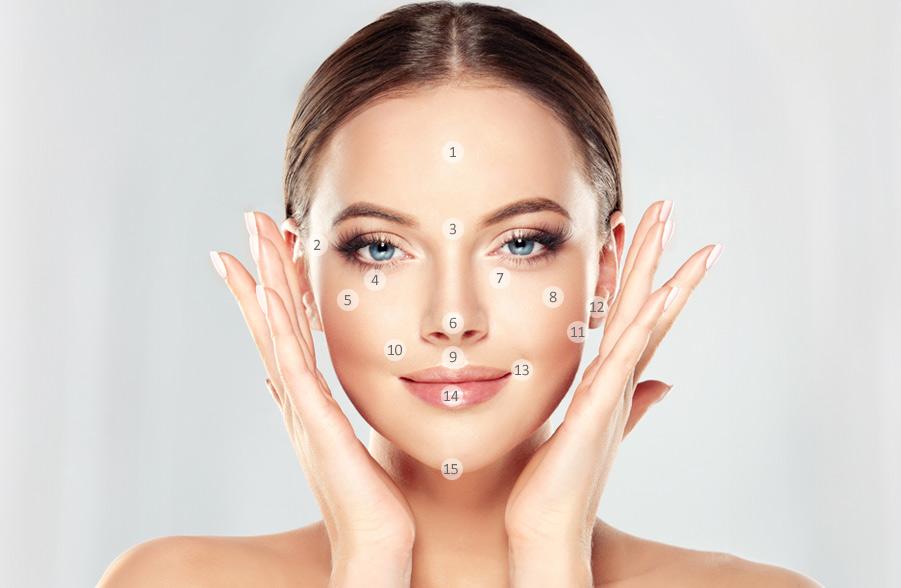
The meaningful differences are the assessment plan and injection approach, rather than consumer-facing filler “types.” In the tear trough, clinicians generally use a traceable hyaluronic-acid (HA) filler because excess HA can usually be treated with hyaluronidase when clinically indicated.
- Direct tear-trough placement — The clinician places very small HA deposits deeply along the infraorbital rim to soften a defined nasojugal groove or palpebromalar hollow.
- Midface-first support — Deep cheek or midface volume restoration can improve the lid-cheek transition and reduce the amount of direct under-eye filler required. It is useful when loss of cheek support contributes to the hollow.
- Needle technique — A needle allows precise focal deposits through several small entry points.
- Blunt microcannula technique — A flexible blunt cannula can use fewer entry points and retrograde threading or fanning. It does not eliminate the risk of intravascular injection or vision-threatening complications.
- Combined technique — Some clinicians use a cannula for one area and a needle for another, based on anatomy and the planned injection plane.
- Staged correction — A conservative first treatment followed by reassessment after swelling settles reduces the risk of overcorrection where edema risk or anatomy is uncertain.
Technique studies describe substantial variation in planes, devices, products, and volumes. A systematic review found predominantly retrospective or descriptive evidence and no evidence-based universal preference for needle versus cannula.
Why Visit Korea for Under-Eye Filler?
For overseas patients, Korea’s most relevant advantage is a formal framework for institutions that attract foreign patients, not proven country-specific superiority in under-eye-filler results. Confirm the actual injector, the exact HA product, and the complication plan before paying a deposit. The final suitability decision must follow an in-person lower-eyelid and midface examination.
- Foreign-patient registration safeguard — Medical Korea states that registered institutions accepting foreign patients must carry medical-malpractice liability insurance. Verify the institution’s registration directly; it is a practical protection, not proof of better aesthetic outcomes.
- Product verification — Ask for the filler brand, HA status, expiry date, sealed-packaging confirmation, and lot or batch information. Korea’s MFDS provides medical-device approval resources, but authorization and labeled use must be confirmed for the exact proposed product rather than assumed from approval in another country.
- Documented emergency planning — Choose a clinician who can explain the emergency protocol for vascular compromise, confirm access to hyaluronidase, and provide an emergency referral pathway. HA can be dissolved in selected situations, but hyaluronidase does not guarantee reversal of vascular injury.
- English records for onward care — Request an English procedure note listing product, batch or lot where available, total volume, injection sites or planes, photographs, aftercare, and emergency contact details before departure.
No comparative evidence identified here establishes that Korean under-eye-filler safety or cosmetic outcomes are superior to those in other countries.
Key Information for International Patients
- Minimum stay — Plan 2–3 days in Korea at minimum: an in-person assessment and injection on day 1, followed by local availability during the first 48 hours. A 1–2 week stay is useful for a settling review or planned staged adjustment but is not necessary after every uncomplicated treatment.
- Flight timing — No high-quality evidence defines a universal no-fly interval after uncomplicated tear-trough filler. Do not leave on the same day; remaining reachable for 48–72 hours is a cautious access-to-care measure, not a validated flying restriction.
- Visible recovery — Pinpoint marks, tenderness, swelling, and bruising are most apparent in the first 24–72 hours. Bruising or swelling can take 1–2 weeks to settle, so do not plan important photographs, weddings, or public events immediately after treatment.
- Itinerary restrictions — Avoid strenuous exercise, saunas, hot baths, intense heat, substantial alcohol, and pressure or massage around the eyes for about 24–48 hours unless the injector gives different instructions.
- Follow-up plan — Arrange a 48–72-hour check-in and a remote review at about two weeks. Identify a licensed clinician near home before travel; emergency symptoms require immediate local emergency care, not cross-border messaging.
Travel note: Build flexibility into flights and accommodation. Early asymmetry can be ordinary swelling, but escalating pain, skin-color change, or any visual symptom needs urgent in-person assessment.
Which Are the Best Clinics in Korea for Under Eye Filler?
Listed below are some of the best clinics in Korea for under eye filler.
1. Haru Clinic
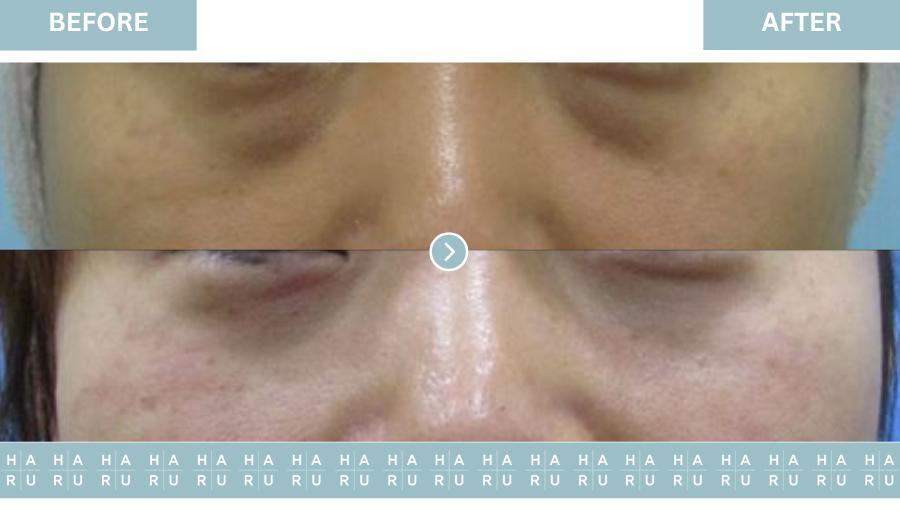
You may consider Haru Clinic for under-eye filler if you want tear-trough treatment planned as part of your overall facial balance. Its dark-circle care can be customized for hollowness, pigmentation, and fine lines using tear-trough filler, laser treatment, or PRP, while Dr. Jeong’s filler-focused research and teaching role supports a technique-conscious, natural-looking approach.
- URL: Haru Clinic Website
- Location: Gangnam-gu, Seoul
- Under-eye approach:
- Dark-circle care is tailored to concerns including hollowness, pigmentation, and fine lines.
- Available approaches include tear-trough filler, laser treatment, and PRP.
- Hyaluronic acid and biostimulatory fillers are used to restore volume and definition, including in the tear trough.
- Filler expertise:
- Dr. Jeong is an official research physician at Merz, the company behind Belotero Filler.
- He teaches other doctors about current filler techniques.
- Treatment planning emphasizes facial harmony and balance rather than isolated volume correction.
- Related options:
- Collagen-tightening treatments use radiofrequency or ultrasound to support skin firmness without incisions.
- Botox is available for concerns such as crow’s feet and other expression lines.
2. PangPang Clinic
You may consider PangPang Clinic if your under-eye concern involves more than filler alone, such as under-eye or eye-bag volume alongside laxity. Although the clinic is primarily dedicated to thread lifting, it offers customized filler and Botox care and uses volume threads specifically for the under-eye, cheek, and eye-bag areas; planning includes a personalized doctor consultation and pre-operative design with ultrasonic visual checks.
- URL: PangPang Clinic Website
- Location: Gangnam-gu, Seoul
- Under-eye volume options:
- Volume threads are used to add volume in the under-eye, cheek, and eye-bag areas.
- Customized filler and Botox treatments are also available as part of the clinic’s injectable services.
- PIM Injection combines Ultra Cell, thread lifting, and Botox and is described for delicate wrinkles around the eyes and mouth.
- Planning and treatment system:
- The clinic uses ultrasonic visual checks and pre-operative design for thread-lifting plans.
- You receive a personalized doctor consultation and thread customization.
- A thread aftercare package is offered to support and prolong thread-lifting effects.
- Thread-lifting focus:
- PangPang Clinic focuses exclusively on thread lifting and has established a Thread Lifting Research Institute.
- Its team participates in international beauty conferences through invited lectures and presentations.
- The clinic reports using 31 specialized functional threads for individualized lifting plans.
- Additional services:
- A revision center addresses unsatisfactory prior thread-lifting results and may incorporate fillers, Botox, or lasers.
- Laser treatments and scar-removal services are available for broader skin concerns.
3. B.V Clinic
You may consider B.V Clinic when you want under-eye volume concerns considered within a broader non-surgical facial rejuvenation plan. The clinic offers personalized volume lifting intended to restore depleted facial volume and elasticity, with thread-lifting and skin-tightening options that may be relevant when laxity or overall facial contour are part of your concern.
- URL: B.V Clinic Website
- Location: Seoul
- Volume and contour care:
- Volume lifting is intended to restore volume and elasticity in depleted facial areas while supporting natural skin structure.
- Full Face Lifting is designed to restore facial volume and balance and can address asymmetry without surgery.
- Treatment plans are tailored to your aesthetic goals.
- Skin-tightening options:
- Shurink Lifting uses high-intensity focused ultrasound for facial tightening, elasticity support, and contour refinement.
- Potenza Lifting uses radiofrequency to support collagen and elasticity and can address scars and pore texture.
- Thor Lifting uses radiofrequency for skin tightening and body contouring.
- Aftercare:
- Post-treatment care includes skin-regeneration management intended to minimize swelling and improve elasticity.
- Aftercare may include nutritional skincare products and ultrasound-based collagen-support treatments.
Under Eye Filler From Start to Finish
- Send a pre-travel inquiry — Ask whether an English or virtual consultation is available. Send unfiltered front and oblique photographs in even lighting, along with details of prior filler, eyelid surgery, allergies, facial swelling, medical conditions, medicines, supplements, and past adverse reactions.
- Receive a preliminary plan — The clinic can discuss likely suitability, expected costs, travel timing, and whether direct tear-trough treatment, midface support, staged correction, or an alternative deserves consideration. Remote review does not replace examination.
- Attend the in-person assessment — The clinician examines the lower lids and midface while upright and with eyes open, assessing hollow depth, skin thickness, pigment, visible vessels, eyelid laxity, fat prolapse, edema, festoons, and asymmetry.
- Confirm product, plan, and consent — Discuss the exact HA filler, injection approach, possible need for midface-first treatment, expected improvement, limitations for pigment-based darkness, and rare serious risks including vascular occlusion and visual injury. Baseline photographs are taken.
- Prepare the area — Makeup is removed if present and the skin is cleansed using periocular-safe aseptic technique. Routine filler normally uses topical or local anesthetic measures; fasting is generally unnecessary unless the treating clinician gives other instructions.
- Receive the injection — The injector places small, slow deposits in the planned deep plane using a needle, microcannula, or both. Treatment duration depends on whether the midface is also treated, but the injection appointment is commonly brief.
- Complete immediate review and discharge — The clinician checks the contour, provides written aftercare and emergency instructions, and tells you whether a local reassessment is needed. Obtain the product name, lot or batch information where available, total volume, and documented treatment areas.
- Stay locally available and complete follow-up — Remain in Korea for the planned 48–72-hour access window. Send requested photographs for the two-week remote review only after swelling has substantially settled; do not schedule an automatic top-up before that assessment.
Alternatives to Under-Eye Filler
The right alternative depends on what creates the dark or tired appearance. Non-surgical approaches offer less downtime but cannot correct significant fat prolapse or loose skin; surgery addresses structural bags and laxity but requires a longer recovery and in-person follow-up.
Lower eyelid fat repositioning or removal
Under-eye fat removal or repositioning is often more appropriate for prominent lower-eye bags, fat prolapse, and marked lid-cheek contour problems.
- Main tradeoff — It is surgery with a longer recovery, but it treats protruding fat rather than attempting to camouflage it with filler.
- Suitable concern — Lower-lid bags, pseudoherniated fat, and tear troughs associated with fat prolapse.
Lower blepharoplasty
Lower blepharoplasty can address lower-eyelid skin laxity, bags, and structural aging that filler cannot reliably correct.
- Main tradeoff — More definitive structural change comes with surgical risks, swelling, and a substantially longer travel and recovery commitment.
- Suitable concern — Excess skin, laxity, or substantial fat prolapse.
Autologous fat grafting
Under-eye fat grafting uses a patient’s own fat to restore volume.
- Main tradeoff — It can persist longer than HA filler but has variable fat survival, risk of irregularity, and no simple reversibility comparable to hyaluronidase.
- Suitable concern — Patients seeking surgical volume restoration who accept less precise reversibility.
Hyaluronidase filler dissolver
Filler dissolver is used for selected complications, excess HA product, or certain contour problems from prior HA filler.
- Main tradeoff — It only applies to HA filler and does not treat pigment, lower-eye bags, skin laxity, or festoons.
- Suitable concern — Persistent edema, blue-gray Tyndall discoloration, lumps, migration, or overcorrection after confirmed HA filler.
How Can I Prepare for Under-Eye Filler?
- Disclose every medicine and supplement — Tell the clinic about aspirin, ibuprofen, naproxen, warfarin, apixaban, rivaroxaban, clopidogrel, fish oil or omega-3, vitamin E, ginkgo, garlic, ginseng, turmeric or curcumin, alcohol use, allergies, autoimmune or inflammatory history, and all prior facial procedures.
- Do not stop prescribed blood-thinning medicine alone — Warfarin, apixaban, rivaroxaban, clopidogrel, aspirin prescribed for cardiovascular prevention, and other prescription anticoagulants or antiplatelets require a plan approved by the prescribing clinician and injector.
- Postpone active inflammation or infection — Delay treatment for a dental or sinus infection, fever, cold sore or herpes flare, acne cyst, rash, dermatitis, active facial infection, or important facial swelling.
- Avoid skin irritation — Avoid sunburn, tanning, facial waxing, aggressive exfoliation, and swelling-producing treatments near the eyes before the appointment. Do not combine tear-trough filler with aggressive laser resurfacing on the same day.
- Plan food and transport — Routine local-anesthetic filler does not usually require fasting. Attend without eye makeup if requested. Arrange flexible transport if sedating medicine is planned; a companion is optional but useful for language support or anxiety.
- Bring prior records — Provide the product name, dates, injection sites, and any hyaluronidase treatment if you have had filler before, especially if it was permanent, semi-permanent, unknown, migrated, or associated with persistent swelling.
Travel note: Keep flights and key events flexible until the two-week settling period has passed. Bruising and swelling are not reliably predictable from photographs alone.
Confirm clinic-specific medicine, alcohol, fasting, and skincare requirements with the treating doctor; their individualized instructions take precedence over general guidance.
Aftercare Advice
Protect the treated area and treat severe pain, skin-color change, or any visual symptom as an emergency.
- First 24–48 hours — Use a cloth-wrapped cool compress only if advised. Avoid strenuous exercise, saunas, hot baths, intense heat, substantial alcohol, and activities that increase facial flushing for approximately 24–48 hours.
- Hands off the under-eye area — Do not rub, press, massage, use facial devices, or sleep with direct pressure on the treated area unless the injector specifically instructs otherwise. Do not try to correct early asymmetry yourself.
- Skin and makeup — Keep injection points clean. Postpone makeup until entry points are closed and clean, and avoid irritating active skincare around the area until the skin has recovered. Use SPF 50 on exposed facial skin once application is comfortable and the skin is intact.
- Judge results at the right time — Swelling and bruising commonly improve over 1–2 weeks. Assess the cosmetic result at about two weeks, not during the first few days. HA filler often lasts about 8–12 months, although persistence depends on product, amount, placement, anatomy, and metabolism; published evidence reports substantial variation in longevity.
- Contact the injector promptly — Report increasing redness or warmth, pus, fever, persistent tender lumps, progressive edema, delayed swelling after an infection or dental work, blue-gray discoloration, or a new contour irregularity. Persistent edema, irregularity, infection, and discoloration are recognized periocular filler complications.
- Seek emergency care immediately — Do not wait for a virtual reply for severe or escalating pain; blanching; gray, dusky, blue, net-like, or cold skin; rapidly worsening one-sided swelling; blurred, lost, or double vision; eye pain; a visual-field defect; facial droop; weakness; speech difficulty; severe headache; confusion; or trouble walking. Rare vascular complications can cause skin injury, vision loss, or neurologic injury.
Follow the treating doctor’s written instructions and contact the clinic promptly when something appears wrong.
Frequently Asked Questions
Related Blogs
Ear Filler in Korea: Candidacy, Safety, Recovery and Travel Planning
Ear filler uses small amounts of hyaluronic acid to restore soft earlobe volume or support an intact widened piercing, with results visible immediately and limited evidence suggesting 6–9 months of effect. The article covers candidate screening, procedure steps, recovery, travel planning, aftercare, urgent warning signs, and surgical alternatives for torn or structurally altered earlobes.
Updated: Oct 28, 2026
Erase Horizontal Forehead Lines with Forehead Filler: Advanced Treatments in Korea
Discover how Korea leads in treating horizontal forehead lines with advanced dermal fillers and Botox. This article explores the causes of static wrinkles, treatment options like hyaluronic acid, CaHA, and PLLA fillers, and the importance of expert practitioners in Korea’s top clinics. Learn about the procedure steps, safety considerations, and how Korea’s affordable, high-quality medical tourism
Updated: Oct 11, 2026
Bony Hands Solutions: Hand Filler Procedures in Korea for Fuller, Youthful-Looking Hands
Discover effective solutions for "bony hands" and veiny hand aging with Korea’s leading hand filler procedures. From hyaluronic acid fillers like Restylane to biostimulatory options such as Radiesse and Sculptra, Korea offers expert treatments to restore youthful volume. Enjoy short, minimally invasive treatments with immediate results, performed by certified Korean surgeons in a patient-focused m
Updated: Oct 10, 2026
Neck Wrinkles Solutions: Neck Filler Procedures in Korea for Smoother, Youthful Skin
Discover how Korea leads in neck wrinkle treatments with advanced Neck Filler procedures like hyaluronic acid, calcium hydroxylapatite, and poly-L-lactic acid. This comprehensive guide explores causes of neck aging, treatment techniques, costs, and patient experiences in Korea—a preferred medical tourism destination. Learn about Korea’s expert injectors, affordable pricing, and all-inclusive packa
Updated: Oct 8, 2026
Clinics offering Under Eye Filler

Haru Clinic Korea | Fully-Customized Full-Face Non-Surgical Rejuvenation With Threads, Botox & Fillers
Sinsa

Hev Clinic Korea | Premium Sinsa Clinic for Skin, Laser & Injectables
Sinsa

Three Wishes Clinic - Myeongdong, Korea: Advanced Botox, Fillers, Laser, and Skin Treatments for Confidence and Care
Myeongdong

PangPang Clinic: Korea's Premier Thread Lifting and Skin Rejuvenation Specialist in Gangnam, Seoul
Sinsa