
Medical Tourism Blog
Korea Bariatric Weight Loss Face Sag Solutions: Face Lift Procedures for Tightening and Rejuvenation
Table of contents
- The Medical Procedure: Facelift (Rhytidectomy)
- The Patient Journey: Getting a Facelift in South Korea
- Which Are the Best Clinics in Korea for Bariatric Weight Loss Face Sag?
- Cost Analysis: Facelift in South Korea for Medical Tourists
- Patient Experiences and Outcomes: Addressing Post-Bariatric Facial Sagging
- Conclusion
- References
Considering treatment in Korea? Everything you need to know e.g. — how to avoid scams, visas, interpreters, recovery tips — in our Medical Tourism Master Guide. Plan with confidence in minutes, not weeks!
Significant weight loss after bariatric surgery can leave patients with pronounced "bariatric weight loss face sag," resulting in both cosmetic and emotional challenges. This article explores the causes and terminology of this condition, the profound impact it can have, and highlights facelift (rhytidectomy) procedures—especially advanced techniques—tailored for those recovering from massive weight loss. It walks patients through the facelift process in South Korea, including consultation, surgery, recovery, and the choice of clinic. A cost breakdown compares South Korean options with other countries, illustrating the country’s unique value for medical tourists. Patient experiences and results are also discussed, showing the transformative effect of these procedures on appearance and self-esteem. The guide aims to help patients and their advisors make informed decisions about facial rejuvenation after bariatric weight loss.
Defining "Bariatric Weight Loss Face Sag"
"Bariatric weight loss face sag" describes a distinctive type of facial laxity that appears after substantial, often rapid, weight loss—most commonly after bariatric surgery. Unlike aging, which leads to slower changes, this condition involves a drastic reduction of key facial fat pads (by up to 70%), causing the face to look gaunt or "deflated." The skin, previously stretched by excess weight, loses its recoil because its collagen and elastin have become damaged, leaving it unable to contract back after the lost volume. This deep damage means the issue is structural, not just superficial, making specialized surgical intervention the most effective solution.
Common Pseudonyms and Related Terms
Being fluent in the language patients use is important. Related terms include:
- Skin laxity, loose skin after weight loss, sagging skin, excess skin – General descriptors for the main problem.
- Generalized loose skin post slimming – Suggests laxity throughout the body.
- Ozempic face – Recent slang for facial changes (volume loss, sagging) after rapid weight loss from GLP-1 medications.
- Deflated look – Describes hollowness and loss of facial contour.
- Turkey neck – Refers to sagging skin and fat around the neck and lower jawline.
- Jowls – Droopy skin and fat along the jawline that blur definition.
Causes and Contributing Factors
Heavy and longstanding skin stretching during obesity weakens skin’s elastic fibers, so when fat and volume drop quickly, the skin can’t bounce back. Other contributors include:
- Amount and Rate of Weight Loss: Higher and faster weight loss increases risk.
- Age: Reduced collagen and elastin in older skin worsen the problem, though even young people are susceptible after rapid, large-volume loss.
- Duration of Obesity: Longer periods overweight cause more permanent skin changes.
- Genetics: Inherited skin elasticity varies.
- Weight Cycling: Repeated gain/loss stretches the skin further.
- Lifestyle Habits: Smoking, sun, and alcohol speed up loss of skin quality.
- Hormonal Changes: Shifts after bariatric surgery can impact skin’s healing capacity.
Physical and Emotional Impact of Excess Facial Skin
Excess facial skin is more than cosmetic. Moisture and friction in folds can cause rashes, infections, and discomfort, impeding daily activities and exercise. Emotionally, this lingering sign of past obesity can make patients self-conscious, affect body image, reduce confidence, and interfere with social engagement—making it feel like the transformation is incomplete. Correcting skin laxity not only improves appearance but restores comfort, boosts self-worth, and helps cement the positive gains from weight loss.
The Medical Procedure: Facelift (Rhytidectomy)
Overview of a Facelift and Its Purpose
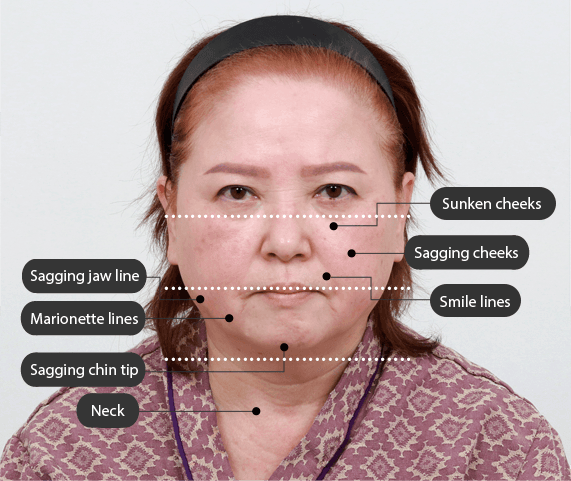
A facelift, or rhytidectomy, is designed to rejuvenate the face and neck, countering the deep folds, sagging, and loss of definition that occur either with aging or after massive weight loss. The operation lifts facial tissues, removes excess skin, and restores lost volume, using either fat transfer or repositioning. While it does not directly address skin texture or color changes (which may call for other procedures), it's the most effective intervention for major facial laxity.
Detailed Description of Facelift Techniques
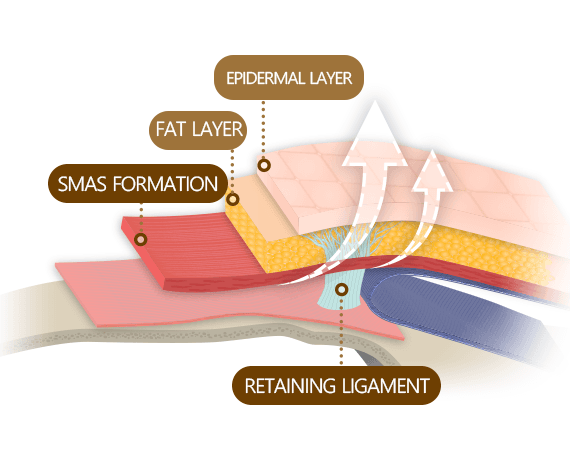
- Traditional Facelift (Rhytidectomy): Involves incisions along the hairline and ears, separation of skin, tightening of muscles (often with fat removal), and redraping skin for natural results.
- SMAS Facelift (Superficial Musculoaponeurotic System): Targets the SMAS layer for improved jawline/chin definition and longevity, often incorporating specialized techniques like SMAS stacking plication for extra support, especially needed by post-bariatric patients.
- Deep Plane Facelift: This advanced method lifts the SMAS, fat, and skin together, allowing for natural rejuvenation and correction of deep folds, often lasting over a decade.
- Mini-Facelift: A faster, less invasive option with shorter incisions—best for those with moderate sagging.
- Mid-Facelift: Targets cheeks and central face to restore midface volume.
- Neck Lift: Often paired with facelifts, a neck lift (with cervicoplasty or platysmaplasty) tackles "turkey neck" and sculpts the jaw and lower face.
How Facelifts Specifically Address Post-Weight Loss Facial Laxity
Facelifts are uniquely suited to extreme laxity after weight loss because:
- Removal of Excess Skin: Only surgery can eliminate large amounts of loose, non-retracting skin.
- Tightening of Muscles and Tissues: Lifting and securing the underlying SMAS and muscles creates a durable, natural lift.
- Fat Management: Repositions, removes, or augments facial fat to restore shape lost from rapid fat pad reduction.
These methods require surgeons skilled in techniques specific to massive weight loss to achieve robust, lasting, and natural-looking outcomes.
Complementary Procedures
Often, a facelift is combined with:
- Neck Lift: For smooth, defined jaw and necklines.
- Brow or Eyelid Lift (Blepharoplasty): To refresh the upper face and correct eyelid droopiness.
- Fat Grafting: To refill hollow cheeks or temples.
- Laser Resurfacing: Improves superficial skin appearance.
- Dermal Fillers and Biostimulators: Targets mild laxity or refines facelift results.
- Radiofrequency (RF) or Ultrasound Therapy: For additional tightening, though not effective alone for severe laxity from major weight loss.
The Patient Journey: Getting a Facelift in South Korea
South Korea stands out as a global hub for advanced cosmetic surgery, offering excellent outcomes and appealing to medical tourists.
Initial Consultation and Assessment
International patients typically start with remote consultations, discussing goals, expectations, and possible results. The surgeon conducts a thorough health and anatomy assessment, with a strong recommendation to wait at least 18 months after bariatric surgery (and maintain goal weight for six months) before proceeding, to ensure optimal results and lower complication risk. A BMI under 28 is ideal for reduced risk.
Pre-Operative Preparations
Pre-surgery steps include:
- Medical Assessments: Blood and health checks to confirm fitness for surgery.
- Medication/Lifestyle Guidance: Stopping blood thinners/NSAIDs and quitting smoking is crucial for healing.
- Practical Arrangements: International patients coordinate travel, accommodation, and finances. Many clinics offer free online consultations to ease planning.
The Surgical Procedure
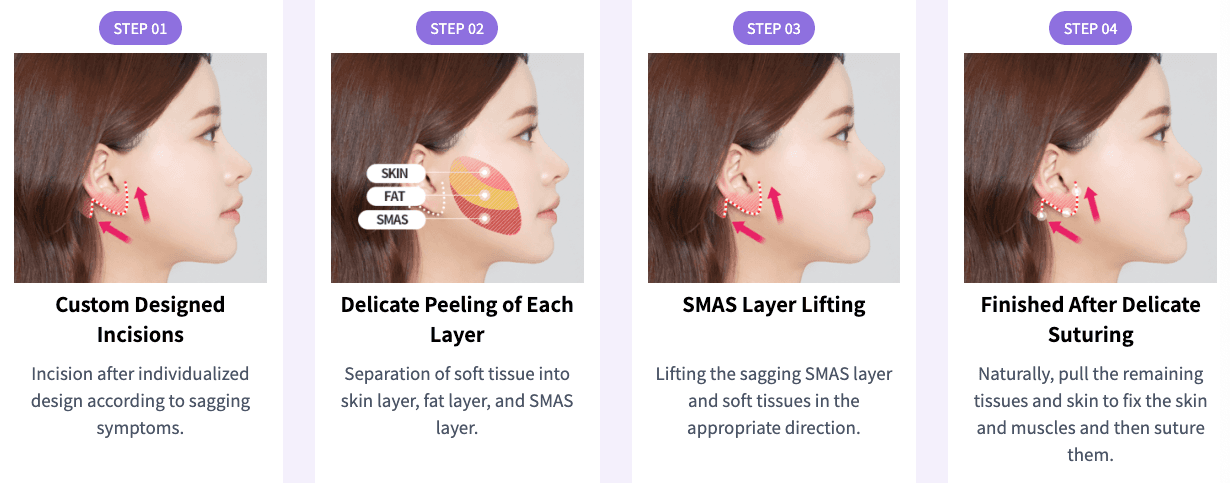
Facelift surgery takes around 3 hours under general anesthesia or IV sedation. Incisions are placed discreetly along hairlines and creases. The skin is lifted, deep tissues tightened, fat re-contoured or grafted as needed, and excess skin removed before closing incisions with stitches or glue. Surgery specifics are tailored to each patient's anatomy.
Post-Operative Care and Recovery
Recovery is typically outpatient or may involve a brief hospital stay. Patients must:
- Manage swelling/bruising with cold compresses and head elevation; most symptoms subside in two weeks.
- Care for incisions as instructed to avoid infection.
- Avoid strenuous activities for several weeks.
- Attend regular follow-up visits for progress checks.
- Protect healing scars from sun and avoid hair treatments for at least six weeks.
Final results appear over several months.
Choosing a Clinic and Surgeon for Medical Tourists in South Korea
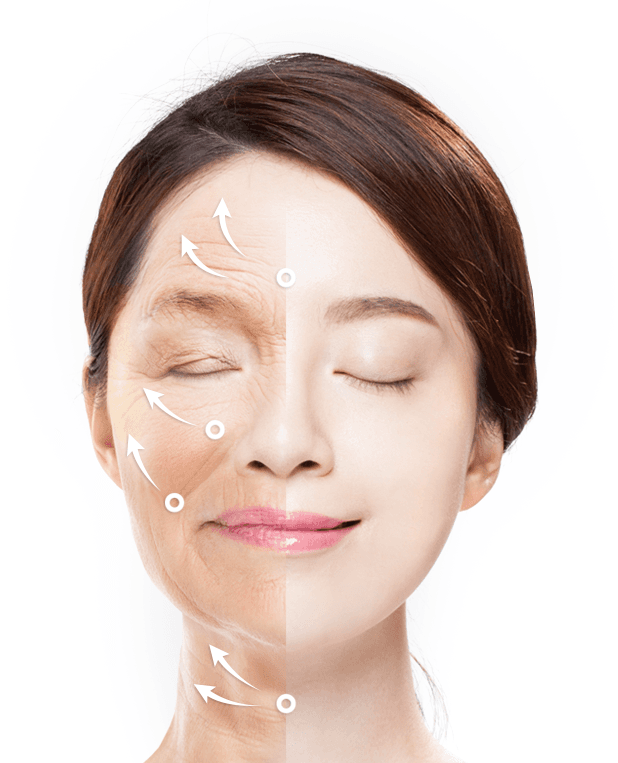
Patients should seek board-certified plastic surgeons with substantial facelift experience—especially with massive weight loss cases—at reputable clinics. Patient-centered care, thorough communication, a strong safety record, comprehensive services, and the convenience of online consultations are essential. South Korea’s reputation for innovation and affordability make it uniquely attractive for facelift medical tourism, especially for advanced procedures like deep plane facelifts.
Which Are the Best Clinics in Korea for Bariatric Weight Loss Face Sag?
Listed below are some of the best clinics in Korea for bariatric weight loss face sag.
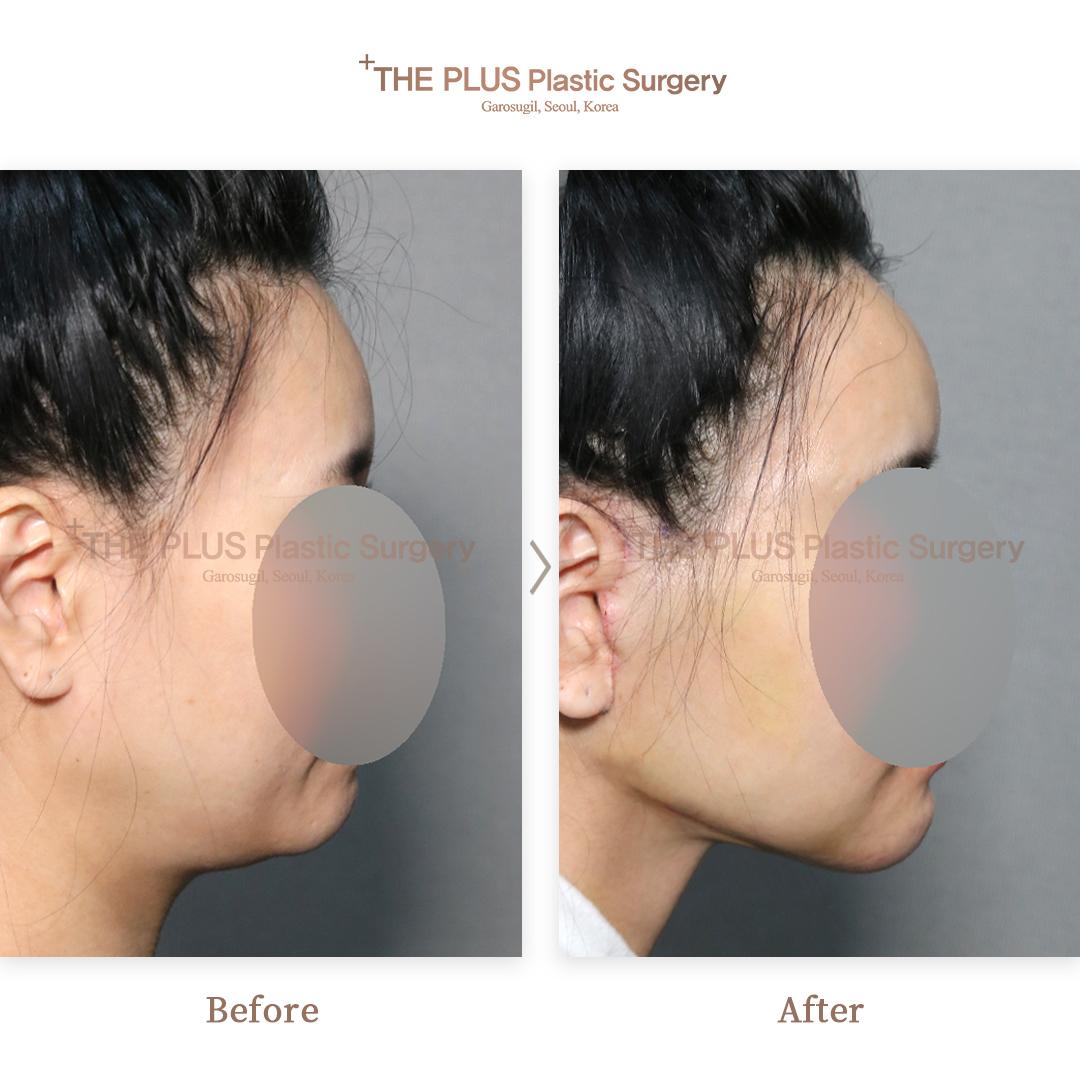
1. THEPLUS Plastic Surgery
You may consider THE PLUS Plastic Surgery if facial sagging after major weight loss has left you seeking either surgical lifting or less-invasive contour support: its stated face-lifting options include facelift, thread lift, and facial fat grafting, which can respectively address lax tissue, mild sagging, and areas of lost facial fullness.
- URL: THEPLUS Plastic Surgery Website
- Location: Gangnam-gu, Seoul
- Face-lifting options:
- Facelift is intended to lift and reposition sagging facial tissue while maintaining natural expression.
- Thread lift uses dissolvable threads for mild facial sagging when you are considering a less-invasive lifting approach.
- Facial fat grafting uses your own fat to restore fullness in hollow or flattened facial areas.
- Relevant surgical expertise:
- Dr. Kim is a board-certified plastic surgeon whose stated areas of expertise include facial contouring; he has received research awards related to 3D implants and conducts educational sessions for other plastic surgeons.
- Dr. Jeong is identified as President of the Korean Society of Plastic Surgeons and has a rhinoplasty-focused practice that emphasizes both function and appearance.
- Additional facial procedures:
- Available facial contouring services include cheekbone, square-jaw, chin, and facial-implant procedures.
- Blepharoplasty and ptosis correction are also listed for concerns involving excess eyelid tissue or drooping upper lids.
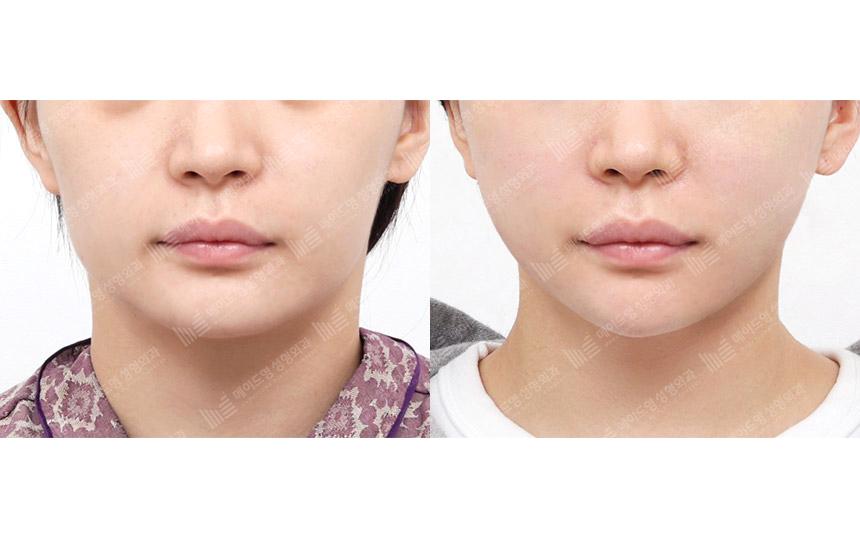
2. Made Young Plastic Surgery
You can expect Made Young Plastic Surgery to assess the areas and causes of your facial sagging before planning treatment. Its surgical facelift approach describes releasing stretched supporting tissues beneath the SMAS, then lifting the skin, fat, and SMAS together and securing them vertically to avoid excessive cheekbone emphasis; thread lifting and face-and-neck lifting options are also available.
- URL: Made Young Plastic Surgery Website
- Location: Seocho-gu, Seoul
- Facelift approach:
- The clinic describes a SMAS-based dissection that releases stretched supporting tissues and lifts the skin, fat, and SMAS as a unit.
- Lifted tissues are secured vertically, opposite the direction of sagging, with the stated aim of natural-looking, durable correction rather than an overemphasized cheekbone contour.
- Listed surgical options include facelift, neck lift, double-chin lift, forehead lift, and sub-brow lift.
- Thread-lift expertise:
- Dr. Soo-Yeon Park is described as a board-certified plastic surgeon specializing in thread lifting and as the clinic's provider for Silhouette Soft thread lifts.
- The clinic states that Dr. Park performed more than 10,000 lifting procedures and recorded the highest Silhouette Soft usage in Korea in 2022.
- Safety and aftercare:
- The clinic states that board-certified anesthesiologists are on site full time, with one-to-one anesthesiology monitoring and a cross-check response system.
- A dedicated aftercare center and systematic post-procedure care are listed.
- You receive direct consultation and diagnosis from the medical team before treatment, according to the clinic.
- Non-surgical support: Non-surgical lifting offerings include thread lift, Shurink, Ultherapy, V-line lifting, and skin boosters.
3. LABOM Plastic Surgery
You may consider LABOM Plastic Surgery for facial sagging after weight loss if you want a deep-plane, multi-layer lift designed around both laxity and volume shift. Its Triple Face Lift repositions the skin, SMAS, and deep malar fat layer together, with the stated goal of improving sagging around the mouth, jawline, double chin, neck, and deeper folds without relying on excessive skin tension.
- URL: LABOM Plastic Surgery Website
- Location: Gangnam-gu, Seoul
- Triple Face Lift:
- The procedure lifts the skin, SMAS, and deep fat layer together and repositions sagging tissue based on deep-plane principles.
- It is described as addressing nasolabial folds, marionette lines, jawline laxity, double chin, neck wrinkles, and loss of definition between the face and neck.
- Planning accounts for retaining ligaments, facial anatomy, your structure, and the degree of aging to preserve natural expression.
- The clinic lists sedation with local anesthesia, an estimated 3–4-hour procedure time, and 7–14 days of recovery.
- Customizable treatment planning:
- Potential combination techniques include SMAS grafting, deep-fat-pad removal, and platysma muscle sling surgery.
- Facial fat grafting is available for volume-deficient areas such as the forehead and nasolabial folds, using purified fat harvested from your own body.
- Facial liposuction may address excess cheek or chin fat and can be combined with contour lifting.
- Clinical care and recovery:
- Plastic-surgery specialists dedicated to anti-aging surgery directly perform procedures; the clinic reports more than 30 years of clinical experience across facial and hand anti-aging care.
- The clinic describes individualized consultation and pre-operative diagnosis, anesthesia and continuous monitoring systems, and high-definition endoscopic equipment.
- Aftercare includes scheduled progress checks and structured swelling, bruising, and scar-management programs, with plans for international visitors.
Cost Analysis: Facelift in South Korea for Medical Tourists
Average Costs in South Korea
Facelift costs in Seoul range from $1,800 to $25,400 USD, with the average around $13,600 USD. Deep plane facelifts are typically $8,000 to $13,000 USD, while mini-facelifts run $5,000 to $9,000 USD. Full, comprehensive procedures can approach $18,000 USD for top-tier surgeons. These fees often cover consultations, surgery, anesthesia, and initial aftercare.
Factors Influencing Cost
Pricing is determined by:
- Technique Used: More complex procedures = higher cost.
- Surgeon’s Reputation: Experienced, in-demand specialists command higher fees.
- Clinic Quality: Clinics with modern facilities and additional services may charge more.
- Package Inclusions: "All-inclusive" medical tourism packages might cover aftercare, tests, medications, garments, and sometimes accommodation or transfers.
Comparative Facelift Costs for Medical Tourists
| Country | Average Facelift Cost (USD) | Cost Range (USD) | Notes |
|---|---|---|---|
| USA | $11,400 (base), $17,500-48,000 | $10,000-$25,000+ | Includes surgeon, anesthesia, operating room fees, and all related expenses |
| UK | $13,300-$18,000 | Includes surgeon, anesthesia, operating room fees | |
| Japan | $10,000 | ||
| South Korea | $7,500 - $13,600 (average) | $1,800-$25,400, $8k-13k DP | Advanced techniques, all-inclusive options often available |
| Thailand | $4,000 | $1,500-$12,000 | Up to 75% less than US/UK; many packages cover various services |
| Turkey | $4,000 | $1,500-$10,500 | Often 80% less than US/UK; frequently includes all-inclusive packages |
| Mexico | $5,200 | $1,700-$13,000 | Up to 70% below US/UK; package deals common |
| Spain | $8,500 | ||
| Poland | $6,000 | ||
| Latvia | $4,600 | ||
| Croatia | $8,000 | ||
| Lithuania | $5,000 |
Potential Savings and Value Proposition for Medical Tourists
Choosing South Korea could mean savings of up to 50% over U.S. prices, with no compromise on quality. While cheaper options exist elsewhere, South Korea’s technical sophistication, skilled practitioners, and robust government support make it one of the best high-value destinations for complex facelifts.
Patient Experiences and Outcomes: Addressing Post-Bariatric Facial Sagging
Expected Aesthetic Results and Realistic Expectations
Facelifts after bariatric weight loss dramatically restore facial definition, address sagging, and correct gauntness. The standard is a renewed, natural appearance that matches the body’s transformation. Final results yield tighter, lifted skin and a marked reduction in jowls or neck folds. Patients must remember, however, that facelifts do not fix superficial skin concerns like sun damage, which can be treated separately.
Patient Satisfaction Rates and Key Drivers
Research shows high satisfaction—over 90%—with facelift outcomes, with results lasting a decade or more for many. Aesthetic results and positive, communicative relationships with the surgeon are the strongest predictors of satisfaction. Disappointment most often stems from unmet expectations or poor surgeon communication, emphasizing the need for clear, realistic pre-operative conversations.
Psychological and Physical Benefits
Beyond looks, patients report better self-esteem and quality of life. With excess skin removed, they feel more confident, more comfortable, and find it easier to fit into clothes and stay active. These improvements help reinforce healthy habits and sustain weight loss.
Potential Challenges and Risks
Risks include bleeding, infection, wound issues, nerve injury, numbness, and visible scarring (which experienced surgeons minimize with careful incision placement). Outcomes can be compromised by future large weight changes. Insurance coverage is often limited unless medical complications from excess skin exist.
Conclusion
Severe facial laxity after bariatric surgery is a unique challenge, both physically and emotionally. Facelift (rhytidectomy), particularly advanced techniques like the deep plane or SMAS facelift, offers the best solution for correcting profound skin laxity and restoring a youthful, natural look. South Korea stands out as an exceptional destination for these procedures, providing expertise and affordability. To achieve the best results, patients should carefully select experienced surgeons, ensure their health and expectations are optimized, and plan thoroughly for the journey and recovery.
References
1, 2, 3, 4, 5, 6, 7, 8, 9, 10, 11, 12, 13, 14, 15, 16, 17, 18, 19, 20, 21, 22, 23, 24, 25, 26, 27, 28, 29, 30
Frequently Asked Questions
Related Blogs
Renuvion in Korea: Methods, Recovery, Risks, and Travel Planning
Renuvion uses helium-plasma radiofrequency energy beneath the skin, alone or after liposuction, to address mild-to-moderate localized laxity; Dermal resurfacing treats surface wrinkles with an external ablative handpiece. The article covers candidacy, alternatives, preparation, recovery, risks, Korea travel planning, and the need for surgeon clearance before flying.
Updated: Oct 13, 2026
Temporal Lift in Korea: Methods, Recovery, Risks and Travel Planning
A temporal lift elevates the outer brow through temporal scalp incisions, using open, subcutaneous, endoscopic, or combined techniques chosen for brow position, hairline, and eyelid anatomy. The article covers candidate screening, Korea facility and surgeon verification, a 10–14-day stay, recovery restrictions, aftercare, warning signs, and alternatives such as forehead lift, blepharoplasty, and p
Updated: Oct 13, 2026
Premature aging face treatment in Korea: Face Lift options for younger-looking skin
Early onset facial laxity and wrinkles are rising among 30s–40s. Our Korea medical tourism guide explains rhytids and how a rhytidectomy (face lift) can refresh the lower face and neck. Explore options: Deep Plane Facelift, SMAS Facelift, Mini Facelift, Lower Facelift and Neck Lift, plus non-surgical adjuncts. Learn candidacy, recovery timelines, costs, certifications, and tips for planning surger
Updated: Oct 12, 2026
Brow Ptosis in Korea: Forehead Lift and Subbrow Lift Treatment Options
Thinking about Brow Ptosis surgery in Korea? This expert guide explains diagnosis, functional vs cosmetic concerns, and compares a Forehead Lift with a Subbrow Lift—indications, scars, recovery, and costs. It maps the South Korea medical tourism journey (planning, visas, surgery day, follow-ups), highlights surgeon credentials and safety, and shares real outcomes, risks, and patient stories so you
Updated: Oct 12, 2026
Clinics offering Face Lift
RINE Plastic Surgery Clinic | Facelift and Eye Rejuvenation Surgery
Nonhyeon

SH Clinic: Comprehensive Women's, Men's & Couples' Health Services in Korea
Sinsa

THEPLUS Plastic Surgery Korea | Eye, Nose, Face & Body Surgery
Sinsa

Made Young Plastic Surgery: Rejuvenating Aesthetic Excellence in Korea for Face Lifts, Contouring and More
Gangnam Station