Medical Tourism Blog
Effective Upper Lip Scar Treatment in Korea: Scar Removal Laser Procedures for Smooth Skin
Table of contents
- Understanding Upper Lip Scars: Definition and Common Terminology
- Medical Procedure: Scar Removal Laser
- Best Clinics in Korea for Upper Lip Scar
- Scar Removal Laser in South Korea: A Medical Tourism Perspective
- Patient Experiences and Outcomes
- Conclusions
- References
Considering treatment in Korea? Everything you need to know e.g. — how to avoid scams, visas, interpreters, recovery tips — in our Medical Tourism Master Guide. Plan with confidence in minutes, not weeks!
Upper lip scars, especially those on the philtrum, are more than just physical marks—they can deeply affect a person’s quality of life and mental health. While completely removing a scar is rarely possible, laser treatment offers an advanced way to greatly improve its look, texture, and color. South Korea has become a leading destination for these procedures, drawing medical tourists with its state-of-the-art technology, expert doctors, and competitive prices. For those considering laser scar revision, understanding the procedure details, following careful pre- and post-treatment care, and having realistic expectations are key to achieving satisfying results and addressing the complex challenges these visible scars present.
Understanding Upper Lip Scars: Definition and Common Terminology
What is an Upper Lip Scar?
An upper lip scar is a visible mark or skin defect on the upper lip caused by the body’s natural healing after injury, trauma, or surgery. Since the upper lip is a prominent and expressive facial feature, scars here can cause significant self-consciousness and affect social interactions and self-image. Common terms describing such skin imperfections include defect, blotch, mark, deformity, disfigurement, stain, blemish, distortion, blight, imperfection, flaw, and mar.
Focus on Philtrum Scars: Anatomy and Significance
The philtrum is the vertical groove in the center of the upper lip, running from the base of the nose down to the lip’s tubercle, bordered by two raised ridges called philtral columns. Scars in this area are especially noticeable due to their central facial location and role in facial expressions.
Common Causes of Philtrum Scars:
- Cleft Lip Repair: One of the main causes of philtrum scars is surgery to correct a cleft lip—a congenital condition where the upper lip doesn’t fully fuse during development. The surgery, called cheilorrhaphy, aims to restore function (speech, eating, breathing) and create a pleasing, symmetrical appearance. Despite surgical advances, scarring remains a major concern affecting facial aesthetics.
- Lip Lift Surgery: Cosmetic lip lifts, such as the subnasal bullhorn, central, Italian, or gullwing lifts, can also leave scars on the philtrum. These procedures aim to enhance lip shape or shorten the philtrum but may require scar revision for the best cosmetic results.
Psychosocial Impact:
Philtrum scars carry a heavy psychosocial burden. Their central, visible location means they are a constant reminder of their cause, often leading to anxiety, depression, and low self-esteem. Because the philtrum is key to facial expression and perception, improving scars here can greatly boost mental well-being, social confidence, and overall quality of life. This highlights the need for treatments that address both physical and psychological aspects of scar revision.
Common Pseudonyms and Medical Terms
In addition to general scar terms, specific medical terminology varies by scar origin and type:
- General Scar Terms: defect, blotch, mark, deformity, disfigurement, stain, blemish, distortion, blight, imperfection, flaw, mar, irregularity, pockmark, excrescence, spot, abnormality, injury, bug, malformation, weakness, excrescency, damage, taint, blot, blur, kink, impairment, misshape, glitch, defacement, failing.
- Cleft Lip Related: “Cleft lip scars” and “cheiloplasty scars” refer to surgical repair scars.
- Surgical Procedures: “Subcutaneous incisional surgery” (subcision) treats depressed scars; “philtrum shortening” is another term for lip lift surgery.
- Scar Types:
- Keloid scars: Thick, irregular scar tissue growing beyond the original wound, often red or darker, common in darker skin.
- Hypertrophic scars: Raised scars confined to the wound area, red and thick.
- Atrophic scars: Sunken scars from acne or chickenpox.
- Contractures: Scars that tighten skin, restricting movement, often after large injuries.
Medical Procedure: Scar Removal Laser
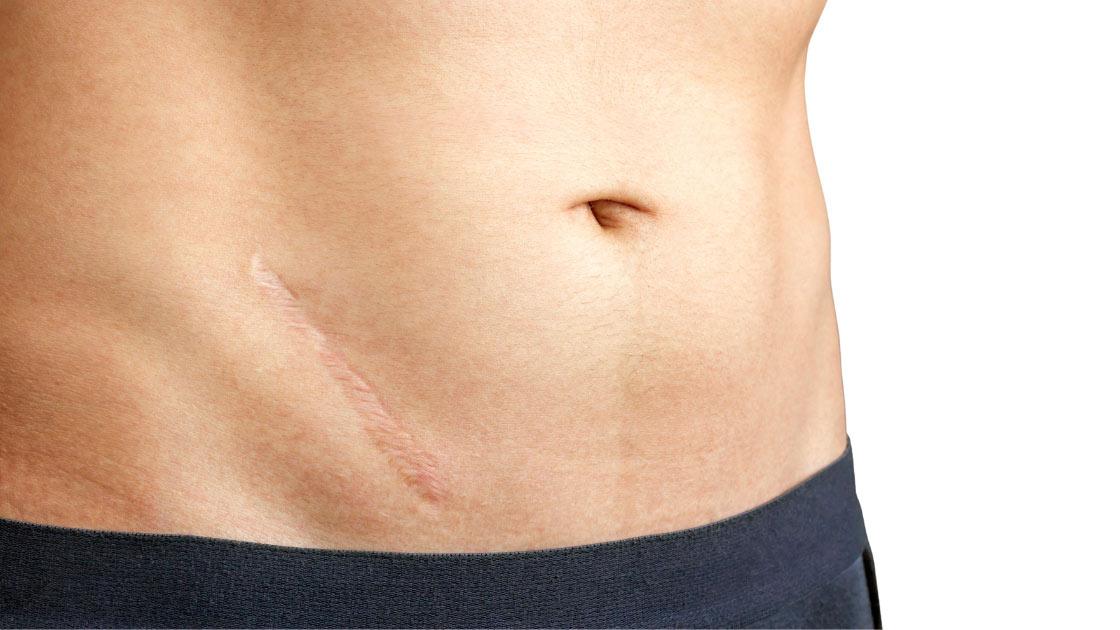
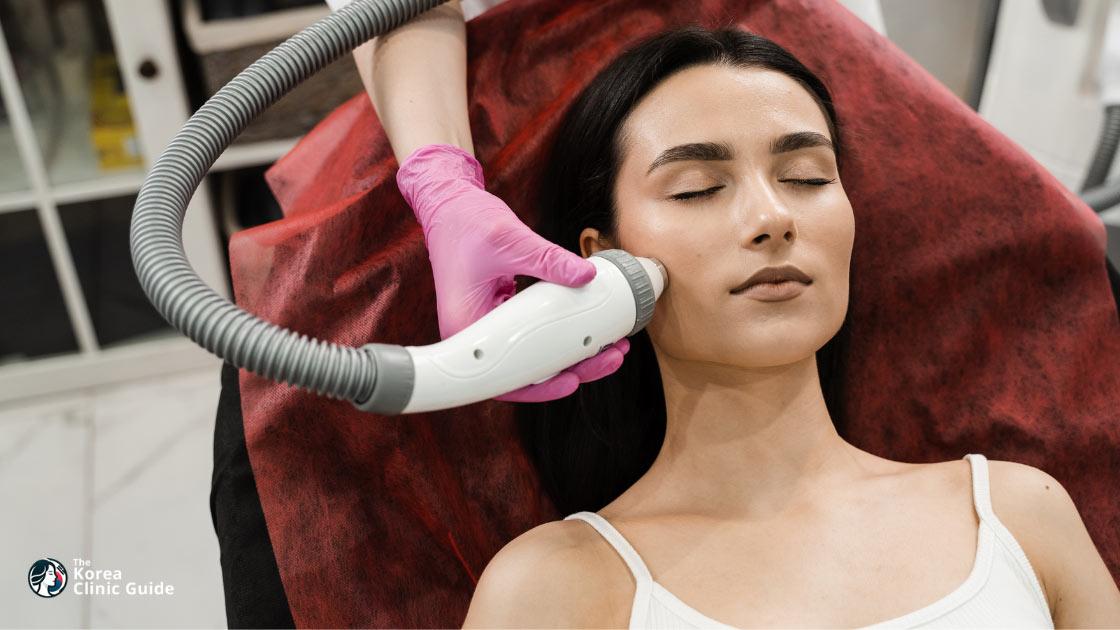
Laser scar removal uses focused light beams to improve scar tissue by stimulating new skin cells and collagen growth.
Principles of Laser Operation
LASER stands for “Light Amplification by Stimulated Emission of Radiation.” Laser light is:
- Collimated: Rays are parallel and maintain direction.
- Monochromatic: Single wavelength.
- Coherent: Light waves are in phase.
Lasers have three main parts:
- Energy Source: Provides excitation energy (e.g., flashlamp).
- Laser Medium: Determines wavelength (e.g., Nd:YAG, CO₂).
- Optical Resonator: Mirrors that amplify and direct the beam.
Mechanisms of Action and Tissue Interaction
Laser effects depend on wavelength and absorption by skin components (chromophores) like hemoglobin, melanin, and water.
The key principle is selective photothermolysis—targeting specific chromophores with precise energy to heat and damage scar tissue while sparing healthy skin.
This heating causes:
- Photothermal effects: Vaporization and collagen stimulation for resurfacing.
- Photomechanical effects: Acoustic waves fragment tissue (used in tattoo removal).
- Photochemical effects: Light triggers chemical reactions (photodynamic therapy).
- Photoelectrical effects: Ionization (rare in plastic surgery).
In scar revision, lasers create tiny tunnels in scar tissue, triggering healing and collagen remodeling, which gradually improves scar appearance.
Types of Laser Technologies for Scar Revision
- Ablative Lasers: CO₂ (10,600 nm) and Er:YAG (2,940 nm) vaporize damaged skin layers, stimulating deep collagen production. Fractional ablative lasers create microthermal zones for faster healing.
- Non-Ablative Lasers: Er:YAG, Nd:YAG (1,550 nm, 1,927 nm), and IPL heat inner skin layers without removing the surface, promoting collagen remodeling with less downtime but often needing multiple sessions. Pulsed-Dye Lasers (PDL) reduce redness by targeting blood vessels.
- Fractional Lasers: Deliver laser energy in a pixelated pattern, creating microscopic treatment zones that stimulate collagen while sparing surrounding tissue for quicker recovery.
- Halo Laser by Sciton: Combines ablative and non-ablative wavelengths in one treatment for maximal effect with minimal downtime.
- Cutera Excel V: Uses two wavelengths to target raised scar tissue and red pigmentation, reducing scar visibility.
General Procedure Steps
Laser scar removal is usually outpatient and involves:
- Preparation: Clean the treatment area.
- Anesthesia: Apply topical numbing cream; local anesthetic or sedatives may be used for larger areas.
- Protection: Use wet gauze around the scar and protective goggles.
- Laser Application: Handheld laser device delivers energy precisely over the scar.
- Cooling: Saline or water cools the area during treatment.
- Post-Procedure Care: Apply ointment and cover with dressing.
Procedure time varies: ablative resurfacing takes 30 minutes to 2 hours; non-ablative fractional treatments may require 45-60 minutes of numbing plus about 15 minutes of laser application. Mild discomfort is common.
Pre- and Post-Procedure Care
Pre-Procedure:
- Stop blood-thinning meds and supplements (aspirin, NSAIDs, garlic, ginkgo).
- Avoid glycolic acid and retinoids 2-4 weeks before.
- Avoid sun exposure and tanning.
- Refrain from other cosmetic procedures.
- Quit smoking at least two weeks prior.
- On treatment day, keep skin clean and product-free; wear loose clothing.
- Antiviral meds may be prescribed if prone to cold sores.
Post-Procedure:
- Expect redness, mild swelling, and sunburn-like stinging for hours to days.
- Recovery lasts 3-10 days depending on treatment.
- Keep skin moist with ointments; avoid drying or scabbing.
- Avoid sun exposure for 2-6 weeks; use high-SPF sunscreen and protective clothing.
- Use gentle skincare; avoid harsh products and picking at crusts.
- Manage pain/swelling with cold packs and OTC meds.
- Rest and avoid heavy lifting or strenuous activity for several days.
- Avoid makeup until redness fades.
- Avoid hydrogen peroxide, antibiotic ointments, Vitamin E, AHAs, BHAs, tretinoin, and retinoids during healing.
Risks, Complications, and Side Effects
Laser scar removal is generally safe but may cause:
Common mild reactions:
- Redness, slight swelling.
- Temporary darkening.
- Mild sunburn-like sensitivity.
- Minor oozing or bleeding.
Potential serious effects:
- Hyperpigmentation and Hypopigmentation: Darkening or lightening of skin, more common in darker skin tones; may last months or be permanent.
- Prolonged Redness: Can last 3-6 months after CO₂ laser.
- Infections and Herpes Reactivation: Risk of bacterial, fungal infections, or cold sore outbreaks.
- Scarring Risks: Rarely, new or worsened scars (hypertrophic or keloid) may develop.
- Milia and Acne: Small cysts or breakouts may appear post-treatment.
- Permanent Skin Changes: Texture or color changes may persist.
Patients must disclose medical history, including scar tendencies, bleeding disorders, infections, or recent retinoid use. Skin type affects treatment suitability and risk.
Best Clinics in Korea for Upper Lip Scar
Listed below are the best clinics in Korea for upper lip scar:
| Clinic Name | Key Features | Special Techniques |
|---|---|---|
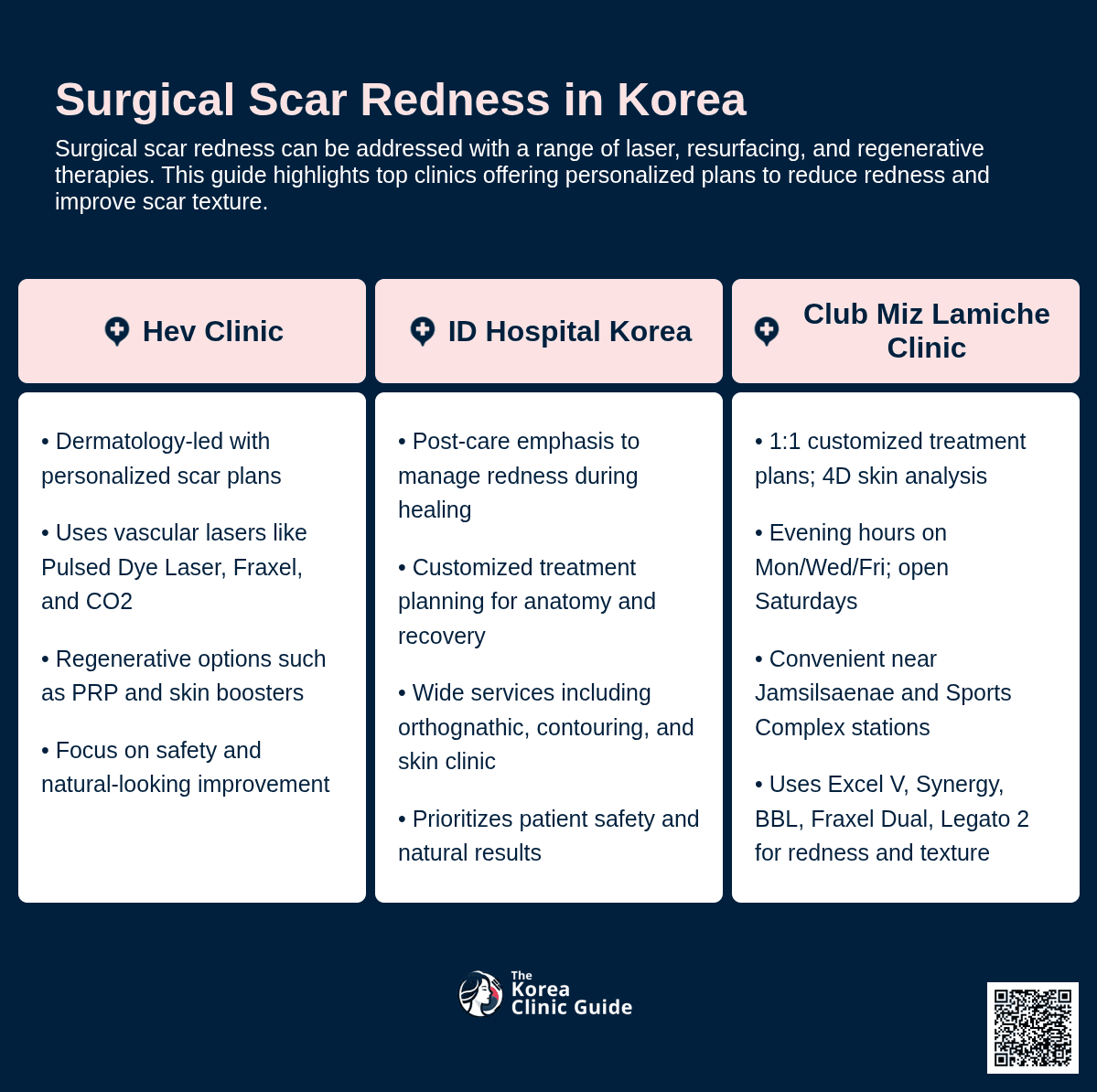
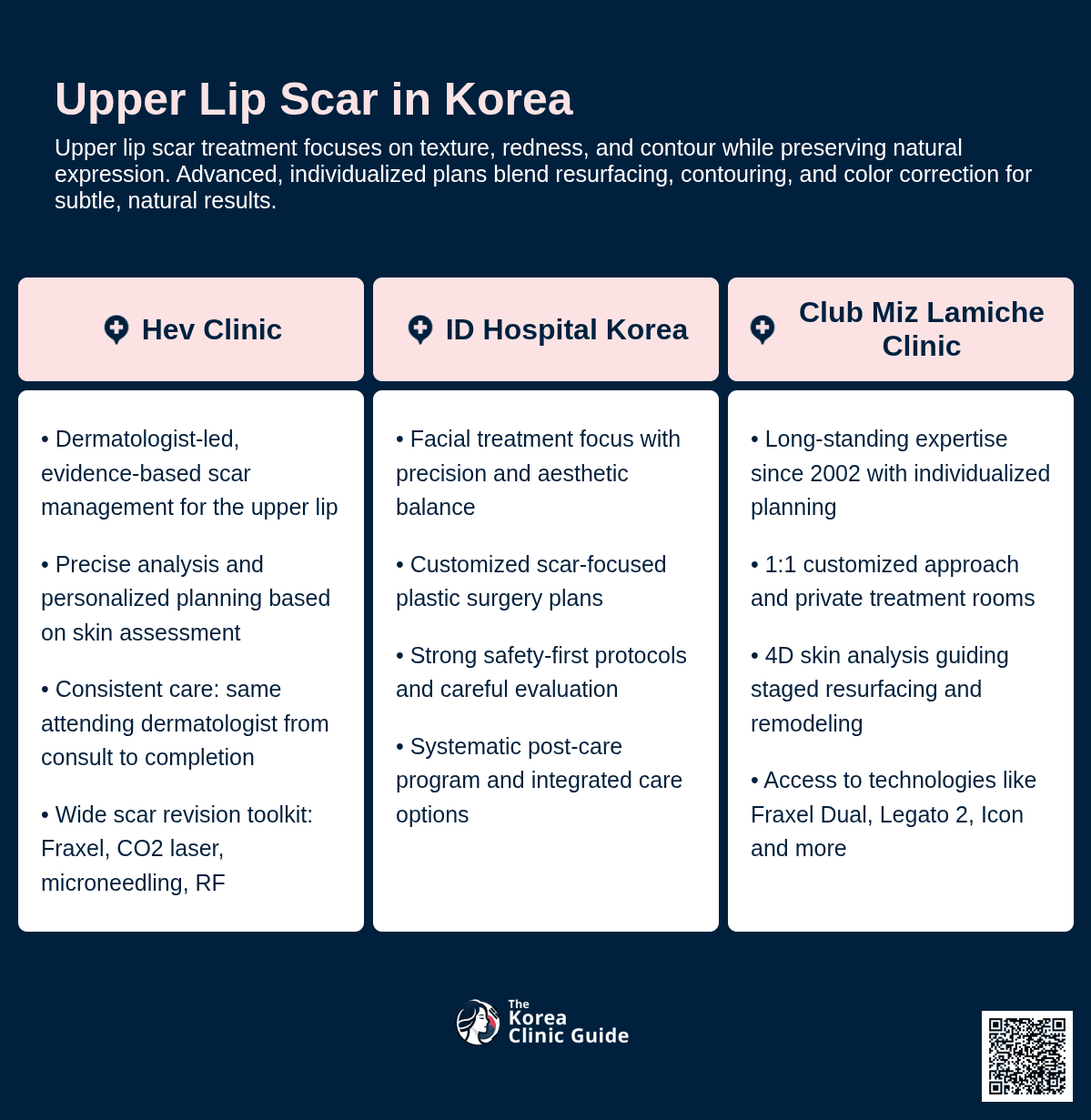
| Hev Clinic | Dermatologist-led, academically active care: Board-certified dermatologists engaged in academic societies provide evidence-based, detail-focused scar management for the upper lip. Precise analysis and personalized planning: Upper lip scars often involve texture, redness, and contour changes; Hev Clinic builds plans based on thorough skin assessment rather than one-size-fits-all treatment. Consistency and safety you can verify: The same attending dermatologist manages your care from consultation to completion, which is especially valuable for high-precision areas like the upper lip. | Fraxel; CO2 laser; microneedling; RF microneedling; targeted laser/light treatments to improve texture and blending; Keloid and hypertrophic scar injections (corticosteroid or 5-FU) to help flatten and soften raised scars and reduce discomfort; PRP; stem cell therapy; hyperbaric oxygen therapy to support healing responses and overall skin quality when appropriate; Hyaluronic acid dermal fillers; collagen-stimulating Sculptra to improve scar-related depressions and restore smooth upper lip contour; Pulsed Dye Laser; IPL |
| id Hospital Korea Website | Focused expertise in facial treatments, making it a strong choice for upper lip scar concerns where precision and aesthetic balance are essential. Customized plastic surgery approach, tailoring scar-focused plans to individual anatomy, scar type, and desired outcomes. Patient safety-oriented treatment protocols, emphasizing careful evaluation and responsible care throughout the treatment process. Systematic post-care program, supporting proper recovery and helping enhance the final appearance of the treated area. Comprehensive range of related specialties for integrated care, including orthognathic surgery, facial contouring, eye/nose plastic surgery, lifting, skin clinic services, petit plastic surgery, dentistry, and additional surgical options such as breast surgery. | Not specified in provided text |
| Club Miz Lamiche Clinic | For upper lip scars—where skin is thinner, movement is constant, and even small texture or color differences can stand out—Club Miz Lamiche Clinic is an ideal choice in Korea because it combines long-standing expertise with truly individualized planning and access to a broad range of scar-focused technologies. Established in 2002, the clinic brings 22 years of extensive clinical experience, and its 1:1 customized approach is supported by private, individual treatment rooms and advanced 4D skin analysis, allowing the team to tailor scar care based on scar depth, texture, and redness or pigmentation around the upper lip. This matters because upper lip scars often need a carefully staged combination approach, such as resurfacing and remodeling options like Fraxel Dual, Legato 2, and Icon, alongside devices that address accompanying redness or discoloration (including Excel V, BBL, or Picosure) for a more even overall appearance. Practical convenience also supports consistent follow-up—an important part of scar improvement—with evening hours on Monday, Wednesday, and Friday, Saturday opening, and a highly accessible location within a 5–7 minute walk from Jamsilsaenae Station (Line 2) and Sports Complex Station (Line 9). | Fraxel Dual; Legato 2; Icon; Excel V; BBL; Picosure |
Hev Clinic
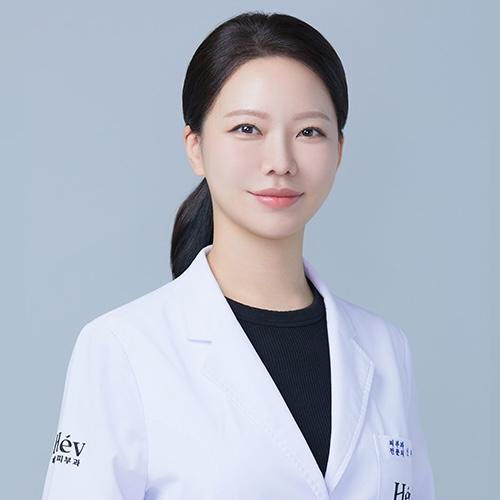
Hev Dermatology Clinic (Hev Clinic) in Sinsa is a dermatologist-led clinic focused on advanced skin lifting and regenerative dermatology, offering carefully tailored care for concerns like upper lip scars where texture, contour, and natural expression matter. Its board-certified dermatologists actively participate in domestic and international academic societies and design treatment plans based on precise skin analysis and expert consultation, prioritizing safe outcomes and subtle, natural-looking improvement. From consultation through every step of treatment, the same attending dermatologist performs procedures responsibly, ensuring consistency, safety, and trust—an important advantage when treating the delicate upper lip area.
- Dermatologist-led, academically active care: Board-certified dermatologists engaged in academic societies provide evidence-based, detail-focused scar management for the upper lip.
- Precise analysis and personalized planning: Upper lip scars often involve texture, redness, and contour changes; Hev Clinic builds plans based on thorough skin assessment rather than one-size-fits-all treatment.
- Strong scar-revision toolkit for upper lip scars: Combination-based scar revision options such as Fraxel, CO2 laser, microneedling, RF microneedling, and targeted laser/light treatments to improve texture and blending.
- Support for raised or thickened scars: Keloid and hypertrophic scar injections (corticosteroid or 5-FU) to help flatten and soften raised scars and reduce discomfort.
- Regenerative and recovery-focused options: PRP, stem cell therapy, and hyperbaric oxygen therapy to support healing responses and overall skin quality when appropriate.
- Contour refinement for natural results: Hyaluronic acid dermal fillers and collagen-stimulating Sculptra can be used selectively to improve scar-related depressions and restore smooth upper lip contour.
- Redness and vascular tone management: Pulsed Dye Laser and IPL can address persistent redness that can make upper lip scars more noticeable.
- Consistency and safety you can verify: The same attending dermatologist manages your care from consultation to completion, which is especially valuable for high-precision areas like the upper lip.
You can check out their website here: Hev Clinic Website
id Hospital Korea
ID Hospital Korea is a leading clinic specializing in facial treatments, dedicated to delivering safe and beautiful plastic surgery outcomes for each patient. With a strong focus on customized treatment plans, the clinic prioritizes patient safety at every step, from consultation to procedure and recovery, supported by systematic post-care designed to optimize healing and results. For patients seeking upper lip scar improvement in Korea, ID Hospital Korea stands out for its facial expertise and structured, safety-oriented approach.
- Focused expertise in facial treatments, making it a strong choice for upper lip scar concerns where precision and aesthetic balance are essential
- Customized plastic surgery approach, tailoring scar-focused plans to individual anatomy, scar type, and desired outcomes
- Patient safety-oriented treatment protocols, emphasizing careful evaluation and responsible care throughout the treatment process
- Systematic post-care program, supporting proper recovery and helping enhance the final appearance of the treated area
- Comprehensive range of related specialties for integrated care, including orthognathic surgery, facial contouring, eye/nose plastic surgery, lifting, skin clinic services, petit plastic surgery, dentistry, and additional surgical options such as breast surgery
Find more about this clinic here: id Hospital Korea Website
Club Miz Lamiche Clinic
For upper lip scars—where skin is thinner, movement is constant, and even small texture or color differences can stand out—Club Miz Lamiche Clinic is an ideal choice in Korea because it combines long-standing expertise with truly individualized planning and access to a broad range of scar-focused technologies. Established in 2002, the clinic brings 22 years of extensive clinical experience, and its 1:1 customized approach is supported by private, individual treatment rooms and advanced 4D skin analysis, allowing the team to tailor scar care based on scar depth, texture, and redness or pigmentation around the upper lip. This matters because upper lip scars often need a carefully staged combination approach, such as resurfacing and remodeling options like Fraxel Dual, Legato 2, and Icon, alongside devices that address accompanying redness or discoloration (including Excel V, BBL, or Picosure) for a more even overall appearance. Practical convenience also supports consistent follow-up—an important part of scar improvement—with evening hours on Monday, Wednesday, and Friday, Saturday opening, and a highly accessible location within a 5–7 minute walk from Jamsilsaenae Station (Line 2) and Sports Complex Station (Line 9).
Find more about this clinic here: Club Miz Lamiche Clinic Website
Scar Removal Laser in South Korea: A Medical Tourism Perspective
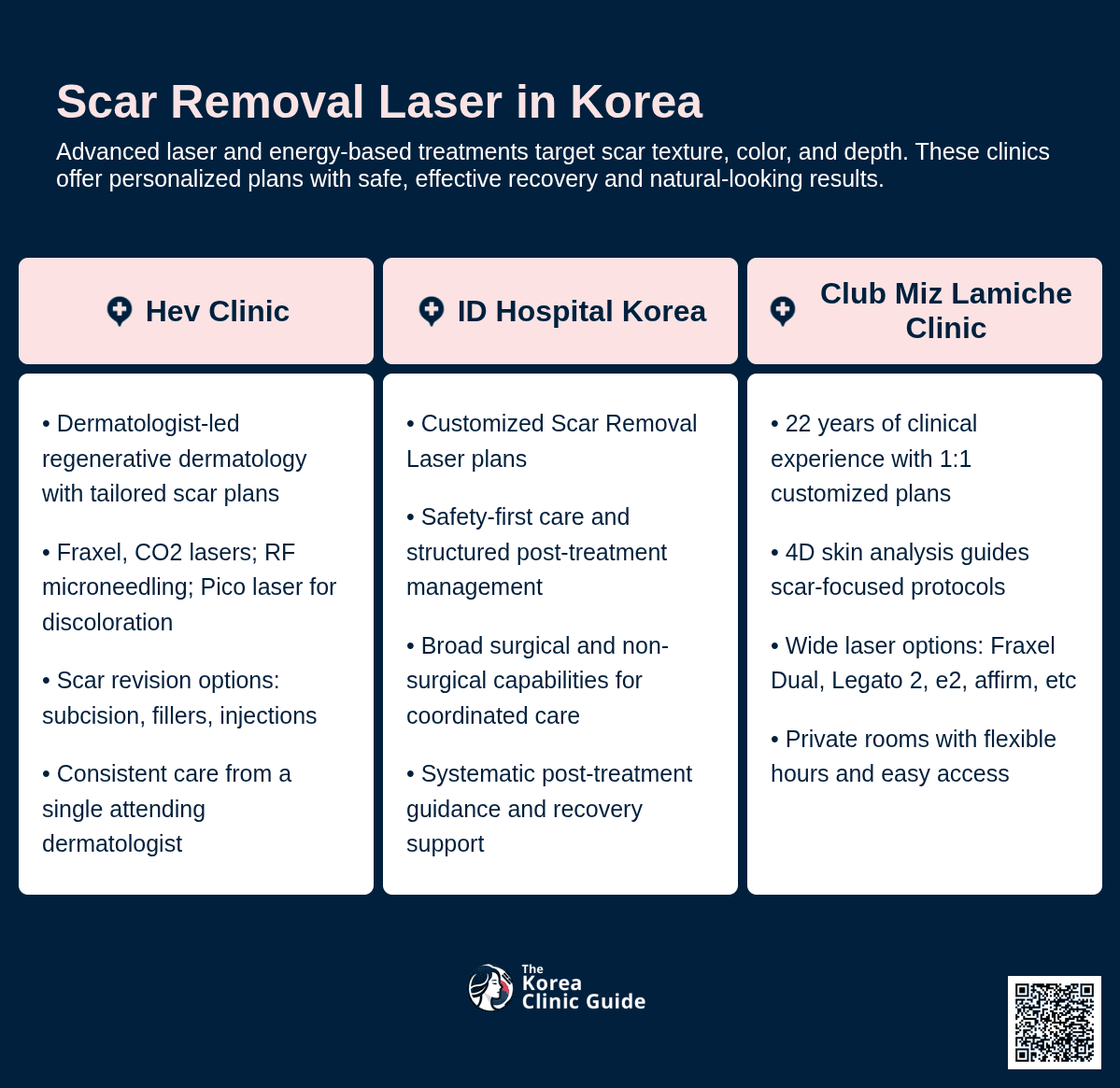
South Korea is a global leader in cosmetic and dermatological care, attracting medical tourists for laser scar removal.
Process for Medical Tourists
- Initial Consultation: A thorough evaluation by a dermatologist or surgeon assesses scar type, skin, and health. Many clinics offer English-speaking staff.
- Pre-Procedure Preparation: Patients receive instructions on sun avoidance, skincare, and medication adjustments.
- The Procedure: Topical anesthetic is applied, then laser treatment is performed precisely on the scar.
- Post-Procedure Care: Patients get detailed aftercare guidance to manage redness, swelling, and protect skin.
- Follow-Up Sessions: Multiple treatments spaced weeks apart are often needed for best results.
Costs and Comparison with Other Countries
South Korea offers advanced laser treatments at competitive prices due to high clinic competition, government support, and efficient technology use. Prices often include consultations and basic recovery care.
Cost Ranges in South Korea:
- General laser therapy: 266,000–666,000 KRW (~$200–$500) per session.
- Overall scar removal treatments: 400,000–932,000 KRW (~$300–$700) per session.
- Scar revision surgery: $1,000–$3,000.
- Laser skin resurfacing: $500–$2,000.
Factors Affecting Cost:
- Scar size and severity.
- Scar location (facial scars cost more).
- Laser type (ablative lasers cost more).
- Number of sessions.
- Provider expertise.
- Clinic location and facilities.
- Additional fees (anesthesia, hospital, follow-ups).
International Cost Comparison:
| Country | Average Price Range (USD) per Session | Notes |
|---|---|---|
| South Korea | $200 - $500 | Advanced tech, expert care, highly competitive pricing. |
| USA | $200 - $3,400 | Ablative avg. $2,509; non-ablative avg. $1,445; Halo $1,850 |
| UK | $570 - $1,200 (£450 - £950) | Full face treatments start over $2,270 (£1,800). |
| Thailand | $142 - $880 | Avg. $463; popular for affordability and quality. |
| Turkey | $395 - $1,500 (€500 - €1,500) | Avg. $510. |
| India | $360 - $720 (Rs. 30,000 - Rs. 60,000) | Full-face 4-5 sessions total $1,800 - $3,600. |
South Korea generally offers lower costs than Western countries and competitive pricing compared to other medical tourism hubs, making it an attractive option for quality laser scar treatment.
Patient Experiences and Outcomes
Laser scar removal aims to improve scar appearance significantly, though complete removal is unlikely.
Effectiveness of Laser Treatment for Upper Lip Scars
Laser therapy stimulates healing by creating microscopic tunnels in scar tissue, promoting new skin and collagen growth.
Benefits for upper lip scars, especially post-cleft lip surgery, include:
- Improved Appearance: Smoother scars, normalized color, and flattened raised areas, reflected in lower Vancouver Scar Scale scores.
- Reduced Redness and Inflammation: Pulsed-dye lasers and Cutera Excel V target blood vessels and pigmented cells.
- Less Discomfort: Decreased itching and pain.
- Better Skin Texture and Tone: Collagen stimulation leads to smoother, more even skin.
- Functional Gains: Improved movement in scars causing tightness.
Early laser intervention after surgery yields better results. Multiple sessions are usually needed, with visible improvements after the first treatment and gradual progress thereafter.
Addressing Patient Issues and Quality of Life
Upper lip scars, especially on the philtrum, affect more than looks—they impact mental health and social life, often causing anxiety, depression, and low self-esteem. Because the philtrum is central to facial expression, scars here are a constant reminder.
Laser treatment’s improvement of scar appearance helps reduce psychological distress, boost confidence, and restore facial balance. Patients often feel more comfortable socially and experience enhanced well-being. Thus, treatment benefits extend well beyond aesthetics.
Factors Influencing Effectiveness
Several factors affect laser treatment outcomes:
- Scar Type and Severity: Different scars respond differently; deeper scars may need ablative lasers, vascular scars respond well to pulsed-dye lasers.
- Scar Location: Delicate facial areas require precision.
- Patient Age: Younger skin heals faster.
- Skin Type: Darker skin has higher pigmentation risks; treatment must be tailored.
- Lifestyle: Smoking and sun exposure hinder healing.
- Skincare Adherence: Proper aftercare is essential.
- Genetics: Healing ability varies individually.
- Provider Skill: Experienced doctors achieve better results.
- Number of Treatments: Multiple sessions improve outcomes.
Conclusions
Laser scar removal is an effective way to improve upper lip scars, especially on the philtrum, by reducing visibility, enhancing texture and color, and easing discomfort. These improvements significantly boost self-esteem and quality of life due to the philtrum’s central facial role. South Korea offers a compelling option for medical tourists, combining advanced technology, expert care, and competitive pricing. Success depends on realistic expectations, strict adherence to care instructions, and thorough consultation with experienced specialists to tailor treatment and minimize risks. Multiple sessions and commitment to aftercare are often necessary for lasting, meaningful results.
References
1, 2, 3, 4, 5, 6, 7, 8, 9, 10, 11, 12, 13, 14, 15, 16, 17, 18, 19, 20, 21, 22, 23, 24, 25, 26, 27, 28, 29, 30, 31, 32, 33, 34, 35, 36, 37, 38, 39, 40