
Medical Tourism Blog
PicoSure in Korea: Uses, Recovery, Safety, and Travel Planning
Table of contents
- PicoSure at a Glance
- What Is PicoSure?
- Who Is a Good Candidate for PicoSure?
- How Is PicoSure Performed?
- Why Visit Korea for PicoSure?
- Key Information for International Patients
- Which Are the Best Clinics in Korea for Picosure?
- PicoSure From Start to Finish
- Alternatives to PicoSure
- How Can I Prepare for PicoSure?
- Aftercare Advice
Considering treatment in Korea? Everything you need to know e.g. — how to avoid scams, visas, interpreters, recovery tips — in our Medical Tourism Master Guide. Plan with confidence in minutes, not weeks!
Last updated: September 2026
PicoSure at a Glance
- What it treats — PicoSure is a picosecond laser platform used for selected benign pigment, tattoo fading, and fractional treatment of atrophic acne scars, texture, and fine lines; the exact wavelength and optic determine the use.
- Results need a series — Acne-scar protocols commonly use 3 sessions spaced 4–6 weeks apart, with improvement assessed 1–3 months after the last session; tattoo removal also requires multiple sessions over months.
- Short but variable recovery — Mild pigment or non-ablative Focus treatment usually causes redness and warmth for hours to 24 hours, while intensive fractional or tattoo treatment can cause swelling, pinpoint bleeding, crusting, scabbing, or blisters.
- Best candidates — Suitable patients have a clinician-confirmed benign pigment concern, shallow atrophic scars, or tattoo-fading goals, intact untanned skin, realistic expectations, and reliable sun protection and follow-up care.
- Key limitation and risk — PicoSure does not permanently cure melasma, reliably correct deep tethered or ice-pick scars alone, or guarantee complete tattoo clearance; burns, pigment changes, blistering, infection, and scarring are possible.
- Korea travel planning — Plan 2–3 nights for a straightforward facial session and 3–5 nights for large tattoos or intensive fractional treatment, but expect to return home before a multi-session course is complete.
- Verify the actual device — “Pico facial,” “pico toning,” and “pico fraxel” are not standardized protocols; Korean clinics should specify the PicoSure model, wavelength, Focus Lens Array or other handpiece, settings, clinician involvement, and aftercare contact plan.
What Is PicoSure?
PicoSure is a brand-specific picosecond laser treatment that uses very short pulses to target pigment, tattoo ink, or skin texture concerns. It aims to gradually fade selected benign pigment and tattoos or improve shallow acne scars, fine lines, and uneven texture. It is a minimally invasive, non-ablative laser procedure performed without surgery.
Who Is a Good Candidate for PicoSure?
- Confirmed pigment concern — Suitable candidates have a clinician-confirmed benign indication such as selected lentigines, freckles, Hori macules, nevus of Ota, or a carefully assessed melasma plan; cosmetic laser treatment is not a substitute for diagnosis of an evolving mole or other suspicious lesion.
- Atrophic acne scars or texture concerns — Good candidates want gradual improvement in shallow atrophic scars, uneven texture, or fine lines and accept that deep tethered, rolling, or ice-pick scars often need combination treatment.
- Tattoo fading goals — Candidates understand that PicoSure tattoo removal requires multiple sessions separated by weeks and that ink colour, depth, layering, and prior treatment affect clearance.
- Reliable aftercare and follow-up — Intact skin, no recent tan, realistic expectations, strict photoprotection, and access to follow-up care at home are important, particularly for people prone to post-inflammatory hyperpigmentation (PIH).
Avoid treatment over active bacterial, viral, or fungal infection, open wounds, dermatitis, active inflammatory acne, or an active cold-sore outbreak. Pregnancy and breastfeeding are commonly reasons to defer elective laser treatment because direct safety data are limited. A history of keloids, poor healing, immunosuppression, uncontrolled diabetes, bleeding disorders, anticoagulant or antiplatelet use, photosensitivity, or prior tattoo-pigment allergy requires individual medical assessment. Darker skin tones are not an automatic exclusion, but conservative settings, possible test spots, and PIH counselling are especially important; the U.S. clearance for PicoSure Focus acne-scar and wrinkle treatment specifies Fitzpatrick skin types I–IV in its device documentation.
How Is PicoSure Performed?
PicoSure is a device brand rather than one standardised facial. Ask which device model, wavelength, handpiece or optic, settings, target diagnosis, and clinical endpoint are planned.
- Flat pigment treatment — The clinician uses a selected wavelength, spot size, and energy level for appropriate benign pigment or a conservative melasma protocol. The historic PicoSure workstation is principally a 755 nm alexandrite platform, with optional 532 nm and 1064 nm delivery systems in some configurations described in the U.S. clearance.
- Fractional Focus Lens Array treatment — A Focus Lens Array, also called a diffractive lens array, creates microscopic treatment zones without fully ablating the skin. This approach is used for atrophic acne scars, texture, fine wrinkles, and modest photodamage improvement; pinpoint bleeding, swelling, and short-lived crusting can still occur.
- Tattoo-specific treatment — Wavelength selection is based on ink colour, skin tone, tattoo depth, and prior treatments. Manufacturer guidance associates 755 nm with black, blue, and green ink, 532 nm with red, yellow, and orange ink, and 1064 nm with black ink, but mixed or resistant pigments do not reliably clear completely on the PicoSure platform page.
- Test-spot approach — A clinician can use a small test area when PIH risk, melasma instability, darker skin tone, unusual pigment, or tattoo reaction history makes the response uncertain. “Pico toning,” “Pico facial,” and “Pico fraxel” are marketing terms, not standardised protocols.
Why Visit Korea for PicoSure?
South Korea has a substantial international dermatology-treatment market, which can make English-language scheduling and cosmetic-laser logistics more accessible at some facilities. This context does not prove that PicoSure treatment in Korea produces better results or fewer complications than treatment elsewhere. Verify the actual machine and the clinician’s plan rather than booking a generic “Pico facial.”
- International-care infrastructure — Korea’s government reported a record number of international patients in 2024, reflecting the scale of its inbound medical-care sector in its official announcement. Individual facilities still vary in English support, dermatologist involvement, and complication access.
- Device verification matters — The Ministry of Food and Drug Safety (MFDS) regulates medical devices, but its English materials focus on the regulatory framework rather than providing an easily searchable patient record for a particular clinic’s PicoSure configuration through its medical-device information. Request the exact model and local-authorisation documentation when it affects the decision.
- Evidence limit — No high-quality comparative evidence establishes superior Korean PicoSure protocols, outcomes, or complication rates. For acne scars, a meta-analysis found fractional picosecond lasers had similar clinical improvement to other fractional lasers, with lower PIH risk and pain scores but more temporary pinpoint bleeding in the published review.
Key Information for International Patients
- Minimum stay — Plan 2–3 nights for a straightforward facial pigment or non-ablative Focus session: treatment on day 1, then time to confirm that marked redness, swelling, blistering, or a pigment reaction is not developing. Plan 3–5 nights for a large tattoo, intensive fractional scar treatment, or any treatment likely to crust.
- Flights — These stay periods are cautious travel-planning guidance, not formal aviation rules. Do not take a long-haul flight with escalating swelling, severe pain, blistering, or an untreated wound; ask the treating clinician to assess fitness to fly.
- Repeat visits — A short trip cannot complete a full course. Fractional acne-scar studies commonly used three sessions at 4–6-week intervals or six sessions, with results assessed 1–3 months after the final session in the comparative evidence. Tattoo removal also requires spaced treatments over months.
- Itinerary impact — Mild facial treatment often permits normal sightseeing after 24–48 hours once redness settles. Avoid outdoor sun exposure, sauna visits, hot baths, swimming, intense workouts, and activities that rub the treated area while skin remains reactive.
- Remote follow-up — Before departure, obtain written English aftercare, an urgent-contact route, photographs, and a treatment record listing model, wavelength, optic, spot size, fluence, repetition rate, pass count, and any medicines used. Arrange a dermatologist at home for delayed blistering, infection, herpes reactivation, or pigment change.
Travel note: Routine outpatient PicoSure does not normally require fasting, IV sedation, hospital admission, or an overnight companion. Bring a companion for a large or painful tattoo session if language support or transport assistance would be useful.
Which Are the Best Clinics in Korea for Picosure?
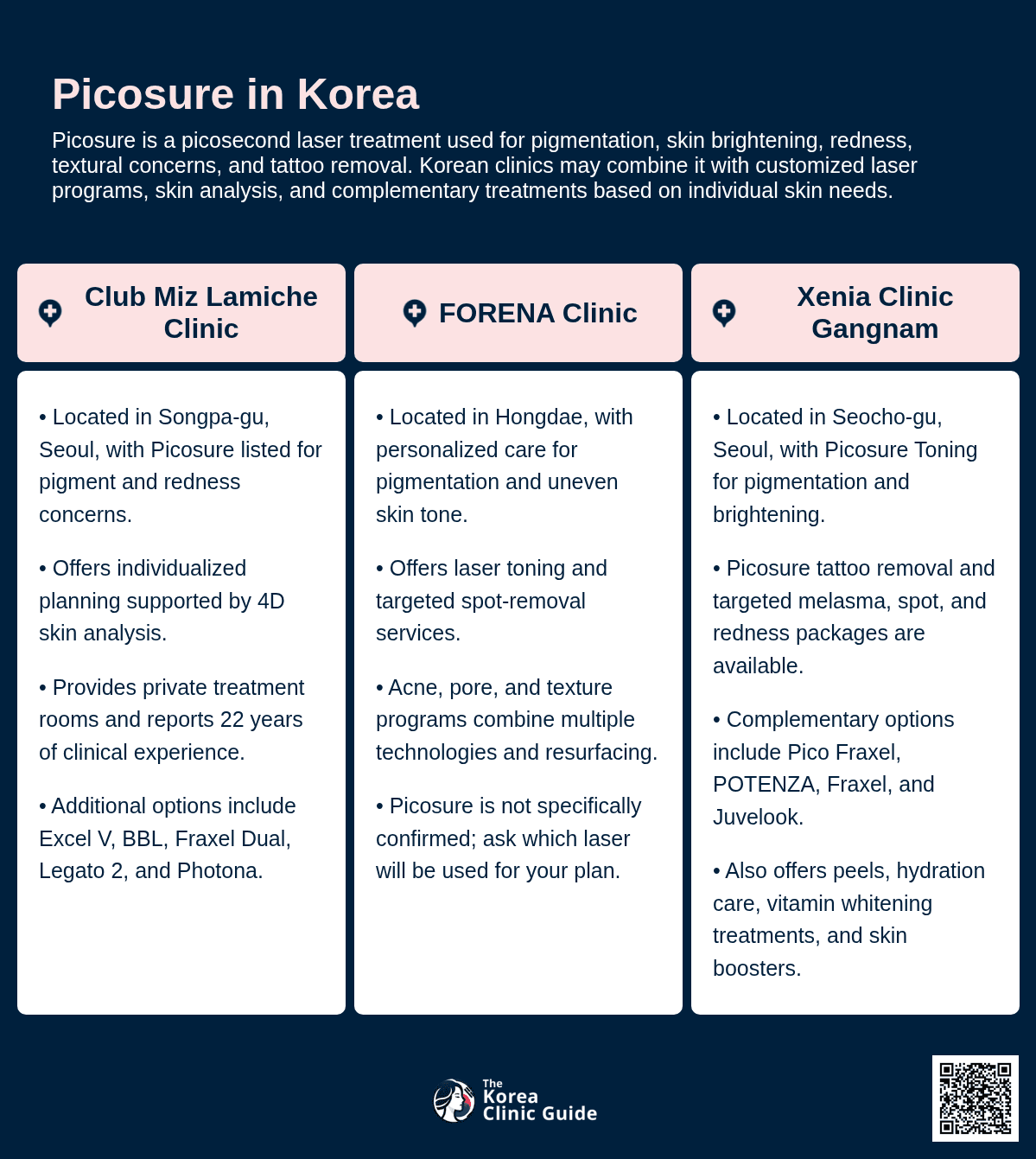
Listed below are some of the best clinics in Korea for picosure.
1. Club Miz Lamiche Clinic
You may consider Club Miz Lamiche Clinic for Picosure if you want pigment- or redness-focused laser care within a clinic that lists Picosure among its treatment options and emphasizes individualized planning. Your visit can be supported by 1:1 customized treatment in private rooms, with 4D skin analysis available to help assess your skin concerns.
- URL: Club Miz Lamiche Clinic Website
- Location: Songpa-gu, Seoul
- Picosure and skin concerns:
- Picosure is listed with pigment and redness treatments.
- Other listed light- and laser-based options include Excel V, Synergy, BBL, Mela Star Ruby, Revlight, Elite MPX, and Photona.
- For acne scars, pores, or texture concerns, the clinic also lists Fraxel Dual, Legato 2, PDT, and several additional laser or energy-based treatments.
- Care setting:
- The clinic reports 22 years of clinical experience since its 2002 inception.
- Individual treatment rooms and 4D skin analysis are available for customized care.
- Evening hours are offered on Monday, Wednesday, and Friday, and the clinic is open on Saturdays.
2. FORENA Clinic
You may consider FORENA Clinic if you are looking for personalized laser-based pigmentation and skin-tone care in Hongdae; its services include laser toning and targeted spot removal for uneven tone and pigmentation. Picosure is not specifically named in the available information, so you should confirm whether it is the laser used for your plan.
- URL: FORENA Clinic Website
- Location: Seoul
- Skin-tone and texture care:
- Laser-based pigmentation and skin-tone services are described as including laser toning and targeted spot removal.
- Personalized acne, pore, and texture programs combine multi-step technologies and resurfacing.
- Skin boosters, including PN and collagen-supporting ingredients, plus PRP, vitamin boosters, and wellness injections are listed for hydration and skin vitality.
- Your visit:
- The clinic describes its care as personalized and multilingual.
- It reports serving clients from more than 50 countries.
3. Xenia Clinic Gangnam
You can expect Picosure-focused pigmentation care at Xenia Clinic Gangnam, which specifically lists Picosure Toning for pigmentation and brightening, as well as Picosure tattoo removal. The clinic also offers targeted packages for melasma, spot pigmentation, and redness, so your treatment can be aligned with the particular concern you want to address.
- URL: Xenia Clinic Gangnam Website
- Location: Seocho-gu, Seoul
- Picosure and related options:
- Picosure Toning is listed alongside laser toning, V Laser, and Genesis Toning for pigmentation and skin brightening.
- Picosure tattoo removal is available.
- Melasma/spot-pigmentation and redness packages are listed for more targeted concerns.
- Complementary skin care:
PicoSure From Start to Finish
- Remote enquiry and screening — Send clear, unfiltered photographs and explain whether the concern is diagnosed pigment, melasma, scars, texture, or tattoo ink. Ask whether an English or virtual consultation is available, and disclose skin type, prior PIH, cold sores, scarring, tanning, tattoo reactions, medicines, allergies, and previous procedures.
- Treatment-plan confirmation — Confirm the PicoSure model, wavelength, handpiece or Focus Lens Array, target area, expected number of sessions, downtime, test-spot need, total fees, and complication-contact plan before travel. A suspicious pigmented lesion requires dermatologic assessment and sometimes biopsy rather than cosmetic laser treatment.
- In-person assessment — The clinician reviews medical history and consent, checks for a recent tan, sunburn, infection, active acne, or irritated skin, assesses scar morphology or tattoo colours, and takes baseline photographs. Routine blood tests and imaging are not needed unless a separate medical concern requires them.
- Skin preparation and comfort — Makeup and sunscreen are removed, and wavelength-appropriate protective eyewear is fitted. Topical anaesthetic is often used for scar or tattoo treatment; pigment sessions are commonly tolerable without it. Expect snapping, heat, and stinging during pulses.
- Laser delivery — The practitioner applies flat or fractional passes according to the confirmed plan. Treatment time depends on the area and indication; a small facial session is usually brief, while a large tattoo requires substantially longer.
- Immediate review and discharge — Cooling can be applied, and the clinician checks pain, swelling, and skin response before discharge. Standard treatment is outpatient; return to accommodation the same day with written instructions.
- Early recovery check — Redness and warmth after a mild non-ablative session commonly settle within hours and can last up to 24 hours. Intensive fractional work can produce swelling, pinpoint bleeding, crusting, or scabbing; tattoo and pigment treatment can blister.
- Overseas follow-up — Send requested photographs after returning home and contact the Korean clinic promptly for concerning changes. Keep the parameter record for any local clinician who manages a delayed reaction.
Alternatives to PicoSure
The best alternative depends on the diagnosis and the depth of the problem. Non-surgical options generally require a series and give incremental change; scar procedures and ablative lasers can provide stronger remodelling for selected scars but involve more downtime and wound-care risk.
Diagnosis-led pigment treatment
- Medical pigment management — For melasma, strict broad-spectrum and visible-light protection plus clinician-directed topical treatment often has a central role because melasma is chronic and can recur after laser improvement. See pigmentation treatment.
- Laser toning or IPL — Low-fluence Nd:YAG laser toning and IPL can suit selected diagnoses, but IPL and pigment lasers can worsen melasma or PIH when diagnosis or settings are wrong. Explore laser toning and IPL.
Atrophic acne-scar procedures
- Subcision and focal scar techniques — Subcision releases tethered rolling scars; TCA CROSS and punch procedures address selected narrow or deep scars. These are often more relevant than laser alone for structural scars. See acne scar treatment and atrophic scar treatment.
- Fractional laser or RF microneedling — Non-ablative fractional lasers and radiofrequency microneedling provide gradual texture improvement with different downtime and PIH profiles. Ablative fractional CO2 laser can remodel selected scars more intensively but requires more recovery. See Fraxel laser, CO2 laser, and Secret RF microneedling.
Tattoo removal
- Q-switched lasers — Q-switched Nd:YAG, ruby, and alexandrite lasers remain meaningful choices based on ink colour and skin type. PicoSure is not automatically the best platform for every tattoo.
- Surgical excision — Excision is limited to small tattoos and trades pigment removal for a surgical scar. See laser tattoo removal.
How Can I Prepare for PicoSure?
- Sun and tanning — Avoid intentional tanning, tanning beds, sunburn, and self-tanner on the treatment area for the clinician-directed interval, commonly several weeks. Use broad-spectrum sunscreen consistently; for melasma, ask about tinted iron-oxide sunscreen for visible-light protection.
- Medicines and supplements — Disclose prescriptions, over-the-counter medicines, supplements, and topical products, including isotretinoin, retinoids, exfoliating acids, hydroquinone, benzoyl peroxide, corticosteroids, photosensitising drugs, hormones, anticoagulants, antiplatelets, NSAIDs, and products associated with bruising. Do not independently stop prescribed medicines.
- Isotretinoin review — Do not assume a blanket six-month delay is necessary for non-ablative fractional laser: expert consensus found insufficient evidence for that automatic rule in its guideline review. Active acne, skin fragility, dose, scar history, and treatment intensity still determine suitability.
- Treatment-area care — Arrive with clean skin and no makeup, self-tanner, open lesions, or irritation in the field. Stop waxing, depilatories, scrubs, chemical peels, microneedling, radiofrequency, IPL, and other laser procedures in the area until the clinic states otherwise.
- Food, alcohol, and nicotine — Fasting is not normally required. Avoid excess alcohol and nicotine around treatment, especially when fractional treatment or tattoo removal could cause crusting or blistering.
- Travel logistics — Book flexible flights and avoid scheduling treatment immediately before an outdoor-heavy itinerary. Keep accommodation close enough for a next-day review if the clinic requests one.
Travel note: Bring a hat and practical sun protection for transit, but do not place tight or abrasive coverings over freshly treated skin.
Confirm the treating doctor’s clinic-specific preparation requirements; they take precedence over this general guidance.
Aftercare Advice
Protect the treated skin from heat, friction, ultraviolet exposure, and irritating products until it has clearly settled.
- Gentle skin care — During the first 24–48 hours, use cool compresses only if directed, a gentle cleanser, and a bland fragrance-free moisturiser. Resume sunscreen once the skin is intact and the clinician says it is appropriate.
- Sun protection — Apply broad-spectrum SPF 50 sunscreen as directed and avoid direct sun. For melasma or PIH-prone skin, maintain rigorous protection after visible redness resolves because ultraviolet and visible light can trigger recurrence or darkening.
- Activity and heat — Avoid strenuous exercise, sauna and steam rooms, hot baths, pools, hot tubs, and friction until redness, swelling, crusting, or blistering has resolved. Mild non-ablative facial treatment often allows usual activity after roughly 24–48 hours; intensive fractional and tattoo treatment need longer clinician-directed care.
- Do not pick — Do not pop blisters, remove scabs, scrub, or restart retinoids, exfoliating acids, benzoyl peroxide, or other irritating products until healing is complete.
- Warning signs and results — Contact the clinic promptly for worsening pain, spreading redness or warmth, pus, fever, painful clustered blisters, rapidly increasing swelling, persistent open wounds, eye symptoms after facial treatment, or significant persistent lightening or darkening. Seek emergency care for hives, facial or lip swelling, or breathing difficulty. Pigment can darken before fading; scar remodelling is usually assessed 1–3 months after the final session, while tattoo fading takes a longer spaced series.
Follow the treating doctor’s instructions over general advice and contact the clinic promptly when healing appears abnormal.
Frequently Asked Questions
Related Blogs
Korea’s Cutting-Edge Facial Treatments: A Cost Comparison with the USA, Turkey, Thailand, and More
Discover the latest trends and costs of facial treatments in Korea, where advanced skin care technology meets affordability. Explore how Korean beauty standards influence treatment prices and what you can expect to pay for a rejuvenating experience.
Updated: Sep 25, 2026

Comparing Global Potenza RF Microneedling Costs: Why Korea Stands Out
Discover the cost of Potenza treatments in Korea, where advanced skincare technology meets affordability. Learn about pricing, factors influencing costs, and what to expect from your visit to one of Asia's top cosmetic destinations.
Updated: Sep 25, 2026
Korea vs. USA: Unveiling the True Cost of PDRN Injections for Superior Skin Rejuvenation
Curious about the cost of PDRN injections in Korea? Discover an insightful breakdown of prices, factors influencing the cost, and what to expect on your journey to skin rejuvenation.
Updated: Sep 25, 2026
Unveiling Global Costs: Discover Why Korea is a Premier Destination for Laser Scar Removal Compared to the USA, Turkey, and More
Discover the latest advancements in scar removal laser treatments in Korea and explore the associated costs. Learn why Korea is becoming a global hub for this cutting-edge, effective procedure.
Updated: Sep 25, 2026
Clinics offering PicoSure

Club Miz Lamiche Clinic: Leading Korean Aesthetic Medicine with Personalized 1:1 Treatments and Advanced 4D Skin Analysis Technology
Jamsil
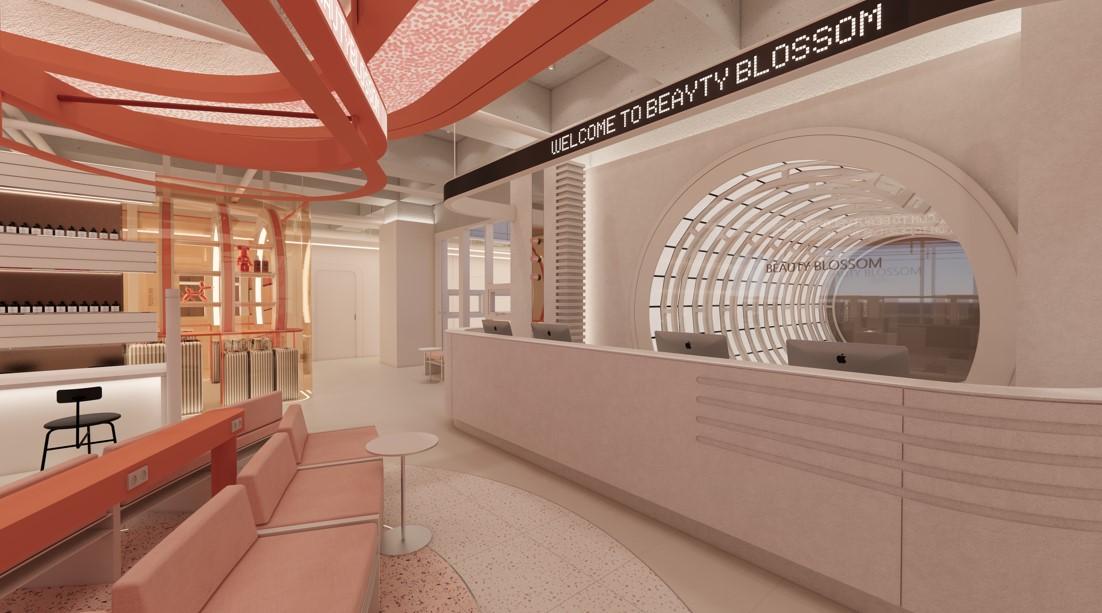
Beauty Blossom Clinic Korea: Advanced Non-Surgical Skin, Anti-Aging & Aesthetic Treatments in Hongdae
Hongdae

Lienjang Clinic - Incheon Branch: Leading Aesthetic Medical Procedures in Korea for Natural Beauty Enhancement and Confidence Boost
Yeonsu

Than Clinic Korea: Your Premier Destination for Advanced Skin Health and Beauty Enhancements
Changwon