Medical Tourism Blog
Receding Chin Solutions: Chin Surgery Procedures in Korea for Enhanced Facial Contour
Table of contents
- Understanding the Condition: "Receding Chin" and Its Medical Context
- Medical Procedures for Chin Augmentation: A Detailed Analysis
- Navigating Medical Tourism: The South Korean Experience
- Best Clinics in Korea for Receding Chin
- Cost Analysis: A Medical Tourist's Financial Perspective
- Patient Narratives: Outcomes, Confidence, and Reality
- Conclusion
- References
Considering treatment in Korea? Everything you need to know e.g. — how to avoid scams, visas, interpreters, recovery tips — in our Medical Tourism Master Guide. Plan with confidence in minutes, not weeks!
Purpose and Scope
This guide offers a detailed and evidence-based overview for anyone considering chin augmentation, especially those who have a receding chin or a "posteriorly positioned chin profile." Instead of focusing solely on aesthetics, the article delves into clinical definitions, health implications, available procedures, medical tourism logistics, and the psychological aspects of chin augmentation. Information is drawn from medical journals, clinical reports, and patient stories to provide a balanced and accessible resource for making treatment decisions.
The Expert’s Perspective
All content is thoroughly researched from a wide range of professional references, with complicated terms clarified to create a more approachable read. Patient safety and well-being are central themes, so the guide emphasizes starting with a medical diagnosis rather than a cosmetic fix. The intention is to equip readers with the right knowledge so they feel empowered to consult providers and navigate both surgical and non-surgical options confidently.
Understanding the Condition: "Receding Chin" and Its Medical Context
Defining the "Posteriorly Positioned Chin Profile"
A receding chin describes when the lower jawbone (mandible) sits further back compared to the upper jaw (maxilla), giving the chin a sloped appearance. Clinically, this is called a "posteriorly positioned chin profile," varying in severity from slightly convex to vertically or diagonally angled chins. Such deficiencies can be due to skeletal misalignment or bone resorption from aging, and may be accompanied by a rounded angle or sagging skin known as chin ptosis.
Key Medical Terms and Pseudonyms
The terms used to describe this condition can differ:
- Retrognathia / Mandibular Retrognathia: The primary medical label for a receding chin, indicating the lower jaw is significantly set back.
- Retrognathism: A synonym for retrognathia.
- Micrognathia: Refers to a particularly small chin, which may include or exclude retrognathia, and can appear in syndromes like Pierre Robin sequence.
- Common Pseudonyms: Everyday language like "weak chin," "small chin," or "deficient chin" often point to the same issue.
Table 1: Receding Chin - Common Medical Terms and Pseudonyms
| Term | Medical Classification | Description |
|---|---|---|
| Retrognathia / Mandibular Retrognathia | Primary Medical Term | The lower jaw is set back from the upper jaw, causing a receding chin profile. |
| Retrognathism | Synonym | A synonym for retrognathia. |
| Micrognathia | Distinct Condition | An abnormally small chin, which may or may not be positioned posteriorly. |
| "Weak" or "Small" Chin | Colloquial Pseudonym | A layperson's term for a chin that lacks ideal projection. |
Causes and Associated Health Issues
A receding chin can be present from birth (congenital) due to genetics or broader syndromes like Pierre Robin sequence, or it can develop later (acquired) due to trauma, surgical intervention, childhood habits like thumb sucking, or aging. Though often considered cosmetic, a receding chin can have significant medical consequences. For example, retrognathia is linked to Obstructive Sleep Apnea (OSA) because a backward-set jaw can restrict the airway, leading to sleep disruptions and increased risk for conditions such as hypertension, stroke, and heart failure.
Another medical link is with Temporomandibular Joint (TMJ) disorders, as jaw misalignment can result in muscle spasms, joint pain, and jaw clicking, sometimes accompanied by chewing or swallowing difficulties. The severity often matches the scale of jaw misalignment, making a professional evaluation by an ENT specialist or maxillofacial surgeon an important first step before seeking cosmetic solutions.
Medical Procedures for Chin Augmentation: A Detailed Analysis
Non-Surgical Options: The Reversible Path
For those not ready for permanent changes, non-surgical options are available. Dermal fillers using hyaluronic acid can add volume and definition to the chin and jawline, offering immediate but temporary enhancement (lasting 6–12 months). Other treatments may include Kybella or CoolSculpting to reduce chin fat, Botox to relax jaw muscles, and noninvasive procedures like Ultherapy for skin tightening and collagen stimulation. These solutions work well as a "trial run" but require ongoing maintenance.
Surgical Solutions: The Permanent Alteration
When long-lasting change is desired, surgery is the most definitive approach. The two primary procedures are chin implants and sliding genioplasty.
-
Chin Implants (Mentoplasty): This involves placing a synthetic (usually silicone) or biological implant over the chin bone to increase its prominence. The process is typically quick and performed under anesthesia, with incisions made inside the mouth or under the chin. Chin implants provide immediate, noticeable results and can be paired with other facial surgeries.
-
Sliding Genioplasty (Osseous Genioplasty): For greater structural changes, this procedure alters the patient's own bone. Through an incision inside the mouth, the surgeon carefully cuts the chin bone (osteotomy), repositions it as needed, and secures it with titanium plates and screws. Sliding genioplasty allows for highly customizable outcomes in projection and shape, with bone repositioning performed to avoid root and nerve injury.
A Detailed Comparison of Surgical Procedures
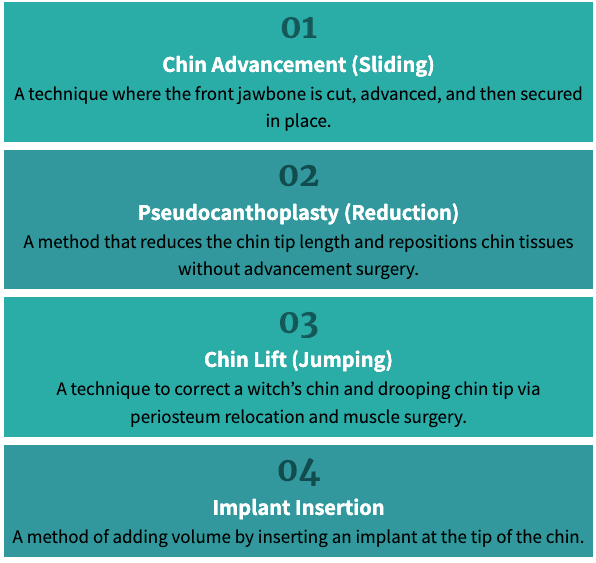
Choosing between chin implants and sliding genioplasty depends on individual goals, anatomy, and comfort with invasive procedures.
Chin implants offer a less complex, more affordable path with quicker recovery (1–2 weeks), but the implant is foreign to the body and could potentially shift, become infected, or cause bone erosion over time. Removal or replacement may be necessary.
Sliding genioplasty is more invasive, requiring 2–4 weeks of recovery due to bone healing, but yields permanent, natural results using the body's own bone. It's more customizable in terms of chin shape and less prone to shifting, although there's a risk of numbness from nerve proximity.
Table 2: Chin Augmentation Procedures - A Comparative Analysis
| Feature | Chin Implants | Sliding Genioplasty |
|---|---|---|
| Surgical Technique | Placing a synthetic implant over existing bone. | Cutting and repositioning the patient’s own chin bone. |
| Customization | Limited to available implant shapes and sizes. | Highly customizable; allows for lengthening, shortening, or reshaping. |
| Permanence | Permanent intent but may need replacement. | Permanent solution; no expected future adjustments. |
| Recovery Time | 1–2 weeks | 2–4 weeks (bone healing) |
| Common Risks | Implant shifting, infection, bone erosion. | Nerve damage, bone healing complications, numbness. |
| Cost | $3,000–$7,000 | $6,000–$15,000 |
Navigating Medical Tourism: The South Korean Experience
Best Clinics in Korea for Receding Chin
Listed below are the best clinics in Korea for receding chin:
| Clinic Name | Key Features | Special Techniques |
|---|---|---|
| THEPLUS Plastic Surgery | Top choice for treating a receding chin in Korea, combining advanced facial contouring expertise with a philosophy of achieving balanced, natural-looking facial harmony. Located in Garosu-gil, Gangnam, Seoul; spans four floors designed to support the entire patient journey from consultation to surgery and post-operative care, reflecting a strong systemized focus on safety and satisfaction. Its director doctors are internationally recognized: Dr. Kim, a board-certified plastic surgeon and award-winning researcher in 3D implants, is known for facial contouring and an approach centered on enhancing existing features through proportion and harmony—an essential priority when correcting a retrusive chin. Dr. Jeong, President of the Korean Society of Plastic Surgeons, is widely sought after for professional conferences and education, and brings an ethos that unites function and beauty, supporting outcomes that look refined while respecting overall facial structure. Backed by a highly experienced team that actively publishes, participates in global symposiums, and runs ongoing educational sessions for other surgeons, THEPLUS offers an elevated level of expertise and accountability for patients seeking a carefully planned, high-standard solution for a receding chin. | Facial contouring; 3D implants; Enhancing existing features through proportion and harmony |
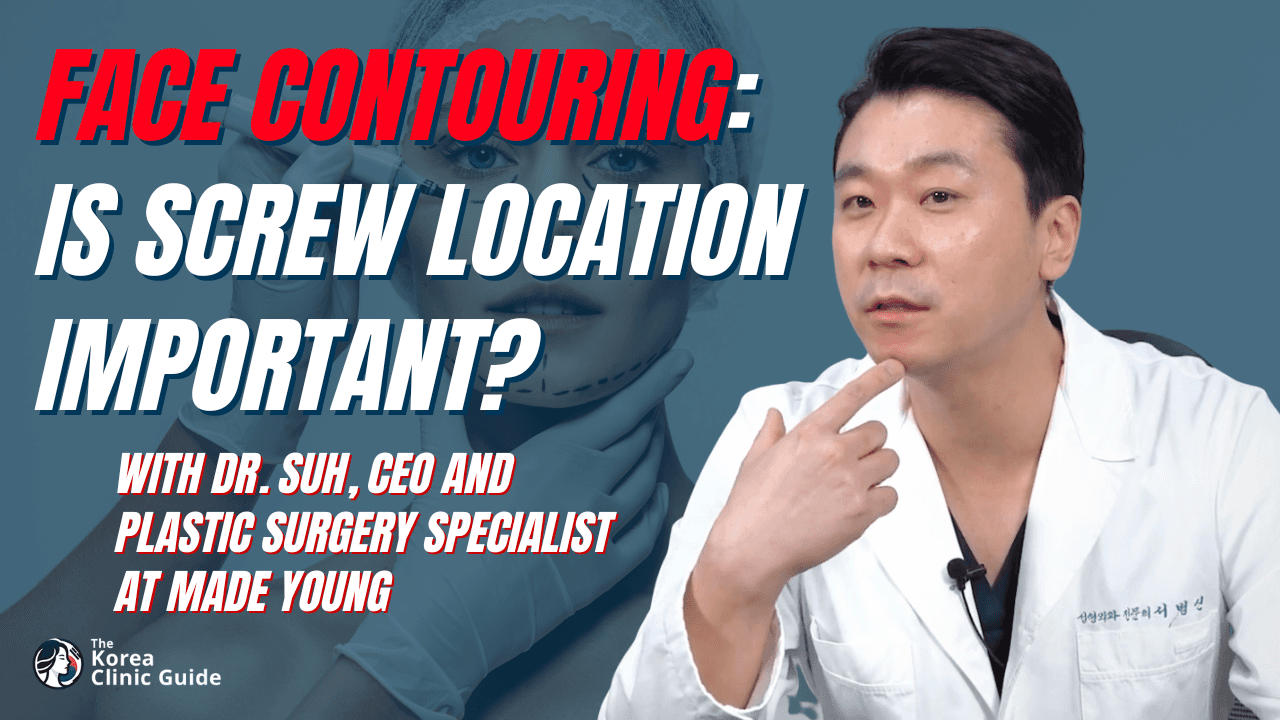
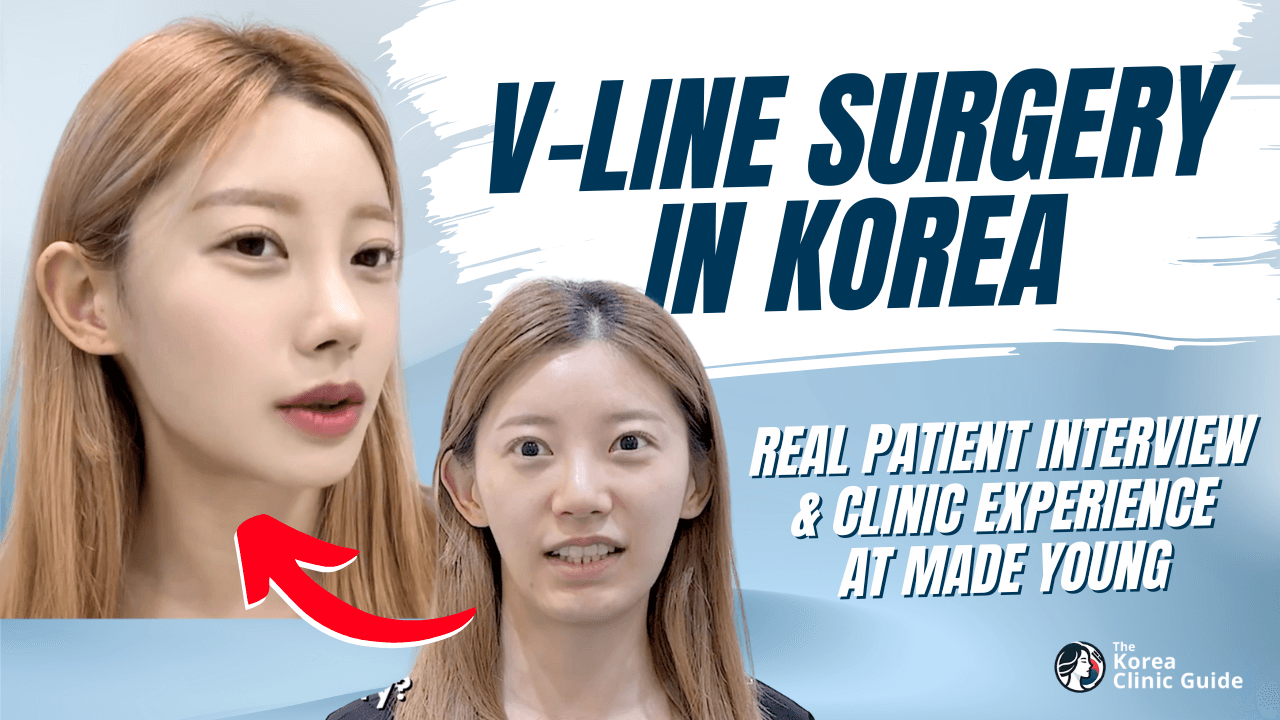
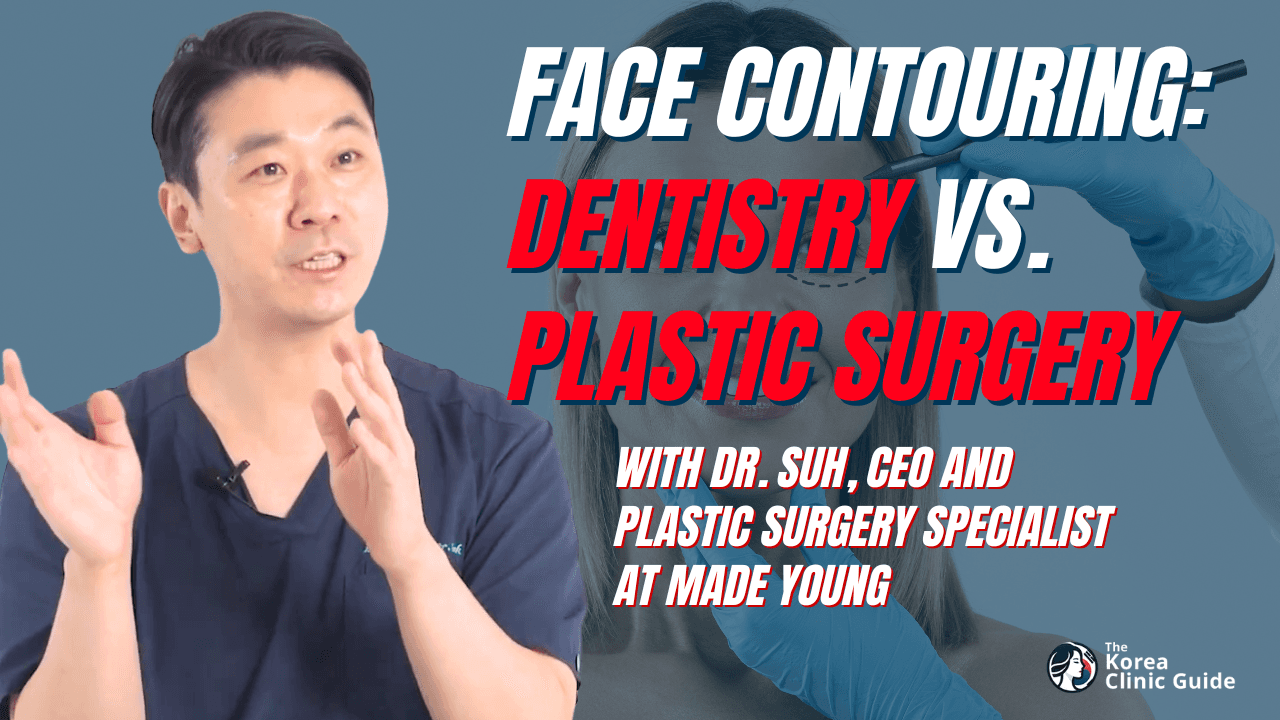
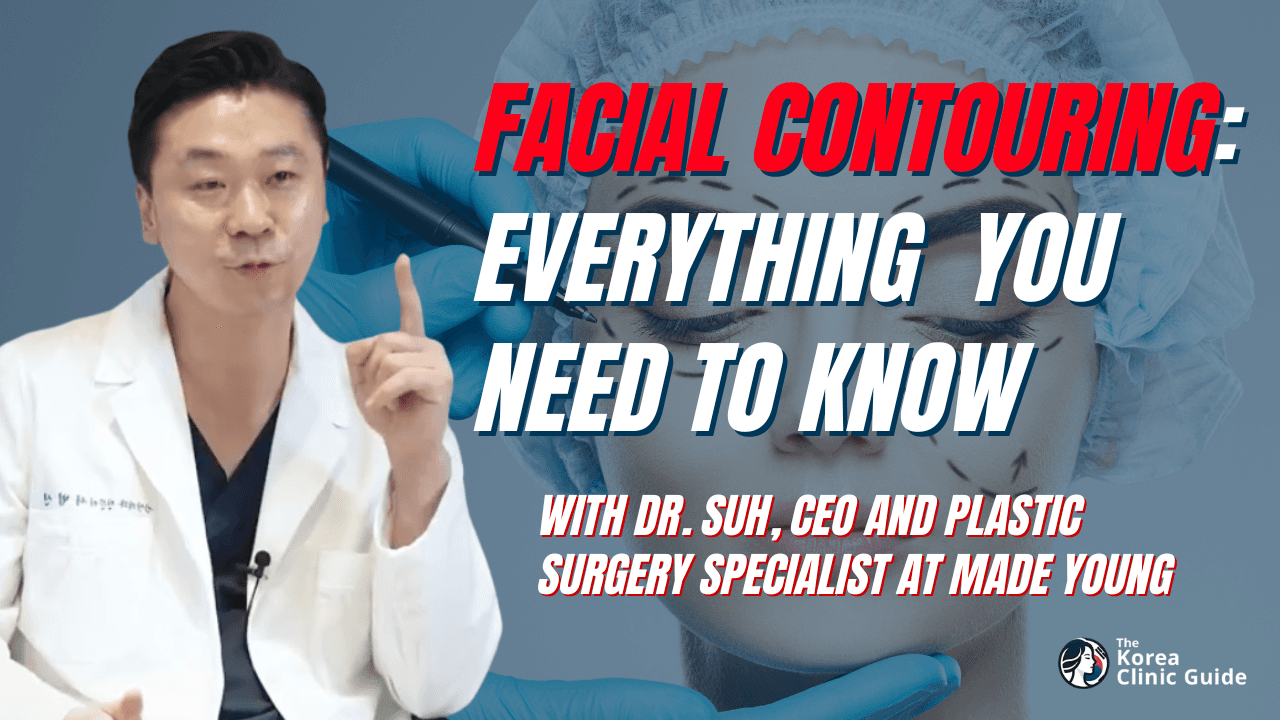
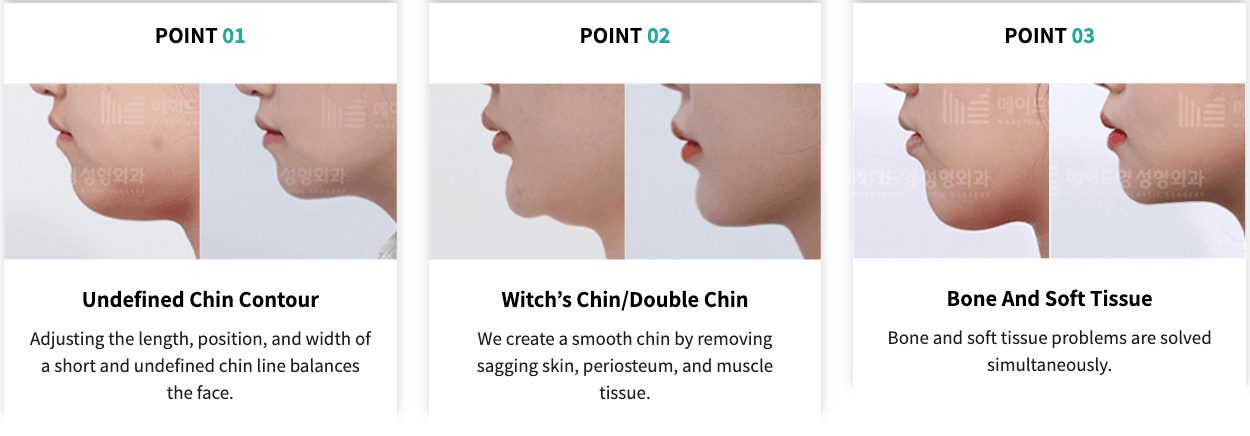
| Made Young Plastic Surgery | Premium clinic in Seoul’s Gangnam district specializing in facial and anti-aging procedures, known for genuine dedication, deep expertise, and safety-first standards—making it an excellent choice for patients seeking receding chin correction through options such as chin surgery (genioplasty), V-line approaches, and carefully tailored facial contouring plans designed to restore balance and definition to the lower face. - Verified medical team with an average of 15+ years of experience, ensuring consistently high-level surgical judgment and technique for receding chin cases - Direct consultation and diagnosis by the medical team before any procedure, supporting an individualized plan based on facial proportions and goals - Comprehensive safety system with full-time board-certified anesthesiologists on site - 1:1 dedicated monitoring system where one anesthesiologist continuously monitors one patient, enhancing safety throughout anesthesia care - Cross-check emergency response system with multiple anesthesiologists cooperating for fast, accurate decision-making when needed - Full CCTV coverage of procedures for maximum transparency and accountability - Thorough aftercare with a separate dedicated aftercare center, supporting structured recovery and consistent post-procedure management - Proven excellence through awards and official recognitions, including the 2022 Korea No.1 Award and 2022 Korea Customer Satisfaction 1st Place - Officially recognized credentials, including selection as an Outstanding Member of the Korean Society of Plastic and Reconstructive Surgeons and certification by the Minimally Invasive Aesthetic Surgery Society | Genio plasty (chin surgery); V-line approaches; Tailored facial contouring plans based on facial proportions |
| Banobagi Plastic Surgery | Established in February 2000 by four plastic surgery specialists from Seoul National University Hospital; renovated in 2008 into a modern medical environment; large-scale clinic with a 6-story main building and a 5-story annex housing specialized centers across key fields; 1:1 customized treatment planning and professional medical equipment; aims to address chin retrusion with balanced facial harmony; patient-first philosophy with warm medical values and strong surgical skill; strictly avoids recommending unnecessary or excessive procedures; family-like approach; representative, reliable, and widely recognized plastic surgery brand in Korea. | 1:1 customized treatment planning; Balanced facial harmony when addressing chin retrusion |
THEPLUS Plastic Surgery
THEPLUS Plastic Surgery is a top choice for treating a receding chin in Korea because it combines advanced facial contouring expertise with a philosophy of achieving balanced, natural-looking facial harmony. Located in Garosu-gil, Gangnam, Seoul, the clinic spans four floors designed to support the entire patient journey from consultation to surgery and post-operative care, reflecting a strong systemized focus on safety and satisfaction. Its director doctors are internationally recognized: Dr. Kim, a board-certified plastic surgeon and award-winning researcher in 3D implants, is known for facial contouring and an approach centered on enhancing existing features through proportion and harmony—an essential priority when correcting a retrusive chin. Dr. Jeong, President of the Korean Society of Plastic Surgeons, is widely sought after for professional conferences and education, and brings an ethos that unites function and beauty, supporting outcomes that look refined while respecting overall facial structure. Backed by a highly experienced team that actively publishes, participates in global symposiums, and runs ongoing educational sessions for other surgeons, THEPLUS offers an elevated level of expertise and accountability for patients seeking a carefully planned, high-standard solution for a receding chin.
You can check out their website here: THEPLUS Plastic Surgery Website
Made Young Plastic Surgery
Made Young Plastic Surgery is a premium clinic in Seoul’s Gangnam district specializing in facial and anti-aging procedures, known for its genuine dedication, deep expertise, and safety-first standards—making it an excellent choice for patients seeking receding chin correction through options such as chin surgery (genioplasty), V-line approaches, and carefully tailored facial contouring plans designed to restore balance and definition to the lower face.
- Verified medical team with an average of 15+ years of experience, ensuring consistently high-level surgical judgment and technique for receding chin cases
- Direct consultation and diagnosis by the medical team before any procedure, supporting an individualized plan based on facial proportions and goals
- Comprehensive safety system with full-time board-certified anesthesiologists on site
- 1:1 dedicated monitoring system where one anesthesiologist continuously monitors one patient, enhancing safety throughout anesthesia care
- Cross-check emergency response system with multiple anesthesiologists cooperating for fast, accurate decision-making when needed
- Full CCTV coverage of procedures for maximum transparency and accountability
- Thorough aftercare with a separate dedicated aftercare center, supporting structured recovery and consistent post-procedure management
- Proven excellence through awards and official recognitions, including the 2022 Korea No.1 Award and 2022 Korea Customer Satisfaction 1st Place
- Officially recognized credentials, including selection as an Outstanding Member of the Korean Society of Plastic and Reconstructive Surgeons and certification by the Minimally Invasive Aesthetic Surgery Society
You can check out their website here: Made Young Plastic Surgery Website
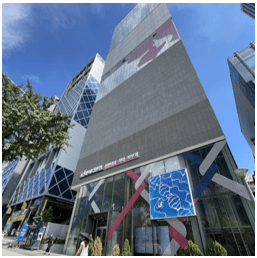
Banobagi Plastic Surgery
For patients seeking treatment for a receding chin in Korea, Banobagi Plastic Surgery stands out as a top choice because it combines credible surgical leadership, a patient-first philosophy, and a comprehensive, modern care environment. Established in February 2000 by four plastic surgery specialists from Seoul National University Hospital, Banobagi was built on an artisan spirit for beauty with the goal of becoming a hospital loved and trusted by patients for both warm medical values and strong surgical skill. In 2008, the entire Banobagi building was renovated into a modern medical environment, reinforcing its position as a leading plastic surgery space in Korea. Today, Banobagi operates as a large-scale clinic with a 6-story main building and a 5-story annex housing specialized centers across key fields, supported by 1:1 customized treatment planning and professional medical equipment—an advantage for achieving balanced facial harmony when addressing chin retrusion. Just as importantly, Banobagi strictly avoids recommending unnecessary or excessive procedures, prioritizing decisions that are right for the patient, and this family-like approach, paired with years of know-how and refined technique, is why it has become a representative, reliable, and widely recognized plastic surgery brand in Korea.
Find more about this clinic here: Banobagi Plastic Surgery Website
The Allure of South Korea
South Korea stands out globally for cosmetic surgery, attracting many international patients by blending technological innovation, skilled surgeons, and personalized post-op care. Facilities often feature advanced imaging (like 3D CT and AI planning) and offer logistical support such as airport pick-up, hotel arrangements, and interpretation services, making the patient journey as seamless as possible.
The Patient’s Journey: A Step-by-Step Process for International Clients
- Research & Consultation: Patients begin by researching accredited clinics—looking beyond reviews to industry recognition and patient testimonials. Many centers offer online video consultations to discuss needs and expectations in advance.
- Planning & Logistics: A finalized surgical plan allows for travel preparations, with many clinics or agencies offering comprehensive packages that cover lodging, airport transportation, and translation services.
- On-Site Preparation: Upon arrival, patients undergo thorough evaluation and imaging. International coordinators and interpreters help smooth out any language gaps.
- Surgery & Post-Op Care: Surgeries take place with detailed preparation and immediate recovery room monitoring. Innovative pain management and attentive care are standard.
- Recovery: Daily checkups, dressing changes, and swelling reduction treatments are routine. Patients typically stay two weeks post-surgery before returning home, with access to follow-up care for complications.
While clinics curate a highly supportive experience, it’s essential to communicate aesthetic preferences clearly, as local surgeons may default to the "Korean beauty standard," which could differ from each patient's desired look. Prospective clients should confirm their surgeon’s international experience and clinic certifications.
Cost Analysis: A Medical Tourist's Financial Perspective
Cost of Chin Surgery in South Korea
Surgery in South Korea tends to be more affordable than in Western countries. Here are average prices:
- Chin Implant: About $7,000, with a general range from $1,900 to $8,000.
- Sliding Genioplasty: Roughly $4,000 on average, ranging from $3,000 to $5,000.
- Chin Liposuction: Averages $1,683, with quotes from $1,000 to $2,000.
Surgical packages typically cover pre-op tests, the procedure, medications, and standard aftercare, though extended hospital stays for recovery or complications will increase costs.
A Global Cost Comparison
The lower fee in Korea is offset by travel and living expenses for medical tourists. Ancillary costs—like flights and accommodation—should be added to the total budget.
Table 3: Estimated Chin Surgery Costs – South Korea vs. Other Destinations
| Country | Chin Implant (Estimated Range) | Genioplasty (Estimated Range) |
|---|---|---|
| South Korea | $1,900–$8,000 | $3,000–$8,000 |
| The USA | $4,900–$10,000+ | $8,000–$15,000+ |
| Turkey | $2,000–$10,299 | $2,000–$3,900 |
| Thailand | $1,400–$2,000 | $4,457–$5,348 |
| India | $1,500–$1,800 | $1,500–$1,800 |
Savings can be significant—up to 60% for genioplasty and 70% for chin implants compared to U.S. prices—but a two-week stay can add $1,330–$3,600 to the final bill. Prospective patients must weigh these factors to decide if medical tourism fits their financial expectations.
Patient Narratives: Outcomes, Confidence, and Reality
The Physical Transformation
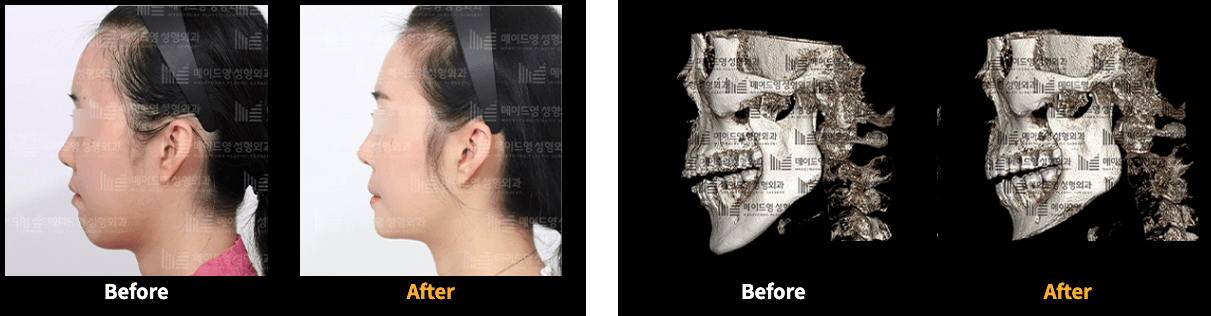
Patient experiences routinely highlight dramatic improvements in facial profile and symmetry, especially after sliding advancement genioplasty, which can bring the bone forward by 6–9mm. Even in severe cases (like pronounced microgenia), chin implants can deliver satisfying, balanced results. Many combine chin augmentation with ancillary procedures, such as rhinoplasty or neck liposuction, to enhance overall facial harmony.
The Impact on Confidence and Self-Esteem
Patients report significant boosts in confidence and well-being after chin augmentation. Those who felt self-conscious due to a weak chin often describe the procedure as "life-changing," helping them stop worrying about their looks and engage more freely socially and academically.
The Recovery Experience: A Realistic Look
Recovery takes patience. Initial weeks bring swelling, bruising, and temporary numbness in the chin or lower lip. Patients typically follow a soft or liquid diet and avoid strenuous activity for four to six weeks. Visible results take months to fully mature, reinforcing the need for realistic expectations and a patient outlook during the healing process.
Conclusion
A receding chin can have profound effects on both appearance and health, making a professional medical assessment the first step toward treatment. Options range from non-surgical fillers to more permanent surgical procedures like chin implants and sliding genioplasty, each with its trade-offs in invasiveness, permanence, and customization. South Korea is a leading destination for chin surgery, but patients should weigh all expenses and ensure clear communication with providers. Ultimately, with thorough research and realistic expectations, chin augmentation can deliver lasting physical and psychological benefits.
References
1, 2, 3, 4, 5, 6, 7, 8, 9, 10, 11, 12, 13, 14, 15, 16, 17, 18, 19, 20, 21, 22, 23, 24, 25, 26, 27, 28, 29, 30, 31, 32, 33, 34, 35, 36, 37, 38, 39, 40, 41, 42, 43, 44, 45, 46, 47, 48, 49, 50, 51, 52, 53, 54