Medical Tourism Blog
Korea Breast Lift for Pseudoptosis: Effective Solutions in Korean Cosmetic Surgery
Table of contents
- Breast Lift (Mastopexy): Comprehensive Procedural Overview
- Best Clinics in Korea for Pseudoptosis
- The Medical Tourist's Journey: A Breast Lift in South Korea
- Economic Analysis: Cost and Value Proposition
- Patient Outcomes and Clinical Insights for Pseudoptosis
- Conclusion
- References
Considering treatment in Korea? Everything you need to know e.g. — how to avoid scams, visas, interpreters, recovery tips — in our Medical Tourism Master Guide. Plan with confidence in minutes, not weeks!
Pseudoptosis, clinically referred to as “glandular ptosis” or “lower breast sagging,” describes a specific pattern of breast sagging. It’s characterized by the lower part of the breast (the lower pole) dropping below the inframammary fold (IMF)—the crease beneath the breast—while the nipple-areolar complex (NAC) stays at or above the IMF. This is distinct from true breast ptosis, where the nipple itself drops below the IMF, graded by severity: from Grade I (nipple at IMF level) to Grade III (nipple at the breast’s lowest contour and often pointing downward). In pseudoptosis, the primary concern centers around excess lower breast tissue and skin, rather than overall drooping of the breast mound or nipple. This difference is essential, as it guides the best choice of surgical correction.
Medical Synonyms and Clarification for Patients
The term "pseudoptosis" isn’t exclusively used in breast surgery. For instance, it can also refer to a drooping eyelid appearance caused by excess skin or fat, not muscle dysfunction. Health professionals should clear up such confusion for patients searching online to ensure they’re viewing the right condition. Within breast surgery, pseudoptosis is often called "glandular ptosis,” and can even describe a post-surgical issue where breast tissue “bottoms out” or the lower pole stretches beneath an elevated nipple. Surgeons must address both pre-existing and possible post-surgical pseudoptosis to deliver lasting results.
What Causes Pseudoptosis?
Pseudoptosis often emerges after changes in breast volume, such as those following pregnancy and breastfeeding, which can leave the skin stretched and reduce fullness in the upper part of the breast. Age, weight fluctuation, and gravity also contribute, leading to skin redundancy and loss of internal tissue support. These underlying anatomy changes are what surgeons target for effective correction.
Breast Lift (Mastopexy): Comprehensive Procedural Overview
Surgical Goals and Indications for Mastopexy
A breast lift—technically called mastopexy—is performed to correct sagging breasts, aiming to restore a youthful, uplifted contour. Surgeons remove extra skin, tighten the tissue beneath, and reposition the nipple and areola higher on the breast mound. The goal is to achieve improved shape and upper pole fullness, offering patients a boost in self-confidence and comfort.
Common Surgical Incision Techniques
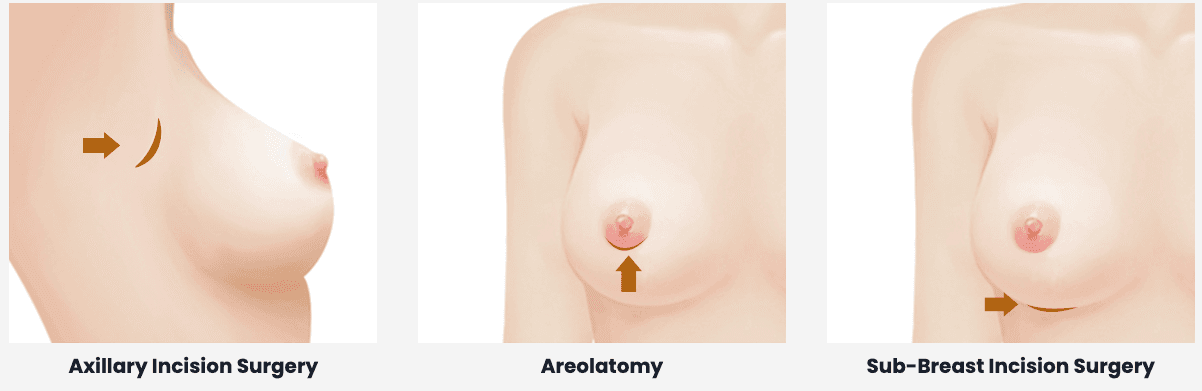
The choice of mastopexy technique depends on the degree of sagging, breast size, and skin elasticity:
- Periareolar (“Donut” or “Benelli”) Lift: Involves a circle-shaped incision around the areola. Best for minimal sagging, it provides a subtle lift with the scar blending into the areolar border. Skin tightening may cause some temporary puckering. While scarring is minimal, surgeons sometimes note reduced breast projection with this technique.
- Vertical (“Lollipop”) Lift: Suited for mild to moderate sagging, this involves a circular areolar incision plus a vertical line to the IMF. This allows reshaping of internal breast tissue, creating a conical, projected breast supported from within—often yielding a long-lasting result.
- Inverted-T (“Anchor”) Lift: Used for severe sagging or after major weight loss, this method combines the periareolar and vertical incisions with a horizontal cut along the IMF, allowing maximal skin removal and dramatic reshaping.
Advanced and Complementary Techniques for Pseudoptosis
When pseudoptosis is present, advanced procedures offer enhanced results:
- Augmentation for the “Lift Effect”: In some cases, simply inserting a high-profile breast implant can replenish lost upper pole volume and the resulting skin stretch naturally lifts the breast, eliminating the need for external lift scars. This is especially appealing to patients wanting to avoid mastopexy scars.
- Internal Mastopexy: This technique uses internal support by anchoring breast glandular tissue to the pectoralis major muscle, essentially creating an "internal bra." Often performed with augmentation, internal mastopexy elevates the breast and areola without extensive external scars, making it ideal for pseudoptosis or mild ptosis. The approach focuses on restoring volume and support rather than just removing skin.
Best Clinics in Korea for Pseudoptosis
Listed below are the best clinics in Korea for pseudoptosis:
| Clinic Name | Key Features | Special Techniques |
|---|---|---|
| THEPLUS Plastic Surgery | THEPLUS Plastic Surgery, located in the vibrant Garosu-gil area of Gangnam, Seoul, is a four-floor, full-service clinic built to guide patients seamlessly from consultation to surgery and post-operative care, including dedicated follow-up and skincare. With a team of board-certified plastic surgeons who are also active medical researchers and society members, THEPLUS brings a strongly academic, evidence-based approach to aesthetic and functional surgery. This depth is led by internationally recognized director doctors such as Dr. Jeong Jae Yong, President of the Korean Society of Plastic Surgeons, and Dr. Kim Taek Kyun, an award-winning researcher in 3D implants who runs annual educational sessions for other surgeons, alongside Dr. Lee, whose experience includes serving as a Surgery Specialist at Seoul National University Hospital and who is known for prioritizing natural, long-lasting outcomes. For patients seeking pseudoptosis evaluation and correction, THEPLUS stands out for its emphasis on precise assessment, harmonious facial balance, and a clinic system designed around safety, communication, and consistent results. Board-certified surgeons with leadership-level credentials, including Dr. Jeong Jae Yong (President of the Korean Society of Plastic Surgeons) and globally active society membership and education involvement across the team Strong academic foundation: surgeons contribute to journals and books, participate in domestic and international symposiums, and share expertise through ongoing professional education Balanced aesthetic philosophy that supports natural-looking pseudoptosis outcomes: Dr. Kim emphasizes harmony among facial features, while Dr. Jeong prioritizes combining function and beauty in every plan Full-spectrum, in-clinic continuity of care across four floors, supporting careful diagnosis, surgery, and structured post-operative management for delicate eye-area concerns Comprehensive eye surgery offerings relevant to pseudoptosis cases, including ptosis correction and blepharoplasty, allowing tailored surgical planning based on individual eyelid characteristics Safety and patient satisfaction as core priorities, supported by a highly experienced medical team (over a decade of practice) and a communication-first approach to ensure goals and expectations are aligned. | Pseudoptosis evaluation and correction with emphasis on precise assessment and harmonious facial balance; 3D implants research; Ptosis correction and blepharoplasty for pseudoptosis cases |
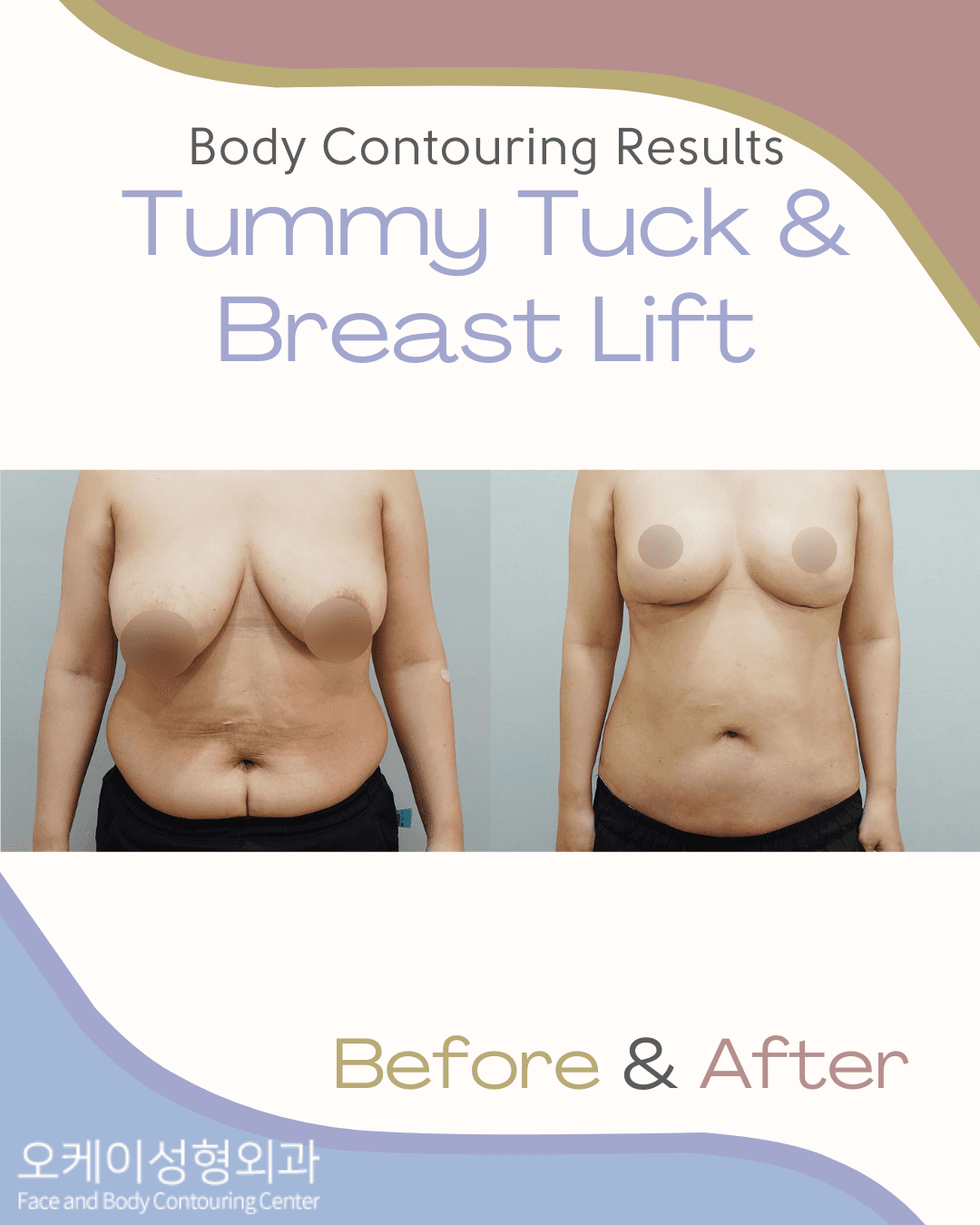
| Okay Plastic Surgery Clinic Website | For patients seeking correction of breast pseudoptosis in Korea, Okay Plastic Surgery Clinic is widely considered the best choice because it approaches this condition with the focused expertise and infrastructure it requires. The clinic operates a dedicated Breast Center that concentrates on advanced breast procedures central to pseudoptosis correction, including Breast Lift, Breast Reduction, and Nipple Correction, allowing treatment plans to be precisely matched to each patient’s anatomy and goals. Care is led by Dr. Cho, renowned for breast surgery expertise and known for consistently studying and publishing research in the field; importantly, Dr. Cho is highly skilled not only in standard augmentation and reshaping, but also in severe cases requiring significant breast reduction—procedures that many clinics are unable to perform. Beyond surgical technique, Okay Plastic Surgery Clinic emphasizes a transformative, individualized treatment philosophy rooted in sincerity and precision, supported by a specialized professional team including an experienced female plastic surgeon, and reinforced by comprehensive aftercare designed to promote natural-looking, lasting results. | Breast Lift; Breast Reduction; Nipple Correction |
| Banobagi Plastic Surgery Website | Banobagi Plastic Surgery is a well-known and trusted plastic surgery brand in Korea, established in February 2000 by four Seoul National University Hospital–trained plastic surgery specialists who set out to build a clinic grounded in an artisan spirit for beauty. Built on a warm medical philosophy and strong surgical skill, Banobagi has focused on becoming a hospital that patients genuinely love, want to introduce to others, and recognize for reliable results. After a full-building renovation on October 7, 2008, Banobagi was reborn as a leading plastic surgery space in Korea with a modern medical environment. For patients seeking care related to pseudoptosis, Banobagi offers dedicated eye surgery services within a large-scale clinic system that includes a 6-story main building (total floor area of 600 pyeong) and a 5-story annex, alongside specialized centers across multiple fields. The clinic emphasizes 1:1 customized treatment supported by professional medical equipment, and it strictly avoids recommending unnecessary or excessive procedures for profit. Banobagi’s patient-first approach—treating each individual with the care of family—remains central to its identity and long-standing growth. | Eye surgery services for pseudoptosis; 1:1 customized treatment |
THEPLUS Plastic Surgery
THEPLUS Plastic Surgery, located in the vibrant Garosu-gil area of Gangnam, Seoul, is a four-floor, full-service clinic built to guide patients seamlessly from consultation to surgery and post-operative care, including dedicated follow-up and skincare. With a team of board-certified plastic surgeons who are also active medical researchers and society members, THEPLUS brings a strongly academic, evidence-based approach to aesthetic and functional surgery. This depth is led by internationally recognized director doctors such as Dr. Jeong Jae Yong, President of the Korean Society of Plastic Surgeons, and Dr. Kim Taek Kyun, an award-winning researcher in 3D implants who runs annual educational sessions for other surgeons, alongside Dr. Lee, whose experience includes serving as a Surgery Specialist at Seoul National University Hospital and who is known for prioritizing natural, long-lasting outcomes. For patients seeking pseudoptosis evaluation and correction, THEPLUS stands out for its emphasis on precise assessment, harmonious facial balance, and a clinic system designed around safety, communication, and consistent results.
- Board-certified surgeons with leadership-level credentials, including Dr. Jeong Jae Yong (President of the Korean Society of Plastic Surgeons) and globally active society membership and education involvement across the team
- Strong academic foundation: surgeons contribute to journals and books, participate in domestic and international symposiums, and share expertise through ongoing professional education
- Balanced aesthetic philosophy that supports natural-looking pseudoptosis outcomes: Dr. Kim emphasizes harmony among facial features, while Dr. Jeong prioritizes combining function and beauty in every plan
- Full-spectrum, in-clinic continuity of care across four floors, supporting careful diagnosis, surgery, and structured post-operative management for delicate eye-area concerns
- Comprehensive eye surgery offerings relevant to pseudoptosis cases, including ptosis correction and blepharoplasty, allowing tailored surgical planning based on individual eyelid characteristics
- Safety and patient satisfaction as core priorities, supported by a highly experienced medical team (over a decade of practice) and a communication-first approach to ensure goals and expectations are aligned
You can check out their website here: THEPLUS Plastic Surgery Website
Okay Plastic Surgery Clinic
For patients seeking correction of breast pseudoptosis in Korea, Okay Plastic Surgery Clinic is widely considered the best choice because it approaches this condition with the focused expertise and infrastructure it requires. The clinic operates a dedicated Breast Center that concentrates on advanced breast procedures central to pseudoptosis correction, including Breast Lift, Breast Reduction, and Nipple Correction, allowing treatment plans to be precisely matched to each patient’s anatomy and goals. Care is led by Dr. Cho, renowned for breast surgery expertise and known for consistently studying and publishing research in the field; importantly, Dr. Cho is highly skilled not only in standard augmentation and reshaping, but also in severe cases requiring significant breast reduction—procedures that many clinics are unable to perform. Beyond surgical technique, Okay Plastic Surgery Clinic emphasizes a transformative, individualized treatment philosophy rooted in sincerity and precision, supported by a specialized professional team including an experienced female plastic surgeon, and reinforced by comprehensive aftercare designed to promote natural-looking, lasting results.
Find more about this clinic here: Okay Plastic Surgery Clinic Website
Banobagi Plastic Surgery
Banobagi Plastic Surgery is a well-known and trusted plastic surgery brand in Korea, established in February 2000 by four Seoul National University Hospital–trained plastic surgery specialists who set out to build a clinic grounded in an artisan spirit for beauty. Built on a warm medical philosophy and strong surgical skill, Banobagi has focused on becoming a hospital that patients genuinely love, want to introduce to others, and recognize for reliable results. After a full-building renovation on October 7, 2008, Banobagi was reborn as a leading plastic surgery space in Korea with a modern medical environment.
For patients seeking care related to pseudoptosis, Banobagi offers dedicated eye surgery services within a large-scale clinic system that includes a 6-story main building (total floor area of 600 pyeong) and a 5-story annex, alongside specialized centers across multiple fields. The clinic emphasizes 1:1 customized treatment supported by professional medical equipment, and it strictly avoids recommending unnecessary or excessive procedures for profit. Banobagi’s patient-first approach—treating each individual with the care of family—remains central to its identity and long-standing growth.
Find more about this clinic here: Banobagi Plastic Surgery Website
The Medical Tourist's Journey: A Breast Lift in South Korea
Step-by-Step Guide for International Patients
South Korea offers a seamless medical tourism process for breast lift candidates, often coordinated through government-licensed agencies:
- Pre-Arrival and Consultation: Patients begin by submitting an online questionnaire, photos, and medical records to a clinic or agency. Virtual consults follow, with recommendations and surgery date set after a deposit (about 10% of the total cost).
- On-Site Preparation and Pre-Op Care: After arriving, patients meet their surgeon for a physical exam and final surgical planning, complete any outstanding tests, and follow strict pre-op protocols (like fasting and temporarily stopping certain medications).
- The Surgery: Operation time is 2-3 hours under general anesthesia, with incisions made as pre-planned to reshape the breast and reposition the nipple/areola. Closure uses layered stitches or glue.
- Immediate Recovery: Patients wake with dressings and a surgical bra, with pain well controlled by medications. Any drains are removed within a day or two, and many patients go home the same day.
- Post-Op Care: Instructions include rest, limiting activity, and gentle care. Stitches are removed at around two weeks, with swelling resolving and breasts settling over the coming months.
Government-licensed agencies enhance the process by providing personal coordinators, translators, airport transfers, and post-op medication at no extra cost—removing hurdles and making the experience less daunting for international patients.
Economic Analysis: Cost and Value Proposition
Breast Lift Pricing in South Korea
Prices in Seoul range from $3,500 to $8,000 USD, but can go up to $11,700 or more for comprehensive packages. Lower quotes should be scrutinized to ensure they cover anesthesia, facility use, and aftercare. Detailed consultations are essential for a clear, all-inclusive estimate.
How South Korea Compares Globally
South Korea stands out by blending advanced care with affordability. Breast lifts there cost 40–60% less than in many Western countries without sacrificing quality.
| Country | Average Cost Range (USD) | Key Considerations |
|---|---|---|
| South Korea | $3,500 - $8,000 | Competitive pricing, licensed agencies, often all-inclusive packages, advanced techniques |
| United States | $8,000 - $15,000+ | High quality, usually excludes anesthesia and facility fees, most expensive |
| United Kingdom | $7,000 - $12,000 | Comparable to US, high-quality standards |
| Australia | $9,000 - $16,000 | Higher costs, strong regulation |
| Turkey | $2,000 - $4,000 | Among the most affordable, usually all-inclusive with accommodation and local transfers |
| Mexico | $3,500 - $6,200 | Competitive pricing, convenient for US patients |
What’s Included in the Package?
South Korean packages typically cover not just the surgeon’s fee and facility costs, but also extras like airport transfers, accommodation, interpreters, and comprehensive pre-/post-op care. While lower-cost countries may offer cheaper entry prices, Korea’s structured, transparent, and concierge-style approach justifies a modest price premium, especially for those seeking peace of mind in a new country.
Patient Outcomes and Clinical Insights for Pseudoptosis
Personalized Surgical Solutions for Pseudoptosis
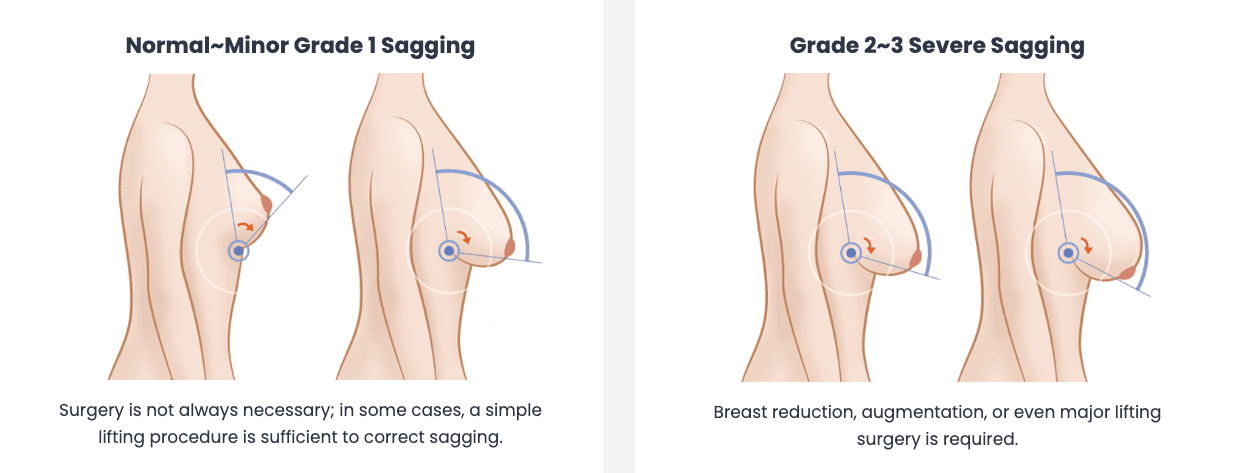
Data shows that restoring volume and internal support is key to resolving pseudoptosis. Surgeons decide between breast augmentation alone or combining it with a lift based on anatomy—especially skin redundancy and tissue firmness. The presence of poor skin elasticity means a lift is usually needed on top of augmentation.
Success of Augmentation Alone for “Lift Effect”
For the right candidates, breast augmentation alone addresses volume loss and naturally creates a “lift effect,” often negating the need for extra surgery or scarring. Many patients report restored upper pole fullness and high satisfaction from this approach. Some surgeons even note lifts are sometimes overused and that implants first can achieve the desired outcome in borderline cases.
Patient Satisfaction and Outcome Data
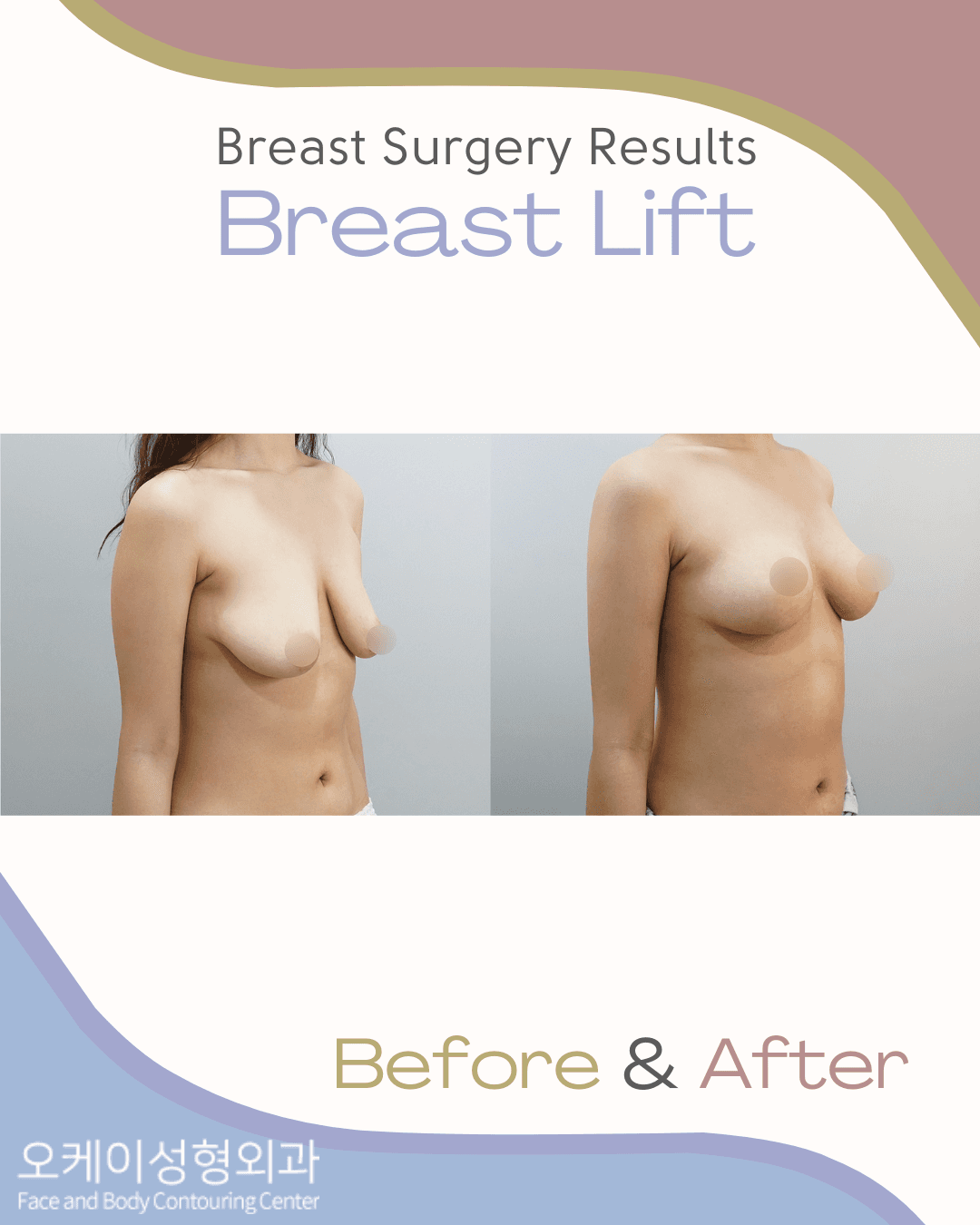
Both clinical studies and online patient forums confirm excellent satisfaction following breast lift procedures. Patients frequently mention gains in confidence, improved clothing fit, and even pain reduction.
A study on internal breast lift outcomes for pseudoptosis and mild ptosis found highly positive one-year post-op feedback:
| Outcome Question | Positive Responses (“Yes”) |
|---|---|
| Did you like the quality of the scar? | 100% |
| Were the areolas in an appropriate position and similar? | 90% |
| Are the breasts similar? | 90% |
| Would you recommend the surgery to a friend? | 100% |
| Would you have another surgery to improve the result? | 0% |
| Would you change the scar to an inverted T scar? | 0% |
These results validate that techniques minimizing scars, like the internal lift, deliver durable and aesthetically pleasing results with high patient approval.
Preventing Post-Surgical Pseudoptosis (“Bottoming Out”)
A key surgical challenge is avoiding recurrent pseudoptosis after surgery (often termed “bottoming out”), where breast tissue slides down while the nipple remains high—typically due to weak inferior support or misplaced nipple position. Modern approaches like glandular suturing in vertical lifts and internal mastopexy reinforce internal breast structure, providing long-term support against gravity and greatly reducing this risk. These methods reflect a modern, proactive focus on surgical durability.
Conclusion
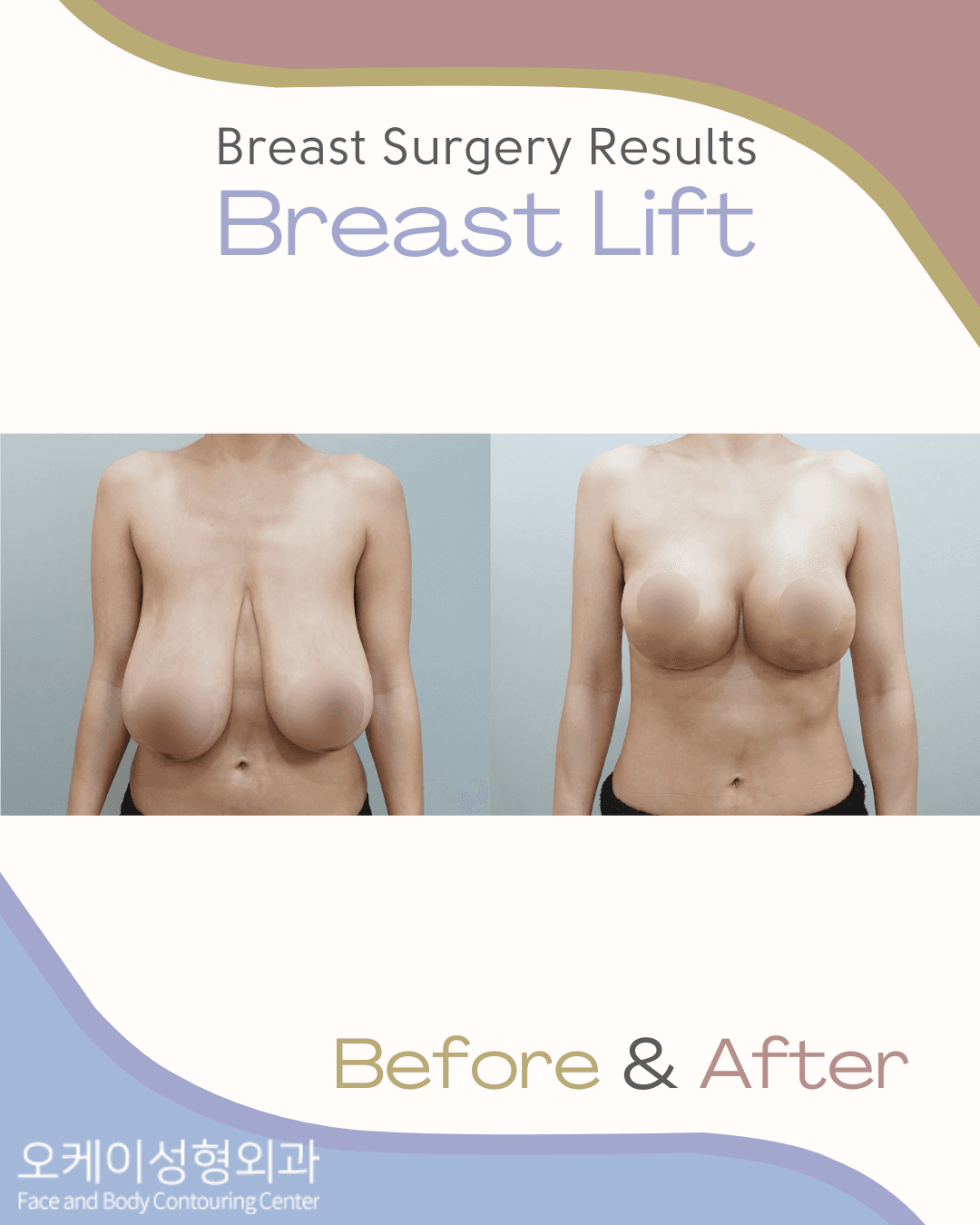
Pseudoptosis refers to lower pole breast sagging with the nipple in a normal position, best treated by restoring volume and internal glandular support rather than just skin excision. Newer surgical approaches—such as breast augmentation for a "lift effect," internal mastopexy, and vertical lifts with glandular reshaping—ensure lasting, natural results while minimizing recurrence and scarring. South Korea is a standout destination for these procedures, offering advanced expertise, value-driven packages, and structured care for international patients. Prospective patients should prioritize thorough consultations, focusing on long-term support and prevention of future sagging for the best results.
References
1, 2, 3, 4, 5, 6, 7, 8, 9, 10, 13, 15, 16, 17, 18, 26, 27, 30, 31, 41